적요
This study was carried out to evaluate the proximate contents and compositions of amino acids and fatty acids in Korean 6 dent, 2 intermediate, and 3 semiflint maize (Zea mays L.) hybrids. The protein content of 11 Korean maize hybrids ranged from 9.0% (Pyeonggangok) to 11.5% (Jangdaok). The crude fat content varied from 4.0% (Pyeonggangok and Yanganok) to 5.6% (Kwangpyeongok), and the crude ash content was 1.3 (Jangdaok) ~ 1.6% (Cheonganok). Total starch contents of maize hybrids were determined in the range of 51.4% (Jangdaok) to 70.9% (Cheonganok). Major amino acid in maize varieties were glutamic acid (27.28~28.68%) and followed by proline, alanine, and aspartic acid. Fatty acid were mainly composed of oleic acid (C18:1, 23.55~31.47%) and linoleic acid (C18:2, 47.55~56.64%) in maize hybrids. Cheonganok, Cheongdaok, and Kwangpyeongok had high oleic acid composition among Korean maize hybrids. Also, Gangdaok and Kwangpyeongok had high composition of saturated fatty acid. Because kernel composition affects maize quality, it is important data for the maize breeding program and food processing.
서 언
세계 3대 작물의 하나인 옥수수(
Zea mays L.)는 줄기부터 이삭까지 모든 부위가 식품, 사료, 에너지, 산업소재, 제약 원료 등 다양하게 이용되는데, 세계 옥수수 생산량의 20~22% 정도가 식용으로 사용되고 있다(
Iordan et al. 2015). 식용으로는 곡실이 식량과 간식으로 이용되며, 가공용으로는 전분(
Zhang et al. 2012a), 비타민(
Warman & Havard 1998), 섬유(
Pandya & Srinivasan 2012), 식용유(
Moreau et al. 2004), 이유식 (
Ikujenlola & Fashakin 2005), 죽(
Mburu et al. 2012), 그리고 에탄올(
Lamsal et al. 2011) 등으로 다양하게 활용되고 있다. 옥수수는 종자의 모양과 성질에 따라서 마치종(馬齒種, dent corn), 경립종(硬粒種, flint corn), 감미종(甘味種, sweet corn), 폭립종(爆粒種, pop corn), 연립종(軟粒種, flour corn), 나종(糯 種, waxy corn), 그리고 유부종(有浮種, pod corn) 등으로 나뉘는 데(
Corona et al. 2006), 대부분의 제품 원료로 황색 마치종이 대부분 이용되고 있으나(
Shukla & Cheryan 2001), 최근 다른 종들도 색소, 당, 식이섬유, 단백질 원료 등으로 다양하게 활용하 기 위한 연구가 진행되고 있다(
Zilic et al. 2011). 우리나라에서 는 주로 찰옥수수와 단옥수수가 식용 및 간식용으로 이용되고 있으며, 일반옥수수는 옥수수차, 뻥튀기 등으로 이용되고 있다.
현재까지 우리나라에서 옥수수의 식용 및 가공 이용 연구는 재배 및 수확시기에 따른 찰옥수수와 단옥수수 품종의 성분 특성에 대한 연구(
Kim et al. 2014a,
Kim et al. 2014b,
Kim et al. 2015,
Lee at al. 2010)와 찰옥수수를 이용한 떡(
Hyun et al. 2008), 국수(
Hwang & Jeong 2012), 옥수수쌀(
Lee et al. 2013) 등 가공 특성 연구와 같이 찰옥수수와 단옥수수 위주로 이루어졌다. 일반옥수수에 대한 연구는 사일리지와 곡실사료 등을 위한 강다옥(
Son et al. 2006a), 광평옥(
Moon et al. 2001), 다평옥(
Son et al. 2015), 장다옥(
Son et al. 2004) 등 품종 개발과 파종시기 및 재배 기술 연구(
Son et al. 2006b,
Son et al. 2009) 위주로 이루어졌으며, 일반옥수수 곡실을 식용 및 가공용으로 이용하기 위한 연구는 매우 미흡한 실정이다. 2000년 이후 일반 옥수수 품종은 광평옥, 양안옥 등 15품종이 국립식량과학원에서 육성되었으나(
NICS 2015), 각 품종의 곡실 성분 특성에 대한 연구는 거의 이루어지지 않았다. 따라서 본 연구는 국내에서 육성한 마치종 6품종, 중간종 2품종, 그리고 반경립종 3품종의 주요 성분 함량을 분석하여 옥수수 품종 육성과 옥수수를 식용 및 가공 이용에 활용하기 위한 기초자료로 제공하고자 수행하였다.
재료 및 방법
시험재료
본 연구에서는 국내에서 육성한 옥수수 품종의 곡실 성분 특성을 비교하기 위하여 마치종 6품종(광평옥, 다평옥, 안다옥, 장다옥, 청다옥, 평강옥), 중간종 2품종(신광옥, 양안옥), 그리고 반경립종 3품종(강다옥, 청안옥, 평안옥)을 이용하였으며 모두 황색종이었다. 수원시 권선구 수봉로 30 소재 국립식량과학원 밭작물시험연구포장에서 4월 5일에 파종하여 재배하였으며, 재 배 관리는 옥수수 표준재배법(
RDA 2011)에 준하였다. 수확한 옥수수 이삭에서 종실을 분리하여 성분분석에 이용하였다.
옥수수 곡실의 일반성분은 국립식량과학원 품질분석 매뉴얼 (
NICS 2009)에 준하여 분석하였다. 수분 함량은 건조기 (DS-80-1, Dasol scientific Co., Ltd, Korea)를 이용하여 상압가 열건조법으로 측정하였다.
단백질 함량은 micro-Kjeldahl법으로 분석하였다. 시료 0.2 g을 단백질 분해관에 넣고 황산 10 mL와 촉매제를 첨가한 후 Kjeltec™ 2200 auto distillation unit (Foss Tecator, Huddinge, Sweden)을 이용하여 420°C에서 40분간 분해하고 30분간 상온 에서 냉각시키고 나서 Kjeltec™ 2400 auto analyzer unit (Foss Tecator, Huddinge, Sweden)을 이용하여 질소함량을 측정한 후 질소계수 6.25를 곱하여 단백질 함량을 구하였다.
지방 함량은 Soxtherm automatic system (Gerhardt Soxtherm 2000, Hoffmannstre, Germany)을 이용하여 정량하 였다. 분쇄된 옥수수 시료 3 g을 extraction thimble에 담고 n-hexane 140 mL와 비등석을 함께 넣고 extraction thimble이 용매에 잠긴 상태로 180°C에서 30분간 가열하여 시료의 지방을 용출시킨 후 80분 동안 5회에 걸쳐 추출용매를 수거하였다. 그 후 용출된 조지방을 담고 있는 수기를 105°C에서 1시간 동안 건조 후 방냉하고 무게를 측정하여 지방의 함량을 구하였다.
회분 함량은 항량이 된 도가니에 분쇄된 시료 1 g을 취하여 무게를 측정한 후 핫플레이트에서 회화하고, 전기회화로 (DS-84E, Dasol scientific Co., Ltd, Korea)를 이용하여 600°C 에서 4시간 동안 회화시킨 후 데시케이터에 옮겨 2시간 동안 방냉한 후 도가니의 무게를 측정하여 구하였다.
전분 함량
옥수수의 전분 함량은 Total starch assay kit (Megazyme international, Wicklow, Ireland)을 이용하여 amyloglucosidase/ α-amylase 방법으로 분석하였다. 분쇄 시료 100 mg에 80% 에탄올과 thermostable α-amylase를 넣고 6분 동안 100°C에서 반응시켰다. 이후 sodium acetate buffer와 amyloglucosidase를 첨가하여 잘 섞어준 다음 30분 동안 50°C에서 반응시키고 나서 50 mL volumetric flask에 옮기고 증류수로 정용하였다. 이 용액을 3,000 rpm으로 10분간 원심분리하여 얻은 상등액에 glucose determination reagent (glucose oxidase/peroxidase) 를 가하고 50°C에서 20분간 반응시킨 후 UV-Vis spectrophotometer (U-2800, Hitachi, Japan)를 이용하여 510 nm 에서 흡광도를 측정하였다. 전분 함량은 다음의 식을 이용하 여 계산하였다.
아미노산 조성
옥수수의 아미노산 조성은
Kim et al. (2004)의 방법을 사용하 였다. 분쇄된 품종별 옥수수 시료 0.5 g에 6N HCl 10 mL을 가하여 110°C dry oven에서 24시간 동안 가수분해 하고, 식힌 후 filter paper로 여과하고 milli-Q water를 가해 100 mL이 되도록 하였다. 이것을 활성화된 Sep-Pak C18 Cartridges를 통과시켜 가수분해 후 남아있는 불순물을 제거하고 여과된 액을 아미노산 분석 시료로 사용하였다. 아미노산 조성 분석은 아미노 산 자동분석기(L-8900 Amino acid auto analyzer, Hitachi Co. Ltd., Tokyo, Japan)를 이용하였다. 컬럼은 ion exchange column (#2622SC PH, Hitachi Co. Ltd., Tokyo, Japan)를 사용하였고, 용매는 PH1, PH2, PH3, PH4, PH‐RG, R‐3, C-1, Ninhydrin solution, 그리고 Buffer solution (Wako Co., Osaka, Japan)을 사용하였다. 컬럼 온도는 50°C, reaction chamber 온도 는 135°C로 분석하였다. 아미노산 표준용액은 Wako사의 Amino acids mixture standard solution (type H)를 사용하였다.
옥수수의 지방산 조성은
Rafael & Mancha (1993)의 방법을 변형하여 분석하였다. 분쇄한 옥수수 시료 0.5 g에 methanol : heptane : benzene : 2,2-dimethoxypropane : H
2SO
4가 37:36:20:5:2 (v/v)로 혼합된 용액을 가하고 80°C에서 1시간 동안 가열하면서 methylation 시켰다. Methylation 후 상온에서 냉각한 fatty acid methyl esters (FAMEs)가 함유된 상등액을 지방산 조성 분석에 이용하였다. 지방산 분석은 GC-FID (Gas Chromatography-Flame Ionization Detector, 6890 N series, Agilent Technologies Inc., Wilmington, DE, USA)를 이용하 였으며, 컬럼은 HP-Innowax capillary column (0.25 μm × 30 m, J&W Scientific, Agilent Technologies Inc., Wilmington, DE, USA)를 사용하였다. Oven 온도는 150°C에 서 280°C까지 분당 4°C씩 상승시켰고, injector 온도는 250°C, detector 온도는 300°C, carrier gas는 N
2로 유속은 2.0 mL/min 이었다. 표준지방산 methyl ester는 FAME mix C
14-C
22 (Supelco, Bellefonte, USA)를 사용하였다.
통계분석은 SAS 9.2 (Statistical analysis systems Inc., Raleigh, NC, USA)을 이용하여 분산분석(ANOVA)을 하였으 며, 던컨의 다중범위검정(Duncan's multiple range test)으로 5% 유의수준에서 검정하였다.
결과 및 고찰
옥수수 곡실의 일반성분 함량
국내 옥수수 품종의 평균 단백질 함량은 10.3% 였고, 단백질 함량이 가장 높은 품종은 장다옥(11.5%), 가장 낮은 품종은 평강옥(9.0%) 이었다(Table
1).
Park et al. (1990)은 우리나라 일반 옥수수 교잡종들의 단백질 함량은 9.1~11.4% 라고 하였고,
Ndukwe et al. (2015)은 나이지리아에서 재배되는 옥수수 품종 의 단백질 함량이 10.7~12.3% 라고 보고하였는데, 이번 연구의 결과는 선행된 여러 연구 결과들과 비슷하였다. 또한
Zilic et al. (2011)은 황색 마치종과 황색 반경립종의 단백질 함량은 각각 10.1%와 10.4% 였다고 보고하였으며,
Watson (2003)은 일반적으로 황색 마치종 옥수수 곡실은 9.5%의 단백질 함량을 가진다고 하였다.
Alexander (1988)는 수량과 단백질 함량이 높은 계통의 적정 단백질 함량을 11~12%라고 하였는데, 이에 해당되는 품종은 장다옥 이었다.
Kim et al. (2006)과
Abiose & Ikujenlola (2014) 등 여러 연구에서 quality protein maize (QPM) 계통은 일반옥수수 계통 보다 단백질 함량은 낮지만 아미노산 조성 면에서 우수하다고 하였다. 배유 특성별로 비교하 였을 때 반경립종(10.8%)이 마치종(10.0%) 보다 단백질 함량이 유의하게 높았는데(
p<0.05), 이 결과는 경립종과 반마치종이 마치종에 비하여 단백질 함량이 높았다는
Park et al. (1990)의 보고와 비슷하였다.
Table 1.Comparison of proximate composition in kernel of 11 Korean maize hybrids.
Table 1.
|
Hybrids |
Kernel type |
Registration year |
Moisture (%) |
Protein (%) |
Fat (%) |
Ash (%) |
|
|
Andaok |
Dent |
2012 |
10.4±0.0a†
|
9.3±0.0h
|
4.5±0.1d
|
1.5±0.0bc
|
|
Cheonganok |
Semi-Flint |
2003 |
7.9±0.1h
|
10.9±0.0b
|
4.6±0.0cd
|
1.7±0.0a
|
|
Cheongdaok |
Dent |
2011 |
9.4±0.0e
|
9.9±0.0g
|
4.5±0.0d
|
1.5±0.0bc
|
|
Dapyeongok |
Dent |
2011 |
8.7±0.1f
|
9.9±0.0g
|
4.8±0.0c
|
1.5±0.0cd
|
|
Gangdaok |
Semi-Flint |
2006 |
10.1±0.0b
|
10.6±0.0d
|
5.0±0.2b
|
1.5±0.0bcd
|
|
Jangdaok |
Dent |
2004 |
8.5±0.0g
|
11.5±0.0a
|
4.2±0.0e
|
1.3±0.0h
|
|
Kwangpyeongok |
Dent |
2001 |
9.4±0.1e
|
10.5±0.1e
|
5.7±0.1a
|
1.5±0.0d
|
|
Pyeonganok |
Semi-Flint |
2009 |
9.4±0.1de
|
10.8±0.0c
|
4.5±0.1d
|
1.6±0.0b
|
|
Pyeonggangok |
Dent |
2012 |
10.0±0.1c
|
9.0±0.0i
|
4.0±0.1f
|
1.4±0.0f
|
|
Singwangok |
Intermediate |
2013 |
10.4±0.0a
|
10.6±0.1d
|
4.6±0.1d
|
1.5±0.0e
|
|
Yanganok |
Intermediate |
2013 |
9.5±0.0d
|
10.3±0.0f
|
4.0±0.1f
|
1.4±0.0g
|
|
|
Mean |
|
9.4±0.8 |
10.3±0.7 |
4.6±0.5 |
1.5±0.1 |
|
CV(%) |
|
0.7 |
0.4 |
1.9 |
1.2 |
국내 옥수수 품종의 평균 지방 함량은 4.6% 였으며, 광평옥 (5.6%)이 가장 높은 지방 함량을 가졌으며, 평강옥과 양안옥 (4.0%)이 가장 낮았다(Table
1). 선행 연구들에서의 지방 함량은 4.3% (
Watson 2003), 4.5% (
Abiose & Ikujenlola 2014), 3.2~4.1% (
Ndukwe et al. 2015), 그리고 3.8~5.3% (
Son et al. 2012) 로 이번 연구의 결과와 비슷하였다. 배유 특성별로 비교시에는 반경립종(4.7%)의 지방 함량이 중간종(4.3%)에 비 해 유의하게 높았다(
p<0.05). 고지방 함유 옥수수 계통 육성시에 는 지방산 조성에도 주의를 기울여야 하는데, 품질이 좋은 옥수수 지방은 불포화지방산 조성이 높고, 지방 함량이 증가하여도 oleic acid와 linoleic acid의 조성의 합은 일정하게 유지되며, 불포화지 방산 조성이 높은 기름에 토코페롤의 함량이 더 높다고 한다 (
Jovanović et al. 2005).
옥수수 11 품종의 회분 함량은 1.3~1.6% 범위였는데, 청안옥 의 회분 함량이 가장 높았고 장다옥이 가장 낮았다(Table
1). 이번 연구에서의 회분 함량은
Son et al. (2012)과
Watson (2003) 등의 연구와 비슷하였고,
Ndukwe et al. (2015)가 보고한 회분 함량 보다 낮은 경향을 보였는데, 이러한 결과는 옥수수 품종이나 재배 환경의 차이에서 기인한 것이라 판단된다. 회분 함량을 배유 특성별로 비교해보았을 때에는 반경립종(1.6%)이 마치종 (1.5%)과 중간종(1.4%) 보다 유의하게 높았다(
p<0.05).
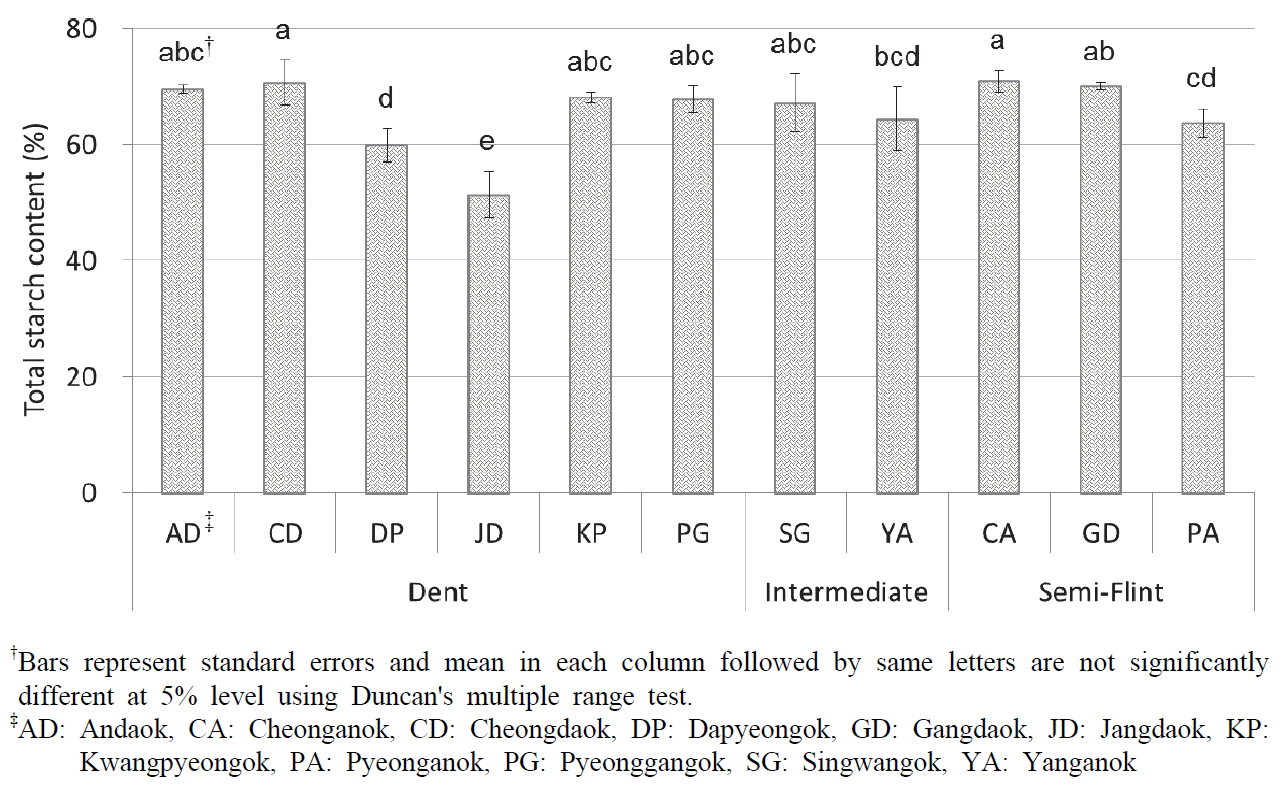
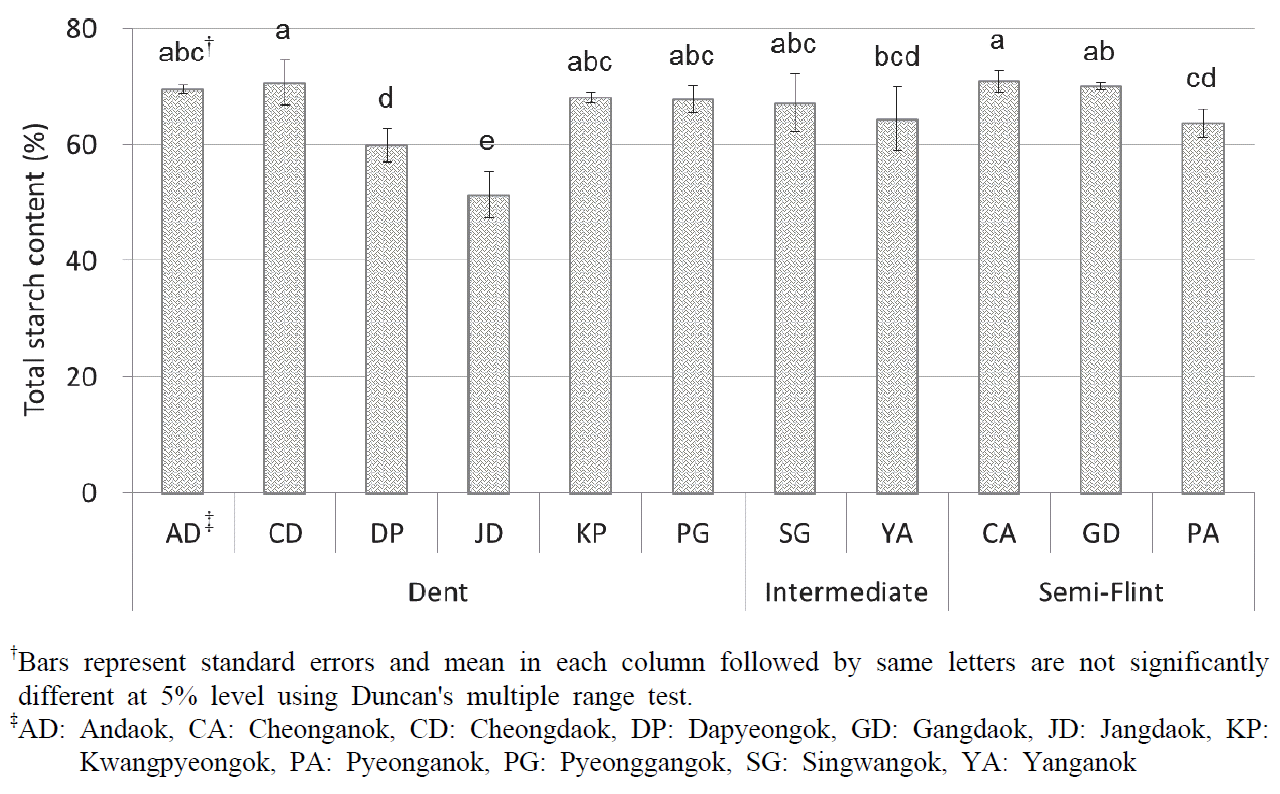
국내 옥수수 품종의 평균 전분 함량은 65.7% 였고, 청안옥 (70.9%)이 가장 높은 전분 함량을 보였고 장다옥(51.4%)이 가장 낮았다(Fig.
1). 그리고 배유 특성간 전분 함량은 유의한 차이를 보이지 않았다.
Watson (2003)은 일반적으로 황색 마치종 옥수 수 곡실의 전분 함량은 71.7% 였고,
Zilic et al. (2011)은 반경립 종의 전분 함량은 67.9% 이고 마치종은 69.9% 라고 보고하였으 며,
Ndukwe et al. (2015)은 10품종의 전분 함량의 범위가 59.7~71.1% 라고 하였다. 옥수수에서 요구되는 품질의 기준은 이용 목적에 따라 다양한데, 옥수수 전분, 전분당, 시럽, 에탄올 생산에는 전분 함량이 높은 품종이 요구된다(
Radosavljević et al. 2010). 옥수수 곡실은 대부분 식품 및 사료로 사용되므로 성분 특성이 중요한데,
Duvick et al. (2004)은 개발된 품종의 단백질 함량이 10년당 0.3% 씩 감소하는 반면 전분 함량은 0.3% 씩 증가하였다고 보고하였다.
Fig. 1.Comparison on total starch content in 11 Korean maize hybrids.
옥수수 곡실의 아미노산 조성
옥수수는 단백질 함량이 낮을 뿐만 아니라 필수아미노산인 lysine과 tryptophan이 결핍되어 있어 불완전한 단백질에 속한다 (
Shewry 2007). 옥수수 단백질은 알코올 용해성 저장단백질 prolamine인 zein이 약 45~50%를 차지하며, 이것은 주로 glutamic acid, proline, alanine 그리고 leucine으로 구성되어 있다(
Shukla & Cheryan 2001). 국내 옥수수 품종의 아미노산 조성은 glutamic acid가 27.28~28.68%로 가장 높았고 다음으로 proline, alanine, aspartic acid, serine, arginine, leucine, glycine, threonine, lysine, valine, histidine, isoleucine, methionine, phenylalanine, tyrosine, 그리고 cysteine 순이었다 (Table
2). 이러한 아미노산 조성은 zein을 구성하고 있는 아미노 산의 영향이 클 것으로 판단된다.
Kim et al. (2006)은 일반 옥수수 계통의 아미노산 조성이 glutamic acid가 가장 높고 aspartic acid와 alanine 순으로 높았으며, lysine이 가장 낮았음 을 보고하였다. 그리고
Son et al. (2012)은 F
1 및 F
2 종실의 아미노산 조성이 glutamic acid가 가장 높고 leucine, alanine, 그리고 proline 순으로 높았고, lysine이 가장 낮았다고 보고하였 다. 그러나
Park et al. (1990)와
Thomison et al. (2003)은 methionine의 조성이 가장 낮은 것으로 보고하여 옥수수의 품종 과 재배환경 등에 따라 아미노산 조성이 달라질 것으로 판단된다. 국내 옥수수 품종의 단백질 1g 당 lysine 함량을 환산하였을 때 21.21~29.26 mg 인데 이것은
FAO (1970) 및
WHO (2002) 에서 옥수수에 요구되는 lysine 함량인 58 mg/g 단백질에 비해 낮은 편이어서 식용으로 이용하기 위해서는 추후 개발되는 품종 에 아미노산 조성의 개선이 필요할 것으로 사료된다.
Table 2.Comparison of amino acids composition in kernel of 11 Korean maize hybrids.
옥수수 곡실의 지방산 조성
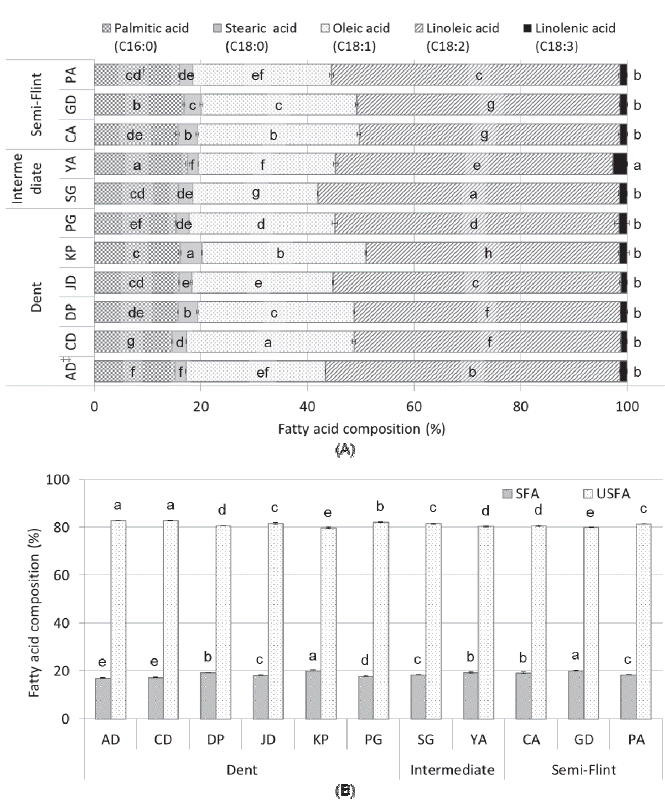
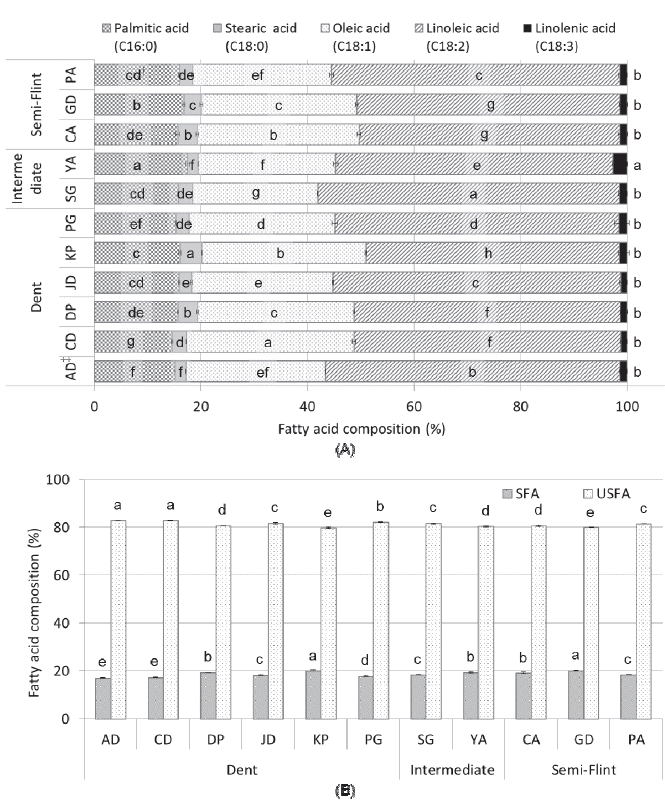
국내 일반옥수수 품종의 지방산 조성은 linoleic acid (C18:2, 47.55~56.64%)와 oleic acid (C18:1, 23.55~31.47%)가 약 80% 를 차지하고, palmitic acid (C16:0, 14.60~17.46%), stearic acid (C18:0, 2.06~4.12%), linolenic acid (C18:3, 1.13~2.58%) 순으로 구성되어 있었는데(Fig.
2A), 시험 품종 중 양안옥만 linolenic acid의 조성이 stearic acid 보다 높았다. 일반적으로 옥수수의 지방산 조성은 linoleic acid와 oleic acid가 주를 이루는 것으로 알려져 있는데(
Ignjatovic-Micic et al. 2015), 국내 품종들의 경우에는 총 지방산 조성의 77.90~81.59%를 차지하고 있었다.
Dunlap et al. (1995)는 옥수 수 교잡종 418점과 자식계통 98점의 지방산 조성을 분석한 결과 변이가 컸으며, 6.7~16.5% palmitic acid, 0.7~6.6% stearic acid, 16.2~43.8% oleic acid, 39.5~69.5% linoleic acid, 그리고 0.0~3.1% linolenic acid 범위를 나타내었다고 하였다.
Weber (1987)는 일반적인 마치종 옥수수의 평균 지방산 조성은 11% palmitic acid, 2% stearic acid, 24.1% oleic acid, 61.9% linoleic acid, 그리고 0.7% linolenic acid로 구성되어 있다고 보고하였는 데 이번 연구의 결과와 비슷하였다. 옥수수 기름의 지방산 조성에 따라 다양한 이점이 있는데, oleic acid의 조성이 증가하면 산패 안정성이 증가하고(
White & Weber 2002), 관상동맥성심질환, 퇴행성 질환과 암 발생을 감소시키는 효과가 있다고 한다 (
Mattson & Grundy 1985,
Zhang et al. 2012b). 반면, palmitic acid나 stearic acid와 같은 포화지방산의 조성이 증가되면 수소 첨가나 원치 않는 트랜스 지방산의 형성 없이 마가린이나 쇼트닝 생산이 가능해진다고 하였다(
Duvick et al. 2006). 국내 육성 품종 중에서는 청다옥, 광평옥과 청안옥이 oleic acid 조성이 높았고(Fig.
2A), 광평옥과 강다옥이 포화지방산 조성이 높은 품종이었다(Fig.
2B). 미국에서 식품산업에 이용하기 위한 옥수 수의 지방산 조성 육종 목표는 (1) 프리 트랜스 지방산 마가린 또는 쇼트닝 생산용 고포화지방산 조성 30%, (2) 식품에 저포화 지방 표시용 저포화지방산 조성 6% 이하, (3) 심장 건강과 요리 및 튀김 안정성 식용유용 mid-oleic acid 조성 50~65% 라고 한다(
White et al. 2007). 국내 옥수수 품종의 포화지방산 조성은 17.17~20.19% (Fig.
2B) 이며, oleic acid 조성은 23.55~31.47% (Fig.
2A) 범위로서 위의 조건에는 부적합한데, 이는 현재까지 우리나라 일반옥수수의 육종목표가 착유용이 아닌 사료용이었기 때문으로 판단된다. 배유 특성별로 비교하였 을때 포화지방산과 불포화지방산 조성에는 유의한 차이는 없었 으나, 중간종이 마치종이나 반경립종에 비하여 oleic acid 조성이 유의하게 낮고, linoleic acid 조성은 유의하게 높았다(
p<0.05).
Fig. 2.
Comparison on fatty acid composition (A) and total of saturated and unsaturated fatty acid composition (B) in kernel of 11 Korean maize hybrids.
†Bars represent standard errors and mean in each column followed by same letters are not significantly different at 5% level using Duncan's multiple range test.
‡AD: Andaok, CA: Cheonganok, CD: Cheongdaok, DP: Dapyeongok, GD: Gangdaok, JD: Jangdaok, KP: Kwangpyeongok, PA: Pyeonganok, PG: Pyeonggangok, SG: Singwangok, YA: Yanganok.
적 요
우리나라에서 사용량의 대부분을 수입하고 있는 일반옥수수 의 국내 개발 품종을 식용 및 가공용으로 이용하기 위한 연구는 매우 미흡한 실정이다. 본 연구는 국내에서 육성한 옥수수 품종의 이용성 제고를 위하여 마치종 6품종, 중간종 2품종, 그리고 반경 립종 3품종의 일반성분 함량, 전분 함량과 아미노산 및 지방산 조성을 분석하였고 그 결과를 요약하면 다음과 같다.
옥수수 품종의 평균 단백질 함량은 10.3% 였고, 단백질 함량이 가장 높은 품종은 장다옥(11.5%), 가장 낮은 품종은 평강옥(9.0%) 이었다. 반경립종 품종(10.8%)이 마치종 품종 (10.0%) 보다 단백질 함량이 유의하게 높았다(p<0.05).
지방 함량은 평균 4.6% 였으며, 광평옥(5.6%)이 가장 높은 지방 함량을 가지는 품종이었고, 평강옥과 양안옥(4.0%)이 가장 낮은 품종이었다 반경립종 품종(4.7%)의 지방 함량이 중간종 품종(4.3%)에 비해 유의하게 높았다(p<0.05).
회분 함량은 1.3~1.6% 범위였는데, 청안옥의 회분 함량이 가장 높았고 장다옥이 가장 낮았다. 반경립종 품종(1.6%)이 마치 종과 중간종 품종 보다 회분 함량이 유의하게 높았다(p<0.05).
전분 함량은 평균 65.7% 였고, 청안옥(70.9%)이 전분 함량 이 가장 높았고 장다옥(51.4%)이 가장 낮았다. 배유 특성간 전분 함량은 유의한 차이를 보이지 않았다.
아미노산 조성은 glutamic acid가 27.28~28.68%로 가장 높았고 다음으로 proline, alanine, aspartic acid 순이었다. 지방 산 조성은 linoleic acid와 oleic acid가 약 80%를 차지하고, palmitic acid, stearic acid, 그리고 linolenic acid 순으로 구성되 어 있었다. 옥수수 품종 중에서 청다옥, 광평옥과 청안옥이 oleic acid 조성이 높았고, 광평옥과 강다옥이 포화지방산 조성이 높은 품종이었다.
사 사
본 논문은 농촌진흥청 작물시험연구사업(ATIS 과제번호: PJ01117201)의 지원으로 수행된 결과입니다.
References
- 1. Abiose SH, Ikujenlola AV. Comparison of chemical composition, functional properties and amino acids composition of quality protein maize and common maize (Zea may L). Afr. J. Food Sci. Technol 2014. 5: 81-89.
- 2. Sprague GF, Dudley JW, Alexander DE. Breeding special nutritional and industrial types Corn and corn improvement 1988. 18: 3rd ed. Agronomy. 369-388.
- 3. Corona L, Owens FN, Zinn RA. Impact of corn vitreousness and processing on site and extent of digestion by feedlot cattle. J. Anim. Sci 2006. 84: 3020-3031.
- 4. Dunlap FG, White PJ, Pollak LM, Brumm TJ. Fatty acid composition of oil from adapted elite corn breeding materials. J. Am. Oil Chem. Soc 1995. 72: 981-987.
- 5. Duvick DN, Smith JSC, Cooper M. Long-term selection in a commercial hybrid maize breeding program. Plant Breed. Rev 2004. 24: 109-151.
- 6. Duvick SA, Pollak LM, Edwards JW, White PJ. Altering the fatty acid composition of Corn Belt corn through Tripsacum introgression. Maydica 2006. 51: 409-416.
- 7. FAOAmino acid content of foods and biological data on proteins. (FAO Nutritional Studies No 24) 1970. Rome, Italy, Food and Agriculture Organization of the United Nations.
- 8. Hyun YH, Nam HW, Pyun JW. Quality characteristics of Sulgidduk with prepared glutinous corn flour. Korean J. Food & Nutr 2008. 21: 293-299.
- 9. Hwang IG, Jeong HS. Quality characteristics of waxy corn noodles containing defatted soybean powder. J. Korean Soc. Food Sci. Nutr 2012. 41: 1584-1590.
- 10. Ignjatovic-Micic D, Vancetovic J, Trbovic D, Dumanovic Z, Kostadinovic M, Bozinovic S. Grain nutrient composition of maize (Zea mays L) drought-tolerant populations. J. Agric. Food Chem 2015. 63: 1251-1260.
- 11. Ikujenlola AV, Fashakin JB. The Physico-chemical properties of a complementary diet prepared from vegetable proteins. J. Food Agric. Environ. Finland 2005. 3: 23-26.
- 12. Iordan LH, Martura T, Alionte E, Lazar C. Protein, Starch, amino and fatty acids content in corn hybrids developed at NARDI Fundulea in natural climatic conditions. Scientific Papers. Series A. Agronomy LVIII 2015. 221-227.
- 13. Jovanovic PL, Dokic LP, Maric BJ. Fatty acid composition of maize germ oil from high-oil hybrids wet-milling processing. Acta periodica technologica 2005. 36: 43-49.
- 14. Kim MJ, Lee JE, Kim JT, Jung GH, Lee YY, Kim SL, Kwon YU. Changes in ear and kernel characteristics of waxy corn during grain filling stage by double cropping. Korean J. Crop Sci 2014a. 59: 73-82.
- 15. Kim MJ, Park HJ, Kim SL, Jung GH, Kim JT, Shin SH, Kwon YU, Chung IM. Changes in the physicochemical characteristics of sweet corn kernels during grain filling stage with different sowing date. Korean J. Crop Sci 2014b. 59: 445-456.
- 16. Kim MJ, Lee JE, Kim JT, Jung GH, Lee JS, Kim SL, Youn KJ, Kim WH, Chung IM. Changes in ear and kernel characteristics of colored waxy corn hybrids during ripening with different sowing dates. Korean J. Crop Sci 2015. 60: 308-317.
- 17. Kim SL, Park NK, Son JR. Analysis of amino acids. Korean J. Crop Sci 2004. 49s: 3-16.
- 18. Kim SL, Son BY, Jung TW, Moon HG, Son JR. Characterization on fatty acids and amino acids of quality protein maize lines. Korean J. Crop Sci 2006. 51: 458-465.
- 19. Lamsal BP, Wang H, Johnson LA. Effect of corn preparation methods on dry-grind ethanol production by granular starch hydrolysis and partitioning of spent beer solids. Bioresource Technol 2011. 102: 6680-6686.
- 20. Lee SH, Hwang IG, Kim HY, Lee HK, Lee SH, Woo SH, Lee J, Jeong HS. Starch properties of Daehak waxy corn with different harvest times. J. Korean Soc. Food Sci. Nutr 2010. 39: 573-579.
- 21. Lee YY, Lee CK, Lee JS, Kim MJ, Kim SL, Kim YH, Park HM, Kim WH, Kwon YU, Kim SK. Comparison on physicochemical and cooking properties of milled kernel in waxy corn hybrids. Korean J. Crop Sci 2013. 58: 424-431.
- 22. Mattson FH, Grundy SM. Comparison of effects of dietary saturated monounsaturated and polyunsaturated fatty acids on plasma lipids and lipoproteins in man. J. Lipid Res 1985. 26: 194-202.
- 23. Mburu MW, Gikonyo NK, Kenji GM, Mwasaru AM. Nutritional and functional properties of a complementary food based on Kenyan amaranth grain (Amaranthus cruentus). Afr. J. Food. Agric. Nutr. Dev 2012. 12: 5959-5977.
- 24. Moon HG, Son BY, Cha SW, Jung TW, Lee YH, Seo JH, Min HK, Choi KJ, Huh CS, Kim SD. A new single cross hybrid for silage “Kwangpyeongok”. Korean J. Breed. Sci 2001. 33: 350-351.
- 25. Moreau RA, Johnston DB, Powell MJ, Hicks KB. A comparison of commercial enzymes for the aqueous enzymatic extraction of corn oil from corn germ. J. Am. Oil Chem. Soc 2004. 81: 1071-1075.
- 26. Ndukwe OK, Edeoga HO, Omosun G. Varietal differences in some nutritional composition of ten maize (Zea mays L) varieties grown in Nigeria. International Journal of Academic Research and Reflection 2015. 3: 1-11.
- 27. NICS (National Institute of Crop Science)Manual of quality analysis for crop 2009. National Institute of Crop Science. 3-11.
- 28. NICS (National Institute of Crop Science)Varieties of Upland Crops 2015. National Institute of Crop Science. 270-271.
- 29. Pandya TS, Srinivasan R. Effect of hammer mill retention screen size on fiber separation from corn flour using the Elusieve process. Indus. Crops Products 2012. 35: 37-43.
- 30. Park KY, Son YH, Jeong SK, Choi KJ, Park SU, Choe BH. Variation of protein content and amino acid composition of maize germplasms. Korean J. Crop Sci 1990. 35: 413-423.
- 31. Radosavljevic M, Bekric V, Milašinovic M, Pajic Z, Filipovic M, Todorovic G. Genetic variability as background for the achievements and prospects of the maize utilisation development. Genetika 2010. 42: 119-135.
- 32. Rafael G, Mancha M. One-step lipid extraction and fatty acid methyl ester preparation from fresh plant tissues. Anal. Biochem 1993. 211: 139-143.
- 33. RDA (Rural Development Administration)Corn 2011. Rural Development Administration. 112-121.
- 34. Shewry PR. Improving the protein content and composition of cereal grain. J. Cereal Sci 2007. 46: 239-250.
- 35. Shukla R, Cheryan M. Zein: the industrial protein from corn. Ind. Crop. Prod 2001. 13: 171-192.
- 36. Son BY, Moon HG, Jung TW, Park NK, Kim SK, Cha SW, Rye YH, Sung BR, Huh CS, Ryu SH. A new single cross maize hybrid cultivar, “Jangdaok” for grain and silage. Korean J. Breed. Sci 2004. 36: 185-186.
- 37. Son BY, Moon HG, Jung TW, Kim SJ, Sung BR, Huh CS, Ryu SH. A new corn hybrid cultivar, “Gangdaok” for silage. Korean J. Breed. Sci 2006a. 38: 149-150.
- 38. Son BY, Moon HG, Jung TW, Kim SJ, Kim JD. Comparison of agronomic characteristics, yield and feed value of different corn hybrids for silage. Korean J. Crop Sci 2006b. 51: 233-238.
- 39. Son BY, Kim JT, Song SY, Baek SB, Kim CK, Kim JD. Comparison of yield and forage quality of silage corns at different planting dates. J. Kor. Grassl. Forage Sci 2009. 29: 179-186.
- 40. Son BY, Kim JT, Lee JS, Baek SB, Kim SL, Ku JH, Hwang JJ, Cha SM, Kwon YU. Chemical composition of seed from inbred lines and hybrids of maize recently developed in Korea. Korean J. Crop Sci 2012. 57: 188-194.
- 41. Son BY, Baek SB, Kim JT, Lee JS, Bae HH, Kim WH, Jung JK, Seo BY, Huh CS, Park JY. Single cross maize hybrid with lodging tolerance for grain, ‘Dapyeongok’. Korean J. Breed. Sci 2015. 47: 87-91.
- 42. Thomison PR, Barker DJ, Geyer AB, Lotz LD, Siegrist HJ, Dobbels TL. Amino acid composition of topcross high-oil maize grain. Plant Genet. Resour 2003. 1: 89-95.
- 43. Warman PR, Havard KA. Yield, Vitamin, Mineral contents of organically conventionally grown potatoes sweet corn. Agric. Ecosyst. Environ 1998. 68: 207-216.
- 44. Watson SA. In: White J, Johnson L. Description, Development, Structure and composition of the corn kernel. (Eds). Corn : Chemistry and Technology. 2003. 2nd ed. St. Paul. MN: American Association of Cereal Chemists, pp. 69-101.
- 45. Weber EJ. In: Watson SA, Ramstad PE. (Eds). Lipids of the kernel Corn Chemistry and Technology. 1987. St. Paul. MN: American Association of Cereal Chemists, pp. 311-349.
- 46. White PJ, Weber EJ. In: White PJ, Johnson LA. (Eds). Lipids of the kernel Corn Chemistry and Technology. 2002. St. Paul. MN: American Association of Cereal Chemists, pp. 355-395.
- 47. White PJ, Pollak LM, Duvick S. Improving the fatty acid composition of corn oil by using germplasm introgression. Lipid Technol 2007. 19: 35-38.
- 48. WHOProtein and Amino Acid Requirements in Human Nutrition (WHO technical report series no. 935) 2002. Geneva. Switzerland, World Health Organization.
- 49. Zhang B, Cui D, Liu M, Gong H, Huang Y, Han F. Corn porous starch Preparation. characterization and adsorption property. Int. J. Biol. Macromolecules 2012a. 50: 250-256.
- 50. Zhang Y, Xue R, Zhang Z, Yang X, Shi H. Palmitic and linoleic acids induce ER stress and apoptosis in hepatoma cells. Lipids Health Dis 2012b. 11: 1-8.
- 51. Zilic S, Milasinovic M, Terzic D, Barac M, Ignjatovic-Micic D. Grain characteristics and composition of maize specialty hybrids. Span. J. Agric. Res 2011. 9: 230-241.