적요
A new mandarin hybrid cultivar ‘Shinyegam’ was developed from a cross between ‘Kiyomi’ (Citrus unshiu × C. sinensis) and ‘Wilking’ (Citrus reticulata) at the Citrus Research Institute of the National Institute of Horticultural and Herbal Science in 2012. The ‘Jegam na No. 33’, a first selection seedling from the fruits obtained in 2008 was finally named ‘Shinyegam’ after field evaluation trials at five locations in Jeju island, Korea from 2010 to 2012. The tree vigor was intermediate and the tree was spreading in nature, similar to that of the ‘Kiyomi’ cultivar. The fruits produced were compressed to oblate and globose in shape, were a deep orange in color, and moderately weighed at 130 g. ‘Shinyegam’ produces fruit that mature in late December, and has few seeds, which are mono-embryonic. The average seed number of a fruit varied depending on the pollinator citrus tree. Cultivation of ‘Shinyegam’ along with the other cultivars possessing high pollen fertility resulted in seed numbers that was more than 20, while in the absence of a pollinator species the seed number was around 5. The fruit contained soluble solids at 11 to 12 ° Bx and the acidity was approximately 1% at maturity. The rind thickness of approximately 2.5 mm ensures easy peeling. The flesh is very tender and juicy, with a pleasant, aromatic flavor similar to that of ‘Wilking’ but is comparatively weak. ‘Shinyegam’ is moderately resistant to the citrus scab disease and melanose, but susceptible to citrus canker. Owing to the high quality of fruit, good aroma, and cold hardness characteristics, this cultivar is expected to satisfy consumer acceptability in terms of the diversity of the cultivar in open-field cultivation.
서 언
감귤은 2014년 기준 72만여톤 생산되어 국내 과수 중 제1위의 생산량을 기록하고 있다(
MAFRA 2015). 감귤에서 노지 온주밀 감(Satsuma mandarin)은 재배면적의 82% 이상을 차지하고 있 다(
USDA 2014). 온주밀감은 감귤 중 내한성이 강하여(
Swingle & Reece 1967) 영하의 기온과 눈이 오는 겨울철이 있는 국내 기후에 가장 적응을 잘하는 계통으로 평가되어 왔고. 이러한 특성으로 인해 온주밀감이 국내에서 주요 재배 감귤 품목이 되었다.
그러나 온주밀감 일변도의 노지재배는 짧은 기간 동안의 대량 생산과 홍수출하, 이로 인한 시장가격 하락 등 문제점을 노출하여 왔다. 또한 온주밀감은 감귤 중에서 상대적으로 성숙기 기준 당도가 낮고, 강우량과 강우일수가 많은 제주도 기후에서 고품질 의 과실을 생산하는데 어려움을 겪어왔다. 이에 조생계 온주밀감 의 당도를 높이기 위한 토양멀칭(
Baek et al. 1992,
Rno et al. 2002), 고품질 과실생산 기술 체계(
Kim 2014)를 개발하여 농가에 보급하고 있다. 그리고 최근에는 고품질 과실을 생산할 수 있는 ‘부지화’, ‘세토카’, ‘감평’ 등 만숙종 품종으로 교체하는 농가가 지속적으로 늘어나고 있으나 이 품종들은 기본적으로 시설재배를 요구하고 있다. 이러한 온주밀감 재배기술이나 만숙 종 품종 재배는 결국 고비용과 더 많은 노동력을 요구하여 개선이 필요한 실정이다. 그리고 온주밀감 중 가장 많이 재배되고 있는 조생계 온주밀감은 1980년 이후 일본에서 개발된 ‘궁천조생’, ‘흥진조생’(
Iwamasa 1988) 두 품종으로 대부분 재편되어 품종 의 변화없이 이어져와 노지에서 재배 가능한 새로운 품종의 필요성이 커졌다. 최근 ‘하례조생’(
Citrus unshiu)(
Yun et al. 2008)이 개발 보급되어 품질 수준을 한 단계 높이는 계기가 되었으나 이 또한 조생계 온주밀감 품종으로 수확시기가 같고 과실 형태나 맛의 특성 등 차별화가 이루어지지 않아 홍수출하를 해소하는 데에는 미흡한 실정이다.
이에 온주밀감을 대체하기 위한 고품질 밀감류 품종육성 연구 가 시급히 요구되었다. 그래서, 2000년 이후 온주밀감을 이용한 교배육종이 추진되었으나 온주밀감은 꽃가루가 퇴화되어 (
Yammamoto et al. 1997) 화분친으로 이용이 어렵고, 또한 다배성(
Hamilton 1936,
Koltunow et al. 1996) 형질로 인해 모본으로서도 교배를 통한 수정 종자를 얻기가 매운 어려운 특성을 갖고 있다. ‘청견’(
Citrus sinensis × C. unshiu)은 온주밀 감 잡종 품종으로 단배성이며 인공 수분에 의한 종자 맺힘이 좋아 교배 모본으로 많이 이용되고 있는 품종이다. 이에 ‘청견’ 품종을 모본으로 하여 온주밀감과 비슷한 형질을 보유하고 있는 만다린 품종을 이용한 교배육종 연구를 추진하게 되었다.
본 시험은 감귤류 중 온주밀감에 집중되어 있는 우리나라의 노지재배 품종을 다양화하여 상대적으로 품질이 낮은 온주밀감 을 대체하고 겨울철에도 노지재배가 가능한 고품질 밀감류 감귤 품종을 육성하고자 수행하였다.
재료 및 방법
2002년 감귤연구소 유전자원 포장에 식재되어 있는 ‘청 견’(Citrus sinensis × C. unshiu)을 모본으로 하여 ‘Wilking’(Citrus reticulata)의 화분을 이용 인공수정 처리한 후 12월에 종자를 채종하였다. 2003년 1월 비닐 하우스 시설에서 화분에 파종하여 육묘한 후 2004년 3월 비닐하우스에 교배실생 을 식재하여 육묘하였다. 2008년 처음 개화하였으며 착과 과실 의 특성을 조사 후 당도 등 품질이 우수한 개체를 1차 선발하여 계통명 ‘제감 나-33호’를 부여하였다.
2009년 4월 제주특별자치도 소재 5개 지역(무릉리, 남원리, 보성리, 봉개동, 하례리)농가에서 온주밀감을 중간대목으로 이 용하여 고접 증식하고 육묘한 후 생육 및 과실 특성을 조사하였 다. 2012년 11월 농촌진흥청 직무육성신품종심사위원회에 상정 하여 심의를 거친 후 최종 선발하여 ‘신예감’으로 명명하였다.
결과 및 고찰
육성경위
‘신예감’은 2002년 감귤연구소에서 ‘청견’에 ‘Wilking’(James 2000)을 교배하여 나온 교배실생 중에서 2008년 1차 선발한 후 그 중 우수한 계통에 ‘제감 나-33호’로 계통명을 부여하여 제주도내 지역별 특성조사를 거친 후 2012년 최종 선발·명명하 였다. 2013년 국립종자원에 품종보호출원하여 2015년 5월 14일 최종 등록되었다(품종등록번호 제 5502호).
주요특성 및 지역적응성
1.
1. 생육특성
나무의 세력은 중간 정도로 대조 품종인 ‘청견’과 비슷하고 나무의 자세는 과실이 달리지 않을 때는 개장성이며 과실이 달리면 하수성이다. 발아기는 감귤연구소 기준 4월 상순이고 개화 시기는 5월 중순이다. 과피 착색은 10월 중순에 시작하여 12월 상순 경에 완전 착색되며 과실의 수확기는 12월 하순부터이 다(Table
1). 감귤 병 발생은 하우스 재배에서는 관행방제 시 문제되지 않으나, 노지재배 조건에서는 ‘청견’과 비교하여 궤양 병 발생이 많은 편이다(자료 미제시).
Table 1.Comparison of Growth characteristics of ‘Shinyegam’ and ‘Kiyomi’
Table 1.
|
Cultivar |
Tree vigor |
Tree habit |
Germinating |
Flowering |
Maturation period |
Alternate bearing |
|
|
Shinyegam |
zMedium |
Spreading |
Early |
Mid.- |
Mid.- |
Medium |
|
Apr. |
Mar. |
Dec. |
|
Kiyomi |
Medium |
Spreading |
Early |
Mid.- |
Mid.- |
Medium |
|
Apr. |
Mar. |
Mar. |
2.
2. 과실특성
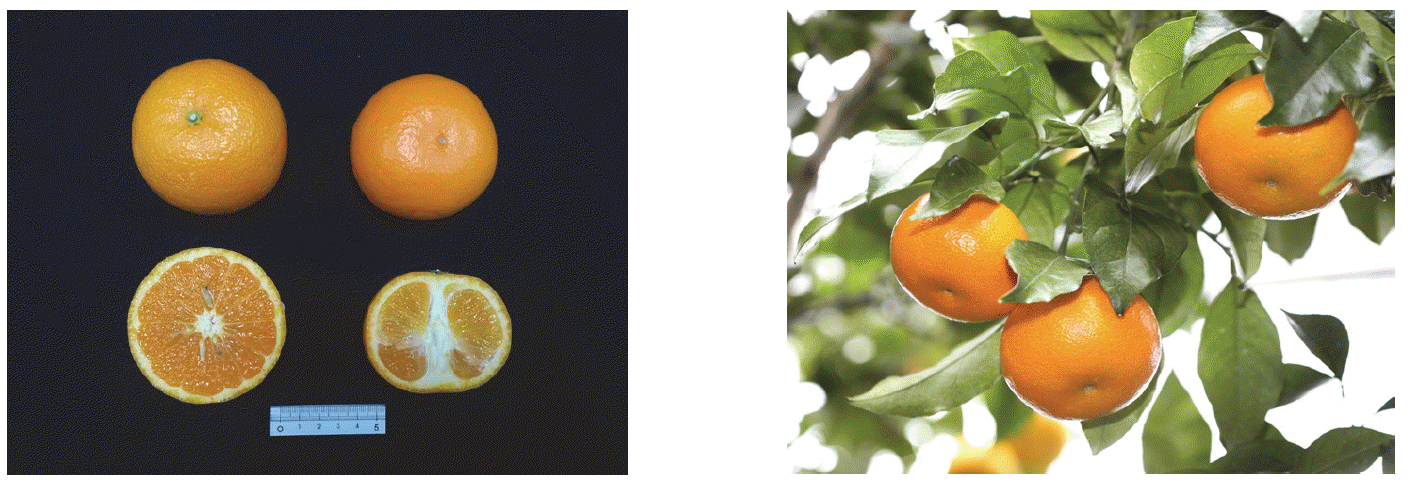
과형은 편구형으로 약간 편평한 편이며(Fig.
1) 과중은 130-150g 정도이고, 과즙율은 83% 내외이다. 과피 및 과육색은 진한 오렌지색으로 대조 품종인 ‘청견’보다 붉은색이 강하다. 감귤연구소에서의 성숙기 평균 당도는 12°Bx 정도이고 산 함량 은 1% 내외이다(Table
2). 당도는 2월 하순까지 지속적으로 상승하고 2월말 산 함량은 약 0.5%까지 감소하나 부피 현상이 없어 식미감은 좋은 편이다. 껍질의 두께는 약 2.5mm 내외이고 껍질의 과육 부착 정도는 중간이고 껍질 벗기기의 강도는 중간 정도이나 박피는 용이한 편이다. 과실의 향기는 중간 정도로 연한 편이고 ‘Wilking’과 비슷한 향이다. 자가화합성으로 임성 이 있는 화분을 갖고 있어 종자가 맺히나 타 품종 등 수분수가 없을 때에는 종자 형성량이 적었고 종자의 배수는 단배성이다. 과실 껍질의 알베도층이 치밀한 특성이 있는데, ‘청견’ 대비 강도가 약하나 온주밀감과 ‘Wilking’ 보다는 강하여 성숙기 및 그 이후에도 과실의 부피현상은 거의 없으며 제주특별자치도 서귀포 노지 재배에서는 과피의 저온 장해 및 내부 품질 변화가 적어 겨울철 노지재배가 가능하다. 지역별 농가에서 과실 특성을 조사한 결과 2012년 12월 17일 당도는 무릉리 농가에서 12.2°Bx 로 가장 높았으며 봉개동 농가에서는 9.9°Bx로 낮은 편이었다. 산함량은 5농가 모두 1% 이하로 0.7-0.8% 내외였다. 과실당 종자수는 무릉리 농가에서 17.3개로 제일 많았고 나머지 농가에 서는 5개 미만이었다(Table
3).
Fig. 1.Fruit morphology (left) and fruiting (right) of a new mandarin cultivar 'Shinyegam'.
Table 2.General fruit characteristics of a new mandarin cultivar ‘Shinyegam’ and the seed parent variety ‘Kiyomi’
Table 2.
|
Cultivar |
zWeight (g) |
yFruit shape |
Rind thickness (mm) |
No. of Seed |
Soluble solid (°Bx) |
Titrable acidity (%) |
|
|
Shinyegam |
x130.0±3.8*
|
127 |
2.67±0.41*
|
27.5±6.2*
|
12.4±0.93*
|
0.99±0.09*
|
|
Kiyomi |
224.5±3.1 |
110 |
4.55±0.48 |
0±0 |
9.6±0.25 |
1.87±0.19 |
Table 3.Fruit characteristics of ‘Shinyegam’ at five locations on Jeju Island in 2012
Table 3.
|
Location |
zWeight (g) |
Rind thickness (mm) |
No. of Seed |
Soluble solid (° Bx) |
Titrable acidity (%) |
|
|
Mureung |
y 125.0 |
2.4 |
17.3 |
12.2 |
0.89 |
|
Namwon |
118.4 |
2.6 |
1.2 |
10.1 |
0.60 |
|
Bosung |
98.7 |
2.3 |
4.1 |
10.6 |
0.79 |
|
Bonggae |
183.2 |
2.9 |
4.2 |
9.9 |
0.68 |
|
Harye |
125.1 |
2.6 |
1.0 |
11.5 |
0.78 |
재배상 유의점
묘목 육묘 초기에는 가시 발생이 다소 많을 수 있으나 결과수령 에 도달하면 대부분 없어진다. 시설 조건에서는 관행방제 시 문제되는 병은 없으나, 노지 조건에서는 묘목을 육묘할 때와 초기 착과 시기에도 궤양병 발생이 많아 적기 방제가 필요하였다. 착과 습성이 좋아 과다 착과하는 경향이 있고, 과실이 작아지며 방치할 시 심하면 수확 후 겨울에 가지가 죽는 경우가 있어 적절한 착과 관리가 필요하였다. 고품질 과실 생산을 위해 무가온 시설재배가 요구되며, 저온에 강한 특성이 있어 노지 재배에서도 과즙 내 품질이 유지되었으나 겨울철 영하의 기온에 장시간 노출되면 냉해 피해가 발생할 수 있어 1월 상순까지는 수확하는 것이 좋다.
유용성
국내 재배 감귤 품종 중 연내에 수확 가능한 품종은 온주밀감 계통이 대부분을 차지한다. 그 중 재배면적이 가장 많은 조생계 온주밀감은 매년 11월에서 12월에 수확기가 집중되고 짧은 시기 에 과실 출하량이 많아 시장 가격의 하락이 심한 실정이다. ‘신예 감’은 얇은 껍질 두께 및 박피 용이성 등 온주밀감과 비슷하면서 향기, 식감 등 만숙종 감귤의 장점을 두루 갖고 있는 품종으로 시설재배 시 고품질 과실을 연내에 생산할 수 있고 평균 온도가 높은 서귀포시 해안가 지역은 겨울철 노지재배도 가능하여 온주 밀감 위주의 연내 수확 품종을 다양화할 수 있고 온주밀감을 대체하여 수확시기도 분산시킬 수 있어 제주도내 감귤농가 소득 향상에 기여할 것으로 기대된다.
또한, 단배성 품종으로 향후 우리나라 기후와 토질에 맞는 온주밀감 대체 고당도, 향기성 품종개발에 중요한 육종 재료로 활용 가치가 높다고 사료된다.
적 요
감귤 신품종 ‘신예감’은 국립원예특작과학원 감귤연구소에서 2002년에 ‘청견’(Citrus unshiu × C. sinensis)에 ‘Wilking’(C. reticulate)을 교배하여 육성된 품종이다. 2008년 과실특성 조사 후 계통명 ‘제감 나-33호’를 부여하였고, 2010년에서 2012년 제주특별자치도 5개지역에서 지역적응 시험을 거쳐 최종 선발되 었다. 나무의 수세는 중간 정도이고 나무의 모양은 개장성이다. 과중은 130g 정도이고 모양은 편구형으로 약간 편평하고 껍질은 진한 오렌지 색이다. 과실 성숙 시기는 12월 하순경이며 단배성 의 종자를 함유하고 있다. 과실당 평균 종자수는 꽃가루 임성이 있는 타 품종과 혼식하면 20개 이상의 종자가 생기나 단독 재배하 면 종자는 5개 정도이다. 성숙기 과실의 당도는 11~12°Bx, 산 함량은 1% 내외이다. 과실 껍질의 두께는 약 2.5mm 내외이고 껍질 벗기기는 용이한 편이다. 과육은 부드럽고 과즙 량이 많은 편이며 향기는 ‘Wilking’과 유사하나 약한 편이다. 병 발생은 시설재배에서 관행방제 시 문제되는 병은 없으나, 노지재배에서 는 ‘청견’과 비교하여 궤양병에 약한 편이다. 본 품종은 온주밀감 과 유사하면서 향기가 있고 당도가 높으며 겨울철 노지재배가 가능하여 국내 노지재배 감귤 품종의 다양성 측면에서 소비자 기호도를 충족하는데 기여할 것으로 기대된다.
사 사
본 논문은 농촌진흥청 시험연구사업(세부과제명: 감귤 육성 품종 조기 특성검정에 의한 보급 체계 확립, 과제번호: PJ01027301)의 지원에 의해 이루어진 것임.
References
- 1. Baek JH, Han HR, Hyun HN, Moon DY, Lim HC. Effects of polyethylene Film Mulch on Soil Moisture and Fruit Quality of Satsuma mandarin. Kor. Soc. Hor. Sci 1992. 10: 110-111.
- 2. Foreign Agricultural Service/United States Department of Agriculture (FAS/USDA). South Korea: Citrus Annual. http://www.fas.usda.gov/search/korea (accessed December 17). 2014
- 3. Hamilton PT. Artificial Control of Nucellar Embryony in Citrus. Science, New Series 1936. 83: 165-166.
- 4. Iwamasa M. Citrus cultivars in Japan. HortScience 1988. 23: 687-690.
- 5. Kim YH. “Development of technology solving the current problems for improving the competitiveness of citrus industry”. 2014. Wanju: Korea Rural Development Administration, pp. 1-166.
- 6. Koltunow AM, Hidaka T, Robinson SP. Polyembryony in Citrus. Plant Physiol 1996. 110: 599-609.
- 7. Ministry of Agriculture, Food and Rural Affairs (MAFRA)Agriculture, food and rural affairs statistics yearbook 2015.
- 8. Rno IR, Kim YH, Koh SU, Kim CM, Moon YE, Han SK, Kim SH, Choi YH, Kim HY. Effect of Root Restriction and Polyethylene Film Mulching on the Fruit Quality of Satsuma Mandarin (Citrus unshiu Marc cv. Uenowase). Kor. J. Hor. Sci. Techno 2002. 20: 325-329.
- 9. Swingle WT, Reece PC. In: Reuther W, Batcheolr LD, Webber H H J. The botany of Citrus and its wild relatives. (Eds). The Citrus industry. 1967. I. Berkley. Calif: Univ. Calif. Div. Agri. Sci, pp. 190-430.
- 10. Yamamoto M, Matsumoto R, Okudai N, Yamada Y. Aborted anthers of Citrus result from gene-cyoplasmic male sterility. Sci. Hortic 1997. 70: 9-14.
- 11. Yun SH, Kim SJ, Kim HY, Park JH, An HJ, Kang SK, Moon YI, Kim KS, Lee DH, Koh SW, Kim CM. New Cultivar Developed A New Early Maturing Satsuma Mandarin Cultivar. “Haryejosaeng”. Korean J. Breed. Sci 2008. 40: 184-187.
Citations
Citations to this article as recorded by

- Cold Injury and Temperature-Dependent Hardiness of Citrus spp. under Rain-Shelter Greenhouse Cultivation in Gyeongnam
Jin Hyang Son, Mi Geon Cheon, Sang Woo Choi, Hae In Lee, Hee Sung Jang, Chul Geum Ahn
Journal of Bio-Environment Control.2025; 34(4): 640. CrossRef - Analysis of the Actual State of Late Maturing Citrus Cultivar Greenhouses
Hyun Ho Shin, Jin Gu Kim, Ki Bum Kweon, Man Kwon Choi
Journal of Bio-Environment Control.2024; 33(4): 312. CrossRef - Breeding of a New Mandarin Cultivar, ‘Miraehyang’, for Easy Cultivation and Late-year Harvest
Jee-Soo Park, Su-Hyun Yun, Min Ju Kim, Cheol-Woo Choi, Seung-Gab Han, Sang Suk Kim, Dong-Hoon Lee, Suk Man Park
Korean Journal of Breeding Science.2024; 56(4): 541. CrossRef - Memory enhancing activity of extract of new citrus cultivar ‘Shinyegam’in mice
Sang Suk Kim, Ji Yong Park, Won Chang Lee, Chang-Yong Park, Bong-Hyon Ko, Yoon-A Jeon, Kyung Jin Park, Hyun Joo An, Seok Beom Kang, Su Hyun Yun, Young Hun Choi, Young Jae Lee
Korean Journal of Food Preservation.2018; 25(7): 855. CrossRef