적요
Knowledge of the chromosomal constitution of the ancestors of modern soybean will complement plant breeding efforts to improve agronomic and economic characteristics of soybean. Variation block (VB)-based comparison using genome-wide insertion/deletion (InDel) markers was used on a diverse panel of 147 soybean cultivars to assess the impact of chromosomal changes during modern breeding. There were identical variation patterns of the examined InDels consistently appearing in the genome parts arising from parental varieties, indicating that soybean chromosomes in descendants should be all determined by genetic reshuffling of VBs inherited from parental chromosomes. Structure analysis of the accessions through the 202 InDels separated the accessions into four subgroups. Gene introgression revealed by the structure analysis agreed with the fact that a limited number of landraces and elite varieties were introduced and used as donors for breeding soybean cultivars in pedigree analysis. Especially, VBs became more reshuffled over time as a result of the breeding process, which resulted in using breeding parents with new VB-types for improving the end-use value of soybean. Therefore, their clustering using the 202 VB-specific InDels is strongly influenced by the difference in breeding ancestors among the subgroups. This indicates that the 202 InDel markers are very useful for genetic study by analyzing the reshuffling patterns of the parental genomes in the descendant.
서 언
교배육종의 인위적 선발은 목표 형질에 관련된 유전자좌를 선발하고 축적하는 과정으로 염색체 구성의 변화를 가져온다. 옥수수의 경우 교배모부본의 2-4% 유전자 재조합으로도 품종 육성에 필요한 변이가 제공된다고 하였다(
Yamasaki et al. 2007). 이러한 이유로 다양한 육종 목표를 달성하는데 있어 품종의 변화 양상을 염색체 수준에서 명확히 밝히는 것이 중요하 다. 최근 유전체 해독 기술의 급속한 발전으로 목표로 하는 농업 형질의 유전체 정보를 품종 육성에 활용하고자 하는 연구가 활발히 진행되고 있다(
Agarwal et al. 2008,
Deschamps & Campbell 2010,
Ganal et al. 2009, Hyten et al. 2010,
Lam et al. 2010,
Liu et al. 2012,
Li et al. 2014,
Moghaddam et al. 2014,
Song et al. 2010). 그러나, 유전체 기반의 분자 육종 기술을 육종 현장에서 활용하기 위해서는 유전체 해독 비용, 정보분석의 어려움 등의 문제점을 해결하고 관련 정보를 쉽게 다룰 수 있는 플랫폼의 개발이 필요한 실정이다.
콩 품종 육성 및 유전 연구에 가장 많이 사용되고 있는 마커로 는 simple sequence repeat (SSR), single nucleotide polymorphism (SNP), insertion/deletion (InDel) 등이 있다. 콩의 SSR 마커는 BARCSOYSSR database (33,065개 SSR)에 구축되어 있으며 대립유전자의 특성을 잘 나타낸다는 장점이 있으나 polyacrylamide gel을 이용해야 하기 때문에 숙련된 기술 과 노력이 많이 든다는 단점이 있다(
Collard & Mackill 2008,
Hwang et al. 2009,
Kim et al. 2015,
Song et al. 2010). SNP 마커는 microarray hybridization 기술 등을 활용하여 대량의 유전 분석이 가능하다는 장점이 있으나 고가의 장비가 필요하여 실험실 수준에서 수행하는데 한계가 있다(
Garvin et al. 2010,
Kim & Misra 2007). 또한, SNP에 기반한 cleaved amplified polymorphic sequence 마커의 경우 프라이머를 만드는 과정이 복잡하고 제한효소를 처리하는 과정이 추가적으로 요구된다 (Thiel et al. 2004).
반면, InDel은 PCR 기반의 공우성(co-dominant) 마커로서 agarose gel을 이용하기 때문에 실험실 수준에서 사용하기 용이하 다(
Hou et al. 2010,
Li et al. 2014, Montgomery et al. 2013, Mullaney et al. 2010,
Pacurar et al. 2012,
Song et al. 2015).
Kim et al. (2014)은 6개 콩의 전장유전체를 분석하여 SNP 변이가 축적된 밀집변이영역(dense variation block, dVB)과 변이가 거의 없는 공통영역(sparse variation block, sVB)으로 유전체를 구분하 였다. 특히, dVB에 기반한 InDel 마커를 이용하면 국내 육성 품종 모두를 구분하는 것이 가능하며 새로운 유전자원도 추가적인 마커의 개발없이 개발된 마커를 적용하여 기존 품종과 차이 나는 유전체 영역을 확인할 수 있다고 하였다(
Sohn et al. 2017).
본 연구에서는 dVB 특이적인 202개 InDel 마커를 이용하여 147개 콩 품종의 유전자 재조합 양상을 염색체 수준에서 구명할 수 있음을 증명하였다. 따라서, 선발된 202개 InDel 마커를 사용 하여 새로운 유전자원의 발굴, 유망계통 육성 및 교배조합의 예측 등 품종육성 효율을 높이는데 유용하게 활용 가능할 것으로 기대된다.
재료 및 방법
공시재료 및 DNA 추출
본 연구는 국내에서 육성된 147개 콩 품종(재래종, 도입품종 및 육성품종 포함)을 공시재료로 사용하였다(Table
1). 본 연구 에 사용된 품종을 대상으로 효과적인 염색체 재조합 양상 분석을 수행하기 위해서 품종 출원 년도에 따라 세 개 그룹으로 구분하였 다. Group Ⅰ(24개 품종)은 재래종과 1969년에서 1989년 육성 된 품종, Group Ⅱ (44개 품종)는 1990년에서 1999년 육성된 품종, Group Ⅲ (75개 품종)은 2000년에서 2013년 육성된 품종 으로 각각 구분하였다. 15일된 어린잎을 각 품종당 10주씩 벌크 로 채취하여(
Reyes-Valdes et al. 2013,
Sham et al. 2002)
Rogers & Dendich (1994)의 방법에 따라 DNA를 추출하였다.
Table 1List of soybean cultivars used in this study.
Table 1
|
Group (Released time periods) |
Utilization type |
No. of cultivars (147) |
|
|
Soy sauce & tofu |
Cooking with rice |
Bean sprouts |
Vegetable & early maturity |
|
|
Group I (1913-1989) |
Jangdanbaekmok(JDBM), PI96983, Chungbukbaek(CBB), Hanagari(HAGR), Keumgangsolip(KGSL), Kwangdu(GD), Kwangkyo(KG), Baegcheon(BC), Jangyeop(JY), Hwangkeumkong(HK), Deokyu(DY), Saealkong(SA), Baegunkong(BU), Paldalkong(PD), Dangkyeongkong(DG), Dangkyeongkong(DG), Jangsukong(JS), Danwonkong(DW)
|
Seomoktae(SMT), Seoritae(SRT)
|
Orialtae(OAT), Eunhakong(EH), Namhaekong(NH)
|
|
24 |
|
|
Group II (1990-1999) |
|
|
Bukwangkong(BG), Kwangankong(GA), Pureunkong(PR), Hannamkong(HN), Myeongjunamulkong(MJNM), Iksannamulkong(ISNM), Sobaegnamulkong(SBNM), Pungsannamulkong(PSNM), Tawonkong(DW), Somyeongkong(SMNM), Paldonamulkong(PDNM), Sowonkong(SW), Doremikong(DRM)
|
Keunolkong(KOK), Hwaeomputkong (HEPK), Hwaseongputkong (HSPK), Seokryangputkong (SRPK)
|
44 |
|
|
Group III (2000-2013) |
Jangwonkong(JW), Jinmi(JM), Daepung(DP), Hojang(HJ), Shingi(SG), Daemang(DM), Daol(DO), Seonyu(SY), Daemang2(DM2), Mansu(MS), Hoban(HB), Nampung(NP), Daeyang(DY), Daeha(DH), Daehwa1(DH1), Cheonsang(CS), Hanol(HO), Geomjeong5(GJ5), Jungmo3003(JM3003), Uram(UR), Saedanbaek(SDB), Hwangkeumol(HKO), Jungmo3006(JM3006), Jungmo3007(JM3007), Jungmo3004(JM3004), Neulchan(NC), Chamol(CO), Jungmo3005(JM3005)
|
Cheongjakong(CJ), Geomjeongkong3(GJ3), Geomjeongkong4(GJ4), Cheongdu1(CD1), Cheongja2(CJ2), Geomjeongsaeol(GJSO), Cheongja3(CJ3), Ilpumgeomjeong2(IPGJ2), Heugmi(HM), Daeheug(DH), Heugseong(HS), Jungmo3002(JM3002), Socheongja(SC), Wonheuk(WH), Socheong2(SC2)
|
Sohokong(SH), Seabyeolkong(SB), Sorog(SR), Anpyeong(AP), Seonam(SN), Dagi(DG), Dachae(DC), Sojin(SJ), Bosuk(BS), Nogchae(NC), SingAng(SGA), Wonhwang(WH), Jangki(JG), Jonam(JN), Pungwon(PW), Wonkwang(WG), Hoseo(HS), Sinhwa(SH), Shingang(SG), Sohwang(SHW), Galchae(GC), Sowon2010(SW2010), Joyang1(JY1)
|
Sinrokkong(SR), Seonnogkong(SN), Danmi(DM), Mirang(MR), Danmi2(DM2), Nokwon(NW), Sangwon(SW), Cheongyeop1 (CY1)
|
75 |
|
|
Reference |
Williams82(W82), L29, Enrei, Lee68 |
4 |
dVB 특이적인 InDel 마커 선발
국내 품종의 유전적 다양성을 분석하기 위해서
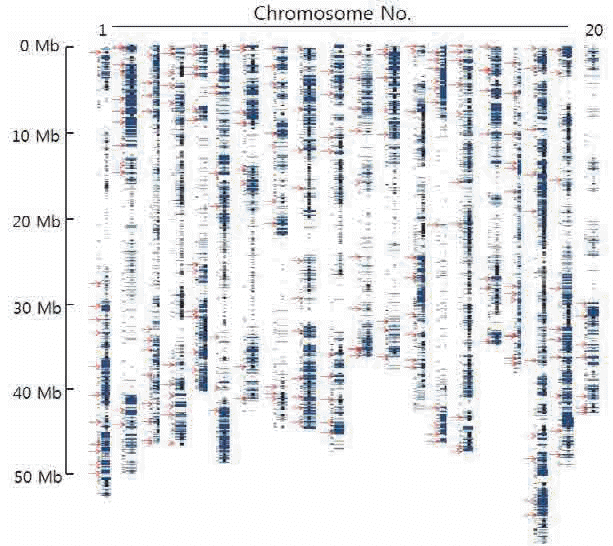
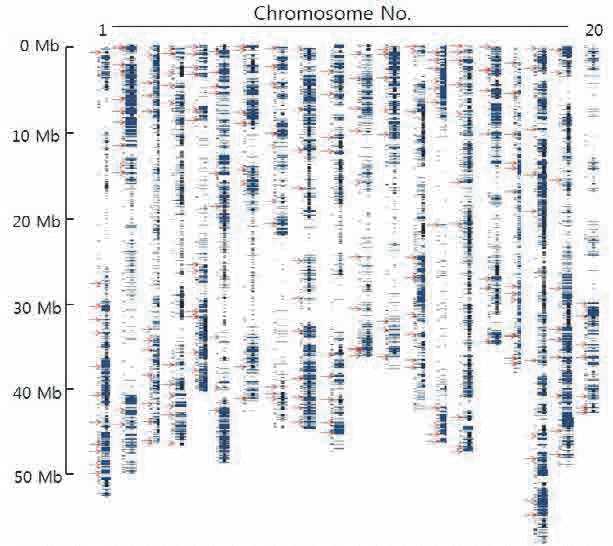
Sohn et al. (2017)이 보고한 dVB 특이적인 202개 InDel 마커를 활용하였 다. 선발된 InDel 마커는 각 염색체별 최소 8개에서 최대 12개로 genome 전체에 고르게 분포하였다(Fig.
1).
Fig. 1Total InDels in cultivated soybean genomes. Red arrows represent 202 InDels.
PCR 및 전기영동
PCR 증폭을 위한 반응액은 총 10 μL로 20 ng의 genomic DNA, 2 pM의 forward와 reverse primer, 2X GoTaq Green Master Mix (Promega, Madison, WI, USA)로 구성하였다. DNA 증폭은 Biometra사의 T1 Thermocycler (Goettingen, Germany)를 사용하였다. PCR 반응 조건은 95℃에서 5분간 초기변성(denaturation)을 한 후, 94℃에서 30초간 변성 (denaturation), 45℃에서 30초간 어닐링(annealing), 72℃에서 30초간 증폭(extension)을 하였으며 35회 반복하였으며 최종 증폭(final extension)을 72℃에서 5분간 실시하였다. PCR 산물 에 6X LoadingSTAR (DyneBio, Seongnam-si, Korea)를 처리 한 후 5 μL의 시료를 3% agarose gel에 로딩하고, 100V에서 3시간 동안 전기영동을 실시하였다.
계통유연관계 및 집단구조 분석
Model-based program인 STRUCTURE 2.2.3을 이용하여 Prichard et al. (2000)이 제안한 방법에 의해 집단구조 분석을 수행하였다. STRUCTURE 프로그램을 이용한 분석에서 적정 조상군(subgroup) 수를 결정하기 위해서 100,000의 burn-in, 100,000의 run length로 1-10의 범위에서 각 K값 당 5반복을 실시하여 평균 가능성 값인 LnP(D)를 계산하였으며, 이를
Evanno et al. (2005)이 제안한 결정계수(ad hoc criterion, △K) 를 이용하여 K 값을 결정하였다. 147개 품종에 대한 주성분분석 및 계통관계도는 202개 InDel을 이용한 유전형에 따라 DARwin 프로그램을 이용하였으며 weighted neighbor-joining 방식을 적용하여 분석하였다(
Perrier & Jacquemoud 2006).
결과 및 고찰
변이영역 특이적인 202개 InDel 마커 선발
국내 품종의 집단구조 분석을 위해서
Sohn et al. (2017)이 보고한 dVB 특이적인 202개 InDel 마커를 활용하였다(Fig.
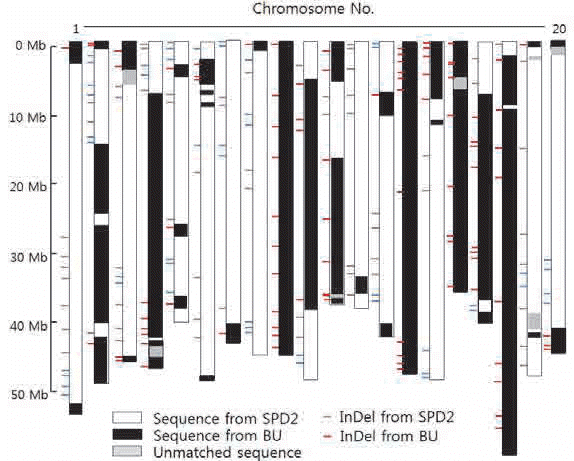
1). 해독된 ‘대풍(DP)’[‘백운콩(BU)’X‘신팔달콩2호(SPD2)’]의 유전체 정보와 선발된 InDel의 다형성을 비교 분석하였다(Fig.
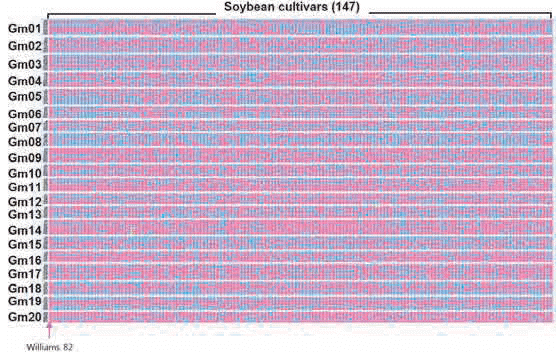
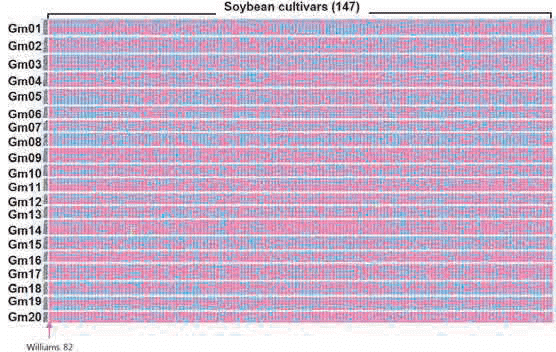
2). 두 가지 방법을 적용한 결과 염색체 1번의 경우 앞부분은 ‘백운 (BU)’에서 뒷부분은 ‘신팔달콩2호(SPD2)’에서 dVB가 유전되 었다는 것을 확인할 수 있었다. 20개 염색체에서 dVB의 유래가 모본, 또는 부본인지를 탐색한 결과가 모두 일치하였다. 또한, 147개 품종을 대상으로 202개의 InDel를 적용한 결과 염색체 수준에서의 bin map 작성이 가능하였다(Fig.
3). 콩 품종에서 연관불균형(linkage disequilibrium) 블록이 90-574kb인 것 (
Hyten et al. 2007)을 고려할 때 100kb 이내로 존재하는 dVB의 경우 품종육성 과정에서 유전자 재조합이 잘 일어나지 않아 안정적으로 유전된다고 하였다(
Kim et al. 2014). 특히,
Sohn et al. (2017)은 국내 콩 품종에서 dVB 특이적인 InDel 마커를 이용한 계보도 및 계통유연관계 평가 결과 품종의 특성을 잘 나타낸다고 하였다. 이처럼 202개의 dVB 특이적인 InDel은 안정적으로 후대에 유전되며 콩 품종의 유전체 특성을 실험실 수준에서 쉽게 파악하는 것이 가능하다는 장점이 있었다.
Fig. 2Comparison of dVB types between whole genome and InDel polymorphism in ‘Daepung’. SPD2, ‘Sinpadalkong2’; BU, ‘Baegunkong’.
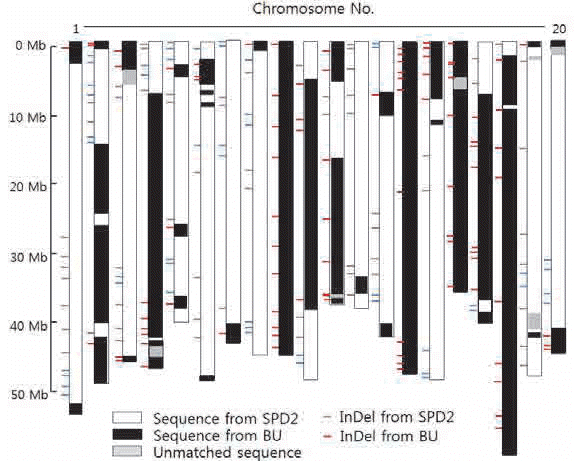
Fig. 3Graphical genotypes of 147 soybean cultivars using 202 dVB-specific InDel markers. Pink bars represent the same allele size with reference genome, W82; blue bars represent the different allele size with W82; yellow bars represent hetero genotypes. The 202 InDels selected in whole genomes are indicated on the left margin. W82, Williams82.
202개 InDel을 활용한 국내 콩 품종의 유전구조분석
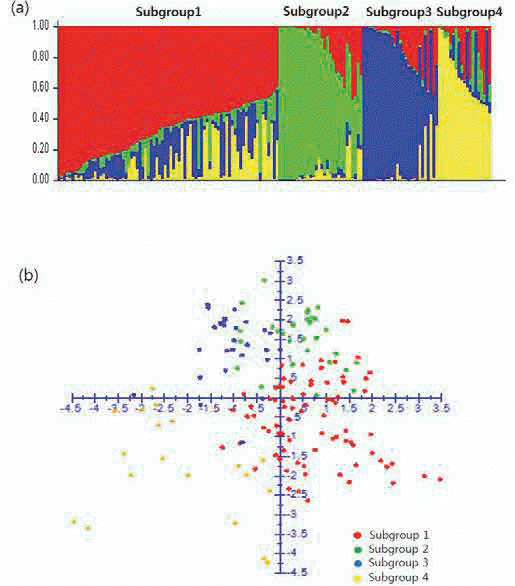
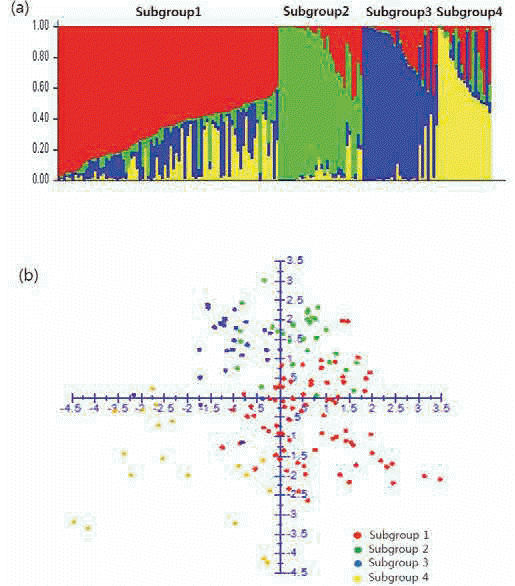
dVB 특이적인 202개 InDel를 활용하여 147개 품종의 집단구 조와 계통유연관계를 분석하였다. 집단구조를 분석하기 위해 STRUCTURE 프로그램(Prichard et al. 2000)을 이용하였으며 deviance information criterion (DIC) value는 △K 가 4일 때 최대값을 보였기 때문에 최적의 cluster model로서 k=4를 사용 해서 집단을 구분하였다. 그 결과 국내 품종을 4개 유전 집단, 즉 subgroup 1 (74 품종), subgroup 2 (30 품종), subgroup 3 (26 품종), subgroup 4 (17 품종)로 구분하였다(Fig.
4a). 단일 조상에서 유래된 allele 빈도가 0.6 이하인 품종(admixture)이 subgroup 1 (20%), subgroup 2 (27%), subgroup 3 (11%), subgroup 4 (41%)에 포함되어 있었다. 또한, 주성분분석에서도 147개 품종이 4개 집단으로 구분되어 STRUCTURE 분석을 잘 뒷받침하였다(Fig.
4b).
Fig. 4Diversity analysis of 147 soybean cultivars. (a) STRUCTURE (
Pritchard et al. 2000) results: four subpopulations corresponded to landraces and introduced cultivars. (b) Principal component analysis and STRUCTURE classification were similar. Each color represents a subpopulation based on STRUCTURE results.
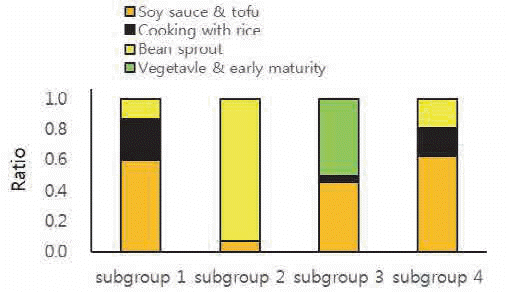
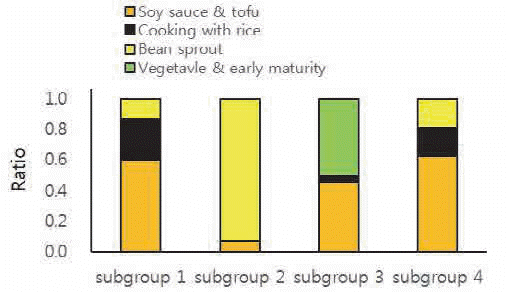
Subgroup 1은 장류 및 두부콩과 밥밑콩(87%), subgroup 2는 나물콩류(93%), subgroup 3은 풋콩 및 올콩류(96%), subgroup 4는 장류·두부콩과 밥밑콩(82%)이 주를 이루는 것으 로 나타났다(Fig.
5). Subgroup 2와 subgroup 3에 각각 포함되는 나물콩류와 풋콩 및 올콩류의 경우 계통유연관계도에서도 명확 히 구분되었다(
Sohn et al. 2017). 이처럼 유전구조분석 집단과 콩 품종의 용도별 분류와의 관련성이 높은 것은 국내 콩 육종프로 그램이 용도별로 4개 집단으로 운영되고 있는 것과 연관성이 있는 것으로 생각된다. 특히, 나물콩의 경우 소립종 위주로, 풋콩 및 올콩류는 단기성을 주 육종목표로 하고 있어 각각의 집단에 교배모부본 pool이 제한적으로 사용되었다는 기존 보고와도 일치하였다(
Lee et al. 2015,
RDA 2008). Subgroup 4의 경우 키가 작아 밀식 적응성이 높은 ‘신팔달2호(SPD2)’를 이용하여 육성된 품종이 대부분을 차지하는 것이 특징적이었다(
RDA 2008). 이처럼 집단구조 분석으로 분류한 4개 유전 구조 분석 집단은 주로 사용된 품종의 교배모부본에 관한 정보를 잘 반영하 고 있었다.
Fig. 5Frequency of soybean cultivars developed for four utilization types in the four subgroups based on STRUCTURE results (Pritchard et al., 2000).
국내 콩 육종은 1990년대 이후 수입산 콩과 차별화를 위해 육종목표가 우리 전통식품에 적합한 용도별 다양화와 품질 고급 화로 전환되었는데, 이 시기에 나물콩류와 풋콩 및 올콩류의 품종 수가 지속적으로 증가한 것이 특이하다(
Kim et al. 2012,
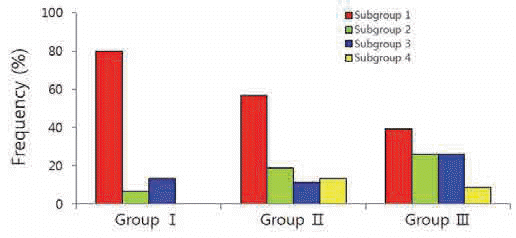
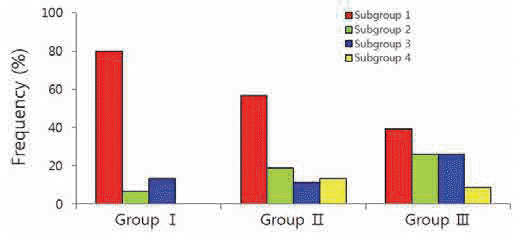
Lee et al. 2015). 147개 품종을 품종 출원 년도에 따라 Group Ⅰ(1913-1989년), Group Ⅱ (1990-1999년), Group Ⅲ (2000-2013년)으로 구분하고 각 그룹별로 4개 유전 집단의 변화 를 분석하였다(Fig.
6). 가장 오래된 품종을 포함하는 Group Ⅰ은 subgroup 1이 대부분을 차지하고 있었다. Group Ⅱ는 subgroup 1의 비율이 가장 높았으나 Group Ⅰ에 비해 그 비율이 감소하는 반면 subgroup 2와 4의 비율이 증가하였다. 최근 육성된 품종을 포함한 Group Ⅲ은 subgroup 1, 2, 3이 유사한 빈도로 나타나 나물콩류와 풋콩 및 올콩류가 증가하는 경향을 잘 반영하고 있었다. 이상의 결과는 4개 subgroup으로 구분한 집단구조 분석이 적절하다는 것을 잘 뒷받침하고 있음을 나타 낸다.
Fig. 6Frequency of the four subgroups among three groups. The 147 accessions were categorized into Group Ⅰ, Ⅱ, and Ⅲ; landraces and improved cultivars developed from 1969 to 1989, improved cultivars developed from 1990 to 1999, and improved cultivars developed from 2000 to 2013, respectively.
한국 콩 품종의 용도별 유전 구조 변화
콩 육종가들은 다양한 변이를 가진 재래종을 활용하여 품종의 내재해성, 내병성, 수량성을 개선해왔다(
Hwang 2004,
Lee et al. 2015,
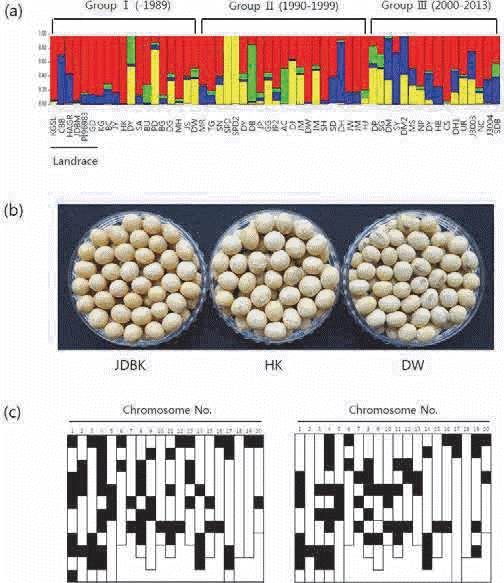
Park et al. 2000). 국내 재래종은 subgroup 1이 주를 이루고 있으며 subgroup 3의 유전 부위가 일부 섞여 있는 집단구 조를 보였다(Fig.
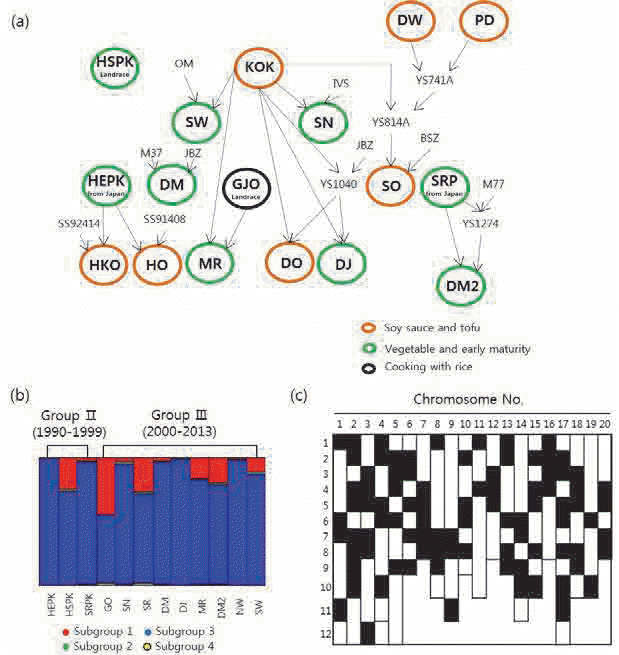
7a). 이중 재래종인 ‘장단백목(JDBM)’과 subgroup 1의 대표 품종인 ‘황금(HK)’ 및 ‘대원(DW)’은 표현형 (Fig.
7b) 및 유전형(Fig.
7c)이 유사하였다. 이를 통해 ‘장단백목’ 의 유전 부위가 상당 부분 subgroup 1에 도입되었음을 알 수 있었다. 반면, subgroup 4의 유전 부위는 외래 품종인 ‘Williams82’에 의해 도입되었으며 밀식 적응성이 높은 ‘신팔 달(SPD)’과 ‘신팔달2호(SPD2)’ 등의 품종 육성에 활용되었다. 2000년대에는 다양한 유전인자를 집적한 admixture 형태가 증가하는 경향이었으며 다수성인 ‘대풍(DP)’, ‘우람(UR)’ 및 ‘대망2호(DM2)’는 대표적인 admixture 품종이었다(Fig.
7a).
Fig. 7Diversity analysis of soybean cultivars developed for soy sauce and tofu. (a) STRUCTURE (
Pritchard et al. 2000) results in three groups. Each color represents a subpopulation based on STRUCTURE results. Full names of soybean cultivars were represented on Table 1. (b) The seed of ‘Jangdanbaekmok (JDBK)’, ‘Hwangkeumkong (HK)’ and ‘Daewonkong (DW)’. (c) A study on the homology of ‘HK’ (left) and ‘DW’ (right) to JDBM using 202 InDels. The same results with ‘JDMB’ were represented by white, the other results by black.
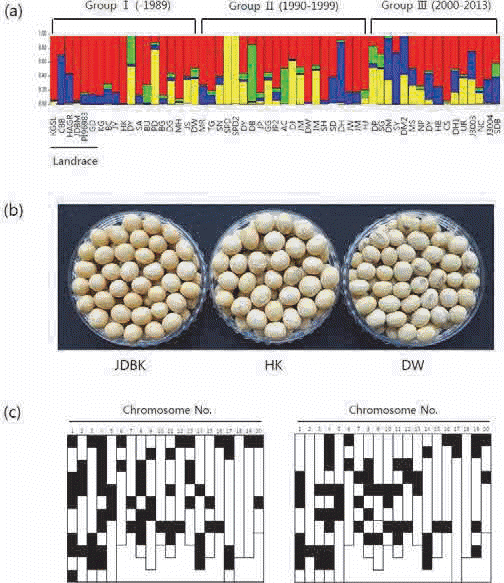
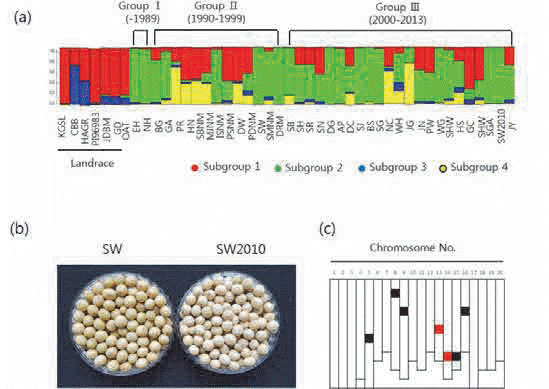
나물콩은 외래 유전자원(‘Hill’, ‘Essex’, ‘D69-7816’)에서 subgroup 2에 해당하는 유전 부위를 ‘은하콩(EH)’과 ‘남해콩 (NH)’에 도입하면서 본격적으로 육성되기 시작하였다(Fig.
8a). Subgroup 2에 해당하는 나물콩류가 대부분이나 보급종인 ‘풍산 나물콩(PSNM)’ 등과 같은 admixture 품종이 Group Ⅱ (15.4%), Group Ⅲ (33.3%)에서 증가하는 경향을 보였다. ‘소원콩(SW)’ 에 여교배로 내병성 유전자를 도입한 ‘소원2010(SW2010)’은 표현형으로 구분하는 것이 거의 불가능하였으나(Fig.
8b) 202 개 InDel로 품종 구분이 가능하고 도입된 내병성 유전자의 위치도 명확히 확인할 수 있었다(Fig.
8c). 또한, 계보도 분석에 서도 집단구조 분석이 교배모부본의 정보를 잘 반영하고 있다 는 것을 확인하였다(
Lee et al. 2015,
RDA 2008). dVB 특이적 인 InDel을 이용한 분석은 집단내 품종의 염색체 및 유전자 수준의 변화를 시각적으로 확인할 수 있다는 장점이 있어 육종가가 신품종 개발에 쉽게 활용할 수 있을 것으로 기대 된다.
Fig. 8Diversity analysis of soybean cultivars developed for bean sprouts. (a) STRUCTURE (
Pritchard et al. 2000) results in three groups. Each color represents a subpopulation based on STRUCTURE results. Full names of soybean cultivars were represented on Table 1. (b) The seed of ‘Sowonkong (SW)’ and ‘Sowon2010 (SW2010)’. (c) A study on the homology of ‘SW2010’ to SW using 202 InDels. The same results with ‘SW’ were represented by white, the other results by black. Red indicates target locus,
Rsv1 and
Rsv3 in SW2010.
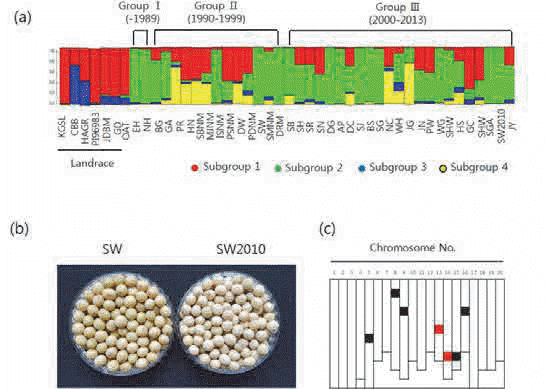
풋콩 및 올콩류는 subgroup 3의 유전 부위가 주를 이루고 있으며 subgroup 1이 일부 섞여 있는 집단구조를 보였다(Fig.
9). Subgroup 3의 경우 ‘큰올콩(KOK)’이 극조생 및 조생종 품종을 육성하기 위해 교배모부본으로 사용되었다. 또한, 2000년대 ‘석 량풋콩(SRPK)’, ‘화엄풋콩(HEPK)’을 일본에서 도입하여 subgroup 3의 품종 육성에 활용하였으며 이러한 유전자 이입 과정을 집단분석으로 확인되었다(Fig.
9a &
9b). 교배모부본 pool이 제한적인 풋콩 및 올콩류 품종의 경우에도 계보도 분석 결과와 집단구조 분석이 유사하였다.
Fig. 9Diversity analysis among soybean cultivars developed for vegetable. (a) Pedigree analysis and (b) STRUCTURE (
Pritchard et al. 2000) results in three groups. Full names of soybean cultivars were represented on Table 1. (c) Reshuffling pattern of 202 InDels in 12 cultivars developed for vegetable. The same results among 12 cultivars were represented by white, and the other results by black.
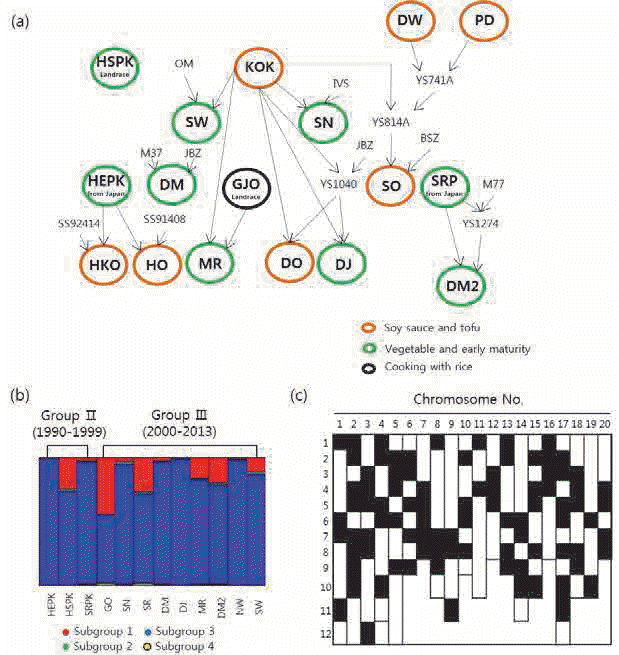
용도별 콩 품종의 집단구조 및 육성계보도 평가결과 Group Ⅰ에서 Ⅲ으로 갈수록 4개 subgroup의 유전 부위가 잘 섞인 admixture 형태의 품종이 증가하였다. 특히, 육종 역사가 비교적 오래된 장류 및 두부콩류에서 admixture 형태의 유전 구조를 가지는 품종이 증가하는 경향이 명확히 확인되었다(Fig.
7). 또 한, 국내 육성 품종의 집단구조, 계통도 및 계보도 분석으로 제한된 수의 교배모부본이 다양한 용도의 신품종 개발에 지속적 으로 사용되었음을 확인할 수 있었다(Fig.
7-
9). 이처럼 제한된 유전자 pool에도 불구하고 새로운 품종의 개발이 가능한 이유는 유전자의 재편(reshuffling)이 교배육종 과정에서 꾸준히 유도되 어 육종가가 원하는 목표형질을 가진 품종을 선발할 수 있는 기회를 제공하기 때문이라고 하였다(
Kim et al. 2014,
Sohn et al. 2017).
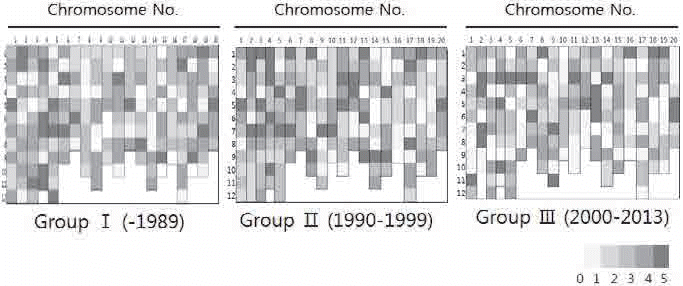
장류 및 두부콩의 202개 마커가 그룹별 섞여 있는 정도는 그림10에 나타내었다. Group Ⅰ에 비해 Ⅱ와 Ⅲ에서 202개 마커의 섞여 있는 정도가 증가하였다(Fig.
10). 변이블록의 다양 성이 지속적으로 증가하는 추세를 보이는 야생콩과는 달리 콩 품종의 변이블록 다양성이 ‘4’에서 포화 되어 더 이상 증가하지 않는다는 기존의 연구결과와 일치하는 경향을 보였다(
Kim et al. 2014). 이상의 결과를 종합해보면 dVB 특이적인 202개의 마커는 지금까지 우리나라 콩 품종의 유전적 다양성 분석에 사용하지 않았던 새로운 핵심 마커 세트로서 콩 147 품종의 염색체 재조합 양상을 실험실 수준에서 효과적으로 구명할 수 있음을 확인하였다.
Fig. 10Reshuffling profiles of dVB-specific 202 InDels in soybean cultivars developed for soy sauce & tofu. Reshuffling diversity is displayed in fold change represented by the color bar beneath the figure. For expanded details of three groups, see Table 1.
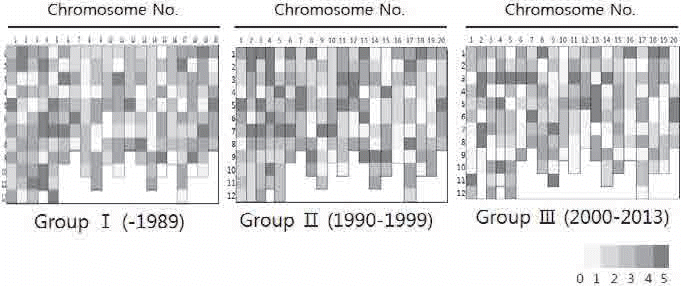
적 요
본 연구에서는 dVB 특이적인 202개 InDel 마커를 이용하여 147개 콩 품종의 집단구조, 계통유연관계 및 계보도를 분석하였다.
1. 해독된 ‘대풍’ 의 유전체 정보와 선발된 InDel의 다형성을 비교하였으며 20개 염색체에서 dVB의 유래가 모본, 또는 부본인지를 탐색한 결과가 모두 일치하였다.
2. dVB 특이적인 202개 InDel을 이용하여 147개 품종의 집단구 조, 계통유연관계 및 계보도 분석 결과, 4개 유전집단으로 구분되었다. Subgroup 1은 장류 및 두부콩과 밥밑콩(87%), subgroup 2는 나물콩류(93%), subgroup 3은 풋콩 및 올콩류 (96%), subgroup 4는 장류·두부콩과 밥밑콩(82%)이 주를 이루는 것으로 나타났다.
3. 최근 육성된 품종일수록 admixture 형태가 증가하는 경향을 나타냈다. 이러한 현상은 육종 역사가 비교적 오래된 장류 및 두부콩류에서 뚜렷하였으며 ‘대풍(DP)’, ‘우람(UR)’, ‘대 망2호(DM2)’ 등 다수성 품종이 대표적인 admixture 품종으 로 확인되었다.
4. 장류 및 두부콩의 경우 Group Ⅰ(1913-1989년)에 비해 Ⅱ (1990-1999년)와 Ⅲ(2000-2013년)에서 202개 마커의 섞여 있는 정도가 증가한 것으로 보아 교배육종 과정에서 유전자의 재편(reshuffling)이 꾸준히 유도되어 품종 육성에 활용되었 음을 알 수 있었다.
이처럼 선발된 202개 InDel 마커를 이용하여 실험실 수준에서 교배모부본의 잠재적 가능성을 평가할 수 있기 때문에 품종 육성의 효율을 더욱 높일 수 있을 것으로 기대된다.
사 사
본 논문은 농촌진흥청 국립식량과학원 시험연구사업(과제번 호: PJ01125902)의 지원에 의해 이루어졌다.
References
- 1. Agarwal M., Shrivastava N., Padh H.. Advances in molecular marker techniques and their applications in plant sciences. Plant Cell Rep 2008. 27: 617-631.
- 2. Collard B.C., Mackill D.J.. Marker-assisted selection: an approach for precision plant breeding in the twenty-first century. Philos. Trans. R. Soc. B 2008. 363: 557-572.
- 3. Deschamps S., Campbell M.A.. Utilization of next-generation sequencing platforms in plant genomics and genetic variant discovery. Mol. Breed 2010. 25: 553-570.
- 4. Evanno G., Regnaut S., Goudet J.. Detecting the number of clusters of individuals using the software STRUCTURE: a simulation study. Mol. Ecol 2005. 14: 2611-2620.
- 5. Ganal M.W., Altmann T., Röder M.S.. SNP identification in crop plants. Curr. Opin. Plant Biol 2009. 12: 211-217.
- 6. Garvin M.R., Saitoch K., Gharett A.J.. Application of single nucleotide polymorphisms to non-model species: a technical reviews. Mol. Ecol. Resour 2010. 10: 915-934.
- 7. Hou X.H., Li L.C., Peng Z.Y., Wei B.Y., Tang S.J., Ding M.Y., Liu J.J., Zhang F.X., Zhao Y.D., Gu H.Y., Qu L.J.. A platform of high-density INDEL/CAPS markers for map-based cloning in Arabidopsis. Plant J 2010. 63: 880-888.
- 8. Hyten D.L., Choi I.Y., Song Q., Shoemaker R.C., Nelson R.L., Costa J.M., Specht J.E., Cregan P.B.. Highly variable patterns of linkage disequilibrium in multiple soybean populations. Genetics 2007. 175: 1937-1944.
- 9. Hwang T.Y., Sayama T., Takahashi M., Takada Y., Nakamoto Y., Funatsuki H., Hisano H., Sasamoto S., Sato S., Tabata S., Kono I., Hoshi M., Hanawa M., Yano C., Xia K., Kitamura K., Ishimoto M.. High-density integrated linkage map based on SSR markers in soybean. DNA Res 2009. 16: 213-225.
- 10. Hwang Y.H.. 2004. Historical review on soybean cultivation in Korea. International symposium on the development of functional soybean varieties, new materials, medicine, and foods Kyungbuk National University.
- 11. Kim S., Misra A.. SNP genotyping: technologies and biomedical applications. Annu. Rev. Biomed. Eng 2007. 9: 289-320.
- 12. Kim Y.H., Hwang T.Y., Seo M.J., Lee S.K., Park H.M., Jeong K.H., Lee Y.Y., Kim S.L., Yun H.T., Lee J.E., Kim D.W., Jung G.H., Kwon Y.U., Kim H.S.. Discrimination of 110 Korean soybean cultivars by sequence tagged sites (STS)-CAPS markers. Kor. J. Breed. Sci 2012. 44: 258-272.
- 13. Kim Y.H., Park H.M., Hwang T.Y., Lee S.K., Choi M.S., Jho S., Hwang S., Kim H.M., Lee D., Kim B.C., Hong C.P., Cho Y.S., Kim H., Jeong K.H., Seo M.J., Yun H.T., Kim S.L., Kwon Y.U., Kim W.H., Chun H.K., Lim S.J., Shin Y.A., Choi I.K., Kim Y.S., Yoon H.S., Lee S.H., Lee S.. Variation block-based genomics method for crop plants. BMC Genomics 2014. 15: 477.
- 14. Kim S.H., Jung J.W., Moon J.K., Woo S.H., Cho Y.G., Jong S.K., Kim H.S.. Genetic diversity and relationship by SSR markers of Korean soybean cultivars. Kor. J. Crop Sci 2006. 51: 248-258.
- 15. Kim B.W., Sa K.J., Park K.J., Park J.Y., Lee J.K.. Genetic analysis of core sets of colored maize and non-colored maize inbred lines using SSR markers. Kor. J. Breed. Sci 2015. 47: 54-62.
- 16. Lam H.M., Xu X., Liu X., Chen W., Yang G., Wong F.L., Li M.W., He W., Qin N., Wang B., Li J., Jian M., Wang J., Shao G., Wang J., Sun S.S., Zhang G.. Resequencing of 31 wild and cultivated soybean genomes identifies patterns of genetic diversity and selection. Nat. Genet 2010. 42: 1053-1059.
- 17. Lee C., Choi M.S., Kim H.T., Yun H.T., Lee B., Chung Y.S., Kim R.W., Choi H.K.. Soybean [Glycine max (L.) Merrill]: Importance as a crop and pedigree reconstruction of Korean varieties. Plant Breed. Biotechnol 2015. 3: 179-196.
- 18. Liu B., Wang Y., Zhai W., Deng J., Wang H., Cui Y., Cheng F., Wang X., Wu J.. Development of INDEL markers for Brassica rapa based on whole-genome re-sequencing. Theor. Appl. Genet 2012. 126: 231-239.
- 19. Li Y.H., Liu B., Relif J.C., Liu Y.L., Li H.H., Chang R.Z., Qiu L.. Development of insertion and deletion markers based on biparental resequencing for fine mapping seed weight in soybean. Plant Genome 2014. 7: 1-8.
- 20. Moghaddam S.M., Song Q., Mamidi S., Schmutz J., Lee R., Cregan P., Osomo J.M., McClean P.E.. Developing market class specific InDel markers from next generation sequence data in Phaseolus vulgaris L. Front. Plant Sci 2014. 5: 295-300.
- 21. Pacurar D.I., Pacurar M.L., Street N., Bussell J.D., Pop T.I., Gutierrez L., Bellini C.. A collection of INDEL markers for map-based cloning in seven Arabidopsis accessions. J. Exp. Bot 2012. 63: 2491-2501.
- 22. Park K.Y., Lee Y.H., Kim S.D., Hong E.H.. Review and future planning for soybean breeding in Korea. Kor. Soybean Digest 2000. 17: 13-26.
- 23. Perrier X., Jacquemoud J.P.. 2006. Darwin software.
http://darwin.cirad.fr/darwin
- 24. Pritchard J.K., Stephens M., Rosenberg N.A., Donnelly P.. Association mapping in structured populations. Am. J. Hum. Genet 2000. 67: 170-181.
- 25. Reyes-Valdés M.H., Santacruz-Varela A., Martinez O., Simpson J., Hayano-Kanashiro C., Cortés-Romero C.. Analysis and optimization of bulk DNA sampling with binary scoring for germplasm characterization. PLoS One 2013. 8: e79936.
- 26. Rogers S.O., Dendich A.J.. 1994. Extraction of total cellular DNA from plants, algae and fungi. Plant Molecular Biology Manual. 2nd ed. pp. 1-8.
- 27. Rural Development Administration (RDA). Catalogue of Pulse cultivar. 2008. pp. 3-669.
- 28. Sham P., Bader J.S., Craig I., Donovan M., Owen M.. DNA pooling: a tool for large-scale association studies. Nat. Rev. Genet 2002. 3: 862-871.
- 29. Sohn H.B., Kim S.J., Hwang T.Y., Park H.M., Lee Y.Y., Markkandan K., Lee D., Lee S., Hong S.Y., Song Y.H., Koo B.C., Kim Y.H.. Barcode system for genetic identification of soybean [Glycine max (L.) Merrill] cultivars using InDel markers specific to dense variation blocks. Front. Plant Sci 2017. 8: 520.
- 30. Song Q., Jia G., Zhu Y., Grant D., Nelson R.T., Hwang E.Y., Hyten D.L., Cregan P.B.. Abundance of SSR motifs and development of candidate polymorphic SSR markers (BARCSOYSSR_1.0) in soybean. Crop Sci 2010. 50: 1950-1960.
- 31. Song X., Wei H., Cheng W., Yang S., Zhao Y., Li X., Luo D., Zhang H., Feng X.. Development of INDEL markers for genetic mapping based on whole genome resequencing in soybean. G3 (Bethesda) 2015. 5: 2793-2799.
- 32. Yamasaki M., Wright S.I., McMullen M.D.. Genomic screening for artificial selection during domestication and improvement in maize. Ann. Bot 2007. 100: 967-973.