적요
Bacterial pustule is a major bacterial disease in most soybean-growing regions of Korea, resulting in soybean yield reductions of up to 60%. In this study, we aimed to understand the differences in disease severity caused by three strains of Xanthomonas citri pv. glycines, including two newly differentiated strains (K29 and K100) and the conventional representative strain, 8ra. Seventeen major soybean cultivars and 14 breeding lines were inoculated and compared for their reactions to the three strains of Xcg. The two new strains caused higher levels of disease severity, resulting in a greater number of susceptible cultivars. The landrace PI 547711, like Williams 82, was highly resistant to all Xcg strains; however, the other six cultivars that were resistant to 8ra, including Daepung2, were susceptible to the new strains (K29 and K100). In particular, the most widely grown cultivars, Daewon and Daepung2, were highly susceptible to K100. All of the breeding lines except two were also vulnerable to the new strains, K100 and K29. Of the breeding lines, SS05004-1-1-4-2-3-4 and SS05022-5-4-2-4-4-4 were resistant to the three Xcg strains, at similar levels to that of Williams 82. The breeding lines and cultivars evaluated in this study may be used to develop breeding materials resistant to new Xcg strains in the future. In addition, establishment of an improved disease evaluation system for bacterial pustule, by using multiple representative strains, is strongly recommended for breeding programs, to increase the efficiency and accuracy of selection for resistance as the pathogenic diversity of X. citri pv. glycines changes.
서 언
콩(
Glycine max L. Merr.)은 우리나라를 포함한 아시아권은 물론 세계적으로 주요한 식량작물로 식량안보 차원에서 안전한 생산기반의 확충이 필요한 작물이다(
Yi et al. 2015). 특히 국산 콩의 우수성 및 안전성에 대한 인식향상과 더불어 식물성 단백질 섭취의 관심 증가로 국산 콩에 대한 수요는 유지되고 있지만, 이상기후 및 재배면적 감소 등으로 국산 콩 생산량은 꾸준히 감소추세에 있다(
Kim et al. 2004,
KOSIS 2021). 이에 대응하고자 정부는 2030년까지 콩의 식량자급률을 45%까지 높이기 위해 논 재배 콩 생산단지를 확대하고 논 재배 콩의 안정생산을 위해 많은 대책을 발표하고 있으나 밭보다 상대적으로 습한 논의 특성상 습해가 자주 발생하고 병균에 의한 피해가 있어 논에서의 콩 재배 확산에 큰 걸림돌이 되고 있다(Kim & Cho 2005). 또 최근 기상 이변에 따라 작물의 생육 중에 집중호우나 강우가 내리는 빈도가 증가하고 있어 콩의 안정적 생산에 제한요인이 되고 있다(
Kim et al. 2011,
Hong et al. 2014,
Lee et al. 2020). 그 중
Xanthomonas citri pv.
glycines (
Xcg)에 의한 불마름병은 콩 세균병 중에서 국내에서 가장 큰 피해를 주고 있는 병 중 하나이다(
Kang et al. 2021). 불마름병에 의한 피해는 콩의 수량구성 요소 중 협당립수 및 백립중을 감소시켜 외국의 경우 20~ 60%의 수량이 감소되는 것으로 보고되었고(
Hartwig & Johnson 1953,
Laviolette et al. 1970), 국내도 콩 불마름병이 심하게 나타난 경우 수량이 2006년에 19.8%, 2007년에 16.8%씩 감소되는 것으로 나타났다(
Hong et al. 2010).
국내에서 콩 불마름병 발병과 그 심각성은 90년대 말부터 지속적으로 보고가 되었다. 환경과 기후에 따라 차이가 있지만 콩 불마름병은 1970년대에는 4.5%의 병 발생률을 보였고, '97년과 '98년에 99개 재배포장을 조사한 결과 85개 포장에서 피해가 확인되었고, '99년에는 전국적으로 확산되어 경기, 강원, 충북, 충남, 경북, 전북 등 콩 재배지 106개소 가운데 약 90%인 94개소에서 불마름병이 발병하였고, 특히 심한 발생을 보인 경기도의 수원 및 화성, 강원도의 춘천, 충북의 청주(청원구)에서는 재식 개체수의 61~78%가 감염되어 콩 불마름병에 의한 피해가 심각하다(
Lee 1999). 이는 2000년대에도 계속되어 '05년~'06년에 조사한 78개 포장 중 89.7%인 70개 포장에서(
Hong et al. 2010), 또한 '17년에는 전국 372개의 재배포장을 조사한 결과 63개의 포장에서 콩 불마름병 발생이 보고되었고, 충청북도 내 불마름병은 총 410개 필지 중 313개의 포장에서 발생되어, 발병 포장률은 76.6%를, 포장 내 발병주율은 29.3%를 나타낸 것으로 나타났다(
Kang et al. 2021,
Yun et al. 2021).
콩 불마름병 방제를 위해서는 등록된 tetracycline 계열의 화학 약제를 적용하는 화학방제와 파종 시기를 조절하는 경종적 방법이 이용되고 있으나 가장 효과적이고 환경친화적인 방법은 저항성 품종을 재배하는 것이다(
Seo et al. 2009). 현재까지 보고된 콩 불마름병 저항성은 단인자 열성으로 유전되는
rxp 유전자(
Hartwig & Lehman 1951,
Palmer et al. 1992)가 유일하며, 염색체 17번에 Simple sequence repeat (SSR) 마커 Satt372와 Satt014가
rxp와 연관되었다고 보고되었다(
Narvel et al. 2001). 이후 fine mapping을 통해 기존 분자표지보다 더 근접한 분자표지를 통해
rxp 유전자의 위치를 염색체 17번의 7.27-7.30 Mbp 사이에 있을 것으로 추정하였고(
Kim et al. 2010), 해당 유전체 지역의 염기서열에서 존재하는 ‘at’ 반복서열 기반 연관 SSR 마커로 해당 유전자좌와 콩 불마름병 저항성 간 연관을 재확인했다(
Yang et al. 2011). 하지만 아직
rxp 유전자의 크기나 정확한 위치가 구명되고 있지 않았다. 현재까지 국내에서 콩 불마름병 저항성으로 알려진 대부분의 품종들은
rxp 유전자에 의한 것으로 여겨지고, 다른 저항성 유전자나
rxp 유전자의 관계를 찾기 위한 연구는 국내외에서 최근 10년 동안 거의 없었다. 게다가 외국의
rxp 유전자를 가진 미국 품종 CNS는 국내 불마름병 병원균에 감수성을 나타냈다는 연구 결과가 있는 것으로 보아 국내 불마름병 균 중 일부는 외국의 병원균과 다른 병원형을 가지고 있을 가능성이 이미 보고되었다(
Hong et al. 2014,
Kang et al. 2021).
균이나 바이러스 집단의 진화 또는 변화는 종종 기존에 알려진 저항성 유전자를 무력화하기 때문에, 식물-병원균 상호작용에 대한 지속적인 모니터링은 저항성 품종 개발에 있어 매우 중요한 과정이다(
Vale et al. 2001,
Kim et al. 2021). 국내에서 '13~'17년 사이에 수집된 콩 불마름병균 106개 균주의
avrBs3의 패턴을 분석한 결과, 2000년대 초 알려진 기존 6개 그룹 외에 다양한 유전형이 발견됨에 따라 균주의 분화가 확인되었고, 국내 보급종 중 우점 균주인 8ra에 대해 저항성으로 알려진 품종들이 최근 분화된 균주 중 일부에 감수성을 보이는 것으로 확인되었다(
Kang et al. 2021). 분화하고 있는 콩 불마름병균에 적절히 대응하고자, 본 연구에서는 신⋅구 불마름병 균주 3종을 이용해 주요 품종들과 최근 육성된 우량계통들을 평가하고, 그 결과를 바탕으로 품종 육성 과정에서 불마름병 저항성 검정의 정확성을 높이기 위한 개선⋅발전 방향을 제시하고자 한다.
실험 재료 및 방법
식물 재료
본 연구에는 계통들의 모/부본으로 이용된 15개의 품종 및 유전자원(대원콩, 연풍, 새금, 우람, 청아, 태선, 강일, 대풍2호, 선유, 풍산나물콩, 천알, 일품검정콩, PI 547426, 청자3호, PI 547711), 각 조합에서 선발된 총 14개의 콩 우량계통, 그리고 2개의 불마름병 대조품종(태광콩, Williams 82)이 이용되었다(
Tables 1,
2). 14개 육성계통들의 계통명, 교배조합, 용도를
Table 2에 제시하였다. 계통 중 BL1-12까지는 2015년에, BL13-14는 2005년도에 교배가 이루어졌다. F
2 세대부터 매세대 개체선발과 계통재배 및 계통선발을 반복하면서 육성하였다. BL4-BL12의 계통들은 F
3~F
5 세대에 single seed descent (SSD) 육종을 진행하였다. 육성 계통의 용도는 BL1~11은 장류⋅두부용 콩이며, BL12은 콩나물용 콩, BL13~14은 검정콩이다. 각 육성 계통의 계보도는
Supplementary Figs. 1-11에 제시하였다.
2005년도와 2015년도에 서로 다른 육종 목표(장류용, 두부용, 나물용, 검정콩 신품종)를 가지고 인공 교배된 11개 교배조합으로부터 계통육종법에 의해 14개의 우량계통들이 선발되었다. 선발된 14개 계통은 2020년도에 생산력검정 예비실험을 거쳐 2021년도 생산력검정 본실험에 사용하였다. 국립식량과학원 시험포장(수원)에서 재식밀도는 70×15 cm, 1주 2본으로 2021년 6월 14일 파종하였고, 시비량은 N-P
2O
5-K
2O:3-3-3.4 (㎏ 10a
-1)을 전량 기비로 시용하였으며, 기타 재배관리는 농촌진흥청 표준재배법에 준하였다. 경장, 성숙기, 100립중, 수량 등은 농촌진흥청 연구조사분석기준(
RDA 2012)에 따라 조사하였고, 14개 계통의 농업적 특성을 표준 품종인 대원콩과 비교하였다.
본 연구에서는 3종의 불마름병 균주를 접종에 이용했다. 우선, 대조 균주로서 국립식량과학원에서 신품종 육성시 불마름병 저항성 검정에 이용하는 균주인 8ra를 이용했다. 균주 8ra는 1980년에 미국 아이오와주에서 분리된 균주로 국립식량과학원에서 보관 중인 것을 사용하였다. 두 번째 균주 K100은 2016년 충남 청양지역에서 분리된 균주로서 예비 실험 결과 병원성이 높고 기존 우점 균주인 8ra와 다른 병원형을 보였다(
Kang et al. 2021). 세 번째 균주 K29는 2015년 충북 제천지역에서 분리된 균주로 최근에 국내에서 가장 우점하는 균주 그룹(48%)의 대표 균주이다(
Kang et al. 2021). 3종의 균주 모두 -72°C 초저온 냉동고에서 20% 글리세롤(v/v)에 보존된 균주를 배양하여 병원성을 확인한 뒤 사용하였다.
2020년도에 수원에서 재배한 콩 계통과 품종의 건전 종자를 소독 후, 포트(Wagner Pot 1/5000 a, Ahnil sangsa, Suwon, Korea)에 3립씩 파종하여(2021년 9월 7일), 제3 복엽 완전 전개기인 V4 시기까지 키운 건강한 식물체에 불마름병균을 접종하였다. 불마름병 접종 반응에 대한 대조구는 8ra 균주에 감수성으로 알려진 태광콩과 저항성으로 알려진 William82를 사용하였다(
Park et al. 2008,
Kim et al. 2010).
불마름병 균주는 Trypic soy agar (TSA) 배지에서 28℃에서 2일 동안 성장시킨 다음, colony를 멸균된 10 mM MgCl2에 현탁시키고, 접종농도 조절은 600 nm에서 광학밀도(optical density) 값 0.5(약 5×10⁸ cfu/ml)로 맞춘 후 공기분무기(automizer, SMH10L, SMASH, China)를 분사압력 2.5 kPa로 분사하여 완전히 팽창된 두 잎에 세균 현탁액을 접종하였다. 접종 후 원심식가습기(HR-50, Faran, Yongin, Korea)을 사용하여 24시간 가습처리하여 병 발생을 유도하였다. 정밀하고 균일한 환경조성을 위해 병 발생 유도 후 25℃, 습도 90~100% 조건의 습실 상에서 7일 동안 진행하였다. 잎에 나타나는 병반 수에 따라 발병도(Disease severity)를 0~5로 나타냈다. 그 기준은 병반 수가 0개인 경우 0, 1-25개인 경우 1, 26-50개인 경우 2, 51-75개인 경우 3, 76-100개인 경우 4, 100개 초과인 경우 5로 조사하였다. 각 균주별 품종 및 계통들의 병 반응을 평균을 내어 표기하였고 3.5 이상을 감수성 반응, 3 이하를 저항성 반응으로 규정하였다. 저항성 검정은 3개체/반복, 2회 반복되었고, 총 6개 생물학적 반복(biological replication)에 대한 발병도 평균값은 계산하였다.
결과 및 고찰
선발 계통의 농업적 특성
생산력검정 본시험 계통들의 농업적 특성(경장, 성숙기, 100립중, 수량)을
Table 2에 제시하였다. 경장과 성숙기는 콩의 적응성과 생산성에 중요한 요소 중 하나인데(
Zhang et al. 2015), 현재 우리나라에 보급되어 있는 대원콩의 경장이 다소 길고 분지가 많아 도복이 되는 경향이 큰 것으로 나타났다(
Yi et al. 2018). 육성한 계통 중 BL6 (SS15127-3S-8-3)과 BL13 (SS05004-1-1-4- 2-3-4)을 제외한 나머지 계통들은 모두 대원콩 대비 키가 작은 특성을 나타냈다. 성숙기는 계통별로 차이가 있었지만 표준품종인 대원콩과 비슷하거나 대체로 빨랐다. 특히 BL10 (SS15128-3S- 51-1)과 BL11 (SS15167-3S-41-1)은 성숙기가 대원콩보다 20일 정도 빠른 것으로 나타났다. BL7 (SS15127-3S-33-2)과 BL8 (SS15127-3S-103-1)의 100립중은 각각 35.6 g, 36.2 g으로 대원콩의 100립중 (34.1 g)보다 무거웠다. BL4 (SS15119-3S-28-1)는 수량이 505 kg/10a로 표준품종인 대원콩보다 높은 다수성 계통이다.
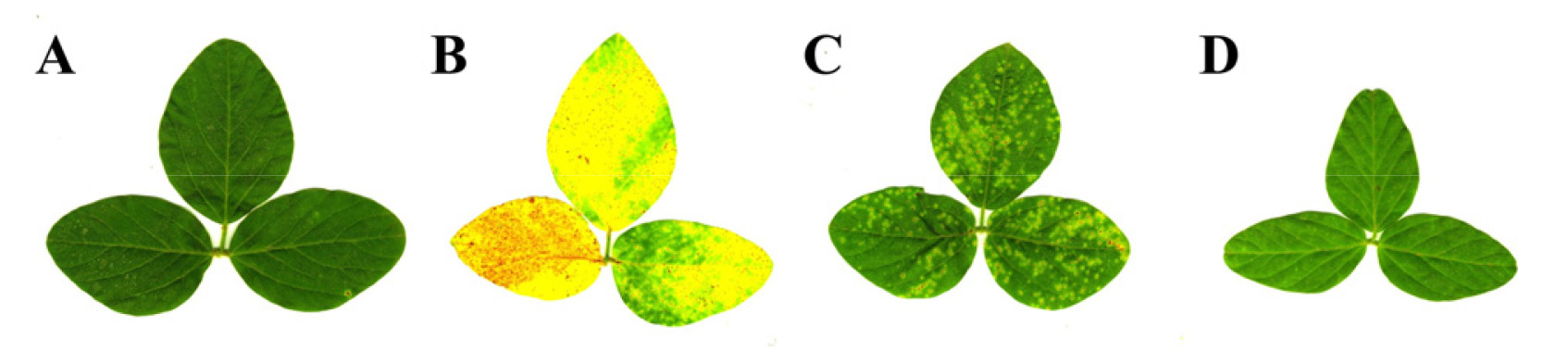
15개 품종과 이들을 모/부본으로 교배하여 육성⋅선발한 14개 우량계통을 대상으로 3종의 불마름병원균을 각각 접종하여 저항성 여부를 검정하였다. 콩 불마름병에 대한 저항성 반응은 반점이 거의 보이지 않고, 감수성 반응은 초기에는 연한 노란색의 반점이 생기다가 시간이 지남에 따라 짙은 갈색으로 변하여 반점이 많아진다. 보통 접종 후 7일 차에 갈색 반점의 수에 따라 저항성/감수성 정도를 판별한다(
Fig. 1). 본 연구에서 사용된 균주 8ra는 2000년대 초반에 국내에서 우점하던 불마름병 균주로 최근 15년 동안 신규 콩 품종 육성 시 불마름병 저항성 여부를 판단하기 위한 검정에 이용된 균주이고, 균주 K100과 K29는 2015년 전후에 국내에서 수집⋅분리된 균주이다(
Kang et al. 2021).
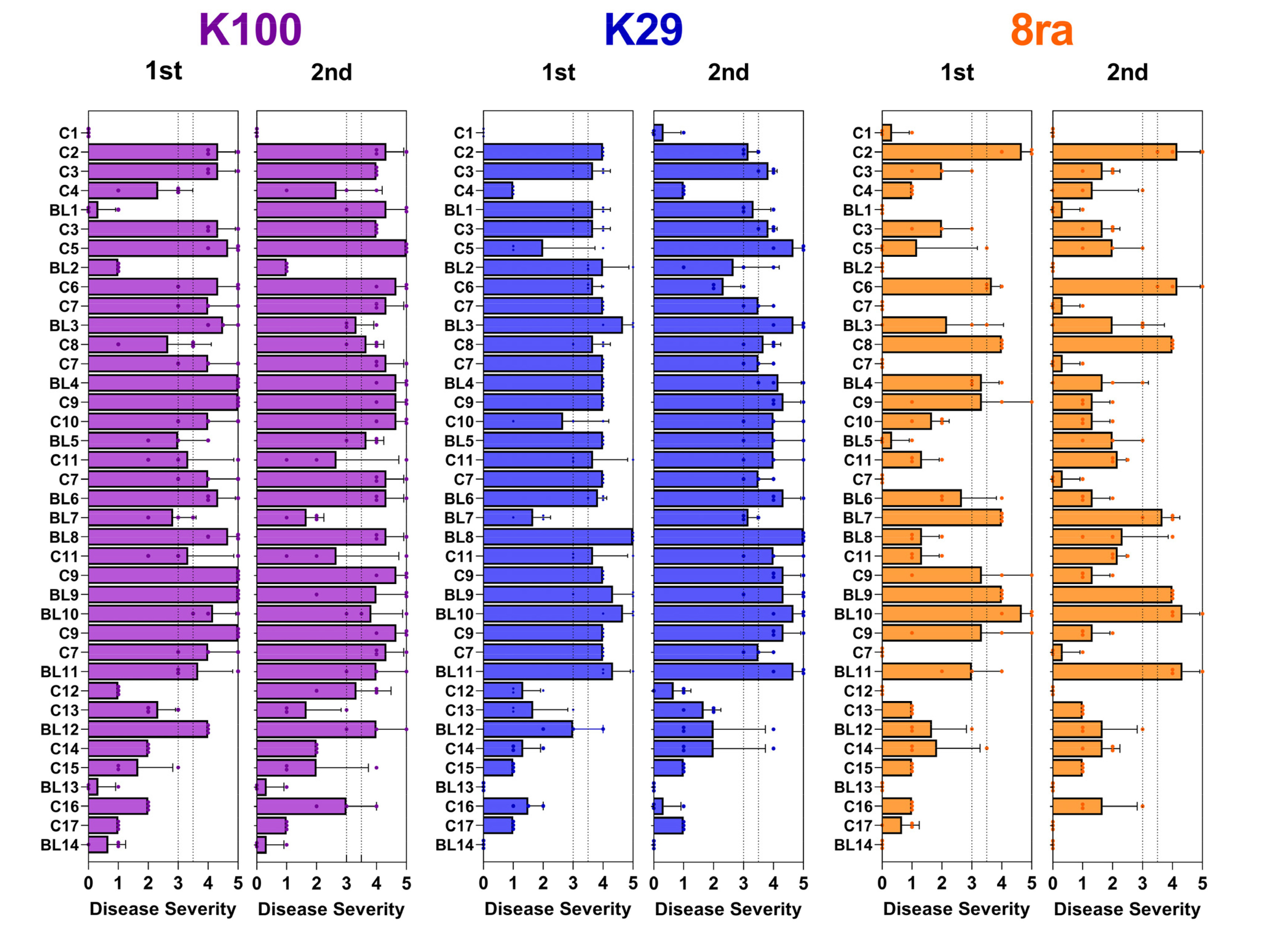
Fig. 2는 이들 3개 균주에 대한 17개 품종과 14개 선발계통의 불마름병 반응을 보여준다. 총 31개 검정 대상에서 보여지는 반응의 전체적인 패턴은 3개 균주에서 유사하나, 8ra보다 K100과 K29에서 대체로 발병도가 높았다.
모/부본 17개의 품종 중 10개의 품종이 1개 이상의 균주에 감수성 반응을 보였다(
Fig. 2,
Table 3). 8ra 균주에 대해서는 3품종(태광콩, 대원콩, 태선)이 감수성을 보였지만, K100 균주에 대해서는 7품종(태광콩, 대원콩, 연풍, 우람, 청아, 강일, 대풍2호), K29에 대해서 6품종(태광콩, 연풍, 청아, 태선, 강일, 선유)에서 감수성 반응이 나타났다. 감수성 대조 품종인 태광콩은 접종한 3개 균주에 대하여 모두 심한 병징을 보이는 감수성 품종으로 확인이 되어 기존
Kim et al. (2010)의 결과를 뒷받침하였다. 저항성 대조 품종인 Williams 82를 비롯하여, 풍산나물콩과 PI 547711 등은 3개 균주 모두에 대해 매우 높은 저항성을 보였다. 연풍, 우람, 청아, 강일, 대풍2호, 선유 6개의 품종은 8ra 균주에서는 저항성을 보였지만 최근 분화 균주 K100 또는 K29에 대해서는 감수성을 보였다. 이는 비교적 최근에 분화된 콩 불마름병균의 병원성이 높다고 보고한
Kang et al. (2021)의 결과와 일치한다.
6개의 품종(새금, 풍산나물콩, 천알, 일품검정콩, PI 547436, PI 547711)은 시험 균주 3개에 모두 저항성 반응을 보였다(
Fig. 2,
Table 3). 다만, 대조품종 Williams 82보다, 6품종에서 더 많은 병징이 발생한 것으로 보아, 발병 수준은 낮은 편이지만 최근 분화된 불마름병 균주들이 8ra보다 더 큰 위협이 될 수 있다는 것을 의미한다. 이는 현재 재배되고 있는 주요 품종들 중 일부는 신규 균주에 취약할 수 있고, 더 나아가 기존에 저항성으로 알려진 품종들이 새롭게 출현한 일부 균계에 의해 불마름병 감수성인 품종이 될 가능성도 있음을 함축한다.
모/부본 품종과 마찬가지로 14개 육성계통들도 8ra보다 K29와 K100에 대한 발병도가 대체로 더 높았고, 감수성 반응을 보인 계통들도 많았다(
Fig, 2,
Table 3), 12개 계통이 1개 이상의 균주에 대해 감수성 반응을 보였고, 각각 4, 9, 8개 계통이 8ra, K29, K100 균주에 대해서 감수성 반응을 보였다(
Fig. 2,
Table 3). 특히, 3개의 계통 BL9 (SS15128-3S-30-3), BL10 (SS15128-3S-51-1), BL11 (SS151 67-3S-41-1)은 3개 실험 균주에서 매우 높은 감수성을 보였다. 기존 감수성 대조품종인 태광콩과 유사하거나 높은 발병도를 보임에 따라, 이 계통들은 새로운 감수성 대조 품종으로써 활용될 수 있다. 흥미롭게도, BL7 (SS15127-3S-33-2)은 8ra에 감수성을 보인 반면, 다른 두 균주에 대해서는 2.3-2.4 수준의 상대적으로 낮은 발병도를 보였고, B12 (SS15230-3S-29-3-2)는 K100에 대해서만, BL1 (SS15101-10-1-4-3)과 BL4 (SS15119- 3S-28-1)는 K29에 대해서만 감수성을 보였다. 이처럼, 균주에 따라 저항성/감수성이 특이적인 양상도 관찰되었다.
BL13 (SS05004-1-1-4-2-3-4), BL14 (SS05022-5-4-2-4-4-4) 2개의 육성계통은 3개 균주에 대해 Williams 82와 유사하게 높은 저항성을 보였고, 또한 신⋅구 국내 우점 균주 K29와 8ra 모두에 대해 강한 저항성을 가진 것으로 나타났다. 일품검정콩과 청자3호는 발병도 3미만으로 세 균주에 모두 저항성으로 판정되지만 대체로 발병도는 1~2.5 사이로 나타났다. 신규 유전자원과의 교배육종을 통해 모/부본의 저항성 대립유전자들이 집적됨에 따라 이 두 조합의 본래 육종 목표와는 별개로 기존 일품검정콩과 청자3호보다 불마름병 저항성 역시 향상된 결과로 생각된다. 따라서 이 두 계통의 중간모본으로의 그 이용 가치가 뛰어나다고 할 수 있다.
국내 콩 육종 과정에서 불마름병 저항성 검정 체계에 대한 개선 방향
총 31개 품종 및 계통의 발병도 평균을 비교하면, 1.8, 2.8, 3.1 (8ra, K29, K100 순)로 8ra에 비해 K100과 K29 접종시 훨씬 높은 발병도를 보였고, 특히 K100의 경우 7개 품종, 6개 계통에서 발병도 4 이상을 기록했다. 특히, ‘청아’는 발병도 0.2, 3.8, 4,2 (8ra, K29, K100 순)로 신규 분화 균주에서 발병도가 가장 많이 커진 품종이다(
Table 3). 육성계통 중에는 BL3, BL5, BL6, BL8이 8ra에 대해서는 발병도 1.8-2.5 였으나, K100과 K29에 대해서는 발병도 3.8-5.0으로 매우 커졌다.
Kang et al. (2021)에 의하면, K100, K29와 같은 신규 분화 균주는 국내 콩 재배포장에서 널리 분포하고 있고, 근래의 불마름병균 집단은 2000년대 초반에 8ra가 전체의 80% 이상을 차지하고 있던 상황과는 상당한 차이가 존재한다. 최근에는 불마름병균 집단의 다양성이 증가하고 각 균계가 차지하는 비율도 변했으며, 본 연구에서 확인된 균주들이 보이는 병원성(발병도 기준)도 8ra에 비해 높은 것으로 드러났다. 이에 따라 현행 육종 프로그램에서 수행되는 콩 불마름병 저항성 검정 체계에 대한 개선⋅보완이 필요성이 제기된다.
첫째, 정확한 불마름병 검정을 위해 8ra 외에 복수의
Xcg 균주를 이용할 필요가 있다. 국내에서는 지난 20여 년 동안 불마름병 저항성 연구에서 대표 균주인 8ra를 기준으로 저항성 여부를 판정하였다. 그러나, 이처럼 균계가 다양해지고 8ra 균주에 저항성인 품종이 타 균주에서는 감수성을 보이는 결과들이 축적됨에 따라 저항성 검정에 이용하는 균주에 8ra 외 다른 대표성 있는 균주들이 추가되어야 한다.
Table 3에 제시된 바와 같이, 각 균주의 병원성이 다르고, ‘청아’의 경우처럼 하나의 품종이 3종의 균주에 대해 서로 상반된 반응을 보이는 것으로 볼 때, 균주간 병원형(pathotype)에도 차이가 있을 것으로 추정된다.
둘째, 지역적응성평가시 인공접종에 의한 불마름병 저항성 평가를 실시할 필요가 있다. 지역적응성평가에 콩 불마름병 저항성이 평가 항목으로 포함되어 있는데, 현행 방법은 포장에서 자연 발생하는 병 발병도에 의존해 판정하기 때문에 저항성 여부를 정확하게 판단하는 데 한계가 있다. 특히, 최근 육성된 품종들이 신규 분화 균주들에게 취약했던 것을 고려하면, 8ra를 포함한 추가로 선발된 대표 균주에 대해서도 평가하여 육성 계통의 불마름병 저항성 여부를 더 정확히 판정해야 할 것이다. 이와 같은 평가 방법의 보완⋅개선을 통해 콩 육종 과정에서 수행되는 불마름병 저항성 평가에 대한 효율성과 정확성을 제고할 수 있고, 변화하는 콩 재배 환경에 효율적으로 대응할 수 있을 것이다.
Xcg에 의한 콩 불마름병이 90년대 이후 전국적으로 확산되고, rxp 유전자의 도입에도 불구하고 20여 년 동안 지속적으로 보고되고 발생되는 이유 중 하나는 불마름병균의 분화 및 다양성 증가일 것이다. 본 연구에서 검정한 국내 주요 보급품종들의 40%와 신규 육성된 계통들의 50%는 최근에 분리된 병원성이 높아진 균주들에 대해 매우 취약한 것으로 드러남에 따라, 신규 분화된 콩 불마름병 균주에도 저항성인 자원을 선발 및 확보하는 것이 매우 중요하다. 또한 기존의 rxp 유전자 외에 신규 분화 균주로부터 콩을 보호할 수 있는 다른 저항성 유전자의 추가 발견에 대한 연구도 요구된다. 결과적으로, 불마름병 신규 분화 균주에 저항성이 높은 콩 중간모본의 확보 및 유전자원의 탐색 및 품종 육성을 통해 향후 불마름병에 대한 저항성이 높은 품종을 개발하는 것이 경제적인 피해를 최소화하는 방법일 것이다. 본 연구에서 확인된 2개의 계통 및 8개의 자원은 콩 불마름병 저항성 품종을 육성하는 재료로 사용할 수 있을 것으로 기대되고, 나아가 저항성 기작 연구에도 도움을 줄 것으로 예상된다.
적 요
불마름병은 콩에서 최대 60% 정도의 수량 감소가 보고된 병으로 한국 콩 재배포장에서 큰 문제로 대두되고 있다. 본 연구에서는 과거 우점 균주 8ra와 신규 우점 균주 K29, 병원성이 강한 균주 K100을 이용해 주요 품종들과 자원 그리고 이들로부터 최근에 육성된 계통들에 접종하고 불마름병 저항성 여부를 확인하고, 불마름병 저항성 육종 재료 탐색 및 저항성 검정 체계 개선을 위한 기초자료로 활용하고자 수행되었다. 세대표 균주인 8ra에 비해 다른 두 균주(K100, K29)에 대한 불마름병 발병도가 높게 나타났고, 감수성으로 판정되는 품종 및 계통의 수도 2배 이상 많았다. PI 547711은 균주에 상관없이 Williams 82와 유사하게 높은 저항성을 보인 반면, 6개의 품종은 8ra 균주에만 저항성을 보였을 뿐 K100과 K29에 대해서는 감수성 또는 중도성을 보였다. 현재 보급종인 대원콩과 대풍2호는 K100에 감수성이다. 육성된 14계통 중 2개의 계통을 제외하고는 대부분 최근 분화된 K100, K29 균주에 취약한 것으로 나타났다. BL13 (SS05004- 1-1-4-2-3-4), BL14 (SS05022-5-4-2-4-4-4) 두 개의 계통은 Williams 82와 유사하게 불마름병에 강했다. BL2 (SS15103- 11-2-4-1)는 8ra와 K100에 모두 높은 저항성을 보였다. 그리고 육성계통과 일부 품종에서는 균주에 따라 상반된 표현형 결과가 나타났다. 본 실험에서 선발된 계통과 품종은 차후 콩 불마름병 저항성 육종 재료로 사용할 수 있을 것이라 기대한다. 또한 불마름병균 집단의 다양성이 커짐에 따라, 향후 육종 과정에서 서로 다른 복수의 균주를 이용한 입체적인 불마름병 저항성 검정 체계를 수립하는 것이 효율성과 정확성 제고 측면에서 매우 중요할 것으로 판단된다.
보충자료
사 사
본 연구는 농촌진흥청 농업과학기술개발 공동연구사업(PJ01 354302, 제목: 국산콩 소비촉진을 위한 두유 및 생청국장용 적합 품종 개발)의 지원에 의해 수행되었습니다.
Fig. 1Resistant and susceptible reaction following inoculation of Xanthomonas citri pv. glycines strain K100; A, Williams 82; B, Taekwang; C, SS15127-3S-103-1 (BL8); D, SS15103-11-2-4-1 (BL2).
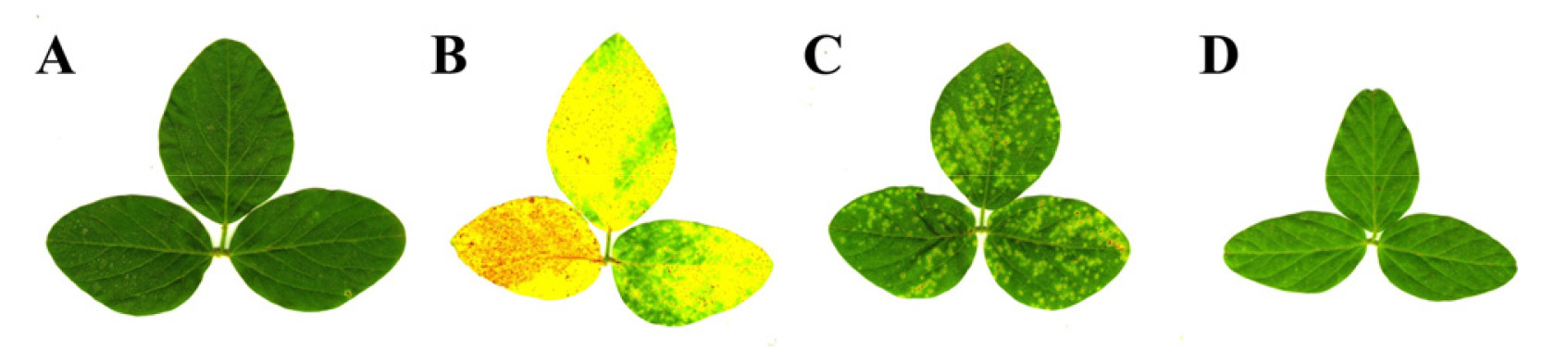
Fig. 2Disease severity (0-5 scale) of soybean cultivars and breeding lines following inoculation of three strains of Xanthomonas citri pv. glycines. Bars indicates standard error of the mean. Longitudinal dotted lines are drawn on 3.5 and 3.0 of severity to indicate borders of susceptibility and respectively.
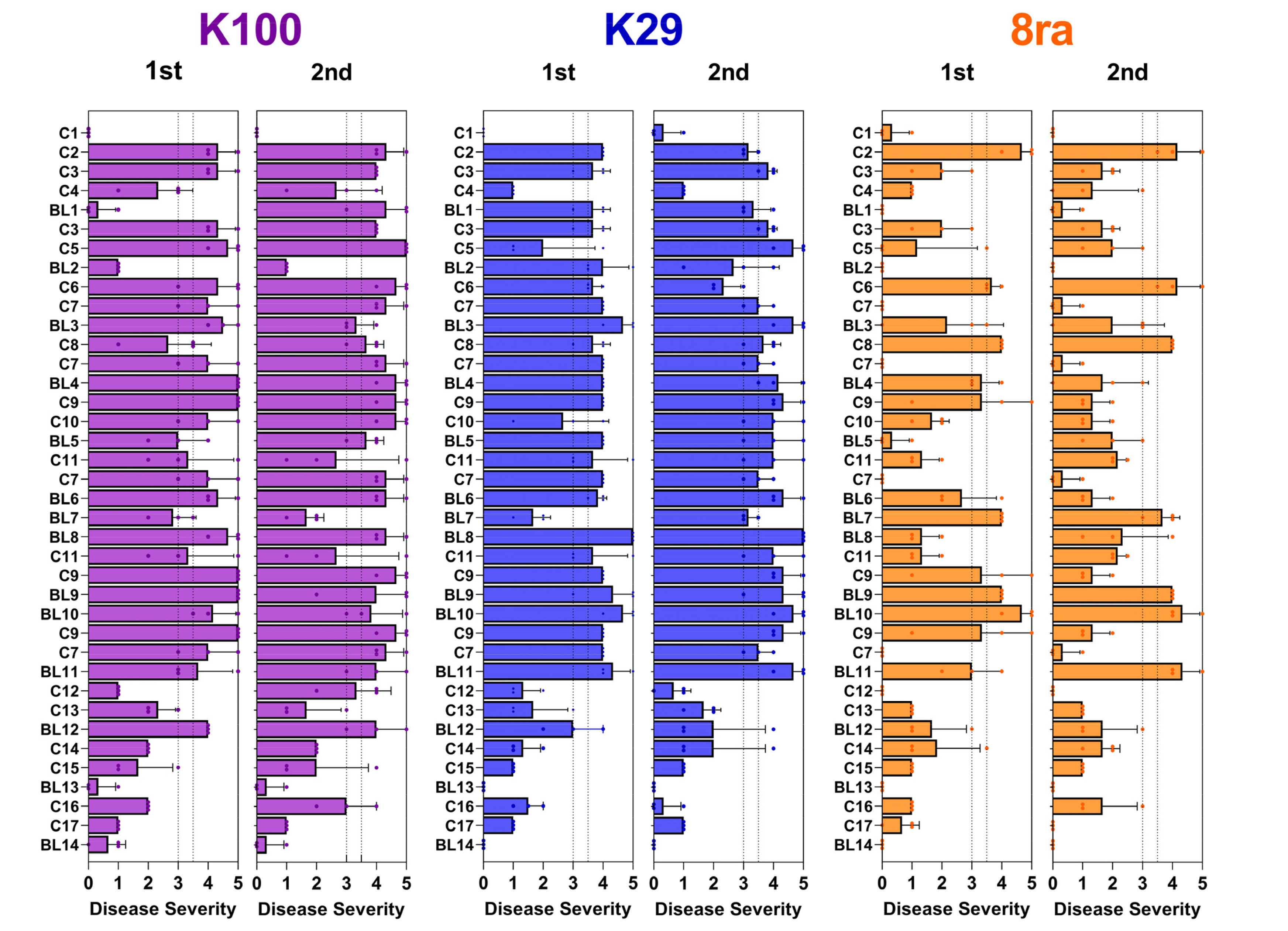
Table 1List of soybean cultivars used in this study.
Table 1
|
Code |
Name of cultivars |
Origin |
Use |
|
C1 |
Williams 82 |
United States |
Resistant check |
|
C2 |
Taekwang |
Korea |
Susceptible check |
|
C3 |
Yongpoong |
Korea |
Parental lines |
|
C4 |
Saegeum |
Korea |
Parental lines |
|
C5 |
Uram |
Korea |
Parental lines |
|
C6 |
Daewon |
Korea |
Parental lines |
|
C7 |
Cheonga |
Korea |
Parental lines |
|
C8 |
Taeseon |
Korea |
Parental lines |
|
C9 |
Gangil |
Korea |
Parental lines |
|
C10 |
Daepung2 |
Korea |
Parental lines |
|
C11 |
Seonyu |
Korea |
Parental lines |
|
C12 |
Punsannamulkong |
Korea |
Parental lines |
|
C13 |
Cheonal |
Korea |
Parental lines |
|
C14 |
Ilpumgeomjeongkong |
Korea |
Parental lines |
|
C15 |
PI 547426 |
United States |
Parental lines |
|
C16 |
Cheongja3 |
Korea |
Parental lines |
|
C17 |
PI 547711 |
United States |
Parental lines |
Table 2Morphological characteristics of fourteen selected breeding lines.
Table 2
|
Code |
Lines |
Cross combination |
Target Use |
Plant Height (cm) |
Maturity date (mm.dd) |
100-seed weight (g) |
Yield (kg/10a) |
|
BL1 |
SS15101-10-1-4-3 |
Yongpoong/Saegeum |
Fermentation & Tofu |
56 |
10.9 |
27.9 |
286 |
|
BL2 |
SS15103-11-2-4-1 |
Yongpoong/Uram |
Fermentation & Tofu |
55 |
10.12 |
27.7 |
419 |
|
BL3 |
SS15108-8-1-3-3 |
Cheonga/Daewon |
Fermentation & Tofu |
66 |
10.11 |
25.6 |
324 |
|
BL4 |
SS15119-3S-28-1 |
Taeseon/Cheonga |
Fermentation & Tofu |
64 |
10.22 |
29.2 |
505 |
|
BL5 |
SS15116-3S-31-4 |
Gangil/Daepung2 |
Fermentation & Tofu |
61 |
10.12 |
24.4 |
454 |
|
BL6 |
SS15127-3S-8-3 |
Seonyu/Cheonga |
Fermentation & Tofu |
67 |
10.17 |
30.1 |
345 |
|
BL7 |
SS15127-3S-33-2 |
Seonyu/Cheonga |
Fermentation & Tofu |
49 |
10.10 |
35.6 |
300 |
|
BL8 |
SS15127-3S-103-1 |
Seonyu/Cheonga |
Fermentation & Tofu |
47 |
10.17 |
36.2 |
412 |
|
BL9 |
SS15128-3S-30-3 |
Seonyu/Gangil |
Fermentation & Tofu |
45 |
10.10 |
28.9 |
331 |
|
BL10 |
SS15128-3S-51-1 |
Seonyu/Gangil |
Fermentation & Tofu |
53 |
10.3 |
27.9 |
313 |
|
BL11 |
SS15167-3S-41-1 |
Gangil/Cheonga |
Fermentation & Tofu |
52 |
10.4 |
22.3 |
346 |
|
BL12 |
SS15230-3S-29-3-2 |
Punsannamulkong/Cheonal |
Soy Sprout |
62 |
10.20 |
14.2 |
380 |
|
BL13 |
SS05004-1-1-4-2-3-4 |
Ilpumgeomjeongkong/PI 547426 |
Black soybean |
70 |
10.20 |
32.7 |
418 |
|
BL14 |
SS05022-5-4-2-4-4-4 |
Cheongja3/PI 547711 |
Black soybean |
65 |
10.22 |
28.8 |
399 |
|
C6 |
Daewon (control) |
- |
Fermentation & Tofu |
66 |
10.23 |
34.1 |
492 |
Table 3Disease severity of 17 cultivars and 14 breeding lines following inoculation of three Xcg strains.
Table 3
|
Code |
Genotype |
Disease severity (0-5)z
|
|
K100 |
K29 |
8ra |
|
C1 |
Williams 82 |
0.0±0.0 |
0.2±0.2 |
0.2±0.2 |
|
C2 |
Taekwang |
4.3±0.0 |
3.6±0.6 |
4.4±0.4 |
|
C3 |
Yongpoong |
4.2±0.2 |
3.8±0.1 |
1.8±0.2 |
|
C4 |
Saegeum |
2.5±0.2 |
1.0±0.0 |
1.2±0.2 |
|
BL1 |
SS15101-10-1-4-3 |
2.3±2.8 |
3.5±0.2 |
0.2±0.2 |
|
C3 |
Yongpoong |
4.2±0.2 |
3.8±0.1 |
1.8±0.2 |
|
C5 |
Uram |
4.8±0.2 |
3.3±1.9 |
1.6±0.6 |
|
BL2 |
SS15103-11-2-4-1 |
1.0±0.0 |
3.3±0.9 |
0.0±0.0 |
|
C6 |
Daewon |
4.5±0.2 |
3.0±0.9 |
3.9±0.4 |
|
C7 |
Cheonga |
4.2±0.2 |
3.8±0.4 |
0.2±0.2 |
|
BL3 |
SS15108-8-1-3-3 |
3.9±0.8 |
4.7±0.0 |
2.1±0.1 |
|
C8 |
Taeseon |
3.2±0.7 |
3.7±0.0 |
4.0±0.0 |
|
C7 |
Cheonga |
4.2±0.2 |
3.8±0.4 |
0.2±0.2 |
|
BL4 |
SS15119-3S-28-1 |
3.3±0.5 |
4.0±0.0 |
1.2±1.2 |
|
C9 |
Gangil |
4.8±0.2 |
4.2±0.2 |
2.3±1.4 |
|
C10 |
Daepung2 |
4.3±0.5 |
3.3±0.9 |
1.5±0.2 |
|
BL5 |
SS15116-3S-31-4 |
4.8±0.2 |
4.1±0.1 |
2.5±1.2 |
|
C11 |
Seonyu |
3.0±0.5 |
3.8±0.2 |
1.8±0.6 |
|
C7 |
Cheonga |
4.2±0.2 |
3.8±0.4 |
0.2±0.2 |
|
BL6 |
SS15127-3S-8-3 |
4.3±0.0 |
4.1±0.4 |
2.0±0.9 |
|
BL7 |
SS15127-3S-33-2 |
2.3±0.8 |
2.4±1.1 |
3.8±0.2 |
|
BL8 |
SS15127-3S-103-1 |
4.5±0.2 |
5.0±0.0 |
1.8±0.7 |
|
C11 |
Seonyu |
3.0±0.5 |
3.8±0.2 |
1.8±0.6 |
|
C9 |
Gangil |
4.8±0.2 |
4.2±0.2 |
2.3±1.4 |
|
BL9 |
SS15128-3S-30-3 |
4.5±0.7 |
4.3±0.0 |
4.0±0.0 |
|
BL10 |
SS15128-3S-51-1 |
4.0±0.2 |
4.7±0.0 |
4.5±0.2 |
|
C9 |
Gangil |
4.8±0.2 |
4.2±0.2 |
2.3±1.4 |
|
C7 |
Cheonga |
4.2±0.2 |
3.8±0.4 |
0.2±0.2 |
|
BL11 |
SS15167-3S-41-1 |
3.8±0.2 |
4.5±0.2 |
3.7±0.9 |
|
C12 |
Punsannamulkong |
2.2±1.6 |
1.0±0.5 |
0.0±0.0 |
|
C13 |
Cheonal |
2.0±0.5 |
1.7±0.0 |
1.0±0.0 |
|
BL12 |
SS15230-3S-29-3-2 |
4.0±0.0 |
2.5±0.7 |
1.7±0.0 |
|
C14 |
Ilpumgeomjeongkong |
2.0±0.0 |
1.7±0.5 |
1.8±0.1 |
|
C15 |
PI 547426 |
1.8±0.2 |
1.0±0.0 |
1.0±0.0 |
|
BL13 |
SS05004-1-1-4-2-3-4 |
0.3±0.0 |
0.0±0.0 |
0.0±0.0 |
|
C16 |
Cheongja3 |
2.5±0.7 |
1.0±0.7 |
1.3±0.5 |
|
C17 |
PI 547711 |
1.0±0.0 |
1.0±0.0 |
0.3±0.5 |
|
BL14 |
SS05022-5-4-2-4-4-4 |
0.5±0.2 |
0.0±0.0 |
0.0±0.0 |
References
- 1. Hartwig EE, Johnson HW. 1953. Effect of the bacterial pustule disease on yield and chemical composition of soybeans. J Agron 45: 22-23.
- 2. Hartwig EE, Lehman SG. 1951. Inheritance of resistance to the bacterial pustule disease in soybean. J Agron 43: 226-229.
- 3. Hong SJ, Kim YK, Jee HJ, Lee BC, Yoon YN, Park ST. 2010. Selection of bactericides for controlling soybean bacterial pustule. Res Plant Dis 16: 266-273.
- 4. Hong SJ, Kim YK, Shim CK, Kim MJ, Park JH, Han EJ, Jee HJ. 2014. Effect of cultivars, sowing date and cropping system on the development of soybean bacterial pustule in the field. Korean Journal of Organic Agriculture 22: 773-787.
- 5. Kang IJ, Kim KS, Beattie GA, Chung H, Heu S, Hwang I. 2021. Characterization of Xanthomonas citri pv. glycines population genetics and virulence in a national survey of bacterial pustule disease in Korea. Plant Pathol J 37: 652-661.
- 6. Kim DH, Kim KH, Van K, Kim MY, Lee SH. 2010. Fine mapping of a resistance gene to bacterial leaf pustule in soybean. Theor Appl Genet 120: 1443-1450.
- 7. Kim MH, Kwon SJ, Seo JK. 2021. Evolution of plant RNA viruses and mechanisms in overcoming plant resistance. Res Plant Dis 27: 137-148.
- 8. Kim SL, Park KY, Lee YH, Ryu YH. 2004. Seed quality of soybean produced from upland and drained-paddy field. Korean J Crop Sci 49: 309-315.
- 9. Kim YJ, Lee KW, Cho SK, Oh YJ, Shin SO, Paik CH, Kim KH, Kim TS, Kim KJ. 2011. Selection and quality evaluation of sprout soybean [Glycine max (L.) Merrill] variety for environment-friendly cultivation in southern paddy field. Korean J Org Agric 19: 357-372.
- 10. KOSIS (Korean Statistical Information Service). 2021. https://kosis.kr/
- 11. Laviolette FA, Athow KL, Probst AH, Wilcox JR. 1970. Effect of bacterial pustule on yield of soybeans. Crop Sci 10: 150-151.
- 12. Lee IH, Seo MJ, Park MR, Kim NG, Yi G, Lee YY, Kim MH, Lee BW, Yun HT. 2020. Yield and seed quality changes according to delayed harvest with rainfall treatment in soybean (Glycine max L.). Korean J Crop Sci 65: 353-364.
- 13. Lee SD. 1999. Occurrence and characterization of major plant bacterial diseases in Korea. Ph.D. Dissertation Seoul National University.
- 14. Narvel JM, Jakkula LR, Phillips DV, Wang T, Lee SH, Boerma HR. 2001. Molecular mapping of Rxp conditioning reaction to bacterial pustule in soybean. J Hered 92: 267-270.
- 15. Palmer RG, Lim SM, Hedges BR. 1992. Testing for linkage between the Rxp locus and nine isozyme loci in soybean. Crop Sci 32: 681-683.
- 16. Park HJ, Han SW, Oh CS, Lee SD, Ra DS, Lee SH, Heu SG. 2008. Avirulence gene diversity of Xanthomonas axonopodis pv. glycines isolated in Korea. J Microbiol Biotechnol 18: 1500-1509.
- 17. RDA (Rural Development Administration).2012. The standard of agricultural research and analysis. 5th ed. pp. 415-420.
- 18. Seo MJ, Kang ST, Moon JK, Lee S, Kim YH, Jeong KH, Yun HT. 2009. Identification of quantitative trait loci associated with resistance to bacterial pustule (Xanthomonas axonopodis pv. glycines) in soybean. Korean J Breed Sci 41: 456-462.
- 19. Vale FXR, Parlevliet JE, Zambolim L. 2001. Concepts in plant disease resistance. Fitopatol Bras 26: 577-589.
- 20. Yang K, Lee YH, Ko JM, Jeon MG, Lee BW, Kim HT, Yun HT, Jung CS, Baek IY. 2011. Development of molecular markers conferring bacterial leaf pustule resistance gene, rxp, using resistant and susceptible cultivars in soybean. Korean J Breed Sci 43: 203-208.
- 21. Yi E, Lee J, Choi B, Lee Y, Kim H, Yun H. 2015. A soybean cultivar 'Yonpoong' with safety high yield for double cropping system introduced winter forage crop. Korean J Breed Sci 47: 425-430.
- 22. Yi ES, Kim JY, Lee JH, Lee JG, Han JA, Kang CS. 2018. A new soybean cultivar, 'Gangpoong' for soy-paste and tofu with large seeds and lodging resistance. Korean J Breed Sci 50: 307-313.
- 23. Yun GS, Moon HL, Kim TI, Kim IJ, Kim YH, Kim HS, Cha JS. 2021. Occurrence of the bacterial diseases of soybean in Chungbuk province in 2017. Korean J Crop Sci 66: 339-349.
- 24. Zhang J, Song Q, Cregan PB, Nelson RL, Wang X, Wu J, Jiang GL. 2015. Genome-wide association study for flowering time, maturity dates and plant height in early maturing soybean. BMC Genom 16: 217