Skip to main navigation Skip to main content

Korean. J. Breed. Sci. : Korean Journal of Breeding Science

OPEN ACCESS
ABOUT
BROWSE ARTICLES
EDITORIAL POLICIES
FOR CONTRIBUTORS

Articles

ARTICLE

친환경재배 적응 벼멸구 저항성 고품질 벼 ‘친들’

A Brown Planthopper Resistance with Eco-Friendly Cultivation Adaptation and High Grain Quality Rice Variety ‘Chindeul’

Korean Journal of Breeding Science 2014;46(4):481-489.
Published online: November 30, 2014

1 국립식량과학원

1 National Institute of Crop Science, RDA Iksan 570-080, Korea

2 농촌진흥청 연구정책국

2 Research Policy Bureau, RDA, Jeonju 560-500, Korea

*Corresponding Author : suwonman@korea.kr, Tel: +82- 63-840-2169, Fax: +82-63-840-2117)
• Received: October 6, 2014   • Revised: October 6, 2014   • Accepted: November 7, 2014

© Tshe Korean Society of Breeding Science All rights reserved

This is an Open-Access article distributed under the terms of the Creative Commons Attribution Non-Commercial License (http://creativecommons.org/licenses/by-nc/3.0) which permits unrestricted non-commercial use, distribution, and reproduction in any medium, provided the original work is properly cited.
  • 6 Views
  • 0 Download
prev
  • ‘Chindeul’, a new japonica rice cultivar developed from a cross between HR22538-GHB-36-4 having brown planthopper (BPH) resistance and Iksan471 having a good eating-quality and high yield, was developed by the rice breeding team of Department of Rice and Winter Cereal Crop, NICS, RDA in 2012. This variety has about 124 days growth duration from transplanting to harvesting in west-southern coast, Honam and Youngnam plain of Korea. It has 83 cm culm length and tolerance to lodging. In reaction to biotic and abiotic stresses, it shows resistance to bacterial blight pathogen races from K1 to K3, stripe virus and brown planthopper. The milled rice of ‘Chindeul’ exhibits translucent, relatively clear non-glutinous endosperm and medium short grain. It has lower protein content of 5.9% and good palatability of cooked rice compared with Nampyeongbyeo. The milled rice yield performance of this variety is about 5.61 MT/ha in local adaptability test for three years. ‘Chindeul’ would be useful genetic resources for multi-resistance breeding program against disease and insect.
앞으로의 쌀 농업은 생산량 위주의 관행농업에서 소비자 지향의 지속농업으로 변화하고 있다. 소비자가 원하는 것이란 다양한 오염원 및 독성물질로부터 보호되어 생산된 안전한 먹거리에 대한 요구이다. 이러한 이유로 친환경 쌀 재배 면적 이 커지고 있다. 실제로 친환경 농산물은 1999년 27,000톤 (전체 농산물의 0.1%)에서 2013년 1,181,000톤(7%)으로 약 44배 증가했다. 벼 재배면적도 마찬가지로 2000년 2,171 ha 에서 2009년 106,840 ha로 약 49배 증가하였다(Choi 2002, Shin et al. 2012, Kim et al. 2013). 이에 따라 친환경재배에 적합한 벼 품종의 요구도 같이 늘고 있다. 병해충의 발생은 수량 감소와 직결되기 때문에 적합한 품종이란 최소한 벼의 주요 병해충인 도열병, 흰잎마름병, 줄무늬잎마름병, 벼멸구 에 저항성을 갖추고 있는 품종일 것이다(Kim et al. 2010). 다만, 도열병의 경우는 표준 질소 시비량이 줄어들면서 발병 율이 현저히 떨어져 현재의 벼 재배법으로 충분히 방제가 가 능하지만 나머지 병해충은 기본적인 방제가 어렵다. 특히 벼 멸구의 경우는 우리나라에서 육성된 저항성 품종의 수가 적 을 뿐만 아니라 도열병, 흰잎마름병, 줄무늬잎마름병에 동시 에 강한 것은 더 제한적이다. 현재 벼멸구 저항성 품종은 통 일형 12품종, 자포니카 8품종이며 ‘안미(Bph18 gene)’를 제 외하고 모두 Bph1bph2 gene을 보유하고 있다(Kim et al. 2013, Suh et al. 2014). 이들 품종 중 도열병, 흰잎마름병, 줄 무늬잎마름병에 모두 강한 것은 오직 통일형 5개 품종이며 자 포니카형은 6개 품종이 도열병에 중간 저항성을 가지고 있다 (Shin et al. 2011). 이처럼 보다 많은 친환경재배적응 복합내 병충성 품종의 개발이 지속적으로 요구됨에 따라 생물검정법 과 최근 발전된 분자마커검정법을 활용하여 도열병에 중도 저항성이며, 흰잎마름병, 줄무늬잎마름병, 벼멸구에 강한 복 합내병충성 벼품종 ‘친들’을 개발하여 그 육성경위와 주요 농 업적 특성을 보고하는 바이다.
시험재료 및 재배방법
HR22538-GHB-36-4(모본) 계통과, 익산471호(동진2호, 부 본)를 인공교배하여 F1을 만들고 F2와 F3는 집단 선발을, F4 이후부터는 계통육종법으로 선발하였다. F5 세대에서는 생물 검정과 함께 벼멸구 저항성 유전자 bph2, 흰잎마름병 저항성 유전자 Xa3, 줄무늬잎마름병 저항성 유전자 stv-bi 보유여부 를 분자마커로 확인하였다. 주요 농업형질을 조사하기 위해 2010~2012년까지 3년간 서남부해안지 및 중부·호남·영남 평야지 13개 지역에서 보통기 표준재배로 수행하여 표준품종 ‘남평벼’와 비교하였고, 2012년에는 중부·호남·영남평야지 3 개 지역에서 소비재배를 표준품종 ‘소비벼’와 비교 검토하였 다(RDA 2010, 2011, 2012a). 각 지역에서 시험에 공시한 계 통은 4월 30일 파종, 5월 30일에 이앙하였고 재식거리는 30×15 cm 주당 3본으로 하였다. 시비량 및 질소분시방법은 농촌진흥청 표준재배법에 준하였고 기타 생육, 수량특성, 생 리장해 및 병충해 저항성, 도정특성 조사는 농촌진흥청 신품 종개발공동연구사업 과제수행계획서 조사기준에 준하여 실시 하였다(RDA 2012b).
주요 병해충 생물검정
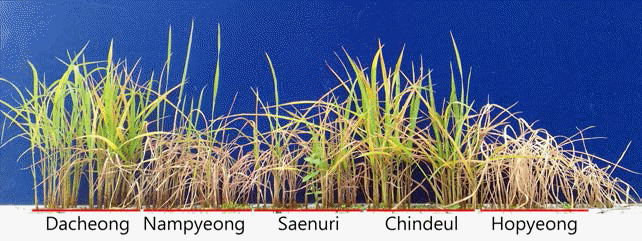
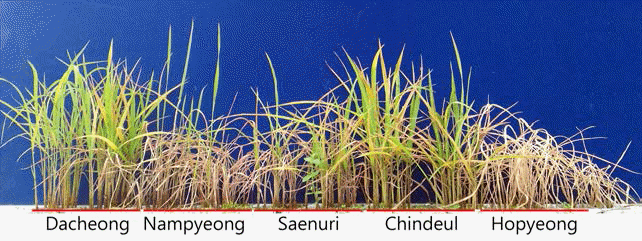
벼멸구 유묘저항성검정은 국립식량과학원 벼맥류부 병해 충연구실에서 사육한 벼멸구(Biotype 1)를 분양 받아 사용하 였다. 플라스틱육묘상자에 계통을 파종하고 10개 계통마다 감수성 품종인 ‘남평벼’와 벼멸구 저항성 품종인 ‘다청’, ‘친 농’을 함께 파종하였다. 유묘 4~5엽기에 2~3령의 벼멸구를 개체당 5~7마리를 접종한 후 ‘남평벼’가 완전히 고사한 시기 에 저항성 여부를 판정하였는데 개체 1~2엽이 황하 되어 있 는 수준이면 저항성으로 판단하였다.
도열병 저항성 검정은 검정계통을 질소 다비조건의 밭못자 리에 파종하여 유묘기 상태에서 농업과학기술 연구조사분석 기준(RDA 2003)으로 조사하였다.
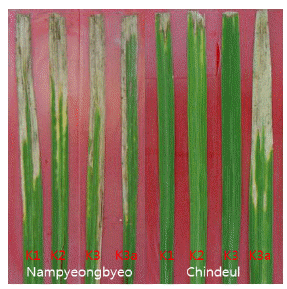
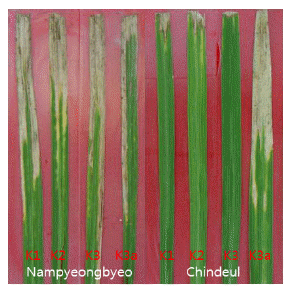
흰잎마름병 검정은 4개 균주 K1(HB1013), K2(HB1014), K3(HB1015), K3a(HB1009)를 국립식량과학원 벼맥류부 병 해충연구실에서 분양 받아 배양하여 사용하였다. 균 접종은 각 균주별로 계통의 잎 윗부분 5 cm 부위를 가위로 잘라 접 종하였다. 접종 3주 후 감염 정도를 농업과학기술 연구조사분 석기준(RDA 2003)에 따라 측정하였다.
줄무늬잎마름병 저항성 검정은 망실검정법으로 보독매개 충 밀도가 충분한 상태에서 검정계통을 파종하여 감수성 품 종인 ‘일품벼’가 고사할 때 저항성을 판정하였다.
DNA 추출 및 분자마커검정
Genomic-DNA는 BS 96 DNA plant kit를 사용하여 Biosprint 96 (Qiagen)로 추출하였다.
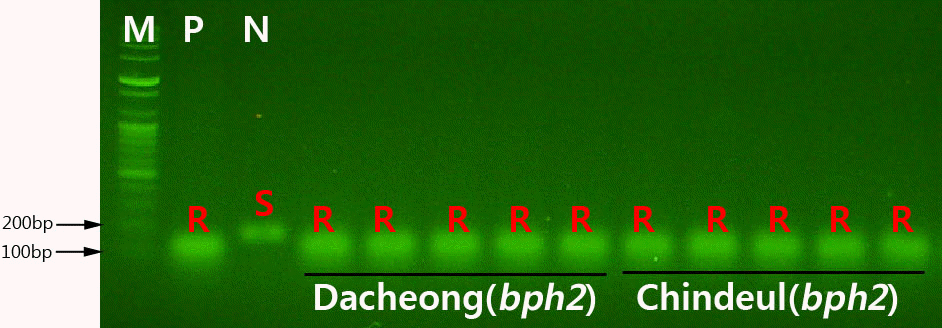
벼멸구(bph2), 흰잎마름병(Xa3), 줄무늬잎마름병(stb-i) 저항 성 유전자 탐색은 각각 KPM2 (Sharma et al. 2004), 9643.T4 (Jeong et al. unpublished), Indel7 (Kwon et al. 2012) 마커 를 사용하였다(Table 1). bph2, Xa3 저항성 유전자 탐색은 PCR 후 각각 Hinf (37°C, 2시간 처리), Taqα I (65°C, 2시 간 처리) 제한효소 처리하고 유전자형을 판정하였다.
Table 1.
DNA markers and restriction enzymes used to detect of R-genes against the brown planthopper, bacterial blight, and rice stripe virus.
Table 1.
Marker Resistance gene tagged Restriction enzyme Forward primer(5’-3’) Reverse primer(5’-3’)

Kpm2 bph2 Hinf I TAAGATTGCCAAGAGAAATGTC AATTCCGGCTTGGGCTGAGAAATG
9643.T4 Xa3 Taqa I AGCCGAGCAATGATACCGACA ACAACTGGGATCGAACCGACA
Indel7 Stv-bi - AAATTCCAATGCCCAAAACC TCCTCATGGAGCTCATCCAA
육성경위
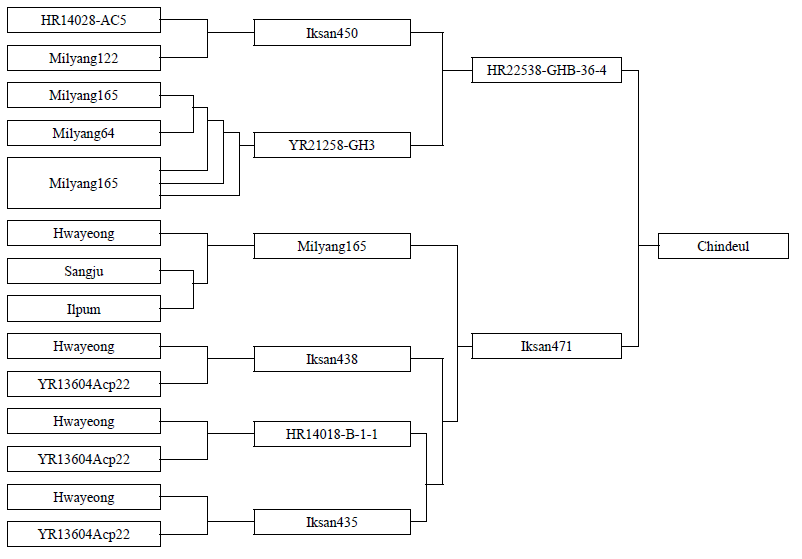
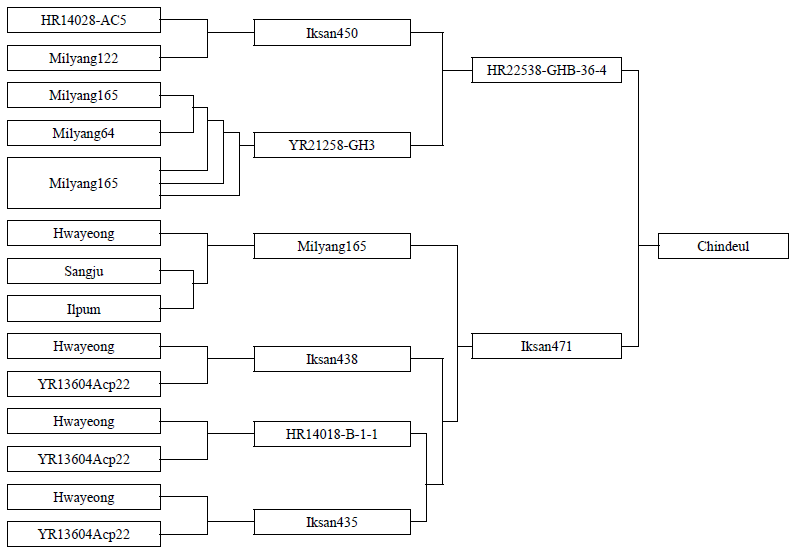
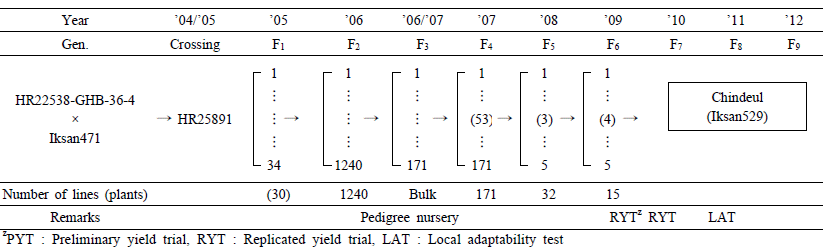
복합내병충성 우량 계통을 육성하기 위해 국립식량과학원 벼백류부에서 ’04/’05 동계에 중만생종이며 벼멸구에 저항성 인 HR22538-GHB-36-4 계통을 모본으로, 흰잎마름병과 줄 무늬잎마름병에 강하지만 벼멸구에 약한 고품질 품종 익산 471호(동진2호)를 부본으로 인공교배하여 F1을 양성하였다 (Fig. 1). F2, F3에서는 단간이며 출수기가 중만생종이고 이삭 과 초형이 우수한 계통을 집단선발하였고 F4 이후부터 계통 육종법으로 선발하였다. 세대 진전시 주요 병해충 및 미질검 정을 실시하였다.
Fig. 1.
Genealogical diagram of ‘Chindeul’.
KJBS-46-481_F1.gif
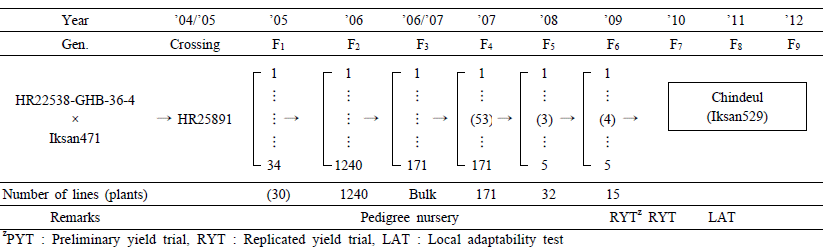
2009~2010년 생산력검정 결과 HR25891-B-53-3-4을 ‘익 산529호’로 계통명을 부여하였다. 2010~2012년 지역적응시 험에서 우수성이 인정되어 2012년 12월 농촌진흥청 농작물 직무육성 신품종 심의위원회에서 품종으로 선정하고 ‘친농’ 으로 명명하였다(Fig. 2).
Fig. 2.
Pedigree diagram of ‘Chindeul’.
KJBS-46-481_F2.gif
생물검정과 분자마커 활용한 저항성 계통 육성과 선발
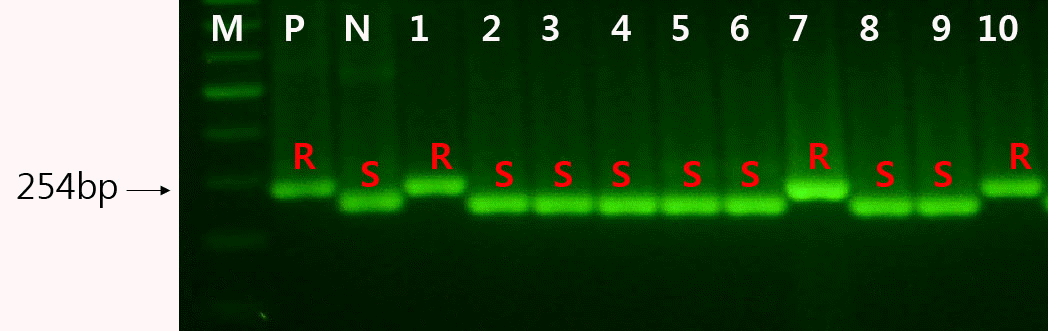
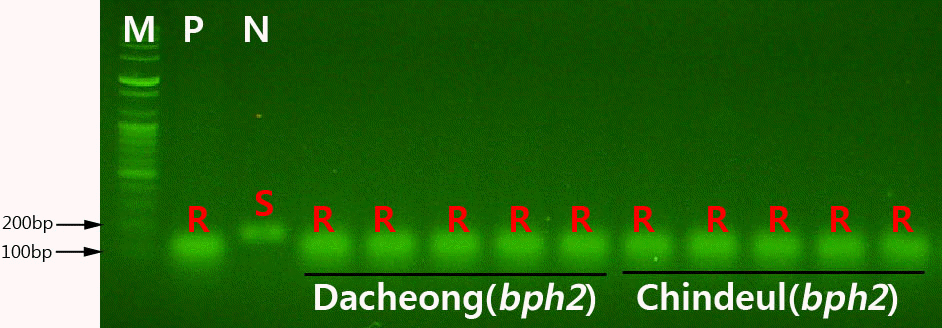
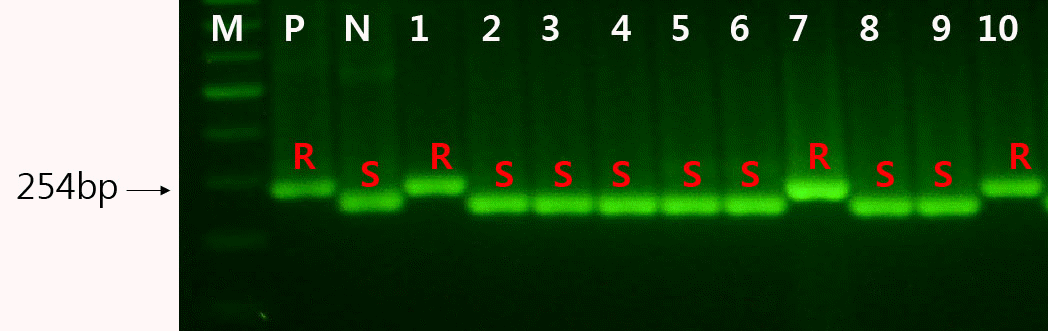
본 연구의 계통육성에서는 F4 에서 생물검정과 미질검정으 로 선발을 하였고 F5부터 생물검정과 분자마커 검정을 동시 에 수행하여 저항성의 정확도를 높여 선발하였다. F1 34개체 중 단간이며 출수기가 중만생종인 30개체를 선발하였으며 F2, F3에서도 단간이며 초형과 수형이 우수한 계통을 선발하였다. F4에서는 171계통을 공시하였으며 생물검정과 미질검정을 실 시한 후 저항성 및 초형 등이 우수한 32계통을 F5에 공시하였다. F5 32계통은 생물검정과 분자마커 검정에서 모두 벼멸구, 흰잎 마름병, 줄무늬잎마름병의 저항성을 나타냈다(Fig. 3, Fig. 4, Fig. 5, Fig. 6). 32계통 중 15계통을 생산력검정시험을 실시 하였으며 그 결과 벼멸구, 흰잎마름병, 줄무늬잎마름병에 저항 성이며 도열병에 중도 저항성인 고품질 HR25891-B-53-3-4 계통을 선발 “익산529호”로 명명하였다.
Fig. 3.
Detection of stv-bi gene using DNA marker Indel7 to ‘Chindeul’. P : Dacheong(resistance), N : Hopyeong(susceptible), 7 : Chindeul(resistance).
KJBS-46-481_F3.gif
Fig. 4.
Detection of bph2 gene using DNA marker kpm2 to ‘Chindeul’. PCR products were cleaved by HinfⅠ and gels were stained by RedSafe. P : Dacheong(resistance), N : Nampyeong(susceptible).
KJBS-46-481_F4.gif
Fig. 5.
BPH bioassay resistance reaction to brown planthopper for ‘Chindeul’ at seedling stage.
KJBS-46-481_F5.gif
Fig. 6.
Resistance reaction to bacterial blight, K1, K2, K3, and K3a races. Lesion length at 2 weeks after inoculation.
KJBS-46-481_F6.gif
‘친들’의 지역적응시험 주요특성 출수기 및 주요 농업적 특성
‘친들’은 보통기 표준재배에서 전체 평균 출수기가 8월 15 일로 ‘남평벼’ 보다 1일 늦은 중만생종이다. 일부 지역에서는 빠른 출수기를 보였는데 ‘영암’이 8월 12일, ‘나주’ 8월 11일, ‘진주’ 8월 12일이며 늦은 지역은 ‘예산’ 8월 20일로 모두 지 대 내 다른 지역과 통계적으로 유의차가 있었다. 표준품종인 ‘남평벼’와 비교 시 간장은 80 cm로 3 cm 크고 주당수수는 같으나 수당립수는 많으며 등숙비율도 높은 중립종에 속한다 (Table 2).
Table 2.
Major agronomic traits and yield components. (Iksan : ’10~’12)
Table 2.
Variety N Heading date Culm length (cm) Panicle length (cm) No. of panicles per hill No. of grains per panicle Ratio of ripened grain (%) Brown rice 1000 grain weight (g)

Chindeul 9 Aug. 15 83 22 13 116 88.8 21.7
Nampyeong 9 Aug. 14 80 21 13 104 87.1 21.1
T-value 16z 0.53nsy 1.18ns 2.12ns -0.31ns 1.50ns 0.32ns 10ns

zDegree of freedom of t-test with same variance (pooled variance)

yns, *, and ** indicate no significant, significant at P<0.05, and P<0.01, respectively

생리장해 저항성
위조현상은 나타나지 않았으며 성숙기 하위노화가 늦고 불 시출수는 없으며 수발아율은 ‘남평벼’보다 다소 높았다. 춘천 내냉성 검정 결과 유묘내냉성, 출수지연일수, 내냉성 임실률 이 ‘남평벼’보다 높은 편이다(Table 3).
Table 3.
Reaction to environmental and physiological stress. (LAT : ’10~sss’12)
Table 3.
Variety Appearance of wilting Adult leaf senescence Cold tolerancez Viviparous germinationy (%) Field lodging resistancex (1-9)

Seeding stage (0-9) Heading delay (days) Grain fertility (%)

Chindeul Strong Late 3 13 46 10.4 1
Nampyeong Strong Late 4 11 32 2.7 1

zCold tolerance was evaluated at Chuncheon cold-water irrigated nursery

yGermination rate at 7th day after incubation (25°C)

xMean lodging degree under wet direct seeding of local adaptability test for 2010 to 2012

병해충 저항성
2010~2012년 전국 14개소에서 실시한 잎도열병 밭못자 리 검정에서 강 7개소, 중 6개소로 ‘남평벼’와 비슷한 중도 저 항성 반응을 보였다. 목도열병 포장검정에서는 경미한 발병을 보여 목도열병에 강한 저항성 반응을 보였다. 도열병 내구저 항성 검정에서는 친화성 균주가 10개였으며 내구성 정도는 중간이었다. 흰잎마름병은 K1, K2, K3 균주에 강했으며, 줄 무늬잎마름병과 벼멸구에 저항성이나 기타 바이러스병 및 충 에는 약하다(Table 4, Table 5). 벼멸구, 벼흰잎마름병, 벼줄 무늬잎마름병 저항성 유전자를 분자마커로 확인한 결과 각각 bph2, Xa3, stv-bi 저항성 유전자를 보유하고 있었다.
Table 4.
Reaction to leaf blast and neck blast. (LAT : ’10~’12)
Table 4.
Variety No. of nursery based on reaction to leaf blast Field test of neck blast

Rz (0~3) M (4~6) S (7~9) Ave. Rate of disease panicle(%)

Icheon Jecheon Iksan Milyang

Chindeul 7 6 1 3.8 0.0 0.1 0.4 0.0
Nampyeong 5 9 0 3.6 0.7 0.0 1.0 0.0

zR : Resistant, M : Moderate, S : Susceptible

Table 5.
Reaction to major disease and insect pest. (LAT : ’10~’12)
Table 5.
Variety Bacterial blight Virus disease (%) Planthopper


K1z K2 K3 K3a RSVy RDV RBSDV BPHx SBPH

Chindeul Rw R R S R(8.3) S(80.0) S(91.1) R S
Nampyeong S S S S S(7.6) R(8.4) S(89.0) S S

zK1 : HB1013, K2 : HB1014, K3 : HB1015, K3a : HB1009

yRSV : Rice stripe virus, RDV : Rice dwarf virus, RBSDV : Rice black-streaked dwarf

xBPH : Brown planthopper, SBPH : Small brown planthopper

w)R : Resistant, M: Moderate, S: Susceptible

미질 및 품질 특성
쌀알은 단원립으로 심복백이 없이 맑고 투명하며 남평벼에 비해 단백질 함량은 낮고 아밀로스 함량은 같으며 밥맛은 매 우 양호한 편이다(Table 6). 기존 보고에 따르면 단백질 함량 이 낮은 조건이 밥맛에 유리하다(Kim et al. 2009)고 하였는 데 ‘친들’의 ‘남평벼’보다 낮은 단백질 함량이 밥맛에 영향을 준 것으로 보여진다.
Table 6.
Grain quality and palatability properties of ‘Chindeul’. (LAT : ’10~’12)
Table 6.
Variety N Translucency (1-9) White core/belly (0-9) Amylose content (%) Protein content (%) Palatability of cooked rice (-3~+3)

Chindeul 9 1 0/1 19.7 5.9 0.39
Nampyeong 9 1 0/0 19.7 6.9 0.18
T-value 16z - - 0.00nsy -3.52* 15.3**

zDegree of freedom of t-test with same variance (pooled variance)

yns, *, and ** indicate no significant, significant at P<0.05, and P<0.01, respectively

도정 특성
도정율이 74.8%로 ‘남평벼’에 비해 높았으나, 백미완전미 율과 완전미도정수율은 낮았다(Table 7). 높은 도정특성은 품 종의 상품가치를 높이는 주요한 원인으로 미곡종합처리장에 서 우선 수매의 기준이 된다. ‘친들’은 도정율에 있어 ‘남평 벼’보다 약간 높았지만 백미완전미율과 완전미도정수율은 낮아 추후 이에 대한 보완된 품종 육성이 필요할 것으로 생각된다.
Table 7.
Milling properties of ‘Chindeul’. (LAT : ’12)
Table 7.
Variety N Brown rice recovery (%) Milled/brown rice ratio (%) Milling ratio (%) Immature rice ratio (%) Head rice recovery (%) Milled rice recovery (%)

Chindeul 3 83.6 89.4 74.8 0.0 88.3 66.0
Nampyeong 3 82.7 89.8 74.2 0.0 91.3 67.7
T-value 7 z 2.53nsy -2.18ns 0.88ns - -0.08ns 0.04ns

zDegree of freedom of t-test with same variance (pooled variance)

yns, *, and ** indicate no significant, significant at P<0.05, and P<0.01, respectively

수량성
2010~2012년 3개년간 실시한 지역적응시험 보통기 표준 재배 13개소에서 5.61 MT/ha 으로 ‘남평벼’보다 8% 증수 되 었으며 ‘고성’, ‘논산’, ‘대구’ 지역에서는 다른 지역보다 높은 수량성을 보였다. 소비재배에서는 5.14 MT/ha으로 ‘소비벼’ 대비 5% 증수하였다(Table 8).
Table 8.
Yield summary of local adaptability test. (LAT : ’10~’12)
Table 8.
Culture season Region No. of test sites Milled rice(MT/ha) Index

Chindeul (A) Nampyeong (B) A/B

Ordinary planting West-southern coast 3 5.44 4.96 110
Honam plain 5 5.58 5.23 107
Youngnam plain 4 5.87 5.44 108
Middle plain 1 5.22 4.75y 110

Mean 13 5.61a 5.20az 108

Late planting Honam plain 1 4.78 4.98 96

Double cropping Youngnam plain 1 5.13 4.89 105

zThe Means with the same letter are not significantly different at P < 0.05 in the least significant difference test (LSD0.05)

yMiddle plain standard variety was Hwaseongbyeo

적응지역 및 재배상 유의점
‘친들’은 중만생종으로 서남부해안지 및 평택이남 평야지 (충남, 전남북, 경남북)에 적합한 품종이다. 질소비료를 많이 주면 미질저하 및 도복발생이 우려되므로 적정 균형시비를 하여야 한다. 벼멸구, 흰잎마름병, 줄무늬잎마름병에 강하고 도열병에는 중도 저항성이나 기타 바이러스병 및 해충에 약 하므로 적기 방제를 실시하여야 한다. 수확기 장마에 수발아 등이 우려되므로 적기 수확을 하여야 한다. 또한 키다리병에 도 감수성으로 종자소독을 하여야 한다.
효율적인 전통육종과 분자육종 간의 상호보완
최근 분자육종법의 발달로 포장에서의 표현형 선발이 아닌 DNA 분자마커를 활용한 선발법의 활용도가 높아지고 있다.
하지만 아직까지 실용적인 품종 육성에 있어 분자육종선발 단독으로의 사용은 제한적이며 생물검정과의 상호 보완을 통 한 활용방안이 보다 큰 효과를 보이고 있다. 분자마커 선발은 노력절감과 고정된 저항성 유전자형을 초기세대에 선발할 수 있다는 장점이 있다. 만약 사용하려고 하는 분자마커가 계통 의 호모와 헤테로를 정확히 구분할 수 있다면 초기세대부터 적용은 긍정적일 수 있으나 반대의 경우라면 생물검정을 먼 저 실시하고 후대에 고정된 계통에 대해 분자마커를 활용하 는 것이 보다 효율적일 것이다. 분자마커 검정기술이 예전보 다 발달하고 가격이 많이 낮아졌다. 하지만 저세대의 수많은 계통을 분자마커로 선발하는 것은 아직까지 힘든 일일 수도 있으며 일부 특성검정에 있어 생물검정과 비교해서도 비효율 적인 경우가 있다. 현재 PCR 수행 만으로 저항성 유전자를 검출할 수 있는 마커가 제한적인 것도 단점이다. 또한 유전자 의 masking effect 등으로 저항성 유전자는 분자마커로 탐색 이 되지만 실제 발현이 안되는 경우도 있는 만큼 생물검정과 분자마커검정을 병용하는 것이 꼭 필요하다. 본 시험에서 F5 32계통의 병해충 저항성 유전자의 생물검정과 분자마커검정 결과 100% 일치율을 보였다. 벼 육성 목적에 필요한 저항성 유전자를 정확하게 판별할 수 있는 분자마커의 확보는 복합 내병충성 ‘친농’의 개발 목표의 정확도를 크게 높였다. 하나 의 저항성 유전자에 대해서 많은 분자마커가 논문으로 발표 되고 있다. 하지만 모든 분자마커가 정확한 탐침을 보장하지 는 않다. 실험자의 숙련도, 장비 및 시약에 따라 정확도가 달 라지는 만큼 자신의 보유 재료에 적합한 분자마커를 확보하 는 것이 중요하다.
복합내병충성 벼 ‘친들’ 육성의 의미 및 발전방향
친환경재배면적의 증가만큼 복합내병충성 벼의 육성은 매 우 바람직하다. 우수 품종 ‘친들’은 친환경재배농가의 수량증 대효과와 더불어 기존 품종의 벼멸구 저항성이 없는 단점을 보완할 수 있는 교배모본으로의 활용이 기대된다. 우수한 밥 맛과 수량성을 가지고 있는 만큼 기존 우수 품종과의 인공교 배는 벼멸구 저항성 유전자가 다양한 고품질 품종에 발현 될 수 있는 기회를 제공할 것이다. ‘친들’이 보완해야 할 점도 많 은데 ‘친들’이 가지고 있는 bph2 유전자는 다른 감수성 품종 보다는 벼멸구에 강하지만 흡즙시간이 지속되면 고사되고 만 다. 앞서 밝혔듯이 현재 ‘안미’를 제외하고 우리나라 벼멸구 저항성 품종은 Bph1, bph2 유전자를 가지고 있다. 유전적 다 양성에 있어 매우 협소한데 현재 중국으로부터 비래하는 벼 멸구는 Bph1, bph2 유전자에 강하다는 것이 많은 논문으로 밝혀지는 만큼 앞으로 벼멸구 저항성 유전자의 다양화가 필 요하다. 하지만 인디카에서 원연교잡을 통해 자포니카형 벼멸 구 저항성 계통을 육성해야 되기에 열악형질 제거 등 많은 어 려움과 시간이 필요하다고 본다. 본 연구를 통해 육성된 ‘친 들’은 전통육종과 분자육종을 활용한 벼멸구, 흰잎마름병, 및 줄무늬잎마름병 복합저항성을 발현하는 우수 품종으로 친환경 재배용 복합내병충성 벼품종육성에 활용되기를 기대해 본다.
‘친들’은 국립식량과학원 벼맥류부에서 2012년도에 벼멸 구 저항성을 가진 HR22538-GHB-36-4와 고품질이며 수량이 우수한 익산471호를 교배하여 육성한 친환경재배적응 고품질 복합내병충성 우수 품종이다. ‘친들’은 서남부해안지 및 평택 이남 평야지(충남, 전남북, 경남북) 보통기 보비재배에서 이앙 부터 수확까지 124일의 생육일수를 가진다. 간장은 83츠 이 며 내도복성이다. 병해충 저항성은 벼멸구, 벼흰잎마름병 K1, K2, K3 균계, 벼줄무늬잎마름병에 강하다. ‘친들’은 쌀알이 맑고 투명하며 중립종이다. 비교품종인 남평벼 보다 단백질이 5.9%로 낮고 밥맞이 매우 좋다. 수량성은 3년간 지역적응성 시험 결과 5.61 MT/ha 이다. ‘친들’은 복합내병충성 육종에 있어 매우 유용한 유전자원으로 사용될 것이다.
‘친들’을 육성하기까지 협력해주신 모든 육종 관련 분들에 게 깊은 감사를 드립니다. 본 연구는 농촌진흥청 연구사업(과 제번호: PJ008710022014)의 지원에 의해 이루어진 것임.
  • Choi HC. Current status and perspectives in varietal improvement of rice cultivars for high-quality and value-added products. Korean J. Crop Sci 2002. 47: 15-32.
  • Kim JI, Choi HC, Kim GH, An JG, Park NB, Park DS, Kim CS, Lee JY, Kim JK. Varietal response to grain quality and palatability of cooked rice influenced by different nitrogen applications. Korean J. Crop Sci 2009. 54: 13-23.
  • Kim WJ, Ko JK, Ko JC, Nam JK, Ha KY, Shin MS, Kim YD, Kim BK, Kang HJ, Kim KY, Baek MG, Park HS, Baek SH, Shin WC, Kim KH, Choung JI, Hwang HG, Kim JG. A new mid-late maturing rice cultivar with high-quality and multiple resistance to diseases and insects, ‘Dacheong’. Korean J. Breed. Sci 2010. 42: 649-653.
  • Kim WJ, Baek SH, Shin MS, Shin WC, Park HS, Ha KY, Park JH, Cho YC, Kim BK, Lee JH. Development of brown planthopper resistant lines carrying Bph18 gene using marker-assisted selection in japonica rice (Oryza sativa L.). Korean J. Intl. Agri 2013. 25: 1-7.
  • Kwon TM, Lee JH, Park SK, Hwang UH, Cho JH, Kwak DY, Youn YN, Yeo US, Song YC, Nam JS, Kang HW, Nam MH, Park DS. Fine mapping and identification of candidate rice genes associated with qSTV11sg, a major QTL for rice stripe disease resistance. Theor. Appl. Genet 2012. 125: 1033-1046.
  • Sharma PN, Torii A, Takumi S, Mori N, Nakamura C. Marker-assisted pyramiding of brown planthopper resistance genes Bph1 and bph2 on rice chromosome 12. Hereditas 2004. 140: 61-69.
  • Shin MS, Kim WJ, Shin WC, Park HS, Seo CS, Choi IB, Ha KY, Kang HJ, Ko JK. Effect of brown planthopper resistance gene, Bph18 to yield components in rice. Korean J. Breed 2011. 43: 56-61.
  • Shin MS, Ko JK, Ko JC, Kim BK, Kang HJ, Kim YD, Nam JK, Ha KY, Kim KY, Baek MG, Shin WC, Kim WJ, Park HS, Baek SH, Mo YJ, Choi IB, Lee GH, Lee YB, Kim JG. A brown planthopper resistnace and high quality rice variety 'Chinnong'. Korean J. Breed. Sci 2012. 44: 373-378.
  • Suh JP, Jeung JU, Kim YG, Jena KK, Cho YC, Lee JH, Kim MK, Hong HC, Lee JH, Kim JJ, Choi IS, Jeong EG, Hwang HG, Oh SK, Yang CI, Shin MS. A brown planthopper resistant and high grain quality rice variety 'Anmi' developed by molecular breeding method. Korean J. Breed. Sci 2014. 46: 152-159.
  • RDAManual for standard evaluation method in agricultural experiment and research 2003. 271-290.
  • RDAReport of Development New Variety of Summer Crops 2010.
  • RDAReport of Development New Variety of Summer Crops 2011.
  • RDAReport of Development New Variety of Summer Crops 2012a.
  • RDAResearch Plan of Development New Variety of Summer Crops 2012b.

Download Citation

Download a citation file in RIS format that can be imported by all major citation management software, including EndNote, ProCite, RefWorks, and Reference Manager.

Format:

Include:

A Brown Planthopper Resistance with Eco-Friendly Cultivation Adaptation and High Grain Quality Rice Variety ‘Chindeul’
Korean. J. Breed. Sci.. 2014;46(4):481-489.   Published online December 31, 2014
Download Citation

Download a citation file in RIS format that can be imported by all major citation management software, including EndNote, ProCite, RefWorks, and Reference Manager.

Format:
Include:
A Brown Planthopper Resistance with Eco-Friendly Cultivation Adaptation and High Grain Quality Rice Variety ‘Chindeul’
Korean. J. Breed. Sci.. 2014;46(4):481-489.   Published online December 31, 2014
Close

Figure

  • 0
  • 1
  • 2
  • 3
  • 4
  • 5
A Brown Planthopper Resistance with Eco-Friendly Cultivation Adaptation and High Grain Quality Rice Variety ‘Chindeul’
Image Image Image Image Image Image
Fig. 1. Genealogical diagram of ‘Chindeul’.
Fig. 2. Pedigree diagram of ‘Chindeul’.
Fig. 3. Detection of stv-bi gene using DNA marker Indel7 to ‘Chindeul’. P : Dacheong(resistance), N : Hopyeong(susceptible), 7 : Chindeul(resistance).
Fig. 4. Detection of bph2 gene using DNA marker kpm2 to ‘Chindeul’. PCR products were cleaved by HinfⅠ and gels were stained by RedSafe. P : Dacheong(resistance), N : Nampyeong(susceptible).
Fig. 5. BPH bioassay resistance reaction to brown planthopper for ‘Chindeul’ at seedling stage.
Fig. 6. Resistance reaction to bacterial blight, K1, K2, K3, and K3a races. Lesion length at 2 weeks after inoculation.
A Brown Planthopper Resistance with Eco-Friendly Cultivation Adaptation and High Grain Quality Rice Variety ‘Chindeul’

DNA markers and restriction enzymes used to detect of R-genes against the brown planthopper, bacterial blight, and rice stripe virus.

Marker Resistance gene tagged Restriction enzyme Forward primer(5’-3’) Reverse primer(5’-3’)

Kpm2 bph2 Hinf I TAAGATTGCCAAGAGAAATGTC AATTCCGGCTTGGGCTGAGAAATG
9643.T4 Xa3 Taqa I AGCCGAGCAATGATACCGACA ACAACTGGGATCGAACCGACA
Indel7 Stv-bi - AAATTCCAATGCCCAAAACC TCCTCATGGAGCTCATCCAA

Major agronomic traits and yield components. (Iksan : ’10~’12)

Variety N Heading date Culm length (cm) Panicle length (cm) No. of panicles per hill No. of grains per panicle Ratio of ripened grain (%) Brown rice 1000 grain weight (g)

Chindeul 9 Aug. 15 83 22 13 116 88.8 21.7
Nampyeong 9 Aug. 14 80 21 13 104 87.1 21.1
T-value 16z 0.53nsy 1.18ns 2.12ns -0.31ns 1.50ns 0.32ns 10ns

zDegree of freedom of t-test with same variance (pooled variance)

yns, *, and ** indicate no significant, significant at P<0.05, and P<0.01, respectively

Reaction to environmental and physiological stress. (LAT : ’10~sss’12)

Variety Appearance of wilting Adult leaf senescence Cold tolerancez Viviparous germinationy (%) Field lodging resistancex (1-9)

Seeding stage (0-9) Heading delay (days) Grain fertility (%)

Chindeul Strong Late 3 13 46 10.4 1
Nampyeong Strong Late 4 11 32 2.7 1

zCold tolerance was evaluated at Chuncheon cold-water irrigated nursery

yGermination rate at 7th day after incubation (25°C)

xMean lodging degree under wet direct seeding of local adaptability test for 2010 to 2012

Reaction to leaf blast and neck blast. (LAT : ’10~’12)

Variety No. of nursery based on reaction to leaf blast Field test of neck blast

Rz (0~3) M (4~6) S (7~9) Ave. Rate of disease panicle(%)

Icheon Jecheon Iksan Milyang

Chindeul 7 6 1 3.8 0.0 0.1 0.4 0.0
Nampyeong 5 9 0 3.6 0.7 0.0 1.0 0.0

zR : Resistant, M : Moderate, S : Susceptible

Reaction to major disease and insect pest. (LAT : ’10~’12)

Variety Bacterial blight Virus disease (%) Planthopper


K1z K2 K3 K3a RSVy RDV RBSDV BPHx SBPH

Chindeul Rw R R S R(8.3) S(80.0) S(91.1) R S
Nampyeong S S S S S(7.6) R(8.4) S(89.0) S S

zK1 : HB1013, K2 : HB1014, K3 : HB1015, K3a : HB1009

yRSV : Rice stripe virus, RDV : Rice dwarf virus, RBSDV : Rice black-streaked dwarf

xBPH : Brown planthopper, SBPH : Small brown planthopper

w)R : Resistant, M: Moderate, S: Susceptible

Grain quality and palatability properties of ‘Chindeul’. (LAT : ’10~’12)

Variety N Translucency (1-9) White core/belly (0-9) Amylose content (%) Protein content (%) Palatability of cooked rice (-3~+3)

Chindeul 9 1 0/1 19.7 5.9 0.39
Nampyeong 9 1 0/0 19.7 6.9 0.18
T-value 16z - - 0.00nsy -3.52* 15.3**

zDegree of freedom of t-test with same variance (pooled variance)

yns, *, and ** indicate no significant, significant at P<0.05, and P<0.01, respectively

Milling properties of ‘Chindeul’. (LAT : ’12)

Variety N Brown rice recovery (%) Milled/brown rice ratio (%) Milling ratio (%) Immature rice ratio (%) Head rice recovery (%) Milled rice recovery (%)

Chindeul 3 83.6 89.4 74.8 0.0 88.3 66.0
Nampyeong 3 82.7 89.8 74.2 0.0 91.3 67.7
T-value 7 z 2.53nsy -2.18ns 0.88ns - -0.08ns 0.04ns

zDegree of freedom of t-test with same variance (pooled variance)

yns, *, and ** indicate no significant, significant at P<0.05, and P<0.01, respectively

Yield summary of local adaptability test. (LAT : ’10~’12)

Culture season Region No. of test sites Milled rice(MT/ha) Index

Chindeul (A) Nampyeong (B) A/B

Ordinary planting West-southern coast 3 5.44 4.96 110
Honam plain 5 5.58 5.23 107
Youngnam plain 4 5.87 5.44 108
Middle plain 1 5.22 4.75y 110

Mean 13 5.61a 5.20az 108

Late planting Honam plain 1 4.78 4.98 96

Double cropping Youngnam plain 1 5.13 4.89 105

zThe Means with the same letter are not significantly different at P < 0.05 in the least significant difference test (LSD0.05)

yMiddle plain standard variety was Hwaseongbyeo

Table 1. DNA markers and restriction enzymes used to detect of R-genes against the brown planthopper, bacterial blight, and rice stripe virus.
Table 2. Major agronomic traits and yield components. (Iksan : ’10~’12)

Degree of freedom of t-test with same variance (pooled variance)

ns, *, and ** indicate no significant, significant at P<0.05, and P<0.01, respectively

Table 3. Reaction to environmental and physiological stress. (LAT : ’10~sss’12)

Cold tolerance was evaluated at Chuncheon cold-water irrigated nursery

Germination rate at 7th day after incubation (25°C)

Mean lodging degree under wet direct seeding of local adaptability test for 2010 to 2012

Table 4. Reaction to leaf blast and neck blast. (LAT : ’10~’12)

R : Resistant, M : Moderate, S : Susceptible

Table 5. Reaction to major disease and insect pest. (LAT : ’10~’12)

K1 : HB1013, K2 : HB1014, K3 : HB1015, K3a : HB1009

RSV : Rice stripe virus, RDV : Rice dwarf virus, RBSDV : Rice black-streaked dwarf

BPH : Brown planthopper, SBPH : Small brown planthopper

)R : Resistant, M: Moderate, S: Susceptible

Table 6. Grain quality and palatability properties of ‘Chindeul’. (LAT : ’10~’12)

Degree of freedom of t-test with same variance (pooled variance)

ns, *, and ** indicate no significant, significant at P<0.05, and P<0.01, respectively

Table 7. Milling properties of ‘Chindeul’. (LAT : ’12)

Degree of freedom of t-test with same variance (pooled variance)

ns, *, and ** indicate no significant, significant at P<0.05, and P<0.01, respectively

Table 8. Yield summary of local adaptability test. (LAT : ’10~’12)

The Means with the same letter are not significantly different at P < 0.05 in the least significant difference test (LSD0.05)

Middle plain standard variety was Hwaseongbyeo