적요
‘Jungmo1029’, a late-maturing, high biomass and multiple disease resistant rice (Oryza sativa L.) cultivar, was developed for whole crop silage (WCS) use. It was derived from a cross between ‘Gillim collection1’ with high biomass and ‘Junam’ which has some of diseases resistant genes. This elite cultivar had about 127 days growth period from seeding to heading, 105 cm culm length, 11 panicles per hill, 163 spikelets per panicle and 1,000-grain weight of 21.5 g as brown rice. This WCS rice variety was weak to cold stresses similar to ‘Nokyang’ but was tolerant to lodging in the field. In addition, ‘Jungmo1029’ was resistant to leaf and neck blast, bacterial blight except race K3a and rice stripe virus but susceptible to brown planthopper. Its average dry matter yield for three years reached 17.1 MT/ha, 14% higher than that of ‘Nokyang’. This stay green cultivar had good quality for WCS with low acid detergent fiber and high total digestible nutrients similar to ‘Nokyang’. ‘Jungmo1029’ was suitable for cultivation in the central and southern plain area of the South Korean peninsula and required to harvest 15~30 days after heading to improve the digestibility of cattle (Registration No. 5104).
서 언
총체사료용 벼는 인간이 식용으로 이용하기 위한 밥쌀용 벼와 달리 종실 및 경엽 즉 지상부 전체를 동시에 수확해 발효 한 후 조사료로 이용하기 위해 육성된 벼이다(
NARO 2009). 국내에서는 2000년대에 들어서면서 쌀 소비량 감소로 인한 재고량 증가와 생산성 향상으로 증산된 잉여량을 인위적으로 조정해 왔고 이는 벼 재배면적의 급격한 감소로 인해 식량안 보나 논의 공익적 기능에 악영향을 미치고 있다. 또한 환율상 승 및 세계 곡물가격 인상으로 축산농가의 경영부담이 지속 적으로 증가하게 되면서 국내 조사료 자급률을 제고할 필요 성도 대두되고 있다. 이러한 현 시점의 문제들을 해결하는 방 안으로 총체사료용 벼는 아주 중요한 의미를 갖는다. 즉, 논의 형태를 유지하면서도 쌀 수급균형을 조절할 수 있고 국내 하 계 조사료 자급에도 기여할 수 있다(
Ahn et al. 2014,
Lee et al. 2005,
Sakai et al. 2003,
Sung et al. 2004).
일본은 1970년대부터 식량자급률 향상 및 축산경영 안정을 도모하기 위해 벼를 가축사료로 활용하려고 사료용 벼 전용품 종을 개발해 왔다. 주로 소먹이로 사용되는 사일리지용 경엽형 품종으로 다찌수가타(Tachisugata), 리프스타(Leaf star), 타치 아오바(Tachiaoba) 등을 개발하였고, 돼지나 닭 먹이로 사용되 는 사료용 쌀용 품종으로 미나유타카(Minayutaka), 타가나리 (Takanari) 등을 육성하였다. 또한 겸용으로 사용할 수 있는 품종으로 유메아오바(Yumeaoba), 호시아오바 (Hoshiaoba) 등도 개발하였다(
Kato 2008). 이에 반해 국내에서는 사료용 벼 품종개발이 늦게 시작되어 경엽이 잘 부러지는 특성을 갖 는 Brittle culm 벼의 사료용 벼로서의 활용가능성 검토(
Kim et al. 1997), 일품벼 돌연변이종을 이용하여 벼를 사료로 이 용하려는 시도(
Sung et al. 2004), 총체사료용 벼로서 적합한 품종을 선발하기 위해 건물수량 및 사료가치와 관련된 형질 들을 검토하여 품종선발에 대한 기초자료를 제시한 연구(
Lee et al. 2005) 등이 있었다. 그 이후 농촌진흥청 국립식량과학 원에서 품종개발 연구가 계속 진행되어 현재 총체사료용 전 용품종으로 ‘녹양’(
Lee et al. 2011), ‘목우’(
Lee et al. 2013), ‘목양’(
Yang et al. 2013)이 개발되어 있다.
국내에서 이러한 품종개발의 초기연구는 초다수성 품종 및 열대자포니카 계통을 주로 활용하여 바이오매스를 높이는 연 구에 치중한 면이 있었으나 이후 농업경영비 절감을 위해 총 체건물수량 및 사료적성은 기본으로 하면서 내도복성, 직파적 성 등 재배특성과 복합내병충성 품종을 육성하는 것이 점차 중요한 과제로 떠오르고 있다. 이에 본 연구는 경엽이 크고 길어 총체건물수량이 높은 유전자원인 ‘길림수집1호’와 내병 성이 뛰어난 재배품종인 ‘주남’벼를 이용하여 건물수량성이 높고 도열병, 흰잎마름병, 줄무늬잎마름병에 강한 복합내병성 이면서 후기녹체성이 좋은 총체사료용 벼를 육성하였기에 그 육성경위와 주요특성에 대해 서술하고자 한다.
재료 및 방법
‘길림수집1호’(IT229742)를 모본으로 복합내병성인 ‘주남’ 벼(IT210050)를 부본으로 교배하여 계통육종법에 따라 선발 육성한 ‘수원544호’를 2010년부터 2012년까지 3개년간 중부 평야 1개소, 호남평야 1개소, 영남평야 1개소에서 보통기 다 비재배(N-P
2O
5-K
2O; 18-9-11 kg/10a)로 대비품종 ‘녹양’과 비교하여 총체사료용으로 사용하기에 적합한 주요 특성을 조 사 하였다(
RDA 2010b,
2011b,
2012b). 농촌진흥청 표준재 배법에 준하여 중부평야에서는 4월 20일, 호남 및 영남평야 에서는 4월 25일에 파종하여 각각 5월 25일, 5월 30일에 이 앙하였으며 난괴법 3반복, 30 × 12 cm로 주당 5본씩 재식하 였다. 기타 재배관리는 농촌진흥청 표준재배법에 준하였고, 주요농업형질, 수량구성요소 및 수량성, 생리장해 및 병해충 저항성 조사는 농촌진흥청 신품종개발공동연구사업 과제수행 계획서(
RDA 2010a,
2011a,
2012a) 조사기준에 준하였다.
사료가치 조사는 출수 후 30일에 식물체 지상부를 3포기씩 3반복으로 수확 건조(80°C, 72시간)한 후 잎, 줄기, 이삭을 혼 합 분쇄하여 각 성분 조사시료로 활용하였다. 사료가치는 조 단백질(CP, crude protein), 산성세제불용섬유소(ADF, acid detergent fiber), 중성세제불용섬유소(NDF, neutral detergent fiber) 및 가소화양분총량 (TDN, total digestible nutrient)을 농업기술실용화재단 종합분석검정센터에 의뢰하여 분석하였 으며 조단백질은 습식 표준 켈달법에 의해 총질소를 측정하 여 6.25를 곱한 값으로 조사하였고, 조섬유 즉 ADF와 NDF 는 Van Soest 세제법(
Van soest et al. 1991)으로 조사하였다.
결과 및 고찰
육성 경위
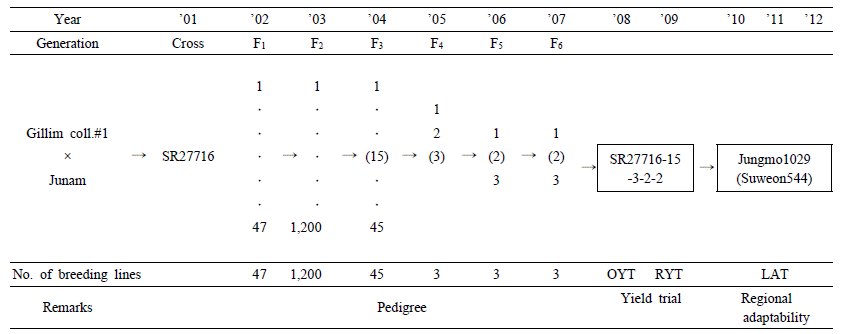
‘중모1029’는 총체건물수량이 높으면서 복합내병성인 총 체사료용 벼를 육성할 목적으로 2001년 하계에 지상부 건물 수량이 높은 ‘길림수집1호’에 중만생 다수성이면서 도열병, 흰잎마름병, 줄무늬잎마름병에 모두 저항성인 ‘주남’벼를 부 본으로 인공교배하여 SR27716의 교배번호를 부여하였다. 2002년 하계에 수원에서 F
1 47개체를 양성한 후, 2003년 하 계에 F
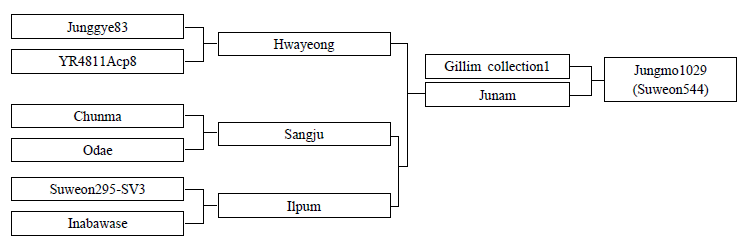
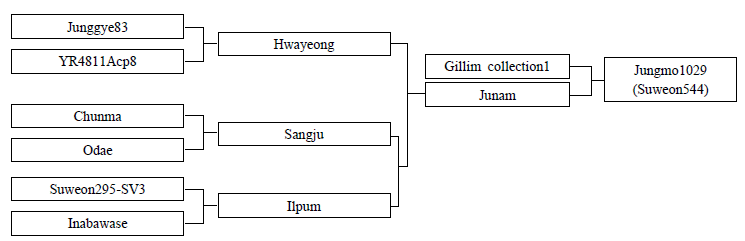
2 1,200개체를 공시하여 지상부의 바이오매스가 크면 서 후기녹체성 및 사료적성이 좋은 45개체를 선발한 후 F3 이 후 세대는 계통육종법에 따라 내병성검정을 병행하면서 우량 계통을 선발 고정시켰다. 선발된 SR27716-15-3-2-2계통에 대하여 2008~2009년 2개년간 생산력검정 시험을 실시하여 총체수량성이 높고 복합내병성인 계통을 선발하여 ‘수원544 호’로 계통명을 부여하였다. 2010~2012년 3개년 간 지역적 응시험 실시결과 총체사료용으로 그 우수성이 인정되어 2012 년 12월 직무육성신품종 선정위원회에서 ‘중모1029’로 명명 되었다(Fig.
1, Fig.
2).
Fig. 1.Pedigree diagram of ‘Jungmo1029’.
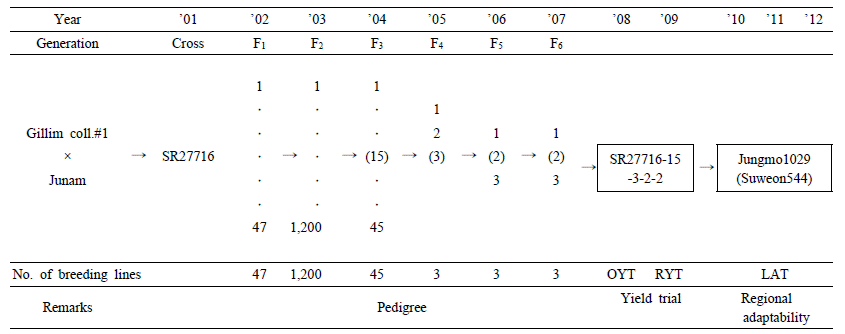
Fig. 2.Genealogical diagram of ‘Jungmo1029’.
생육특성
‘중모1029’의 출수기는 중부평야 및 호남평야지에서 각각 9월 1일과 8월 30일로 ‘녹양’보다 15일정도 늦고 영남평야지 에서는 8월 26일로 ‘녹양’보다 13일 늦은 만생종이었다 (Table
1). 간장은 105 cm로 ‘녹양’보다 22 cm 길고 수장은 26 cm로 ‘녹양’과 거의 비슷했으며 주당수수는 11개로 ‘녹 양’과 같지만 수당립수는 163개로 100개인 ‘녹양’보다 월등 히 많았다. 등숙비율은 65.9%로 다소 낮은 편이나 ‘녹양’과 비슷한 수준이고 현미 천립중은 21.5 g으로 가벼운 편이었다 (Table
2). 이와 같이 만생종이며 입수가 많은 생육특성은 건 물수량을 높이기 위해 생육기간을 최대한 확보하기 위한 선 발 결과이나 우리나라와 같은 온대기후에서는 등숙기 환경에 따라 등숙이 불량한 종자가 발생하는 원인이 되고 이러한 종 자는 차년도 육묘 시에 발아율이 떨어져 안정육묘에 문제를 일으키곤 한다. 이에
Ahn et al. (2014)은 우리나라 벼 재배 지대별 10개소에서 주요생육 및 발아특성을 조사하여 ‘중모 1029’의 최적 종자생산지역을 제시하였는데 영남평야지에 속 하는 대구지역이 가장 적합하다고 하였다. 그러나 대구지역 이외의 재배가능지역에서는 충실한 종자생산에 어려움이 발 생할 수 있다. 그러므로 차후에는 우리나라의 벼 재배지대별 기상조건에서 최대건물수량을 확보하면서 충실한 채종용 종 자를 얻을 수 있는 최적 숙기를 가진 지역 맞춤형 사료용 벼 품종개발이 필요하다고 생각된다.
Table 1.Heading date of whole crop silage rice cultivar, ‘Jungmo1029’.
Table 1.
|
Region |
Heading date |
Transplanting date |
|
|
Jungmo1029 |
Nokyang |
|
|
Suwon |
Sep. 1 |
Aug. 14 |
May 25 |
|
Iksan |
Aug. 30 |
Aug. 14 |
May 30 |
|
Milyang |
Aug. 26 |
Aug. 13 |
May 30 |
|
|
Average |
Aug. 29 |
Aug. 14 |
- |
Table 2.Major agronomic traits and yield components of ‘Jungmo1029’.
Table 2.
|
Variety |
Culm length (cm) |
Panicle length (cm) |
No. of panicles /hill |
No. of grains /panicle |
Ripened grain ratio (%) |
1,000 grain weight of brown rice (g) |
|
|
Jungmo1029 |
105 |
26 |
11 |
163 |
65.9 |
21.5 |
|
Nokyang |
83 |
26 |
11 |
100 |
65.8 |
25.3 |
생리장해 저항성
기상이변에 따른 환경적인 재해가 빈번해짐에 따라서 내재 해성 품종개발 연구가 요구되고 있는 가운데 ‘중모1029’는 못자리일수 50일묘 이앙에서 불시출수가 되지 않았으며 생육 후기 위조에 강할 뿐만 아니라 성숙기 잎의 노화는 느린 편이 었다. 성숙기 잦은 강우에 의해 수확 전 이삭에서 싹이 트는 수발아는 대비품종인 ‘녹양’과 비슷한 수준으로 강한 편이었 다. 국립식량과학원 춘천출장소 내랭성 검정 시험포에서 조사 된 ‘중모1029’의 내랭성 검정 결과 냉수 흘려대기에서 출수 지연은 무처리에 비해 10일 늦은 특성을 보였으며 냉수구 임 실율은 45%로 15%인 ‘녹양’보다는 높았지만 종합내랭성은 6정도로 약한 것으로 판정되었다(Table
3). 도복특성으로 간 장은 ‘녹양’에 비해 긴 편이지만 좌절중은 1,261 g으로 ‘녹양’ 과 비슷했고 도복지수는 ‘녹양’보다 약간 높은 편으로 평가되 었으나 실제 포장도복에는 강했다(Table
4). 이러한 도복특성 은 간이 굵은 ‘길림수집1호’의 형질에서 유래된 것으로 보이 며 지상부의 바이오매스를 증대 시켜야 하는 총체사료용 벼 품종육성 시 유용하게 사용 될 것으로 판단된다.
Table 3.Response to physiological and environmental stress of ‘Jungmo1029’.
Table 3.
|
Variety |
Premature heading (%) |
Appearance of wilting |
Adult leaf sensecence |
Premature germination of paniclez (%) |
Cold tolerancey
|
|
|
Heading delay (days) |
Grain fertility (%) |
PAx
|
|
|
Jungmo1029 |
0 |
Resistant |
Slow |
16.4 |
10 |
45 |
6 |
|
Nokyang |
0 |
Resistant |
Normal |
14.2 |
15 |
16 |
8 |
Table 4.Agronomic traits related to lodging resistance of ‘Jungmo1029’.
Table 4.
|
Variety |
Culm length (cm) |
Third Internode-length (cm) |
Breaking strength (g) |
Lodging Index |
Lodging in the field (0~9) |
|
|
Jungmo1029 |
103 |
17.8 |
1,261 |
237 |
1 |
|
Nokyang |
85 |
16.3 |
1,265 |
193 |
1 |
병해충 저항성
2010년부터 2012년까지 전국 밭못자리 14개 시험지에서 ‘중모1029’의 잎도열병 반응을 검정한 결과 5개지역에서 저 항성 반응을 나타내었고 7개 지역에서 중도저항성을 보였으 며 2개지역에서 약한 반응을 보였다. 목도열병은 이천, 제천, 익산에서 이병수율이 0.0%로 거의 병이 발생하지 않았다(Table
5). 흰잎마름병(
Xanthomonas oryzae pv.
oryzae (Ishiyama) Swings et al.)은 K1, K2, K3 균계에 모두 저항성이나 K3a 균계에서는 약한 반응을 보였다. 바이러스병에는 줄무늬잎마 름병에는 강하였으나 오갈병 및 검은줄오갈병에는 약한 반응 을 보였다. 충에 대해서는 벼멸구(
Nilaparvata lugens Stål) 및 애멸구(
Delphacodes striatella Fallem)에 모두 약한 반응 을 보였다(Table
6). 부본인 ‘주남’벼로부터 도입된 이와 같은 병 저항성은 차후 바이오매스가 크면서 복합내병성 품종을 육성하는데 유용한 중간모본으로 사용될 뿐만 아니라 농촌현 장에서 친환경재배를 가능하게 하여 농업경영비 절감에 도움 이 될 것으로 사료된다.
Table 5.Reaction to rice blast disease.
Table 5.
|
Variety |
Reaction to leaf blast at nursery test (0-9) |
Reaction to neck blast (%) |
|
|
No. of site tested (14) |
Ichon |
Jechon |
Iksan |
|
|
Rz (0-3) |
M (4-6) |
S (7-9) |
|
|
Jungmo1029 |
5 |
7 |
2 |
0.0 |
0.0 |
0.0 |
|
Nokyang |
1 |
12 |
1 |
91.4 |
66.4 |
31.0 |
Table 6.Reaction to bacterial blight, virus disease and insect pests.
Table 6.
|
Variety |
Bacterial blight |
Virus diseases |
Resistance to insects |
|
|
K1 |
K2 |
K3 |
K3a |
Stripe |
Dwarf |
Black-streak dwarf |
BPHy
|
SBPH |
|
|
Jungmo1029 |
Rz
|
R |
R |
S |
R |
S |
S |
S |
S |
|
Nokyang |
R |
R |
R |
S |
S |
S |
S |
S |
S |
총체건물수량성
2010년부터 2012년까지 3개년간 중부평야지인 수원, 호남 평야지인 익산, 영남평야지인 밀양에서 실시한 지역적응시험 결과 총체건물수량성은 평균 1,705 kg/10a로 대비품종인 ‘녹 양’보다 26% 높게 나타났다(Table
7). 이는 ‘중모1029’가 만 생종 품종으로 생육후기 기상이 좋을 경우 바이오매스가 커 지고 등숙비율이 높아져서 전체적으로 ‘녹양’에 비해 총체수 량성을 증가시키는 요인이 된 것으로 판단된다.
Table 7.Dry matter yields of whole crop silage rice cultivar, ‘Jungmo1029’.
Table 7.
|
Region |
Nokyang (kg/10a) |
Jungmo1029 (kg/10a) |
|
|
|
Average (’10~’12) |
’10 |
’11 |
’12 |
Average |
Index |
|
|
Suwon |
1,388 |
1,883 |
1,831 |
1,796 |
1,820 |
131 |
|
Iksan |
1,348 |
1,694 |
1,778 |
1,653 |
1,708 |
127 |
|
Milyang |
1,323 |
1,356 |
1,687 |
1,717 |
1,587 |
120 |
|
|
Average |
1,353 |
1,628 |
1,765 |
1,722 |
1,705 |
126 |
사료가치
출수 후 30일에 지상부 전체 즉 잎, 줄기, 이삭을 건조 후 혼합 분쇄하여 사료가치를 분석한 결과 조단백질은 6.5%로 ‘녹양’보다 낮았고, 조사료의 소화율에 관여하는 산성세제불 용섬유소(ADF)와 섭취량에 관계하는 중성세제불용섬유소 (NDF)는 각각 28.2%, 55.0%를 보여 ‘녹양’과 비슷하였고 가 소화양분총량(TDN)은 66.6%로 66.7%인 ‘녹양’과 비슷하였 다.
Rohweder et al. (1978)에 의해 고안된 상대적사료가치 (RFV, relative feed value)는 NDF와 ADF 값을 이용하여 계산된 값으로 조사료의 사료가치를 판단하는 기준으로 그 값에 따라 5등급으로 구분하였는데 ‘중모1029’의 상대적 사 료가치는 113.1로 3등급(RFV 101~123)의 사료에 해당되었 다. 후기녹체성을 나타내는 출수 후 30일 SPAD(엽록소함량) 값은 22.9로 15.8인 ‘녹양’보다 높았다(Table
8).
Table 8.Nutritive value of ‘Jungmo1029’ for silage use.
Table 8.
|
Variety |
SPADz
|
Chemical properties (%) |
|
|
CPy
|
ADFx
|
NDFw
|
TDNv
|
|
|
Jungmo1029 |
22.9 |
6.5 |
28.2 |
55.0 |
66.6 |
|
Nokyang |
15.8 |
8.4 |
28.1 |
52.3 |
66.7 |
재배상의 유의점
‘중모1029’는 만생종으로 파종이 늦어질 경우 생육기간이 짧아져 후기 등숙이 불량할 수 있으므로 만기재배는 피하는 것이 좋다. 또한 착유우에서는 8~50%의 종실이 미소화된 상 태로 배설되는 것으로 밝혀져 있는데 그 원인은 종실이 난소 화되는 왕겨에 덮혀 있기 때문이며 일반적으로 성숙기가 진 행될수록 소화율이 낮아진다(
RDA 2010c). 그러므로 사료영 양가치 및 알곡의 소화율을 높이기 위하여 호숙기(출수 후 15 일) 에서 황숙기(출수 후 30일) 까지가 수확 적기이며 수확시 기가 늦어지면 총체수량성은 다소 높아지나 사료영양가치 및 소화율은 낮아질 수 있다.
‘중모1029’는 총체수량성이 높으면서 복합내병성인 총체 사료용 벼 품종을 육성할 목적으로 2001년 하계에 ‘길림수집 1호’를 모본으로 ‘주남’벼를 부본으로하여 인공교배하여 계통 육종법으로 통해 개발하였다. 주요 농업적 특성은 중부, 호남 및 영남평야지 보통기 다비재배에서 출수기가 평균 8월 29일 로 ‘녹양’보다 15일 늦은 만생종이고 간장은 105 cm로 긴 편 이며 주당수수는 11개, 수당립수는 163개이고 현미천립중은 21.5 g으로 ‘녹양’보다 가벼운 편이다. 불시출수는 되지 않았 고 성숙기 잎의 노화는 느린 편이며 수발아는 ‘녹양’과 비슷 한 수준으로 강한 편이었다. 종합내랭성은 6으로 ‘녹양’과 비 슷하게 약했고 도복지수는 약간 높았으나 실제 포장도복에는 강했다. 잎도열병, 흰잎마름병, 줄무늬잎마름병에는 강한 편 이나 벼멸구에는 약한 반응을 보였다. 총체수량성은 건물기준 으로 10a당 평균 1,705 ㎏으로 ‘녹양’보다 26% 증수되는 경 향을 보였다. 사료가치는 조단백질이 6.5%, 가소화양분총량 (TDN)이 66.6%로 ‘녹양’과 비슷하게 양호한 편이었다. 이 품종의 재배에 알맞은 지역은 중부 및 남부평야지이고 후기 기상이 좋은 지역이 안전할 것으로 보이며 호숙기에서 황숙 기에 수확하는 것이 사료영양가치가 높고 알곡의 소화율을 높일 수 있다.
사 사
‘중모1029’를 육성함에 있어 적극 협력하여주신 국립식량 과학원 본원, 중부작물부, 남부작물부 벼 육종 연구팀 및 각 도농업기술원 지역적응시험 담당자들과 농촌진흥청 연구정책 국 관계관 여러분께 깊이 감사 드리며 본 연구는 농촌진흥청 기관고유사업(과제번호: PJ008679012015)의 지원으로 수행 된 결과입니다.
References
- 1. Ahn EK, Lee JH, Chang JK, Won YJ, Jeong EG, Suh JP, Shon JY, Baek MK, Nam JK, Lee JY, Park NB, Kim YG, Joung WK, Lee I, Kwon OD, Kim EJ, Lee CY, Shin JH, Kim BK. Study on establishing the most suitable seed-gathering region of the main whole crop silage rice varieties. Korean J. Int. Agric 2014. 26: 447-456.
- 2. Kato H. Development of rice varieties for whole crop silage(WCS) in Japan. JARQ 2008. 42: 231-236.
- 3. Kim YD, Park HK, Ha KY, Cho SY. Forage yield and TDN by cutting time of brittle culm rice. Korean J. Crop Sci 1997. 42: 483-488.
- 4. Lee SB, Yang CI, Lee JH, Kim HY, Shin YS, Lee KS, Choi YH, Jung OY, Jeon YH, Hong HC, Kim YG, Hwang HG, Jung KH, Yang SJ, Jeung JU, Kang KH, Kim JH, Shon JY. A new high biomass yield and whole crop silage rice cultivar 'Nokyang'. Korean J. Breed. Sci 2011. 43: 519-523.
- 5. Lee SB, Yang CI, Lee JH, Kim MK, Shin YS, Lee KS, Choi YH, Jeong OY, Jeon YH, Hong HC, Kim YK, Jung KH, Jeung JU, Kim JH, Shon JY. A late-maturing and whole crop silage rice cultivar 'Mogwoo'. J. Korean Grassl. Sci 2013. 33: 81-86.
- 6. Lee JH, Jeong OY, Pack JS, Hong HC, Yang SJ, Lee YT, Kim JG, Sung KI, Kim BW. Analysis of dry matter yield and feed value for selecting of whole crop rice. J. Anim. Sci & Technol 2005. 47: 355-362.
- 7. National Agriculture and Food Research OrganizationRice varieties for whole crop silage and grain use 2009. NICS. Tsukuba. Japan.
- 8. Rohweder DA, Barnes RF, Jorgensen N. Proposed hay grading standards based on laboratory analyses for evaluating quality. J. Anim. Sci 1978. 47: 747-759.
- 9. Rural Development Administration2010 Project Plan for Collaborative Research Program to Develop new Variety of Summer Crop 2010a. 5-52.
- 10. Rural Development Administration2010 Project Report for Collaborative Research Program to Develop New Variety of Summer Crop 2010b. 5-175.
- 11. Rural Development AdministrationProduction and Utilization Techniques of Whole Crop Forage Rice 2010c. 115-126.
- 12. Rural Development Administration2011 Project Plan for Collaborative Research Program to Develop New Variety of Summer Crop 2011a. 5-85.
- 13. Rural Development Administration2011 Project Report for Collaborative Research Program to Develop New Variety of Summer Crop 2011b. 5-208.
- 14. Rural Development Administration2012 Project Plan for Collaborative Research Program to Develop New Variety of Summer Crop 2012a. 3-50.
- 15. Rural Development Administration2012 Project Report for Collaborative Research Program to Develop New Variety of Summer Crop 2012b. 3-217.
- 16. Sakai M, Iida S, Maeda H, Sunohara Y, Nemoto T, Imbe T. New rice varieties for whole crop silage use in Japan. Breeding Sci 2003. 53: 271-275.
- 17. Sung KI, Hong SM, Kim BW. Plant height, dry matter yield and forage quality at different maturity of whole crop rice. J. Kor. Grassl. Forage Sci 2004. 24: 53-60.
- 18. Van soest PJ, Povertson JB, Lewis BA. Methods for dietary fiber, neutral detergent fiber, and nonstarch polysaccharides in relation to animal nutrition. J. Dairy Sci 1991. 74: 3583-3597.
- 19. Yang CI, Lee SB, Won WJ, Ahn EK, Kim MK, Kim YK, Hyun UJ, Jeong JM, Hwang HG, Shin YS, Hong HC, Lee JH, Lee KS, Choi YH, Choi S, Jeong OY, Kim JH, Chang JK, Park HM, Sung NS. A high biomass yield and whole crop silage rice cultivar 'Mogyang'. Korean J. Breed. Sci 2013. 45: 405-409.
Citations
Citations to this article as recorded by

- Feeding Effects of Whole-Crop Rice Silage-based TMR on Rumen Microbial Diversity of Fattening Hanwoo Heifers
Min Jung Ku, Michelle A. Miguel, Chang Dae Jeong, Seon Ho Kim, A Rang Son, Young Sun Choi, Sang Suk Lee
Journal of Agriculture & Life Science.2026; 60(1): 125. CrossRef - Mid-late Maturing, Multiple-Disease-and-Insect-Resistant, High Yielding Forage Rice Cultivar ‘Gowoo’ with Glabrous Leaf and Hull
Eok-Keun Ahn, Hyang-Mi Park, Kuk-Hyun Jung, Ung-Jo Hyun, Yong-Jae Won, Jeom-Ho Lee, Ha-Cheol Hong, Jae-Ki Chang, Jeong-Heui Lee, Yoon-Sung Lee, Sang-Beom Lee
Korean Journal of Breeding Science.2023; 55(2): 163. CrossRef - ‘Miwoo’, a Mid-Late Maturing, Multiple Disease and Insect Resistant, High Biomass Yielding a Rice Cultivar for Whole Crop Silage Use
Eok-Keun Ahn, Yong-Jae Won, Ha-Cheol Hong, Hyang-Mi Park, Kuk-Hyun Jung, Ung-Jo Hyun, Jae-Ki Chang, Jeong-Heui Lee, Jeom-Ho Lee, Jung-Pil Suh
Korean Journal of Breeding Science.2022; 54(1): 43. CrossRef - ‘Jowoo’, Early Maturing, Multiple Disease and Insect Resistant High Biomass Yielding Rice Cultivar for Winter Forage Crop-Whole Crop Silage Rice Double Cropping
Eok-Keun Ahn, Yong-Jae Won, Jeom-Ho Lee, Eung-Gi Jeong, Hyang-Mi Park, Ha-Cheol Hong, Jae-Ki Chang, Ung-Jo Hyun, Kuk-Hyun Jung, Jeong-Heui Lee
Korean Journal of Breeding Science.2021; 53(2): 154. CrossRef - Golden queen 3: A High-quality Rice Variety with Low Amylose Contents and Aroma
Seong-Gyu Jang, Wondo Lee, Yong-Jin Park, Young-Sang Lee, Joohyun Lee, Jeonghwan Seo, Yoo-Hyun Cho, Soon-Wook Kwon
Korean Journal of Breeding Science.2021; 53(2): 177. CrossRef - Productivity and quality of whole crop rice varieties in relation to plant components
Jong Geun Kim, Byung‐Chul Park, Chang Liu, Guo Qiang Zhao, Hak Jin Kim, Eok Keun Ahn
Grassland Science.2020; 66(1): 40. CrossRef - ‘Cheongwoo’, Late Maturing, Multiple Disease and Insect Resistant, High Biomass Yielding Rice Cultivar for Whole Crop Silage Use
Eok-Keun Ahn, Kyung-Ho Kang, Yong-Jae Won, Kuk-Hyun Jung, Ung-Jo Hyun, Eung-Gi Jeong, Hyang-Mi Park, Jeom-Ho Lee, Jae-Ki Chang, Jeong-Heui Lee, Jong-Min Jeong, Jung-Pil Suh
Korean Journal of Breeding Science.2020; 52(2): 190. CrossRef - Feeding Effects of Whole Crop Rice based TMR on Growth Performance and Carcass Characteristics of Hanwoo Steers
Jong Geun Kim, Guoqiang Zhao, Chang Liu, Wei Sheng Nan, Hak Jin Kim, Kyoung Hoon Kim, Eok Geun Ahn, Hyung-Gyu Min
Journal of The Korean Society of Grassland and Forage Science.2019; 39(2): 97. CrossRef - Mid-late Maturing, Multiple Disease and Insect Resistant, High Biomass Yielding Whole Crop Silage Rice Cultivar 'Yeongwoo'
Eok-Keun Ahn, Sang-Bok Lee, Yong-Jae Won, Jeom-Ho Lee, Jae-Ki Chang, Eung-Gi Jeong, Kuk-Hyun Jung, Jeong-Heui Lee, Young-chan Cho, Jong-Min Jeong, Jung-Pil Suh, Jeong-Ju Kim, O-Young Jeong, Yong-Hee Jeon, Ha-Cheol Hong, Gyu-Sung Lee, Bo-Gyeong Kim
Korean Journal of Breeding Science.2018; 50(3): 331. CrossRef - Late-Maturing, Low Amylose Rice Variety Jinsang 2 with a Medium to Short Culm
Wondo Lee, Yong-Jin Park, Seong‑Gyu Jang, Soon‑Wook Kwon, Young-Sang Lee, Yoo-Hyun Cho
Korean Journal of Breeding Science.2018; 50(3): 344. CrossRef