적요
In chronic renal failure, to reduce the burden on the kidneys, it is necessary to provide patients with therapy based on a low-protein diet. To cope with this situation, low and easy to-digest protein rice variety is helpful. ‘Geongyang2’, low glutelins rice cultivar, was developed by the National Institute of Crop Science (NICS), RDA, Miryang, Korea in 2012. ‘Geongyang2’was derived from a cross between ‘Junambyeo’and‘Chugoku 173’ as a source of low glutelin and amylose. The pedigree of ‘Geongyang2’was YR24174-B-B-B-B-46 and designated as the ‘Milyang262’ in 2009. The local adaptability test of ‘Milyang262’ was carried out at six locations from 2010 to 2012. ‘Geongyang2’ is a mid-maturing ecotype with 65cm in culm length and the number of spikelet/panicle and 1,000 grain weight of brown rice were slightly lower compared to those of ‘Nampyeongbyeo’. ‘Geongyang2’ is resistant to bacterial blight and virus disease while susceptible to major insect and pest. The glutelin and amylose contents of ‘Geongyang2’ were 63.1% and 11.5%, respectively. The milled rice yield of ‘Gyeongyang2’ is 4.61MT/ha at the ordinary transplanting of the local adaptability test. This cultivar would be adaptable to the plain paddy field of middle, honam and yeongnam province of Korea under ordinary cropping system.
서 언
최근 고령화 사회로 접어들면서 국내의 만성 신부전증 진 료환자는 2006년 이후 최근 5년간 연평균 8.2%씩 증가되고 있으며, 특히 65세 이상 고령층 환자가 77.1%를 차지한다 (건강보건심사평가원 보도자료
www.Hira.or.kr,
2011). 만성 신부전증 환자들은 단백질이 거의 없는 식품을 섭취해야 하 며, 필요한 경우 인위적으로 단백질을 정제 또는 제거한 식품 을 섭취해야 한다. 그러나 환자식용 제단백 식품은 가공과정 을 거치면서 가격이 높아지므로, 소비자들의 부담이 커지게 된다.
Youichi et al. (2009)는 저단백질 식품의 단백질 함량 을 일반 식품 대비 50%이하 수준을 권장하고 있으며, 쌀에서 저단백질 식품의 기준을 맞추기 위한 도정율은 일반품종인 Nihonmasari는 60%정도, 저글루테린 품종은 80% 정도가 적 당하다고 하였다. 저글루테린 품종개발은 단백질 섭취가 제한 된 만성 신부전증 환자 등의 식이 요법으로 활용이 기대되고 있으며, 밥을 주식으로 하는 환자들에게는 유용할 것으로 판 단된다.
저글루테린 품종개발은
Iida et al. (1993)에 의해 Nihonmasari 품종에 방사선(gamma rays)을 처리하여 소화성 단백질인 글루테 린함량이 낮고 난소화성 단백질인 프롤라민 함량이 높은 품종 ‘LGC1’(Low glutelin content)을 선발함으로써 시작되었다. 이후 일본에서는 LGC을 이용하여 ‘LGC-soft’가 육성되었으며 (
Mochizuki & Hara 2000), 저글루테린 유전자 2개가 집적된 품종 ‘LGC-Katsu’, ‘LGC-Jun’ 등이 개발되었다(
Nishimura et al. 2005). 국내에서는 ‘LGC1’ 품종을 도입하여 저글루테린 품종인 ‘건양미’를 개발하였다(
Kim et al. 2014). 특히, 저글루 테린 유전자 Lgc1은 소화성 단백질인 글루테린 함량이 낮은 반면, 취반의 식미와 부의 상관이 있는 난소화성 단백질인 프 롤라민 함량이 높은 특성을 가지고 있다(
Tanaka & Okawa 1986). 따라서 저글루테린 품종의 식미관련 단점을 개선하기 위해서는 저글루테린 유전자와 저아밀로스 유전자가 집적된 품종을 개발이 필요하다고 하였다(
Lee et al. 2012). 이에 국립 식량과학원 에서는 영호남 남부 평야지에 적응하는 저글루테 린 저아밀로스 품종인 ‘건양2호’를 육성하여 주요 특성을 보고 하고자 한다.
재료 및 방법
본 연구는 2010년부터 2012년까지 3년간 영남, 호남 및 중 부평야지 6개 지역의 벼 지역적응 시험포장에서 표준품종인 ‘남평벼’를 공시하여 수행하였다(
RDA 2010,
2011,
2012a). 각 시험지별 재배방법은 4월 30일 파종하여 30일간 육묘한 후 5월 30일에 30 × 15 cm의 재식거리로 주당 3본씩 이앙하 고, 시비량은 N-P
2O
5-K
2O = 9-4.5-5.7 kg/10a로 재배하였다. 그 밖의 재배관리와 품종육성을 위한 주요 농업적 특성, 수량 특성, 생리장해 및 병해충 저항성, 도정특성 조사는 농촌진흥청 신품종개발공동연구사업 과제수행계획서 (
RDA 2012b) 조사 기준에 준하여 실시하였다. 단백질 전기영동은 lab on-a-chip 기 반의 Agilent 2100 Bio analyzer system (Agilent, Waldbronn, Germany)와 Protein 80 Lab Chip kit를 이용하였으며, 분석용 샘플 전처리는 Kit (
Bousse et al. 2001)에 제공된 분석방법 에 따랐으며, 크래마토그램의 특성에 따라 글루테린 영역과 플로라민 영역을 구분하여 상대적 비율로 나타내었다.
결과 및 고찰
육성경위
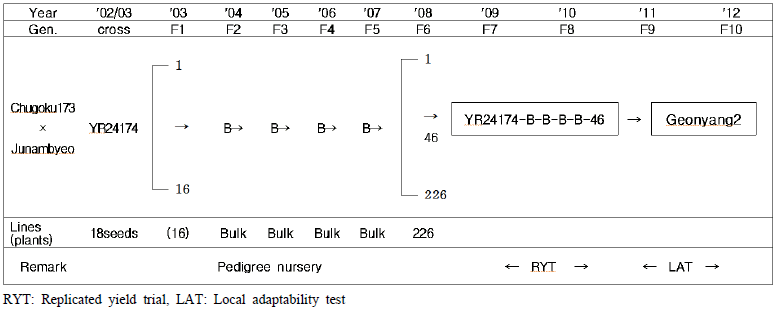
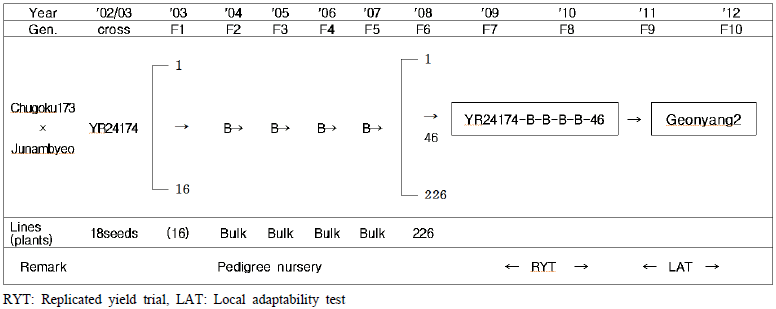
‘건양2호’는 단백질 섭취가 제한된 환자식용 품종을 개발 하고자 저글루테린 계통이면서 아밀로스 함량이 낮은 ‘중국 173호’를 모본으로 사용하였으며, 단간 내도복 직립초형으로 수량성이 높고 복합내병충성인 고품질인 ‘주남벼’를 부본으 로 사용하여 ’02 / ’03년 동계온실에서 인공교배를 수행하였 다. 2003년 하계에 F
1을 식물체를 양성하였으며, 그 이후는 세대촉진과 계통육종법에 따라 주요 병해충 및 특성검정을 실시하면서 YR24174-B-B-B-B-46을 선발하여 ‘밀양262호’ 로 계통명을 부여하였다. 2009 ~ 2010년 2년의 생산력검정시 험과 2010 ~ 2012년 3개년간 지역적응시험을 수행한 결과 우 수성이 인정되어 농작물직무육성 신품종선정위원회에서 신품 종으로 선정되었다. ‘건양2호’는 저글루테린 및 저아밀로스 품질이면서 영호남평야 평야지 1모작지에 적응성이 높은 중 생종 기능성 품종이다(Fig.
1).
Fig. 1.Pedigree diagram of ‘Geonyang2’
주요특성
출수기 및 주요 농업적 특성
‘건양2호’의 출수기는 영호남 및 중부평야지 보통기 보비 재배에서 8월 10일로 ‘남평벼’보다 5일 빠른 중생종이다. 간 장은 65 cm로 ‘남평벼’보다 13cm 작은 편이고, 이삭길이는 21cm로 ‘남평벼’보다 긴 편이나 수당립수는 90개로 ‘남평벼’ 보다 적은 편이다. 등숙율은 82.0%로 ‘남평벼’와 비슷하며, 현미 천립중은 20.2 g으로 ‘남평벼’와 비슷한 편이다(Table
1).
Table 1.Major agronomic traits and yield components of ‘Geonyang2’.
Table 1.
|
Variety |
Heading date |
Culm length (cm) |
Panicle length (cm) |
No. of panicle per hill |
No. of Spikelets per panicles |
Ratio of ripened grain(%) |
Brown rice 1000 grain weight(g) |
|
|
Geonyang2 |
Aug. 10 |
65 |
21 |
15 |
90 |
82.0 |
20.2 |
|
Nampyeongbyeo |
Aug. 15 |
78 |
19 |
13 |
105 |
83.3 |
20.7 |
생리장해저항성
‘건양2호’는 ‘남평벼’와 같이 불시출수 발생은 없었으며, 수발아는 12.0%로 ‘남평벼’보다 약간 높은 편이다. 도복지수 는 ‘남평벼’보다 작고, 담수직파 포장검정에서 도복에 강한 반응을 보였다. 유묘기 내냉성 및 출수지연일수는 ‘남평벼’와 비슷하였고, 임실율은 45.0%로 ‘남평벼’보다 높은 편이었다 (Table
2).
Table 2.Reaction to environmental and physiological stress of ‘Geonyang2’.
Table 2.
|
Variety |
Premature heading ratio (%) |
Viviparous germinationz (%) |
Lodging tolerancey
|
Cold tolerancex
|
|
|
Lodging index |
Transplanting field (1-9) |
Direct seeding field (1-9) |
Seedling stage (0-9) |
Heading delay (days) |
Grain fertility (%) |
|
|
Geonyang2 |
0 |
12.0 |
201 |
1 |
1 |
7 |
13 |
45 |
|
Nampyeongbyeo |
0 |
2.7 |
213 |
1 |
3 |
7 |
11 |
32 |
병충해 저항성
전국 14개소에서 3년간 실시한 잎도열병 밭못자리검정에 서 ‘건양2호’의 평균 저항성정도가 5.7으로 ‘남평벼’보다 약 한 반응을 보였다. 목도열병 현지포장검정에서는 이천과 제천 에서 각각 3.6%와 1.6%의 경미한 발병이 있었으나 대부분의 시험지에서는 저항성반응을 나타내었다(Table
3). 흰잎마름 병 K
1, K
2, 및 K
3 균주에 대해서는 저항성이었으나 K3a균주 에는 이병성 반응을 보였다. 줄무늬잎마름병에는 저항성이나 오갈병과 검은줄오갈병 및 주요 해충인 벼멸구와 애멸구에는 저항성이 없다(Table
4).
Table 3.Reaction to leaf and neck blast disease of ‘Geonyang2’.
Table 3.
|
Variety |
Leaf blast |
Neck blast |
|
|
No. of tested sites |
Rate of disease panicle (%) |
|
|
R (0~3) |
M (4~6) |
S (7~9) |
Mean |
Jecheon |
Icheon |
Iksan |
Miryang |
|
|
Geonyang2 |
1 |
8 |
5 |
5.7 |
1.6 |
3.6 |
0.9 |
0.0 |
|
Nampyeongbyeo |
5 |
9 |
0 |
3.6 |
0.0 |
0.7 |
1.0 |
0.0 |
Table 4.Reaction to major disease and insect pests of ‘Geonyang2’.
Table 4.
|
Variety |
Bacterial blightz
|
Virus diseasey
|
Planthopperx
|
|
|
K1
|
K2
|
K3
|
K3a
|
RSV |
RDV |
RBSDV |
BPH |
SBPH |
|
|
Geonyang2 |
Rw
|
R |
R |
S |
R |
S |
S |
S |
S |
|
Nampyeongbyeo |
S |
S |
S |
S |
R |
M |
S |
S |
S |
품질 및 도정 특성
‘건양2호’의 쌀알은 불투명하며, 아밀로스함량은 11.5%로 메벼와 찹쌀의 중간형태를 가진다. 단백질함량은 6.0%로 ‘남 평벼’보다 낮으며, 소화성 전분인 글루테린 비율이 63.1%로 ‘남평벼’의 73.8%보다 낮았다. 도정특성에서 ‘건양2호’의 현 백율은 81.8%로 ‘남평벼’와 비슷하였으나 완전미율은 89.1% 로 ‘남평벼’보다 낮은 편이다(Table
5).
Table 5.Grain quality, physiochemical and milling properties of ‘Geonyang2’.
Table 5.
|
Variety |
Trans lucency (1-9) |
White core/ belly (0-9) |
Amylose content (%) |
Protein content (%) |
Glutelin content (%) |
Alkali digestion value (1-7) |
Milled/ brown rice ratio (%) |
Head rice recovery (%) |
|
|
Geonyang2 |
5 |
dull |
11.5 |
6.0 |
63.1 |
5.6 |
81.8 |
89.1 |
|
Nampyeongbyeo |
1 |
0/0 |
19.7 |
6.9 |
73.8 |
5.9 |
82.1 |
97.2 |
수량성
‘건양2호’의 수량성은 2010년부터 2012년까지 3개년간 실 시한 지역적응시험 결과 영호남 및 중부 평야지의 보통기 보 비재배 6개소에서 4.61 MT/ha로 ‘남평벼’의 5.05 MT/ha 보 다 9% 감수되었다(Table
6).
Table 6.Yield summary of ‘Geonyang2’ in local adaptability test.
Table 6.
|
Culture season |
Region |
No. of test sites |
Milled rice(MT/ha) |
|
|
Nampyeongbyeo (B) |
Geonyang2 |
|
|
’10 |
’11 |
’12 |
Mean (A) |
Index (A/B) |
|
|
Ordinary planting |
Middle plain |
2 |
(482) z
|
442 |
505 |
396 |
448 |
93 |
|
Yeongnam plain |
1 |
522 |
476 |
462 |
457 |
465 |
90 |
|
Honam plain |
3 |
515 |
459 |
500 |
445 |
468 |
91 |
|
Mean |
6 |
505 |
456 |
496 |
431 |
461 |
91 |
적응지역 및 재배상 유의점
‘건양2호’는 대전이남 남부 평야지 1모작지에 추천되는 중 생종 기능성 품종이다. 질소비료 과다시 단백질 함량이 증가 되어 품질 저하의 우려가 있으므로 적정균형 시비를 하여야 한다. 벼멸구 등 해충과 흰잎마름병 균주 K3a에는 감수성으로 적기에 기본방제를 실시하여야 하고 냉수 용출답이나 극만식 재배는 피하는 것이 좋다.
적 요
저글루테린 및 저아밀로스 품종인 ‘건양2호’는 ‘중국173 호’와 ‘주남벼’를 각각 모본과 부본으로 인공교배 후 집단육 종법을 통하여 육성한 기능성 품종이다. ‘건양2호’의 출수기 는 영호남 및 중부평야지 보통기 보비재배에서 8월 10일로 ‘남평벼’보다 5일 빠른 중생종이다. 간장은 65 cm로 내도복 성이며, 불시출수와 수발아는 안되는 편이고 내냉성은 ‘남평 벼’와 비슷한 편이다. 잎도열병 밭못자리검정에서 중정도 저 항성을 보였으며, 줄무늬잎마름병과 흰잎마름병(K1, K2, K3) 에는 저항성이다. ‘건양2호’의 아밀로스함량은 11.5%로 메벼 와 찹쌀의 중간형태로 불투명한 저아밀로스 품종이며, 단백질 함량은 6.0%로 ‘남평벼’보다 약간 낮으며 소화성 전분인 글 루테린 비율이 63.1%로 ‘남평벼’의 73.8%보다 낮다. ‘건양2 호’의 쌀 수량성은 4.61 MT/ha로 ‘남평벼’보다 9% 감수되었 고, 적응지역은 영호남 및 중부 평야 1모작지이다(품종 등록 번호: 제5105호).
사 사
본 ‘건양2호’ 품종은 농촌진흥청 연구사업 (세부과제명: 건 강증진 기능성 벼 품종개발, 세부과제번호: PJ010268012015) 의 지원에 의해 이루어진 것임. 본 ‘건양2호’를 육성함에 있어 협력하여 주신 국립식량과학원 소속연구소의 벼육종연구진, 농촌진흥청 연구정책국, 기술지원국 및 각도 농업기술원 관계 관께 깊은 감사를 드리는 바이다.
References
- 1. Bousse L, Mouradian S, Minalla A, Yee H, Williams K, Dubrow R. Protein sizing on a microchip Anal. Chem 2001. 73: 1207-1212.
- 2. Iida S, Amano T, Nishio T. A rice (Oryza sativa L.) mutant having a low content of glutelin and a high content of prolamine. Theor. Appl. Genet 1993. 87: 374-378.
- 3. Kim MK, Lee SB, Lee JH, Jeong OY, Jeong JM, Shin YS, Choi YH, Hong HC, Park HM, Jeung JU, Lee JH, Kang KH, Kim YM. Low glutelins rice, mid-late maturing variety ‘Geonyangmi’. Korean J. Breed. Sci 2014. 46: 160-165.
- 4. Lee JY, Lee JH, Cho JH, Kim CS, Sohn YB, Yeo US, Lee CW, Nam MH. Analysis of eating quality in recombinant inbred lines and selection of elite line with low glutelin content in rice. Korean J. Breed. Sci 2012. 44: 136-141.
- 5. Mochizuki T, Hara S. Usefulness of low protein rice in diet therapy in patients with chronic renal failure. Jpn. J. Nephrol 2000. 42: 24-29. (in Japanese with English summary).
- 6. Nishimura M, Kusaba M, Muyahara K, Nishio T, Iida S, Imbe T, Sato H. New rice varieties with low levels of easy to digest protein, LGC-Katu and LGC-Jun. Jpn. J. Breed. Sci 2005. 55: 103-105.
- 7. Rural Development Administration (RDA)2010 Report of new cultivars development and research in summer crop 2010. 3-118.
- 8. Rural Development Administration (RDA)2011 Report of new cultivars development and research in summer crop 2011. 3-126.
- 9. Rural Development Administration (RDA)2012 Report of new cultivars development and research in summer crop 2012a. 13-186.
- 10. Rural Development Administration (RDA)2012 Project Plan for Collaborative Research Program to Develop New Variety of Summer Crop 2012b.
- 11. Tanaka K, Ogawa M. Genetic analysis of rice storage proteins. Proc Inst Rice Genetic Symp. Int. Rice Res. Inst 1986. 887-897.
- 12. Youichi O, Hiroyuki T, Ryouji S. Distribution of seed proteins in rice grain of seed-protein mutant cultivars. Jpn. J. Crop Sci 2009. 78: 58-65.
Citations
Citations to this article as recorded by

- ‘Dapum’, a Late-Maturing Rice Cultivar with Low Amylose Content in the Chungnam Plain Area, Korea
Giwon Cho, Gyucheol Kim, Chongtae Chung, Tugsang Yun, Yoetae Yun
Korean Journal of Breeding Science.2024; 56(4): 513. CrossRef - 'Miho' (Milyang300), a Mid to Late Low-Amylose Variety of Processed Rice
Ji Yoon Lee, Na Geum Lee, You Chun Song, Jong Hee Lee, Su min Jo, Young Ho Kwon, So Myeong Lee, Ju won Kang, Dong Soo Park, Jun Hyeon Cho
Korean Journal of Breeding Science.2021; 53(3): 295. CrossRef