Skip to main navigation Skip to main content

Korean. J. Breed. Sci. : Korean Journal of Breeding Science

OPEN ACCESS
ABOUT
BROWSE ARTICLES
EDITORIAL POLICIES
FOR CONTRIBUTORS

Articles

ARTICLE

고온조건에서 등숙이 양호하고 도열병에 강한 조생 고품질 벼 ‘중모1024’ 육성

Blast Resistant Early Maturing Rice ‘Jungmo1024’ with High Temperature Tolerance during Grain Filling Stage

The Korean Journal of Breeding Science 2016;48(1):72-84.
Published online: February 29, 2016

1 농촌진흥청 국립식량과학원

1 National Institute of Crop Science, RDA, Wanju 54955, Korea

2 농촌진흥청

2 Rural Development Administration, Jeonju 54875, Korea

3 전라북도농촌진흥원

3 Jeolabuk-do Agricultural Research & Extension Services, Iksan 54591, Korea

*Corresponding author (jrnj@korea.kr, +82-63-238- 5236, +82-63-238-5205)
• Received: November 20, 2015   • Revised: December 1, 2015   • Accepted: December 2, 2015

© The Korean Society of Breeding Science. All rights reserved

This is an Open-Access article distributed under the terms of the Creative Commons Attribution Non-Commercial License (http://creativecommons.org/licenses/by-nc/3.0) which permits unrestricted non-commercial use, distribution, and reproduction in any medium, provided the original work is properly cited.

  • 7 Views
  • 0 Download
prev next
  • ‘Jungmo1024’ is a blast resistant early maturing rice cultivar with high temperature tolerance during grain filling stage. ‘Jungmo1024’ was derived from a sodium azide treatment on ‘Suweon472’, a high yielding japonica elite line which was latterly registered as ‘Namil’. Comparison with the agronomical traits of ‘Namil’, ‘Jungmo1024’ was uniquely characterized as the induced gained function due to the reduced culm length, increased tiller number, strong blast resistance and especially high temperature tolerance during grain filling stage. The high temperature tolerance of ‘Jungmo1024’ was supported by two years experiments by comparing the head rice ratio produced in ordinary paddy field and green house condition. The heading date of ‘Jungmo1024’ was July 29 in central plain area, which was 9 days earlier than that of ‘Hwaseong’. The milled rice yield performance of ‘Jungmo1024’ was about 4.98 MT/ha in local adaptability test for three years. ‘Jungmo1024’ had 69 cm in culm length, which was 15 cm shorter than that of ‘Hwaseong’, 20 cm in panicle length, 16 in tiller number, and 22.3g in 1,000 grain-weight of brown rice. ‘Jungmo1024’ exhibited strong rice blast resistance, but do not have any clear resistance gene sources against bacterial blight, viral diseases and insect fests. ‘Jungmo1024’, nevertheless, would be a useful rice cultivar could be used as a donor line for the breeding programs for developing southern plane adaptable early maturing rice cultivars with enhanced rice blast resistance, lodging tolerance, and especially high temperature tolerance during grain filling stage.
21세기에 들면서 세계적으로 작물생산의 경제성에 기후변 화가 큰 영향을 미치는 것으로 인식되고 있다. 기후변화와 관 련된 정부간 협의체인 IPCC(Intergovernmental Panel on Climate Change)는 지구온난화로 과거 100년 동안 (1906 ~ 2005) 세계 평균기온이 0.74°C 상승한 것으로 보고 하였는데, 향후 이러한 기온상승은 온실가스 효과로 인해 더욱 심화될 것으로 예측하였다. 특히 벼를 주곡으로 삼는 동북아시아의 기온상승은 더욱 두드러져서 100년 후 세계 평균기온은 2. 8°C 상승하는 데 반해 한반도는 4.0°C 정도 상승할 것으로 예 측된 바 있다(Lee et al. 2012). 기후변화에 따른 온도 상승은 작물의 생산성을 제한하는 주된 환경스트레스로 인식되어 (Hasanuzzaman et al. 2013), 근래에는 기후변화로 인한 작 물학적 특성의 변화, 이산화탄소의 증가로 인한 작물의 생리 적 변화 및 작물의 생장 한계선의 이동 등에 대한 다양한 기 후변화 대응연구들이 수행되고 있다(Lee et al. 2011).
일반적으로 자포니카(Oryza sativa L. sp. Japonica) 벼가 이삭이 패어(출수) 수정이 완료된 후, 알곡이 익어가는 기간 인 등숙기의 최적온도로 주간 26°C, 야간 16°C가 제시되고 있는데(Lee 2011), 일 평균기온 21 ~ 23°C가 수량성 측면에 서 볼 때 가장 유리한 등숙온도 범위라고 보고된 바 있다 (Yun & Lee 2001). 그러므로 출수기 이후의 고온은 벼의 임 실율 저하(Jagadish et al. 2007, Endo et al. 2009, Ye et al. 2012)와 종실중 감소를 초래하여 심각한 수량감소로 이어지 게 된다(Yamakawa et al. 2007). 특히 등숙기의 고온은 원활 한 전분합성을 교란시켜 쌀 외관품위를 저하시키는 주된 원 인으로 지적되어왔다(Morita 2005, Kobayashi et al. 2007, Hakata 2012, Phan et al. 2013).
일본은 최근 전국에서 생산된 쌀의 1등미 비율이 크게 낮아 져서, ‘고시히카리’로 대변되는 고품질 쌀의 주산지인 니가타 현의 1등미 비율이 2009년 86%에서 2010년 63%로 크게 감 소한 반면, 최근 홋카이도 지역에서는 ‘나나쓰보시’와 ‘유메삐 리카’ 품종들의 1등미 비율이 높아지는 등 고품질 쌀 생산 지 역이 점차 북상하고 있다(Ko et al. 2014). 우리나라는 추석 전 출하되는 햅쌀에 대한 선호도가 높아 남부지방의 농가에서 는 평야지에서 조생종을 일찍 이앙하고 수확하는 조기재배가 확산되고 있는데(Lee et al. 2008), 이삭이 패는 시기는 7월 중순 무렵으로 고온조건에서 이삭의 등숙이 진행되는 조건이 다. 이러한 고온등숙 조건은 호흡촉진효과와 일조의 건물생산 효과의 비를 의미하는 소모도장효과(respiration consumption effect)를 상승시켜(Kim et al. 2007), 낮은 등숙률과 과도한 싸라기발생으로 인한 완전미 비율의 하락을 초래한다고 보고 된 바 있다(Seung et al. 2014).
고온등숙으로 인한 벼의 피해를 경감하기 위한 재배적, 육 종적 방법들이 모색되고 있는데, 일본에서는 미숙립 발생 경 감(Takahashi 2006), 질소 시비량 영향(Wakamatsu et al. 2008), 고온등숙 대응(Morita 2011) 등 다양한 재배적인 방 법들을 검토된 바 있다. 또한 고온등숙 조건에서도 쌀 수량 및 미질 저하가 적은 내성품종으로 ‘니꼬마루’, ‘유메미즈호’, ‘후사오도메’ 등이 육성되어 보급되고 있다(Ko et al. 2014). 우리나라도 남부지방 평야지 벼 조기재배에 적합한 품종을 선별하려는 노력을 통해 ‘산들진미’, ‘조광’ 등의 품종들이 제 시된 바 있으나, 높은 분상질립과 싸라기 및 동할립 발생율 등은 여전히 해결해야 할 문제로 지적되었다(Seong et al. 2014).
국내에서 육성된 7개 벼 품종들을 출수 후 22°C(적온)과 27°C(고온)에서 각각 등숙시키고 현미 천립중과 완전미 감소 율을 평가하여 ‘동안’을 고온등숙에 강한 품종으로, ‘일품’을 약한 품종으로 제시한 결과에 따르면(Kim et al. 2013), 고온 등숙 조건에서 현미 천립중의 감소는 소모도장효과와 관련되 지만 현미 완전미율의 감소는 전분축적 대사작용의 이상에서 야기된다고 하였다. 이러한 결과로 미루어 이삭당 영화수(즉 sink 규모)가 많은 벼 품종 보다 영화수가 적은 품종이 고온 등숙 조건에서 등숙률과 천립중의 저하를 어느 정도 억제할 수 있으나, 현미 완전미율에는 그 효과가 미미하여 영화수 조 절과 같은 형태적 접근은 한계가 있을 것으로 판단하였다. 반 면에 국내육성 170개 자포니카 벼 품종들을 고온구(비닐하우 스)와 적온구(포장)에서 각각 재배하여 조사된 미질평가 성적 간의 편차와 전분합성에 관여하는 것으로 알려진 7개 유전자 들에 대해 규명된 각 품종의 대립인자군(allele type)간의 연 관성분석(association analysis) 결과에 따르면(Mo et al. 2014), 국내육성 자포니카 벼 품종의 유전적 다양성이 매우 협소할 뿐 아니라, 고온등숙 조건에서 유의한 내성을 발현하 는 대립인자는 확인할 수 없으므로 전분대사와 관련된 신규 유전인자의 탐색이 요구된다고 하였다.
농촌진흥청 벼 연구팀은 조생 다수성인 ‘남일’로 품종 등록 되었던 ‘수원472호’에 아지드화나트륨(Sodium azide)을 처리 하고 그 후대 계통들의 작물학적 성능을 기존의 조생 품종들 과 비교함으로써 고온조건에서도 등숙이 양호하고 도열병에 강한 ‘수원535호’를 육성하였다. ‘수원535호’는 3개년 동안 수행된 지역적응시험에서 그 우수성과 차별성이 인정되어 2012년 농촌진흥청의 직무육성 신품종 선정위원회의에서 ‘중 모1024’로 명명되어 2014년 품종으로 등록되었기에(등록번 호 제5103호, 2014. 7.31) 그 육성경위 및 주요특성을 보고하 고자 한다.
자포니카(Oryza sativa L. sp. Japonica) 벼 품종으로 숙기가 빠르고 다수성이며 ‘남일’(Kim et al. 2003)로 품종 등록된 ‘수 원472’를 인산가리 완충용액에 희석한 아지드화나트륨(Sodium azide; NaN3)으로 처리함으로써 돌연변이 후대계통들을 확보하 였다(Shin et al. 2009a, 2009b). 이후 계통육종법에 의거하여 선발과 세대진전을 실시하여 ‘Suweon472(SA)M2-31-1-1-B-3’ 의 계보를 지니는 고정계통을 확보하였다. 해당계통에 대한 생 산력 검정시험을 원품종 ‘남일’을 대비품종으로 2008년 (preliminary yield trial; PYT)과 2009년(replicated yield trial; RYT)에 각각 수행하였다. 4월28일 파종하여 5월28일에 재식 거리 30x15 cm로 주당 3본씩 이앙하였다. 질소, 인산, 가리를 성분량으로 각각 9, 4.5, 5.7 Kg/10a를 시비하되 질소는 기비, 분얼비, 수비를 각각 50%, 20% 및 30%의 비율로 분시하였다. ‘수원535호’의 고온조건에서의 등숙특성을 평가하기 위해 ‘고 운’, ‘진부’, ‘오대’, ‘운광’ 등 조생 품종들을 함께 2개년 동안 (2009~2010) 일반포장과 유리온실에 각각 공시하였다. 공시재 료들은 4월28일 파종하여 질소(18)-인산(7)-가리(9)-고토(2)를 성분(량)으로 하는 완효성비료(단한번, 조비)를 시비한 후, 일반 포장은 5월28일에 재식거리 30x15 cm로, 유리온실은 6월 5일 에 재식거리 25x15 cm로 1본씩 이앙하였다. 이앙 후 온도변화 를 측정하기 위해 일반포장과 유리온실에 각각 전자온도계를 설치하였으며, 유리온실은 고온조건 조장을 위해 창들을 폐쇄 하였다. 각 품종들의 출수기가 확인된 후 40일간의 일 평균온도 를 이용하여 등숙기 평균온도로 산출하였다. 수확된 시료들의 현미완전립 비율을 현미품위판정기(FOSS Cervitec 1625 Grain Inspector, Denmark)의 BRJK647A mode를 이용하여 측정하 였다.
‘중모1024’에 대해 3년간(2010~2012) 보통기 보비재배, 조기재배 및 소득후작재배에 준하여 지역적응시험을 실시하 였다. 보통기 보비재배(수원기준 5월25일 이앙)는 ‘화성’과 ‘오대’를 비교품종으로 중부평야지 5개소, 남부중산간지 3개 소, 중서부해안지와 중북부중산간지 및 동북부해안지 각 1개 소 등 총 11개 시험지에서 실시되었다. 2011년과 2012년 실 시된 조기재배(수원기준 5월 10일 이앙)와 2012년 실시된 소 득후작재배(수원기준 7월 1일 이앙)는 중부평야지, 호남평야 지 그리고 영남평야지 등 총 3개 시험지에서 실시되었는데, 대비품종으로 조기재배는 ‘조평’을 소득후작재배는 ‘금오’를 사용하였다. 재배방법에 따른 시험지별 파종 및 이앙날짜, 재 식밀도와 주당묘수, 시비량 및 질소 분시방법 등과 농업형질, 수량구성요소 및 수량성, 생리장해 및 병해충 저항성, 도정특 성 조사는 농촌진흥청 신품종개발공동연구사업 과제수행계획 서의 조사기준에 준하여 실시하였다(RDA 2010, 2011, 2012a). 단, 도복관련형질은 Kim et al.(2000)의 방법으로 초 장과 중심고, 좌절중을 조사하여 도복지수를 산출하였으며, 도복지수는 농업과학기술 연구조사분석기준(RDA 2012b)의 방법으로 조사하였다. 연계재배법을 이용한 도열병 내구저항성 평가는 Kim et al.(2004)의 방법을 따랐다. ‘중모1024’와 대비 품종간의 조사 평균값에 대한 유의성 검정은 t-test와 Duncan의 다중평균비교 방법을 이용하여 실시하였다.
육성경위
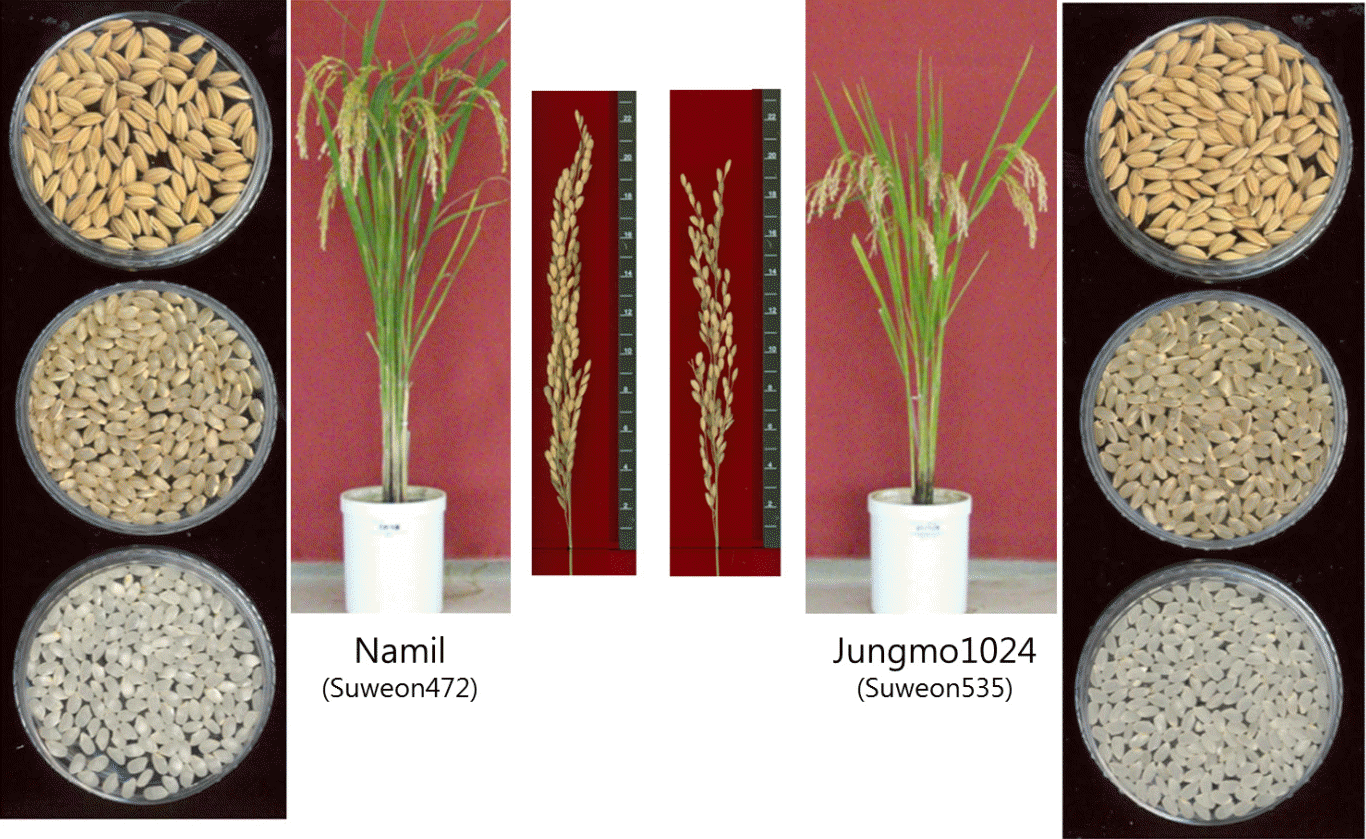
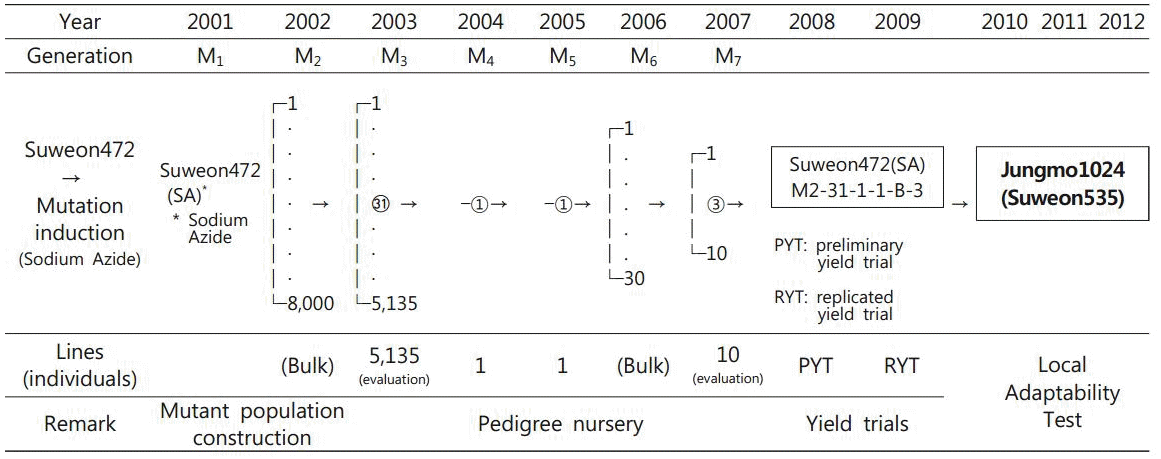
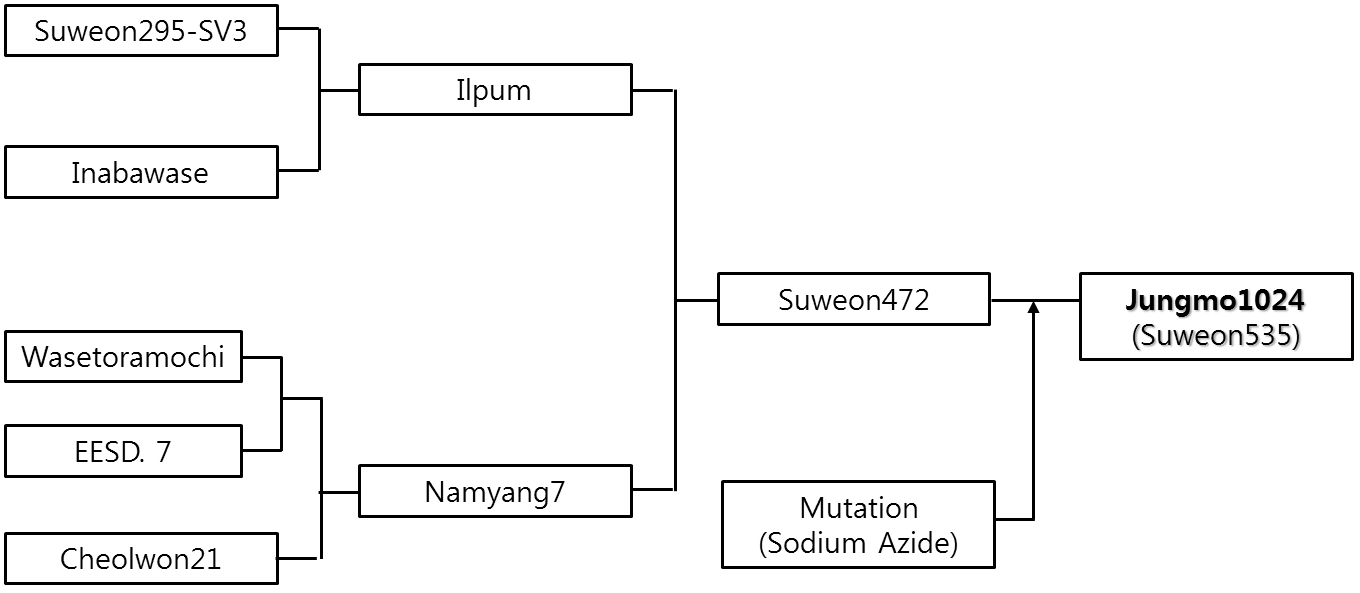
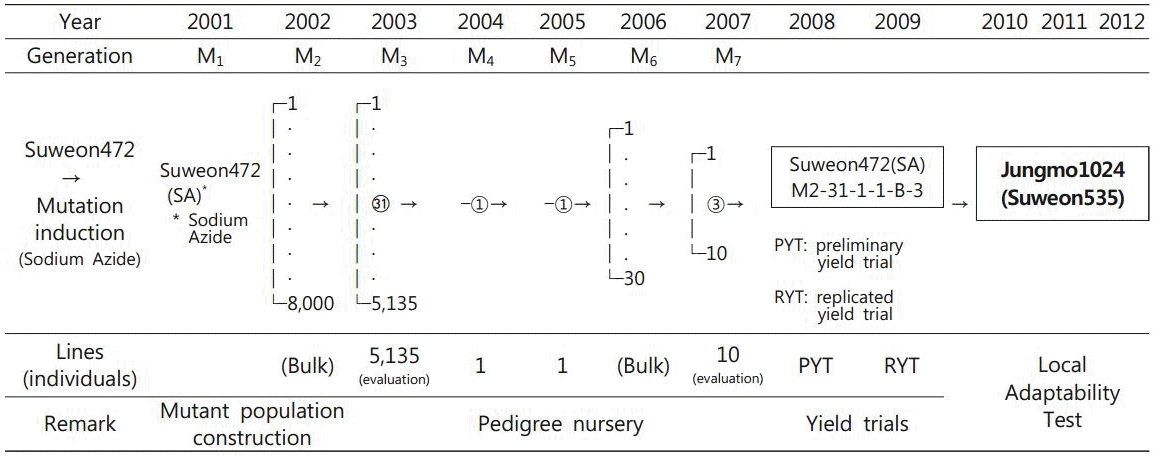
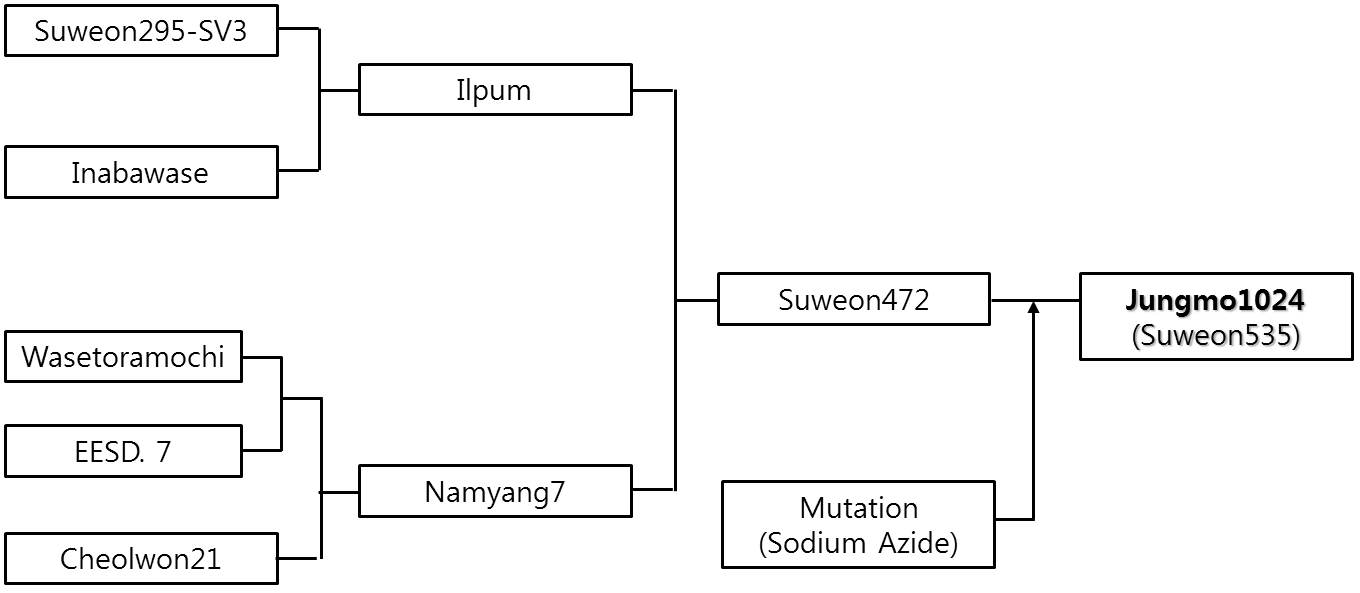
벼 우량계통 ‘수원535호’는 벼 신품종 ‘중모1024’로 명명 되었으며 그 육성과정과 계통도는 Fig. 1과 Fig. 2에 제시되 었고, ‘남일’의 돌연변이 후대계통으로 그 차별성과 우수성은 Table 1과 Fig. 3에 제시된 바와 같다.
Fig. 1.
Pedigree diagram of ‘Jungmo1024’.
KJBS-48-72_F1.gif
Fig. 2.
Genealogical diagram of ‘Jungmo1024’.
KJBS-48-72_F2.gif
Table 1.
Comparison between ‘Jungmo1024’ and the wild type, ‘Namil’ on the major agronomic traits.
Table 1.
Variety Heading date (mm.dd) Culm length (cm) Panicle length (cm) No. of panicles /hill No. of spikelets /panicle Ratio of ripened grain(%) 1,000-grain weight of brown rice(g) Milled Rice yield (kg/10a)

Jungmo1024 (Suweon535) 7.31** 66** 19ns 17** 77** 86.1** 21.3 ** 548**
Namil 8.02 75 22 11 119 76.5 25.7 426

zThe data set are derived from the replicated yield trial conducted in 2009 at NICS, RDA, Suwon.

Not significant (ns) in the t-test, while * and ** Significant at *P < 0.05 and P < 0.01, respectively.

Fig. 3.
Phenotypic comparison between ‘Namil(Suweon472)’, the wild type, and it’s induced mutant, ‘Jungmo1024(Suweon535)’.
KJBS-48-72_F3.gif
돌연변이 처리와 유망 우량계통 선발
자포니카(Oryza sativa L. sp. Japonica) 벼 품종으로 숙기가 빠르고 다수성인 ‘남일(수원472호)’을 인산가리 완충용액에 희 석한 아지드화나트륨(Sodium azide; NaN3)으로 처리하여 돌연 변이 후대계통들을 확보하였다(Shin et al. 2009b). 간략하게는, M1 식물체들로부터 1개씩 수확된 이삭으로 8,000여 M2 계통을 1수-1열법으로 전개하였다. 작물학적으로 불량한 계통들을 제외 한 총 5,135개 계통들 내에서 임성이 높은 1개체씩을 수확하였 다. 이후부터는 매 세대마다 각 계통 당 임성이 높은 1개 식물체 를 무작위로 선발하여 후대계통을 전개하였다. M7 식물체 세대 에서 각 계통들이 유전적으로 고정되었다고 판단하고 총 5,135 개의 계통을 ‘남일’에 아지드화나트륨을 처리해 육성된 돌연변 이 후대집단으로 확정하였다. 세대를 진전시키는 중 M3 종자를 이용한 밭못자리 검정에서 원품종인 ‘남일’에 비해 저항성이 향 상된 ‘Suweon472(SA)M2-31’ 계통을 확인하였다. 해당 계통은 M6 세대에서 계통 내 각 개체들이 균일한 표현형을 보여 유전적 으로 고정되었다고 판단하였으며, M7 세대에서는 각종 병해충 저항성과 특히 현미외관 특성을 면밀히 관찰하여 가장 유망한 1 개 개체를 선발함으로써 ‘Suweon472(SA)M2-31-1-1-B-3’의 계보를 지니는 고정계통을 확보하였다(Fig. 1).
선발된 고정계통 ‘Suweon472(SA)M2-31-1-1-B-3’에 대 해 생산력 검정시험을 수행한 결과, 원품종 ‘남일’에 비해 키 가 작은 조생이며 도열병에 강하고 특히 쌀 외관이 맑은 특성 이 확인되어 우량계통 ‘수원535호’로 명명되었다(Table 1, Fig. 1). 돌연변이 후대계통인 ‘수원535호’의 출수기는 7월31 일로 원품종 ‘남일’에 비해 약 2일정도 빨라졌으며, 간장이 매우 유의하게 단축되었다. 간장단축과 더불어 이삭길이가 짧 아지고 수당립수도 작아졌으나, 주당수수는 대폭 증가한 형태 를 발현하였다. 이러한 형태적 특성으로 ‘남일’에 비해 천립 중이 감소하였음에도 ‘중모1024’의 등숙률과 수량성이 향상 된 것으로 판단되었다(Table 1). 특히 ‘수원535호’는 원품종 ‘남일’에 비해 출수기가 약간 빠름에도 현미외관이 매우 양호 하여(Fig. 1) 간장단축에 따른 형태적 변이와 더불어 고온등 숙 여건에서 내성을 발현하는 유용변이가 내포되어있음을 추 정할 수 있었다.
고온등숙 내성 평가
원품종 ‘남일’보다 양호한 ‘수원535호’의 현미외관이 엄격 한 고온등숙 조건에서도 발현되는지에 대한 평가를 2개년 (2009~2010)에 걸쳐 수행하였다(Table 2). 기존에 보급된 조 생 품종인 ‘고운’, 진부’, ‘오대’ 및 ‘운광’ 등을 대비로 ‘수원 535호’의 고온등숙 내성을 평가하였다. 평가된 품종별로 일 반포장의 출수기와 약 8일 정도 늦게 이앙된 온실의 출수기는 1~2일 정도의 차이는 있었으나 거의 유사하여 온실의 고온조 건이 출수를 촉진하였다고 판단되었다. 각 품종별로 출수기 이후 40일간의 평균온도는 각 시험구(일반포장과 온실)내에 서 품종간 차이는 그리 크지 않았고, 온실이 일반포장에 비해 평균온도가 약 2.5°C 정도 높게 유지되었다.
Table 2.
Comparisons of early-maturing Korean japonica rice cultivars in terms high-temperature tolerance during grain filling stage.z
Table 2.
Cultivars Green House (High-Temp.)y Paddy field (Ordinary temperature)


Head ricex (%) Heading Date (month.day) Mean temp. of ripeningw (°C) Head ricex (%) Heading Date (month.day) Mean temp. of ripeningw (°C)

Jungmo1024 (Suweon535) 39.7a 8.04 28.4 82.4a 8.02 25.9
Goun 30.3b 7.29 28.5 75.2a 7.28 26.2
Jinbu 23.0c 7.30 28.4 76.3a 7.29 26.2
Odae 24.1c 7.29 28.4 64.7b 7.29 26.1
Ungwang 19.0c 8.03 28.4 66.8b 8.02 26.0

zThe experiment was conducted during two years (2009~2010) at National Institute of Crop Science, Suwon (37°16′N, 126°59′E, 37 m altitude), Korea.

yGreen house was closed after transplanting the seedlings to have high-temperature condition.

xFive to seven grams of brown rice per each rice cultivar was used to estimate the head rice percentage by using a near-infrared spectrometric analyzer (FOSS Cervitec 1625 Grain Inspector). Means with the same letter are not significantly different by Duncan’s multiple range test at 5% level.

wAfter checking the heading date for each cultivar, the mean temperature of ripening stage was calculated by averaging the daily mean temperature for 40 days.

일반포장조건에서는 ‘수원535호’의 현미 완전미율(82.4%) 이 가장 높았으나, ‘고운’(75.2%), ‘진부’(76.3%)과는 통계적 으로 유의한 차이로 볼 수 없었고, ‘오대’(64.7%)와 ‘운 광’(66.8%)은 상기 세 품종에 비해 현미 완전미율이 유의하 게 낮았다(Table 2). 온실에서의 현미 완전미율은 약 40~19% 수준으로 일반포장조건에 비해 현저히 낮아졌음에도 ‘수원 535호’(39.7%)가 ‘고운’(30.3%)을 비롯한 다른 조생품종들 에 비해 유의하게 높게 평가되었다(Table 2). 이러한 결과로 돌연변이 계통 ‘수원535호’는 고온등숙 조건에서 전분축적 대사작용의 이상에서 야기되는 것으로 추정된 현미 완전미율 의 감소(Kim et al. 2013)를 상당부분 억제할 수 있는 유용한 신규 유전인자를 지닌 것으로 결론 내릴 수 있었다.
한가지 고려할 점은 7월하순 ~ 8월상순 사이에는 정오 무 렵의 온실내부온도가 35°C 이상으로 유지되는 날이 많아 공 시재료들의 불임률이 약 30 ~ 50% 정도로 높았다는 것이다 (data not shown). 현재 동남아시아 지역에서는 벼의 개화시 점의 고온에 의한 높은 불임률이 문제가 되고 있는데, 벼의 꽃가루가 35°C 이상에 노출될 경우 그 활력이 급속히 저하되 기 때문이다(Ye et al. 2012). 그러나 우리나라의 벼 재배포장 에서는 이러한 극단적인 고온조건이 조장되는 것은 현실적으 로 기대하기 어렵기 때문에 동남아시아지역에서 추진되고 있 는 내열성(heat-tolerance) 유전자원 탐색 및 활용연구(Ye et al. 2012)와는 다른 접근 즉, 고온등숙 조건에서도 쌀 외관품 위가 크게 저하되지 않는 고온등숙 내성(high-temperature tolerance)자원의 확보에 중점을 두어야 할 것이므로, ‘수원 535호’가 유용한 유전자원으로 활용될 가치가 크다고 판단되 었다.
지역적응 시험에서 관찰된 ‘중모1024’의 주요특성
‘수원535호’는 2010년부터 2012년까지 3년간 지역적응시 험을 실시한 결과, 키가 작은 조생이며 도열병에 매우 강하고 도정, 미질특성과 밥맛이 양호하며 특히 쌀 외관이 깨끗한 계 통으로 그 우수성이 인정되어 2010년 12월 농촌진흥청의 농 작물 직무육성 신품종선정위원회에서 국가목록등재 품종으로 선정되어 ‘중모1024’로 명명되었다.
출수기 및 주요 농업적 특성
‘중모1024’의 출수기는 중부평야지 보통기 표준재배에서 평균 7월 29일로 ‘화성’보다 9일 빠른 조생종이다(Table 3). 육성 모지인 수원을 기준하여 조기재배(5월 10일 이앙)에서 평균출수기는 7월 24일로 대비품종 ‘조평’(7월 19일) 보다 5 일 느리며, 소득후작재배(7월 1일 이앙)의 평균출수기는 8월 27일로 대비품종 ‘금오’(8월 27일)와 같은 수준이었다(data not shown). 간장은 69 cm로 ‘화성’보다 15 cm 짧고, 이삭길 이는 20 cm로 ‘화성’과 비슷하였으며, 포기당 이삭 수는 16 개로 ‘화성’보다 약간 많은 편이었다. 이삭당 벼알수는 82 개 로 ‘화성’보다 적었고, 등숙률은 78.5%로 ‘화성’보다 약간 낮 았으며, 현미 천립중은 22.3 g으로 중립종이다(Table 3).
Table 3.
Major agronomic traits and yield components of ‘Jungmo1024’ along with the check variety, ‘Hwaseong’.z
Table 3.
Variety Heading date (mm.dd) Culm length (cm) Panicle length (cm) No. of panicles /hill No. of spikelets /panicle Ratio of ripened grain(%) 1,000-grain weight of brown rice(g)

Jungmo1024 7.29** 69** 20ns 16* 82** 78.5* 22.3 ns
Hwaseong 8.10 84 21 14 93 81.8 22.4

zThe over-all means of three years local adaptability trials (2010~2012) conducted in ‘Suwon’.

Not significant (ns) in the t-test, while * and ** Significant at *P < 0.05 and P < 0.01, respectively.

병해충 저항성
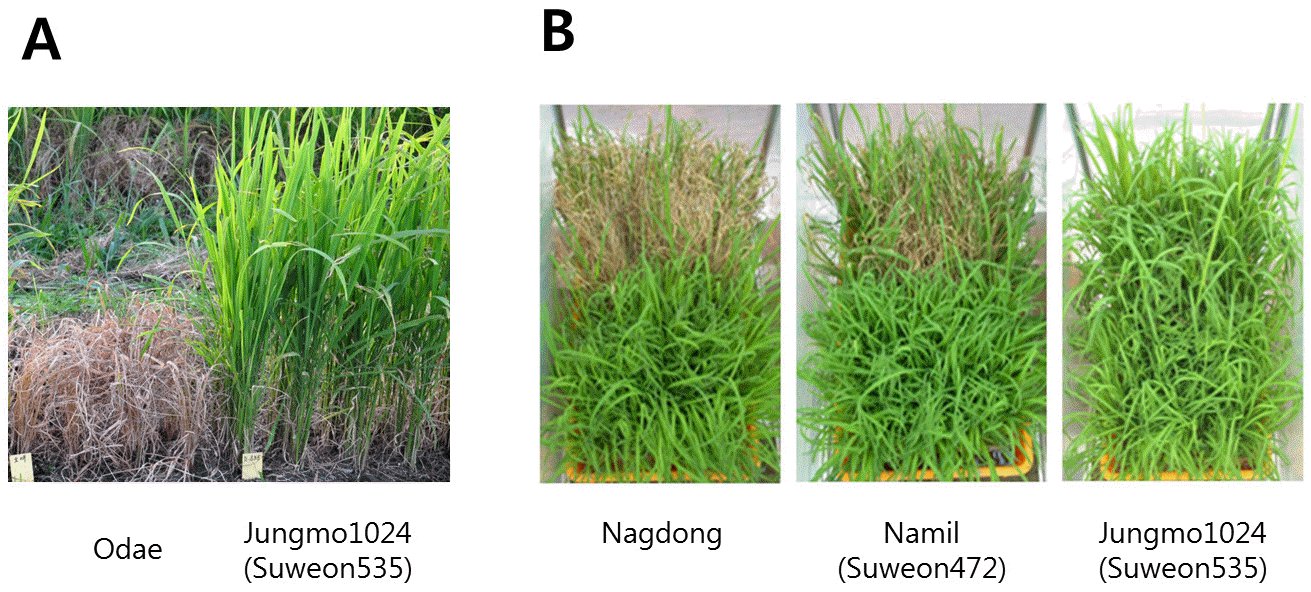
‘중모1024’의 도열병저항성은 도열병 밭못자리 검정결과 전국 14개소 중 12개소에서 저항성, 2개소에서 중 정도의 저 항성반응을 보여 원품종 ‘남일’은 물론 대비품종 ‘화성’에 비 해 도열병 저항성이 매우 유의하게 증가되었음을 확인할 수 있었다(Table 4, Fig. 4A). 국내 육성 벼 품종들에 대해 높은 친화성을 보이는 도열병 30개 균주를 혼합접종하고 7차에 걸 친 연계재배를 통해 내구저항성을 평가하는 검정에서 ‘중모 1024’는 전 기간 동안 1% 미만의 병반면적이 형성되었을 뿐 아니라, 혼합 접종된 30개 대표 균주들 중 단 1개의 균주에서 ‘중모1024’에 대한 친화성이 확인되는 등 병반면적율 변이가 58~32% 범주의 대비품종 ‘화성’에 비해 도열병 내구저항성 이 매우 강하였다(Table 4). ‘중모1024’는 목도열병 포장검정 에서도 높은 수준의 저항성을 발현하였다(Table 4). 이러한 도열병 저항성은 원품종 ‘남일’에서는 확인되지 않았던 형질 로써(Fig. 4B), 앞서 언급되었던 단간, 다얼, 개선된 고온등숙 성과 함께 돌연변이 처리에 의해 유발되고 유전적으로 고정 된 ‘중모1024’의 유용한 고유형질로 판단되었다. 반면에 ‘중 모1024’는 벼 흰잎마름병 모든 레이스(K1, K2, K3, K3a)에 이 병성 일 뿐 아니라, 바이러스병과 멸구류 등에 대해서도 저항 성은 없는 것으로 평가되었는데, 이는 원품종 ‘남일’의 특성 과 일치되는 결과이다(Table 5).
Table 4.
Resistance reactions to blast disease.
Table 4.
Variety Reaction to leaf blast at blast nursery testsz Area ratio of leaf lesion of Magnaporthe grisea during sequential plantings (%)y Reaction to neck blast(%)x


No. of tested sites (14) 1 2 3 4 5 6 7 Resistance (0~7) No. of susceptible isolate (30) Jecheon Iksan

R (0~3) M (4~6) S (7~9) Mean


Jungmo1024 12 2 0 2.4 0.5 0.5 0.5 0.3 0.1 0.1 0.0 0 1 0.2 0.0
Hwaseong 0 12 2 5.8 58 58 48 50 50 38 32 7 18 8.7 11.0

zN fertilizer of blast nursery test = 240 kg/ha

yDurability against co-infection of 30 virulent M. grisea isolates during sequential planting (Kim et al. 2004)

xN fertilizer of neck blast = 220 kg/ha

R: resistance, M: moderately resistance, S: susceptible.
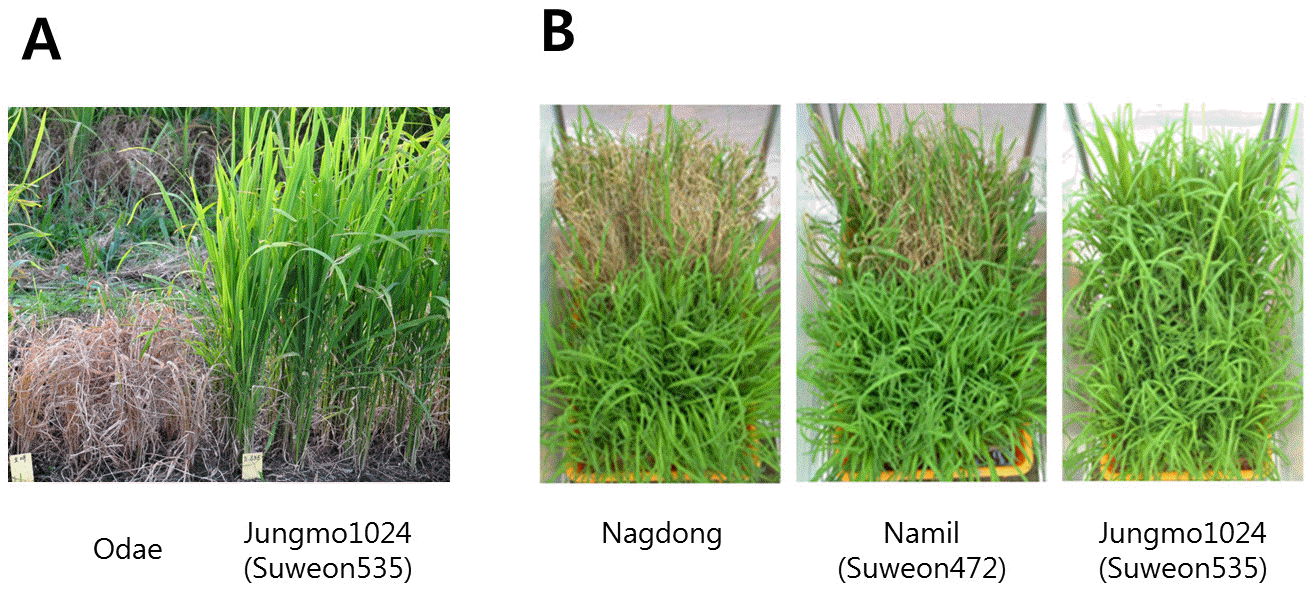
Fig. 4.
Reactions of ‘Jungmo1024’ against rice blast, Magnaporthe grisea. A) Strong resistance of ‘Jungmo1024’ observed during the field blast nursery test conducted at Cheolwon substation, NICS, RDA in 2009. It should be noticed that ‘Odea’ has been placed as the major rice cultivar cultivated in mid-north middle plain region of South Korea including Cheolwon area since 1990s. B) High durability of ‘Jungmo1024’ at the end of 7th sequential planting with co-infection of 30 virulent M. grisea isolates along with ‘Nagdong’, highly susceptible cultivar and ‘Namil’, the wild type of ‘Jungmo1024’ (see also Table 4).
KJBS-48-72_F4.gif
Table 5.
Reaction to bacterial blight, virus disease and insect pests.
Table 5.
Variety Bacterial blight Viral diseases Resistance to insectsz


K1 K2 K3 K3a Stripe (%) Dwarf Black-streak dwarf BPH WBPH SBPH


Jungmo1024 S S S S S(100) S S S S S
Hwaseong S S S S R(14.1) S S S S S

zBPH(brown planthopper), WBPH(white-backed planthopper), SBPH(small brown planthopper).

R: resistance, S: susceptible.

생리장해 저항성 및 도복관련 특성
‘중모1024’는 노화묘 늦심기에서 13.9%의 불시출수가 발 생하였지만, 생육 중후기에 위조현상이 없으며, 성숙기 하엽 노화 정도는 보통이었다(Table 6). 춘천 냉수처리 내랭성 검 정에서 적고와 출수지연일수(11일)은 ‘화성’과 유사하였고, 임실율(39%)로 화성(53%)에 비해 다소 낮았다(Table 6). 반 면에 수발아율은 45.4%로 ‘화성’(17.1%)에 비해 높은 편이 었으나 통계적으로 유의하지는 않았다(Table 6). 과비 조건에 서 이앙재배 검정을 통한 도복관련 특성평가에서 ‘중모1024’ 는 ‘화성’에 비해 단간이며 좌절중(breaking resistance)이 높 고 특히 휨 모멘트(bending moment)가 낮아 내도복성이 우 수한 것으로 평가되었다(Table 7).
Table 6.
Response to physiological and abiotic stresses.
Table 6.
Variety Premature heading (%) Occurrence of wilting Leaf senescence at maturing Cold tolerancez Viviparous germinationx (%)

Leaf discolorationy (1~9) Heading delay (day) Grain Fertility (%) Phenotypic Acceptability (1~)

Jungmo1024 13.9** Tolerance Normal 1 11ns 39ns 6 45.4ns
Hwaseong 0.0 Tolerance Slow 1 11 53 6 17.1

zCold tolerance was evaluated by using cold-water (17°C) irrigation nursery in Chuncheon subsbtaion, NICS.

yEvaluation at maximum tillering stage (1: toterance; 9: susceptible).

xGermination rate under water saturated incubation (17°C) for 7 days on the panicle at 40 days after pollination.

Not significant(ns) in the t-test, while * and ** significant at *P < 0.05 and P < 0.01, respectively.

Table 7.
Culm characters related to lodging.z
Table 7.
Variety Culm length (cm) Length of 3rd internode (cm) Breaking Resistancey (g) Fresh weight of upper portion (g) Bending momentx (g.cm) Lodging Indexw

Jungmo1024 74** 13* 610* 11.3* 1,075** 176**
Hwaseong 85 11 561 14.7 1,597 298

zEvaluated under ordinary transplanting nursery condition, and the evaluation methods was based on Kim et al.(2000).

yBreaking resistance of the middle point of 3rd internode with leaf sheath.

xLength from the lower node of 3rd internode to the top of panicle (fresh weight of upper portion + fresh weight of 3rd internode)

wBending moment / Breaking resistance × 100

*and ** Significant at *P < 0.05 and P < 0.01, respectively in the t-test.

미질 및 도정특성
‘중모1024’의 입형은 현미 장폭비가 1.91로 단원형이고, 백미외관은 맑고 심복백이 거의 없어 외관품위가 ‘화성’보다 우수하였다. ‘중모1024’의 알칼리 붕괴도(6.2)와 단백질함량 (6.2%)은 ‘화성’에 비해 다소 낮았으나 통계적으로 유의하지 않았던 반면, 아밀로스 함량은 18.5%로 ‘화성’(20.6%)에 비 해 낮은 편이었다. 육성 모지인 수원에서 2012년 증식된 쌀을 이용한 밥맛 관능검정에서 총평은 0.06으로 중생종인 ‘화성’ 의 0.08과 비슷하였다(Table 8). 따라서 동일한 지역에서 당 해 년에 생산된 ‘오대’의 밥맛총평(0.02; data not shown)을 고려하면, ‘중모1024’는 조생종으로는 다소 양호한 밥맛을 지 닌 것으로 가름되었다. ‘중모1024’의 도정특성은 제현율이 82.1%, 현백율이 89.5%로 대비품종인 ‘화성’과 비슷한 수준 이었고 도정율은 73.4%로 다소 낮았으나, 쌀의 완전미율이 93.7%로 ‘화성’의 73.8%에 비해 매우 유의하게 높아 완전미 도정율이 ‘화성’의 55.2% 보다 월등히 높은 68.8% 수준으로 평가되었다(Table 9).
Table 8.
Characteristics related to grain shape and quality.
Table 8.
Variety Brown rice Translucency (1~9) White belly/core (0~9) Alkali digestive value (1~7) Protein content (%) Amylose content (%) Palatability of cooked rice (-3~+3)

Length (mm) Width (mm) L/W ratio

Jungmo1024 5.21** 2.73ns 1.91ns 1 0/0 6.2 6.2 18.4* 0.06
Hwaseong 4.98 2.79 1.79 1 2/0 6.5 6.9 20.6 0.08

Not significant (ns) in the t-test, while * and ** Significant at *P < 0.05 and P < 0.01, respectively.

Table 9.
Characteristics related to milling quality.
Table 9.
Va」riety Milling recovery ratio (%) Head rice milling recovery ratio (%)

Brown/rough Milled/brown Milled/rough Head Rice

Jungmo1024 82.1ns 89.5ns 73.4* 93.7** 68.8 **
Hwaseong 83.2 89.9 74.8 73.8 55.2

Not significant (ns) in the t-test, while * and ** Significant at *P < 0.05 and P < 0.01, respectively.

수량성
‘중모1024’의 백미수량은 2010년부터 2012년까지 3년간 실시한 지역적응시험 결과 보통기 보비재배 11개소에서 4.98MT/ha으로 중생종인 ‘화성’ 대비 98% 수준이었으며, 조 생종인 ‘오대’와 거의 비슷한 수량성을 보였다(Table 10). 지 대별로는 중부평야지 5개소(수원, 화성, 여주, 연천, 춘천)에서 4.96 MT/ha, 남부중산간지 3개소(보은, 진안, 안동)에서 5.03 MT/ha, 중서부해안지인 남양에서 4.40 MT/ha, 중북부중산간 지인 철원에서 5.20 MT/ha 그리고 동북부해안지인 강릉에서 4.93 MT/ha의 평균 쌀수량을 보였다(Table 10). 보통기 보비 재배 조건에서 최대 수량지역은 남부중산간지에 속하는 안동 으로 3개년 평균이 5.87 MT/ha로 특히 2011년은 6.54MT/ha 에 달했다(data not shown). ‘중모1024’는 2011년과 2012년 수원, 익산, 밀양 등 3개소에서 실시된 조기재배에서도 대비품 종 ‘조평’의 99% 수준인 499MT/ha의 쌀 수량을 보였는데, 수원에서는 연차간 변이가 크지만 ‘조평’에 비해 평균 약 4% 증수하였다. 2012년 1년동안 수행된 소득후작 재배에서는 대 비품종 ‘금오’에 비해 약 5% 증수되었다(Table 10).
Table 10.
Summary on the yield potential evaluated during 3 years local adaptability trials (2010~2012).
Table 10.
Culture Seasonz (no.) Regiony Trial sites Milled Rice Yield (MT/ha) Index (A/B) × 100

Jungmo1024 (A) Check varietyx (B)


2010 2011 2012 Mean 2010 2011 2012 Mean 2010 2011 2012 Mean

Ordinary Planting Culture (11) MDP Suwon 4.66 4.41 4.81 4.63 4.77 4.59 4.90 4.75 hs 98 96 98 97
Hwaseong 4.22 5.05 5.75 5.01 4.37 4.39 5.32 4.69 hs 97 115 108 107
Yeoju 4.63 5.29 5.52 5.15 5.41 5.02 5.10 5.18 hs 86 105 105 99
Yeoncheon 4.38 4.45 nt 4.42 4.77 4.86 4.79 4.81 hs 92 92 - 92
Chuncheon 5.89 5.29 5.60 5.59 5.06 5.11 5.97 5.38 hs 116 104 94 104

Mean 4.76 4.90 5.42 4.96 4.88 4.79 5.22 4.96 hs 98 104 102 100

MSM Boeun 4.66 4.42 nt 4.54 4.58 5.09 5.31 4.99 hs 102 87 - 91
Jinan 4.88 4.56 4.57 4.67 5.15 5.15 4.93 5.08 hs 95 89 93 92
Andong 5.62 6.54 5.46 5.87 5.89 5.90 5.92 5.90 hs 95 111 92 99

Mean 5.05 5.17 5.02 5.03 5.21 5.38 5.39 5.32 hs 97 96 93 94

MWC Namyang 4.55 3.40 5.25 4.40 5.18 3.93 5.71 4.94 hs 88 87 92 89
MMP Cheolwon 5.19 5.55 4.87 5.20 4.69 5.03 5.23 4.98 od 111 110 93 104
NEC Ganreung 5.51 5.35 5.15 5.34 4.67 5.31 4.80 4.93 od 118 101 107 108

Grand Mean 5.04 4.94 5.33 5.10 hs 98 100 98 98

4.93 4.94 5.22 4.98 4.68 5.17 5.02 4.96 od 105 96 104 101

Early Planting Culture (3) MDP Suwon nt 5.77 4.80 5.29 nt 5.01 5.12 5.07 jp - 115 94 104
HNP Iksan nt 4.62 4.76 4.69 nt 4.91 4.95 4.93 jp - 94 96 95
YNP Milyang nt 4.87 5.11 4.99 nt 4.91 5.27 5.09 jp - 99 97 98

Grand Mean - 5.09 4.89 4.99 - 4.94 5.11 5.03 jp - 103 96 99

Late Planting Culture (3) MDP Suwon nt nt 4.68 4.68 nt nt 4.95 4.95 go - - 95 95
HNP Iksan nt nt 3.89 3.89 nt nt 3.31 3.31 go - - 118 118
YNP Milyang nt nt 4.70 4.70 nt nt 4.41 4.41 go - - 107 107

Grand Mean - - 4.42 4.42 - - 4.22 4.22 go - - 105 105

zLocal adaptability trials for early and late planting cultures were conducted 2(2011, 2012) years and 1(2012) year, respectively. The total numbers of trial sites for each culture season are indicated in parenthesis.

yRegions are middle plane (MDP), mid-south mountain (MSM), mid-west coastal (MWC), mid-north middle plain (MMP), north-east coastal (NEC), honam plane (HNP), and Yeongnam plane (YNP).

xCheck varieties for each trial site are indicated as superscripted abbreviation with the mean milled rice yield; ‘Hwaseong’ (hs), ‘Odae’ (od), ‘Jopyeong’ (jp), and ‘Geumo’ (go).
돌연변이 육종을 통한 유용 유전인자의 확보
우리나라에서 육성된 벼 품종들은 그 유전적 다양성이 매우 협소한 것으로 알려져 있어 농업적으로 유용한 신규 유전자를 확보하는 것이 매우 제한적이다(Jeung et al. 2005, 2007). 이 를 극복하기 위하여 국내의 자포니카계 품종으로 야생종의 다 양한 병해충 저항성 유전자를 이전코자 하는 연구가 많이 수 행되었으나(Jena et al. 2006, Jeung et al. 2007, 2011, 2014, Rahman et al. 2007, 2009), 원연교잡 후대에서 흔히 관찰되 는 낮은 임성과 예상하지 못했던 열악형질의 동반이입 (linkage drag) 등으로 인하여 ‘안미’(Shu et al. 2014)와 같이 실용성 있는 벼 품종으로 등록된 예는 매우 제한적이다.
협소한 유전적 다양성을 확충하기 위한 또 다른 수단으로 화학약품이나 방사선 처리를 통한 돌연변이 육종법이 활용되 고 있다. 돌연변이 육종법은 규모 있는 변이집단을 양성한 후, 목표형질을 적절히 발현하는 후대계통을 확보하는데 많은 노 력과 시간을 요구되는 단점이 있으나, 일단 확보된 유용한 돌 연변이 후대계통은 그 유전적 배경이 원품종과 매우 유사하 여(Shin & Jeung 2011) 바로 실용화가 가능하거나 원품종 혹은 기타 우량품종과의 (여)교잡을 통하여 기존 품종들의 단 점을 신속히 보완해 줄 수 있는 중간모본으로 활용할 수 있는 장점이 있다. 국내에서는 농촌진흥청이 ‘일품벼’ 수정란에 N-methyl-N-nitrosourea(MNU) 처리하여 뽀얀멥쌀(opaque) 인 ‘설갱’, 중간찰인 ‘백진주’, 아밀로스 함량이 높은 ‘고아미2 호’, 거대배아인 ‘큰눈’ 등을 육성하였고, 한국원자력연구원은 방사선을 활용하여 ‘녹원찰벼’를 비롯한 10여 품종을 개발한 바 있다(Mo et al. 2013a). 근래에는 ‘남일’ 종자에 돌연변이원 으로 아지드화나트륨(sodium azide)과 ethyl methanesulfonate (EMS)를 처리하여 대규모의 돌연변이 후대집단을 양성한 후 (Cho et al. 2014a, Shin et al. 2009a, 2009b), 이들로부터 유 용한 배유변이와 병해충 저항성 계통들이 확보되고 그 목표형 질을 지배하는 유전자위가 규명된 바 있다(Cho et al. 2014a, 2014b, Mo et al. 2013a, 2013b).
‘중모1024’는 ‘남일’에 대해 아지드화나트륨을 처리하여 확보된 계통으로 단간, 도열병 저항성 및 고온등숙 내성 등의 유용한 작물학적 특성이 돌연변이 처리를 통해 획득되었다고 판단되는 신품종이다. 특히 ‘중모1024’는 대비품종으로 국내 에서 육성된 14개 조생 품종들로 확대한 온실평가에서도 유 의한 고온등숙 내성이 재 확인된 바 있다(Cho et al. 2015). 반면에 3개년의 지역적응시험결과 ‘중모1024’는 출수기가 ‘오대’와 ‘조평’ 등 기존 품종에 비해 빠르지 않아 새로운 조 생품종으로 차별성이 약하며, 특히 줄무늬잎마름병, 흰잎마름 병, 멸구류 등에 저항성 유전자를 지니고 있지 않기 때문에 남부지방의 평야지 조기재배에도 추천하기에 무리가 따를 것 으로 판단되었다. 그러나 쓰러짐과 도열병에 강하고 쌀 수량 성이 안정적일 뿐 아니라, 특히 고온등숙 조건에서 등숙된 쌀 의 외관이 맑고 깨끗하기 때문에 향후 미질이 우수하고 도열 병저항성이 강화된 평야지 적응 벼 조생품종을 개발하기 위 한 중간모본으로 유용하게 활용될 수 있을 것이다.
적응지역과 재배상의 유의점
3개년간 수행된 지역적응시험을 통해 평가된 쌀 수량성과 주요 병해충 저항성에 근거하여 중북부중산간지, 남부중산간 지 및 동북부해안지 등이 ‘중모1024’를 재배하는데 적합한 지역이라고 판단되었다. ‘중모1024’는 질소질 비료 과용 시 등숙과 미질의 저하, 병해충 발생이 우려되므로 적정 균형시 비가 필요하다. 도열병에는 강하나 흰잎마름병, 줄무늬잎마름 병 및 멸구류에는 저항성이 없으므로 적기에 기본방제를 실 시하여야 한다. 모내기가 지연될 때 불시출수 및 수확기 장마 에 수발아 등이 우려되므로 적기에 모내기와 수확을 실시하 여야 하며, 냉수용출답이나 만식재배는 피해야 한다.
적 요
‘중모1024’는 농촌진흥청 국립식량과학원이 돌연변이 육 종법을 이용하여 육성한 도열병에 강한 조생 고품질 품종으 로 쌀 외관이 양호한 품종이다. ‘중모1024’는 ‘남일’에 아지 드화나트륨을 처리하여 확보한 돌연변이 후대계통으로 원품 종에 비해 단간, 다얼, 강한 도열병 저항성, 특히 고온등숙 내 성 등으로 차별화 된다. 일반포장과 온실을 이용한 고온등숙 내성평가에서 ‘중모1024’는 기존의 조생 품종들에 비해 현미 완전미율이 유의하게 높아 돌연변이에 의해 고온등숙 내성인 자가 유발되었음을 확인할 수 있었다. 지역적응시험을 3개년 (2010~2012)간 수행한 결과, ‘중모1024’는 중부 평야지에서 보통기 보비재배 시 출수기는 7월 29일로 ‘화성’보다 9일 빠 른 조생종이었다. 쌀수량은 보통기 표준재배에서 4.98 MT/ha 로 ‘화성’ 대비 98% 수준이었으며, ‘오대’보다 1% 증수되었 다. ‘중모1024’의 간장은 ‘화성’보다 15 cm 작은 69 cm였다. ‘중모1024’의 이삭길이는 20 cm, 포기당 이삭수는 16개로 ‘화성’과 유사하거나 약간 많고 현미 천립중은 22.3 g이었다. ‘중모1024’는 현미 장폭비가 1.91인 단원형이었으며 백미는 심복백 발현이 거의 없어 맑고 투명하였다. ‘중모1024’의 알 카리 붕괴도(6.2), 단백질 함량(6.2%) 및 아밀로스 함량 (18.5%)은 ‘화성’보다 조금 낮았다. ‘중모1024’의 재배시험 과정 중 위조현상은 관찰되지 않았으며 성숙기 하위엽 노화 는 늦은 편이었다. ‘중모1024’는 ‘화성’에 비해 수발아에 약 간 민감하였고 내랭성 평가 중 적고는 나타나지 않았으나 임 실율은 다소 낮았다. ‘중모1024’는 도열병에 강한 저항성을 발현하였으나, 벼흰잎마름병, 줄무늬잎마름병 및 멸구류에는 감수성이었다. 그러나 ‘중모1024’는 쓰러짐과 도열병에 강하 고 쌀 수량성이 안정적일 뿐 아니라, 특히 고온등숙 조건에서 등숙된 쌀의 외관이 맑고 깨끗하기 때문에 향후 미질이 우수 하고 도열병저항성이 강화된 평야지 적응 벼 조생품종을 개 발하기 위한 중간모본으로 활용될 수 있을 것으로 판단된다 (품종보호권 등록번호: 제5103호; 2014. 7. 31).
본 논문은 농촌진흥청 작물시험연구사업(PJ0092622015) 의 지원으로 수행된 결과의 일부입니다. 품종을 육성함에 있 어 협력하여 주신 농촌진흥청 국립식량과학원, 연구정책국, 농촌지원국 및 각도 농업기술원 관계관께 깊은 감사를 드립 니다.
  • 1. Cho SW, Jeung JU, Kang KH, Kim HS, Kim BK. Evaluation on early-maturing Korean japonica cultivars for high-tempeature tolerance during grain filling stage. Korean J. Crop Sci 2015. 60: 146-152.
  • 2. Cho SW, Jeung JU, Shin YS, Kang KH, Lee SB, Kim BK. Genetic analysis on the rice blast and brown planthopper resistance of Namil(EMS)-bl10,bph1, a japonica rice mutant line. Korean J. Breed. Sci 2014a. 46: 226-237.
  • 3. Cho SW, Jeung JU, Shin YS, Kang KH, Lee SB, Kim BK. Genetic analysis on short culm and the rice blast resistance of Namil(SA)-bl5, a japonica mutant line. Korean J. Breed. Sci 2014b. 46: 228-249.
  • 4. Endo M, Tsuchiya T, Hamada K, Kawamura S, Yano K, Ohshima M, Higashitani A, Watanabe M, Kawagishi-Kobayashi M. High temperatures cause male sterility in rice plants with transcriptional alterations during pollen development. Plant Cell Physiol 2009. 50: 1911-1922.
  • 5. Hakata M, Kuroda M, Miyashita T, Yamaguchi T, Kojima M, Sakakibara H, Mitsui T, Yanakawa H. Suppression of α-amylase genes improves quality of rice grain ripened under high temperature. Plant Biotechnol. J 2012. 10: 1110-1117.
  • 6. Hasanuzzaman M, Nahar K, Alam MM, Roychowdhury R, Fujita M. Physiological, biochemical, and molecular mechanisms of heat stress tolerance in plants. Int. J. Mol. Sci 2013. 14: 9643-9684.
  • 7. Jagadish SVK, Craufurd PQ, Wheeler TR. High temperature stress and spikelet fertility in rice (Oryza sativa L.). J. Exp. Bot 2007. 58: 1627-1635.
  • 8. Jena KK, Jeung JU, Lee JH, Choi HC, Brar DS. High-resolution mapping of a new brown planthopper (BPH) resistance gene, Bph18(t), and marker-assisted selection for BPH resistance in rice (Oryza sativa L). Theor. Appl. Genet 2006. 112: 288-297.
  • 9. Jeung JU, Choi BJ, Kang KH, Mo YJ, Lee SB, Oh SK, Kim BK. Genetic analysis on the blast resistance gene of ‘Suweon506’ derived from a wild relative, Oryze minuta. Korean J. Breed. Sci 2014. 46: 17-27.
  • 10. Jeung JU, Hwang HG, Moon HP, Jena KK. Fingerprinting template japonica and tropical indica rice genotypes by comparative analysis of DNA markers. Euphytica 2005. 146: 239-251.
  • 11. Jeung JU, Kim BR, Cho YC, Han SS, Moo HP, Lee YT Jena KK. A novel gene, Pi40(t), linked to the DNA markers derived from NBS-LRR motifs confers broad spectrum of blast resistance in rice. Theor. Appl. Genet 2007. 115: 1163-1177.
  • 12. Jeung JU, Roh TH, Kang KH, Jeong JM, Kim KM, Kim YG. Genetic analysis on the bacterial blight resistance of Suweon497, a rice breeding line developed through wide Hybridization. Korean J. Breed. Sci 2011. 43: 81-91.
  • 13. Kim BR, Roh JH, Choi SH, Ahn SW, Han SS. Durability of rice cultivars to blast in Korea by sequential planting method. Korean J. Breed. Sci 2004. 36: 350-356.
  • 14. Kim CS, Lee JS, Ko JY, Yun ES, Yeo US, Lee JH, Kwak DY, Shin MSm, Oh. BG. Evaluation of optimum rice heading period under recent climate change in Yeongnam area. Korean J. Agri. & Forest Meteorology 2007. 9: 17-28.
  • 15. Kim HY, Kang KH, Hwang HG, Moon HP, Choi IS. A semi-early maturing, high yielding and processing japonica rice cultivar “Namilbyeo”. Treat. Of Crop Res 2003. 4: 141-148.
  • 16. Kim JD, Chang JK, Sohn JK, Choi J. Inheritance of lodging tolerance in rice. Korean J. Breed. Sci 2000. 32: 194-198.
  • 17. Kim JH, Shon JY, Yoon YH, Choi KJ, Lee CK. Study on improving high-temperature tolerance for grain filling through adjusting sink size, Korean. J. Crop Sci 2013. 8: 107-112.
  • 18. Ko JK, Park HK, Kang SG, Kato H, Ishii T, Nemoto H, Sakai M, Satou K, Ando I, Kim BK. Comparison of rice grain yield and quality of different maturity groups by cultivating in Korea and Japan. Korean J. Int. Agric 2014. 26: 353-359.
  • 19. Kobayashi A, Genliang B, Shenghai Y, Tomira K. Detection of Quantitative Trait Loci for white-back and basal-white kernels under high temperature stress in japonica rice varieties. Breed. Sci 2007. 57: 107-116.
  • 20. Lee CH, Kim JH, Shon JH, Yang WH, Yoon YH, Choi KJ, Kim KS. Impact of climate change on rice production and adaptation method in Korea as evaluated by simulation study. Korean J. Agri. & Forest Meteorology 2012. 14: 207-221.
  • 21. Lee CK, Kwak KS, Kim JH, Son JY, Yang WH. Impact of climate change and follow-up cropping seasonshift on growing period and temperature in different rice maturity types. Korean J. Crop Sci 2011. 56: 233-243.
  • 22. Lee JH, Park DS, Kwak DY, Yeo US, Song YC, Kim CS, Jeon MG, Oh BG, Shin MS, Kim JK. Yield and grain quality of early maturing rice cultivars as affected by early transplanting in Yeongnam plain area. Korean J. Crop Sci 2008. 53: 326-332.
  • 23. Mo YJ, Jeung JU, Kang KH, Lee JS, Kim BK. Genetic analysis on floury endosperm mutant characteristics of ‘Namil(SA)-flo1’, a japonica rice mutant line. Korean J. Crop Sci 2013a. 58: 283-291.
  • 24. Mo YJ, Jeung JU, Shin WC, Kim KI, Ye C, Redona ED, Kim BK. Effects of allelic variations in starch synthesis-related genes on grain quality traits of Korean nonglutinous rice varieties under different temperature conditions. Breeding Science 2014. 64: 1-12.
  • 25. Mo YJ, Jeung JU, Shin YS, Park CS, Kang KH, Kim BK. Agronomic and genetic analysis of Suwon542, a rice floury mutant line suitable for dry milling. Rice 2013b. 6: 37.
  • 26. Morita S. The occurrences of immature grain with white portions and deep ditch, and grain weight decrease in rice under high temperature during ripening. J. of Agri. Sci 2005. 60: 442-446.
  • 27. Morita S. The countermeasure and damage under the high temperature during ripening of rice. Noubunkyo 2011. 143.
  • 28. Phan TTT, Ishibashi Y, Miyazaki M, Tran HT, Okamura K, Tanaka S, Nakamura J, Yuasa T, Iwaya-Inoue M. High temperature-induced repression of the rice sucrose transporter (OsSUT1) and starch synthesis-related genes in sink and source organs at milky ripening stage causes chalky grains. J. of Agron. and Crop Sci 2013. 199: 178-188.
  • 29. Rahman ML, Chu SH, Choi MS, Qiao YL, Jiang W, Piao R, Khanam S, Cho YI, Jeung JU, Jena KK, Koh HJ. Identification of QTLs for some agronomic traits in rice using an introgression line from Oryza minuta. Mol. Cells 2007. 24: 16-26.
  • 30. Rahman ML, Jiang W, Chu SH, Qiao Y, Ham TH, Woo MO, Lee JH, Khanam MS, Chin JH, Jeung JU, Brar DS, Jena KK, Ko HJ. High-resolution mapping of two rice brown planthopper resistant genes, Bph20(t) and Bph21(t), originating from Oryza minuta. Theor. Appl. Genet 2009. 119: 1237-1246.
  • 31. RDA2010 Project plan for collaborative research program to develop new variety summer crop 2010. 5-52.
  • 32. RDA2011 Project plan for collaborative research program to develop new variety summer crop 2011. 5-44.
  • 33. RDA2012 Project plan for collaborative research program to develop new variety summer crop 2012a. 3-49.
  • 34. RDAAgricultural science and technological research standard evaluation handbook 2012b. 321.
  • 35. Seong DG, Kim YG, Cho YC, Shin HY, Kim MC, Shim SI, Chung JI, Kim SH, Kim CS, Chung JS. J. Agri. & Life Sci 2014. 48: 1-9.
  • 36. Shin YS, Jeon YH, Kang KY, Seo YW, Jeung JU. Variation of agronomic traits of rice mutant lines induced by sodium azide. Korean J. Breed. Sci 2009b. 41: 92-100.
  • 37. Shin YS, Jeung JU. Genetic diversity of the rice mutant lines induced by sodium azide. Korean J. Breed. Sci 2011. 43: 23-31.
  • 38. Shin YS, Park CS, Seo YW, Jeung JU. Characterization of endosperm starch of the rice mutant lines induced by sodium azide. Korean J. Breed. Sci 2009a. 41: 84-91.
  • 39. Suh JP, Jeung JU, Kim YG, Jena KK, Cho YC, Lee JH, Kim MK, Hong HC, Lee JH, Kim JJ, Choi IS, Jeong EG, Hwang HG, Oh SK, Yang CI, Shin MS. A brown planthopper resistant and high gain quality rice variety ‘Anmi’ developed by molecular breeding method. Korean J. Breed. Sci 2014. 46: 152-159.
  • 40. Takahashi W. The cultivation management of immature grain with white portions under high-temperature condition of Koshihikari. Agri. Horti 2006. 81: 1012-1018.
  • 41. Wakamatsu K, Sasaki O, Uezono I, Tanaka A. Effect of the amount of nitrogen application on occurrence of white-back kernels during ripening of rice under high-temperature conditions. Jpn. J. Crop Sci 2008. 77: 424-433.
  • 42. Xiong LZ, Liu KD, Dai XK, Xu CG, Zhang Q. Identification of genetic factors controlling domesticationrelated traits of rice using an F2 population of a cross between Oryza sativa and O. rufipogon. Theor. Appl. Genet 1999. 98: 243-251.
  • 43. Yamakawa H, Hirose T, Kuroda M, Yamaguchi T. Comprehensive expression profiling of rice grain filling-related genes under high temperature using DNA microarray. Plant Physiol 2007. 144: 258-277.
  • 44. Yun SH, Lee JT. Climate change impacts on optimum ripening periods of rice and its countermeasure in rice cultivation. Korean J. of Agricultural and Forest Meteorology 2001. 3: 55-70.

Download Citation

Download a citation file in RIS format that can be imported by all major citation management software, including EndNote, ProCite, RefWorks, and Reference Manager.

Format:

Include:

Blast Resistant Early Maturing Rice ‘Jungmo1024’ with High Temperature Tolerance during Grain Filling Stage
Korean. J. Breed. Sci.. 2016;48(1):72-84.   Published online March 31, 2016
Download Citation

Download a citation file in RIS format that can be imported by all major citation management software, including EndNote, ProCite, RefWorks, and Reference Manager.

Format:
Include:
Blast Resistant Early Maturing Rice ‘Jungmo1024’ with High Temperature Tolerance during Grain Filling Stage
Korean. J. Breed. Sci.. 2016;48(1):72-84.   Published online March 31, 2016
Close

Figure

  • 0
  • 1
  • 2
  • 3
Blast Resistant Early Maturing Rice ‘Jungmo1024’ with High Temperature Tolerance during Grain Filling Stage
Image Image Image Image
Fig. 1. Pedigree diagram of ‘Jungmo1024’.
Fig. 2. Genealogical diagram of ‘Jungmo1024’.
Fig. 3. Phenotypic comparison between ‘Namil(Suweon472)’, the wild type, and it’s induced mutant, ‘Jungmo1024(Suweon535)’.
Fig. 4. Reactions of ‘Jungmo1024’ against rice blast, Magnaporthe grisea. A) Strong resistance of ‘Jungmo1024’ observed during the field blast nursery test conducted at Cheolwon substation, NICS, RDA in 2009. It should be noticed that ‘Odea’ has been placed as the major rice cultivar cultivated in mid-north middle plain region of South Korea including Cheolwon area since 1990s. B) High durability of ‘Jungmo1024’ at the end of 7th sequential planting with co-infection of 30 virulent M. grisea isolates along with ‘Nagdong’, highly susceptible cultivar and ‘Namil’, the wild type of ‘Jungmo1024’ (see also Table 4).
Blast Resistant Early Maturing Rice ‘Jungmo1024’ with High Temperature Tolerance during Grain Filling Stage

Comparison between ‘Jungmo1024’ and the wild type, ‘Namil’ on the major agronomic traits.

Variety Heading date (mm.dd) Culm length (cm) Panicle length (cm) No. of panicles /hill No. of spikelets /panicle Ratio of ripened grain(%) 1,000-grain weight of brown rice(g) Milled Rice yield (kg/10a)

Jungmo1024 (Suweon535) 7.31** 66** 19ns 17** 77** 86.1** 21.3 ** 548**
Namil 8.02 75 22 11 119 76.5 25.7 426

zThe data set are derived from the replicated yield trial conducted in 2009 at NICS, RDA, Suwon.

Not significant (ns) in the t-test, while * and ** Significant at *P < 0.05 and P < 0.01, respectively.

Comparisons of early-maturing Korean japonica rice cultivars in terms high-temperature tolerance during grain filling stage.z

Cultivars Green House (High-Temp.)y Paddy field (Ordinary temperature)


Head ricex (%) Heading Date (month.day) Mean temp. of ripeningw (°C) Head ricex (%) Heading Date (month.day) Mean temp. of ripeningw (°C)

Jungmo1024 (Suweon535) 39.7a 8.04 28.4 82.4a 8.02 25.9
Goun 30.3b 7.29 28.5 75.2a 7.28 26.2
Jinbu 23.0c 7.30 28.4 76.3a 7.29 26.2
Odae 24.1c 7.29 28.4 64.7b 7.29 26.1
Ungwang 19.0c 8.03 28.4 66.8b 8.02 26.0

zThe experiment was conducted during two years (2009~2010) at National Institute of Crop Science, Suwon (37°16′N, 126°59′E, 37 m altitude), Korea.

yGreen house was closed after transplanting the seedlings to have high-temperature condition.

xFive to seven grams of brown rice per each rice cultivar was used to estimate the head rice percentage by using a near-infrared spectrometric analyzer (FOSS Cervitec 1625 Grain Inspector). Means with the same letter are not significantly different by Duncan’s multiple range test at 5% level.

wAfter checking the heading date for each cultivar, the mean temperature of ripening stage was calculated by averaging the daily mean temperature for 40 days.

Major agronomic traits and yield components of ‘Jungmo1024’ along with the check variety, ‘Hwaseong’.z

Variety Heading date (mm.dd) Culm length (cm) Panicle length (cm) No. of panicles /hill No. of spikelets /panicle Ratio of ripened grain(%) 1,000-grain weight of brown rice(g)

Jungmo1024 7.29** 69** 20ns 16* 82** 78.5* 22.3 ns
Hwaseong 8.10 84 21 14 93 81.8 22.4

zThe over-all means of three years local adaptability trials (2010~2012) conducted in ‘Suwon’.

Not significant (ns) in the t-test, while * and ** Significant at *P < 0.05 and P < 0.01, respectively.

Resistance reactions to blast disease.

Variety Reaction to leaf blast at blast nursery testsz Area ratio of leaf lesion of Magnaporthe grisea during sequential plantings (%)y Reaction to neck blast(%)x


No. of tested sites (14) 1 2 3 4 5 6 7 Resistance (0~7) No. of susceptible isolate (30) Jecheon Iksan

R (0~3) M (4~6) S (7~9) Mean


Jungmo1024 12 2 0 2.4 0.5 0.5 0.5 0.3 0.1 0.1 0.0 0 1 0.2 0.0
Hwaseong 0 12 2 5.8 58 58 48 50 50 38 32 7 18 8.7 11.0

zN fertilizer of blast nursery test = 240 kg/ha

yDurability against co-infection of 30 virulent M. grisea isolates during sequential planting (Kim et al. 2004)

xN fertilizer of neck blast = 220 kg/ha

R: resistance, M: moderately resistance, S: susceptible.

Reaction to bacterial blight, virus disease and insect pests.

Variety Bacterial blight Viral diseases Resistance to insectsz


K1 K2 K3 K3a Stripe (%) Dwarf Black-streak dwarf BPH WBPH SBPH


Jungmo1024 S S S S S(100) S S S S S
Hwaseong S S S S R(14.1) S S S S S

zBPH(brown planthopper), WBPH(white-backed planthopper), SBPH(small brown planthopper).

R: resistance, S: susceptible.

Response to physiological and abiotic stresses.

Variety Premature heading (%) Occurrence of wilting Leaf senescence at maturing Cold tolerancez Viviparous germinationx (%)

Leaf discolorationy (1~9) Heading delay (day) Grain Fertility (%) Phenotypic Acceptability (1~)

Jungmo1024 13.9** Tolerance Normal 1 11ns 39ns 6 45.4ns
Hwaseong 0.0 Tolerance Slow 1 11 53 6 17.1

zCold tolerance was evaluated by using cold-water (17°C) irrigation nursery in Chuncheon subsbtaion, NICS.

yEvaluation at maximum tillering stage (1: toterance; 9: susceptible).

xGermination rate under water saturated incubation (17°C) for 7 days on the panicle at 40 days after pollination.

Not significant(ns) in the t-test, while * and ** significant at *P < 0.05 and P < 0.01, respectively.

Culm characters related to lodging.z

Variety Culm length (cm) Length of 3rd internode (cm) Breaking Resistancey (g) Fresh weight of upper portion (g) Bending momentx (g.cm) Lodging Indexw

Jungmo1024 74** 13* 610* 11.3* 1,075** 176**
Hwaseong 85 11 561 14.7 1,597 298

zEvaluated under ordinary transplanting nursery condition, and the evaluation methods was based on Kim et al.(2000).

yBreaking resistance of the middle point of 3rd internode with leaf sheath.

xLength from the lower node of 3rd internode to the top of panicle (fresh weight of upper portion + fresh weight of 3rd internode)

wBending moment / Breaking resistance × 100

*and ** Significant at *P < 0.05 and P < 0.01, respectively in the t-test.

Characteristics related to grain shape and quality.

Variety Brown rice Translucency (1~9) White belly/core (0~9) Alkali digestive value (1~7) Protein content (%) Amylose content (%) Palatability of cooked rice (-3~+3)

Length (mm) Width (mm) L/W ratio

Jungmo1024 5.21** 2.73ns 1.91ns 1 0/0 6.2 6.2 18.4* 0.06
Hwaseong 4.98 2.79 1.79 1 2/0 6.5 6.9 20.6 0.08

Not significant (ns) in the t-test, while * and ** Significant at *P < 0.05 and P < 0.01, respectively.

Characteristics related to milling quality.

Va」riety Milling recovery ratio (%) Head rice milling recovery ratio (%)

Brown/rough Milled/brown Milled/rough Head Rice

Jungmo1024 82.1ns 89.5ns 73.4* 93.7** 68.8 **
Hwaseong 83.2 89.9 74.8 73.8 55.2

Not significant (ns) in the t-test, while * and ** Significant at *P < 0.05 and P < 0.01, respectively.

Summary on the yield potential evaluated during 3 years local adaptability trials (2010~2012).

Culture Seasonz (no.) Regiony Trial sites Milled Rice Yield (MT/ha) Index (A/B) × 100

Jungmo1024 (A) Check varietyx (B)


2010 2011 2012 Mean 2010 2011 2012 Mean 2010 2011 2012 Mean

Ordinary Planting Culture (11) MDP Suwon 4.66 4.41 4.81 4.63 4.77 4.59 4.90 4.75 hs 98 96 98 97
Hwaseong 4.22 5.05 5.75 5.01 4.37 4.39 5.32 4.69 hs 97 115 108 107
Yeoju 4.63 5.29 5.52 5.15 5.41 5.02 5.10 5.18 hs 86 105 105 99
Yeoncheon 4.38 4.45 nt 4.42 4.77 4.86 4.79 4.81 hs 92 92 - 92
Chuncheon 5.89 5.29 5.60 5.59 5.06 5.11 5.97 5.38 hs 116 104 94 104

Mean 4.76 4.90 5.42 4.96 4.88 4.79 5.22 4.96 hs 98 104 102 100

MSM Boeun 4.66 4.42 nt 4.54 4.58 5.09 5.31 4.99 hs 102 87 - 91
Jinan 4.88 4.56 4.57 4.67 5.15 5.15 4.93 5.08 hs 95 89 93 92
Andong 5.62 6.54 5.46 5.87 5.89 5.90 5.92 5.90 hs 95 111 92 99

Mean 5.05 5.17 5.02 5.03 5.21 5.38 5.39 5.32 hs 97 96 93 94

MWC Namyang 4.55 3.40 5.25 4.40 5.18 3.93 5.71 4.94 hs 88 87 92 89
MMP Cheolwon 5.19 5.55 4.87 5.20 4.69 5.03 5.23 4.98 od 111 110 93 104
NEC Ganreung 5.51 5.35 5.15 5.34 4.67 5.31 4.80 4.93 od 118 101 107 108

Grand Mean 5.04 4.94 5.33 5.10 hs 98 100 98 98

4.93 4.94 5.22 4.98 4.68 5.17 5.02 4.96 od 105 96 104 101

Early Planting Culture (3) MDP Suwon nt 5.77 4.80 5.29 nt 5.01 5.12 5.07 jp - 115 94 104
HNP Iksan nt 4.62 4.76 4.69 nt 4.91 4.95 4.93 jp - 94 96 95
YNP Milyang nt 4.87 5.11 4.99 nt 4.91 5.27 5.09 jp - 99 97 98

Grand Mean - 5.09 4.89 4.99 - 4.94 5.11 5.03 jp - 103 96 99

Late Planting Culture (3) MDP Suwon nt nt 4.68 4.68 nt nt 4.95 4.95 go - - 95 95
HNP Iksan nt nt 3.89 3.89 nt nt 3.31 3.31 go - - 118 118
YNP Milyang nt nt 4.70 4.70 nt nt 4.41 4.41 go - - 107 107

Grand Mean - - 4.42 4.42 - - 4.22 4.22 go - - 105 105

zLocal adaptability trials for early and late planting cultures were conducted 2(2011, 2012) years and 1(2012) year, respectively. The total numbers of trial sites for each culture season are indicated in parenthesis.

yRegions are middle plane (MDP), mid-south mountain (MSM), mid-west coastal (MWC), mid-north middle plain (MMP), north-east coastal (NEC), honam plane (HNP), and Yeongnam plane (YNP).

xCheck varieties for each trial site are indicated as superscripted abbreviation with the mean milled rice yield; ‘Hwaseong’ (hs), ‘Odae’ (od), ‘Jopyeong’ (jp), and ‘Geumo’ (go).
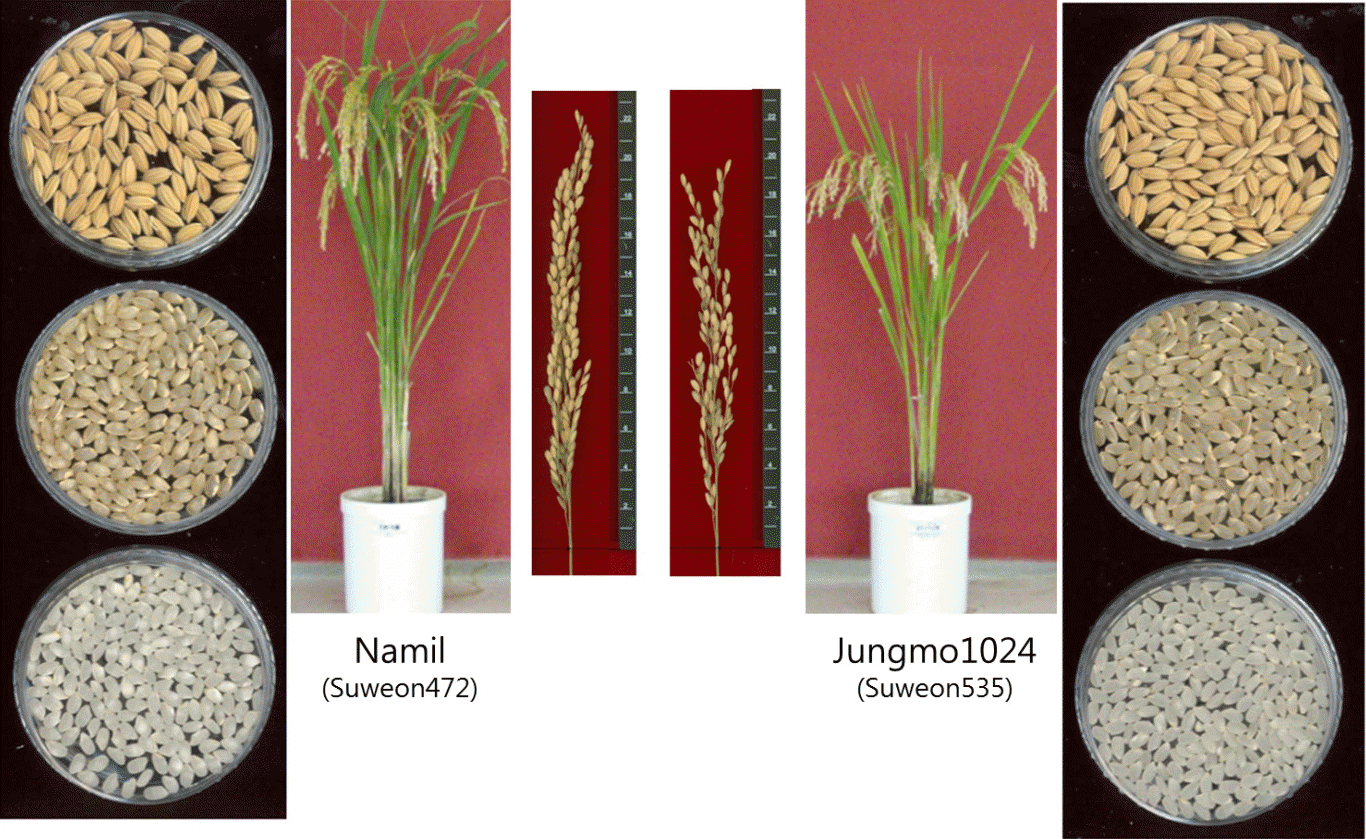
Table 1. Comparison between ‘Jungmo1024’ and the wild type, ‘Namil’ on the major agronomic traits.

The data set are derived from the replicated yield trial conducted in 2009 at NICS, RDA, Suwon.

Not significant (ns) in the t-test, while * and ** Significant at *P < 0.05 and P < 0.01, respectively.

Table 2. Comparisons of early-maturing Korean japonica rice cultivars in terms high-temperature tolerance during grain filling stage.z

The experiment was conducted during two years (2009~2010) at National Institute of Crop Science, Suwon (37°16′N, 126°59′E, 37 m altitude), Korea.

Green house was closed after transplanting the seedlings to have high-temperature condition.

Five to seven grams of brown rice per each rice cultivar was used to estimate the head rice percentage by using a near-infrared spectrometric analyzer (FOSS Cervitec 1625 Grain Inspector). Means with the same letter are not significantly different by Duncan’s multiple range test at 5% level.

After checking the heading date for each cultivar, the mean temperature of ripening stage was calculated by averaging the daily mean temperature for 40 days.

Table 3. Major agronomic traits and yield components of ‘Jungmo1024’ along with the check variety, ‘Hwaseong’.z

The over-all means of three years local adaptability trials (2010~2012) conducted in ‘Suwon’.

Not significant (ns) in the t-test, while * and ** Significant at *P < 0.05 and P < 0.01, respectively.

Table 4. Resistance reactions to blast disease.

N fertilizer of blast nursery test = 240 kg/ha

Durability against co-infection of 30 virulent M. grisea isolates during sequential planting (Kim et al. 2004)

N fertilizer of neck blast = 220 kg/ha

R: resistance, M: moderately resistance, S: susceptible.

Table 5. Reaction to bacterial blight, virus disease and insect pests.

BPH(brown planthopper), WBPH(white-backed planthopper), SBPH(small brown planthopper).

R: resistance, S: susceptible.

Table 6. Response to physiological and abiotic stresses.

Cold tolerance was evaluated by using cold-water (17°C) irrigation nursery in Chuncheon subsbtaion, NICS.

Evaluation at maximum tillering stage (1: toterance; 9: susceptible).

Germination rate under water saturated incubation (17°C) for 7 days on the panicle at 40 days after pollination.

Not significant(ns) in the t-test, while * and ** significant at *P < 0.05 and P < 0.01, respectively.

Table 7. Culm characters related to lodging.z

Evaluated under ordinary transplanting nursery condition, and the evaluation methods was based on Kim et al.(2000).

Breaking resistance of the middle point of 3rd internode with leaf sheath.

Length from the lower node of 3rd internode to the top of panicle (fresh weight of upper portion + fresh weight of 3rd internode)

Bending moment / Breaking resistance × 100

and ** Significant at *P < 0.05 and P < 0.01, respectively in the t-test.

Table 8. Characteristics related to grain shape and quality.

Not significant (ns) in the t-test, while * and ** Significant at *P < 0.05 and P < 0.01, respectively.

Table 9. Characteristics related to milling quality.

Not significant (ns) in the t-test, while * and ** Significant at *P < 0.05 and P < 0.01, respectively.

Table 10. Summary on the yield potential evaluated during 3 years local adaptability trials (2010~2012).

Local adaptability trials for early and late planting cultures were conducted 2(2011, 2012) years and 1(2012) year, respectively. The total numbers of trial sites for each culture season are indicated in parenthesis.

Regions are middle plane (MDP), mid-south mountain (MSM), mid-west coastal (MWC), mid-north middle plain (MMP), north-east coastal (NEC), honam plane (HNP), and Yeongnam plane (YNP).

Check varieties for each trial site are indicated as superscripted abbreviation with the mean milled rice yield; ‘Hwaseong’ (hs), ‘Odae’ (od), ‘Jopyeong’ (jp), and ‘Geumo’ (go).