적요
‘Jungmo1038', a mid-late maturing, high dry matter yielding rice (Oryza sativa L.) cultivar with glabrous leaf and hull, was developed for whole crop silage (WCS) use. It was derived from a cross between ‘SR24592-HB2319’ with high biomass, smooth leaf and hull and good germinability in low temperature and new plant type (NPT), ‘IR73165-B-6-1-1‘ which had low tillering trait, large panicle, dark green leaf, thick and sturdy stem and vigorous root system. This cultivar had about 125 days growth period from seeding to heading, 99cm culm length, 20cm panicle length, 13 panicles per hill, 119 spikelets per panicle and 1,000-grain weight of 23.3 g as brown rice in central plain region, Suwon. This hairless WCS rice variety was weak to cold stresses similar to ‘Nokyang’ but was resistant to lodging in the field, strong to viviparous germination and good to low temperature germination. In addition, ‘Jungmo1038’ was resistant to leaf and neck blast but susceptible to bacterial blight, rice stripe virus and brown planthopper. Its average dry matter yield for three years reached 17.2 MT/ha, 21% higher than that of ‘Nokyang’. This glabrous cultivar had 6.6% crude protein and 62.4% total digestible nutrients a little low compared to ‘Nokyang’. In Korea peninsular, 'Jungmo1038' grows well in central and southern plain and is good to harvest between 15 to 30 days after heading to improve its feeding value and digestion rate of livestock(Grant No. 5634).
서 언
사료용 벼는 인간이 식용으로 이용하기 위한 밥쌀용 벼와 달리 가축의 사료로 사용하는 벼이다. 이러한 벼는 종실 및 경엽 즉 지상부 전체를 동시에 수확 후 사일리지로 이용하는 ‘발효조 사료(WCS, whole crop silage)용 품종’, 종실을 이용하는 ‘사료 용 쌀 품종’, 그리고 양쪽 모두 이용이 가능한 ‘겸용 품종’으로 나누어 진다. 특히 WCS용 품종은 종실과 경엽의 비율에 따라 ‘경엽형’과 ‘종실형’으로 나눌 수 있는데 특히 사료용 쌀 품종은 사료용으로 뿐만 아니라 쌀가루나 바이오 연료의 원료로서 이용 성이 검토되고 있다. 이러한 사료용 벼는 식미를 중요시 하는 밥쌀용 벼와 달리 수량성, 사료적성인 가축의 기호성 및 영양가 치, 내도복성과 같은 재배특성, 병충해저항성을 갖는 것이 특히 중요하다(
NARO 2009).
국내에서는 2000년대에 들어서면서 쌀 소비량 감소로 인한 재고량 증가와 생산성 향상으로 증산된 잉여량을 인위적으로 조정해 왔다. 이는 벼 재배면적의 급격한 감소로 인해 식량안보나 논의 공익적 기능에 악영향을 미치고 있다. 뿐만 아니라 환율상승 및 세계 곡물가격 인상으로 축산농가의 경영부담이 지속적으로 증가하게 되면서 국내 조사료 자급률을 제고할 필요성도 대두되 고 있다. 이러한 현 시점의 문제들을 해결하는 방안으로 사료용 벼는 아주 중요한 의미를 갖는다. 즉, 논의 형태를 유지하면서도 쌀 수급균형을 조절할 수 있고 국내 하계 조사료 자급에도 기여할 수 있다(
Sakai et al. 2003,
Sung et al. 2004,
Lee et al. 2005,
Ahn et al. 2015).
국내 사료용 벼 품종개발은 경엽이 잘 부러지는 특성을 갖는 Brittle culm 벼의 사료용 벼로서의 활용가능성 검토(
Kim et al. 1997), 일품벼 돌연변이종을 이용하여 벼를 사료로 이용하려 는 시도(
Sung et al. 2004), 사료용 벼로서 적합한 품종을 선발하 기 위해 건물수량 및 사료가치와 관련된 형질들을 검토하여 품종선발에 대한 기초자료를 제시한 연구(
Lee et al. 2005) 등이 있었다. 그 이후 농촌진흥청 국립식량과학원에서 품종개발 연구 가 계속 진행되어 현재 사료용 벼 품종으로 ‘녹양’(
Lee et al. 2011), ’목우’(
Lee et al. 2013), ‘목양’(
Yang et al. 2013)’, ‘중모1029’(
Ahn et al. 2015) 등이 개발되어 있을 뿐만 아니라 복합내병충성 및 바이오매스가 향상된 우량계통, 야생벼인 오리 자 글라베리마(
O. glaberrima)를 이용한 초다수 종실용 우량계 통, 이모작 작부체계 적용에 유리한 조생이면서 내랭성 및 복합내 병충성을 갖는 우량계통, 줄기 속에 안토시아닌을 함유하며 후기 녹체성이 우수한 계통 등이 지역적응시험 중에 있다.
이러한 사료용 벼 품종개발의 초기연구는 초다수성인 통일형 품종 및 국제벼 연구소(IRRI, international rice research institute)에서 도입된 열대자포니카 계통을 주로 활용하여 바이 오매스를 높이는 연구에 치중한 면이 있었으나 이후 농업경영비 절감을 위해 지상부 건물수량 및 사료적성은 기본으로 하면서 내도복성, 직파적성 등과 같은 재배특성 개선을 위한 품종개발을 해 오고 있다. 그러나 최근에는 사료용 벼의 이용성 확대를 위해 난소화성 물질 즉 리그닌, 셀룰로오스, 실리카, 열손상단백질 등 함량이 적은 품종 육성이 중요한 과제로 떠오르고 있다. 현재 강모가 없어 식물체 전체에 매끄러운 특성을 갖게 하는 유전자는 열성유전자로 인디카 벼에서 5번 염색체에 존재하는 좌위의 5’-UTR(untranslated region)부분이 아데닌(A)이 티민(T)으로 치환된 점 돌연변이(point mutation)에 의해 발생하는 것으로 알려져 있다(
Li et al. 2010). 이에 본 연구는 종실과 잎이 강모가 없어 매끄러운 특성을 가지면서 저온발아성이 우수한 SR24592-HB2319계통을 모본으로 엽색은 짙고 이삭이 길고 입수가 많으며 소얼이면서 줄기가 굵은 신초형(NPT, new plant type)인 IR73165-B-6-1-1 계통을 부본으로 교배하여 지상부 건물수량이 높으면서 가축의 소화율과 기호성을 향상시킬 수 있는 엽표면이 부드러운 발효조사료용 벼를 육성하였기에 그 육성경위와 주요특성에 대해 서술하고자 한다.
재료 및 방법
저온발아성이 좋고 엽표면이 부드러운 ‘SR24592-HB2319’ 를 모본으로 소얼 수중형 열대 자포니카 신초형(NPT)인 ‘IR73165-B-6-1-1’을 부본으로 2001년에 인공교배하여 계통육 종법에 따라 계통선발 및 생산력검정시험을 거쳐 2010년에 ‘수 원552호’로 계통명을 부여하였다. 2011년부터 2013년까지 3개 년 간 중부평야지 1개소, 호남평야지 2개소, 영남평야지 1개소에 서 보통기 다비재배(N-P
2O
5-K
2O; 18-9-11kg/10a)로 지역적응 시험을 실시하여 대비품종 ‘녹양’과 비교하여 사료용으로 사용 하기에 적합한 주요 특성을 조사 하였다(
RDA 2011b,
2012b,
2013b). 농촌진흥청 표준재배법에 준하여 중부평야지에서는4 월20일, 호남 및 영남평야지에서는 4월25일에 파종하여 각각 5월25일, 5월30일에 이앙하였으며 30 × 12cm로 주당 5본씩 재식하였다. 기타 재배관리는 농촌진흥청 표준재배법에 준하였 고, 주요농업형질, 수량구성요소 및 수량성, 생리장해 및 병해충 저항성 조사는 농촌진흥청 신품종개발공동연구사업 과제수행 계획서(
RDA 2011a,
2012a,
2013a) 조사기준에 준하였다. 특히 잎도열병 검정 시 질소비료는 N성분량으로 240kg/ha, 목도열병 의 경우는 220kg/ha를 주었으며 도복저항성 검정 중 좌절중은 출수 후 20일에 반복별로 평균적인 3개체를 골라 주간 기부 10cm를 잘라 중앙부에 하중을 걸어 부러질 때까지의 무게를 좌절중 측정기(SHMPO FGX series, Japan)를 이용하여 측정하 였다. 도복지수는 모멘트[(주간간장+수장) × 총생체중]/좌절중 (g) × 100의 식을 이용하여 구하였다. 포장도복은 출수 후 30일에 달관조사 하였는데 그 기준은 이삭줄기 경사 15%미만일 때 1, 16~30%일 때 3, 31~45%일 때 5, 이삭의 일부가 지면에 닿을 때 7, 완전히 땅에 깔린 상태일 때 9의 등급으로 그 정도를 파악하였다.
사료가치 조사는 출수 후 30일에 이삭을 포함하는 식물체 지상부를 3포기씩 3반복으로 수확 건조(80°C, 72시간)한 후 잎, 줄기, 이삭을 혼합 분쇄하여 각 성분 조사시료로 사용하였다. 사료가치 평가를 위해 조지방(CF, crude fat), 조단백질(CP, crude protein), 산성세제불용섬유소(ADF, acid detergent fiber), 중성세제불용섬유소(NDF, neutral detergent fiber)를 농업기술실용화재단 종합분석검정센터에 의뢰하여 분석하였으 며 조단백질은 습식 분해 후 켈달법에 의해 총질소 함량을 구한 6.25를 곱하여 함량을 산출하였고, 조섬유 즉 ADF와 NDF 는 Van Soest 세제법(
Van soest et al. 1991)으로 조사하였다. 가소 화양분총량 (TDN, total digestible nutrient)은 ADF값을 기초로 하여 88.9-(0.779% × ADF) 계산식을 이용하여 산출하였다(
Lee et al. 2005).
결과 및 고찰
육성 경위
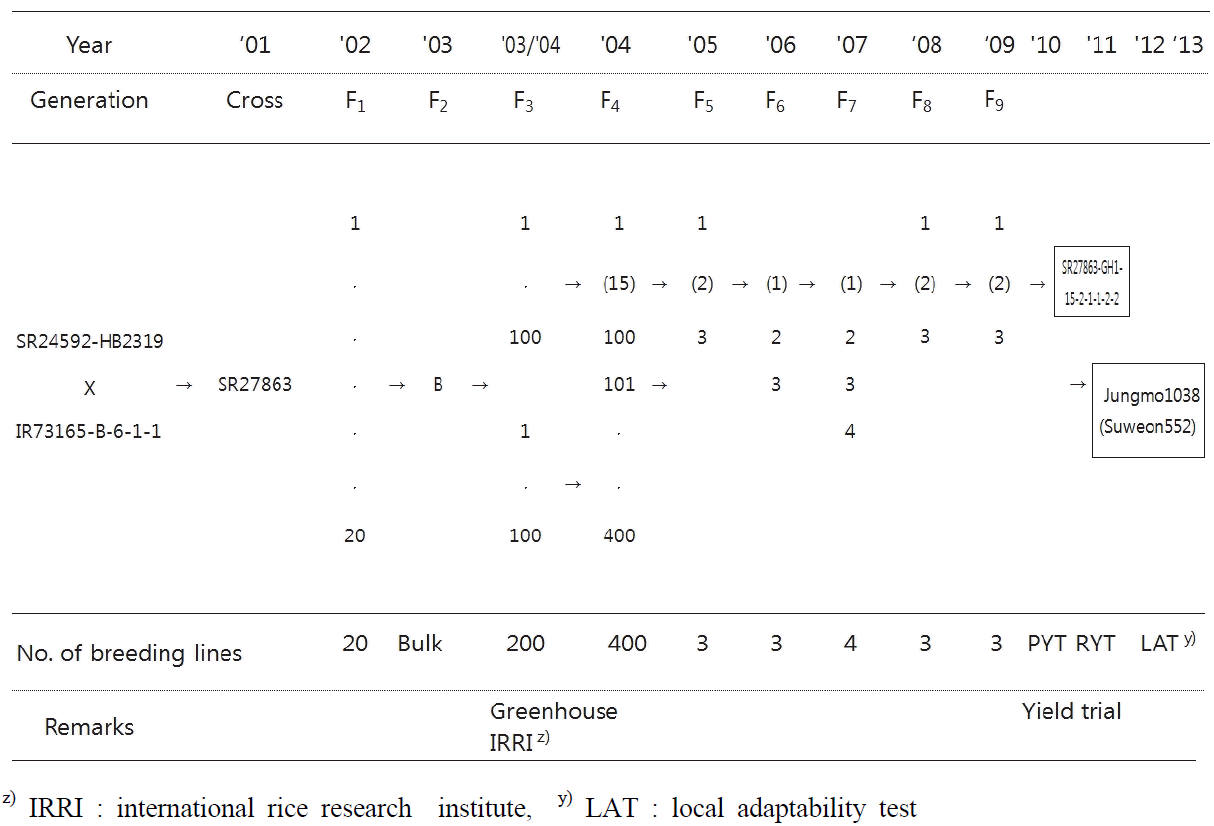
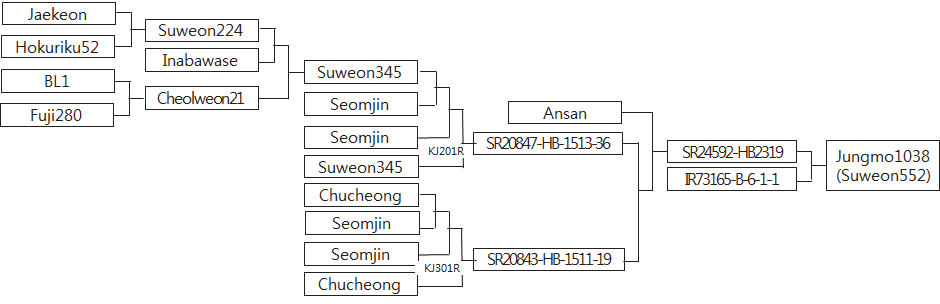
‘중모1038’은 지상부 건물수량이 높으면서 가축의 소화율을 높여 기호성을 향상시키기 위해 2001년 하계에 종실과 잎에 털이 없어 매끄러운 특성을 가지면서 저온발아성이 우수한 SR24 592-HB2319계통을 모본으로 소얼이면서 이삭이 길고 입수가 많으며 줄기가 굵고 잎이 진한 녹색을 띠는(
Peng et al. 1999) 신초형(NPT)인 IR73165-B-6-1-1 계통을 부본으로 인공교배하 여 SR27863의 교배번호를 부여하였다. 2002년 하계에 수원에 서 F
1 20개체를 양성한 후, 2003년 하계에 F
2 를 집단 공시하여 100개체를 선발한 후 국립식량과학원 세대단축온실과 같은 계 통을 필리핀에 있는 국제벼연구소(IRRI)에서 F
3세대를 경과시 켜 2004년에 F
4 400계통을 포장에 공시하여 지상부의 바이오매 스가 크면서 강모가 없어 매끄러운 잎과 종실을 갖는 3계통을 선발한 후 F
5 이후 세대는 계통육종법에 따라 내병성검정을 병행하면서 우량계통을 선발 고정시켰다. 선발된 SR27863-GH 1-15-2-1-1-2-2계통에 대하여 2010~2011년 2개년간 생산력검 정 시험을 실시하여 지상부의 수량성이 높고 매끄러운 잎 및 종실특성을 유지하고 있는 계통을 선발하여 ‘수원552호’로 계통 명을 부여하였다. 2011~2013년 3개년 간 지역적응시험 실시 결과 사료용으로 그 우수성이 인정되어 2013년 12월 직무육성신 품종 선정위원회에서 ‘중모1038’로 명명되었다(Fig.
1~
4).
Fig. 1.Pedigree diagram of ‘Jungmo1038’.
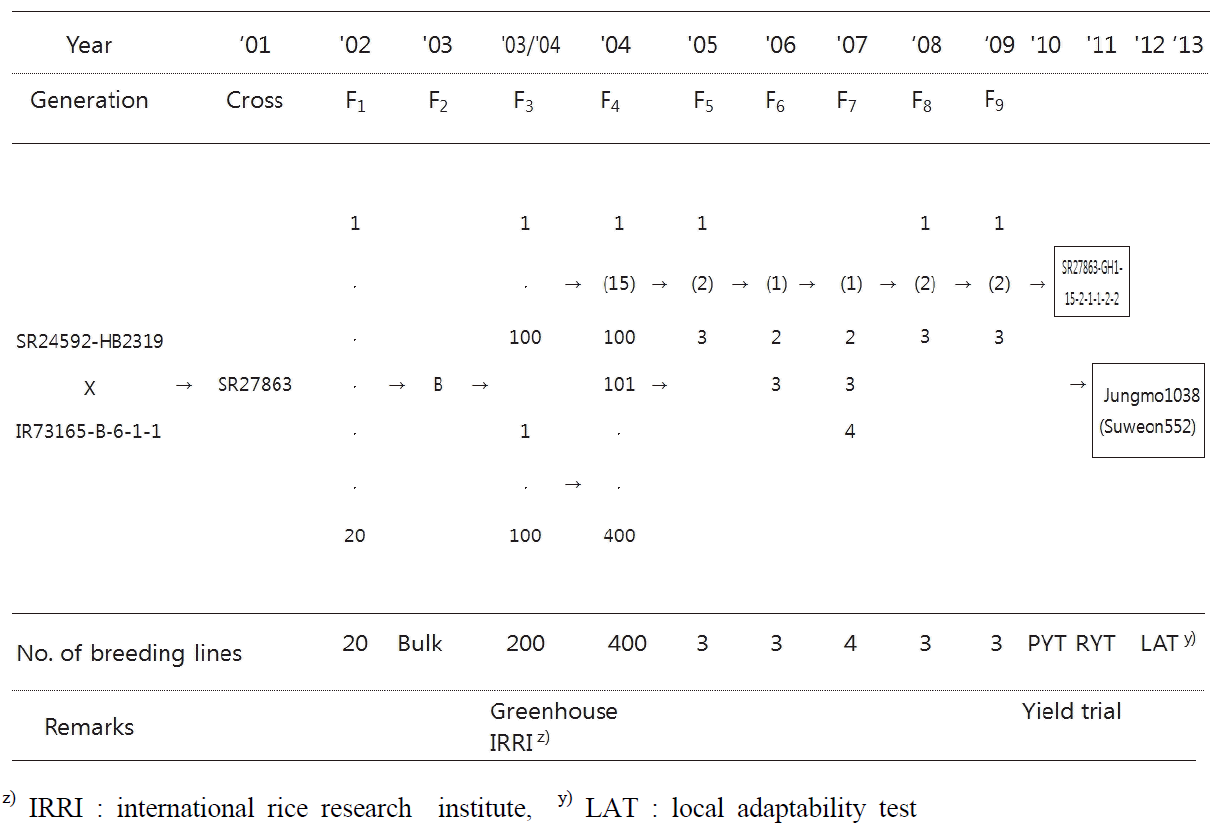
Fig. 2.Genealogical diagram of ‘Jungmo1038’.
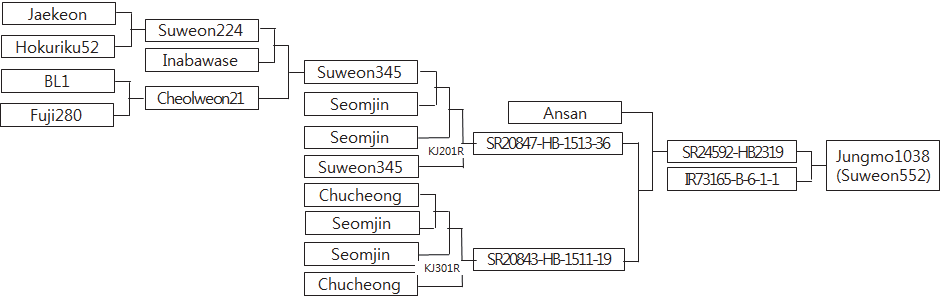
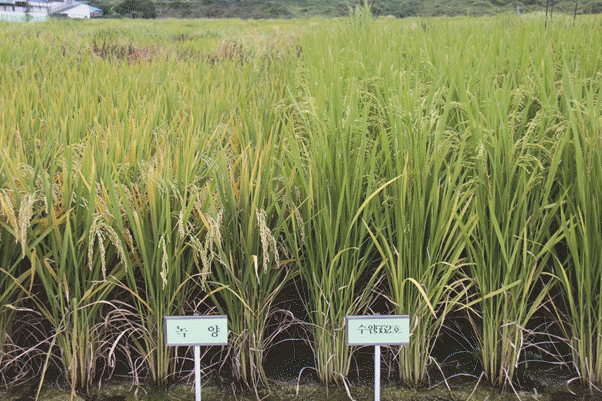
Fig. 3.The appearance of whole crop silage rice variety, ‘Nokyang’(left) and ‘Jungmo1038(Suweon552)’(right) which has glabrous hulls and leaves in the paddy field.
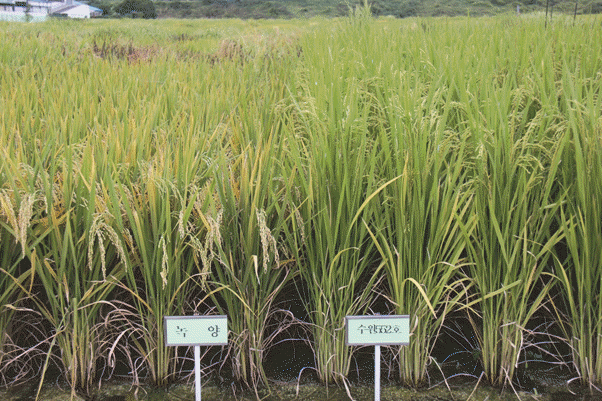
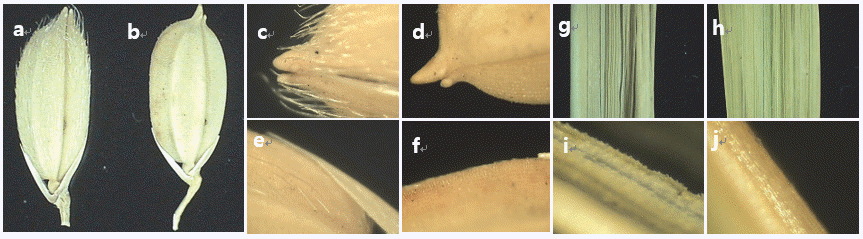
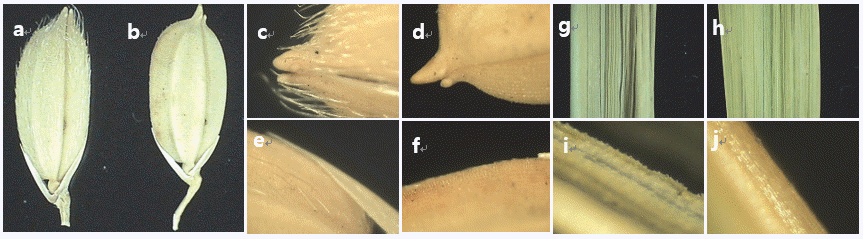
Fig. 4.Grain and leaf phenotypes of ‘Nokyang’ and ‘Jungmo1038’. a, b, c, d, e and f Grain morphology of ‘Nokyang’(a, c, e) and ‘Jungmo1038’(b, d, f). ‘Nokyang’ shows hairs on hulls, and the ‘Jungmo1038’ shows glabrous hulls. And g, h, i and j Leaf morphology of ‘Nokyang’(g, i) and ‘Jungmo1038’(h, j). ‘Nokyang’ shows hairs on leaf epidermis, and the ‘Jungmo1038’ shows glabrous leaves.
생육특성
‘중모1038’의 출수기는 중부평야 및 호남평야지에서 각각 8월 28일과 8월 20일로 ‘녹양’보다 16일, 7일 늦고 영남평야지에 서는 8월 22일로 ‘녹양’보다 10일 늦은 중만생종이었다(Table
1). 간장은 99cm로 ‘녹양’보다 16cm 길고 수장은 20cm로 ‘녹양’ 보다 5cm 짧으며 주당수수는 13개로 ‘녹양’보다 2개 적었지만 수당립수는 119개로 95개인 ‘녹양’보다 조금 많은 편이었다. 등숙비율은 63.2%로 ‘녹양’의 72.0%와 비교하여 다소 낮은 편이었고 현미 천립중은 23.3g으로 가벼운 편이었다(Table
2). 초기생육 특성은 ‘녹양’에 비해 저온발아율이 72.7%로 월등히 높았으며 이는 농업경영비를 절감하기 위해 직파재배를 선택했 을 때 초기생육에 유리한 특성이다. 파종 후 30일째 측정한 묘초장은 20.5cm로 ‘녹양’과 비슷하게 길었고 초기 신장성은 ‘녹양’보다 양호하였으며 유묘냉해 검정결과 ‘녹양’에 비해 냉해 에 강했다(Table
3).
Table 1.Heading date of whole crop silage rice cultivar, ‘Jungmo1038‘.
Table 1.
|
Plain |
Region |
Seeding date |
Transplanting date |
Heading date
|
|
Jungmo1038 |
Nokyang |
|
|
Central |
Suwon |
Apr. 20 |
May 25 |
Aug. 28 |
Aug. 12 |
|
Honam |
Iksan |
Apr. 25 |
May 30 |
Aug. 21 |
Aug. 13 |
|
Naju |
Apr. 25 |
May 30 |
Aug. 18 |
Aug. 12 |
|
Yeongnam |
Milyang |
Apr. 25 |
May 30 |
Aug. 22 |
Aug. 12 |
|
Average |
- |
- |
Aug. 23 |
Aug. 12 |
Table 2.Major agronomic traits and yield components.
Table 2.
|
Variety |
Culm length (cm) |
Panicle length (cm) |
No. of panicles /hill |
No. of grains/panicle |
Ripened grain ratio (%) |
1,000 grain weight of brown rice (g) |
|
|
Jungmo1038 |
99 |
20 |
13 |
119 |
63.2 |
23.3 |
|
Nokyang |
83 |
25 |
11 |
95 |
72.0 |
26.2 |
Table 3.Major growth characteristics of the ‘Jungmo1038’ in the early stages.
Table 3.
|
Variety |
Germination z) Rate (%) |
Seedling y) height (cm) |
Early Elongation |
Cold x) tolerance |
Discoloration w)
|
|
|
Jungmo1038 |
72.7 |
20.5 |
good |
4 |
5 |
|
Nokyang |
22.3 |
20.1 |
good |
8 |
6 |
생리장해 및 도복 저항성
‘중모1038’은 못자리일수 50일묘 이앙에서 불시출수가 되지 않았으며 생육후기 위조에 강할 뿐만 아니라 성숙기 잎의 노화는 느린 편이었다. 성숙기의 잦은 강우에 의해 수확 전 이삭에서 싹이 트는 수발아는 대비품종인 ‘녹양’과 비교하여 5.2%로 아주 강한 편이었다. 국립식량과학원 춘천출장소 내랭성 검정 시험포 에서 조사된 ‘중모1038’의 내랭성 검정 결과 냉수 흘려대기에서 출수지연은 무처리에 비해 15일 늦은 특성을 보였으며 냉수구 임실율은 17.2%로 15.7%인 ‘녹양’보다는 약간 높았지만 종합내 랭성은 8정도로 약한 것으로 판정되었다(Table
4). 사료용 벼는 지상부의 바이오매스를 키우기 위한 방향으로 육종되어 왔기 때문에 이삭이 길고 무겁거나 간장이 긴 경향이 있기 때문에 기본적으로 도복에 강한 특성을 요구한다. ‘중모1038’의 도복관 련 특성을 조사한 결과 간장은 ‘녹양’에 비해 긴 편이지만 좌절중 은 1,399 g으로 ‘녹양’과 비슷했고 도복지수는 ‘녹양’보다 약간 높은 편으로 평가되었으나 실제 포장도복에는 강했다(Table
5). 이러한 도복특성은 분얼이 적고 간이 굵은 신초형(NPT)인 ‘IR73165-B-6-1-1’의 형질에서 유래된 것으로 보인다.
Table 4.Response to physiological and environmental stress.
Table 4.
|
Variety |
Premature heading (%) |
Appearance of wilting |
Adult leaf sensecence |
Premature germination of paniclez) (%) |
Cold tolerance y)
|
|
Heading delay (days) |
Grain fertility (%) |
PAx)
|
|
|
Jungmo1038 |
0.0 |
Resistant |
Slow |
5.2 |
15 |
17.2 |
8 |
|
Nokyang |
6.6 |
Resistant |
Normal |
19.9 |
13 |
15.7 |
8 |
Table 5.Agronomic traits related to lodging resistance of ‘Jungmo1038’.
Table 5.
|
Variety |
Culm length (cm) |
Third Internode-length (cm) |
Breaking strength (g) |
Lodging Index |
Lodging in the field (0~9) |
|
|
Jungmo1038 |
99 |
12.6 |
1,399 |
201 |
3 |
|
Nokyang |
86 |
14.1 |
1,450 |
192 |
1 |
병해충 저항성
2011년부터 2013년까지 전국 밭못자리 14개 시험지에서 ‘중 모1038’의 잎도열병 반응을 검정한 결과 2개지역에서 저항성 반응을 나타내었고 9개 지역에서 중도저항성을 보였으며 3개 지역에서 약한 반응을 보였다. 목도열병은 이천, 제천, 밀양에서 이병수율이 0.0~0.7%로 거의 병이 발생하지 않았다(Table
6). 흰잎마름병(
Xanthomonas oryzae pv.
oryzae(Ishiyama) Swings et al.)은 K1, K2, K3, K3a균계에서 모두 약한 반응을 보였다. 바이러스병인 줄무늬잎마름병, 오갈병 및 검은줄오갈병 모두 ‘녹양’과 비슷하게 약한 반응을 보였다. 해충에 대해서는 벼멸구 (
Nilaparvata lugens Stål) 및 애멸구(
Delphacodes striatella Fallem)에 모두 약한 반응을 보였다(Table
7). 도열병 이외에 병해충 저항성이 없으므로 재배 시 적기 방제가 필요하고 앞으로 농촌현장에서 친환경재배를 가능하게 하여 농업경영비 절감에 도움을 주기 위해서는 내병충성 유전자 도입이 필요하다.
Table 6.Reaction to rice blast disease.
Table 6.
|
Variety |
Reaction to leaf blast at nursery test (0-9)
|
Reaction to neck blast (%)
|
No. of site tested (14)
|
Ichon |
Jechon |
Milyang |
|
Rz) (0-3) |
M (4-6) |
S (7-9) |
|
|
Jungmo1038 |
2 |
9 |
3 |
0.7 |
0.0 |
0.0 |
|
Nokyang |
1 |
11 |
2 |
51.9 |
54.7 |
0.0 |
Table 7.Reaction to bacterial disease, virus disease and insect pests.
Table 7.
|
Variety |
Bacterial blight
|
Virus diseases
|
Resistance to insects
|
|
K1 |
K2 |
K3 |
K3a |
Stripe |
Dwarf |
Black-streak dwarf |
BPH y)
|
SBPH |
|
|
Jungmo1038 |
S |
S |
S |
S |
S |
S |
S |
S |
S |
|
Nokyang |
Rz)
|
R |
R |
S |
S |
S |
S |
S |
S |
지상부 건물수량성
2011년부터 2013년까지 3개년간 중부평야지인 수원, 호남평 야지인 익산 및 나주, 영남평야지인 밀양에서 실시한 지역적응시 험 결과 지상부 건물수량성은 평균 1,716 kg/10a로 대비품종인 ‘녹양’(1,423kg/10a)보다 21% 높게 나타났다(Table
8). 이는 ‘중모1038’은 ‘녹양’에 비해 출수기가 늦어짐으로 기본영양생장 이 많았고 주당수수 및 수당립수가 많을 뿐만 아니라 간장 및 엽신도 길기 때문에 전체적으로 바이오매스가 증대된 것으로 판단된다.
Table 8.Dry matter yields of whole crop silage rice cultivar, ‘Jungmo1038’.
Table 8.
|
Region |
Nokyang(kg/10a)
|
Jungmo1038(kg/10a)
|
|
Average(’11~’13) |
’11 |
’12 |
’13 |
Average |
Index |
|
|
Central |
1,457 |
1,821 |
1,625 |
1,562 |
1,669 |
115 |
|
Honam |
1,452 |
1,852 |
1,760 |
1,798 |
1,794 |
124 |
|
Yeongnam |
1,343 |
1,463 |
1,644 |
1,797 |
1,635 |
122 |
|
|
Average |
1,423 |
1,712 |
1,697 |
1,739 |
1,716 |
121 |
사료가치, 입형 및 미질특성
출수 후 30일에 지상부 전체 즉 잎, 줄기, 이삭을 건조 후 혼합 분쇄하여 사료가치를 분석한 결과 조지방은 2.1%로 ‘녹 양’(2.3%)과 비슷하였고 조단백질은 6.6%로 ‘녹양’(6.4%)과 비슷하였으며 조사료의 소화율에 관여하는 산성세제불용섬유 소(ADF)와 섭취량에 관계하는 중성세제불용섬유소(NDF)는 각각 33.5%, 48.5%를 보여 ‘녹양’(20.2%, 36.5%)보다 많았으 며 이로 인해 가소화양분총량(TDN)은 62.4%로 72.9%인 ‘녹양’ 보다 다소 낮았지만(Table
10) 일반적인 사료작물과 비슷한 수준이다. 종실은 외영에 강모가 없어 매끄러운 특성을 보였고 (Fig.
4.) 이는 약 60%가 규소결정체로 구성되어 있는 강모가 없기 때문에 가축이 소화하기 어려운 규소가(
Rohweder et al. 1978) 적어서 가축의 소화율을 증가시킬 것으로 기대되고 이는 가축의 기호성을 증가시킬 것으로 판단된다. 또한 농작업 시 농기계의 마모경감, 작업자의 가려움 방지 및 먼지감소로 작업위 생 향상에도 기여할 것이다(
Hu et al. 2013). 입형은 정조 장폭비 가 2.24, 현미 장폭비가 1.81로 ‘녹양’(2.65, 2.08)에 비해 단원립 이고 아밀로스 함량은 22.3%로 ‘녹양’(20.9)에 비해 다소 높은 편이다. 심복백은 1/1로 ‘녹양’(1/2)에 비해 좋은 편이나 일반 밥쌀용에 비해 많은 편이다(Table
9). 미질을 불량하게 만드는 것은 사료용 벼 육종에 있어 중요하다(
Kato 2008). 밥쌀용과 비슷한 수준의 외관품위를 갖는다면 생산자의 편의에 따라 용도 변경이 가능하여 수급, 유통과정에서 여러 문제를 야기할 수 있다. ‘중모1038’은 심복백이 다소 있어 이런 문제에도 큰 어려움 이 없을 것으로 판단된다.
Table 9.Grain shape, appearance and amylose content of ‘Jungmo1038’.
Table 9.
|
Variety |
Unhulled rice |
Brown rice |
White core/belly (0-9) |
Amylose content (%) |
|
L z)
|
W y)
|
T x)
|
L/W w)
|
L |
W |
T |
L/W |
|
Jungmo1038 |
7.35 |
3.28 |
2.18 |
2.24 |
5.18 |
2.86 |
1.82 |
1.81 |
1/1 |
22.3 |
|
Nokyang |
7.98 |
3.00 |
2.10 |
2.65 |
5.67 |
2.73 |
1.95 |
2.08 |
1/2 |
20.9 |
Table 10.Nutritive value of ‘Jungmo1038’ for whole crop silage use.
Table 10.
|
Variety |
Chemical properties (%) |
|
CF z)
|
CP y)
|
ADF x)
|
NDF w)
|
TDN v)
|
|
Jungmo1038 |
2.1 |
6.6 |
33.5 |
48.5 |
62.4 |
|
Nokyang |
2.3 |
6.4 |
20.2 |
36.5 |
72.9 |
재배상의 유의점
‘중모1038’은 중만생종으로 파종이 늦어질 경우 생육기간이 짧아져 후기 등숙이 불량할 수 있으므로 만기재배는 피하는 것이 좋다. 또한 최대 건물수량을 확보하려면 다비조건(질소 : 18kg/10a)에서 재배하는 것이 좋으나 다비조건에서는 내병충 성이 약한 ‘중모1038’의 경우 병해충 발생이 우려되므로 적기에 방제하는 것 또한 중요하다. 수확은 사료영양가치 및 알곡의 소화율을 높이기 위하여 호숙기(출수 후 15일) 에서 황숙기(출수 후 30일) 에 하는 것이 좋으며 수확시기가 늦어지면 지상부 수량성은 다소 높아지나 사료영양가치 및 소화율은 낮아질 수 있다.
적 요
‘중모1038’은 건물수량이 높으면서 가축의 소화율을 높여 기호성을 향상시키기 위해 2001년 하계에 SR24592-HB2319계 통을 모본으로 신초형(NPT)인 IR73165-B-6-1-1 계통을 부본 으로 계통육종법으로 전개한 후 2013년 사료용 벼로 육성하였다. 주요 농업적 특성은 중부, 호남 및 영남평야지 보통기 다비재배에 서 출수기가 평균 8월 23일로 ‘녹양’보다 11일 늦은 중만생종이 고 간장은 99cm로 긴 편이며 주당수수는 13개, 수당립수는 119 개이고 현미천립중은 23.3g으로 ‘녹양’보다 가벼운 편이다. 불시 출수는 되지 않았고 성숙기 잎의 노화는 느린 편이며 수발아는 5.2%로 ‘녹양’보다 강한 편이었다. 종합내랭성은 8로 ‘녹양’과 비슷하게 약했고 도복지수는 ‘녹양’에 비해 약간 높았으나 실제 포장도복에는 강했다. 잎도열병에는 중도저항성을 보였으나 흰 잎마름병, 줄무늬잎마름병 및 벼멸구에는 모두 약한 반응을 보였 다. 지상부 수량성은 건물기준으로 10a당 평균 1,716kg으로 ‘녹양’(1,423kg)보다 21% 증수되는 경향을 보였다. 사료가치는 조단백질이 6.6%, 가소화양분총량(TDN)이 62.4%로 ‘녹양’보 다는 약간 적었지만 양호한 편이었다. 종실 및 잎에 강모가 없어 매끄러운 특성을 가지고 있으며 이는 가축의 소화율을 높여 기호성이 증대될 것으로 기대된다. ‘중모1038’의 재배에 알맞은 지역은 중부 및 남부평야지이고 생육 후기 기상이 좋은 지역이 재배에 안전할 것으로 보이며 호숙기에서 황숙기에 수확하는 것이 사료영양가치가 높고 알곡의 소화율을 높일 수 있다.
사 사
‘중모1038’을 육성함에 있어 적극 협력하여주신 국립식량과 학원 본원, 중부작물부, 남부작물부 벼 육종 연구팀 및 각 도농업 기술원 지역적응시험 담당자들과 농촌진흥청 연구정책국 관계 관 여러분께 깊이 감사 드리며 본 연구는 농촌진흥청 기관고유사 업(세부과제명 : 총체사료용 벼 계통육성 시험, 과제번호 : PJ008679012016)의 지원으로 수행된 결과입니다.
References
- 1. Ahn EK, Lee JH, Lee SB, Yang CI, Choi YH, Chang JK, Jeong JM, Lee GS, Kim MK, Kim JH, Hyun UJ, Mo YJ, Yoon YH, Jeung JU, Oh SK, Seo MW, Kim CK. Late-maturing, high biomass and multiple disease resistant whole crop silage rice cultivar ‘Jungmo1029’. Korean. J. Crop Sci 2015. 47(2):159-165.
- 2. Hu B, Wan Y, Li X, Zhang F, Yan W, Xie J. Phenotypic characterization and genetic analysis of rice with pubescent leaves and glabrous hulls(PLgh). Crop Sci 2013. 53: 1878-1886.
- 3. Kato H. Development of rice varieties for whole crop silage(WCS) in Japan. JARQ 2008. 42(4):231-236.
- 4. Kim YD, Park HK, Ha KY, Cho SY. Forage yield and TDN by cutting time of brittle culm rice. Korean. J. Crop Sci 1997. 42(4):483-488.
- 5. Lee SB, Yang CI, Lee JH, Kim HY, Shin YS, Lee KS, Choi YH, Jung OY, Jeon YH, Hong HC, Kim YG, Hwang HG, Jung KH, Yang SJ, Jeung JU, Kang KH, Kim JH, Shon JY. A new high biomass yield and whole crop silage rice cultivar ‘Nokyang’. Korean. J. Breed Sci 2011. 43(6):519-523.
- 6. Lee SB, Yang CI, Lee JH, Kim MK, Shin YS, Lee KS, Choi YH, Jeong OY, Jeon YH, Hong HC, Kim YK, Jung KH, Jeung JU, Kim JH, Shon JY. A late-maturing and whole crop silage rice cultivar ‘Mogwoo’. J. Korean Grassl. Sci 2013. 33(2):81-86.
- 7. Lee JH, Jeong OY, Pack JS, Hong HC, Yang SJ, Lee YT, Kim JG, Sung KI, Kim BW. Analysis of dry matter yield and feed value for selecting of whole crop rice. J. Anim. Sci & Technol.(Kor) 2005. 47(3):355-362.
- 8. Li W, Wu J, Weng S, Zhang D, Zhang Y, Shi C. Characterization and fine mapping of the glabrous leaf and hull mutants (gl1):in rice(Oryza sativa L). Plant Cell Rep 2010. 29: 617-627.
- 9. National Agriculture and Food Research OrganizationRice varieties for whole crop silage and grain use. NICS. Tsukuba. Japan 2009.
- 10. Rohweder DA, Barnes RF, Jorgensen N. Proposed hay grading standards based on laboratory analyses for evaluating quality. J. Anim. Sci 1978. 47: 747-759.
- 11. Rural Development Administration2011 Project plan for collaborative research program to develop new variety of summer crop 2011. 5-52.
- 12. Rural Development Administration2011 Project report for collaborative research program to develop new variety of summer crop 2011. 5-175.
- 13. Rural Development Administration2012 Project plan for collaborative research program to develop new variety of summer crop 2012. 5-85.
- 14. Rural Development Administration2012 Project report for collaborative research program to develop new variety of summer crop 2012. 5-208.
- 15. Rural Development Administration2013 Project plan for collaborative research program to develop new variety of summer crop 2013. 3-50.
- 16. Rural Development Administration2013 Project report for collaborative research program to develop new variety of summer Crop 2013. 3-217.
- 17. Sakai M, Iida S, Maeda H, Sunohara Y, Nemoto T, Imbe T. New rice varieties for whole crop silage use in Japan. Breeding Sci 2003. 53: 271-275.
- 18. Peng S, Cassman KG, Virmani SS, Sheehy J, Khush GS. Yield potential trends of tropical rice since the release of IR8 and the challenge of increasing rice yield potential. Crop Sci 1999. 39: 1552-1559.
- 19. Sung KI, Hong SM, Kim BW. Plant height, dry matter yield and forage quality at different maturity ofwhole crop rice. J. Kor. Grassl. Forage Sci 2004. 24(1):53-60.
- 20. Van soest PJ, Povertson JB, Lewis BA. Methods fordietary fiber, neutral detergent fiber, and nonstarchpolysaccharides in relation to animal nutrition. J. Dairy Sci 1991. 74: 3583-3597.
- 21. Yang CI, Lee SB, Won WJ, Ahn EK, Kim MK, Kim YK, Hyun UJ, Jeong JM, Hwang HG, Shin YS, Hong HC, Lee JH, Lee KS, Choi YH, Choi IS, Jeong OY, Kim JH, Chang JK, Park HM, Sung NS. A high biomass yield and whole crop silage rice cultivar ‘Mogyang’. Korean. J. Breed Sci 2013. 45(4):405-409.
Citations
Citations to this article as recorded by

- Insights into engineering flowering time for breeding innovation and strategies to overcome trade-offs
Sujeevan Rajendran, Yu Mi Kang, Baul Ko, Hye Song Lim, Jung Ro Lee, Geupil Jang, Sang Uk Lee, Chul Min Kim
Molecular Breeding.2025;[Epub] CrossRef - Mid-late Maturing, Multiple-Disease-and-Insect-Resistant, High Yielding Forage Rice Cultivar ‘Gowoo’ with Glabrous Leaf and Hull
Eok-Keun Ahn, Hyang-Mi Park, Kuk-Hyun Jung, Ung-Jo Hyun, Yong-Jae Won, Jeom-Ho Lee, Ha-Cheol Hong, Jae-Ki Chang, Jeong-Heui Lee, Yoon-Sung Lee, Sang-Beom Lee
Korean Journal of Breeding Science.2023; 55(2): 163. CrossRef - Characterization of Grain-Related Traits and Pasting and Texture Properties of United State Rice Varieties in Korea
Jae-Ryoung Park, Chang-Min Lee, Man-Kee Baek, Ju Hyeon An, Jeonghwan Seo, Ha-Cheol Hong, O-Young Jeong, Hyun-Su Park
Korean Journal of Breeding Science.2022; 54(2): 81. CrossRef - ‘Miwoo’, a Mid-Late Maturing, Multiple Disease and Insect Resistant, High Biomass Yielding a Rice Cultivar for Whole Crop Silage Use
Eok-Keun Ahn, Yong-Jae Won, Ha-Cheol Hong, Hyang-Mi Park, Kuk-Hyun Jung, Ung-Jo Hyun, Jae-Ki Chang, Jeong-Heui Lee, Jeom-Ho Lee, Jung-Pil Suh
Korean Journal of Breeding Science.2022; 54(1): 43. CrossRef - ‘Jowoo’, Early Maturing, Multiple Disease and Insect Resistant High Biomass Yielding Rice Cultivar for Winter Forage Crop-Whole Crop Silage Rice Double Cropping
Eok-Keun Ahn, Yong-Jae Won, Jeom-Ho Lee, Eung-Gi Jeong, Hyang-Mi Park, Ha-Cheol Hong, Jae-Ki Chang, Ung-Jo Hyun, Kuk-Hyun Jung, Jeong-Heui Lee
Korean Journal of Breeding Science.2021; 53(2): 154. CrossRef - ‘Cheongwoo’, Late Maturing, Multiple Disease and Insect Resistant, High Biomass Yielding Rice Cultivar for Whole Crop Silage Use
Eok-Keun Ahn, Kyung-Ho Kang, Yong-Jae Won, Kuk-Hyun Jung, Ung-Jo Hyun, Eung-Gi Jeong, Hyang-Mi Park, Jeom-Ho Lee, Jae-Ki Chang, Jeong-Heui Lee, Jong-Min Jeong, Jung-Pil Suh
Korean Journal of Breeding Science.2020; 52(2): 190. CrossRef - Mid-late Maturing, Multiple Disease and Insect Resistant, High Biomass Yielding Whole Crop Silage Rice Cultivar 'Yeongwoo'
Eok-Keun Ahn, Sang-Bok Lee, Yong-Jae Won, Jeom-Ho Lee, Jae-Ki Chang, Eung-Gi Jeong, Kuk-Hyun Jung, Jeong-Heui Lee, Young-chan Cho, Jong-Min Jeong, Jung-Pil Suh, Jeong-Ju Kim, O-Young Jeong, Yong-Hee Jeon, Ha-Cheol Hong, Gyu-Sung Lee, Bo-Gyeong Kim
Korean Journal of Breeding Science.2018; 50(3): 331. CrossRef