적요
'Hyowon 2’, a new medium-late maturing glutinous rice variety with short clum and lodging tolerance was developed by the rice breeding team of Pusan National University in 2013. This cultivar was derived from a cross between 'Junam’ as a short clum source and ‘Donna’ with a good glutinous properties. During selected by the pedigree breeding method, until F8 generation. As a result, a promising line, JS22-3-24-1-6-2-1-1-1, was advanced and designated as the name of ‘SP 105’ in 2012. This variety headed on Aug. 22 is 9 days later than ‘Dongjinchal’ in middle plane. The Culm length and panicle length of this variety was 65.6 cm and 22.5 cm, respectively. This variety has about 14.4 tillers per hill and 113 spikelet numbers per panicle. The ratio of ripened grain is about 93.0% and 1000-grain weight was 18.4 g in brown rice. This variety has higher α-tocotrienol content compared to that of ‘Hwasunchal’. The yield performance of brown rice was 4.81 MT/ha in local adaptability test.
서 언
벼(
Oryza sativa L.)는 우리나라에서 가장 많이 소비되는 식량 자원 중 하나이다. 최근 1인당 쌀 소비량은 2005년 80.7kg에서 2015년 65.1kg으로 지속적으로 감소하는 추세이다. 쌀 공급량 은 크게 변화하지 않아 소비량이 점점 감소함으로써 국내 쌀 재고량의 문제가 발생되고 있다. 그럼에도 불구하고 쌀은 아직도 주요 농가소득원일 뿐 아니라, 국민 한 사람당 섭취열량의 35%, 단백질 섭취량의 21%를 공급하는 주요 영양원으로서의 위치를 지키고 있다(
MAFRA 2015). 이러한 쌀 재고량 해소를 위해 주식용이 아닌 가공용 또는 사료용과 같이 새로운 용도로 이용하 는 방안이 제시되고 있다. 국립식량과학원에서는 돌연변이 계통 들로부터 배유변이체를 선발, 난소화성 전분을 지니는 ‘고아미2 호’, 연질배유를 지니는 ‘설갱’, 및 반찰인 ‘백진주’ 등의 벼 품종을 등록하였다(
Choi 2002,
Hong et al. 2011,
Hong et al. 2012a). 이들 벼 품종은 전통적인 교잡육종의 모본으로 활용 되어 ‘고아미 3호’, ‘고아미4호’, '백진주1호‘ 등의 신품종들이 육성되어 등록되었다(
Hong et al. 2012b,
Kang et al. 2004,
Kim et al. 2011). 최근에는 건식제분에 적합한 분질계통 ‘수원 542호’ 등이 개발되었다(
Mo et al. 2013). 국내에서 가공용도 쌀의 대부분은 떡류이며, 혼반 및 주류의 이용 비율이 높으므로 떡류에 적합한 품종 육성 요구가 높아지고 있다.
국내 재래종 유전자원 중 ‘돈나(돼지찰벼)’는 찰성이 강하고 떡 제조시 부드러운 성질이 오래가는 것으로 보고된 바 있으나, 키가 크고 까락이 길며 줄기가 약해 도복이 심하고 도열병이 많이 발생하여, 수량이 300kg/10a 정도로 낮은 것으로 알려져 있다(
Chungcheongbukdo 1996). 따라서 이러한 농업형질을 개선 하고, 우수한 가공적성을 도입하고자, 본 연구는 우리나라 재래종 찰벼 ‘돈나(돼지찰벼)’와 내도복 다수성의 ‘주남벼’을 인공교배하 여 가공적성과 재배 안정성이 양호한 ‘효원 2호’를 개발하였기에 그 육성 경위와 주요 농업적 특성에 대하여 보고하고자 한다.
재료 및 방법
생산력검정
본 시험은 ‘효원 2호’와 ‘동진찰’을 공시하여 2012, 2013년 2년간 중부지역 2개소와 남부지역에서 1개 지역에서 실시하였 다. 재배법은 농촌진흥청 표준재배법에 준하였고(
RDA 2011a,
RDA 2011b), 4월 22일에 파종하여 5월 21일에 30 × 15 cm의 재식거리로 이앙하였고, 시비량은 N-P-K = 9-4.5-5.7 kg/10a로 시비하였다. 제초제는 초기제초제 5월 17일, 중기제초제 6월 5일에 살포하였고, 살균살충제는 이앙 당일 살균살충 입제를 살포하고, 8월 5일에 살충제와 살균제를 함께 살포하였다. 시험 구 표본 채취는 1반복당 30주로 3반복씩 수확하였고, 시험구 배치는 난괴법 3반복으로 하였다.
총 페놀류, 비타민, 지방산 조성 분석은 찰벼 품종 중 항산화 성분이 우수한 것으로 보고된 화선찰벼를 대조구로 하여 분석하 였다 (
Kim et al. 2010,
Kwak & Park 1998,
Oh et al. 2010). 페놀류 함량 분석은
Chung et al. (2011)의 방법에 따라 분쇄된 시료 2g에 10mL acetonitrile (ACN)과 2mL 0.1N HCL을 가하 여 상온에서 추출하였으며, Thermo UHPLC system(Thermo Fisher Scientific Inc., USA)로 분석하였고, column은 HALO C18 Column (2.1×100 mm, 2.7
μm)을 사용하였다. 비타민 B 함량은 시료 1g을 추출용매 (0.01% TFA:Meoh = 50:50) 4mL로 추출하였으며, 분석은 Vitamin analyzer(Younglin Co., Korea) 를 이용하였고, YMC ODS AM-303(4.6×250 mm, 5
μm) column을 사용하였다. 토코페놀 함량 분석은
Kim et al. (2005) 의 방법에 따라 전처리 과정에서 토코페놀류의 산화를 방지하기 위해 ascorbic acid을 가하고, 현미 가루 0.5g를 ethanol 및 KOH 와 함께 80°C에서 비누화 반응을 수행한 후, Hexane으로 추출하 였으며, SHIMADZU GC 2010 (Shimadzu Co. Japan)으로 분석하였다. 현미의 지방산 조성 분석은
Cho et al. (2006)에 준하여 현미 가루 0.2g을 methylation 처리 후 SHIMADZU GC 2010 (Shimadzu Co. Japan) 를 이용하여 분석하였다.
결과 및 고찰
육성경위
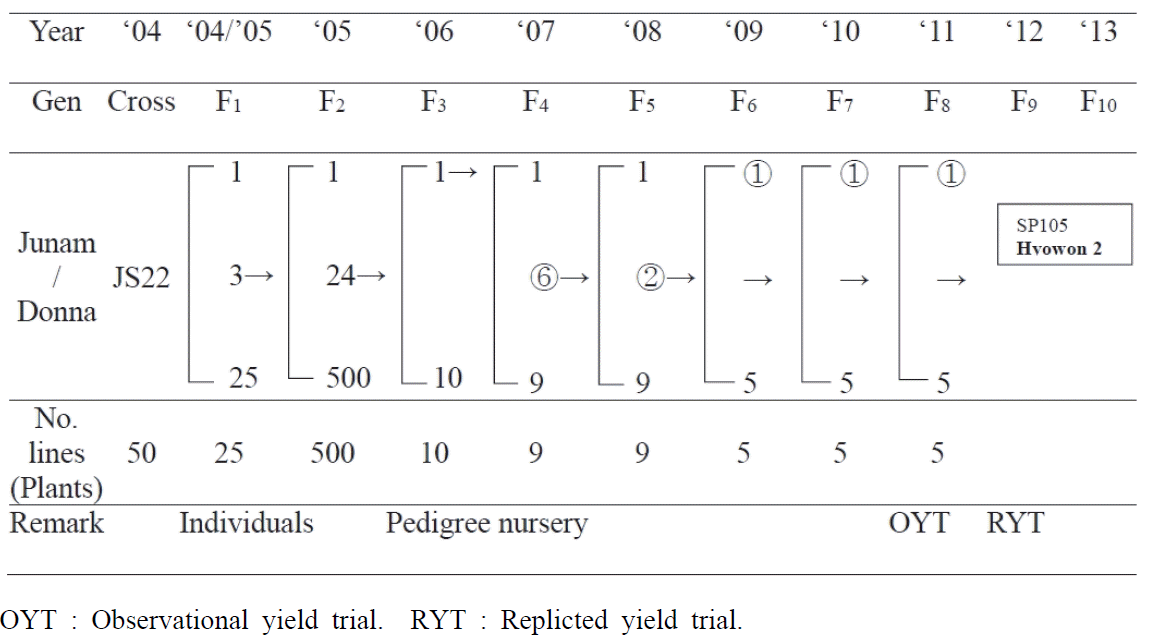
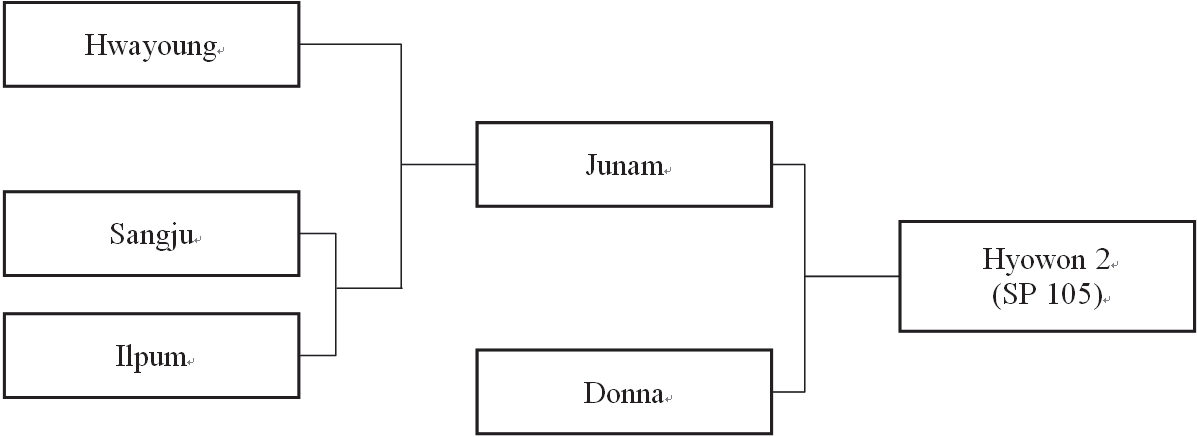
‘효원 2호’는 재래종의 우수한 특성을 활용하여 가공적성이 우수한 찰벼를 육성할 목적으로 재래종 찰벼 중 가공 시 굳는 성질이 늦은 특성을 보이는 돈나(돼지찰벼) 유전자원을 수집하 고 그 특성을 평가하여 옹진수집 돈나를 교배부본으로 선정하였 고, 재래종 찰벼의 도복, 병해, 수량성을 개선하기 위해 내도복 다수성의 주남벼를 교배모본으로 선정하였다. 목적에 부합하는 계통을 선정하여 2004년 하계에 국내 내도복 다수성의 주남벼를 모본으로 하고, 가공 특성이 우수한 재래종 찰벼인 옹진수집 돈나를 인공교배하여 수확된 종자를 JS22으로 표기하여, 2004 년 동계에 F
1 종자를 파종하여 F
2 개체를 확보하였다. 2005년 F
2를 집단전개 하여 찰 특성을 갖고, 단간인 개체를 선발하였고, 2006년부터 2011년까지 매년 포장에서 계통재배 하면서 찰 및 중소립 특성을 갖고, 단간이며 수량성이 양호한 JS22-3-24-1-6-2-1-1-1 계통을 선발하였다(Fig.
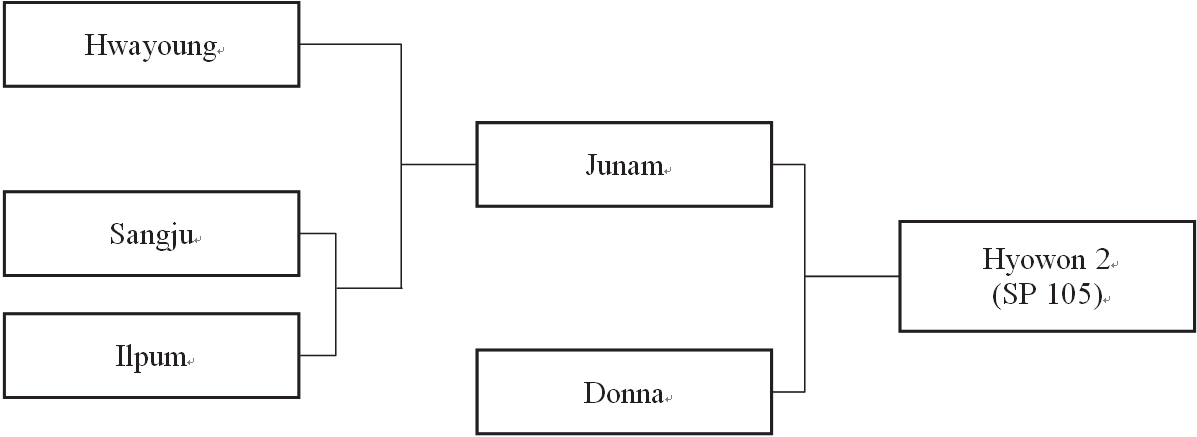
1). 선발된 계통 에 대해 SP105호로 계통명을 부여하고, 2012년~2013년에 생산 력검정을 수행한 결과 품종의 균일성과 재배안정성을 확인하여 우수성이 인정되어 ‘효원 2호’라고 명명하고 품종보호출원을 하였다. ‘효원 2호’의 육성 경위와 육성 계보는 Fig.
1 및 Fig.
2와 같다.
Fig. 1.Pedigree diagram of ‘Hyowon 2’.
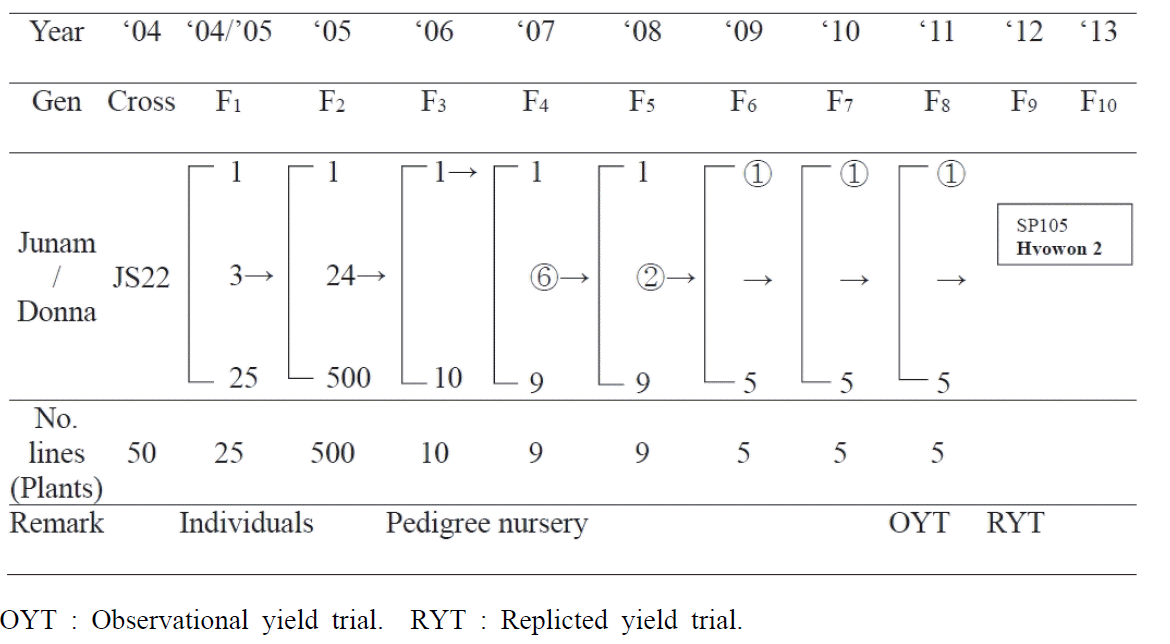
Fig. 2.Genealogical diagram of ‘Hyowon 2’.
주요특성
출수기 및 주요 농업적 특성
보통기 보비재배에서 ‘효원 2호’는 출수기가 8월 22일로 대조 품종인 ‘동진찰’보다 9일 늦은 중만생종이다. 간장은 65.6cm로 ‘동진찰’의 80.6cm 보다 15cm 작고, 수장은 22.5cm로 2cm 길었다. 주당 이삭수는 14.4개로 ‘동진찰’과 비슷하였고, 이삭당 벼알수는 113개로 ‘동진찰’보다 11개 많았다. 등숙비율은 93% 로 ‘동진찰’과 비슷하였고, 현미천립중이 18.4g로 ‘동진찰’의 21.3g 보다 가벼운 중소립이다(Table
1).
Table 1.Major agronomic traits and yield components.
Table 1.
|
Variety |
Heading date |
Culm length (cm) |
Panicle length (cm) |
No. of Panicles per hill |
No. of Spikelets per panicle |
Ratio of ripened grain (%) |
1,000 grain weight (g) |
|
|
Hyowon 2 |
8/22 |
65.6±1.5 |
22.5±0.9 |
14.4±1.3 |
113±4.5 |
93 |
18.42±0.12 |
|
Dongjinchal |
8/13 |
80.6±1.4 |
20.2±0.7 |
14.5±1.5 |
102±4.6 |
90 |
21.34±0.35 |
생리장해 및 병해충 저항성
‘효원 2호’는 못자리 불시출수는 관찰되지 않았고, 유묘기 내냉성과 성숙기 엽 노화는 대조품종과 비슷한 수준을 보였다. ‘효원 2호’는 목도열병과 흰잎마름병에 대해 중간 정도의 저항성 을 나타냈으나, 줄무늬잎마름병과 멸구에 대한 저항성은 없는 것으로 나타났다(Table
2).
Table 2.Response to physiological stress and pest resistance.
Table 2.
|
Variety |
Lodging in field (0-9) |
Leaf senescence at maturity |
Cold tolerance |
Neck Blast |
Bacterial blight |
Rice stripe virus |
Brown planthopper |
|
|
Hyowon 2 |
1 |
Slow |
Mz
|
M |
M |
S |
S |
|
Dongjinchal |
1 |
Slow |
M |
M |
S |
R |
M |
미질 및 수량성
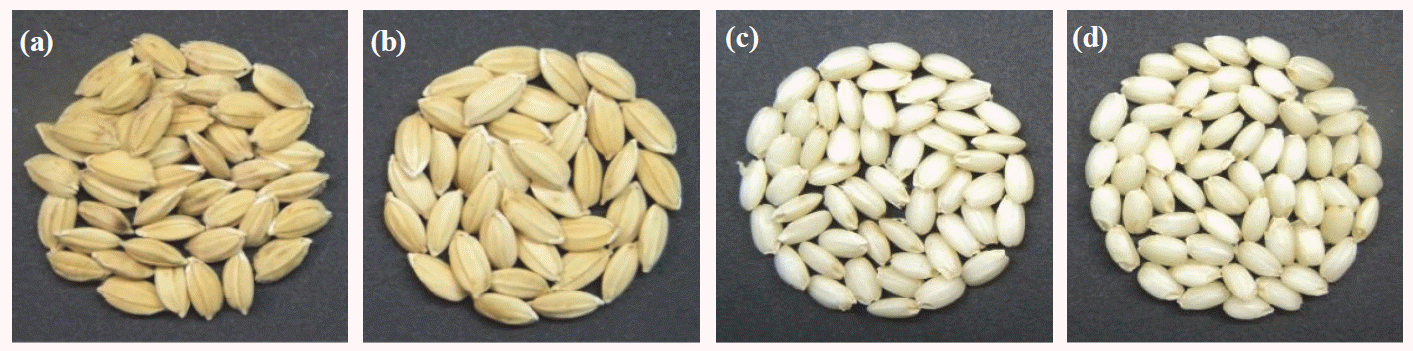
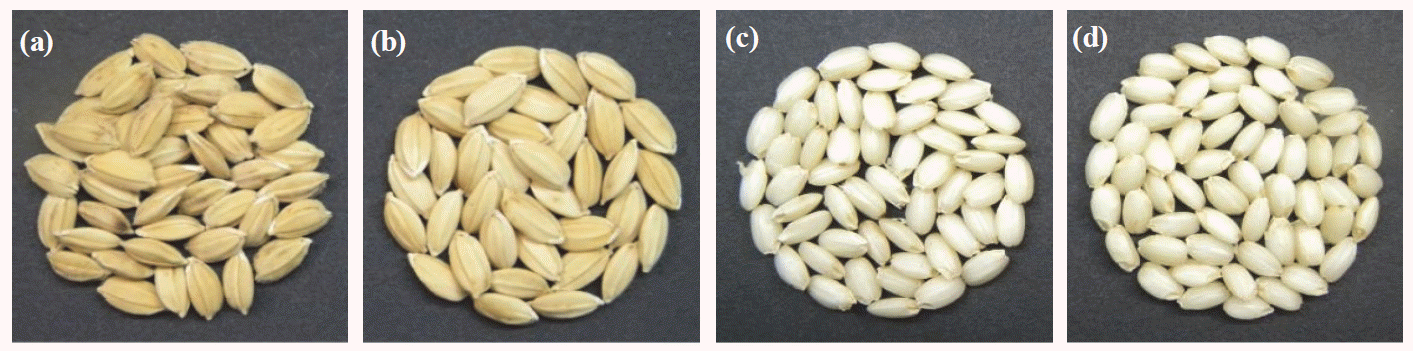
‘효원 2호’는 현미길이가 4.39mm로 대조품종의 4.89mm에 비해 짧고, 폭은 2.75mm로 대조품종 2.97mm보다 약간 좁은 편이다. 두께는 대조품종과 비슷한 1.91mm 수준으로 장폭비가 1.60 정도로 중소립의 단원형이다(Table
3, Fig.
3). 현미단백질 함량은 대조품종과 비슷한 7.5% 였다. ‘효원 2호’의 수량성은 2012년부터 2013년 2년간 조사한 결과 481kg/10a로 대조품종 ‘동진찰’ 549kg/10a의 88% 수준이였다(Table
3).
Table 3.Grain characteristics of ‘Hyowon 2’.
Table 3.
|
Variety |
Brown rice
|
Grain yield (kg/10a) |
|
Length (mm) |
Width (mm) |
Thick-ness (mm) |
L/W ratio |
Protein content (%) |
|
|
Hyowon 2 |
4.39±0.70 |
2.75±0.43 |
1.91±0.30 |
1.60 |
7.5 |
481 |
|
Dongjin-chal |
4.89±0.14 |
2.97±0.10 |
1.90±0.19 |
1.65 |
7.5 |
549 |
Fig. 3.Grain appearance (a): Rough rice-Hyowon 2, (b): Rough rice-Dongjinchal, (c): Brown rice-Hyowon 2, (d): Brown rice-Dongjinchal.
기능성 성분함량
‘효원 2호’ 의 7가지 phenol compounds 함량을 비교한 결과, 대체적으로 대조품종인 ‘화선찰벼’, ‘돈나’와 비슷한 결과를 보 였으나, 화선찰벼에서 β-Resorcylic acid 함량이 유의하게 높았 으며, ‘효원 2호’에서 Naringenin함량이 낮은 것으로 조사되었 다(Table
4). 비타민 B 함량은 ‘효원 2호’와 ‘화선찰벼’. ‘돈나’ 모두 B
1이 B
2 보다 높은 것으로 나타났으나, 세 품종간의 큰 차이는 보이지 않았다. 비타민 E의 경우, α-tocotrienol, γ-tocotrienol 이 ‘효원 2호’ 는 부본으로 이용된 재래종 ‘돈나’보 다는 낮았지만, ‘화선찰벼’에 비해 유의하게 높았다(Table
5). 지방산 함량을 비교한 결과, 대체적으로 대조품종인 ‘화선찰벼’, ‘돈나’와 비슷한 결과를 보였다(Table
6).
Table 4.Phenol compounds content of ‘Hyowon 2’. (μg/g)
Table 4.
|
Variety |
Chlorogenicacid |
Vanillin |
P-coumaric acid |
Naringenin |
Formononetin |
Biochanin A |
β-Resorcylic acid |
|
|
Hyowon 2 |
29.5±5.9 |
8.7±0.3 |
36.3±0.4 |
2.5±0.8 |
42.8±0.5 |
72.7±0.6 |
6.5±2.4 |
|
Hwasunchal |
27.5±3.9 |
8.7±0.2 |
37.3±1.0 |
6.5±1.3 |
43.3±0.2 |
72.6±0.5 |
13.4±11.4 |
|
Donna |
27.0±3.9 |
9.1±0.8 |
36.4±0.6 |
8.8±3.2 |
45.9±1.8 |
87.3±9.9 |
9.0±6.0 |
Table 5.Vitamin content of ‘Hyowon 2’.
Table 5.
|
Variety |
Vitamin B(μg/g)
|
Vitamin E (μg/g)
|
|
B1 |
B2 |
α-tocopherol |
β-tocopherol |
γ-tocopherol |
δ-tocopherol |
α-tocotrienol |
γ-tocotrienol |
|
|
Hyowon 2 |
3.657 |
1.855 |
25.8 |
29.7 |
31.5 |
32.4 |
121.3 |
50.7 |
|
Hwasunchal |
3.687 |
1.876 |
24.1 |
29.6 |
31.2 |
32.1 |
99.1 |
46.7 |
|
Donna |
3.758 |
1.867 |
27.4 |
29.8 |
31.9 |
32.7 |
143.6 |
54.8 |
Table 6.Fatty acids content of ‘Hyowon 2’. (μg/g)
Table 6.
|
Variety |
myristic acid |
palmitic acid |
stearic acid |
oleic acid |
γ-linolenic acid |
linolenic acid |
|
|
Hyowon 2 |
2.837 |
3.929 |
3.880 |
4.040 |
4.380 |
5.588 |
|
Hwasunchal |
2.838 |
3.902 |
3.910 |
4.029 |
4.453 |
5.626 |
|
Donna |
2.844 |
3.895 |
3.855 |
4.053 |
4.353 |
5.603 |
재배상 유의점
중만생종 ‘효원2호’ 는 단간종으로 도복에 다소 강하지만, 질소질 비료 과용 시 등숙 저하, 숙색불량, 병해충 발생이 우려되 므로 적정 균형시비를 하여야 하고 적기 기본방제를 하여야 한다.
적 요
‘효원2호’는 우리나라 재래종의 우수한 특성을 활용하여 가공 적성이 우수한 찰벼를 육성하고자 내도복 다수성의 주남벼를 모본으로 하고, 재래종 찰벼 중 가공적성이 우수한 돈나를 부본으 로 하여 인공교배하고, 2006년부터 2011년까지 매년 포장에서 계통재배하면서 찰 특성을 갖고, 중소립이며, 가공적성과 친환경 적응성이 양호한 계통을 선발하여 생산력검정을 수행한 결과 우수성이 인정되어 품종으로 출원 및 등록되었다. ‘효원2호’는 중부평야지에서 8월22일 경에 출수하는 중만생종으로 동진찰벼 에 비해 9일 정도 늦다. 간장이 65.6cm로 단간이며, 이삭길이와 포기당 주당 이삭수는 각각 22.5cm, 14.4개로 동진찰과 비슷하 였다. ‘효원2호’는 도복에 강하고, 성숙기 엽노화가 느리며, 중간 정도의 내냉성을 보였고, 목도열병과 흰잎마름병에 중 정도의 저항성을 보였으나, 줄무늬잎마름병과 멸구에 대한 저항성은 없었다. ‘효원2호’는 현미천립중이 18.42g로 동진찰에 비해 작 은 중소립종이며, 장폭비가 1.60 정도의 단원형이다. 현미 단백 질 함량은 7.5% 였고, 수량은 481kg/10a으로 동진찰의 88% 수준이다. ‘효원2호’의 Phenol compounds 함량과 지방산 함량 은 대체적으로 화선찰과 비슷한 수준이며, α-tocotrienol, γ -tocotrienol 은 화선찰벼에 비해 높다. ‘효원2호’는 우리나라 재래종 ‘돈나’과 국내 육성종 ‘주남’을 인공교배하여 개발된 품종으로서, 우리나라 재래종의 유전자원 및 교배모본으로서 가치와 이용가능성을 보여주었다. 향후 재래 유전자원의 수집과 탐색 그리고 수집된 유전자원들에 대한 지속적인 기초연구가 필요할 것으로 보인다.
(품종보호권 등록번호 : 제 6209호, 2016. 6. 21)
사 사
본 논문은 농촌진흥청 연구사업(벼 저항전분 및 분질배유 지배 유전자 관련 분자표지 개발, 과제번호: PJ011139)의 지원과 2013학년도 부산대학교 신임교수 연구정착금 지원으로 이루어 졌음.
References
- 1. Cho KS, Kim HJ, Moon SM, Kang JH, Lee YS. Optimization of one-step extraction/methylation method for analysis of fatty acid composition in brown rice. Korea. J. Crop Sci 2006. 51: 89-94.
- 2. Choi HC. Current status and perspectives in varietal improvement of rice cultivars for high-quality and value added products. Korean. J. Crop Sci 2002. 47: 15-32.
- 3. Chungchoengbukdo. The project of the 100th anniversary of Chung Buk 1996. 219-220.
- 4. Chung IM, Seo SH, Ahn JK, Kim SH. Effect of processing, fermentation, and aging treatment to content and profile of phenolic compounds in soybean seed, soy curd and soy paste. Food Chemistry 2011. 127: 960-967.
- 5. Hong HC, Choi HC, Hwang HG, Kim YG, Moon HP, Kim HY, Yea JD, Shin YS, Choi YH, Cho YC, Baek MK, Lee JH, Yang CI, Jeong KH, Ahn SN, Yang SJ. A lodging-tolerance and dull rice cultivar ‘Baegjinju’. Korean. J. Breed. Sci 2012a. 44: 51-56.
- 6. Hong HC, Moon HP, Choi HC, Hwang HG, Kim YG, Kim HY, Yea JD, Shin YS, Kang KH, Choi YH, Cho YC. New cultivar developed A lodging tolerant, opaque rice cultivar “Seolgaeng”. Korean. J. Breed. Sci 2011. 43: 532-537.
- 7. Hong HC, Yang SJ, Lee JH, Jung OY, Yang CI, Choi YH, Kim YG, Lee KS, Choi IS, Cho YC, Kim MK, Lee JI, Jeong EK, Roh JH, Kim KJ, Hwang HG, Moon HP, Lee YT. A medium-maturing, dull cultivar ‘Baegjinju 1’. Korean. J. Breed. Sci 2012b. 44: 57-61.
- 8. Kang HJ, Seo HS, Hwang IK. Comparison of gelatinization and retrogradation characteristics among endosperm mutant rices derived from Ilpumbyeo. Korean. J. Food Sci. Technol 2004. 36: 879-884.
- 9. Kim DJ, Oh SK, Yoon MR. Antioxidant Compounds and Antioxidant Activities of the 70% Ethanol Extracts from Brown and Milled Rice by Cultivar. J. Korean Soc. Food Sci. Nutr 2010. 39: 467-473.
- 10. Kim YG, Jeong KH, Lee YT. A medium-maturing, high non-dietary starch, specialty rice cultivar ‘Goami 3’. Korean. J. Breed. Sci 2011. 43: 595-599.
- 11. Kim YS, Park SR, Lee YS, Jung H, Koh KO, Kim HS. Determination of tocopherol and tocotrienol contents in rice cooked with various cereals. J Korean Soc. Food Sci. Nutr 2005. 34: 1289-1292.
- 12. Kwak TS, Park HJ. Evaluation on the Contents of Antioxidative Substance at the Different Layers in Several Rice Varieties. Korean. J. Plant Res 1998. 11: 257-263.
- 13. Ministry of agriculture, food and rural affairs (MAFRA)Agriculture food and rural affairs statistics yearbook 2015.
- 14. Mo YJ, Jeung JU, Shin YS, Kang KH, Kim BK. Agronomic and genetic analysis of Suweon 542, a rice floury mutant line suitable for dry milling. Rice 2013. 6: 1-12.
- 15. Oh SK, Kim DJ, Chun AR, Yoon MR, Kim KJ, Lee JS, Hong HC, Kim YK. Antioxidant Compounds and Antioxidant Activities of Ethanol Extracts from Milling By-products of Rice Cultivars. J. Korean Soc. Food Sci. Nutr 2010. 39: 624-630.
- 16. Rural Development Administration (RDA)Research plan of development new variety of summer crops 2011a. 5-53.
- 17. Rural Development Administration (RDA)Report off development new variety of summer crops 2011b. 5-186.
Citations
Citations to this article as recorded by

- Utilization of Korean Landrace Rice to Develop A Medium-Maturing Glutinous Rice Variety ‘Hyowon 3’
Soon-Wook Kwon, Da-Eun Im, Joohyun Lee
Korean Journal of Breeding Science.2019; 51(1): 61. CrossRef - Evaluation of Mesocotyl Elongation Ability in Korean Rice Landraces (Oryza sativa L.)
So-Yeon Park, Seong-Gyu Jang, Joohyun Lee, Soon-Wook Kwon
Korean Journal of Breeding Science.2019; 51(4): 351. CrossRef