적요
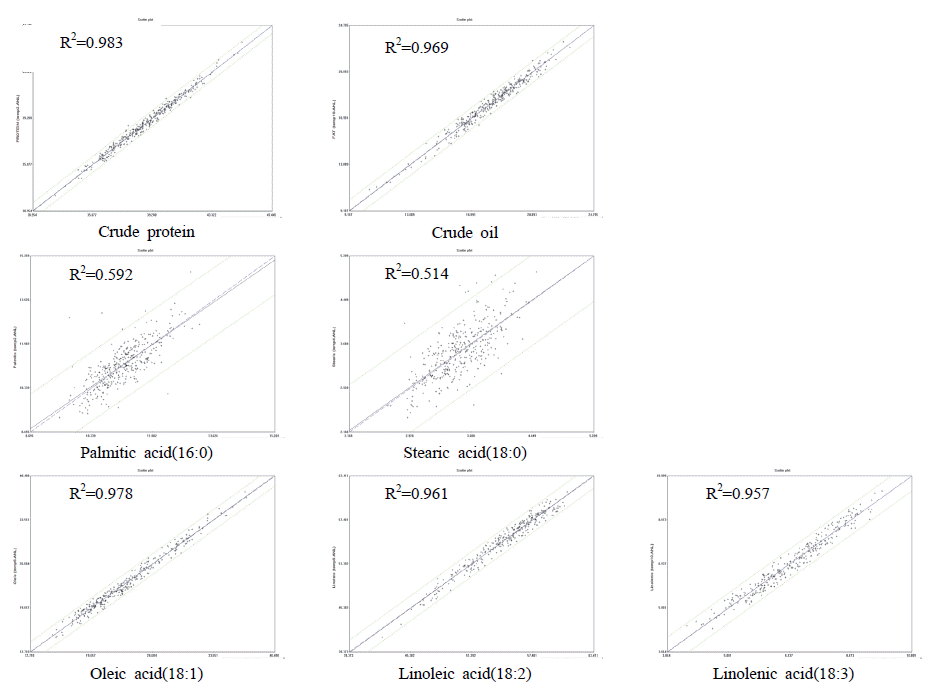
This study was investigated to develop mass evaluation system for the contents of crude protein, oil and fatty acid in soybean germplasm using NIRS. NIRS equations were created with 345 soybeans, multiple correlation coefficients of crude protein, oil, palmitic, stearic, oleic, linoleic and linolenic acid between data obtained from NIRS and quantitative analysis were 0.983, 0.969, 0.592, 0.514, 0.978, 0.961 and 0.957, respectively. Equation statistics indicated that contents of crude protein, oil and unsaturated fatty acid except palmitic and stearic acid in soybean seed were suitable for determination by NIRS. Those NIRS equations were applied to examine crude protein, oil and unsaturated fatty acid of 854 soybean landraces from Korea. The average contents and ranges of crude protein and oil were 39.2% with a range of 33.7-47.0% and 15.0% with a range of 9.8-20.3%, individually. In addition, those of oleic, linoleic and linolenic acid were 21.4% with a range of 12.1-30.2%, 55.6% with a 47.8-62.3% and 8.1% with a range of 5.9-10.7% respectively. We conducted quantitative analysis to reconfirm with IT154552 (45.1%) and IT023955(46.9%) above 45% of crude protein, the results were similar from NIRS (45.2%, 47.0%). NIRS data for protein from this study made no difference with lab data, which would be useful for mass evaluation. There was negative correlation (-0.203) between crude protein and oil, positive correlation (0.379) between crude oil and oleic acid, and significantly negative correlation (-0.879) between oleic and linoleic acid.
서 언
콩은 만주를 중심으로 한 동북아시아를 원산지로 추정하고 있으며, 우리나라 전역에 야생종이 분포하고 있어 원산지 일부로 여겨지고 있다(
Kwon 1972). 콩의 우리나라 재배역사는 기원전 4-5세기경으로 추정되며 우리 재래종 자원은 콩이 보유하고 있는 각종 특성을 모두 보유할 뿐 아니라, 특성이 우수한 것으로 알려져 있다(
Kwon 1972). 재래종 자원의 적극적 활용을 위해서 는 자원의 특성을 파악하는 것이 기본이며, 가장 중요한 성분인 단백질과 지방을 분석하여 데이터 베이스 하는 것은 매우 중요한 일이라 할 수 있다.
콩 단백질은 양질의 식물성 단백질로, 보통 35~40% 정도 함유되어 있으며(
Hong et al. 2010,
Lee et al. 2001) 단백질 성분은 두부, 장류와 같은 전통식품의 재료 뿐 아니라 최근에는 인공섬유와 방화복 등에도 이용되고 있다(
Choung et al. 2001). 또한 콩은 20% 내외의 식물성 지방을 함유하고 있어 2015년 기준으로 전세계 식물성 기름 생산의 61%를 차지하며(
www.soystats.com), 콩의 지질 성분은 샐러드, 튀김용 등 식용과 프린 터용 잉크, 바이오 디젤, 살충제 등 산업용으로도 많이 활용되고 있는 주요한 성분이라고 할 수 있다(
Choung et al. 2001). 콩의 지방은 palmitic acid(16:0), stearic acid(18:0), oleic acid(18:1), linoleic acid(18:2), linolenic acid(18:3) 등 주요 5종의 지방산 으로 구성되며, 포화 지방산인 palmitic acid와 stearic acid가 약 16%, 불포화 지방산인 oleic acid(23%), linoleic acid(53%), linolenic acid(8%)가 약 84%를 차지하고 있다(
Lee et al. 2007). 지방산의 조성은 매우 중요한데 바이오 디젤용은 저온 유동점의 개선을 위해 포화 지방산 함량이 낮은 것이 좋으며, 포화 지방산 을 많이 섭취할수록 콜레스테롤과 심장병 가능성을 높이는 것으 로 알려져 산업적, 건강적 측면에서 포화 지방산이 낮은 지방이 요구되고 있다(
Lee et al. 2007). 반면 불포화 지방산인 oleic acid는 콜레스테롤을 낮추고, 동맥경화와 심장병의 위험을 줄여 건강에 유리하며, 산화 안정성을 증가시켜 고온을 요하는 요리에 서 트랜스 지방을 낮춰 주는 역할을 한다(
Lee et al. 2007). Linolenic acid는 저장력을 약화시키고, 콩기름의 변성에 관여하 여 산화 안정성을 낮추기 때문에 함량을 줄이려는 시도를 하고 있다(
Lee et al. 2007,
Song et al. 2015,
Yoon et al. 1984).
근적외선분광분석기(NIRS: near infrared spectroscopy)를 이용한 분석 방법은 전통의 습식분석 과정이 복잡하여 시간 소모적이고 부식성 화학약품의 사용으로 환경오염을 유발하는 데 반해 많은 성분을 한번에 분석하여 시간과 비용을 절약할 수 있는 분석 도구로 평가 받고 있다(
Choung et al. 2001,
Kim et al. 1995). 따라서 NIRS 비파괴분석은 육종소재의 대량평가용 으로 널리 사용하는 방법으로 벼, 콩, 강낭콩, 옥수수 등에서 단백질, 지방, 전분과 같은 성분 분석 뿐 아니라(
Jiang et al. 2007,
Kim et al. 2008,
Lee et al. 2001) 분말을 이용한 콩 종자의 지방산 조성(
Roberts et al. 2006), 검정콩의 안토시아닌 (
Kim et al. 2008) 등의 다양한 분석에 이용되고 있다. 강낭콩 종실의 통알곡과 분말을 NIRS로 분석하여 비교한 결과 검량식 R
2 값이 각각 0.40과 0.92로 나타나 결과에 대한 신뢰도 차이가 컸으며(
Lee et al. 2001),
Choung et al.(2001)에 따르면 NIRS를 이용한 콩의 조단백과 조지방 분석시 분말을 이용한 결과 검량식 의 R
2 값이 각각 0.985와 0.956, 검량식 확인(validation)을 위한 R
2 값이 각각 0.984와 0.965로 조사되어 대량 자원을 쉽고 빠르 고 정확하게 분석할 수 있는 방법이 될 것이라고 하였다. 최근에 는 콩의 저장 단백질인 Glycinin(11S)와 β-Conglycinin(7S)의 평가에도 NIRS을 적용하였으며 단백질의 여러 특성으로 인해 NIRS 예측치(prediction)가 제한적이라는 결과를 얻은 바 있다 (
Delwiche et al. 2007).
농업유전자원은 최근 영양적 가치와 기능 성분을 토대로 식품 소재 뿐 아니라 의약품, 기능성 식품 등 다방면으로 이용 가능성 이 커지고 있어, 종자은행에 보존된 자원의 유용형질 특성평가와 데이터베이스 구축이 촉구되고 있다. 따라서 본 연구는 육종소재 나 유전자원과 같은 대량의 재료를 빠르고 정확하게 평가할 수 있는 체계를 구축하고자 수행하였으며, 특히 건강식품으로 관심이 증가되고 있는 콩 유전자원의 주요 성분인 조단백, 조지방 성분과 지방산 조성을 대량평가하고 그 결과에 대해 데이터베이스 를 구축함으로서 이용자의 접근을 용이하게 하고자 수행하였다.
재료 및 방법
공시재료
NIRS 검량식 작성을 위하여 국내외 육성종 및 재래종 콩 345자원이 이용되었으며, 검량식 작성 후 NIRS를 이용한 유전 자원의 대량평가에는 2011년 수원에서 증식한 국내 재래종 콩 854자원(강원 83, 경기 64, 경남 147, 경북 177, 전남 104, 전북 79, 충남 98, 충북 76, 제주 26자원)을 공시하였다. 실험실 분석치와 NIRS 예측치의 비교를 위해 일품검정콩(
Shin et al. 1998)을 대조 품종으로 이용하였다. 이들 재료는 모두 농업유전 자원센터에 보존된 유전자원을 분양받아 사용하였다.
콩 유전자원의 조단백, 조지방 및 지방산 조성 분석용은 국내 외 육성종 및 재래종 콩 345자원을 이용하여 수행하였다. 조단백 함량은 자동분석기인 Kjeltec 8400(Foss, Sweden) 을 이용하였 으며, 곱게 마쇄한 분말(100mesh) 0.5g에 셀레늄 촉매제와 진한 황산(H
2SO
4) 12ml를 넣고 420°C로 예열된 분해장치에 증류수 와 15~20% NaOH를 반응시켜 분해시킨 후 분석하였다. 조지방 함량은 자동분석기인 Soxtec 2043(Foss, Sweden)을 이용하였 으며, 곱게 마쇄한 분말(100mesh) 약 0.5g 가량을 50°C 건조기 에서 건조 후 시료의 무게를 기록하고 순수 추출컵의 무게를 잰 후 추출컵에 핵산(hexan) 50ml을 넣어 자동분석을 실시하였 다. 분석이 완료되면 지방이 추출된 컵의 무게에서 순수 컵의 무게를 빼어 시료의 무게로 나누어 준 후 100을 곱하여 조지방 함량을 환산하였다. 지방산은 BF
3 메탄올법(
Yoon 1987)을 이용 하였으며, 추출된 조지방 50μl에 0.5N NaOH 2mℓ를 분주한 후 잘 섞고 80°C water bath에서 10분간 처리하고 Boron trifluoride-methanol 용액(BF용액) 2ml를 넣고 잘 섞어 다시 80°C water bath에서 10분간 처리하였다. 식힌 용액에 핵산 7mℓ과 증류수 2mℓ을 분주하여 잘 섞은 후 3,000rpm으로 원심 분리하고 준비된 Whatman No.42여과지에 sodium sulfate 분말을 올리고 원심 분리한 용액의 상층액만 여과지에 흘렸으며, 여과된 용액을 이용하여 GC MS QP 2010c Ultra System(Shimadzu, Japan)에서 측정하였다. 각 실험은 2반복을 기본으로 하였으나 반복간 편차가 1% 이상이면 반복을 1회 추가하였다.
검량식 작성을 위해 곱게(100mesh) 마쇄한 콩 345자원을 가시광선 및 근적외선 범위(400~2,500nm)에서 NIRSystems model 6500 spectrophotometer(Foss analytical AB, Sweden) 을 이용하여 스캐닝하였다. 실험결과와 NIRS 데이터의 통계분 석은 WinISI 프로그램을 사용하여, 1차 미분법에 의한 1:4:4:1 수처리와 MPLS(Modified Partial Least Squares) 회귀분석법 으로 검량식을 작성하였다. 검량식 확인(validation)에 50자원을 이용하였으며, 일반 분석결과와 검량식에서 얻은 값을 표준오차, 상관계수 등을 비교하여 검량식의 유효성을 판단하였다.
작성된 검량식을 토대로 마쇄한 국내 재래종 콩 854자원의 조단백, 조지방과 불포화 지방산을 분석하였다.
결과 및 고찰
검량식 작성에 사용된 자원들의 실험실 분석치는 Table
1과 같다. 조단백 함량의 범위는 32.3-46.0% , 평균 38.8%, 조지방 함량 범위는 11.1-23.7%, 평균 18.4%로 조사되어 변이폭이 비교적 큰 것으로 나타났으나 보다 다양한 자원을 분석하기 위하여 단백질 함량 50% 이상, 지방 함량 25% 이상인 자원을 추가할 필요가 있으며 지속적으로 보완하여야 할 것으로 보인다. 대조품종으로 사용된 일품검정콩(
Shin et al. 1998)은 조단백, 조지방이 각각 39.4%와 20.7%로 알려진 바 있으며, 본 연구에서 는 각각 40.6%와 20.4%로 조사되었다(Table
1). 지방산 함량은 palmitic acid(16:0) 9.2-14.7%, 평균 11.2%, stearic acid 2.4-4.9%, 평균 3.6%, oleic acid(18:1) 15.0-39.0%, 평균 23.7%, linoleic(18:2) 41.4-61.2% 평균 54.5%, linolenic acid(18:3) 4.1-11.1 평균 7.0%로 조사되었다. 이들 지방산 함량 은 palmitic acid 12%, stearic acid 4%, oleic acid 23%, linoleic acid 53%, linolenic acid 8% 라고 한
Lee et al.(2007)의 보고와 유사하였으며, 특히 불포화 지방산으로서 중요도가 높은 oleic acid와 linoleic acid 함량의 변이가 큰 것으로 조사되었다.
Table 1.Reference value of crude protein, crude oil and composition of fatty acid (palmitic, stearic, oleic, linoleic and linolenic acid) for calibration in 345 soybean seeds.
Table 1.
|
Statistical parameters |
Crude protein |
Crude oil |
Fatty acid
|
Saturated
|
Unsaturated
|
|
Palmitic (16:0) |
Stearic (18:0) |
Total |
Oleic (18:1) |
Linoleic (18:2) |
Linolenic (18:3) |
Total |
|
|
Mean |
38.8 |
18.4 |
11.2 |
3.6 |
14.8 |
23.7 |
54.5 |
7.0 |
85.2 |
|
Min |
32.3 |
11.1 |
9.2 |
2.4 |
11.7 |
15.0 |
41.4 |
4.1 |
82.0 |
|
Max |
46.0 |
23.7 |
14.7 |
4.9 |
19.6 |
39.0 |
61.2 |
11.1 |
87.7 |
|
S.D. |
2.2 |
1.99 |
0.81 |
0.45 |
1.26 |
4.62 |
3.6 |
1.39 |
1.0 |
실험실 분석치를 이용하여 NIRS 검량식 작성 결과 단백질 함량에 대한 R
2 값 0.983, SEC(Standard Error of Calibration) 0.290, 지방 함량에 대한 R
2 값 0.969, SEC 0.363으로 두 성분에 대한 검량식 작성이 적당함을 알 수 있었다. 반면 각 지방산 중 포화 지방산인 palmitic acid와 stearic acid 의 R
2 값은 각각 0.592와 0.514로 낮게 나타나 분광분석기를 이용한 성분 분석을 위해서는 연구가 더 필요할 것으로 보이며, 불포화 지방산의 R
2 값은 oleic acid 0.978, linoleic acid 0.961, linolenic acid 0.957로 모두 높았으며 SEC 값 역시 각각 0.659, 0.690, 0.265로 양호한 것으로 나타났다. 근적외선 분광분석기를 이용한 콩의 지방산 분석은 1997년과 2005년에도 수행된 바 있으나 본 연구 와 마찬가지로 불포화 지방산에서 성공적인 검량식을 얻었지만 포화 지방산에서는 낮은 R
2 값 때문에 성공하지 못하였다는 보고(
Roberts et al. 2006)가 있으며, 포화 지방산 분석 실패의 이유로 종자의 heterogeneity, sample size, 다섯 가지 지방산의 양적 문제 등을 들었다(
Roberts et al. 2006). 검량식 확인 (validation)은 미지의 시료를 이용하여 검량식에서 얻은 분석값 을 판단하기 위한 것으로 본 시험에서는 50자원을 이용하였으며, 검량식 작성시 얻은 값과 유사한 경향을 나타내어 포화 지방산 중 palmitic acid와 stearic acid의 R
2 값은 매우 낮아(각 0.170, 0.249) 활용이 어려울 것으로 보였으며, 조단백(0.971), 조지방 (0.939), 불포화 지방산인 oleic acid(0.974), linoleic acid(0.975), linolenic acid(0.947)의 R
2 값은 이용에 적합한 것으로 나타났다. 조단백과 조지방의 SEP(Standard Error of Prediction)값은 각각 0.377과 0.668로 검량식에서 얻은 SEC 값과 큰 차이가 없었으며, 불포화 지방산의 SEP 값은 oleic acid와 linoleic acid에서 각각 1.811과 1.650으로 조사되어 조단 백, 조지방의 예측치 편차보다는 크게 나타났다.
검량식(Table
2, Fig.
1.)과 검량식 확인(Table
2)에서 나온 통계 수치를 비교하였을 때 분광분석기를 이용하여 조단백, 조지 방과 불포화 지방산 조성의 분석은 가능한 것으로 나타났으나 palmitic acid와 stearic acid 분석은 방법을 달리한 추가 연구 수행이 필요할 것으로 보인다.
Fig. 1.Correlation plots between NIRS data and reference data of crude protein, crude oil and composition of fatty acid (palmitic, stearic, oleic, linoleic and linolenic acid) of the calibration set in 345 soybean seeds.
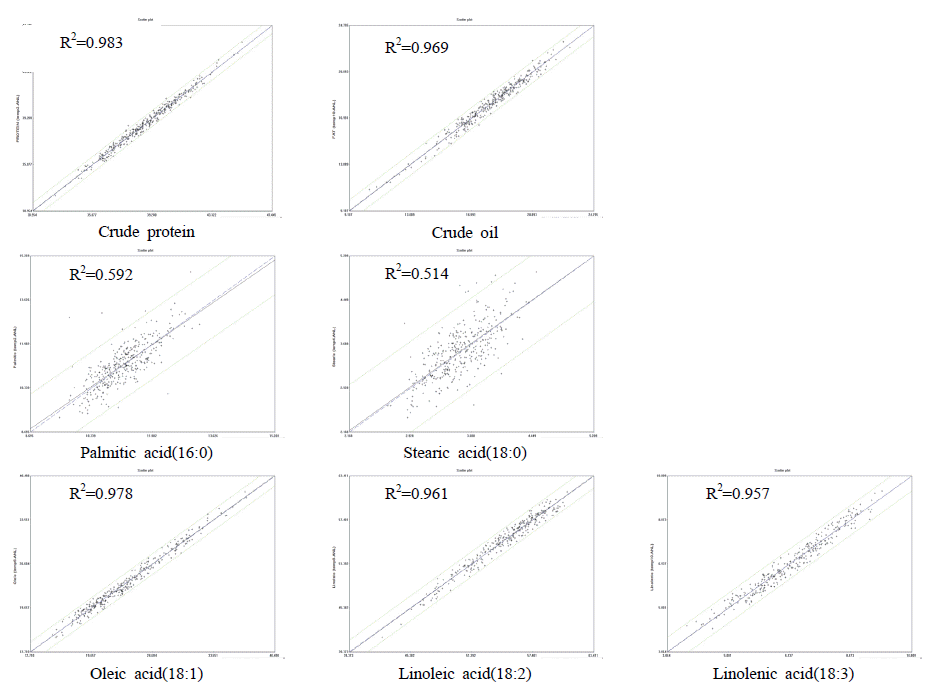
Table 2.Statistics for calibration and validation parameters for crude protein, crude oil and composition of fatty acid (palmitic, stearic, oleic, linoleic and linolenic acid) in soybean seed.
Table 2.
|
Statistical parameters |
Crude protein |
Crude oil |
Fatty acid
|
Saturated
|
Unsaturated
|
|
Palmitic (16:0) |
Stearic (18:0) |
Oleic (18:1) |
Linoleic (18:2) |
Linolenic (18:3) |
|
|
Calibration |
SEC |
0.290 |
0.363 |
0.519 |
0.315 |
0.659 |
0.69 |
0.265 |
|
Bias |
-0.002 |
-0.002 |
0.019 |
0.014 |
-0.005 |
0.005 |
0.007 |
|
R2
|
0.983 |
0.969 |
0.592 |
0.514 |
0.978 |
0.961 |
0.957 |
|
|
Validation |
SEP |
0.377 |
0.668 |
0.763 |
0.394 |
1.811 |
1.650 |
0.457 |
|
Bias |
0.487 |
0.557 |
0.042 |
0.014 |
1.218 |
0.816 |
0.040 |
|
R2
|
0.971 |
0.939 |
0.170 |
0.249 |
0.974 |
0.975 |
0.947 |
따라서 본 연구에서는 활용이 가능한 조지방, 조단백과 불포화 지방산 검량식에 재래종 콩 854자원을 적용하여 분석한 결과 조단백 함량 범위는 33.7-47.0%, 평균 39.2%, 조지방 함량 범위 는 9.8-20.3%, 평균 15.0%로 조사되었다(Table
3).
Kwon et al.(1975)이 우리나라 재래종 자원 840계통을 이용하여 단백질 과 지방 함량을 조사한 결과에 따르면 단백질 함량의 범위는 33.2~49.8%, 평균 41.7%, 지방 함량의 범위는 11.2~23.4%, 평균 17.4%로 나타나 본 시험의 결과보다 단백질, 지방 함량 모두 조금 높은 경향이었다. 이와 같은 결과는 실험에 사용된 재료에서 오는 차이일 수도 있으며, 또한 단백질, 지방 함량은 재배장소와 재배년도 등 환경조건에 따라 달라질 수 있다고 하였다(
Kwon et al. 1972,
Park 1974). 일품검정콩을 NIRS 검량식에 적용하여 성분을 분석한 결과 조단백 함량 40.7%, 조지방 함량 18.8%로 조단백은 실험실 분석값(40.6%)과 같았으 며, 조지방은 1.6%의 편차를 보여 본 연구의 NIRS를 이용한 분석의 신뢰도가 높음을 알 수 있었다(Table
1, Table
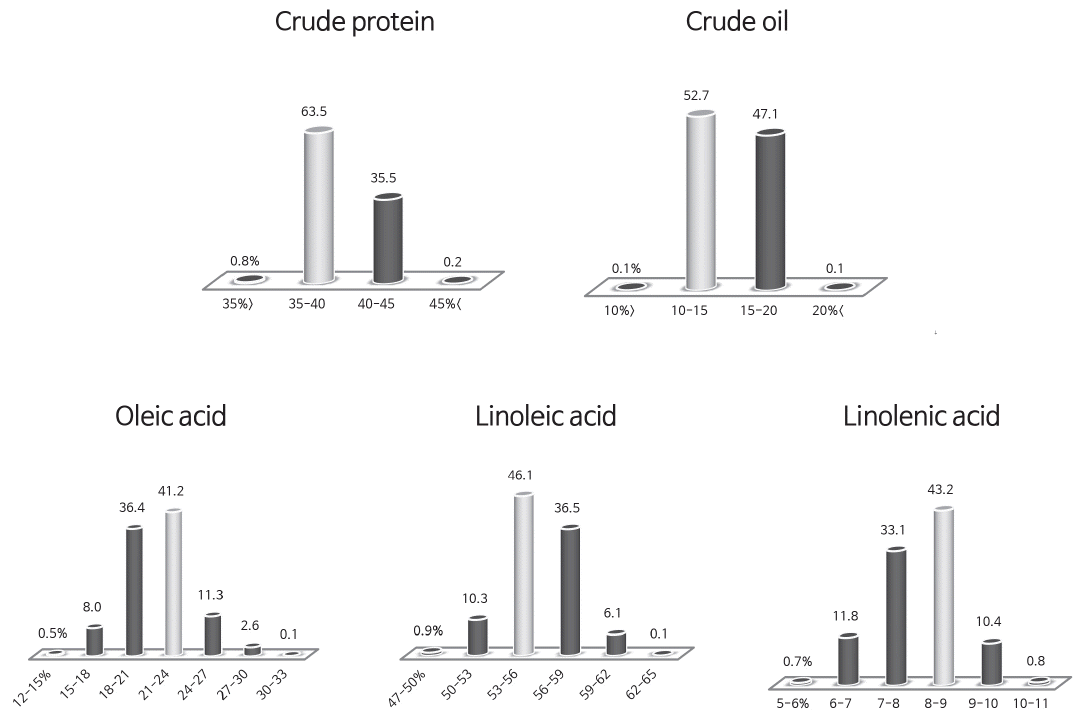
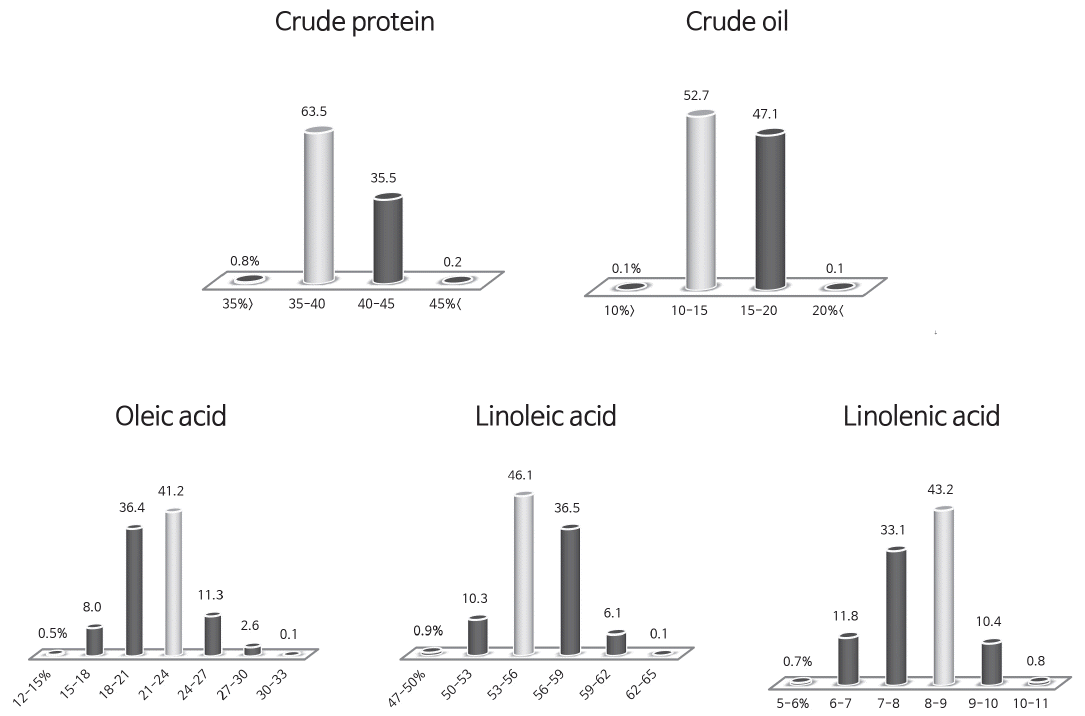
3). 단백질 함량 40% 이상인 자원의 비율은 35.5%로 단백질 함량은 비교적 높은 경향이었으나, 조지방 함량은 일반적으로 알려진 평균인 20% 이상 자원이 1자원에 불과하였으며 10-15% 범위의 자원이 52.7%로 지방 함량이 낮은 자원이 많은 경향을 나타내었다(Fig.
2). 이와 같은 결과는 우리나라 재래종 콩은 단백질 우수 자원을 위주로 선발하여 왔기 때문에 조지방 함량이 외국에 비하여 월등히 낮다고 한 보고와 다르지 않았다(
Kwon et al. 1975). 단백질 함량 45.0% 이상으로 조사된 IT023955(47.0%)와 IT154552(45.2%)의 조단백 함량 재확인을 위하여 2반복으로 정량 분석을 하였으며 각각 46.9%와 45.1%의 결과를 얻어 두 분석 방법간에 차이가 없음을 알 수 있었다. 이와 같은 결과에서 볼 때 본 시험에서 작성한 NIRS 검량식은 육종소재나 유전자원 과 같은 재료의 대량평가에 매우 유용할 것으로 생각된다. 불포화 지방산 중 oleic acid 함량의 평균은 21.4%, 범위 12.1-30.2%, linoleic acid 평균 55.6%, 범위47.8-62.3%, , linolenic acid 평균 8.1%, 범위 5.9-10.7%로 조사되어 일반적인 불포화 지방산 분포와 유사하였으나
Song et al.(2015)이 한국과 중국 유전자원 379점을 대상으로 한 결과인 oleic acid 28.2%(15.2-56.0), linoleic acid 51.2%(24.4-68.1), linolenic acid 7.1%(3.4-11.1) 와는 차이를 보였다. 산화 안정성이 높고, 심혈관 질환에 좋은 oleic acid 함량을 늘리고 산화안정성이 낮은 linolenic acid 함량을 줄이려는 시도로 oleic acid 함량 50-55% 이상, linolenic acid 3-4% 미만인 품종 개발을 추구하고 있다고 하였으며(
Lee et al. 2007,
Song et al. 2015) 본 연구 결과에서는 oleic acid 최대 함량 30.2%, linolenic acid 최소 5.9% 으로 조사되어 보다 다양한 자원의 평가를 통해 목표에 근접한 자원을 발굴해야 할 것으로 보인다. 본 연구 결과의 조단백과 조지방 함량에 대한 상관 분석시 부의 상관(-0.203)을 보였으며, 이는
Kwon(1972) 이 국내 재래콩의 단백질, 지방 상관 분석 결과(-0.22)와 유사하 였다(Table
4). 조단백, 조지방, 불포화 지방산 조성의 상관 분석 에서는 조지방과 oleic acid는 높은 정의 상관(0.374)이 있으며, 조지방과 linoleic acid는 부의 상관(-0.133)을 보였고, linolenic acid와는 매우 강한 부의 상관(-0.666)이 있었다. Oleic acid는 linoleic acid(-0.879), linolenic acid(-0.601)과 고도로 유의한 부의 상관이 있었고, linoleic acid과 linolenic acid은 높은 정의 상관(0.476)이 있어 Hong et al.(2010)이 보고한 결과와 유사하 였다. 실제 조지방 함량 최고치(20.3%)인 자원의 oleic acid 함량은 27.6%, linoleic acid 52.0%, linolenic acid 6.1%로 본 연구 결과의 oleic acid 평균(21%)보다 높고 linoleic acid 평균(55.7%)과 linolenic acid 평균(8.0%)보다 낮았다. 국내 재 래종 자원의 oleic acid와 linolenic acid의 평균을 검량식 작성에 사용된 국내외 육성종과 비교하였을 때 oleic acid는 평균 2.3% 낮고 linolenic acid는 평균 1.1% 높았다. 이러한 결과로 보아 본 연구에 사용된 재래종 자원은 우리나라의 전통 식습관에 따라 밥밑용, 장용, 두부용 등 고단백 위주로 활용, 선발되어 왔기 때문에 조지방 함량이 낮은 경향이라는 보고가 있으며 (
Kwon 1972,
Kwon et al. 1975), 조지방과 불포화 지방산의 상관에 따라 다른 집단에 비해 oleic acid 함량은 낮고 linolenic acid 함량은 높은 결과를 얻었을 가능성이 있으므로 앞으로 다양 한 도입종을 대상으로 하여 지방산 조성이 우수한 유용 자원과 관련 정보를 제공하여야 할 것이다.
Table 3.Statistical results of crude protein, crude oil and unsaturated fatty acid (oleic, linoleic and linolenic acid) by NIRS in 854 soybean landraces from Korea.
Table 3.
|
Statistics |
Crude protein |
Crude oil |
Unsaturated fatty acid
|
|
Oleic (18:1) |
Linoleic (18:2) |
Linolenic (18:3) |
|
|
Mean |
39.2 |
15.0 |
21.4 |
55.6 |
8.1 |
|
Range |
33.7-47.0 |
9.8-20.3 |
12.1-30.2 |
47.8-62.3 |
5.9-10.7 |
|
Standard deviation |
2.05 |
1.44 |
2.62 |
2.20 |
0.85 |
Table 4.Pearson correlation coefficients for crude protein, crude oil and unsaturated fatty acid (oleic, linoleic and linolenic acid) in 854 soybean landraces from Korea.
Table 4.
|
Characters |
Crude protein |
Crude oil |
Oleic acid |
Linoleic acid |
Linolenic acid |
|
|
Crude protein |
1.0 |
-0.203**
|
-.0.06 |
-0.026 |
-0.197**
|
|
Crude oil |
|
1.0 |
0.374**
|
-0.133**
|
-0.666**
|
|
Oleic acid |
|
|
1.0 |
-0.879**
|
-0.601**
|
|
Linoleic acid |
|
|
|
1.0 |
0.476**
|
|
Linolenic acid |
|
|
|
|
1.0 |
Fig. 2.Frequently distribution of crude protein, crude oil and unsaturated fatty acid (oleic, linoleic and linolenic acid) in 854 soybean landraces from Korea (white bar include mean of each contents).
적 요
본 연구는 콩 유전자원의 조단백, 조지방과 지방산을 대량 평가하기 위하여 NIRS 검량식을 작성하고 작성된 검량식으로 국내 재래종 콩 854자원의 성분을 분석하기 위하여 수행하였다.
검량식 작성에 사용된 국내외 육성종의 실험실 분석값은 조단 백 평균 38.8%, 범위 32.3~46.0%, 조지방 평균 15.0%, 범위 11.1-23.7%로 조사되었으며, 지방산 조성의 평균 함량과 범위는 각각 palmitic acid 11.2%, 9.2-14.7%, stearic acid 3.6%, 2.4-4.9%, oleic acid 23.7%, 15.0-39.0%, linoleic acid 54.5%, 41.4-61.2%, linolenic acid 7.0%, 4.1-11.1% 였다. 검량식의 통계 분석 결과 R2 값은 각각 조단백 0.983, 조지방 0.969, palmitic acid 0.592, stearic acid 0.514, oleic acid 0.978, linoleic acid 0.961, linolenic acid 0.957 이었다. 검량식은 통계 분석값에 따라 조단백, 조지방과 불포화 지방산 분석(oleic, linoleic, linolenic acid)에는 적용이 가능하였으나 포화 지방산 (palmitic, stearic acid)에는 적용이 불가능하였다. 따라서 국내 재래종 콩 854자원의 성분분석에 조단백, 조지방과 불포화 지방 산의 검량식을 적용하였으며 그 결과 조단백 평균은 39.2%, 범위 33.7-47.0%, 조지방 평균 15.0%, 범위 9.8-20.3%로 조사 되었다. 조단백 함량이 높은 2자원, IT154552(45.2%)와 IT023955(47.0%)의 값을 재확인하기 위하여 정량 분석하였으 며, 각각 45.1%와 46.9%로 조사되어, 두 방법간 함량 차이가 없음을 알 수 있었다. 따라서, 본 연구결과의 단백질 검량식은 대량평가에 매우 유용할 것으로 보인다. Oleic acid는 평균 21.4%, 12.1-30.2%, linoleic acid 평균 55.6%, 47.8-62.3%, linolenic acid 평균 8.1%, 5.9-10.7%로 조사되었다. 조단백, 조지방, oleic acid, linoleic acid, linolenic acid을 이용하여 상관관계를 조사한 결과, 조단백과 조지방은 부의 상관(-0.203), 조지방과 oleic acid는 강한 정의 상관(0.374), linolenic acid와 는 강한 부의 상관(-0.666)이 있었다.
사 사
본 연구는 농촌진흥청 농업과학기술연구 개발사업(과제번호: PJ01010603)의 지원에 의해 이루어졌습니다.
References
- 1. Choung MG, Baek IY, Kang ST, Han WY, Shin DC, Moon HP, Kang KH. Determination of protein and oil contents in soybean seed by Near Infrared Reflectance Spectroscopy. Korean J. Crop Sci 2001. 46: 106-111.
- 2. Delwiche SR, Pordesimo LO, Panthee DR, Pantalone VR. Assessing glycinin(11S) and β-conglycinin(7S) fractions of soybean storage protein by Near-Infrared Spectroscopy. J. Am. Oil Chem. Soc 2007. 84: 1107-1115.
- 3. Hong SB, Lee SJ, Kim YH, Hwang YS, Yoon KH, Lee SI, Nam MY, Song LS, Baek IY, Kim HK, Choung MG. Variation of protein Oil, fatty acid and sugar contents in black soybean cultivars according to different latitudes. Korean Journal of Environmental Agriculture 2010. 29: 120-128.
- 4. Jiang HY, Zhu YJ, Wei LM, Dai JR, Song TM, Yan YL, Chen SJ. Analysis of protein starch and oil content of single intact kernels by near infrared reflectance spectroscopy (NIRS) in maize(Zea mays L.). Plant breeding 2007. 126: 492-497.
- 5. Kim YH, Ahn HK, Lee ES, Kim HD. Development of prediction model by NIRS for anthocyanin contents in black colored soybean. Korean J. Crop Sci 2008. 53: 15-20.
- 6. Kim YH, Yun HT, Chung WK, Kim SD. Determination of seed component contents in whole soybean seeds by Near Infrared Spectroscopic analysis. RDA. J. Agri. Sci 1995. 37: 91-94.
- 7. Kwon SH. Origin and importance of protein and oil of Korean soybean. Korean J. Food Sci. Technol 1972. 4: 158-161.
- 8. Kwon SH, Im KH, Kim JR. Diversity of protein and oil contents of the Korean soybean land races(I). Korean J. Breeding 1972. 4: 29-32.
- 9. Kwon SH, Oh JH, Kim JR, Song HS, Kim BW. Diversity of protein and oil contents of the Korean native soybean seeds II. Korean J. Breeding 1975. 7: 40-44.
- 10. Lee HB, Choi BR, Kang CS, Kim YH, Choi YJ. Determination of seed protein and oil concentration in kidney bean by Near Infrared. Spectroscopic analysis 2001. 46: 248-252.
- 11. Lee JD, Bilyeu KD, Shannon JG. Genetics and breeding for modified fatty acid profile in soybean seed oil. J. Crop Sci. Biotech 2007. 10: 201-210.
- 12. Messina MV, Setchell PR, Branes S. Soy intake and cancer risk : A review of the in vitro and in vivo data. Naturo. Cancer 1994. 113-131.
- 13. Ok HC, Yoon YH, Jeong JC, Hur OS, Lee CW, Kim CG, Cho HM. Yields and isoflavone contents of soybean cultivar in highland area. Korean J. Crop Sci 2008. 53: 102-109.
- 14. Park YK. Effects of varieties and seeding dates on the yield components, protein and oil content in soybean. J. Korean Soc. Crop Sci 1974. 15: 77-83.
- 15. Roberts CA, Ren C, Beuselinck PR, Benedict HR, Bilyeu K. Fatty acid profiling of soybean cotyledons by Near-Infrared Spectroscopy. Society for Applied Spectroscopy 2006. 60: 1328-1333.
- 16. Shin DC, Baek IY, Park CK, Kang ST, Song SB, Hur SO, Kwack YH, Oh YJ, Hwang YH. A new early maturity diseases and lodging resistance. high yielding and black seed coat soybean variety “Ilpumgeomjeongkong”. RDA. J. Crop Sci 1998. 40(2):92-96.
- 17. Song HL, Jang EK, Son EH, Lee KH, Hwang SG, Yun GS, Lee JD, Kim HS. Evaluation of oil contents and fatty acid composition and selection of useful resources in soybean germplasm accessions. Korean J. Breed. Sci 2015. 47: 209-218.
- 18. Yoon TH, Im KJ, Kim DH. Fatty acid composition of lipids obtained from Korean soybean varieties. Korean J. Food Sci. Technol 1984. 16: 375-382.
- 19. Yoon TH. Effects of procedures for preparing fatty methyl esters on fatty acid composition of Korean vegetable oils (sesame seed oils). J. of the Korean Chemists Society 1987. 4: 9-18.