적요
Mixolab is suitable to evaluate mixograph and farinograph for testing dough rheology and amylopgraph for properties of starch pasting with a view to analyze protein and starch quality at the same time. Mixolab analysis revealed that water absorption and dough development time of Korean wheat cultivars were similar to it of soft wheats and flour while dough stability and protein weakening of Korean wheat cultivars were similar to it of hard wheat and strong flour. Also, starch properties of Korean wheat cultivars showed similar properties of hard wheats. There was a significantly positive correlation between mixolab and mixograph in the water absorption of dough, whereas no correlation was observed between them in dough development time and stability. Furthermore, maximum viscosity of starch and breakdown in amylopgraph were correlated to stabilities of pasting and cooking and setback in mixolab. Resultantly, in mixolab, properties of dough and protein highly and positively correlated to loaf volume, hardness of noodles, and size of cookies i.e. diameter. Moreover, positive correlation was identified between viscoelasticity of noodles and properties of protein, pasting, and setback in mixolab.
서 언
믹소랩(Mixolab®, Chopin Tech, 프랑스)은 반죽 물성 뿐만 아니라 전분과 단백질의 특성을 평가 할 수 있으며, 열이 가해졌 을 때 반죽의 연화 정도 (thermal weakening)와 호화 특성 (pasting properties)을 동시에 분석이 가능하기 때문에 밀가루 물성을 평가하는 제분 및 식품업체에서 많은 관심을 가지고 있다(
Dubat, 2010). 믹소랩은 밀가루와 물 혼합 동안 반죽 형성 과정, 반죽내 단백질의 결합, 가열에 의한 반죽 특성 변화, 전분의 호화와 노화 정도에 대한 평가가 동시에 가능하기 때문에 제빵 및 제과 특성 평가에 많이 이용되고 있으며(
Collar et al. 2007,
Kahraman et al. 2008,
Ozturk et al. 2008,
Koksel et al. 2009,
Rosell et al. 2007,
Caffe-Treml et al. 2010,
Simsek et al. 2016), 최근에는 듀럼밀과 또르티아뿐만 아니라 쌀 품질 평가에 도 이용되고 있다 (
Xie 2011,
Posner et al. 2014,
Blandin et al. 2015). 이러한 이유는 믹소랩이 기존의 반죽 평가와 달리 반죽 동안에 단백질 및 반죽 특성에 영향을 미치는 열처리가 가능하였기 때문이다(
Lefebvre et al. 1994, 2000). 열처리로 인하여 글루텐의 탄성력(gluten elasticity)은 반죽 온도가 10-5 5℃일 때 감소하며 55℃이상에서는 증가한다. 이러한 현상은 고분자량 글루텐닌 (High molecular weight glutenin subnunits) 의 조성이나 발현과 밀접한 관련이 있다.
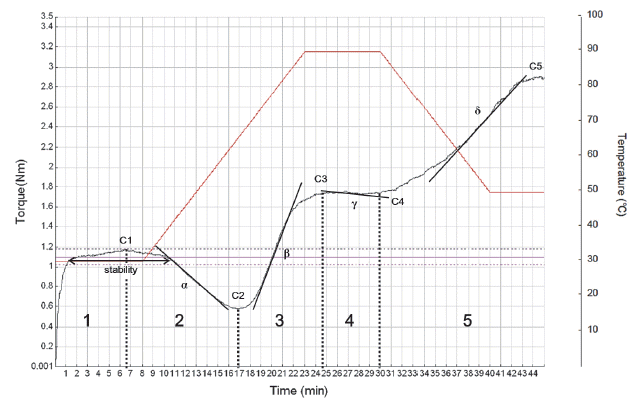
믹소랩은 반죽 물성 평가를 하는 동안 반죽의 힘에 의해 총 5단계로 구분된다 (Fig.
1). 이 과정 동안에 일어나는 변화는 반죽의 힘을 의미하는 토크(torque, Nm)로 표시된다. 단계별 특성을 보면, 1단계와 2단계는 단백질 및 반죽 특성과 관련 있으며 이후 단계는 전분 특성과 관련 있다. 1단계는 반죽 개시 단계로 온도는 30°C를 유지하고 반죽이 변형(deformation)에 저항할 수 있을 때까지 토크가 증가한다. 이 과정에서 가수량 (water absorption) 및 반죽 발달 시간(dough development time) 과 안정도(stability)를 측정할 수 있다. 가수량(%)은 토크 값이 1.1±0.07 Nm이 도달할 때 이용된 물의 양이다. 또한, 반죽 발달 시간(min)은 30°C에서 반죽의 힘이 최대 토크 (C1)에 도달하는 시간이며, 안정도(min)는 반죽이 형성된 시점으로부터 반죽 지 속성(consistency)이 11% 떨어진 시간(C1-11%)을 의미한다. 2단계는 단백질 연화(protein weakening) 과정으로 과반죽 (excessive mixing)으로 인해서 반죽의 지속성이 약해지고 온도 는 60°C까지 상승한다. 이 과정에서 반죽의 최소 지속성 (minimum consistency of dough)을 알 수 있다. 또한, 토크 값이 최소로 떨어진 시점으로 단백질 강도(protein strength)를 나타내며 C2로 표기한다. 3단계는 온도가 90°C까지 상승하는 전분 호화 단계로 전분의 팽윤(swelling) 및 호화(pasting)되는 과정에서 전분의 점성 상승으로 토크 값이 상승하여 최고 값이 전분 호화 (starch gelatinization) 정도를 나타내기 때문에 아밀 로스 함량과 관련이 있으며, C3로 표기한다. 4단계는 온도가 90°C로 유지되며 아밀라아제(amylase)와 같은 전분 분해 효소 로 인하여 전분의 점성이 줄어드는 안정화 (stability during baking)단계로 최저값이 전분의 호화 안정도 (gelatinization stability of starch)을 의미하며, C4로 표기한다. 5단계는 온도가 50°C까지 낮아지면서 호화된 전분이 젤(gel)을 형성하는 전분 노화(starch retrogradation) 단계로 토크 값이 상승한다. 최고 토크 값은 전분 노화도를 의미하고, C5로 표기한다.
Fig. 1Typical Mixolab curve. Annotated Mixolab output. C1, maximum consistency during 30°C period; stability, time during which torque is greater than C1 – 11%; C2, minimum torque value obtained during the heating period; C3, maximum torque during 90°C period; C4, minimum torque during the 90°C period; C5, torque at end of test; α, curve slope between the end of 30°C period and C2; β, curve slope between C2 and C3; γ, curve slope between C3 and C4; and δ, curve slope between C4 and C5 (
Dubat 2010).
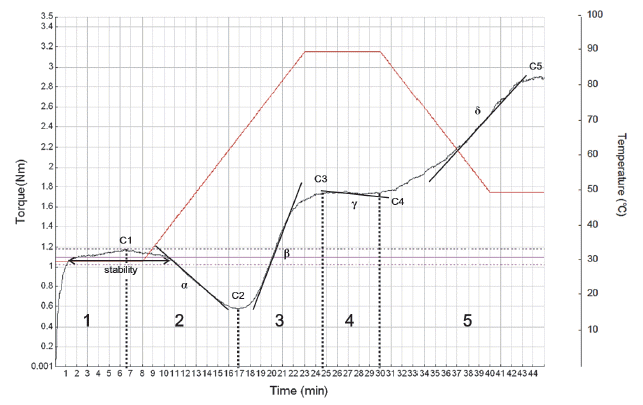
믹소랩은 측정치를 1차와 2차로 구분한다. 1차 측정치 (primary parameters)는 가수량, 반죽 발달 시간, 안정도, C1-5를 기기로 측정한 값을 의미한다. 2차 측정치(secondary parameters)는 각 단계의 기울기를 의미하며 α, β, γ와 δ로 표기한다. 각 단계별 특징을 보면, 1단계와 C2사이의 기울기인 α는 열에 의한 단백질 연화 속도(protein weakening rate)를 의미하며, C2와 C3사이의 기울기인 β는 호화 속도 (starch gelatinization rate)를 나타낸다. 또한, C3와 C4 사이의 기울기인 γ는 전분 분해 효소의 분해 속도를 나타내기 때문에 조리 안정도 (cooking stability rate)를 의미하고, C4와 C5 사이의 기울기를 나타내는 δ는 노화 속도를 나타내기 때문에 냉각 감속 비율 (cooling setback rate)를 의미한다. 이러한 2차 변수는 기울기로 표기하기 보다는 각 지표간 토크 차이로 표시한다.
믹소랩 분석 수치와 기존의 밀가루 특성, 반죽 및 전분 특성과 비교 평가가 이루어 졌는데(
Pena et al. 2006,
Koksel 2009), 믹소랩 분석으로 단백질 및 전분 특성을 동시에 분석이 가능하기 때문에 향후 국내 밀 육종 프로그램에 이용 가능성이 높을 것으로 전망된다. 그럼에도 불구하고 믹소랩을 이용한 국내 밀 품종에 대한 분석 및 평가는 전무하다. 따라서 본 연구에서는 현재 국내 밀 품질 분석에서 이용되는 믹소그램 및 아밀로그램과 믹소랩과 상관 관계를 분석하여 국내 밀 육종 프로그램의 이용성에 대해 평가하였다.
재료 및 방법
공시재료
본 연구에 위해 농촌진흥청 국립식량과학원 증식포장에서 전작조건으로 재배하여 2014년에 수확된 국내 육성 품종 19개, 수입산 원맥 6종과 시중 밀가루 3종을 이용하였다. 수입산 원맥 6종은 사조동아원(주)으로 부터 제공 받았으며, 호주산 경질밀 (Australian hard: AH), 호주산 표준 백립계(Australian standard white: ASW), 미국산 연질 백립계(soft white: SW), 미국산 경질 적립계 추파밀(hard red winter: HRW), 미국산 빵용 춘파 밀(dark northern spring: DNS)과 캐나다산 서부 적립계 춘파밀 (Canadian western red spring)이 이용되었다. 시중 밀가루는 3개 회사에서 판매하는 밀가루를 종류별로 혼합하여, 강력분, 중력분과 박력분으로 이용하였다. 국내 밀 품종과 수입산 원맥은 Buhler mill(MLU-202, Switzerland)을 이용하여 제분수율 60% 수준으로 제분하였고, 제분된 밀가루는 10℃ 저온실에 보관하여 실험에 사용하였다.
믹소그램 및 아밀로그램 분석
밀가루의 수분과 단백질 함량은 각각
AACCI Approved Methods 44-15.02과 46-30.01 (2010)에 준하여 측정하였다. 아밀로스 함량은
Williams 등(1970)의 방법에 따라 측정하였다. 밀가루 반죽 특성 평가는 믹소그래프를 이용하였으며,
AACCI Approved Methods 54-40.02(2010)에 준하여 10 g mixograph(National Mfg. Co., USA)를 이용하였다. 밀가루의 호화특성은 Micro Visco-Amylo–Graph (Brabender GmbH, Co., 독일)를 사용하여 측정하였다. 밀가루 (7g, 14% 수분함량 기준)를 Amylograph 용기에 넣고 증류수 100 ml를 첨가한 후 현탁액을 만들어 Micro Visco-Amylo-Graph에 넣은 뒤 110 rpm으로 교반되는 현탁액 용기를 30℃에서 95℃까지 분당 7. 5℃씩 온도를 올려 주고, 5분간 유지한 후 분당 7.5℃씩 50℃까 지 온도를 내려준 후 2분간 유지하면서 온도에 따른 밀가루 현탁액의 최고점도(peak viscosity), 최저점도(holding strength), 최종점도(final viscosity), 최고점도에서 최저점도를 뺀 값(breakdown), 및 최종 점도에서 최저점도를 뺀 값(setback) 을 측정하였다.
Mixolab (Chopin, 프랑스)은
AACCI Approved Methods 54-60.01(2010) 방법과 믹소랩 사용자 매뉴얼에 따라 수행하였 다(
Dubat 2010). 밀가루 50g(수분함량 14%)과 증류수를 포함한 무게를 75g으로 맞추고 반죽 발달(dough development)하는 동안 최고 토크(peak torque)가 1.1 ± 0.07 Nm이 되도록 유지했 으며, 반죽 속도는 80 rpm이었다. 믹소랩의 여러 가지 지표 (mixolab parameters)는 쇼팡 믹소랩 소프트웨어 (Chopin Mixolab software Version 3.14, Chopin, 프랑스)를 이용하여 분석하였다.
제빵 평가를 위한 식빵은
AACCI Approved Methods 10-10.03(2010) 방법에 따라 100g 밀가루(14% 수분함량 기준) 를 이용하여 straight-dough methods에 준하여 제조하였다. 빵 부피는 오븐에서 구워 낸 직후 제빵용 체적기(Loaf volumeter, National Mfg., USA)를 이용하여 측정하였다.
국수 평가를 위해서 우동을 만들었으며, 우동 제조를 위한 가수량 결정은 34% 가수량으로 제조한 중력분을 비교하여 결정 하였다. 밀가루 100 g(수분함량 14% 기준)에 소금물을 넣고 pin mixer(Micro Mixer 100g, National Mfg., 미국)에서 4분간 혼합하였으며, 최종 소금물 농도는 2.0%로 맞추었다. 국수 제조 는 국수 제조기(Ohtake Noodle Machine Mfg., 일본)를 이용하 였으며, 최초 면대 생성을 위한 롤러 간격은 3mm로 하였다. 상온에서 1시간 숙성 후, 순차적으로 2.40, 1.85과 1.30 mm 롤러 간격을 하여 면대 생성을 하였으며, 우동 면발을 만들기 위해 12번 절단 롤을 이용하였다. 국수 식미 평가를 위하여 우동 20g을 끓는 물(500 mL)에서 18분간 삶은 후, 찬물에 행군 다음, Texture Analyser(TA-XT2, Haslemeres, England)를 이 용하여 측정하였다. 삶은 후 5분 이내에 5가닥의 면발을 이용하 여 측정하였으며 최소한 5반복을 실시하였다. 식미 검정은 3.175 mm 금속날을 이용하여 1.0 mm/sec 속도로 70% strain으로 측정하였다. 삶은 국수의 경도(hardness), 탄성(springiness)과 점성(cohesiveness)은
Baik 등(1994)의 방법을 따랐다.
제과 적성 평가를 위한 쿠키는 Sugar snap cookie를
AACCI Approved Methods 10-52.02(2010)방법에 따라 Micro-mixer bowl에 Creamed Mass (sugar + shortening + NaHCO
3 + NFDM) 37.6 g, NaHCO
3 (0.4 g)와 NaCl (0.4 g)을 첨가하여 178rpm 속도로 3분 정도 반죽하였으며, 반죽하는 동안 밀가루 40 g을 spatulas로 10, 5, 5, 5초 간격으로 나누어 넣은 다음 3분간 더 반죽하였다. 반죽이 끝난 후 양분한 다음 Cookie sheet 에서 골고루 펴고 Cookie cutter로 잘라내었다. 오븐에서 204℃ 에서 10분간 굽고 상온에서 30분정도 식힌 후, 쿠키의 직경을 측정하였다.
모든 분석은 최소한 3회 이상 분석하였으며, 통계 분석은 SAS computer software package (SAS Institute, 미국)을 이용 하여 분석하였다. 분산분석은 PROC GLM을 이용하였고, 상관 관계는 Pearson’s correlation coefficients를 이용하여 P < 0.05 수준에서 검정하였다.
결과 및 고찰
국내 밀 품종의 반죽 및 호화 특성
국내 밀 품종과 수입 원맥 및 시중 밀가루의 특성을 평가하였다 (Table
1). 국내 밀 품종의 평균 단백질 함량은 11.77%로 고소밀 이 10.79%로 가장 낮았고 올밀은 12.68%로 가장 높았다. 수입원 맥과 단백질 함량을 비교한 결과, 국내 품종의 단백질 평균 단백 질 함량은 ASW보다 높았으며, AH나 HRW 보다는 낮았다. 국내 밀 품종은 수입되는 연질밀 보다 높은 단백질 함량을 지니며 경질밀 보다는 약간 낮은 함량으로, 중력분보다는 높고 강력분보 다는 낮은 수준이다.
Table 1Protein and amylose content, mixograph parameters and pasting properties of Korean wheat cultivars, imported wheat and commercial wheat flours.
Table 1
|
Flour |
PROa (%) |
AMYb (%) |
Mixographc
|
Amylographd
|
|
|
|
Abs (%) |
Time (min) |
Tol (mm) |
PV (BU) |
HS (BU) |
FV (BU) |
BD (BU) |
SB (BU) |
|
|
Korean wheat cultivars
|
|
Alchan |
11.62 |
26.18 |
57.00 |
5.13 |
34.67 |
327.50 |
214.50 |
514.50 |
113.00 |
300.00 |
|
Baekjoong |
11.66 |
26.84 |
65.00 |
2.40 |
15.00 |
306.50 |
203.00 |
473.00 |
103.50 |
270.00 |
|
Chunggye |
11.78 |
26.93 |
58.00 |
3.12 |
16.00 |
324.50 |
208.50 |
535.50 |
116.00 |
327.00 |
|
Dahong |
11.60 |
26.45 |
62.67 |
2.30 |
9.67 |
287.00 |
207.67 |
488.67 |
79.33 |
281.00 |
|
Eunpa |
12.39 |
27.51 |
62.00 |
3.47 |
19.00 |
387.33 |
232.33 |
557.67 |
155.00 |
325.33 |
|
Geuru |
12.11 |
26.39 |
62.67 |
1.50 |
8.00 |
315.50 |
215.00 |
501.00 |
100.50 |
286.00 |
|
Gobun |
12.08 |
25.94 |
60.67 |
4.33 |
27.33 |
337.00 |
197.50 |
470.00 |
139.50 |
272.50 |
|
Goso |
10.79 |
28.86 |
62.00 |
2.08 |
11.33 |
280.00 |
221.00 |
550.50 |
59.00 |
329.50 |
|
Hojoong |
11.60 |
24.77 |
61.00 |
3.33 |
18.00 |
410.00 |
258.00 |
636.50 |
152.00 |
378.50 |
|
Joa |
11.28 |
27.98 |
60.00 |
2.17 |
6.00 |
284.33 |
231.00 |
582.67 |
53.33 |
351.67 |
|
Jokyung |
11.91 |
27.53 |
65.00 |
4.37 |
25.33 |
269.00 |
188.00 |
411.00 |
81.00 |
223.00 |
|
Keumkang |
12.14 |
24.74 |
63.00 |
3.37 |
21.67 |
337.50 |
216.50 |
489.50 |
121.00 |
273.00 |
|
Ol |
12.68 |
25.92 |
60.00 |
2.33 |
9.67 |
337.50 |
250.00 |
588.50 |
87.50 |
338.50 |
|
Olgeuru |
11.33 |
27.61 |
61.00 |
2.50 |
14.67 |
281.50 |
200.50 |
478.00 |
81.00 |
277.50 |
|
Seodun |
12.15 |
25.49 |
59.67 |
3.57 |
20.00 |
302.00 |
231.50 |
560.50 |
70.50 |
329.00 |
|
Suan |
11.57 |
27.10 |
61.00 |
2.13 |
19.00 |
321.50 |
209.00 |
493.50 |
112.50 |
284.50 |
|
Tapdong |
12.02 |
27.49 |
60.67 |
6.13 |
26.67 |
344.50 |
217.50 |
510.00 |
127.00 |
292.50 |
|
Uri |
11.60 |
27.96 |
56.00 |
3.37 |
25.00 |
278.50 |
217.00 |
505.50 |
61.50 |
288.50 |
|
Younbaek |
11.20 |
28.04 |
61.00 |
4.73 |
11.67 |
285.00 |
191.50 |
461.50 |
93.50 |
270.00 |
|
|
Imported wheat flourse
|
|
AH |
12.68 |
25.36 |
63.00 |
3.90 |
8.00 |
398.50 |
288.50 |
668.00 |
110.00 |
379.50 |
|
ASW |
10.00 |
26.63 |
59.00 |
4.90 |
7.50 |
429.00 |
292.00 |
704.00 |
137.00 |
412.00 |
|
SW |
9.56 |
29.57 |
58.00 |
4.20 |
7.00 |
253.50 |
212.50 |
498.00 |
41.00 |
285.50 |
|
DNS |
14.42 |
27.91 |
66.00 |
5.23 |
13.00 |
360.50 |
269.00 |
613.50 |
91.50 |
344.50 |
|
HRW |
12.70 |
28.06 |
63.00 |
5.60 |
18.00 |
306.00 |
250.00 |
545.00 |
56.00 |
295.00 |
|
CWRS |
14.07 |
27.27 |
66.00 |
4.25 |
10.67 |
432.50 |
253.50 |
572.50 |
179.00 |
319.00 |
|
|
Commercial wheat floursf
|
|
Bread |
14.15 |
25.23 |
65.22 |
4.41 |
19.33 |
317.67 |
243.83 |
569.17 |
73.83 |
325.33 |
|
Noodles |
10.67 |
27.28 |
62.33 |
5.01 |
14.89 |
274.33 |
225.17 |
534.00 |
49.17 |
308.83 |
|
Cookies |
9.05 |
28.64 |
59.33 |
3.91 |
8.11 |
240.17 |
207.50 |
481.83 |
32.67 |
274.33 |
|
LSDg
|
0.26 |
1.40 |
1.49 |
0.48 |
2.99 |
19.68 |
10.42 |
31.20 |
19.28 |
29.21 |
반죽 특성 평가를 위한 믹소그램 결과 국내 밀 품종의 평균 가수량은 60.96%로, 우리밀이 56.00%로 가장 낮았으며 조경밀 이 65.00%로 가장 높았다. 또한 평균 반죽 시간은 3.28분으로 그루밀이 1.50분으로 가장 짧았으며 탑동밀이 6.13분으로 가장 길었다. 평균 반죽 안정도는 17.82mm로 조아밀이 6.0m로 가장 낮았으며 알찬밀이 34.67mm로 가장 높았다. 국내 품종의 평균 반죽 시간과 반죽 안정도는 각각 3.28분과 17.82로 나타났으며, 그루밀과 조아밀의 반죽시간과 반죽안정도가 낮은 것으로 확인 되었다. Glu-1 점수가 10점인 알찬밀, 금강밀, 조경밀과 탑동밀 은 반죽시간과 반죽안정도가 우수한 것으로 나타났다. 가수량은 단백질 함량과 높은 정의 상관을 보였다. 이러한 결과는 국내 밀 품종에 대한 이전 평가에서도 확인된 바 있으며(
Park et al. 2001, Kang et al. 2010a), 단백질 함량이 높은 경질밀이 연질밀 에 비하여 가수량이 높았다. 반죽시간과 안정도는 단백질 함량에 도 영향을 받지만 단백질의 특성에 의해 영향을 받는다. 특히 글루텐닌의 조성과 밀접한 연관이 있다(
Gianibelli et al. 2001). 국내 밀 품종은 높은 단백질 함량으로 높은 가수량을 보이는 반면에 반죽시간은 Glu-1 점수가 10점인 품종을 제외하고 수입 원맥보다 짧았으며, 반죽안정도는 일부 품종을 제외하고는 미국 수입산 경질밀과 유사하게 나타났다. 결과적으로 국내 밀 품종은 반죽 가수량과 반죽 안정도는 높고 반죽 시간이 짧은 것으로 확인되었다.
국내 밀 품종의 평균 아밀로스 함량은 26.62%로 부분 찰성 밀인 호중밀을 제외하고는 24.74에서 28.86%까지로 변이 폭이 좁았다. 호중밀은 전분의 아밀로스 합성 효소인 GBSS (granule bound starch synthase)가 B 게놈에서 발현을 하지 못하여 아밀 로스 함량이 24.77%로 다른 품종에 비해서 낮았으며, 이러한 호중밀의 특성은 기존의 보고와 일치하였다(
Baik et al. 2003).
국내 밀 품종의 호화 특성을 측정한 결과, 최고 점도, 최저 점도, 최종 점도, breakdown과 setback의 평균값은 각각 316.67, 216.32, 516.21, 100.35와 299.89BU로 나타났다. 호중밀은 breakdown 값을 제외한 모든 수치에서 다른 품종에 비해서 높은 값을 보였다. 또한, 조경밀의 최고 점도, 최저 점도, 최종 점도는 다른 품종에 비해서 가장 낮은 수치를 보였으며, 조아밀은 가장 낮은 breakdown 값을 보였다. 국내 밀 품종은 호주산 ASW 보다 낮은 최고점도와 캐나다산 CWRS보다 낮은 breakdown 값을 보였지만 전체적으로 수입원맥과 유사한 호화 특성을 보였 다. 또한, 시중 밀가루에 비하여 높은 최고점도와 breakdown 값을 보였다. 일반적으로 전분이 물과 결합하여 온도가 올라가면 전분입자가 팽윤(swelling)하면서 점성을 갖게 되는데, 이러한 특성은 아밀로스 함량과 부의 상관을 나타낸다. 아밀로스 함량이 감소할수록 호화 과정에서 최고점도가 올라가고 최저점도는 낮아지게 되어 breakdown 값이 커지게 된다(
Crosbie 1991,
Oda et al. 1980,
Kang et al. 2012). 본 연구에서도 아밀로스 함량은 최고점도(r = -0.498**)와 breakdown(r = -0.477*) 값과 부의 상관을 보였다. 결국 아밀로스 함량이 감소할 수록 전분의 점성을 증가시키고, 최종 가공 제품의 물성을 개선시킨다 (
Graybosch 1998,
Guo et al. 2000,
Kang et al. 2012). 이와 같은 이유로, 최근 아밀로스 함량이 낮은 부분 찰성 육성에 대한 관심이 높아지고 있다. 국내 밀 육종 프로그램에서도 이미 개발된 호중밀과 중모2012이외에도 다양한 아밀로스 함량을 지닌 계통 및 품종 육성에 대한 관심이 필요하다.
국내 밀 품종의 가공적성을 평가한 결과 (Table
2), 국내 밀 품종의 평균 빵 부피는 706.40ml로 측정되었다. 국내 품종 중 서둔밀(583.33ml)이 제일 작은 빵 부피를 보였으며 금강밀 (941.67ml)은 가장 큰 빵 부피를 보였다. 수입원맥과의 제빵력 비교 결과는 국내 밀 품종의 대부부분은 중력분과 박력분의 중간 성질로 호주산 밀의 제빵력과 유사함을 보였다. 금강밀과 조경밀은 미국이나 캐나다산 경질밀과 비슷한 수준의 제빵력을 보였다. 그 중 금강밀은 강력분과 같은 빵 부피를 나타냈으며, 제빵력에 대한 결과는 이전의 보고와 유사한 것으로 확인되었다 (
Kang et al. 2010b). 단백질 함량과 질적 특성은 좋은 빵의 조건인 큰 부피와 부드러운 속질에 영향을 미친다(
Czuchajowska & Pomeranz 1993). 결과적으로 빵 부피는 단백질 함량과 정의 상관을 보였다(r = 0.460*). 제빵력은 단백질 함량 및 재배환경에 대한 영향을 많이 받기 때문에 연차 및 지역별 재배 시험이 추가적으로 필요하다(
Park et al. 2002). 또한, 단백질은 함량만 으로 제빵 적성의 변이를 모두 설명할 수 없으며 단백질의 조성 역시 중요한 요인으로 작용하기 때문에 국내 밀 품종의 제빵 적성을 향상시키기 위해서 단백질 질적 특성 개선 관련 연구가 필요하다(
Kang et al. 2010b).
Table 2End-use quality of Korean wheat cultivars, imported wheat and commercial wheat flours.
Table 2
|
Flour |
Bread Loaf Volume (ml) |
Texture of Cooked Noodles |
Cookie Diameter (mm) |
|
|
Hardness (N) |
Springiness (Ratio) |
Cohesiveness (Ratio) |
|
|
Korean wheat cultivars
|
|
Alchan |
675.00 |
3.67 |
0.92 |
0.67 |
85.63 |
|
Baekjoong |
816.67 |
4.75 |
0.95 |
0.65 |
79.56 |
|
Chunggye |
641.67 |
3.91 |
0.94 |
0.65 |
88.76 |
|
Dahong |
650.00 |
3.47 |
0.91 |
0.65 |
88.58 |
|
Eunpa |
725.00 |
4.45 |
0.95 |
0.67 |
78.99 |
|
Geuru |
625.00 |
4.61 |
0.92 |
0.64 |
82.23 |
|
Gobun |
633.33 |
4.34 |
0.92 |
0.66 |
81.94 |
|
Goso |
680.00 |
4.37 |
0.93 |
0.66 |
85.70 |
|
Hojoong |
708.33 |
3.84 |
0.92 |
0.67 |
85.62 |
|
Joa |
625.00 |
4.34 |
0.94 |
0.67 |
92.71 |
|
Jokyung |
875.00 |
4.76 |
0.94 |
0.65 |
83.81 |
|
Keumkang |
941.67 |
4.24 |
0.93 |
0.64 |
80.75 |
|
Ol |
600.00 |
4.16 |
0.91 |
0.64 |
86.50 |
|
Olgeuru |
650.00 |
3.56 |
0.92 |
0.64 |
83.94 |
|
Seodun |
583.33 |
4.66 |
0.93 |
0.64 |
83.73 |
|
Suan |
725.00 |
5.38 |
0.95 |
0.66 |
81.56 |
|
Tapdong |
800.00 |
3.88 |
0.92 |
0.65 |
82.33 |
|
Uri |
750.00 |
4.59 |
0.93 |
0.67 |
89.91 |
|
Younbaek |
716.67 |
5.18 |
0.93 |
0.62 |
88.13 |
|
|
Imported wheat floursa
|
|
AH |
758.33 |
3.63 |
0.95 |
0.65 |
75.10 |
|
ASW |
700.00 |
5.33 |
0.95 |
0.67 |
76.46 |
|
SW |
662.50 |
3.54 |
0.95 |
0.62 |
96.49 |
|
DNS |
916.67 |
5.65 |
0.94 |
0.64 |
70.78 |
|
HRW |
833.33 |
4.45 |
0.95 |
0.65 |
80.56 |
|
CWRS |
866.67 |
5.12 |
0.95 |
0.65 |
68.40 |
|
|
Commercial wheat floursb
|
|
Bread |
941.67 |
5.55 |
0.93 |
0.64 |
75.56 |
|
Noodles |
821.67 |
4.65 |
0.94 |
0.64 |
79.95 |
|
Cookies |
720.00 |
3.99 |
0.93 |
0.64 |
91.29 |
|
LSDc
|
23.19 |
0.16 |
0.01 |
0.01 |
1.03 |
국내 밀 품종으로 만든 국수의 식미 특성 결과, 삶은 국수의 평균 경도는 4.32N으로 다홍밀이 3.47N로 가장 낮았고 수안밀 은 5.38N으로 가장 높았다. 평균 탄성과 점성은 각각 0.93과 0.65로 경도에 비해여 품종간 차이가 크지 않았기 때문에 이들 범위는 각각 0.91-0.95와 0.62-0.67로 나타났다. 국내 밀 품종의 경도는 미국산 연질밀보다는 높았으며, 호주산 밀 ASW보다낮 았고 미국산 HRW와 비슷한 값을 나타내었으며, 시중 밀가루에 서는 중력분과 비슷한 경도를 나타내었다. 탄성은 수입 원맥보다 는 약간 낮았고 시중 밀가루와는 비슷하였으며, 점성은 호중밀과 우리밀이 0.67로 ASW와 같은 값으로 가장 높았으며, 다른 품종 은 수입원맥 및 시중 밀가루와 차이가 없었다. 삶은 국수의 경도 는 주로 단백질 함량에 영향을 받기 때문에 단백질 함량이 낮은 연질밀이 부드러운 국수에 알맞고, 단백질 함량이 증가할수록 국수 경도는 증가한다(
Kruger et al. 1992,
Park et al. 2003,
Chang et al. 2006). 본 연구에서도 삶은 국수 경도는 단백질 함량과 정의 상관을 나타내었다(r = 0.386*). 삶은 국수의 탄성은 단백질 함량 뿐만 아니라 질적인 특성에 영향을 받으며, 점성은 아밀로스 함량과 상관이 높지만 (
Park et al. 2003), 본 연구에서 도 탄성과 점성은 단백질 함량 및 아밀로스 함량과 상관이 없는 것으로 나타났다. 이러한 결과는 이전의 국내 밀 품종을 평가 결과와 같았으며(
Kang et al. 2008,
2010b), 외국 실험 결과와 차이는 단백질 질적 변이 폭과 아밀로스 함량에서 좁은 유전적인 변이 때문으로 생각된다. 일반적으로 산업체에서 제면용으로 많이 이용되는 호주산 ASW는 아밀로스 함량이 일반 밀에 비해 서 1-2% 낮아 삶은 국수의 점성이 높고 단백질 함량도 10%수준 으로 적당한 경도와 탄성을 지닌다 (
Baik et al. 2003). 그러므로 국내 밀 품종의 국수 식미 개선을 위해서 단백질 질적 특성과 전분 특성을 동시에 고려해야 한다.
국내 밀 품종의 평균 과자 직경은 84.76mm로 은파밀이 78.399mm로 제일 작았으며, 조아밀이 92.71mm로 가장 컸다. 국내 밀 품종은 미국산 SW이나 박력분의 과자 직경보다는 작았 지만 경질밍에 비해서는 과자 직경이 컸다. 특히 최근에 육성된 조아밀은 박력분과 비슷한 과자 직경을 나타내었다. 쿠키를 만들 었을 때 과자 직경이 크고 표면의 균열이 고르게 많이 나타나고 바삭거리는 식감이 큰 것이 과자로서 좋은데, 이러한 특성을 위해서 박력분처럼 단백질 함량이 낮고, 점성이 낮은 연질 밀가루 가 적합하다(
Chang & Kim 2004). 본 연구에서도 단백질 함량이 낮아질수록 과자 직경이 증가하였으며(r = -0.690***), 이러한 결과는 이전에 평가한 결과와 같았다(
Chang & Kim 2004,
Kang et al. 2010b).
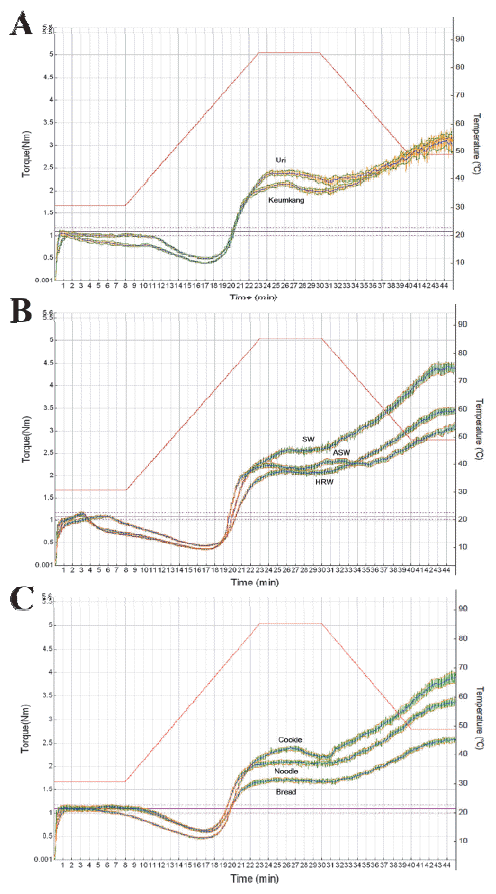
국내 밀 품종의 믹소랩 특성은 Table
3과 Fig.
2에서 보는 바와 같다. 평균 반죽 가수량은 53.93%로 우리밀이 50.00%로 가장 낮았으며 그루밀이 60.60%로 가장 높았다. 수입밀과 비교 했을 때 미국산 연질밀인 SW보다 약간 높았지만 다른 원맥에 비해서는 낮았으며, 박력분 보다는 높았지만 국내 밀 품종의 대부분이 중력분 보다 낮은 가수량을 나타내었다. 평균 반죽 발달 시간과 반죽 안정 시간은 각각 1.75분과 6.11분으로 나타났 으며, 범위는 각각 0.80 ~ 3.98분과 3.45 ~ 10.50분으로 나타났 다. 금강밀과 수안밀을 제외하고는 반죽 발달 시간이 3분이하로 SW를 제외한 수입원맥에 비해서 짧았으며, 대부분 품종이 박력 분 수준의 반죽 발달 시간을 나타내었다. 그러나 금강밀과 조경밀 의 반죽안정시간은 10분 이상으로 중력분이나 강력분 수준으로 상당히 길었으며, 국내 밀 품종도 수입 경질밀 수준으로 길게 나타났다. 반죽 온도가 올라가면서 측정된 단백질 강도(protein strength)는 평균값이 0.41Nm로 그루밀과 청계밀은 호주산 밀 이나 SW와 비슷한 수치를 나타내었으며, 백중밀, 다홍밀, 조아 밀, 올밀, 올그루밀과 우리밀은 미국산 빵용 밀인 DNS와 비슷한 수치를 나타내었다. 나머지 품종은 HRW 보다는 높고 CWRS 보다 낮은 수치였으며, 박력분과 비슷한 수치로 나타났다. 이차 변수인 단백질 연화 범위(protein weakening rage)를 나타낸 평균값은 0.89Nm으로 수입원맥보다 낮았으며, 시중 밀가루 보 다 높은 값을 나타내었다.
Fig. 2Mixolab curves of Korean wheat cultivars (A, Keumkang and Uri), imported wheat flours (B, Soft white, Hard Red winter and Australian standard white) and commercial wheat flours(C).
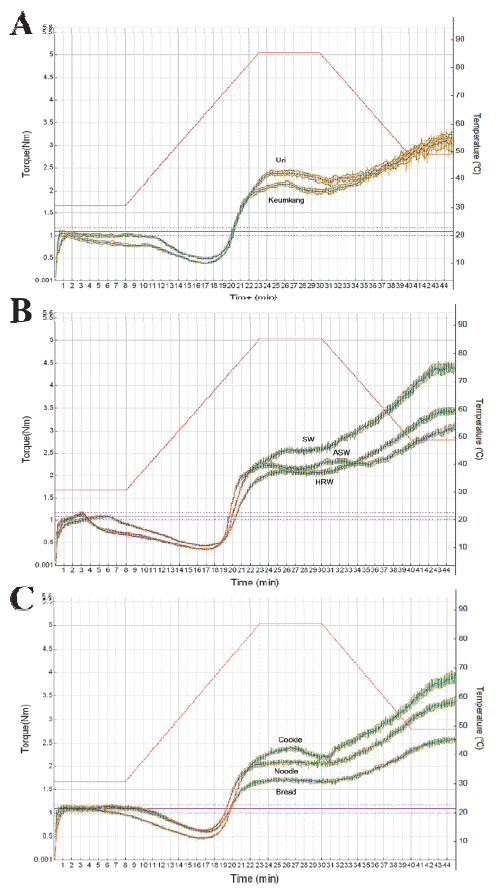
Table 3Mixolab parameters of Korean wheat cultivars, imported wheat and commercial wheat flours.
Table 3
|
Flour |
Mixolab Parametersa
|
|
|
Primary parameters |
Secondary parameters (Nm/min) |
|
|
|
WA (%) |
DDT (min) |
STB (min) |
C2 (Nm) |
C3 (Nm) |
C4 (Nm) |
C5 (Nm) |
α |
β |
γ |
δ |
|
|
Korean wheat cultivars
|
|
Alchan |
52.60 |
0.95 |
4.02 |
0.48 |
2.16 |
1.85 |
2.74 |
0.47 |
1.68 |
-0.31 |
0.89 |
|
Baekjoong |
51.00 |
0.80 |
4.15 |
0.38 |
2.28 |
2.15 |
3.54 |
0.76 |
1.90 |
-0.13 |
1.39 |
|
Chunggye |
52.70 |
1.27 |
6.68 |
0.33 |
2.14 |
1.76 |
2.75 |
0.95 |
1.82 |
-0.38 |
0.99 |
|
Dahong |
53.00 |
2.34 |
4.78 |
0.36 |
2.13 |
1.88 |
2.77 |
1.99 |
1.78 |
-0.26 |
0.89 |
|
Eunpa |
56.80 |
1.32 |
8.31 |
0.46 |
2.01 |
1.54 |
2.84 |
1.67 |
1.56 |
-0.47 |
1.30 |
|
Geuru |
60.60 |
1.72 |
3.45 |
0.32 |
1.60 |
1.27 |
2.53 |
1.40 |
1.28 |
-0.33 |
1.27 |
|
Gobun |
56.20 |
0.99 |
6.12 |
0.45 |
2.06 |
1.63 |
2.77 |
0.54 |
1.61 |
-0.43 |
1.14 |
|
Goso |
50.00 |
2.99 |
6.11 |
0.41 |
2.26 |
2.16 |
3.47 |
0.76 |
1.86 |
-0.11 |
1.32 |
|
Hojoong |
50.20 |
1.74 |
6.52 |
0.43 |
2.22 |
1.83 |
2.96 |
0.73 |
1.80 |
-0.39 |
1.13 |
|
Joa |
50.20 |
2.67 |
5.63 |
0.37 |
2.47 |
2.32 |
3.83 |
0.71 |
2.10 |
-0.15 |
1.51 |
|
Jokyung |
57.60 |
0.95 |
10.06 |
0.43 |
1.96 |
1.91 |
3.05 |
0.63 |
1.53 |
-0.05 |
1.14 |
|
Keumkang |
53.00 |
3.98 |
10.50 |
0.49 |
2.17 |
1.99 |
3.15 |
0.55 |
1.68 |
-0.18 |
1.16 |
|
Ol |
54.00 |
1.71 |
3.91 |
0.37 |
2.02 |
1.62 |
2.71 |
1.35 |
1.65 |
-0.40 |
1.10 |
|
Olgeuru |
54.40 |
1.31 |
4.52 |
0.39 |
2.12 |
1.71 |
2.59 |
0.92 |
1.73 |
-0.41 |
0.88 |
|
Seodun |
58.40 |
1.18 |
5.73 |
0.45 |
2.08 |
1.59 |
2.93 |
0.73 |
1.63 |
-0.49 |
1.34 |
|
Suan |
53.00 |
3.76 |
6.93 |
0.45 |
2.13 |
1.92 |
3.04 |
0.70 |
1.68 |
-0.21 |
1.12 |
|
Tapdong |
58.00 |
1.13 |
6.90 |
0.45 |
2.05 |
1.69 |
2.68 |
0.68 |
1.60 |
-0.36 |
0.99 |
|
Uri |
50.00 |
1.18 |
3.82 |
0.39 |
2.39 |
2.15 |
3.01 |
0.66 |
2.01 |
-0.24 |
0.86 |
|
Younbaek |
53.00 |
1.22 |
8.01 |
0.44 |
1.73 |
1.87 |
3.07 |
0.64 |
1.30 |
0.14 |
1.20 |
|
|
Imported wheat floursb
|
|
AH |
61.50 |
4.60 |
2.67 |
0.31 |
2.06 |
1.93 |
2.78 |
4.29 |
1.75 |
-0.13 |
0.85 |
|
ASW |
59.00 |
3.39 |
2.73 |
0.33 |
2.23 |
2.09 |
3.04 |
3.06 |
1.90 |
-0.14 |
0.95 |
|
SW |
51.00 |
2.59 |
3.23 |
0.34 |
3.17 |
3.13 |
4.30 |
2.25 |
2.82 |
-0.03 |
0.07 |
|
DNS |
63.00 |
4.80 |
3.37 |
0.37 |
1.80 |
1.96 |
2.95 |
4.43 |
1.42 |
0.17 |
0.81 |
|
HRW |
61.00 |
5.04 |
5.48 |
0.42 |
2.09 |
2.03 |
3.44 |
4.62 |
1.67 |
-0.06 |
1.40 |
|
CWRS |
59.10 |
9.06 |
7.93 |
0.55 |
2.99 |
1.94 |
2.96 |
0.57 |
2.44 |
-1.05 |
1.02 |
|
|
Commercial wheat floursc
|
|
Bread |
63.00 |
6.22 |
11.06 |
0.65 |
1.73 |
1.68 |
2.62 |
0.49 |
1.08 |
-0.05 |
0.94 |
|
Noodles |
57.50 |
6.08 |
10.22 |
0.66 |
2.09 |
2.02 |
3.41 |
0.47 |
1.43 |
-0.07 |
1.39 |
|
Cookies |
51.00 |
2.06 |
7.40 |
0.46 |
2.38 |
2.17 |
3.88 |
0.64 |
1.92 |
-0.20 |
1.70 |
|
LSDd
|
0.00 |
0.48 |
0.85 |
0.03 |
0.32 |
0.32 |
0.12 |
0.10 |
0.31 |
0.03 |
0.07 |
가수량이 높고 반죽시간이 짧고 안정도가 좋은 국내 밀 품종의 특성은 믹소그래프에서 나타난 특성과 비슷한 경향을 나타내었 지만, 반죽기나 평가 방법은 핀 믹서인 믹소그래프보다는 파리노 그래프와 유사한 경향을 나타내는 것으로 보인다. 국내 밀 품종은 짧은 반죽 시간을 지녔음에도 반죽 안정도가 양호하여 반죽의 온도가 올라가면서 발생하는 단백질 연화 정도에는 견디는 힘이 강한 것으로 생각된다. 이러한 특성으로 반죽 시간은 연질밀과 유사하지만 반죽안정도는 빵용 경질밀과 유사한 특이한 특성을 나타내는 것으로 보인다. 시중 밀가루의 경우 여러 종류 원맥을 혼합하였고, 본 연구에서는 이러한 시중 밀가루를 용도별로 합쳐 서 실험을 하였기 때문에 국내 품종은 물론 수입원맥과 다른 반죽 특성을 나타내는 것으로 보인다. 믹소랩의 가수량은 단백질 함량(r = 0.627***) 및 믹소그래프의 가수량(r = 0.548**)과 정의 상관을 나타내었으며(Table
4), 반죽 발달 시간도 단백질 함량과 정의 상관을 나타내었다(r = 0.418*). 그러나 믹소그래프 의 반죽시간과는 상관이 없는 것으로 나타났다. 또한, 믹소랩의 반죽 안정시간도 믹소그래프의 반죽안정도와 상관이 없는 것으 로 나타났다. 반면에 믹소랩의 반죽 발달 시간은 가수량이 증가할 수록 증가하는 것으로 나타났다(r = 0.535**). 단백질 연화 범위 는 반죽의 최고 토크 값에서 온도가 올라가면서 단백질 강도가 낮아진 값의 차이를 나타내기 때문에 단백질 강도와 부의 상관을 나타내었다(r = -0.465*). 그러나, 미국 빵용 밀인 HRS(hard red spring)에서 믹소그래프 분석 결과는 믹소랩과 높은 상관을 나타내었으며(
Caffe-Treml et al. 2010), 믹소랩의 반죽 안정도, 단백질 강도 및 단백질 연화 정도는 글루텐 인덱스, 파리노그래프 의 반죽 안정도 및 침전가와 상관이 높은 것으로 나타났다(
Collar et al. 2007,
Ozturk et al. 2008,
Kahraman et al 2008,
Dapčević et al. 2009,
Koksel et al. 2009,
Xhabiri et al. 2016). 또한 CIMMYT에서 통밀의 믹소랩 분석 결과, 반죽 발달 시간과 안정도는 알베오그래프의 인장성(
W value)와 높은 상관을 나타 내었다(
Pena et al. 2006). 외국의 결과와 국내 밀 품종의 이러한 차이는 국내 밀 품종이 가진 고유한 특성으로 볼 수 있는 단백질 함량 및 질적 특성의 좁은 변이에 기인하는 것으로 생각되며, 이러한 한계를 극복하기 위해서는 다양한 단백질 함량 및 질적 특성을 지닌 계통 육성이 필요할 것이다.
Table 4Coefficients correlations between Mixolab parameters and mixograph parameters of Korean wheat cultivars, imported wheat and commercial wheat flours.
Table 4
|
Parameters |
Proteina
|
Mixographa
|
|
|
Water Absorption |
Mixing Time |
Mixing Tolerance |
|
|
Mixolab |
|
Water Absorption |
0.627***
|
0.548**
|
0.457*
|
0.005 |
|
Dough Development Time |
0.418*
|
0.535**
|
0.251 |
-0.291 |
|
Dough Stability |
0.135 |
0.350 |
0.188 |
0.299 |
|
Protein Strength |
0.214 |
0.286 |
0.367 |
0.375*
|
|
Starch Gelatinization |
-0.342 |
-0.254 |
-0.018 |
-0.224 |
|
Starch Gel Stability |
-0.497**
|
-0.209 |
0.111 |
-0.307 |
|
Starch Retrogradation |
-0.577**
|
-0.133 |
0.018 |
-0.370 |
|
Protein Network Weakening Range |
0.219 |
0.208 |
0.273 |
-0.351 |
|
Starch Gelatinization Range |
-0.383*
|
-0.318 |
-0.115 |
-0.307 |
|
Cooking Stability Range |
-0.358 |
0.057 |
0.189 |
-0.124 |
|
Cooling Setback Range |
-0.072 |
0.179 |
-0.187 |
-0.019 |
믹소랩의 전분의 특성은 온도가 올라가면서 전분 호화 발생으 로 나타나는 1차 변수인 전분 호화 값, 호화 안정도 값과 노화 정도가 측정되며, 이들 측정값의 차이를 나타내는 2차 변수인 전분 호화 정도, 조리 안정도와 냉각 감속 정도를 나타낸다. 국내 밀 품종의 평균 전분 호화 값, 호화 안정도 값과 노화 정도는 각각 2.10Nm, 1.83Nm과 2.97 Nm였으며, 범위는 각각 1.60 ~ 2.47Nm, 1.27 ~ 2.32Nm과 2.53 ~ 3.83Nm이었다. 그루밀이 이들 수치가 가장 낮았으며, 조아밀이 가장 높은 값을 나타내었 고, 부분 찰성 밀인 호중밀은 각각 2.22Nm, 1.83Nm과 2.96Nm 으로 비교적 높은 값을 나타내었다. 수입원맥과 비교하였을 때 국내 밀 품종은 호주산 밀이나 미국산 경질밀과 비슷한 수치를 나타내었으며, 미국산 SW 보다는 낮은 값을 나타내었다. 또한, 시중 밀가루와 비교하였을 때, 중력분 수준의 전분 호화 값과 호화 안정도 값을 나타냈지만 노화 정도는 낮은 것으로 나타났다. 국내 밀 품종의 전분 호화 정도, 조리 안정도와 냉각 감속 정도의 평균 값은 각각 1.69Nm, -0.29Nm과 1.14Nm이었고, 범위는 각각 1.28(그루밀) ~ 2.10Nm(조아밀), -0.49(서둔밀) ~ -0.05Nm(조경밀)과 0.86(우리밀) ~ 1.51 Nm(조아밀)으로 나타 났다. 국내 밀 품종의 전분 호화 정도는 경질밀인 AH와 HRW와 유사하였으며, 중력분과 박력분 중간 정도의 수치를 나타내었다. 조리 안정도는 CWRS 보다는 높았지만 다른 수입원맥이나 시중 밀가루보다는 낮았다. 냉각 감속 정도는 경질밀 수입 원맥이나 강력분과 비슷한 수준을 나타내었다. 이러한 결과를 종합해 보면 국내 밀 품종의 전분 특성은 경질밀과 비슷한 특성을 나타내는 것으로 정리할 수 있다. 아밀로스 함량은 호화 안정도 값(r = 0.567**), 노화 정도(r = 0.604***)과 전분 호화 정도(r = 0.411*)와 정의 상관을 나타내었고, 아밀로그램의 최고점도는 노화 정도(r = -0.454**)와 부의 상관을 나타내었으며, breakdown도 호화 안정도, 노화 정도 및 조리 안정도와 부의 상관을 나타내었다(Table
5). 이러한 특성은 아밀로스 함량이 감소할수록 전분 점성이 증가하고 이로 인해서 호화 점도가 증가하고 노화가 지연되어 조리에 유리한 특성을 지니는 것으로 생각할 수 있다. 하지만 아밀로스 함량이 호화 정도(r = 0.388*) 와 정의 상관을 나타내며, 아밀로그램의 다른 관측치와 믹소랩의 전분 특성을 나타내는 수치 사이에 상관 관계가 적게 나타났다. 세르비아 밀 품종에서도 아밀로그래프의 최고점도는 믹소랩의 전분 호화 정도와 높은 상관을 보였지만 (
Dapčević et al. 2009), 국내 품종에서는 상관이 없는 것으로 나타났다. 이러한 차이는 믹소랩과 아밀로그램의 온도 상승 프로파일 및 점도를 평가하는 패들의 차이로 인한 것으로 생각되는데, 향후 시료양 조절 및 온도 프로파일 조정에 대한 연구가 필요하다. 또한, 이들 밀 품종에서는 아밀로그램의 최고점도가 믹소랩의 조리안정도와 정의 상관을 나타내었지만(
Xhabiri et al. 2016), 본 연구에서는 부의 상관을 나타내었다(r = -0.499***). 조리 안정도는 호화 전분내 효소 활력 정도와 상관이 있는 지표이기 때문에, 국내 밀 품종과 외국 밀 품종 간의 재배환경 차이에 따른 효소 활성이 영향을 미칠수 도 있을 것으로 보인다.
Table 5Coefficients correlations between Mixolab parameters and amylogram parameters of Korean wheat cultivars, imported wheat and commercial wheat flours.
Table 5
|
Parameters |
Amyloseb
|
Amylogramb
|
|
|
Peak Viscosity |
Holding Strength |
Final Viscosity |
Breakdown |
Setback |
|
|
Mixolaba
|
|
WA |
-0.250 |
0.403*
|
0.499**
|
0.336 |
0.191 |
0.210 |
|
DDT |
-0.036 |
0.333 |
0.526**
|
0.395*
|
0.074 |
0.287 |
|
STB |
-0.126 |
-0.124 |
-0.309 |
-0.333 |
0.056 |
-0.332 |
|
C2 |
-0.164 |
-0.038 |
-0.099 |
-0.149 |
0.020 |
-0.175 |
|
C3 |
0.388*
|
-0.016 |
0.028 |
0.037 |
-0.042 |
0.041 |
|
C4 |
0.567**
|
-0.324 |
-0.004 |
-0.014 |
-0.445*
|
-0.020 |
|
C5 |
0.604***
|
-0.454**
|
-0.116 |
-0.113 |
-0.544**
|
-0.105 |
|
α |
0.107 |
0.295 |
0.636***
|
0.508**
|
-0.060 |
0.396*
|
|
β |
0.411*
|
-0.005 |
0.049 |
0.072 |
-0.042 |
0.084 |
|
γ |
0.209 |
-0.499**
|
0.077 |
-0.094 |
-0.633***
|
-0.102 |
|
δ |
-0.064 |
-0.126 |
-0.123 |
-0.093 |
-0.083 |
-0.068 |
믹소랩과 가공적성간 상관관계 분석 결과(Table
6), 빵 부피는 믹소랩의 단백질 관련 반죽 특성을 나타내는 가수량(r = 0.417*), 반죽 발달 시간(r = 0.547**), 반죽 안정도(r = 0.513**) 및 단백질 강도(r = 0.503**)와 정의 상관을 나타내었다. 삶은 국수 의 식미 평가에서는 가수량 및 반죽 발달 시간이 경도 및 탄성과는 정의 상관을 나타내었지만, 점성과는 부의 상관을 나타내었다. 가수량은 탄성과 상관이 없었지만 단백질 연화 정도(r = 0.378*) 과 정의 상관을 나타내었다. 호화 안정도 및 노화 정도는 탄성(r = 0.453*과 r = 0.454*)과 점성(r = 0.386*과 r = 0.433*)과 정의 상관을 나타내었다. 이들 특성은 과자 직경과도 정의 상관을 나타내었으며, 가수량(r = -0.755***)과 반죽 발달 시간 (-0.622***)은 과자 직경과 부의 상관을 나타내었다. 이러한 결과는 단백질 함량 및 질적 특성과 반죽 관련 특성이 빵 부피와 정의 상관을 나타내고, 단백질 함량이 과자 직경과 부의 상관이 있으며, 삶은 국수의 경도는 단백질 특성과 상관이 높고 탄성과 점성은 단백질 및 전분 특성에 영향을 받는다는 기존의 연구 결과와 일치한다. 또한 미국 빵용 밀에서도 믹소랩 분석치는 빵 부피와 높은 정의 상관을 나타내었다(
Caffe-Treml et al. 2010,
Dhaka et al. 2012). 믹소랩을 이용하여 국내 밀 품종을 평가한 결과 단백질 관련 특성은 연질밀 특성을 많이 나타내고 전분 특성은 경질밀 특성을 나타내는 특이한 특성을 나타내지만, 믹소랩을 이용한 가공적성 평가는 가능한 것으로 생각된다. 앞으 로 보다 많은 계통과 품종에 대한 평가를 통하여 국내 밀 육종 프로그램에 이용이 가능성을 높이고, 이용 효율성 증진을 위해서 밀가루가 아닌 통밀을 분쇄한 계통에 대한 평가와 NIR(near infrared)을 연계한 간이 검정에 대한 평가도 필요할 것이다.
Table 6Coefficients correlations between Mixolab parameters and end-use quality of Korean wheat cultivars, imported wheat and commercial wheat flours.
Table 6
|
Parameters |
Bread Loaf Volumea
|
Texture of Cooked Noodlesa
|
Cookie Diametera
|
|
|
Hardness |
Springiness |
Cohesiveness |
|
|
Mixolab |
|
Water Absorption |
0.417*
|
0.433*
|
0.205 |
-0.755***
|
-0.755***
|
|
Dough Development Time |
0.574**
|
0.411*
|
0.424*
|
-0.622***
|
-0.622***
|
|
Dough Stability |
0.513**
|
0.267 |
0.035 |
-0.136 |
-0.136 |
|
Protein Strength |
0.503**
|
0.328 |
-0.010 |
-0.316 |
-0.316 |
|
Starch Gelatinization |
-0.086 |
-0.282 |
0.353 |
0.254 |
0.254 |
|
Starch Gel Stability |
0.090 |
-0.137 |
0.453*
|
0.386*
|
0.386*
|
|
Starch Retrogradation |
0.026 |
-0.068 |
0.454*
|
0.433*
|
0.433*
|
|
Protein Network Weakening rate |
0.138 |
0.033 |
0.378*
|
-0.320 |
-0.320 |
|
Starch Gelatinization Rate |
-0.214 |
-0.355 |
0.336 |
0.326 |
0.326 |
|
Cooking Stability Rate |
0.190 |
0.005 |
0.158 |
-0.168 |
0.292 |
|
Cooling Setback Rate |
-0.009 |
0.201 |
-0.030 |
-0.050 |
-0.050 |
적 요
믹소랩은 반죽의 단백질 특성 뿐만 아니라 전분화 호화 및 노화특성을 평가할 수 있기 때문에 반죽 물성을 평가하는 믹소그 래프나 파리노그래프와 전분호화특성을 평가하는 아밀로 그래 프를 이용한 평가를 동시에 할 수 있는 장점이 있다. 믹소랩 분석 결과, 국내 밀 품종의 가수량과 반죽시간은 연질밀이나 박력분과 비슷하였으나, 반죽의 안정도 그리고 단백질 연화 정도 는 경질밀이나 중강력분 수준을 보였다. 믹소랩으로 측정된 국내 밀 품종의 전분 특성은 경질밀의 전분특성과 유사함을 보였다. 믹소그래프와 믹소랩의 상관에서 반죽의 가수량은 정적 상관을 보인 반면에 반죽시간이나 안정도는 상관이 없는 것으로 확인되 었다. 아밀로그래프의 최고점도와 브레이크 다운은 호화 및 조리 의 안성도 그리고 노화정도와 상관을 보였다. 믹소랩의 반죽 및 단백질 특성은 빵 부피, 삶은 국수의 경도 및 과자 직경과 높은 상관을 보였고, 삶은 국수의 탄성 및 점성은 단백질 특성 및 전분의 호화정도와 노화 특성과 상관이 있는 것으로 나타났다.
사 사
본 연구는 농촌진흥청 연구사업 (세부과제명: 용도별 기준 재설정을 위한 밀 품종의 품질 구명 및 규격화, 세부과제번호: PJ011009012016)에 의해 이루어진 것임.
References
- 1. AACC International. Approved Methods of Analysis. 2010. 11th Ed. AACCI, St. Paul, MN: Method 08-01.01. Ash-Basic method. Methods 10-10.03. Optimized straight-dough bread-baking method. Method 10-52.02. Baking quality of cookie flour—micro method. Method 26-31.01. Experimental milling-Bühler method for soft wheat straight grade flour. Method 44-15.02. Moisture-Air-oven methods. Method 46-30.01. Particle size of wheat flour by laser instrument. Available online only.
- 2. Baik B-K, Park CS, Paszczynska B, Konzak C. Characteristics of noodles and bread prepared from double-null partial waxy wheat. Cereal Chem 2003. 80: 627-633.
- 3. Baik BK, Czuchajowska Z, Pomeranz Y. Role and contribution of starch and protein contents and quality to texture profile analysis of oriental noodles. Cereal Chem 1994. 71: 315-320.
- 4. Blandin M, Marinaccio F, Ingegno BL, Pansa MG, Vaccino P, Tavella L, Reyneri A. Evaluation of common and durum wheat rheological quality throughMixolab® analysis after field damage by cereal bugs. Field Crops Res 2015. 179: 95-102.
- 5. Caffe-Treml M, Glover KD, Krishnan PG, Hareland GA. Variability and relationships among mixolab, mixograph, and baking parameters based on multienvironment spring wheat trials. Cereal Chem 2010. 87: 574-580.
- 6. Chang HG, Park YS, Lee MH. Flour characteristics related to noodle sheet color for making yellow alkaline noodles. Food Eng. Progress 2006. 10: 83-91.
- 7. Chang HK, Kim JY. Physicochemical characteristics and sugar-snap cookie potentialities of Korean wheats. Kor. J Food Sci Tech 2004. 36: 754-760.
- 8. Collar C, Bollain C, Rosell CM. Rheological behaviour of formulated bread doughs during mixing and heating. Food Sci. Technol. Int 2007. 13: 99-107.
- 9. Crosbie GB. The relationship between starch swelling properties, paste viscosity and boiled noodle quality in wheat flours. J. Cereal Sci 1991. 13: 145-150.
- 10. Czuchajowska Z, Pomeranz Y. Gas formation and gas retention I The system and methodology. Cereal Foods World 1993. 38: 499-503.
- 11. Dapčević T, Handnadev M, Poji? M. Evaluation of the possibility to replace conventional rheological wheat flour quality control instruments with the new measurement tool - Mixolab. Agric. conspec. sci 2009. 74: 169-174.
- 12. Dhaka V, Gulia N, Khatkar BS. Application of Mixolab to assess the bread making quality of wheat varieties. Sci. Rep 2012. 1: 183.
- 13. Dubat A. A new AACC International approved method to measure rheological properties of a dough sample. Cereal Foods World 2010. 55: 150-153.
- 14. Gianibelli MC, Larroque OR, Mac-Ritchie F, Wrigley CW. Biochemical, genetic and molecular characterization of wheat gluten and its component subunits. Cereal Chem 2001. 78: 635-646.
- 15. Graybosch RA. Waxy wheats Origin, properties, and prospects. Trends Food Sci. Technol 1998. 9: 135-142.
- 16. Guo G, Jackson DS, Graybosch RA, Parkhurst AM. Asian salted noodle quality Impact of amylose content adjustments using waxy wheat flour. Cereal Chem 2003. 80: 437-445.
- 17. Kahraman K, Sakiryan O, Ozturk S, Koksel H, Summu G, Dubat A. Utilization of mixolab to predict the suitability of flours in terms of cake quality. Eur. Food Res. Technol 2008. 227: 565-570.
- 18. Kang CS, Jeung JU, Baik B-K, Park CS. Effects of allelic variations in Wx-1, Glu-D1, Glu-B3, and Pinb-D1 loci on flour characteristics and white salted noodle-making quality of wheat flour. Cereal Chem 2012. 89: 296-306.
- 19. Kang CS, Park CS, Park JC, Kim HS, Cheong YK, Kim KH, Kim KJ, Park KH, Kim JG. Flour characteristics and end-use quality of Korean wheat cultivars I Flour characteristics. Kor. J. Breed. Sci 2010a. 42: 61-74.
- 20. Kang CS, Park CS, Park JC, Kim HS, Cheong YK, Kim KH, Kim KJ, Park KH, Kim JG. Flour characteristics and end-use quality of Korean wheat cultivars II End-use properties. Kor. J. Breed. Sci 2010b. 42: 75-86.
- 21. Kang CS, Park KS, Park JC, Kim HS, Cheong YK, Kim JG, Park CS. Flour and end-use quality of "Charmdlerak" wheat, a Korean wheat. Kor. J. Food Preserv 2008. 15: 219-224.
- 22. Koksel H, Kahraman K, Sanal T, Ozay DS, Dubat A. Potential utilization of mixolab for quality evaluation of bread wheat genotypes. Cereal Chem 2009. 86: 522-526.
- 23. Kruger JE, Matsuo RR, Preston K. A comparison of methods for prediction of cantonese noodle colour. Can J Plant Sci 1992. 72: 1021-1029.
- 24. Lefebvre J, Popineau Y, Cornec M. Viscoelastic properties of gluten proteins: influence of prolamin composition and of temperature. Gluten Proteins 1993. 1994. Association of Cereal Research, Detmold, Germany: pp. 180-189.
- 25. Lefebvre J, Popineau Y, Deshayes G, Lavenant L. Temperature induced changes in the dynamic rheological behavior and size distribution of polymeric proteins for glutens from wheat nearisogenic lines differing in HMW glutenin subunit composition. Cereal Chem 2000. 77: 193-201.
- 26. Oda M, Yasuda Y, Okazaki S, Yamauchi Y, Yokoyama Y. A method of flour quality assessment for Japanese noodles. Cereal Chem 1980. 57: 253-254.
- 27. Ozturk S, Kahraman K, Tiftik B, Koksel H. Predicting the cookie quality of flours by using mixolab. Eur. Food Res. Technol 2008. 227: 1549-1554.
- 28. Park CS, Baik BK, Ha YW, Hong BH. Flour quality characteristics of Korean waxy wheat lines. Kor J Crop Sci 2001. 46: 360-366.
- 29. Park CS, Hong BH, Baik BK. Protein quality of wheat desirable for making fresh white salted noodles and its influences on processing and texture of noodles. Cereal Chem 2003. 80: 297-303.
- 30. Park DS, Ko JM, Han SI, Oh SK, Hyun JN, Suh DY, Shin DC, Moon HP. Effect of HMW glutenin subunit composition on baking quality traits in wheat. Korean J Breed 2002. 34: 15-21.
- 31. Pena RJ, Cervantes-Espinoza MI, Ortiz-Monasterio JI, Dubat A. Gluten composition, gluten quality, and dough mixing properties (National-Mixograph; Chopin-Mixolab) of high yielding wheats derived fromcrosses between common (Triticum aestivum) and synthetic (T dicoccon × Aegilops tauschii) wheats. In Proc 2006. EUCARPIA. Hungary.
- 32. Posner ES, Chew-Guevara AA, Mitre-Dieste M, Perez-Carrillo E, Heredia-Olea E, Wilson JD, Serna-Saldivar SO. Generation of a Mixolab profileafter the evaluation of the functionality of different commercial wheat flours for hot-press tortilla production. Cereal Chem 2014. 91: 139-145.
- 33. Rosell CM, Collar C, Haros M. Assessment of hydrocolloid effects on the thermo-mechanical properties of wheat using the Mixolab. Food Hydro 2007. 21: 452-462.
- 34. Simsek S, Ohm J-B, Cariou V, Mergoum M. Effect of flour polymeric proteins on dough thermal properties and breadmaking characteristics for hard red spring wheat genotypes. J. Cereal Sci 2016. 68: 164-171.
- 35. Williams PC, Kuzina FD, Hlynka I. A rapid colorimetric method for estimating the amylose content of starches and flours. Cereal Chem 1970. 47: 411-421.
- 36. Xhabiri GQ, Durmishi N, Idrizi X, Ferati I, Hoxha I. Rheological qualities of dough from mixture of flour and wheat bran and possible correlation betweenbrabender and Mixolab chopin equipments. MOJ Food Process Technol 2016. 2: 00042.
- 37. Xie L, Chen N, Tang S, Luo J, Jiao G, Hu P. Use of Mixolab in predicting rice quality. Cereal Chem 2011. 88: 333-337.
- 38. Ozturk S, Kahraman K, Tiftik B, Koksel H. Predicting the cookie quality of flours by using Mixolab. Eur. Food Res. Technol 2008. 227: 1549-1554.