적요
Abstract‘Daegwang’ was developed in a potato breeding program at the Highland Agriculture Research Institute, National Institute of Crop Science, Rural Development Administration, South Korea. It was selected from the hybrid ‘Haryeong’בP03404-1’ from 2007. In 2011-2012, the major agronomic characteristics of this variety were evaluated in Gangneung for spring cultivation and Pyeongchang for summer cultivation as clone number ‘P07917-4’. ‘P07917-4’ was renamed as ‘Daegwan 1-127’, and regional yield trials for this clone were conducted in Cheongju, Naju, Gangneung, and Pyeongchang in 2013-2015. This cultivar was registered as ‘Daegwang’, based on its key agronomic characteristics, including drought tolerance, late blight resistant, and high yield. It has medium maturity and a semi-erect growth habit. ‘Daegwang’ has a round to short oval tuber shape, shallow eye-depth, yellow skin color, and white flesh color. Its leaf color is green, and its white flowers bloom abundantly. This cultivar is resistant to potato late blight but susceptible to potato common scab. The incidences of hollow heart and internal brown spot were low. However, the frequency of tuber cracking was high, at about 6.0% in summer cultivation in Pyeongchang. In the regional yield trials, ‘Daegwang’ had an average tuber yield of 34.1 ton/ha, which was 6.2% higher than that of ‘Sumi’, and its dry matter content was 16.8%. Boiled ‘Daegwang’ tubers have a viscous-floury texture and a pleasant taste. ‘Daegwang’ is expected to be produced as a table potato. (Registration No. 7664).
서 언
감자는 세계적으로 4대 식량작물로서 약 120여 국가에서 재배하고 있다(FAO 2018). 최근 우리나라의 감자 생산 동향을 보면 약 2만 2천 ha 내외의 재배면적에서 연평균 50~55만톤을 생산하고 있다(
Statistics Korea 2018). 국내 생산량의 10~15% 정도는 감자칩 가공용으로 이용되고 나머지는 가정용 부식이나 식품소재 등 일반식용으로 소비되고 있다. 햇감자를 선호하는 소비자들의 기호에 맞춰서 봄감자 63%, 여름감자 16%, 가을감자 14%, 그리고 겨울시설재배가 7% 정도의 비율로 재배 형태가 분화되어 있으나, 주요 생산 시기는 봄과 여름에 집중되어 있다(
Statistics Korea 2018). 우리나라의 기후 특성으로 인하여 봄감자 재배기인 4~5월의 가뭄과 여름감자 재배기인 6~7월 장마기의 감자역병은 감자 재배에 영향을 미치는 매우 중요한 요인으로 작용하고 있다. 감자역병은
Phytopthora infestans에 의해 유발되는 병해로 감자에 발생하는 병해 중 가장 치명적인 피해를 일으킨다. 우리나라에서 역병 방제는 대부분 화학농약 살포에 의존하고 있는데, 고랭지 여름감자 작형의 경우 약제 구입 비용이 ha당 약 250만원에 이르고 있어 농가의 경영비 부담이 큰 실정이다. 감자 재배에 있어서 토양내 수분은 감자의 생장, 수량 및 품질과 매우 밀접하게 연관되어 있으며, 수분 부족은 생산성에 가장 큰 영향을 주는 요인이다(
Burton 1981). 수분이 부족한 토양에서 감자를 재배할 경우 괴경형성기 지연(
Dalla et al. 1997), 수량 감소(
Jefferies 1993), 기형감자 발생량 증가 및 가공품질 저하(
Parveen et al. 2007) 등의 문제가 발생한다. 우리나라에서 봄과 여름에 널리 재배되는 품종인 ‘수미’는 전체 감자 재배 면적의 약 65% 정도를 차지하고 있다. ‘수미’는 숙기가 빠르고 더뎅이병에 강하지만, 감자역병과 가뭄에는 매우 취약한 특성을 가지고 있다(
Lee et al. 1985,
Rieman 1962). ‘수미’ 품종이 가지고 있는 재배상의 단점들을 개선함과 동시에 햇감자를 선호하는 소비자들의 다양한 기호성을 만족시킬 수 있는 새로운 품종의 개발이 절실한 시점이다. 본 연구는 가뭄과 감자역병에 약한 ‘수미’ 품종을 보완할 새로운 품종을 육성하기 위하여 수행하였으며, 그 결과 2015년 ‘대광’ 품종을 선발하였기에 육성 경위 및 주요 특성을 보고하고자 한다.
재료 및 방법
육성과정
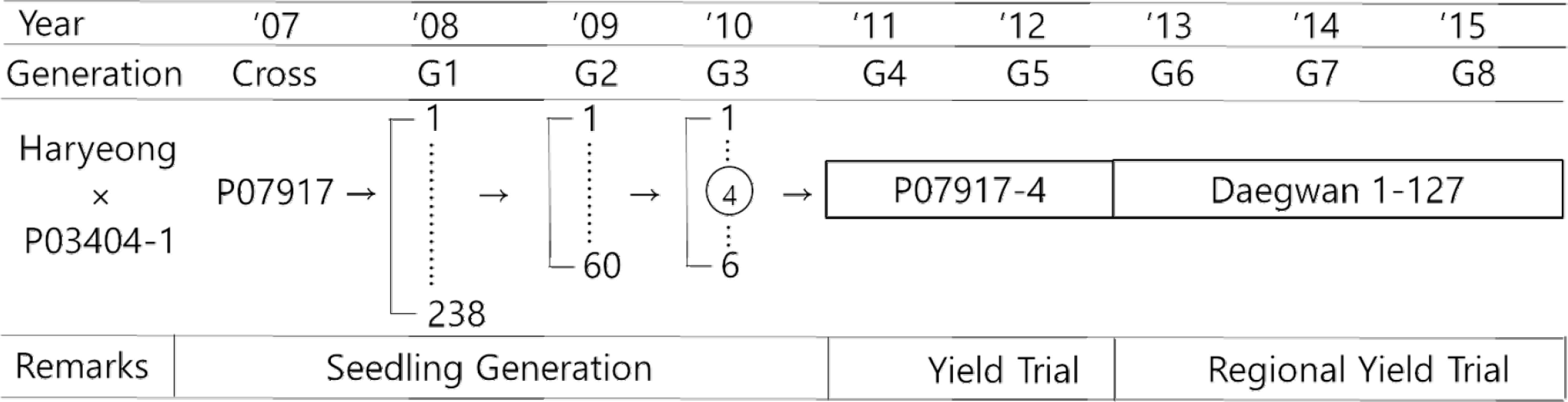
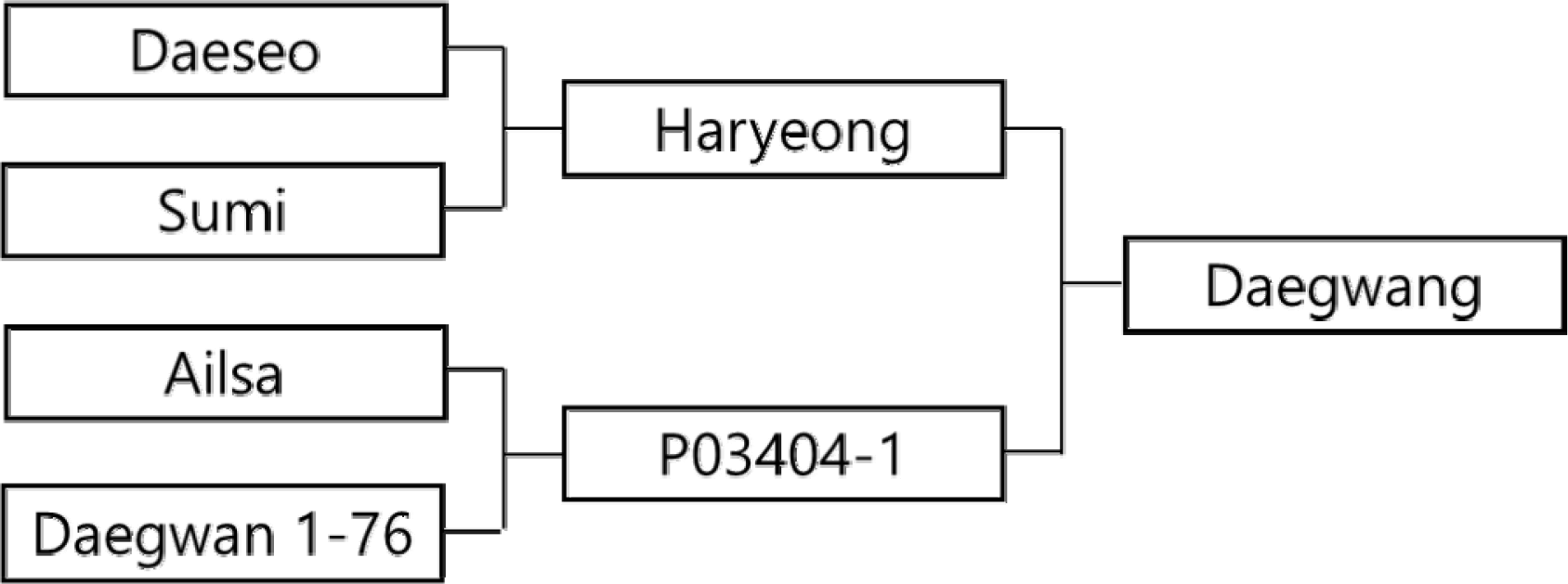
‘대광’은 2007년 감자역병에 강하고 맛이 좋은 ‘하령’ 감자를 모본으로 하고, 외관형질이 수려하고 조숙성인 ‘대관1-76호’에서 유래한 ‘P03404-1’을 부본으로 한 인공교배 조합 후대에서 선발되었다. 2008년 P07917 조합에서 238개의 진정종자를 파종하여 60개체의 괴경을 선발하였다. 2009년 실생1세대에서 선발한 60개체를 평가하여 6개체를 선발하였고, 2010년 실생3세대에서 농업형질이 우수한 4번째 계통을 선발하여 ‘P07917-4’로 계통 번호를 부여하였다. 이후 2011년 생산력검정을 위하여 예비시험(2011년)과 본시험(2012년)을 실시한 결과 가뭄과 감자역병에 강하고 수량성이 높은 것으로 평가되어 ‘대관1-127호’로 계통명을 부여하였다. 2013년부터 2015년까지 전국 4개소에서 3개년간(2013년-2015년) 지역적응시험을 실시한 결과 계통의 우수성이 인정되어 2015년 12월 농촌진흥청 농작물 직무육성 신품종 선정위원회에서 신품종으로 선정되어 ‘대광’으로 명명하였다. ‘대광’ 품종의 육성 계통도와 계보도는
Figs. 1,
2와 같다.
선발계통의 생산력검정을 위하여 예비시험(2011년)과 본시험(2012년)을 강릉과 평창(대관령)에서 수행하였다. 생산력검정 예비시험은 계통당 20주씩 완전임의배치 2반복으로, 생산력검정 본시험은 계통당 40주씩 난괴법 3반복으로 배치하였다. 봄재배는 강릉에서 여름재배는 평창에서 수행하였고, 재식거리는 80×25 cm로 하였으며, 농업과학기술 연구조사 분석기준에 따라 생육특성, 수량성 및 품질특성 등을 조사하였다(
RDA 2012).
농촌진흥청 고령지농업연구소의 감자육종 프로그램에 따라 6개년간 인공교배, 실생양성, 계통선발 과정을 거쳐 선발된 ‘대관1-127호(대광)’를 대상으로 3개년간(2013년-2015년) 지역적응시험을 수행하였다. 시험지역은 전남 나주, 충북 청주, 강원 강릉 및 평창의 4지역이며 표준품종으로 ‘수미’를 사용하였다. 평난지인 나주, 청주, 강릉 지역은 봄작형으로 3월 중순경 파종하여 6월 중하순에 수확하였고, 평창은 여름작형으로 4월 하순에 파종하여 8월 하순에 수확하였다. 시험구는 계통별로 4열에 80주를 파종하였고, 난괴법 3반복으로 배치하였다. 작형별 시비 및 재배관리는 농촌진흥청에서 발간한 ‘표준영농교본(감자)’에 준하여 실시하였다(
RDA 2003). 수량은 반복당 20주씩을 수확하여 감자 개수와 무게를 측정하고 ha당 수량으로 환산하였다. 수확과 동시에 감자모양, 표피색, 육색 등 주요한 괴경 특성과 열개서, 내부생리장해 및 기형서 발생 정도를 조사하였다. 건물률은 각 반복별로 80~150 g 정도 크기의 감자를 1 kg씩 골라서 조사하였다. 감자는 가로/세로/높이를 약 0.5 cm 정도의 크기로 깍둑썰기를 한 다음 생체중을 재고, 시료봉투에 넣어 70℃ 정도에서 72시간 정도 완전히 건조시킨 다음 건조된 시료의 무게를 측정하여 건물률을 계산하였다. 주요 농업형질 및 품종보호 출원을 위한 특성 조사는 농업과학기술 연구조사 분석기준에 따랐다.
감자에 발생하는 주요 병해인 바이러스, 역병 및 더뎅이병에 대한 반응 정도를 계통별로 평가하였다. 감자 바이러스에 대한 저항성은 무방제 포장에 감자를 재배하여 지상부 병징의 육안조사와 효소항체결합법(ELISA)에 의한 후대검정법으로 평가하였다. 감자 역병에 대한 저항성 평가는 고령지농업연구소의 역병 무방제 포장(대관령 소재)에서 실시하였고, 저항성 정도의 차이는 국제감자연구소(International Potato Center)의 조사 기준에 준하여 역병 초발생 후 병진전도(AUDPC, Area Under the Disease Progress Curve)를 이용하여 분석하였다(CIP 2004). 감자 더뎅이병에 대한 평가는 고령지농업연구소의 더뎅이병 검정 포장(강릉 소재)에서 이루어졌으며, 50 g 이상의 감자를 대상으로 발병률, 발병지수 및 발병도를 조사하였다. 감자의 상품률은 표면의 병반 면적이 5%이하인 감자의 비율로 하였다.
결과 및 고찰
지상부 식물체 및 괴경 특성
‘대광’ 품종의 지상부 식물체 형태는 직립성으로 초세가 매우 강한 특성을 가지고 있다(
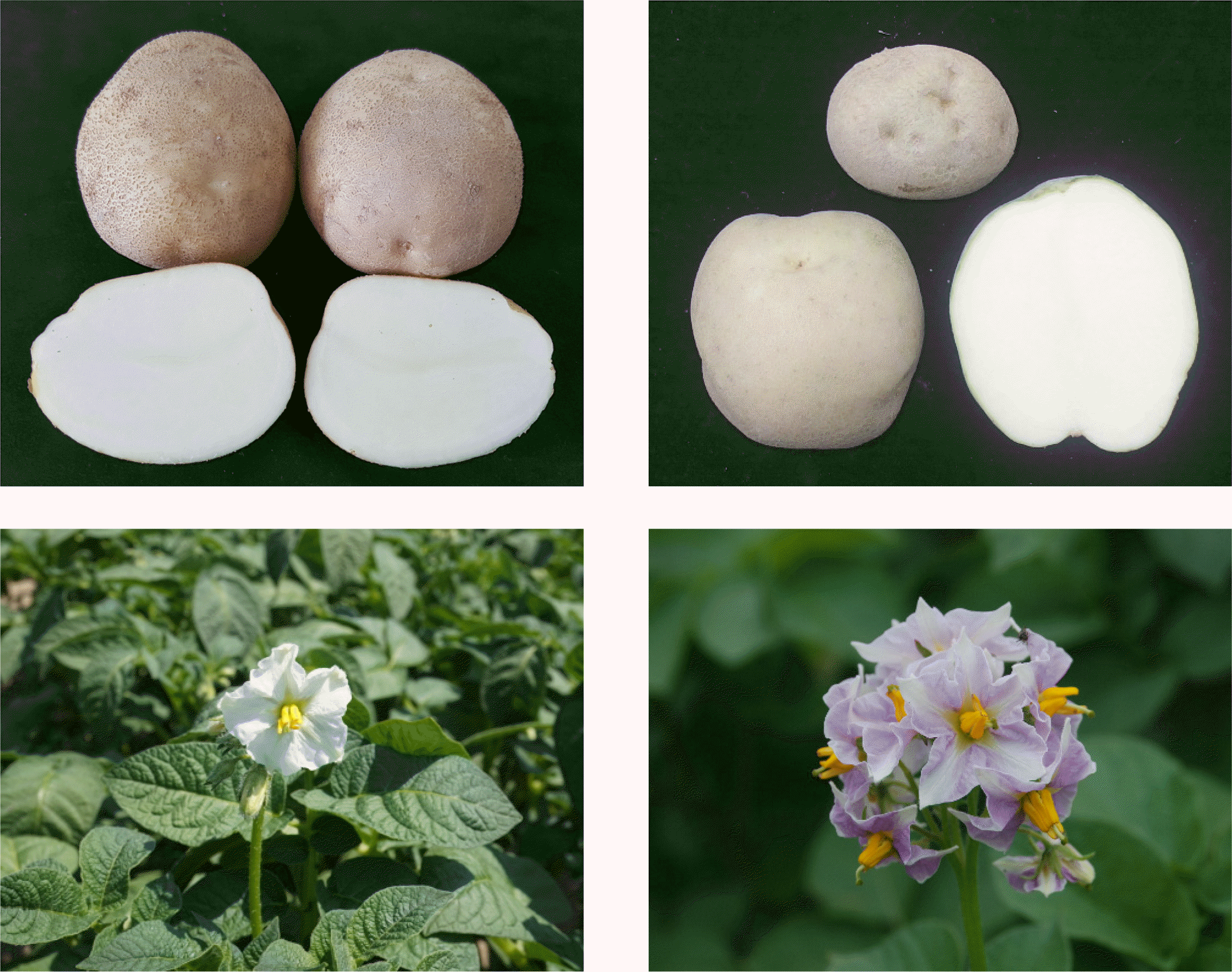
Table 1). 꽃색은 백색이며 개화량은 많은 편이다. 괴경 모양은 ‘수미’와 비슷한 원형 또는 짧은 타원형이며, 속이 희고 눈 깊이가 매우 얕다. 완숙된 ‘대광’ 감자의 껍질은 황색이지만 고랭지 여름작형에서는 다소 거친 러셋 형태를 띠기도 한다(
Fig. 3). 숙기는 ‘수미’ 보다 약 10일 정도 늦은 중생종이다.
2개년간(2013년-2014년) 고령지농업연구소의 역병 무방제 포장에서 감자역병에 대한 저항성을 평가한 결과, ‘대광’ 품종의 2년 평균 AUDPC 값은 514.4로 ‘수미’의 1073.7보다 낮아 역병에 강한 특성을 보였다(
Table 2). 실내 접종 시험에서도 ‘대광’ 품종은 MR~R 정도의 반응을 나타내어 역병에 강한 것으로 확인되었다. 포장에서의 평가와 접종시험 결과를 종합하여 ‘수미’는 감수성, ‘대광’은 저항성으로 판단하였다. 또한 ‘대광’ 품종은 2015년 강릉 시험포에서 자연발생한 겹둥근무늬병(Early blight,
Alternaria solani)에 대해서도 상당한 저항성을 가진 것으로 평가되었다(
Table 3). 바이러스에 대한 저항성을 평가한 결과, 감자바이러스X (PVX) 및 감자잎말림바이러스(PLRV)에 감염된 개체는 없었으나, 후대검정에서 감자바이러스Y (PVY)의 감염률이 높게 나타나 바이러스에는 두 품종 모두 감수성으로 평가하였다(
Table 4). 더뎅이병에 대해서는 ‘수미’가 중도저항성으로 평가된 반면 ‘대광’은 감수성으로 확인되었다(
Table 5).
3개년간(2013년-2015년) 봄작형 3개 지역, 여름작형 1개 지역에서 지역적응시험을 수행한 결과, ‘대광’ 품종의 평균 수량은 34.1톤/ha로서 ‘수미’보다 약 6.2% 많았다(
Table 6). 평난지 봄재배에서는 2015년 나주와 강릉 지역에서 ‘대광’이 ‘수미’에 비해 유의한 수량 증가를 나타낸 것 외에는 ‘수미’와 유사한 수량성을 보였다. 2013년 고랭지 여름재배에서는 ‘대광’이 ‘수미’에 대비하여 58% 정도 수량이 많았으나, 감자역병에 약한 ‘수미’ 품종이 역병 감염으로 괴경의 부패가 많이 발생하여 수량성에 영향을 미친 것으로 추정되었다. 국내에서 감자역병 방제는 전적으로 화학적 방제에 의존하고 있는데 강우 등으로 약제살포 시기를 놓칠 경우에는 감수성 품종에서 수량 감소가 크기 때문이다(
Ryu et al. 2006).
괴경의 내부생리장해인 중심공동과 내부갈변 증상은 ‘대광’과 ‘수미’ 품종 모두 발생률이 매우 낮았다(
Table 7). 기형서 발생률은 ‘대광’이 7.6%, ‘수미’가 8.3%로 두 품종이 유사하였으나, 열개서 발생률은 ‘대광’이 평균 3.1%로서 ‘수미’에 비해 높았다. 작형별로 비교해 보면, 고랭지의 여름재배가 평난지 봄재배보다 열개서 발생이 많은 경향을 보였다(세부성적 미제시). 평난지에 비해 재배기간 중 기온과 토양 수분의 변동이 큰 고랭지의 기후에 대한 적응성의 차이에 의한 것으로 판단되었다.
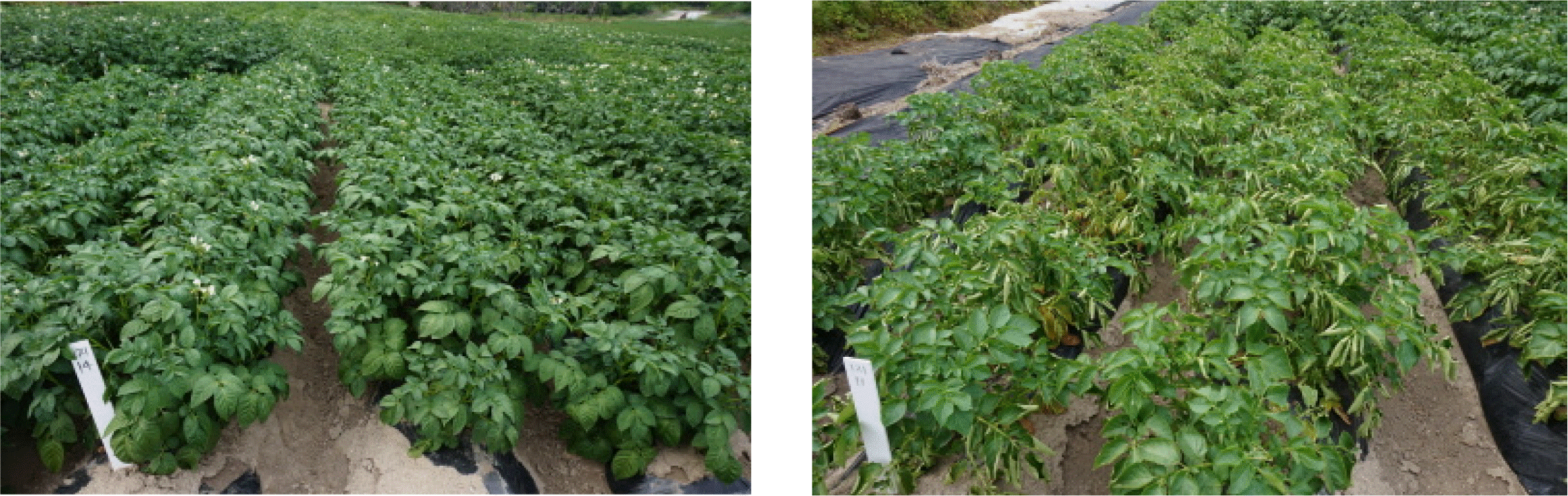
2015년 강릉 지역에서는 4월~5월의 감자 재배기간에 봄가뭄이 극심하게 발생함에 따라 가뭄에 대한 품종별 반응 정도를 잎말림지수(Leaf Rolling Index)로 평가하였다. 수분 부족이 심해짐에 따라 ‘수미’ 품종은 LRI가 ‘7’ 정도로 심한 잎말림 증상을 보였으나, ‘대광’은 ‘1’ 정도로 증상이 거의 나타나지 않아 가뭄에 대해 상당한 저항성이 있는 것으로 평가되었다(
Fig. 4). 가뭄에 견디는 특성은 2015년 강릉 시험포에서의 수량성으로 확인이 되었는데 ‘대광’이 ‘수미’에 비해 전체 감자의 수량은 12.6%, 상품감자의 비율은 46.1% 더 많았다.
대관령 시험포에서 수확된 감자를 시료로 하여 평가자 27명을 대상으로 찐감자의 향(Perfume), 분질도(Mealiness), 식감(Texture), 그리고 종합 선호도(Preference)를 조사하였다(
Table 8). 향이나 식감, 종합 선호도에서 신품종 ‘대광’과 표준품종 ‘수미’ 품종의 차이는 비슷하였다. 분질도에서는 ‘대광’이 3.6으로 중간질인 ‘수미’의 2.7보다 높은 것으로 평가되었다. 건물 함량은 16.8%로 ‘수미’의 18.7%보다 약간 낮았다.
‘대광’은 제주도를 제외한 전국의 1기작 감자재배 지대에서 재배가 가능하다. ‘대광’은 더뎅이병에 약하므로 더뎅이병균의 밀도가 높은 토양이나 감자 연작지에서는 재배를 피하는 것이 좋다. 그리고 바이러스에 약하기 때문에 씨감자 생산시에는 진딧물 방제를 철저히 하여야 한다. 토양수분의 변화가 큰 토양에서는 열개서가 발생할 가능성이 높아지므로 사질토에서의 재배는 피하는 것이 좋다. 생육기간이 표준품종인 ‘수미’에 비해 10일 정도 긴 편이므로 감자 싹의 출현을 앞당길 수 있도록 충분히 싹을 틔워서 심으면 수량을 높이는데 유리하다.
적 요
‘대광’은 ‘하령’ 품종을 모본으로, ‘P03404-1’을 부본으로 하여 2007년에 교배한 조합에서 선발하였다. 2011년부터 2012년까지 ‘P07917-4’라는 계통명으로 고령지농업연구소에서 봄재배(강릉)와 여름재배(대관령)에서 주요 농업형질에 대한 특성평가를 실시하였다. 3개년간(2013년-2015년) 전국 4개소(전남 나주, 충북 청주, 강원 강릉 및 평창)에서 지역적응시험을 실시한 결과, 가뭄(한발)에 잘 견디고 역병에 강하며 수량성이 높아 2015년 농작물직무육성 신품종선정위원회에서 신품종으로 선정되어 품종출원하였고 2019년 등록(등록번호 7664)되었다. ‘대광’ 품종의 주요 특성을 보면, 숙기가 중생이고 지상부 식물체는 직립성이다. 감자의 모양은 원형 또는 짧은 타원형이며 눈 깊이가 매우 얕다. 감자 껍질은 황색이고 속은 흰색이다. 잎은 녹색이며 꽃은 흰색으로 개화량이 많은 편이다. 감자역병에는 강하였지만 더뎅이병에는 감수성이었다. 괴경 내부의 중심공동과 갈변 증상의 발생률은 매우 낮았지만, 고랭지 여름재배에서 열개서 발생률이 약 6.0%로 다소 높았다. ‘대광’의 3개년간(2013년-2015년) 전국 4개소의 평균 수량은 34.1톤/ha로서 ‘수미’에 비해 6.2% 정도 높았다. 건물률은 16.8%였으며, 삶은 감자는 분질성으로 맛이 우수하고 일반 부식용으로 적당한 편이었다.
사 사
본 논문은 농촌진흥청 연구사업(과제명: 친환경 재배에 적합한 감자역병 저항성 품종, 과제번호: PJ01024003)의 지원으로 수행된 결과입니다. ‘대광’ 품종이 육성될 수 있도록 도와주신 전라남도와 충청북도농업기술원 지역적응시험 담당자들과 국립식량과학원 기획조정과 및 농촌진흥청 연구운영과 관계자들께 깊은 감사를 감사드립니다.
Fig. 1
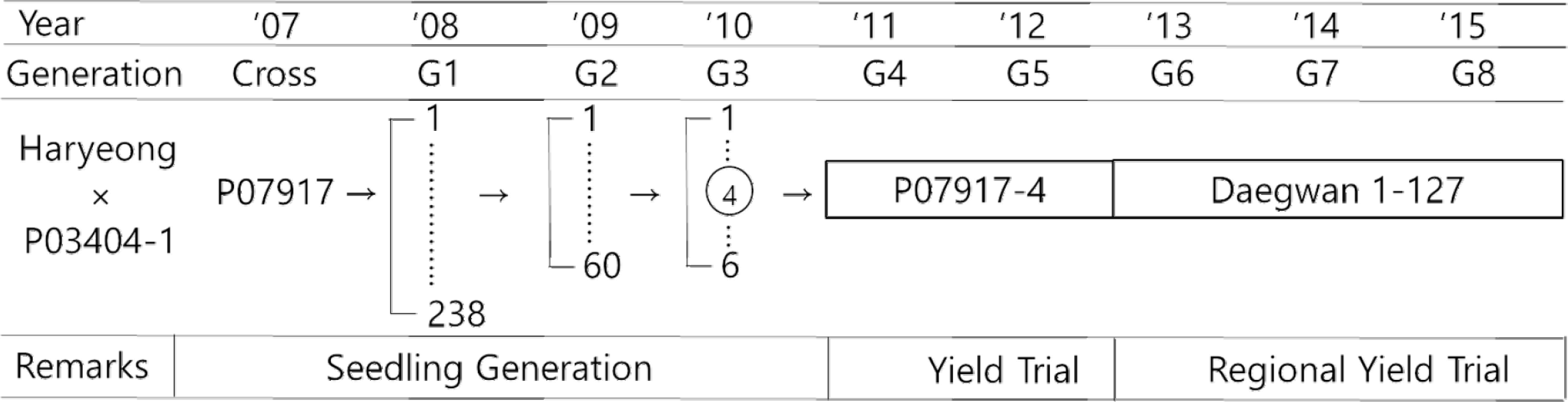
Fig. 2
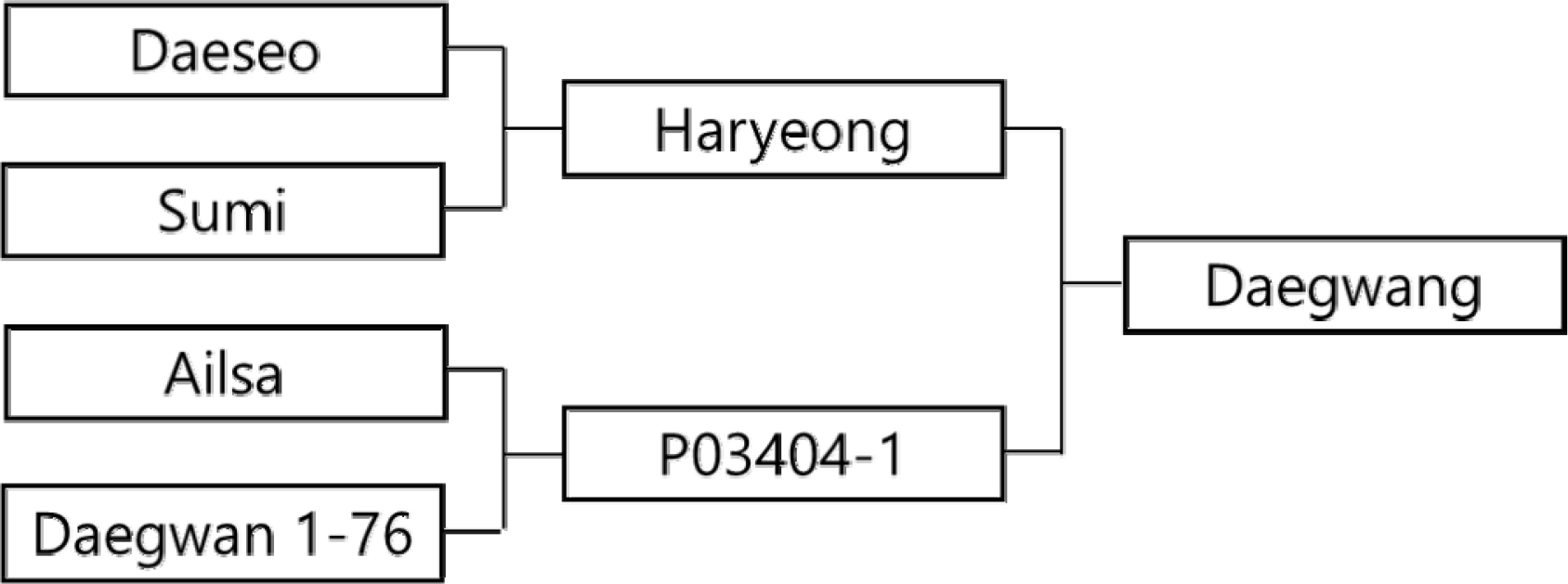
Fig. 3Comparison of tuber and flower characteristics of ‘Daegwang’ (left) and ‘Sumi’ (right).
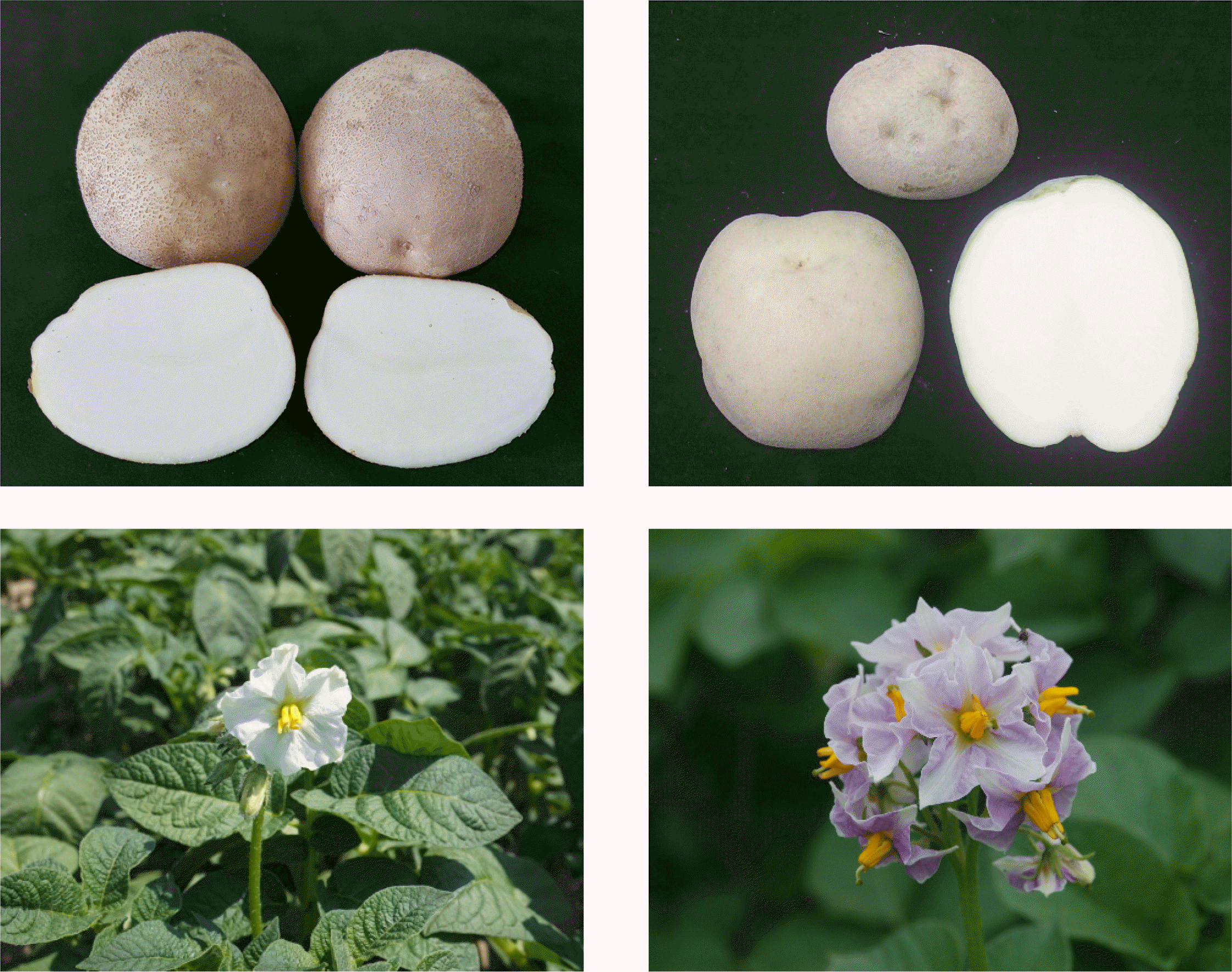
Fig. 4Comparison of tolerance to drought of Daegwang (left) and Sumi (right) in the natural cultivating field in 2015.
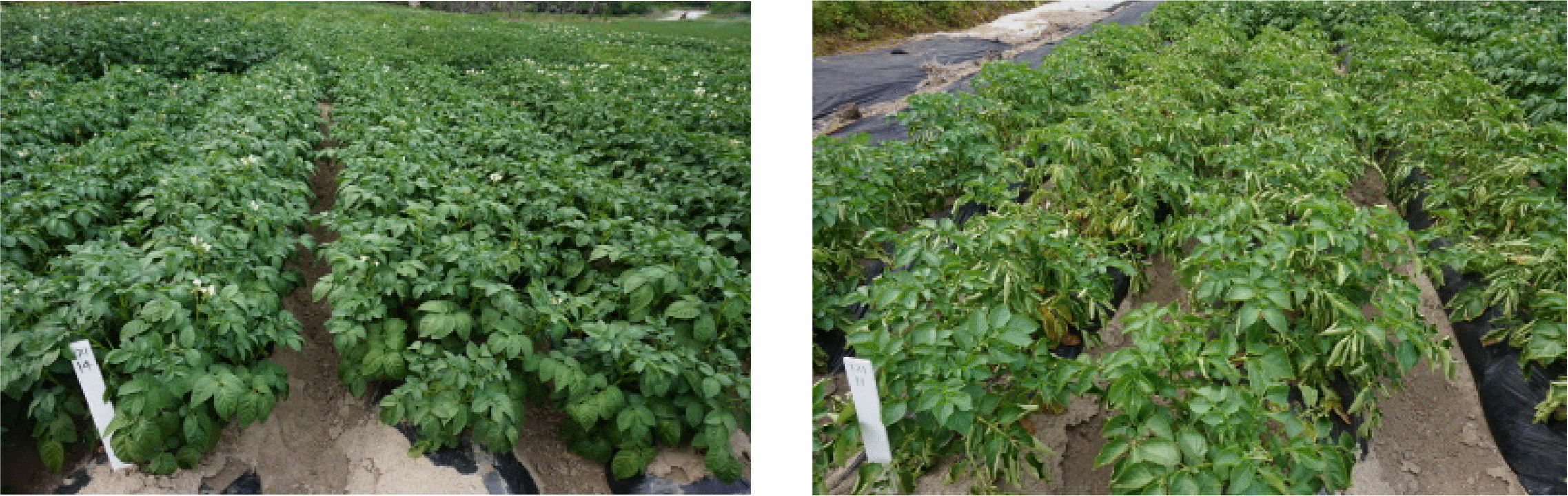
Table 1Major characteristics of plant and tuber of ‘Daegwang’.
Table 1
|
Variety |
Plant |
|
Tuber |
Maturity |
|
Growth habit |
Flower color |
Shape |
Skin color |
Flesh color |
Eye depth |
|
Daegwang |
Erect |
White |
|
Short-oval |
Yellow |
White |
Shallow |
Medium |
|
Sumi |
Semi-erect |
Purple |
|
Short-oval |
Yellow |
White |
Mid |
Early |
Table 2Resistance level to potato late blight.
Table 2
|
Year |
Variety |
Natural infection in field |
Inoculation |
|
|
|
AUDPCz
|
rAUDPCy
|
Responsex
|
response |
|
2013 |
Daegwang |
731.2 |
0.6 |
R |
MR |
|
Sumi |
1126.5 |
0.9 |
S |
S |
|
2014 |
Daegwang |
297.5 |
0.2 |
R |
R |
|
Sumi |
1020.8 |
0.7 |
S |
S |
Table 3Resistance level to potato early blight evaluated in 2015.
Table 3
|
Variety |
Incidence rate (%) |
Incidence indexz
|
Response |
|
Daegwang |
100.0 |
2.1 |
R |
|
Sumi |
100.0 |
6.2 |
S |
Table 4Field resistance to major potato viruses.
Table 4
|
Year |
Variety |
Infected rates with virus (%) |
Response |
|
|
PVY |
PVX |
PLRV |
|
2013 |
Daegwang |
90.0 |
0.0 |
0.0 |
S |
|
Sumi |
100.0 |
0.0 |
0.0 |
S |
|
2014 |
Daegwang |
58.3 |
0.0 |
0.0 |
S |
|
Sumi |
60.0 |
0.0 |
0.0 |
S |
|
2015 |
Daegwang |
60.0 |
0.0 |
0.0 |
S |
|
Sumi |
59.1 |
0.0 |
0.0 |
S |
|
Average |
Daegwang |
69.4 |
0.0 |
0.0 |
S |
|
Sumi |
73.0 |
0.0 |
0.0 |
S |
Table 5Resistance response to common scab in natural infected test field.
Table 5
|
Year |
Variety |
Rates of diseased tubers (%)z
|
Scab severity
(%)y
|
Rates of marketable tuber (%)x
|
Response |
|
2013 |
Daegwang |
100.0 |
53.6 |
21.6 |
S |
|
Sumi |
98.3 |
31.6 |
74.0 |
MR |
|
2014 |
Daegwang |
74.4 |
20.8 |
88.8 |
MR |
|
Sumi |
73.4 |
19.5 |
96.4 |
MR |
|
2015 |
Daegwang |
35.5 |
8.9 |
100.0 |
S |
|
Sumi |
14.4 |
3.6 |
100.0 |
R |
|
Average |
Daegwang |
70.0 |
27.8 |
70.1 |
S |
|
Sumi |
62.0 |
18.2 |
90.1 |
MR |
Table 6Average tuber yield across four field trial locations from 2013 to 2015.
Table 6
|
Year |
Variety |
Mean tuber yield (MT/ha) |
Average |
|
|
|
Naju |
Cheongju |
Gangneung |
Pyeongchang |
Yeild (MT/ha) |
Index |
|
2013 |
Daegwang |
46.1 |
24.6 |
41.9 |
41.3 |
38.5 |
112.2 |
|
Sumi |
45.5 |
22.7 |
43.0 |
26.1 |
34.3 |
100.0 |
|
LSD 0.05 |
5.70 |
2.33 |
3.32 |
2.88 |
|
|
|
2014 |
Daegwang |
29.5 |
16.4 |
36.2 |
46.5 |
32.2 |
96.4 |
|
Sumi |
32.4 |
16.2 |
37.9 |
47.0 |
33.4 |
100.0 |
|
LSD 0.05 |
11.49 |
ns |
6.83 |
5.60 |
|
|
|
2015 |
Daegwang |
33.5 |
15.5 |
31.7 |
45.5 |
31.5 |
110.1 |
|
Sumi |
20.3 |
15.1 |
28.2 |
50.6 |
28.6 |
100.0 |
|
LSD 0.05 |
2.28 |
ns |
1.92 |
3.22 |
|
|
|
Average |
Daegwang |
36.3 |
18.8 |
36.6 |
44.4 |
34.1 |
106.2 |
|
Sumi |
32.8 |
18.0 |
36.4 |
41.2 |
32.1 |
100 |
Table 7Frequency of physical defects in potato tubers investigated at four field trial locations for three years from 2013 to 2015.
Table 7
|
Variety |
Internal defects (%) |
External defects (%) |
|
|
|
Hollow heart |
Internal brown spot |
Malformation |
Crack |
|
Daegwang |
0.1 |
0.1 |
7.6 |
3.1 |
|
Sumi |
0.1 |
0.1 |
8.3 |
0.5 |
Table 8Average dry matter content for three years at regional yield trial and taste characteristics of boiled potatoes.
Table 8
|
Variety |
Dry matter (%) |
Starch (%) |
Perfumez
|
Mealinessy
|
Texture |
Preference |
|
Daegwang |
16.8 |
18.1 |
3.6±0.7x
|
3.6±0.8 |
3.3±0.6 |
3.5±0.5 |
|
Sumi |
18.7 |
19.8 |
3.3±0.5 |
2.7±0.6 |
3.5±0.5 |
3.2±0.6 |
References
- 1. Burton WG. 1981. Challenges for stress physiology in potato. American Potato Journal 58: 3-14.
- 2. Dalla LC, Delle GV, Gianquinto G, Giovanardi R, Peressotti R. 1997. Yield, water use efficiency and nitrogen uptake in potato: influence of drought stress. Potato Res 40: 19-34.
- 3. FAO. World Crop Production Statistics. 2018. Available from: http://faostat.fao.Org
- 4. International Potato Center2004. Annual report. Late blight new development 9-13.
- 5. Jefferies RA. Responses of potato genotypes to drought1993. I. Expansion of individual leaves and osmotic adjustment. Ann. Appl Biol 122: 93-104.
- 6. Lee DK, Jeong HY, Hahm YI, Kim KS. 1985. Studies on the cultural characteristics of a new potato cultivar, 'Superior'. Horticulture, Environment and Biotechnology 26: 29-33.
- 7. Parveen K, Pandey SK, Singh SV, Kumar D. 2007. Irrigation requirements of chipping potato cultivars under west-central Indian plains. Potato J 34: 193-198.
- 8. Rural Development Administration (RDA)2003. Standard farming guide of potato cultivation.
- 9. Rural Development Administration (RDA)2012. Agricultural science technology standards for investigation of research 468-482.
- 10. Rieman GH. 1962. Superior; a new white, medium-maturing, scab resistant potato variety with high chipping quality. American Potato Journal 39: 19-23.
- 11. Ryu KY, Park YE, Cheon JU, Kim SY. 2006. Evaluation of potato germplasm for resistance to late blight caused by Phytophthora infestans. Korean J Breed Sci 38: 317-322.
- 12. Statistics Korea. 2018. Statistics of agriculture, forestry and fishery. http://Kosis.kr
Citations
Citations to this article as recorded by

- Mangang, a Potato Variety with Good Chipping Quality and Late Blight Resistance
Young-Eun Park, Jang-Gyu Choi, Kwang-Soo Cho, Ji-Hong Cho, Hong-Sik Won, Young-Gyu Lee, Jeom-Soon Kim, Yong-Ik Jin, Ju-Sung Im, Dong-Chil Chang
Korean Journal of Breeding Science.2023; 55(2): 172. CrossRef