적요
A short rotation coppice (SRC) refers to cultivation systems using fast-growing tree species with the ability to re-sprout from the stump after harvest. Harvest in SRC cultivation occurs in short intervals, 2-6 years, and management practices are more similar to those of agricultural annual crops than to forestry. The SRC for production of biomass for heat and electricity is considered a very promising means to meet the different targets set to increase the amount of renewable energy. This study was conducted to analyze growth characteristics and biomass production of poplar clones in the SRC under the treatment of slurry composting and biofiltration liquid fertilizer (SCBLF). The average survival rate of poplar clones at SCBLF treatment was 95.0% and that at control was 92.5%, respectively. The average number of shoot at the treatment was 11.8 ea/clone and that of control was 11.5 ea/clone. ’72-31’, ‘Bonghwa1’ and ‘Clivus’ from Populus alba × P. glandulosa were superior clones for the number of shoot with 17.1 ea/clone, 14.5 ea/clone and 13.8 ea/clone at the treatment of SCBLF. For the average of leaf area, the SCBLF treatment showed 35% broader leaf (71.0 cm2) than control (52.3 cm2). The annual average of above-ground biomass production showed 51% better at the SCBLF treatment (8.5 ton/ha) than control (5.6 ton/ha). ‘Clivus’, ‘72-31’ and ‘Bonghwa1’ clones from P. alba × P. glandulosa were superior for the annual average of above-ground biomass production with 15.2 ton/ha, 14.0 ton/ha and 11.6 ton/ha at the treatment of SCBLF.
서 언
목질계 바이오매스를 증가시킬 수 있는 방법 중 하나인 단 벌기 맹아림은 포플러 등과 같은 속성수를 고밀도로 식재하 고 2~6년 주기로 수확하여 바이오매스를 생산하는 것이며, 일반 산림수종의 경우 수확기가 긴 반면에 속성수 단벌기 맹 아림은 수확주기가 짧고 많은 바이오매스를 생산할 수 있는 장점이 있다(
Hyun et al. 1982,
Kim et al. 2011). 하지만 단 벌기 맹아림에서 연간 10 ton/ha의 바이오매스를 수확할 경 우 135.5 kg/ha의 질소, 15.8 kg/ha의 인 및 85.1 kg/ha의 칼 슘이 토양에서 제거된다고 알려져 있기 때문에 적절한 시비 또한 필요하다(
Tubby & Armstrong 2002).
가축분뇨 및 저농도 액비의 활용범위를 넓혀 기존의 농작 물뿐만 아니라 임목의 바이오매스 생산, 채종원 시비 및 유실 수와 특용수 재배 등과 같은 임업생산에 적용시킨다면 가축 분뇨의 흡수 ‧ 제거효과는 물론 수목의 생장에 필요한 양료 및 수분 공급을 동시에 해줄 수 있는 장점이 있다.
본 연구는 가축분뇨 저농도 액비를 유휴농지에 조성된 포 플러 단벌기 맹아림에 처리하여 가축분뇨 처리에 따른 포플 러류의 생장반응을 구명하고, 단벌기 맹아림의 바이오매스 생 산량을 증대시킬 수 있는 포플러 수종 및 우수 클론을 선발하 는데 그 목적이 있다.
재료 및 방법
식물재료, 시험림 조성 및 저농도 액비 처리
가축분뇨 저농도 액비 처리에 적합한 포플러 클론의 선발 및 바이오매스 생산을 위하여 2008년 3월 경기도 수원시 권 선구 호매실동 소재의 유휴농지에 이태리포플러, 미루나무 교 잡종, 현사시, 수원포플러 및 양황철 등 총 4수종, 8클론을 식 재하였다(Table
1). 1년생 삽목묘를 식재한 후 맹아지(coppice) 생산을 위해 지상부 10 cm 지점에서 대절을 실시하였다. SCB 액비(SCBLF: slurry composting and biofiltration liquid fertilizer)를 처리한 처리구 및 아무런 처리를 하지 않은 무처 리구 등 2개의 처리구를 3반복으로 두었으며, 각 처리구 내 클론 별로 5본씩 식재하였다. 각 처리구 내 공시목의 식재 간 격은 1 m× 1 m로 총 240본의 묘목을 식재하였다.
Table 1List of poplar clones used for this study
Table 1
|
Species |
Clone |
Number of trees planted in each treatment
|
|
With SCBLFz
|
Without SCBLF |
|
|
Populus euramericana
|
Eco28 |
15 |
15 |
|
Populus deltoides × Populus nigra
|
Dorskamp |
15 |
15 |
|
Populus deltoides × Populus deltoides
|
97-19 |
15 |
15 |
|
Populus alba × Populus glandulosa
|
Clivus |
15 |
15 |
|
72-31 |
15 |
15 |
|
Bonghwa1 |
15 |
15 |
|
Populus koreana × Populus nigra var. italica
|
Suwon |
15 |
15 |
|
Populus nigra × Populus maximowiczii
|
62-10 |
15 |
15 |
본 연구에 사용된 SCB액비는 여과상으로 된 퇴비단에 돈 분 슬러리를 살포하여 고형물은 퇴비 상층부에 남아있고 액 체는 퇴비단 내 미생물에 의해 발효시켜 여과하여 만든 가축 분뇨 저농도 액비이다. SCB액비는 2008년부터 2010년까지 매년 묘목의 잎이 생장하기 시작하는 5월부터 생장이 정지하 기 시작하는 9월까지 표토가 건조할 때 시비하였으며, 시험림 에 설치된 물탱크에 저장한 후 파이프로 된 관수시설을 이용 하여 매회 5 L씩 시비하였다. 2008년에는 본 당 115 L 처리 하여 690 ton/ha을 시비하였으며, 2009년 및 2010년에는 각 각 본당 130 L, 150 L 씩 처리하여 각각 780 ton/ha 및 900 ton/ha씩 시비하였다.
처리된 SCB액비에 포함된 질소 농도를 기준으로 연도별 본당 처리된 질소량을 환산했을 때 2008년 88.2 g, 2009년 99.7 g, 2010년에는 115.0 g씩 처리되었으며, 2008년부터 2010년까지 처리된 본 당 질소량은 총 302.9 g이다. Table
2 에 본 연구에 사용된 SCB액비의 화학적 특성을 나타내었다.
Table 2Chemical characteristics of SCBLF used in this study
Table 2
|
pH |
T-N |
NH4-N |
NO3-N |
T-P |
|
(mg/L) |
(mg/L) |
(mg/L) |
(mg/L) |
|
|
SCBLF |
7.9 (0.5)z
|
767.0 (48.4) |
56.5 (9.5) |
211.9 (11.2) |
110 (22.4) |
생육특성
포플러 클론의 생장특성을 조사하기 위해 처리구 및 무처 리구에 대하여 클론별로 생존율, 줄기 발생량 및 엽면적을 조 사하였다. 엽면적은 포플러 클론별 당년생 줄기에 있는 잎 10 개를 Li-3100 Area Meter(Li-3100, Licor Inc., USA)로 측 정하여 평균을 산출하였다.
바이오매스 생산량 추정
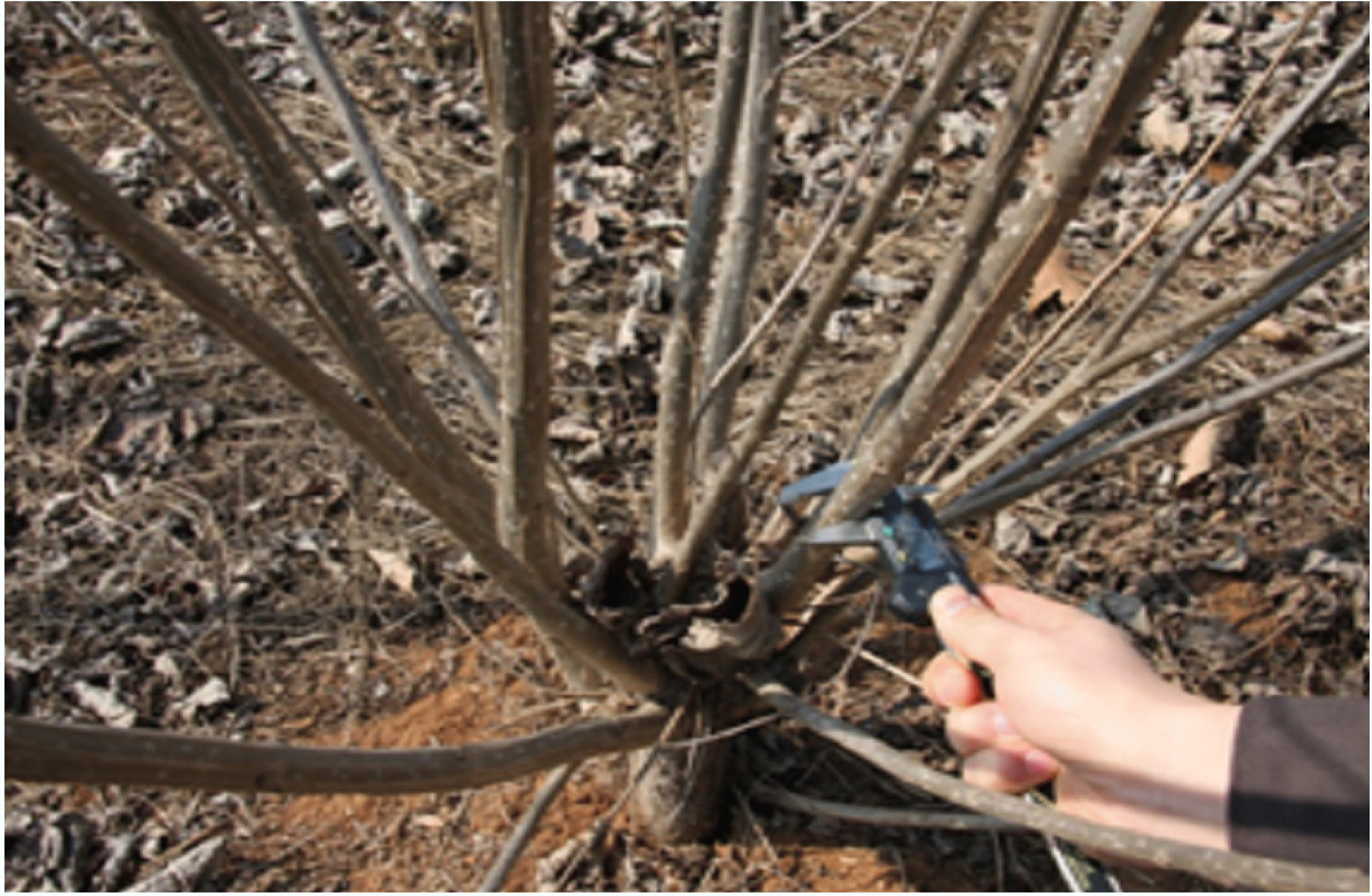
가축분뇨 저농도 액비 처리에 따른 포플러 맹아림의 바이 오매스 생산량을 추정하기 위해 SCB액비 처리구 및 무처리 구의 포플러 개체별 줄기(stump sprout) 기부직경을 모두 측 정하였다(Fig.
1). 측정한 성적은 층화임의추출법을 사용하여 클론별로 기부직경을 10층화(등급화)하여 각 층화내 1개의 기부직경을 임의 표본으로 선정하였다(Table
3). 선정된 표본 줄기를 채취하여 건조기에 넣고 75°C로 3일 이상 무게 변동 이 없을 때까지 건조시켜 잎과 줄기의 건중량을 측정하였다.
Fig. 1.Measurement of the diameter of stump sprout for the biomass estimation of poplar clones treated with SCBLF.
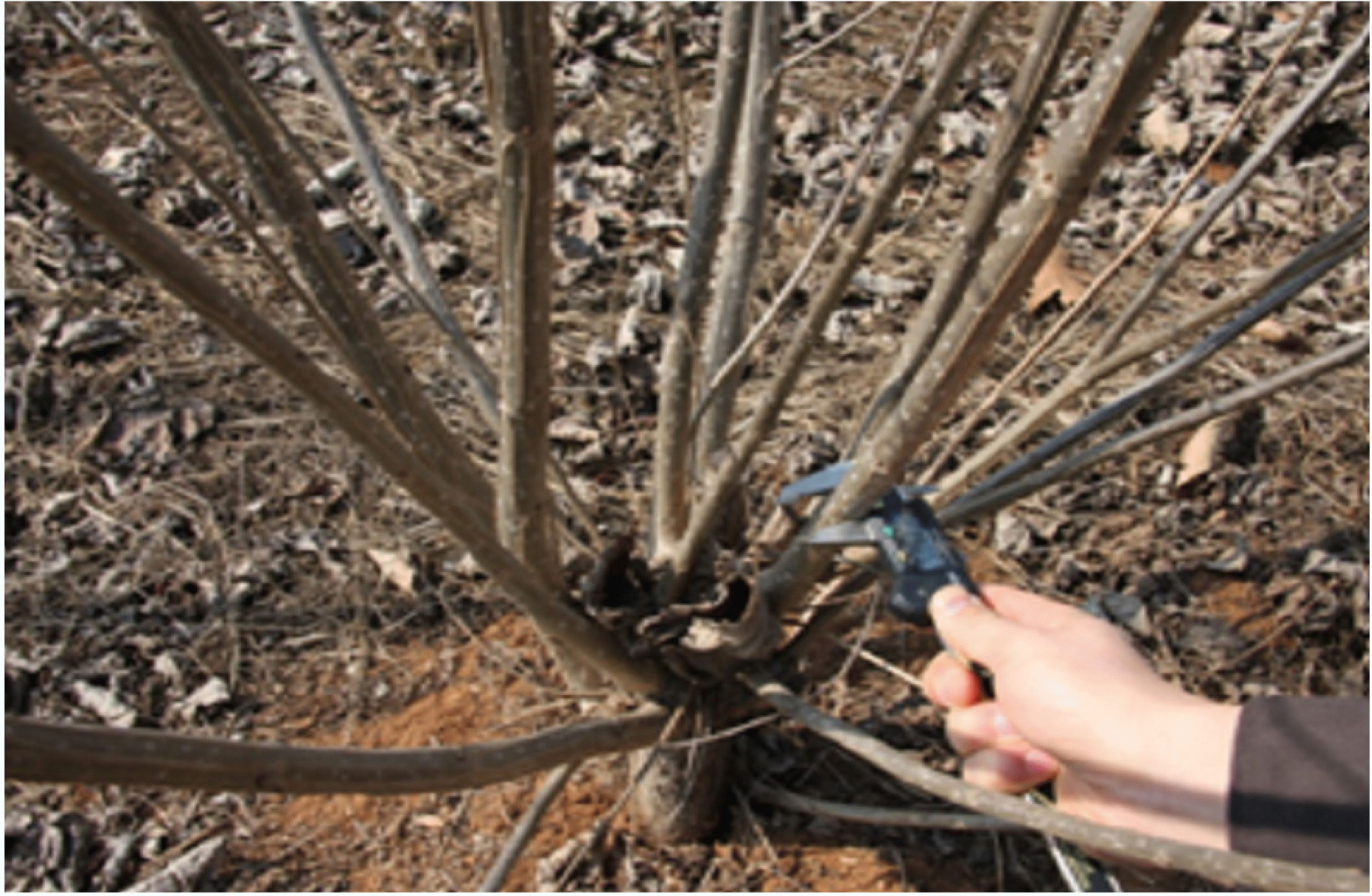
Table 3Growth characteristics of poplar clones for the estimation of biomass treated with SCBLF
Table 3
|
Species |
Clone |
Number of stump sprout sampled |
Diameter of stump sprout (mm)z
|
|
|
Populus euramericana
|
Eco28 |
10 |
16.8 ± 6.5 (7.4 - 27.1) |
|
Populus deltoides × Populus nigra
|
Dorskamp |
10 |
13.3 ± 5.7 (5.9 - 25.9) |
|
Populus deltoides × Populus deltoides
|
97 - 19 |
10 |
18.7 ± 9.3 (4.9 - 36.2) |
|
Populus alba × Populus glandulosa
|
Clivus |
10 |
21.2 ± 10.1 (9.1 - 40.3) |
|
72 - 31 |
10 |
17.4 ± 8.4 (8.1 - 37.6) |
|
Bonghwa1 |
10 |
14.1 ± 6.1 (6.4 - 24.1) |
|
Populus koreana × Populus nigra var. italica
|
Suwon |
10 |
14.7 ± 5.4 (6.1 - 23.8) |
|
Populus nigra × Populus maximowiczii
|
62 - 10 |
10 |
16.4 ± 7.4 (9.1 - 34.3) |
지상부 바이오매스 추정을 위하여 수집된 표본의 건중량과 줄기기부 직경 사이의 회귀모델을 유도하였으며, 적용된 기본 지수함수는 공식 (
1)과 같다.
여기서 y는 표본의 건중량, x는 표본의 줄기 기부직경, a는 상수, 그리고 b는 지수이다. 이때 변수의 자연대수 변환 시 발 생하는 편이는 Baskerville (
1972)의 모델을 통하여 공식 (
2) 와 같이 수정하였다.
여기서 y’는 편이 수정된 지상부 바이오매스, zi는 log (y), 그리고 MSE는 평균제곱근 오차이다. 이렇게 유도된 회귀모 델에 클론별 줄기 기부직경을 대입하여 지상부 바이오매스 생산량을 추정하였다.
통계분석
클론별 SCB액비 처리 및 무처리간의 생육특성, 바이오매 스 차이는 SAS/STAT (ver. 8.01 SAS Institute Inc.) 프로그 램의 t-test를 이용하여 분석하였다. SCB액비 처리 내 클론간 의 생육특성, 바이오매스 차이는 분산분석(ANOVA)을 이용 하여 구명하였다.
연구결과 및 고찰
포플러 클론별 생육특성
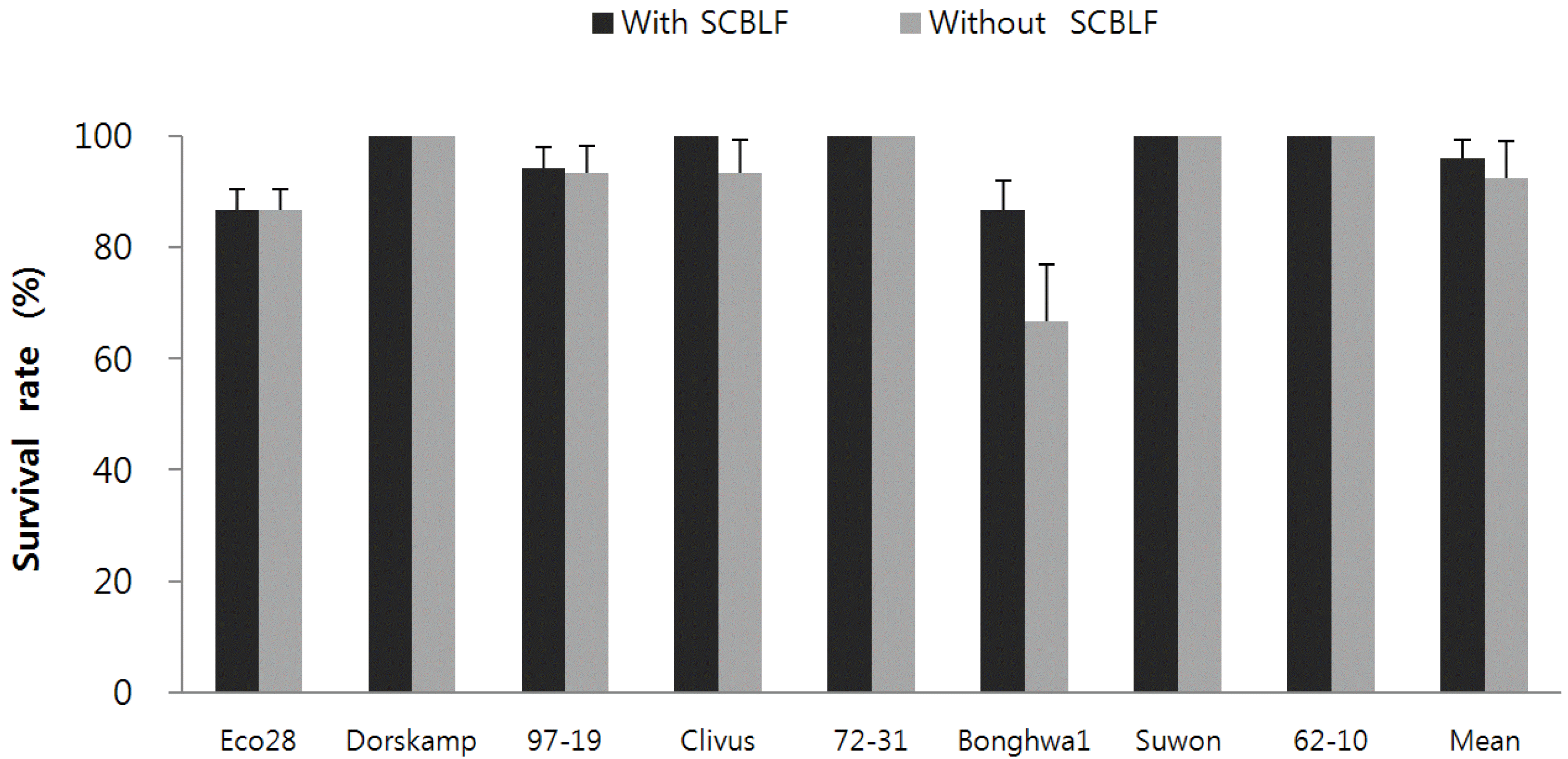
SCB액비 처리에 따른 포플러 클론별 생존율은 처리 및 클 론 간에 차이가 없었다. 처리구와 무처리구 포플러 클론들의 평균 생존율은 각각 95.0%와 92.5%로 나타나 양호하였다 (Fig.
2).
Fig. 2.Survival rate of the poplar clones treated with SCBLF. Bars indicate standard errors.
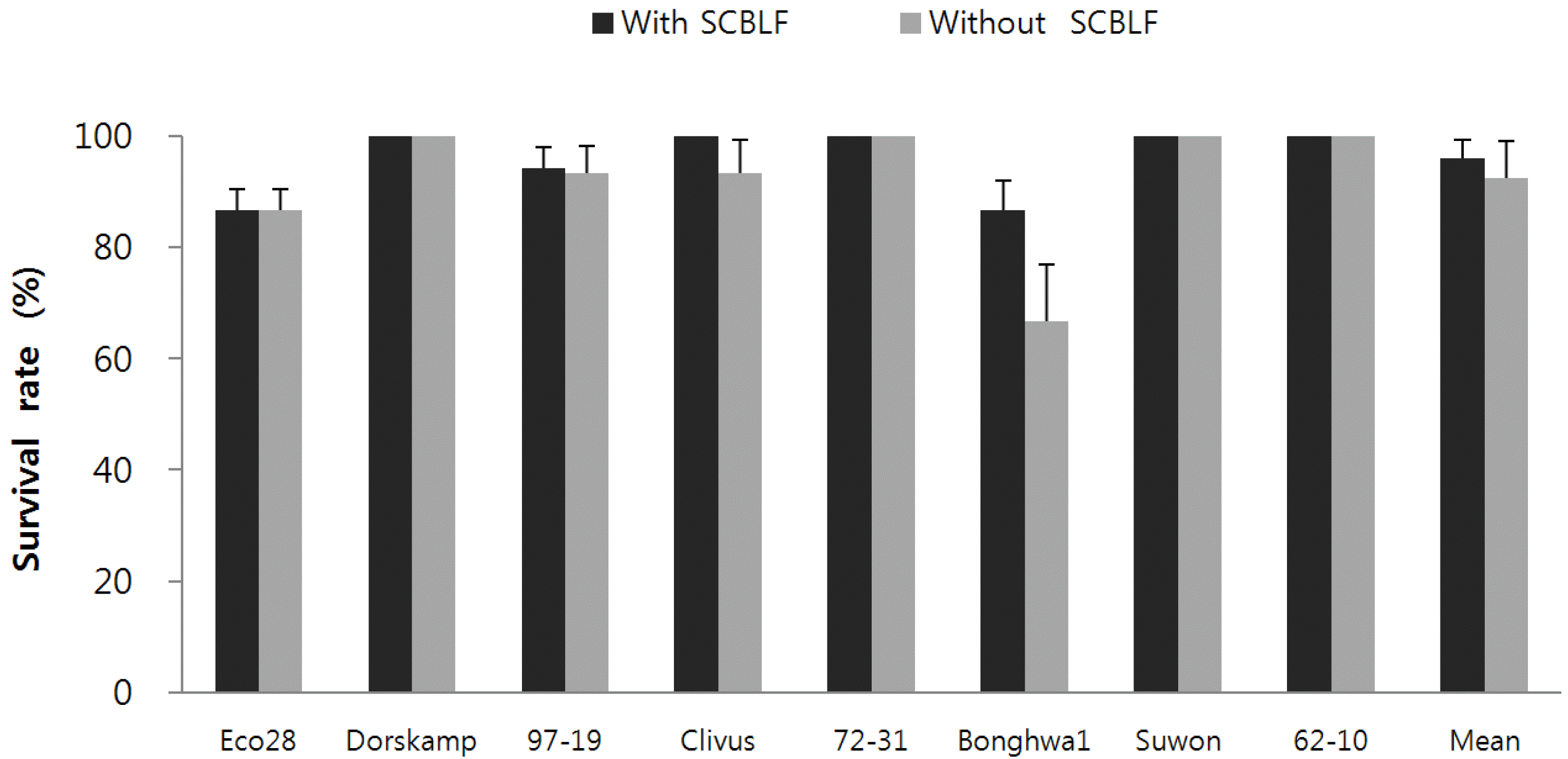
이태리포플러 Eco28 클론, 현사시 Clivus 및 72-31 클론, 수원포플러 Suwon 클론 및 양황철 62-10 클론은 처리구에서 모두 100%의 생존율을 나타내어 SCB액비 처리에 따른 피해 가 전혀 발생하지 않았다. 이는 본 연구에 사용된 SCB액비의 경우 낮은 질소함량을 나타내 고농도의 암모늄태 질소에 의 한 피해가 거의 나타나지 않았기 때문이라 판단된다. 현사시 Bonghwa1 클론의 경우에는 처리구 및 무처리구에서 각각 86.6%, 66.6%로 나타났으며, 특히 무처리구에서 낮게 나타 나 식재 후 맹아지 생산을 위한 대절에 의해 생리적 스트레스 를 받은 것으로 추정되었다.
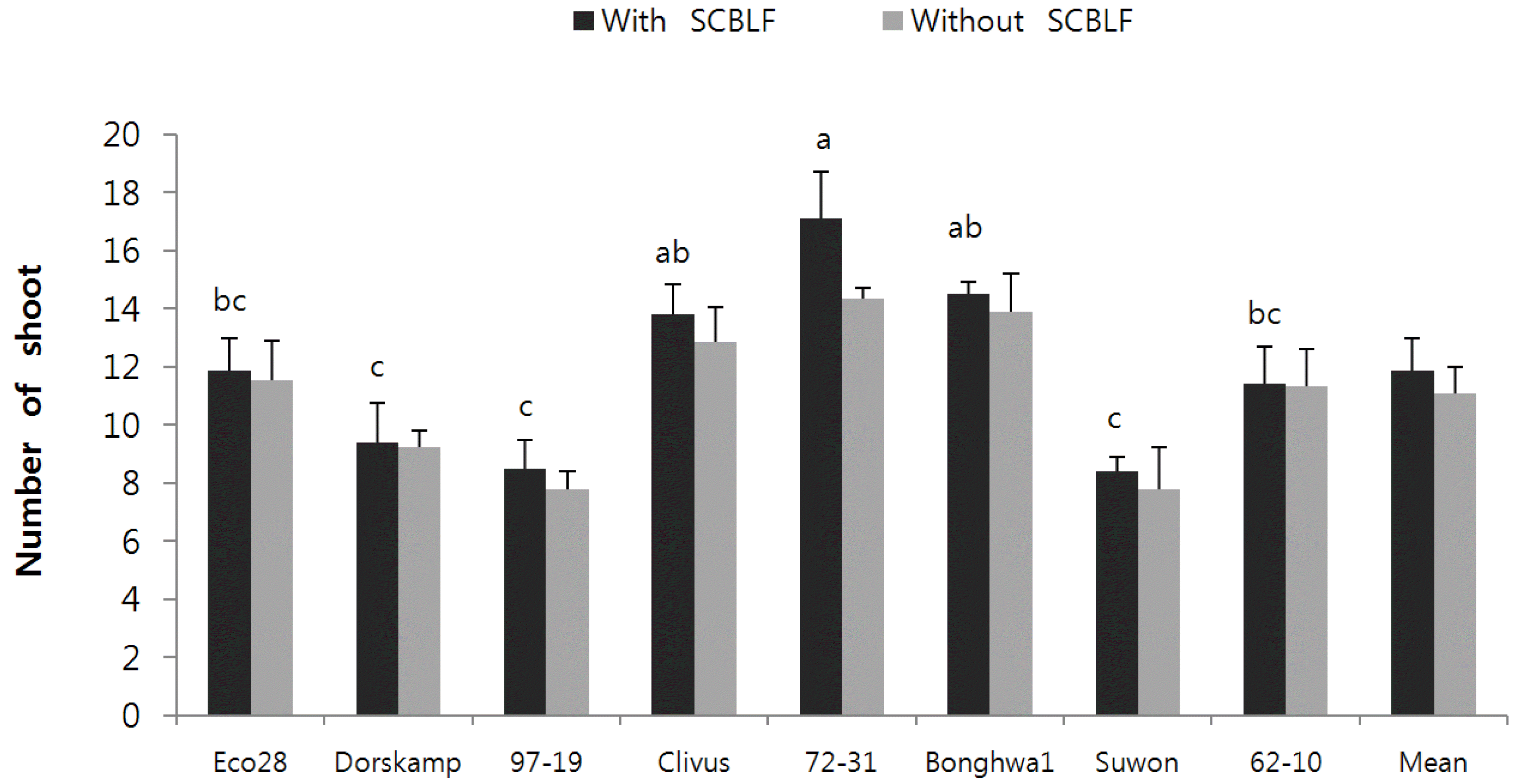
SCB액비 처리에 따른 포플러 클론들의 평균 줄기 수는 SCB액비 처리구 및 무처리구에서 각각 11.8개와 11.1개로 나타났으며, 통계적 유의성이 인정되지는 않았다(Fig.
3). SCB액비 처리구 내 포플러 클론 간의 줄기 수에는 차이가 나 타났으며(P<0.05), 현사시 72-31, Bonghwa1 및 Clivus 클론 이 각각 17.1개, 14.5개, 13.8개로 우수하게 나타났다. 현사시 72-31 클론의 경우 처리구가 무처리구 14.3개 보다 20% 더 높게 나타나(P<0.05), SCB액비 처리에 의해 줄기 수가 가장 많이 증가한 클론으로 나타났다.
Fig. 3.Number of shoot of the poplar clones treated with SCBLF. Bars indicate standard errors. Same letters are not significantly different at P<0.05.
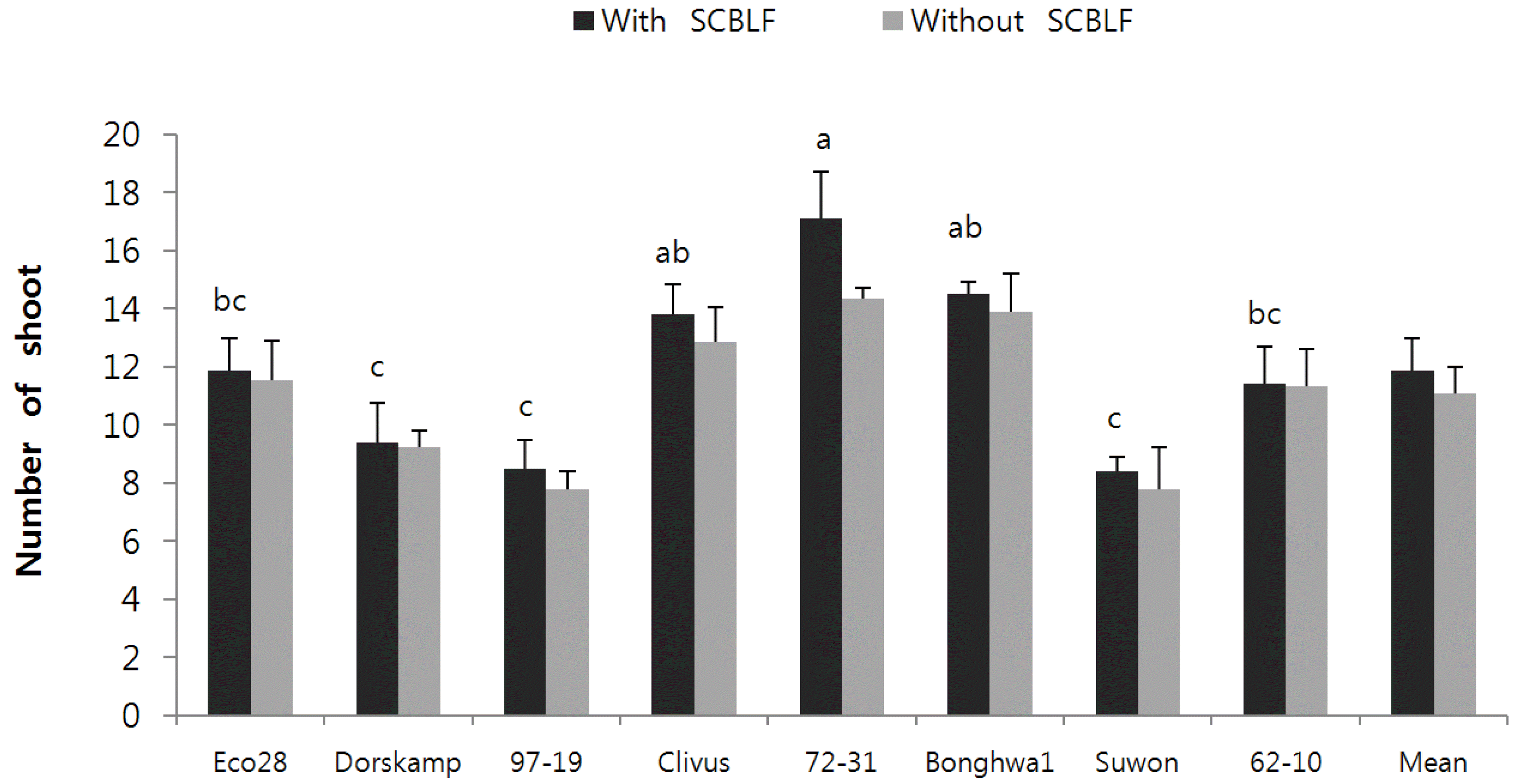
이태리포플러 Eco28 클론 및 양황철 62-10 클론의 SCB액 비 처리구의 줄기 수는 각각 11.8개와 11.4개로 나타났으며, 미루나무 교잡종 Dorskamp 및 97-19 클론, 수원포플러 Suwon 클론은 각각 9.4개, 8.5개 및 8.4개로 낮게 나타났다.
Laureysens et al. (
2005)은 생활쓰레기 처리장에 포플러 단벌기 맹아림을 조성한 후 포플러 클론들의 줄기 수를 조사 하였는데, 최대 13.4개의 줄기가 발생한다고 보고하였다. 본 연구에서 현사시 클론들의 경우 더 많은 맹아지를 발생시켰 는데, 이는 SCB액비가 포플러 클론의 줄기 수를 증가시킨 것 으로 판단되었으며, 현사시 클론들이 다른 포플러 클론 보다 맹아 발생력이 더 높은 것으로 나타났다.
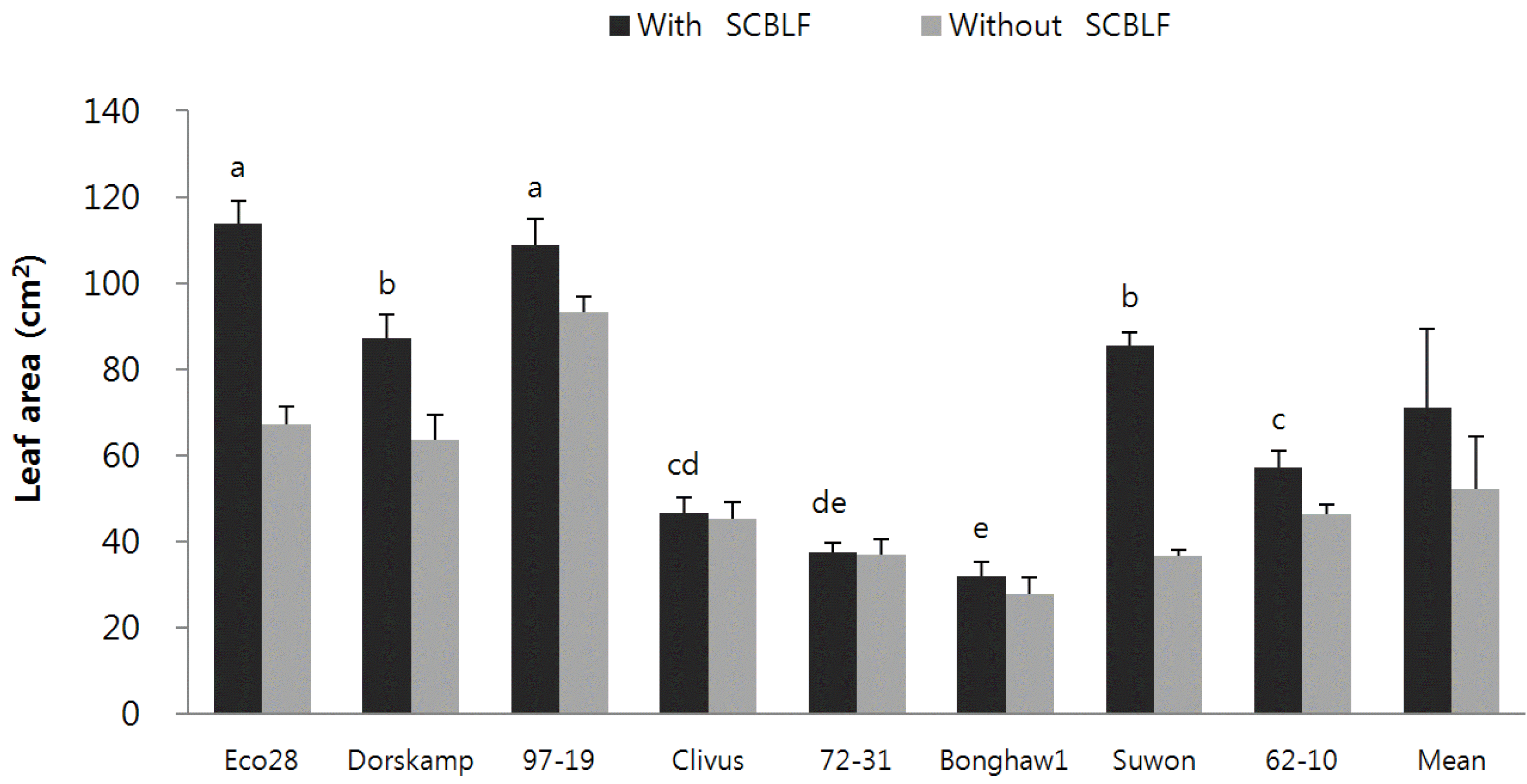
SCB액비 처리에 따른 포플러 클론별 엽면적은 처리 및 클 론간에 모두 차이가 나타났으며(P<0.05), 처리구 및 무처리구 포플러 클론들의 평균 엽면적은 각각 71.0 cm
2와 52.1 cm
2로 나타나 SCB액비 처리구가 35% 높게 나타났다(Fig.
4).
Fig. 4.Leaf area of the poplar clones treated with SCBLF. Bars indicate standard errors. Same letters are not significantly different at P<0.05.
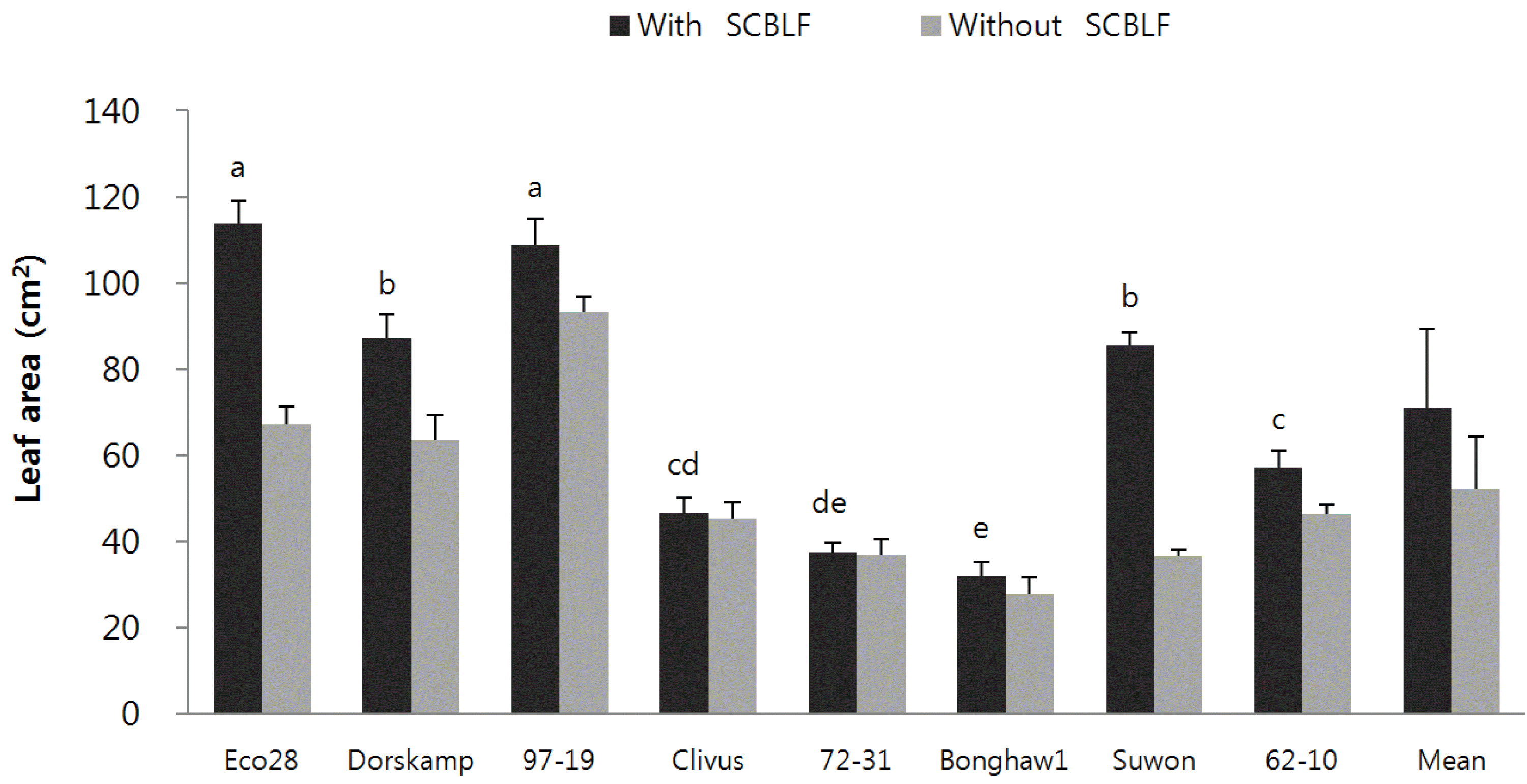
SCB액비 처리구 내 포플러 클론들의 엽면적은 이태리포플 러 Eco28 클론 및 미루나무 교잡종 97-19 클론이 각각 113.7 와 108.8로 나타나 가장 우수하였으며, 그 다음으로 미루나무 교잡종 Dorskamp 클론 및 수원포플러 Suwon 클론이 각각 87.1 cm2와 85.5 cm2로 나타났다.
현사시 Clivus, 72-31 및 Bonghwa1 클론은 각각 45.6 cm2, 37.6 cm2 및 31.9 cm2로 저조하게 나타났으며, 무처리 구에서도 각각 47.3 cm2, 37.1 cm2 및 27.8 cm2로 낮게 나타 났다. 이태리포플러 Eco28 클론 및 수원포플러 Suwon 클론 은 무처리구에서 각각 67.1 cm2와 36.7 cm2로 나타나 SCB 액비 처리구가 각각 69%, 132% 우수 하였다.
Pellis et al. (
2004)의 연구 결과에 따르면 포플러 단벌기 맹아림에서 포플러 클론들의 엽면적은 평균 50 cm
2~60 cm
2 범위에 있는 것으로 나타났으며, 본 연구에서는 SCB액비 처 리구의 평균 엽면적은 71.0 cm
2로 높게 나타나 SCB액비 내 함유된 질소 등이 양료 역할을 한 것으로 판단된다.
표본 줄기의 기부직경과 지상부 바이오매스에 대하여 공식 (
2)를 통해 유도된 회귀모형의 추정 모수를 Table
4에 나타내 었으며, 모든 포플러 클론에서 91% 이상의 설명력을 나타내 었다. 유도된 회귀모델과 공식 (3)의 편이 수정모델을 통해 지상부 바이오매스 생산량을 추정하였다.
Table 4Parameter estimates of regression equations used for the estimating above-ground biomass of the poplar clones
Table 4
|
Response variable (y)z
|
a |
b |
MSEy
|
Adjusted r2
|
|
|
Eco28 |
-1.2500 |
2.0359 |
0.037 |
0.958 |
|
Dorskamp |
-0.9429 |
1.8661 |
0.066 |
0.912 |
|
97-19 |
-3.1378 |
2.8107 |
0.065 |
0.963 |
|
Clivus |
-3.0354 |
2.7372 |
0.066 |
0.975 |
|
72-31 |
-1.6558 |
2.2123 |
0.077 |
0.939 |
|
Bonghwa1 |
-3.1636 |
2.7936 |
0.064 |
0.963 |
|
Suwon |
-2.4645 |
2.4105 |
0.034 |
0.969 |
|
62-10 |
-1.7349 |
2.1588 |
0.006 |
0.992 |
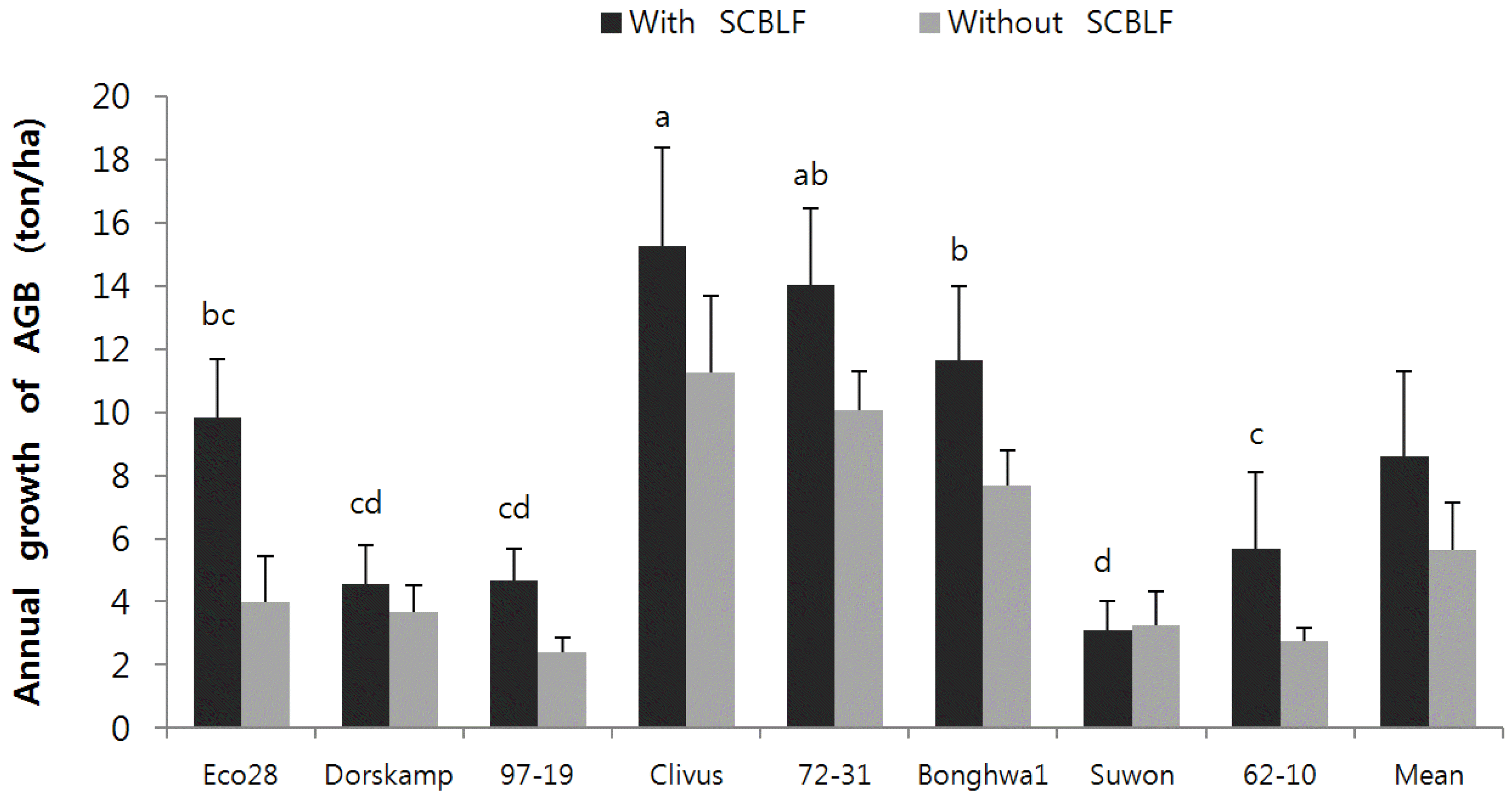
2008년부터 2010년까지의 매년 포플러 단벌기 맹아림의 클론별 연평균 바이오매스 생산량을 조사한 결과(Fig.
5), 포 플러 단벌기 맹아림의 클론별 연평균 바이오매스 생산량은 처리 및 클론 간 모두 차이가 나타났다(P<0.05). SCB액비 처 리구 및 무처리구의 포플러 클론들의 연평균 바이오매스 평 균 생산량은 각각 8.5 ton/ha와 5.6 ton/ha으로 나타나 SCB 액비 처리구가 51% 우수하게 나타났다.
Fig. 5.Annual growth of above-ground biomass (AGB) of the poplar clones treated with SCBLF. Bars indicate standard errors. Same letters are not significantly different at P<0.05.
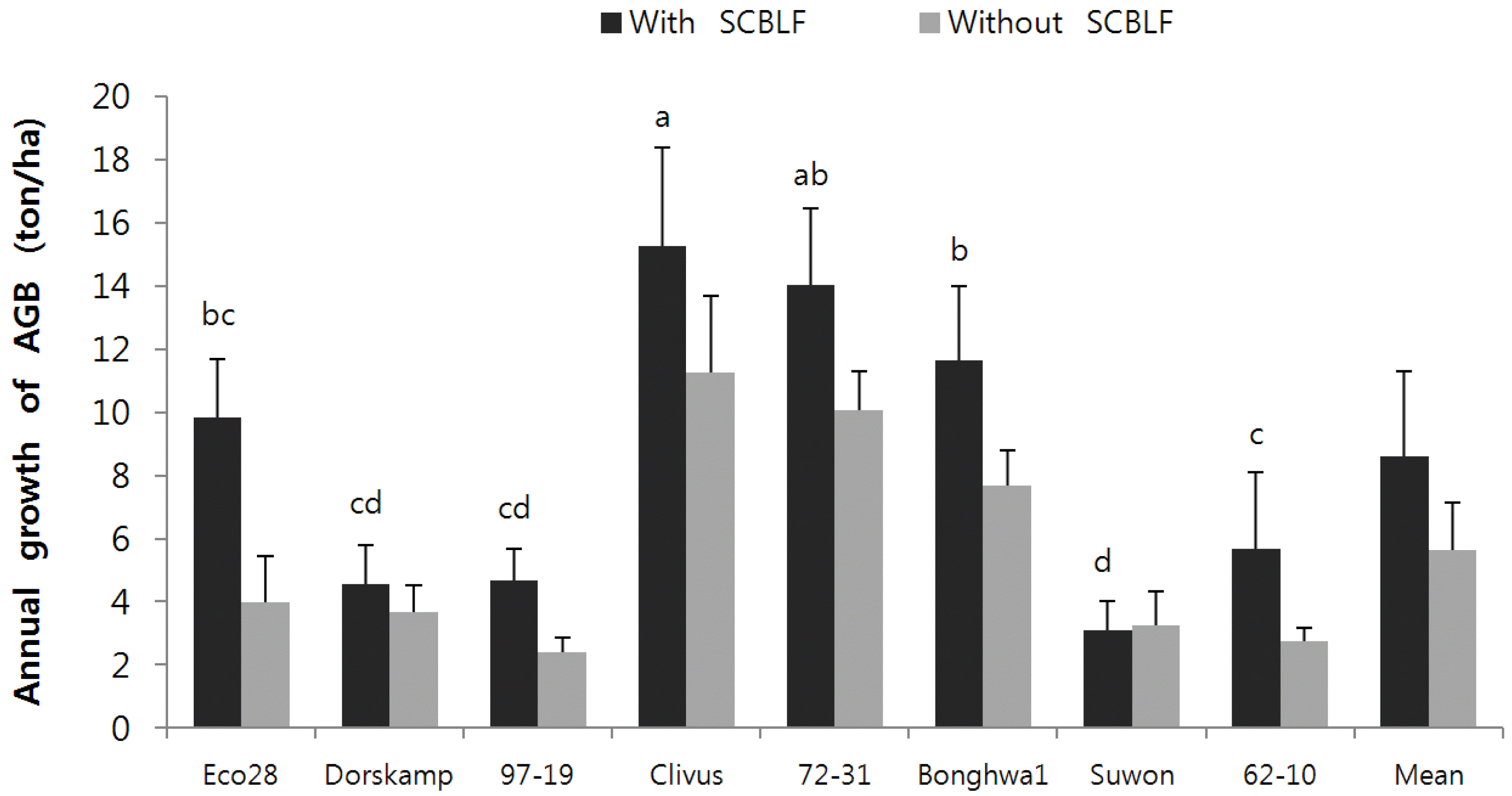
현사시 Clivus, 72-31 및 Bonghwa1 클론의 바이오매스 생 산량은 처리구에서 각각 15.2 ton/ha, 14.0 ton/ha 및 116 ton/ha, 무처리구에서 11.2 ton/ha, 10.1 ton/ha 및 7.6 ton/ha 로 나타나 처리구가 34%, 38%, 52% 우수하게 나타났다. 이 태리포플러 Eco28 클론은 처리구와 무처리구에서 각각 9.8 ton/ha와 3.9 ton/ha으로 처리구가 150% 우수하였다. 수원포 플러 Suwon 클론은 연평균 바이오매스 생산량이 SCB액비 처리구가 3.0 ton/ha, 무처리구가 3.2 ton/ha으로 나타나 SCB 액비 처리 효과가 없는 것으로 나타났다.
Laureysen et al. (
2003)은 17개 포플러 클론을 이용하여 쓰레기 매립지로 사용되었던 곳에 맹아림을 조성하여 바이오 매스 생산량 등을 조사하였는데, 그 결과 포플러 단벌기 맹아 림의 바이오매스 생산량은 2 ton/ha~11 ton/ha으로 나타났 다고 보고하였다. 본 연구결과, 현시시 클론들의 경우 처리구 에서 11.6 ton/ha~15.2 ton/ha의 바이오매스를 생산할 수 있 는 것으로 나타나 유휴농지에서 바이오매스 생산에 가장 적 합한 포플러는 현사시 클론으로 판단된다. 이태리포플러 Eco28 클론의 경우 역시 처리구가 무처리구 보다 150% 생산 량이 증가하여 유휴농지에서 SCB액비 처리효과가 우수한 클 론이라 판단되었다.
적 요
SCB액비 처리에 의한 포플러 클론들의 생육특성을 조사한 결과, 생존율은 처리구와 무처리구에서 각각 95.0%와 92.5% 로 양호하게 나타났다. 포플러 클론들의 평균 줄기 수는 처리 구 및 무처리구에서 각각 11.8개와 11.5개로 나타났으며, SCB액비 처리구에서 현사시 72-31, Bonghwa1 및 Clivus 클론이 각각 17.1개, 14.5개 및 13.8개로 우수하게 나타났다. 평균 엽면적은 처리구 및 무처리구에서 각각 71.0 cm2와 52.3 cm2로 나타나 처리구가 35% 높았다. 포플러 단벌기 맹 아림의 연평균 지상부 바이오매스 생산량을 조사한 결과, 처 리구 및 무처리구의 연평균 바이오매스 생산량은 각각 8.5 ton/ha와 5.6 ton/ha로 나타나 처리구가 51% 우수하였으며, SCB액비 처리구에서 현사시 Clivus, 72-31 및 Bonghwa1 클론이 각각 15.2 ton/ha, 14.0 ton/ha 및 11.6 ton/ha로 우수 하였다.
사 사
본 연구는 2012년도 산림청 국립산림과학원 리서치 펠로 우십의 지원에 의해 이루어진 것임.
References
- 1. Baskerville GL. Use of logarithmic regression in the estimation of plant biomass. Can. J. Forest Res 1972. 2: 49-53.
- 2. Dauen A, Quilez D. Pig slurry versus mineral fertilization on corn yield and nitrate leaching in a Mediterranean irrigated environment. Eur. J. Agron 2004. 21: 7-19.
- 3. Gray KA, Zhao L, Emptage M. Bioethanol. Curr. Opin. Chem. Biol 2006. 10: 141-146.
- 4. Hamelinck C, Hooijdonk G, Faaij A. Ethanol from lignocellulosic biomass technoeconomic performance in short-, middle- and long-term. Biomass Bioenergy 2005. 28: 384-410.
- 5. Ham SK, Kim YS, Kim TS, Kim KS, Park CH. The effect of SCB (slurry composition and biofilter) liquid fertilizer on growth of creeping bentgrasss. Korean J. Turfgrass Sci 2009. 23: 97-100.
- 6. Hyun YI, Kim JH, Han YC, Lee KJ. Wood biomass production of twelve tree species in coppice plantations managed under 1-, 2- and 3-year rotations. J. Korean Forest Soc 1982. 55: 30-36.
- 7. Kim HC, Yeo JK, Koo YB, Shin H, Choi JY, Lee HH. Growth and biomass production of fast growing tree species treated with slurry composting and biofiltration liquid fertilizer. Korean J. Soil Sci. Fertilizer 2011. 44: 206-214.
- 8. Kim JS, Lee KB, Lee DB, Lee SB, Na SY. Influence of liquid pig manure on rice growth and nutrient movement in paddy soil under different drainage conditions. Korean J. Soil Sci. Fertilizer 2004. 37: 97-103.
- 9. Laureysens L, Draedt W, Indeherberge T, Ceulemans R. Population dynamics in a 6-year old coppice culture of poplar. I. Clonal differences in stool mortality, Shoot dynamics and shoot diameter distribution in relation to biomass production. Biomass Bioenergy 2003. 24: 81-95.
- 10. Laureysens L, Pellis A, Willems J, Ceulemans R. Growth and production of a short rotation coppice culture of poplar. III. Second rotation results. Biomass Bioenergy 2005. 29: 10-21.
- 11. Lee JE, Heo SW. A study on recycling systems of livestock excretions and benefits analysis. Korean J. Agricul. Management Policy 2009. 36: 371-393.
- 12. Lim TJ, Hong SD, Kim SH, Park JM. Evaluation of yield and quality from red pepper for application rates of pig slurry composting biofiltration. Korean J. Environ. Agriculture 2008. 27: 171-177.
- 13. Misselbrook TH, Smith KA, Jackson DR, Gilhespy SL. Ammonia emissions from irrigation of dilute pig slurries. Biosys. Engin 2004. 89: 473-484.
- 14. Paschold JS, Wienhold BJ, McCallister DL, Ferguson RB. Crop nitrogen and phosphorus utilization following application of slurry from swine fed traditional or low phytate corn diets. Agron. J 2008. 100: 997-1004.
- 15. Pellis A, Laureysens I, Ceulemans R. Growth and production of a short rotation coppice culture of poplar I. Clonal differences in leaf characteristics in relation to biomass production. Biomass Bioenergy 2004. 27: 9-19.
- 16. Sanchez O, Cardona C. Trends in biotechnological production of fuel ethanol from different feedstocks. Bioresource Technol 2008. 99: 5270-5295.
- 17. Son YM, Lee KH, Kim RH. Estimation of forest biomass in Korea. J. Korean Forest Soc 2007. 96: 477-482.
- 18. Tubby I, Armstrong A. Establishment and management of short rotation coppice Forestry Commission 2002. 12.