적요
‘Eunhyang’ is a new strawberry cultivar developed in 2021 by the Strawberry Research Institute of the Chungcheongnam-do Agricultural Research and Extension Services for forcing culture. The cultivar was bred to diversify the domestic market dominated by the single cultivar ‘Sulhyang’ and to improve fruit quality, including sweetness, firmness, and flavor. ‘Daewang,’ characterized by excellent flavor, aroma, and high firmness was used as the female parent, while ‘Durihyang,’ bred by the same institute with large fruit size, strong vigor, and good taste, was used as the male parent. Artificial crossing was conducted in 2017, followed by seedling selection, evaluation of characteristics, and productivity testing from 2018 to 2020. The selected line, initially designated ‘Nonsan 16,’ was officially named ‘Eunhyang’ in 2021. ‘Eunhyang’ exhibits semi-spreading growth, strong plant vigor, and elliptic leaves. Its flowering date is slightly earlier than that of ‘Sulhyang,’ and it shows excellent continuous flowering ability. The first harvest date was similar to that of ‘Sulhyang.’ The fruits are conical and bright light red. The first flower cluster has 8.6 flowers, fewer than ‘Sulhyang’ (16.8), reducing labor for flower thinning. It demonstrates higher soluble solids content (11.0 °Brix), stronger fruit firmness (14.1 g/mm2), and a higher sugar-to-acid ratio (19.0) than ‘Sulhyang.’ The average fruit weight is 17.7 g, which is heavier than ‘Sulhyang’ (15.4 g). Total yield is 3,945 kg/10a, which is 93% of ‘Sulhyang’ (4,236 kg/10a). ‘Eunhyang’ is relatively susceptible to anthracnose, powdery mildew, and two-spotted spider mites. ‘Eunhyang’ was registered for plant variety protection in 2023 (Registration No. 9751).
서언
딸기(
Fragaria×
ananassa Duch.)는 뛰어난 맛과 선명한 과색을 지닌 과채류로 소비자 선호도가 높으며 비타민, 미네랄, 페놀 화합물을 포함한 항산화물질이 풍부해 기능성 식품으로서의 가치도 높다(
Giampieri et al. 2015,
Sharma et al. 2022). 현재 재배되는 딸기는 장미과에 속하며(
Hancock et al. 2002) 약 300년전 유럽에서
F. virginiana와
F. chiloensis가 교배되어 형성된 잡종 계통을 기원으로 한다(
Bringhurst 1990,
Darrow 1966,
Edger et al. 2019,
Whitaker et al. 2020). 세계적인 딸기 품종 육종 동향은 전통적 교배육종을 기반으로 하되 마커 보조 선발과 유전체 선발 등 첨단 육종 기술이 빠르게 확대되고 있다(
Cockerton et al. 2021). 특히 과실 품질, 기능성 성분(
Jee et al. 2024,
Yong et al. 2019)과 병저항성 향상을 목표로 한 연구(
Barbey et al. 2019,
Sharma et al. 2022)가 활발히 진행되고 있다. 국내 딸기재배 면적은 2024년 기준 5,612 ㏊로 대부분 시설재배 형태로 촉성재배 작형 위주로 재배되고 있다. 국내 딸기 생산량은 155,000톤, 생산액은 1조5,211억원으로(KOSIS 2025), 전체 과채 생산액 중 24.3%를 차지하며 가장 큰 비중을 나타낸다. 2000년대 초반까지는 일본 도입 품종인 ‘아끼히메’와 ‘레드펄’ 등이 주로 재배되었으나 충청남도농업기술원 딸기연구소는 1994년부터 일본 도입 품종을 대체하고 품종 국산화를 달성하기 위해 교배육종을 시작하여 ‘매향’(
Kim et al. 2004)과 ‘설향’(
Kim et al. 2006)을 선두로 현재까지 ‘킹스베리’(
Kim et al. 2016), ‘비타베리’(
Kim et al. 2020) 등 17개 품종을 개발 보급하였다. 국내 육성 품종은 ‘설향’(
Kim et al. 2006), ‘금실’(
Yoon et al. 2020), ‘죽향’(
Lee et al. 2016), ‘킹스베리’ 품종 등이 98.4%를 점유하며 딸기 품종의 국산화가 이루어졌고 이 중 ‘설향’ 품종의 점유율이 80.6%로 가장 높지만 최근 다양한 품종이 재배되며 그 비중은 감소하고 있는 추세이다(
KREI 2025).
수량성이 높고 병해에 강하며 재배가 용이한 ‘설향’ 품종은 종자 독립을 이루며 국내 딸기 산업의 성장을 견인해왔다. 그러나 주로 11~12월의 고가 시기에 생산이 집중적으로 이루어지고 3월 이후 고온기에 당도가 저하되는 문제점이 있으며 단일 품종의 편중 재배로 인해 품종 다양화 요구가 증가하고 있다. 또한 최근 소비자들은 당도, 풍미, 경도 등 프리미엄 품질에 대한 요구가 커지고 있어 고품질 딸기 품종의 육성 필요성이 크게 부각되고 있다. 충청남도농업기술원은 이러한 시장 요구에 대응하여, 기존의 수량성 중심 육종 전략에서 벗어나 맛과 풍미를 향상시키는 프리미엄 품종 육종 전략을 수립하였다. 그 결과, 맛과 향이 우수하고 경도가 높은 ‘대왕’을 모본으로, 대과성이며 초세가 강하고 맛이 양호한 ‘두리향’을 부본으로 한 교배를 통해 당도가 높고 풍미가 우수한 딸기 신품종 ‘은향’을 육성하였다. 본 연구에서는 ‘은향’의 육성 과정과 주요 특성을 기술하고자 한다.
재료 및 방법
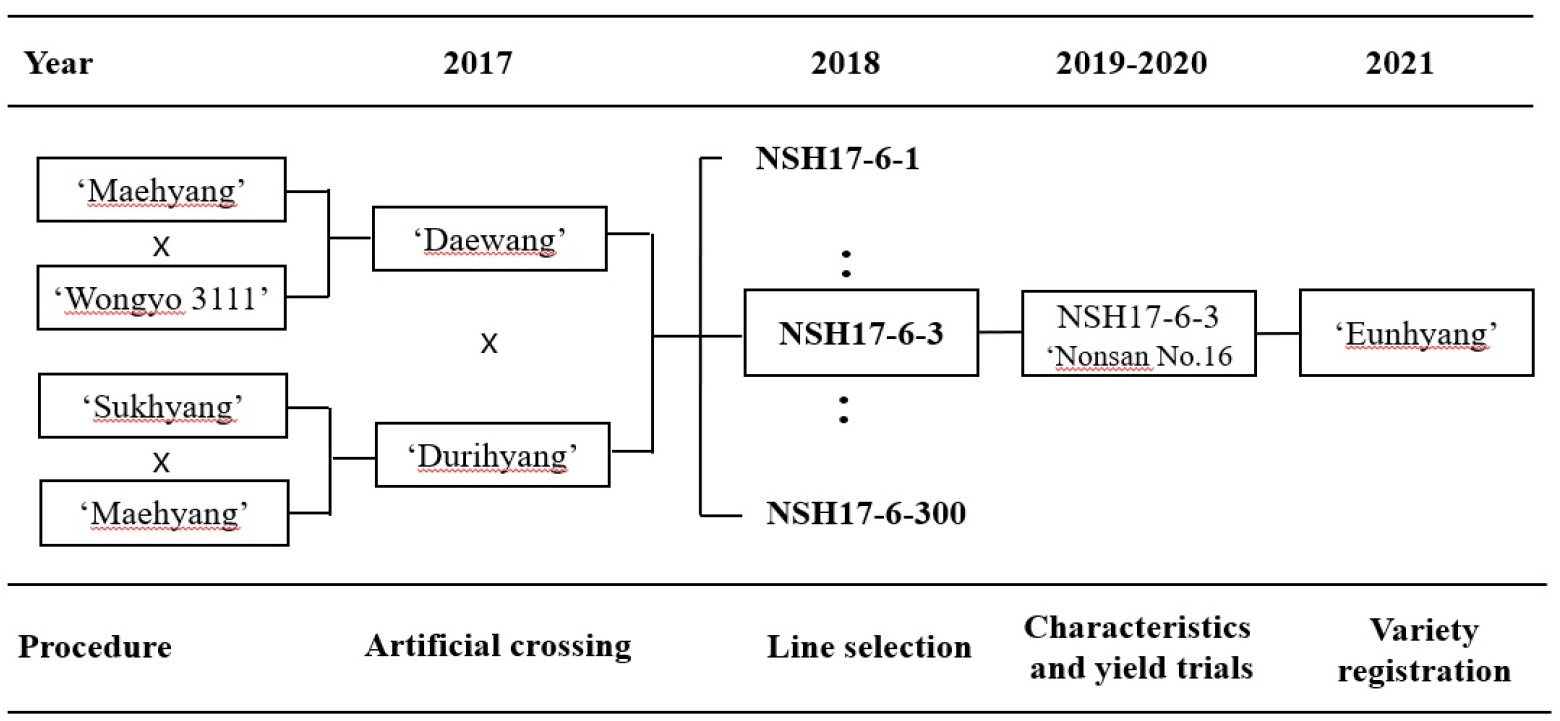
고품질 딸기 신품종을 육성하기 위해 충청남도농업기술원 딸기연구소 시험포장(충남 논산)에서 2017년에 ‘대왕’을 모본으로 하고 ‘두리향’을 부본으로 하여 인공교배를 실시하였다(
Fig. 1). 인공교배를 실시하여 총 1,000여립의 종자를 채종하였고, 4℃ 냉장고에서 4주간 저온 저장 후 5월 하순에 딸기전용상토(코코피트:피트모스:펄라이트=65:17:10, Purumi, Seoulbio, Korea)를 채운 파종상에 파종하였다. 본엽이 3~4매 확보된 후에 생육이 양호한 실생개체를 선발하여 점적관수 육묘상자(A형 24구, 60×34×10 cm, Hwasung industries Co., Korea)에 가식하였다. 포트에서 육묘한 실생개체 중 생육이 왕성하고 병해 발생이 없는 건전 개체 300주를 선별하여, 9월 10일에 비닐하우스에 재식거리 20×20 cm (2조식)로 정식하고 촉성작형에 준하여 수경재배하였다. 양액조성은 N-P-K-Ca-Mg=12.5-2.8-6.6-4.6-2.0 me/L로 공급 EC는 0.8-1.0 dS⋅m
-1 범위, pH는 5.5~6.5범위로 유지하였다. 재배 기간동안 동절기 야간에는 최저온도 8℃이상을 확보하고, 주간에는 최고 24~27℃ 범위로 관리하였다. 생육, 수량 및 과실 품질 등을 종합적으로 검토하여 우수한 개체를 선발하였다. 생육, 수량 및 과실 품질 등의 조사는 농업과학기술 연구조사기준(RDA 2012)에 준하여 수행하였다. 선발된 계통의 생산력검정은 2019~2020년에 실시하였다. 대조품종으로는 국내 주력 품종인 ‘설향’을 이용하였다. 9월 15일 토경재배 조건의 비닐하우스에 재식거리 20×20 cm (2조식)로 정식하고 난괴법 3반복(반복당 30주)으로 배치하였다. 과중은 전자식 저울(AND GX-4000, AND Ltd., Japan)로 과장, 과폭은 디지털 캘리퍼스(Mitutoyo, Mitutoyo Cor. Japan)를 이용하여 측정하였다. 과실 경도는 과실 경도계(Sun Rheo Meter Compac-100Ⅱ, SUN SCIENTIFIC Co., Ltd, Japan)를 사용하여 직경 5 mm tip, 120 mm/min 속도로 반복당 10개의 딸기를 임의로 취하여 과실 중앙부를 측정하였다. 당도와 산도는 과실을 착즙하여 프리미엄 과일 당산도측정기(SAM-7300 plus, G-won Hightec, Korea)를 사용하여 측정하였다. 상품과 수량은 12 g 이상의 정상과의 누적 수량으로 하였다. 병해충 발생 조사는 재배 기간동안 자연 발생정도를 대상으로 육안으로 평가하였으며, 농촌진흥청 농업과학기술 연구조사분석기준(RDA 2012)에 의거하여 다음과 같이 5단계로 등급화하여 판정하였다. 발병 정도에 따라 - (무발생, 0%), +(약간 발생, 1-25%), ++(중간 발생, 26-50%), +++(심하게 발생, 51-75%), ++++(아주 심함, 76-100%)으로 판정하였다.
품종의 구별성을 확인하기 위하여 딸기 ‘설향’과 ‘은향’의 식물체로부터 전개하기 시작한 어린 잎(200 mg)을 채취하여 genomic DNA를 추출하였다. PrimePrep Genomic DNA Extraction Kit (GeNet Bio, Korea)를 이용하여 제조사 지침에 따라 DNA를 확보하였다. 추출된 genomic DNA를 증폭하기 위해 충청남도농업기술원에서 특허 출원된 딸기 품종 구별용 분자 마커 A080302-010, B051209-B15, D020807-055, D030808-125, D070404-015 (
Park et al. 2012)를 이용하여 PCR을 수행하였다. PCR 조건은 98℃에서 5분간 초기 변성 후, 98℃ 10초, 프라이머의 Tm 온도에서 5초간 결합, 68℃에서 1초간 신장을 35회 반복하였으며, 최종적으로 68℃에서 1분간 신장하였다. PCR 산물은 2% agarose gel에서 전기영동하였고 Gel Doc XR
+ Gel Documentation System (Bio-Rad, USA)을 이용하여 밴드를 관찰하였다.
통계분석은 R 소프트웨어(Version 4.4.3, The R Foundation for Statistical Computing Platform)를 이용하였다. 육성 품종과 비교 품종 간의 형질 차이는 t-test를 사용하여 통계적 유의성을 검정하였다.
결과 및 고찰
육성 경위
본 연구에서는 고품질 딸기 품종을 육성하기 위해 모본으로는 국립원예특작과학원에서 개발하여 맛, 향, 경도 면에서 우수한 ‘대왕’(
Na et al. 2013)을 이용하였고, 부본으로는 충청남도농업기술원 딸기연구소에서 육성한 대과성인 ‘두리향’(
Kim et al. 2018)을 이용하여 2017년에 인공교배를 실시하였다(
Fig. 1). 인공교배를 통해 약 1,000여립의 종자를 확보하였고 5월 하순에 파종하여 실생묘를 육묘하였다. 육묘과정 중 묘소질이 불량하거나 이병주는 도태시키고 묘소질이 양호한 개체를 9월 10일에 비닐하우스에 정식하여 촉성재배에 준하여 수경재배하였다. 출뢰성, 초형, 초세, 과형, 내병성 정도 등을 관찰하고 과실의 맛과 당도, 경도를 직접 평가하여 우수한 대과형 실생 7개체를 선발하였다. 이들에 계통번호를 부여한 뒤 다음해(2018년)에 각 개체로부터 자묘 10주씩을 증식하여 재배하고 1년차 특성검정을 하였다. 2019년 수행한 2년차 특성 평가에서 생육, 과실 특성 및 수량성이 뛰어난 1계통을 선발하였고, 이에 계통명 ‘NSH170603’을 부여하였다. 2020년 생산력검정을 수행한 뒤, ‘논산 16호’라는 계통명을 부여하였고 2021년 충청남도농업기술원 직무육성 신품종 심의위원회를 통과하여 ‘은향(Eunhyang)’으로 명명하였고, 2023년 국립종자원에 품종보호품종으로 등록되었다(등록번호 제9751호). ‘은향’ 딸기의 육성과정 및 계통도는
Fig. 1과 같다.
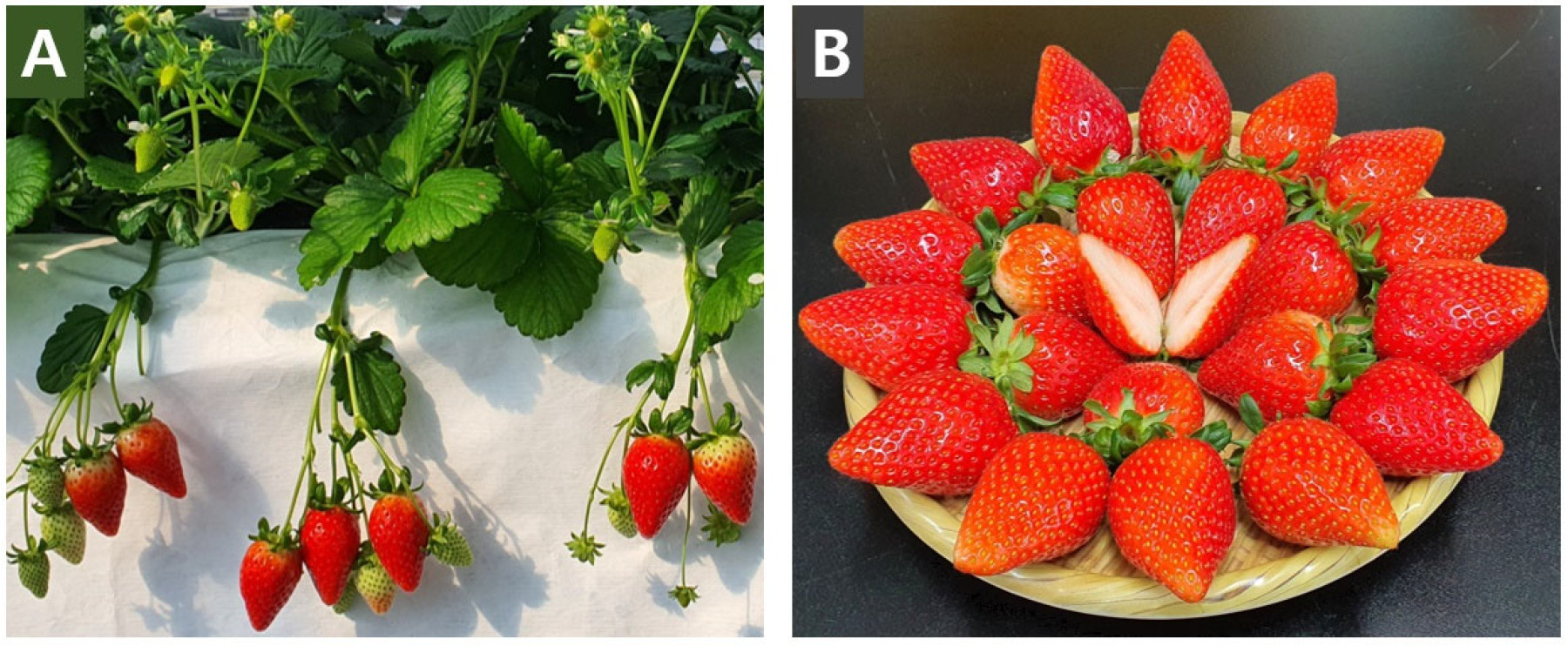
‘은향’은 일계성 품종으로 9월 상순에 비닐하우스에 정식 후 12월 상순부터 이듬해 5월 상순까지 수확이 가능하여 촉성재배에 적합한 재배 특성을 나타낸다. 식물체는 초형이 반개장형이고 초세가 왕성하다. 엽형은 타원형에 가깝고 과실의 과형은 원추형이고 균일하며 과색은 밝은 선홍색을 띤다(
Fig. 2). 화아분화 시기는 ‘설향’보다 약간 빠른 편이며, 휴면성 역시 비교적 얕은 정도로 ‘설향’ 품종과 유사한 경향을 보인다(
Table 1). ‘은향’의 엽병장은 22.9 cm로 ‘설향’ 18.1 cm보다 다소 길었으나 통계적 유의성은 없었고, 엽수는 7.8개로 ‘설향’ 8.0개와 비슷하여 엽의 출현속도가 ‘설향’과 비슷한 편이다(
Table 2). 화방당 화수는 평균 8.6개로 대조 품종인 ‘설향’(16.8개)보다 약 50% 적어서(
Table 3) 초기 과실 비대기에 필수적인 적화의 노동력을 획기적으로 절감할 수 있다(
Yoon et al. 2020). 이러한 노동력 절감은 대규모 재배 농가에서 인건비 감소로 이어져 실질 소득 증대에 기여할 것이다. 다만 2화방 이후의 화수 변화 및 수확 후기까지의 노동력 투입량에 대해서는 향후 추가적인 재배 실증 연구가 필요할 것으로 판단된다. 화경장은 37.1 cm로 ‘설향’의 29.2 cm보다 유의적으로 길었으며, 개화기는 ‘설향’ 대비 3일 빠른 10월 18일이었다. 그러나 첫 수확일은 11월 30일로 두 품종이 동일하여 수확 개시 측면에서 재배상 큰 차이는 없었다(
Table 3).
‘은향’의 총수량은 3,945 kg/10a로 대조 품종인 ‘설향’ 대비 약 93% 수준으로 나타났다(
Table 4). 수량성은 다소 낮으나 수확개시 시기가 비슷하여 조기 출하가 가능하고 ‘설향’(10.2 °Brix, 12.2 g/mm
2)보다 유의적으로 높은 당도(11.0 °Brix)와 경도(14.1 g/mm
2)를 보유하고 있어(
Table 5) 프리미엄 시장에서의 높은 수취 가격 형성이 가능하다. 또한 평균과중이 17.7 g으로 ‘설향(15.4 g)’보다 큰 중대과성 특성으로 인해 상품성이 향상되고 뛰어난 맛으로 품질이 차별화되어 ‘설향’보다 높은 가격이 형성되어 소득을 충분히 보전할 수 있을 것으로 판단된다.
‘은향’의 당도는 11.0 °Brix로 ‘설향’의 10.2 °Brix보다 유의하게 높았으며, 산도는 0.58%로 ‘설향’의 0.68%보다 0.1% 낮아 당산비가 19.0로 ‘설향’의 15.0보다 고도로 유의하게 높았다(
Table 5). ‘은향’은 ‘설향’보다 당도가 높고 과즙이 풍부하며 풍미가 깊고 청포도향을 포함한 향미 특성이 확인되었다. 경도는 14.1 g/mm
2으로 ‘설향’의 12.2 g/mm
2보다 유의하게 높아 저장성이 우수할 것으로 판단된다(
Table 5).
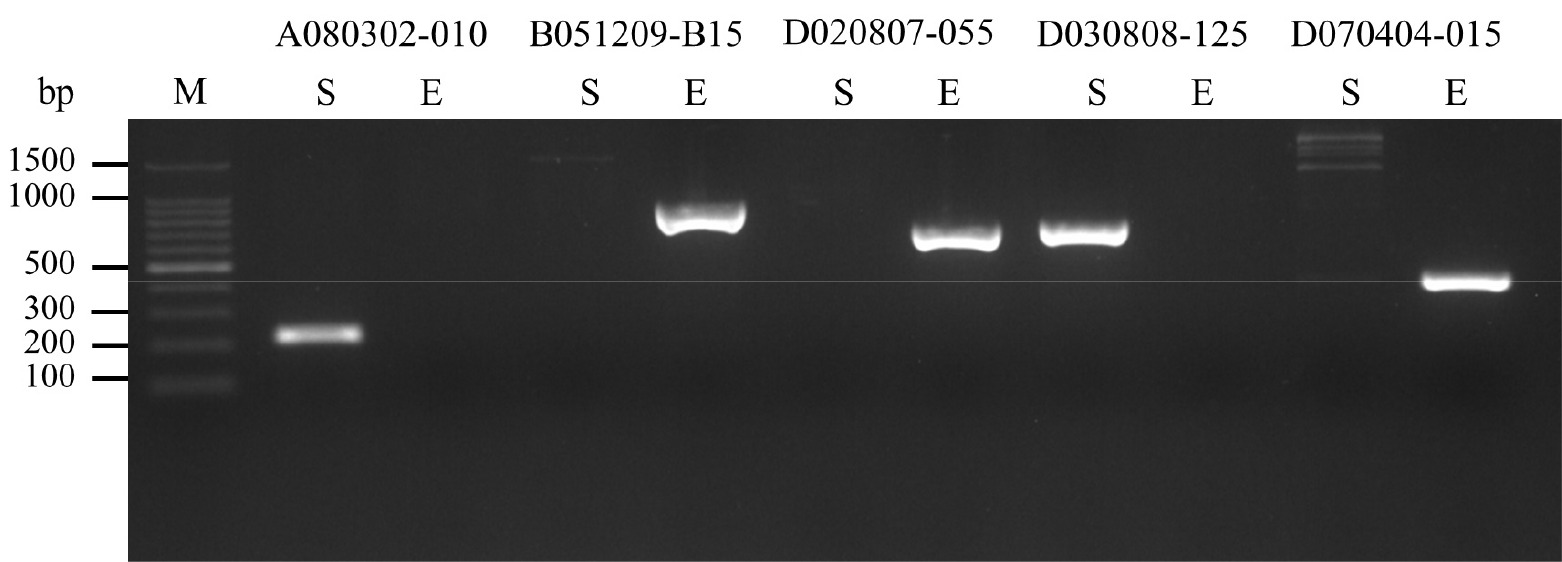
SCAR marker set를 이용한 전기영동 결과, ‘설향’과 ‘은향’은 5개 프라이머 세트(A080302-010, B051209-B15, D020807-055, D030808-125, D070404-015)를 이용한 PCR 증폭에서 상이한 밴드 양상을 나타냈다(
Fig. 3). A080302-010 마커와 D030808-125 마커의 경우 각각 250 bp와 700 bp 크기의 밴드가 ‘설향’에서만 출현(present)하였으며, ‘은향’에서는 결측(absent)되어 ‘설향’을 식별하는 마커로 확인되었다. 반면 B051209-B15 (900 bp), D020807-055 (650 bp), D070404-015 (450 bp) 마커는 ‘은향’에서만 선명한 밴드가 출현(present)하고 ‘설향’에서는 증폭 산물이 나타나지 않아(absent) ‘은향’ 고유의 유전적 지표임이 입증되었다. 이는 두 품종 간 명확한 유전적 구별성이 존재함을 의미한다. 5개의 프라이머를 이용하여 ‘은향’과 ‘설향’의 품종 구별이 가능했다.
병해충 저항성 조사 결과 ‘은향’은 탄저병, 흰가루병에 대해 대조 품종인 ‘설향’보다 다소 감수성인 것으로 나타났다(
Table 6). 이는 신품종 보급 시 농가의 재배 안정성을 저해하는 요인이 될 수 있으므로 철저한 재배 관리가 요구된다. 육묘기에 주로 발생하는 탄저병 발생을 억제하기 위해서는 육묘기 비가림 재배가 필수적이며, 조기에 이병주를 제거하고 등록된 약제를 예방적으로 살포해야 한다. 흰가루병은 잎과 과실에서 ‘설향’보다 발생이 높게 관찰되어, 육묘기와 수확기에 주야간 일교차가 큰 시기에는 시설 내 습도 관리와 통풍에 유의하여 환경 관리에 특히 주의가 요구된다. 반면 잿빛곰팡이병에 대해서는 ‘설향’보다 상대적으로 강한 경향을 보였다. 목화진딧물 발생은 ‘설향’보다 낮은 수준이었고, 점박이응애는 비슷한 수준을 보였으나 시설 환경에 따라 변동 폭이 커 개화기 이전에 예방적 방제가 필요하다(
Table 6).
‘은향’의 안정적 생산을 위해서는 육묘기 동안 70~90일간 병 발생이 없이 건전하게 육묘한 우량묘를 사용하는 것이 중요하다. 토양재배 시 정식 적기는 9월 10일~15일로 ‘설향’과 유사하며, 9월 20일 이후의 늦은 정식은 바람직하지 않다. ‘은향’은 화경장이 길어 수경재배에서는 큰 문제가 없으나, 토양재배에서는 화경이 바닥에 닿는 것을 방지하기 위해 이랑을 50 cm 이상으로 높게 조성하는 것이 권장된다. 육묘기와 수확기 모두에서 양분 요구도가 ‘설향’보다 높은 편이고, 1화방 수확기 촉진을 위해 육묘 후기 질소 시비량을 세심하게 조절할 필요가 있다. ‘은향’의 상품과율은 76.1%로 대조 품종인 ‘설향’(78.6%) 대비 다소 낮게 나타났는데(
Table 4), 이는 저온기에 해당하는 1, 2화방의 1번과에서 발생하는 기형과가 주요 원인인 것으로 분석되었다. 이를 극복하고 상품과율을 높이기 위해서는 개화기 시설 내 야간 최저온도를 8℃ 이상으로 철저히 유지하고, 주간에는 25℃ 내외로 관리하여 화분의 활력을 높여야 한다. 또한, 수분 수정 효율을 높이기 위해 매개 곤충(수정벌)의 활동을 저해하지 않는 적정 습도(60~70%) 관리와 함께 1번과의 기형과 발생 시 조기 적과를 실시하여 후속 과실의 비대를 유도하는 것이 권장된다. ‘은향’은 초세가 왕성하고 ‘설향’과 엽 전개속도가 유사하므로 재배기간 동안 주간 온도는 ‘설향’에 준하여 관리하는 것이 적합하다. 과실 비대기에는 질소질 비료가 과다할 경우 선청과가 나타날 수 있으므로 시비관리에 유의해야 한다. ‘은향’은 탄저병 발병률이 ‘설향’보다 높으므로 육묘기 비가림 재배를 필수로 이행하고 예방적 약제 방제를 철저히 해야 한다. 흰가루병 또한 ‘설향’ 대비 감수성이 높은 편으로, 발생을 억제하기 위해 주야간 일교차가 큰 시기에는 시설 내 적절한 통풍과 습도 관리가 요구된다. 점박이응애는 발생 초기 확산 속도가 빠를 수 있으므로 육묘기부터 정밀 예찰을 통한 초기 집중 방제를 실시해야 하며, 특히 정식 후 개화 이전부터 예방적 방제와 수확기까지의 지속적인 관리가 필수적이다.
‘은향’ 품종은 2021년 충청남도농업기술원 직무육성 신품종선정 심의를 통과한 뒤, 식물신품종보호법에 의거하여 국립종자원에 품종보호권을 출원하였다(품종출원 : 제2021-348호). 이후 2021년~2022년 동안 국립종자원에서 실시한 재배심사를 거쳐 2023년에 품종등록이 완료되었다(제9751호). 등록 이후에는 육묘업체에 품종보호권 통상실시를 시행하여 원원묘 생산과 보급이 활발히 진행되고 있으며 현재 충남 논산 지역에서 상업적으로 재배되고 있다. ‘은향’은 높은 당도와 풍미로 인해 국내 프리미엄 유통시장에서 고급 딸기로 평가받아 높은 가격대를 형성하고 있다. 향후 농가 보급이 확대되면 고급 시장에서 차별화된 품종으로 정착할 것으로 전망된다.
적요
‘은향’ 품종은 충남농업기술원 딸기연구소에서 2021년도에 육성한 촉성재배용 품종이다. ‘설향’ 단일 품종의 편중재배로 획일화된 내수 시장을 다변화하고 고품질 품종을 육성하기 위해 맛, 향, 경도가 뛰어난 ‘대왕’을 모본으로 하고 과실이 크고 초세가 강하며 맛이 좋은 ‘두리향’을 부본으로 하여 2017년에 인공교배를 실시하였다. 이후 2018~2020년동안 실생선발, 특성검정, 생산력검정 등을 거쳐 ‘논산 16호’로 계통명을 부여하였고, 2021년에 ‘은향’으로 명명하였다. ‘은향’은 초형이 반개장형이고 초세가 왕성하다. 잎은 연한 녹색이며 엽형은 타원형이다. 개화기는 ‘설향’보다 다소 빠르고 연속 출뢰성이 우수하며 첫 수확일은 ‘설향’과 유사하다. 과형은 원추형이고 과색은 밝은 선홍색이며 과실 표면의 색이 고르다. 정화방의 화수는 8.6개로 ‘설향’(16.8개)보다 적어서 적화 노동력을 절감할 수 있다. 과실 경도는 14.1 g/mm2, 당도는 11.0 °Brix로 ‘설향’보다 더 단단하고 당도가 높으며 당산비가 19.0으로 높게 나타났다. 평균 과중은 17.7 g으로 ‘설향’(15.4 g)보다 크고 총수량은 3,945 kg/10a으로 ‘설향’(4,236 kg/10a)의 93% 수준이었다. 병해충 면에서는 탄저병에 약한 편으로 육묘 기간 중 철저한 예방적 방제가 필요하고 흰가루병과 점박이응애에도 약한 편이다. 1, 2화방의 1번과에서 저온기 수정불량으로 인한 기형과 발생이 많은 편으로 환경 관리와 1번과의 기형과 발생시 적과가 필요하다. ‘은향’은 2023년 국립종자원에 품종보호 등록이 되었다(등록번호 제9751호).
Fig. 1Pedigree of ‘Eunhyang’ strawberry.
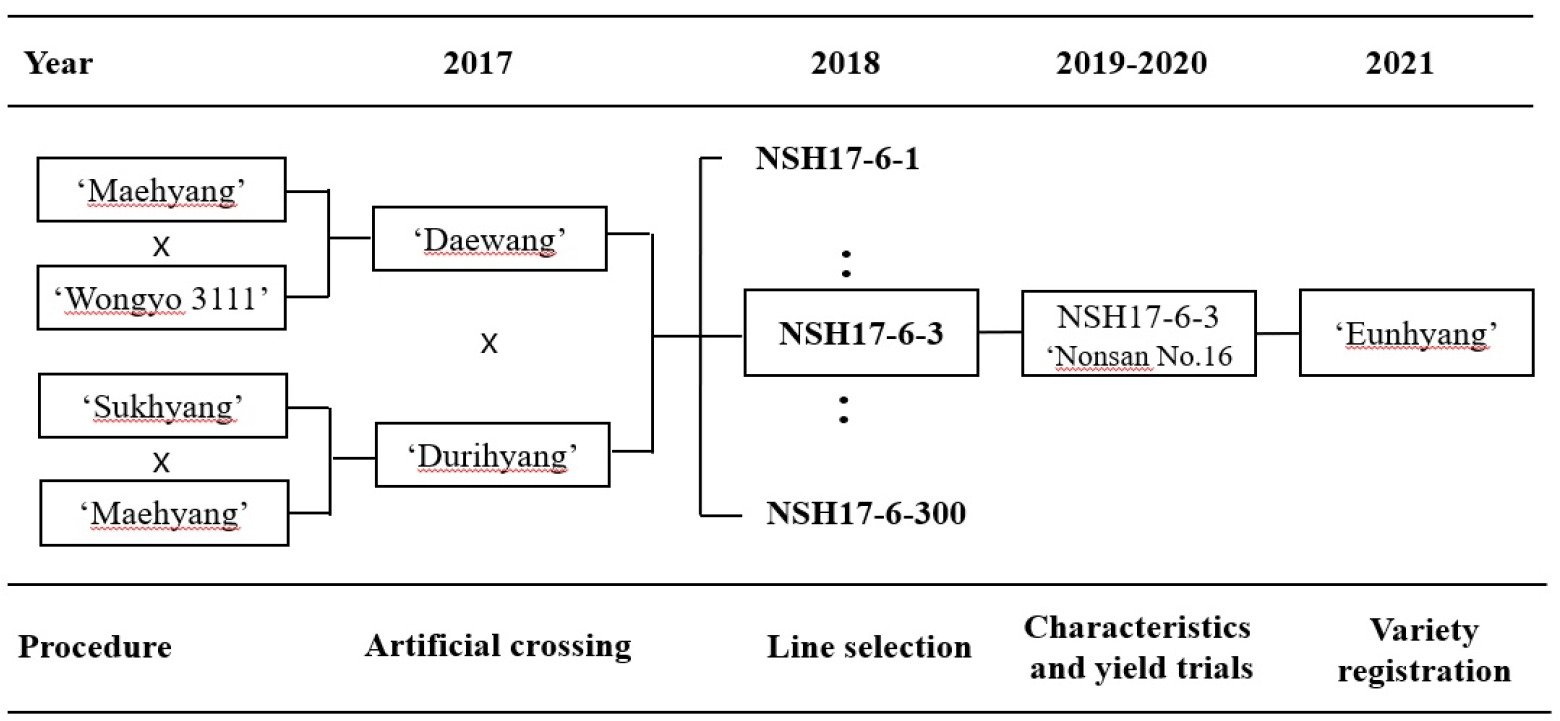
Fig. 2Plants (A) and fruits (B) of ‘Eunhyang’ strawberry.
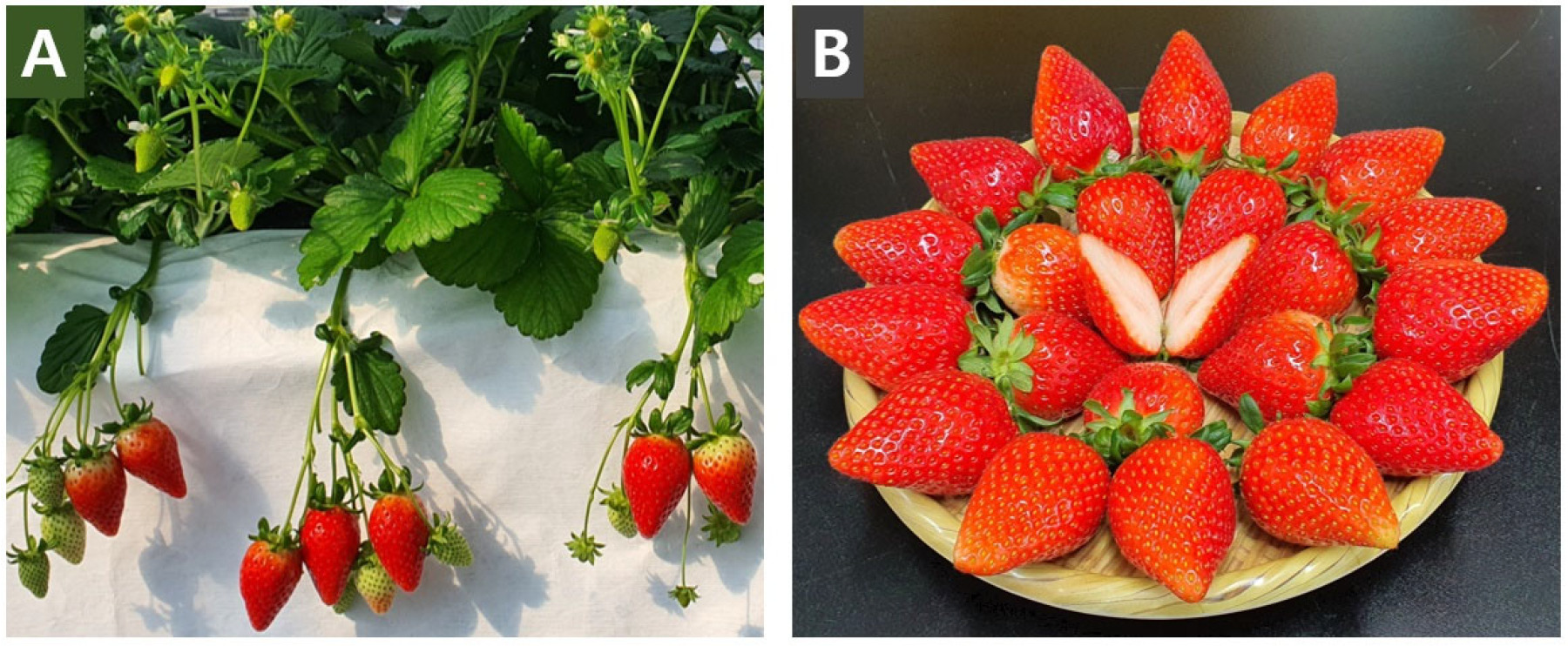
Fig. 3PCR amplification patterns of the strawberry cultivars ‘Sulhyang (S)’ and ‘Eunhyang (E)’ generated with five primer sets (A080302-010, B051209-B15, D020807-055, D030808-125 and D070404-015).
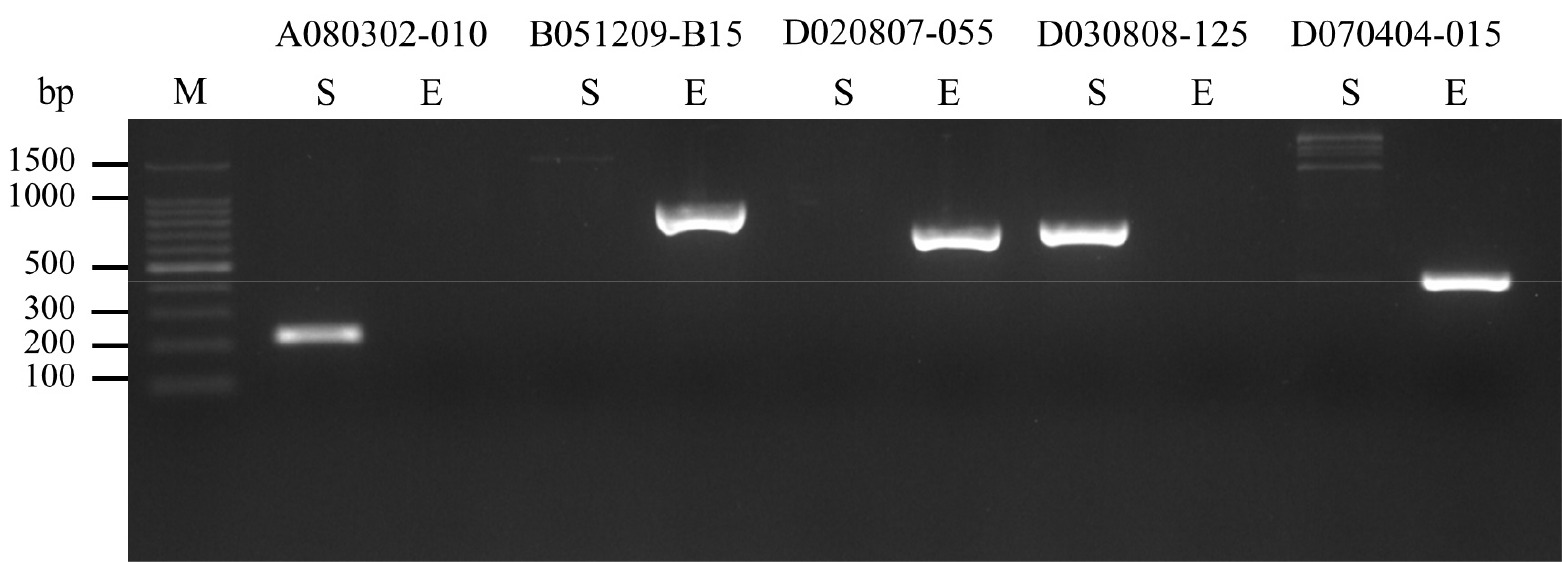
Table 1Plant characteristics of ‘Eunhyang’ and ‘Sulhyang’ strawberries in forcing culture.
Table 1
|
Cultivar |
Plant type |
Plant vigor |
Leaf shape |
Fruit shape |
Fruit color |
Flower bud differentiation |
Dormancy |
|
Eunhyang |
Semi-spreading |
Strong |
Elliptic |
Conical |
Light red |
Early |
Shallow |
|
Sulhyang |
Semi-spreading |
Strong |
Elliptic |
Conical |
Red |
Early |
Shallow |
Table 2Growth characteristics of ‘Eunhyang’ and ‘Sulhyang’ strawberries in forcing culture.
Table 2
|
Cultivar |
Petiole length
(cm) |
No. of leaves |
Leaf length
(cm) |
Leaf width
(cm) |
|
Eunhyang |
22.9 |
±1.32ns z
|
7.8 |
±0.21ns
|
12.6 |
±0.55ns
|
9.1 |
±0.45ns
|
|
Sulhyang |
18.1 |
±1.84 |
8.0 |
±0.14 |
11.7 |
±0.07 |
9.1 |
±0.78 |
Table 3Physiological characteristics of ‘Eunhyang’ and ‘Sulhyang’ strawberries of 1st flower cluster in forcing culture.
Table 3
|
Cultivar |
No. of flowers |
Flower stalk length
(cm) |
Flowering date
(mm.dd.) |
First harvest date
(mm.dd.) |
|
Eunhyang |
8.6±0.56* z
|
37.1±1.80**
|
10.18. |
11.30. |
|
Sulhyang |
16.8±0.92 |
29.2±0.92 |
10.21. |
11.30. |
Table 4Yield characteristics of ‘Eunhyang’ and ‘Sulhyang’ strawberries in forcing culture.
Table 4
|
Cultivar |
No. of
marketable
fruitsz
|
Average fruit
weighty
(g) |
Marketable yieldx
(kg/10a) |
Total yield
(kg/10a) |
Percentage of
marketable
yield
(%) |
|
Eunhyang |
15.0 |
±0.78* w
|
17.7 |
±0.10ns
|
2,997 |
±184.7ns
|
3,945 |
±60.3ns
|
76.1 |
±0.96*
|
|
Sulhyang |
17.6 |
±0.21 |
15.4 |
±0.35 |
3,365 |
±65.0 |
4,236 |
±44.5 |
78.6 |
±0.21 |
Table 5Fruit quality characteristics of ‘Eunhyang’ and ‘Sulhyang’ strawberries in forcing culture.
Table 5
|
Cultivar |
Soluble solids
content (A)
(°Brix) |
Acidity (B)
(%) |
A/B |
Fruit firmness
(g/mm2) |
Color of fruit flesh
(white-dark red) |
|
Eunhyang |
11.0 |
±0.48* z
|
0.58 |
±0.04***
|
19.0 |
±1.35***
|
14.1 |
±0.90***
|
Light red |
|
Sulhyang |
10.2 |
±1.22 |
0.68 |
±0.05 |
15.0 |
±2.25 |
12.2 |
±1.13 |
Red |
Table 6Disease and pest incidence of ‘Eunhyang’ and ‘Sulhyang’ strawberries in forcing culture.
Table 6
|
Cultivar |
Diseases |
|
Pests |
|
|
|
Anthracnose crown rot |
Fusarium
wilt |
Powdery mildew |
Gray mold |
Cotton Aphid |
Two-spotted
spider mites |
|
Eunhyang |
+++z
|
++ |
+ |
+ |
|
+ |
++ |
|
Sulhyang |
++ |
++ |
- |
++ |
|
++ |
++ |
References
- 1. Barbey C, Lee S, Verma S, Bird KA, Yocca AE, Edger PP, Knapp SJ, Whitaker VM, Folta KM. 2019. Disease resistance genetics and genomics in octoploid strawberry. Front Plant Sci 9: 3315-3332.
- 2. Bringhurst RS. 1990. Cytogenetics and evolution in American Fragaria. HortScience 25: 879-881.
- 3. Cockerton HM, Karlström A, Johnson AW, Li B, Stavridou E, Hopson KJ, Whitehouse AB, Harrison RJ. 2021. Genomic informed breeding strategies for strawberry yield and fruit quality traits. Front Plant Sci 12: 724847.
- 4. Darrow GM. 1966. The strawberry. Holt, Rinehart and Winston in Canada, pp. 40-57.
- 5. Edger PP, Poorten TJ, VanBuren R, Hardigan MA, Colle M, McKain MR. 2019. Origin and evolution of the octoploid strawberry genome. Nat Genet 51: 541-547.
- 6. Giampieri F, Forbes-Hernandez TY, Gasparrini M, Alvarez-Suarez JM, Afrin S, Bompadre S. 2015. Strawberry as a health promoter: An evidence-based review. Food Funct 6: 1386-1398.
- 7. Hancock JF, Hokanson SC, Finn CE, Hummer KE. 2002. Introducing a supercore collection of wild octoploid strawberries. Acta Hortic 567: 77-79.
- 8. Jee E, Do E, Gil CS, Kim S, Lee SY, Lee S, Ku KM. 2024. Analysis of volatile organic compounds in Korean-bred strawberries: Insights for improving fruit flavor. Front Plant Sci 15: 1360050.
- 9. Kim HS, Jang WS, Kim TI, Nam MH, Lee IH, Lee HC. 2016. Breeding of big size strawberry 'Kingsberry' for forcing culture. Korean J Hort Sci Technol 34(Suppl II):120.
- 10. Kim HS, Jang WS, Kim TI, Nam MH, Lee IH, Lee HC. 2018. Breeding of new strawberry variety 'Durihyang' for forcing culture. Korean J Hort Sci Technol 36(Suppl I):104.
- 11. Kim HS, Lee IH, Nam MH, Lee HC, Jang WS. 2020. Breeding of new strawberry cultivar 'Vitaberry' for forcing culture. Korean J Hort Sci Technol 38(Suppl):95.
- 12. Kim TI, Jang WS, Choi JH, Nam MH, Kim WS, Lee SS. 2004. Breeding of strawberry 'Maehyang' for forcing culture. Korean J Hort Sci Technol 22: 434-437.
- 13. Kim TI, Jang WS, Nam MH, Lee WK, Lee SS. 2006. Breeding of strawberry 'Sulhyang' for forcing culture. Int Hortic Congr 2006 (Abstract), pp. 231.
- 14. Korea Rural Economic Institute (KREI).2025. Agricultural outlook conference 2025. pp. 334.
- 15. Korean Statistical Information Service (KOSIS). 2025. Statistics by theme, agriculture and forestry/fishery. http://www.kosis.kr
- 16. Lee CG, Jang PH, Seo JB, Shin GH, Yang WM. 2016. A new strawberry 'Jukhyang' with high sugar content and firmness. Acta Hortic 1117: 39-44.
- 17. Na YW, Jeong HJ, Cheong JW, Choi HG. 2013. Breeding of 'Daewang' strawberry for forcing culture with good taste and fragrance. Korean J Hort Sci Technol 31: 648-651.
- 18. Park SK, Kim TI, Jang WS, Kim HS. 2012. Molecular marker for cultivar discrimination in strawberry and use thereof. Korean Patent KR101135713B1.
- 19. Rural Development Administration (RDA).2012. Research and analysis standard for agricultural science and technology. pp. 601-603.
- 20. Sharma S, Marin MV, Lee MB, Baggio JS, Peres NA, Lee S. 2022. Genomic approaches for improving resistance to Phytophthora crown rot caused by P. cactorum in strawberry (Fragaria×ananassa). Front Agron 4: 941111.
- 21. Whitaker VM, Knapp SJ, Hardigan MA, Edger PP, Slovin JP, Bassil NV, Hytonen T, Mackenzie KK, Lee S, Jung S, Main D, Barbey CR, Verma S. 2020. A roadmap for research in octoploid strawberry. Hortic Res 7: 33
- 22. Yong YS, Lee S, Byun NY, Sun S, Kim MJ, Jang SW, Jang WS, Lee SY, Yim SH. 2019. Antioxidant activities and validation of analytical method of marker compounds in strawberry fruits from various cultivars. Korean J Food Sci Technol 51: 517-523.
- 23. Yoon HS, Jin HJ, Oh JY. 2020. 'Keumsil', a strawberry variety suitable for forcing culture. Korean J Breed Sci 52: 184-189.