적요
The Goji berry line CBP06419-243 was selected from the hybrids (F1) between CBP03310-250 (IT232705) and CBP05399-1. The line used for crossing was tetraploid induced by the colchicine treatment on bud. Preliminary yield tests using this line were performed from 2009 to 2011, and the final selected line was named ‘Cheongyang 18’, which was subsequently registered under the name ‘Whasu’ in 2015. The specific characteristics of this cultivar are summarized as follows: The flowers are distinctly larger, fruit is medium in size, long oblong, and red, and flowering commenced on June 21. Branching by pruning generated less than the reference variety Cheongmyeong. The leaf infection rates by Eriophyes macrodonis Keifer were as high as 7.7%. Anthracnose on fruits in open field was slightly more severe compared with the reference cultivar, but the infection rates in rain shelter greenhouses was similar. The content of betaine and free sugar in dry fruit was higher than that of the reference cultivar. The dry-fruit yield decreased about 13% in open field, but increased 18% in rain shelter greenhouses. The cultivar ‘Whasu’ is suitable for cultivation in rain shelter greenhouses because of self-compatibility and high yield. It is not necessary the companion cultivar (Registration No. 6345).
서 언
구기자나무(
Lycium chinense Mill.)는 가지과(Solanacease)에 속하는 잎 지는 떨기나무이고, 구기자(열매), 지골피(뿌리 껍질), 구기엽(순 또는 잎) 등을 한약재 또는 식품용으로 이용할 수 있다. 이중 구기자는 간장과 신장을 좋게 하여 당뇨, 고혈압, 자양강장, 강정에 사용하는 한약재로 알려져 있다. 구기자 생산통계를 보면(MAFRA 2019) 재배면적 95 ha, 764농가이고 충남이 전국 대비 67%를 차지하여 전국에서 특화계수가 높을 뿐만 아니라 일반작물에 비하여 소면적 재배에 적합한 고소득 작물 중 하나이다(
RDA 2019).
구기자 수집종에 대하여 생육 특성과 수량(
Lee et al. 1999), 수확시기에 따른 품종별 성분 변화(
Lee et al. 2008), 유전적 유연관계 분석(
Lee et al. 2007), 품종 판별(
Chung et al. 2009), 항산화 활성 비교(
An et al. 2012), 페놀화합물 함량(
Cho et al. 2012) 등이 보고되었고, 품종으로 ‘유성 1호’와 ‘유성 2호’(
Seo 1988), ‘청광’(
Ju et al. 2015), ‘청홍’(
Ju et al. 2016) 등이 보고되어 있다. 성분과 효능으로 암세포 증식 억제 효과(
Park 2002), 급성 간 독성에 대한 보호 효과(
Kang et al. 2007), 항산화 및 항고혈압 효과(
Cho et al. 2005) 등 많은 연구가 이루어졌다.
기후변화에 대응하고, 미래 수요에 부응하기 위하여 구기자 신품종은 지속적으로 육성되어야 하는데 4배체, 자가화합성으로 비가림하우스 재배에 적합하면서 혹응애 저항성, 다수성인 신품종 ‘화수(품종보호 제6345호, 2016. 11. 09~2036. 11. 08)’ 품종을 육성하였기에 보고하는 바이다.
재료 및 방법
재배방법
본 시험에 사용된 계통은 2006년에 CBP03310-250 (IT232705)와 CBP05399-1 (IT 미등록)를 인공교배하여 선발한 ‘청양 18호’이고, 대비 품종은 생산력검정시험과 지역적응시험에서 ‘청명’으로 하였다. 생산력검정시험은 청양군에 소재한 구기자연구소에서 수행하였고, 지역적응시험은 충남 청양, 예산, 그리고 전남 진도에서 2012, 2014, 2015년 3개년간 실시하였다. 정식은 3월 중순에 120 cm 간격으로 높은 이랑을 만들고 배색비닐을 멀칭한 후 40 cm 간격으로 약 15 cm 길이의 삽수를 1개씩 삽목하였다. 시비량은 N-P
2O
5-K
2O를 40-30-30 kg/10a로 하였고, 이중 밑거름으로 질소 60%, 인산 전량, 칼리 70% 시용하였으며, 웃거름은 질소 40%, 칼리 30%를 8월 하순에 시용하였다. 기타 재배법은 구기자 표준재배법에 준하였고, 생산력검정시험과 지역적응시험은 난괴법 3반복으로 실시하였다. 그리고 생육 및 수량조사는 농촌진흥청 시험연구조사 기준(
RDA 2012)에 준하였다.
지표성분인 베타인(IUPAC name: 2-trimetylammonacetete) 함량 분석은 건조 시료 10 g에 증류수 100 ml를 가하여 95℃ water bath에서 추출한 후 여과하여 HPLC (Thermo separation products / Spetra system P2000)로 분석하였다. 분석조건은 Carbohydrate ES Column (250 mm×4.6 min, 5 um)을 이용하여 이동상은 HPLC grade water: acetonitrile = 30:70, 검출기는 굴절률 검출기(ELSD, Alltech 3300), 유속은 0.5 ml/min이며, 함량 계산은 외부표준법에 의하여 정량 하였다. 이외에 구기자 잎의 엽록소 함량은 Minolta SPAD-502 (-9.9~199), 색도는 Minolta spectrophotometer (CM-3500d), 당도는 Refractometer (GMK-701AC) 를 이용하여 조사하였다.
통계분석
통계분석은 Statistic analysis system (SAS, version 9.2, SAS Institute Inc., Cary, NC, USA)을 이용하여 ANOVA를 실시한 후, Duncan’s multiple range test로 각 군의 평균 차이에 대한 사후 검정을 하였으며, 통계적 유의성은 5% 수준에서 분석하였다.
결과 및 고찰
육성경위
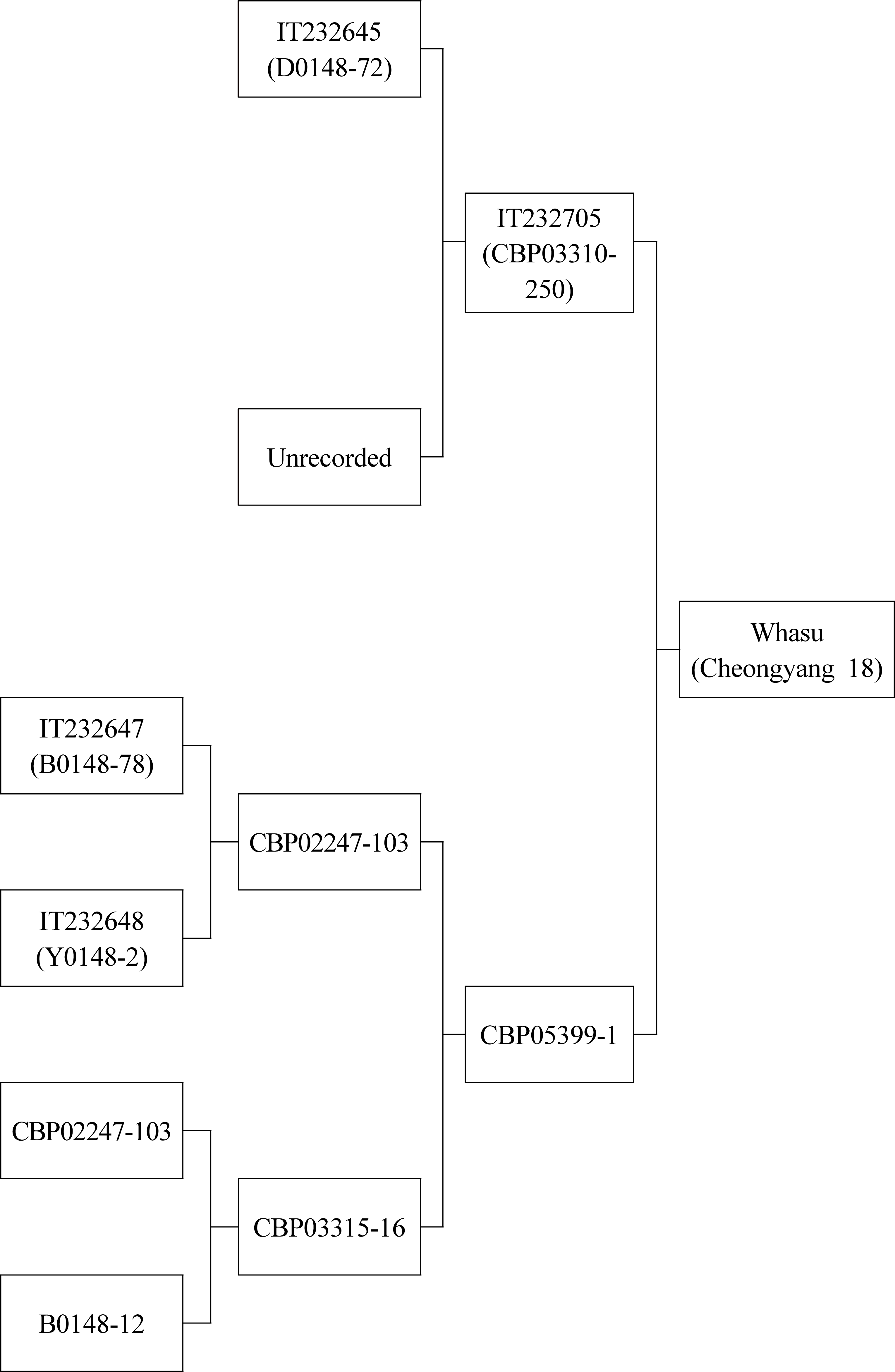
2006년에 4배체인 CBP03310-250 (IT232705)을 모본으로 하고 역시 4배체인 CBP05399-1 (IT 미등록)을 부본으로 하여 인공교배를 실시하였다. 교배 부모본으로 사용된 CBP03310-250와 CBP05399-1은 구기자 육성품종인 ‘명안’, ‘불로’, ‘청대’ 그리고 중국 도입종인 ‘영하’의 삽수에 Cholchcine을 처리하여 유기된 돌연변이 계통간 교배를 통하여 육성된 4배체 계통들이다(
Kim 2012). 인공교배하여 얻은 F
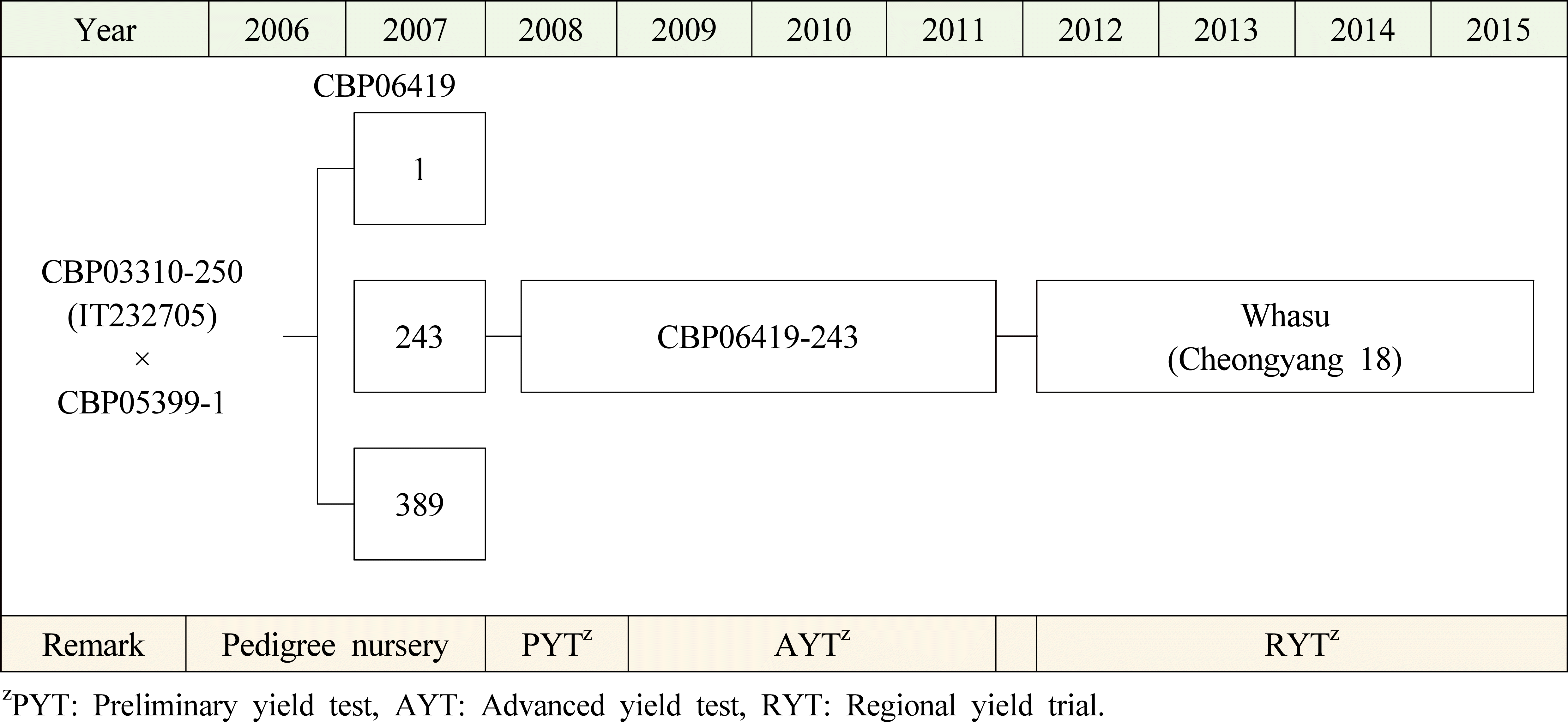
1 389개체 중 CBP06419-243 개체를 선발하였고, 2009~2011년까지 생산력검정시험을 실시한 결과 주요 특성이 우수하여 ‘청양 18호’로 계통명을 부여하였다. ‘청양 18호’는 충남 청양군, 예산군과 전남 진도군 등 3지역에서 2012, 2014, 2015년까지 3개년간 지역적응성을 검정하였고, 2013, 2014, 2015년에는 청양군에서 비가림하우스 조건에서 생산성을 검토한 결과 자가화합성이면서 혹응애 저항성, 지표성분 고함유, 다수성으로 2015년 농촌진흥청 직무육성 신품종 선정위원회에서 신품종으로 인정되어 ‘화수(和秀, Whasu)’로 명명하였다. 구기자 신품종을 육성하기 위한 일련의 선발 과정은
Fig. 1, 육성 계보도는
Fig. 2와 같다.
신품종 ‘화수’의 고유특성을 보면(
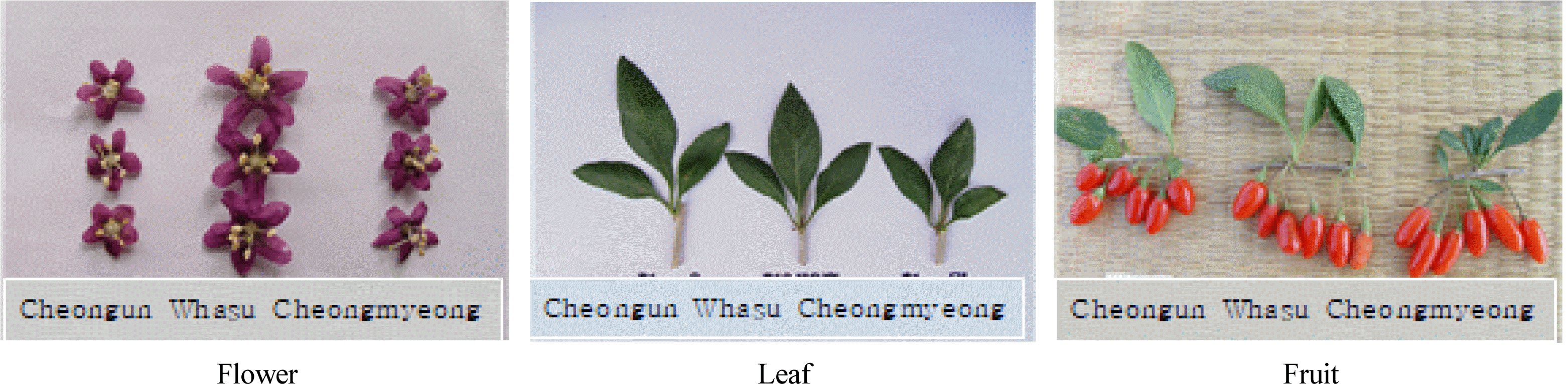
Table 1) 식물체는 반개장형이고, 줄기가 지표면을 향해 늘어지며, 분지 발생이 다소 적은 편이다. 잎은 피침형이고 두꺼운 편이며, 꽃은 자색이고 대비 품종에 비하여 크다. 열매는 장타원형이고, 중간 크기이며, 적색을 띠고 있다. 식물체의 고유특성을 관찰해 보면 외관적인 특성은 기존 2배체와 큰 차이를 관찰할 수 없으나 꽃 크기는 확실히 차이가 있었다(
Fig. 3). DNA 함량을 flow cytometry 검정에 의해 측정한 결과(
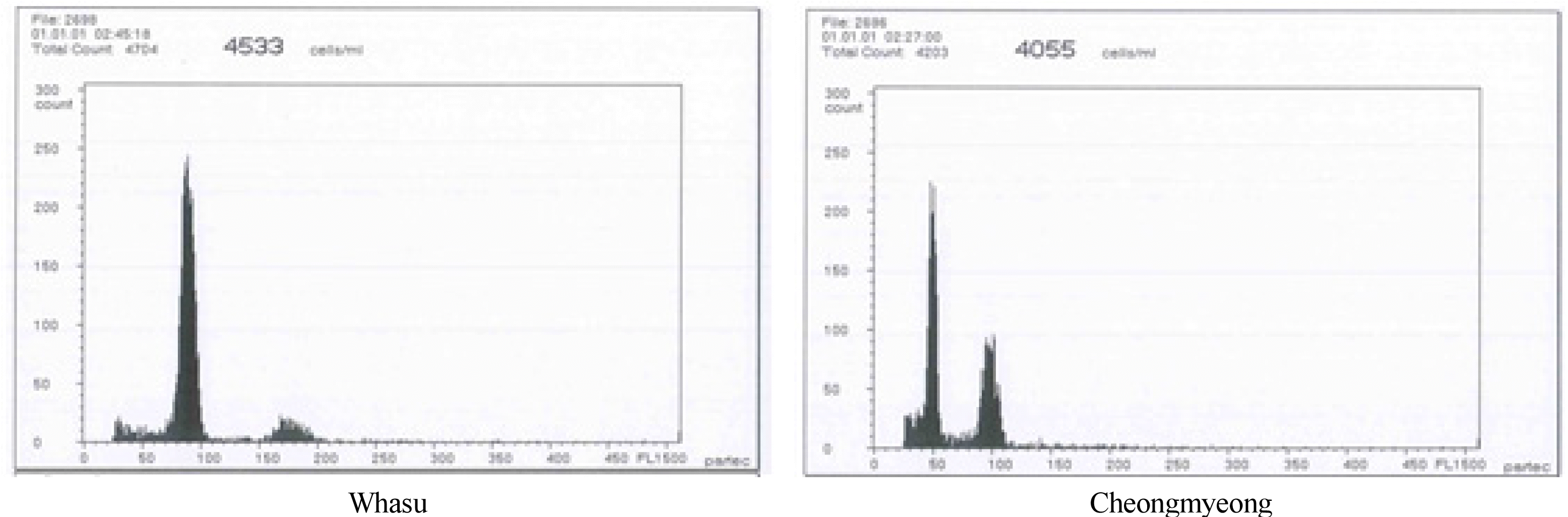
Fig. 4) DNA 함량이 2배체의 두배인 4배체로 판정되었다.
‘화수’ 품종의 개화 개시일은 6월 21일로 대비 품종 ‘청명’에 비하여 약 2일 늦었다. 잎 크기는 대비 품종과 비슷하고, 줄기 길이는 다소 짧고 굵으며, 결과지는 상대적으로 적게 발생되었다(
Table 2). 자가화합성을 검정하기 위하여 인공교배를 실시하였는데(
Table 3) ‘화수’ב화수’는 자가수정율이 65.7%이었고, 2배체인 ‘청명’ב청명’은 자가수정률이 11.4% 이었다. 따라서 ‘화수’는 자가화합성인 것으로 판정되었다. 기존 이배체인 구기자 품종은 각 품종에 맞는 수분수 품종(예를 들면 청명:청홍 = 1:1)과 혼식하여 재배하여야만 두 품종에서 모두 열매를 수확할 수 있는데, ‘화수’ 품종은 단일 품종만 재배해도 자가수분에 의하여 열매가 달리고, 꿀벌의 유입이 적은 비가림하우스에서 재배하면 적합할 것으로 판단되었다. 그리고 ‘화수’의 수술대 길이와 꽃 직경은 대비 품종에 비하여 상대적으로 크고, 수술대와 암술대의 길이 차이가 ‘청명’보다 작았다.
착과수와 열매 특성을 보면(
Table 4) ‘화수’ 품종은 대비 품종에 비하여 착과수가 적었고, 100개 건과의 무게는 약 21.8 g로 대비품종보다 크고 3.8 g 무거웠다. 열매의 색차값을 보면(
Table 5) ‘화수’ 품종은 대비 품종 ‘청명’과 비교하여 명도(L)와 적색도는 낮았다. 따라서 구기자의 외관 품질은 차이가 없는 것으로 판단되었다. 생과에 대하여 과실특성을 검정한 결과(
Table 6) ‘화수’ 품종은 대비 품종에 비하여 경도가 강하고, 과피가 두꺼워 생과 유통에 유리한 것으로 판단되었다. 그리고 대비 품종에 비하여 종자수는 적었지만 100립중은 무거운 편이었다.
병해충 저항성은 무방제 상태인 노지포장에서 자연발생 정도를 조사하였는데(
Table 7), 혹응애 발생량은 7.7%로서 혹응애에 강한 편이었다. 탄저병 이병과율은 대비 품종과 비교하여 노지에서 23.5% 높았으나 비가림하우스에서는 비슷하였다. 따라서 구기자 신품종 ‘화수’는 탄저병에 약한 편이므로 노지재배보다 비가림하우스에서 재배하는 것이 안전할 것으로 판단되었다.
2009년부터 2011년까지 3개년간 생산력검정시험 결과(
Table 8) ‘화수’ 품종의 건과수량은 평균 205 kg/10a로서 대비 품종인 ‘청명’에 비하여 약 63% 증수되었다. 충남 청양, 예산과 전남 진도 등 3개 지역에서 2012, 2014, 2015년 3년간 지역적응성을 검정한 결과(
Table 9) ‘화수’ 품종은 평균 건과수량 190 kg/10a로서 대비 품종인 ‘청명’보다 약 13% 감수되었다. 이는
Table 2에서 보는 바와 같이 ‘화수’ 품종이 대비 품종에 비하여 결과지 발생량이 적고 착과수도 적었던데 기인하는 것으로 판단되었다. 2013~ 2015년 3년간 비가림하우스에서 재배한 결과(
Table 10) ‘화수’의 건과수량은 대비 품종에 비하여 18% 증수되었다. 이는 자가화합성으로서 꿀벌 등 매개 곤충의 유입이 적은 비가림하우스에서 자가수분에 의하여 수정율이 높아 착과수가 많았을 뿐만 아니라 탄저병 등의 발생이 없었던데 기인하는 것으로 판단되었다. 따라서 ‘화수’ 품종은 자가화합성으로서 기존 품종과 달리 수분수 품종이 필요하지 않아 비가림하우스 조건에서 ‘화수’ 단일품종만으로도 재배할 수 있어 건구기자의 품질과 크기를 균일하게 할 수 있을 것으로 판단되었다.
구기자의 주요 성분으로 베타인, Fructose와 Glucose는 건구기자로 분석하였고, 당도는 생구기자로 분석하였다(
Table 11). ‘화수’ 품종의 베타인 함량은 1.0%로서 대비 품종인 ‘청명’에 비하여 다소 높았고, 유리당인 Fructose와 Glucose 함량도 높았다. 한편 구기자의 지표성분인 베타인은 Glycine의 Trimethyl derivative로서 사람의 신장에서 삼투 보호제, 간에서 methionine cycle에 관여하는데, 내부 장기를 보호하고 혈관 위험요소를 개선하는 것으로 알려져 있다(
Craig 2004,
Day & kempson 2016).
4배체인 구기자 신품종 ‘화수’는 자가화합성이므로 수분수 품종과 혼식하여 식재하지 않아도 된다. 탄저병에 약한 편이므로 노지보다는 비가림하우스에서 재배할 것을 권장한다. 과피가 두껍고 당도가 높아 두껍게 널면 건조시간이 오래 걸리고 서로 들러붙으므로 얇게 펴서 건조해야 하고, 세근의 발생이 적은 편이여서 가뭄에 약하므로 수분 관리를 적절하게 할 필요가 있다.
적 요
콜히친 돌연변이에 의하여 유기된 4배체 육성계통인 CBP03310-250 (IT232705)을 모본으로 하고, 역시 4배체인 CBP05399-1 (IT 미등록)을 부본으로 교배를 실시하여 CBP06419-243를 선발하였고, 생산력 검정시험을 통하여 ‘청양 18호’로 계통명을 부여하였으며, 비가림 하우스 재배에 적합하면서 생육 및 수량성이 우수하여 신품종 ‘화수(품종보호 제6345호, 2016. 11. 09~2036. 11. 08)’ 로 품종보호등록 하였다. 꽃은 크고, 열매는 장타원형, 중간 크기였다. 개화 개시일은 6월 21일로 대비 품종에 비하여 2일 늦고, 적심에 의하여 분지 발생이 다소 적어 착과수가 적었다. 혹응애 저항성은 강하였고, 탄저병 저항성은 중간 정도 였으나 비가림하우스에 재배하면 대비 품종과 비슷한 이병율을 보였다. 지표성분인 베타인 함량은 대비 품종에 비하여 다소 높았고, 유리당인 Fructose와 Glucose 함량도 높은 편이었다. 건구기자 수량은 대비 품종에 비하여 지역적응시험에서는 13% 감수되었으나 비가림하우스에서 18% 증수되었다. 따라서 ‘화수’ 품종은 비가림하우스 조건에서 재배하면 수분수 품종이 필요하지 않아 단일품종 재배로 품질을 균일하게 할 수 있을 것으로 판단되었다.
Fig. 1Pedigree diagram of goji berry cultivar ‘Whasu’.
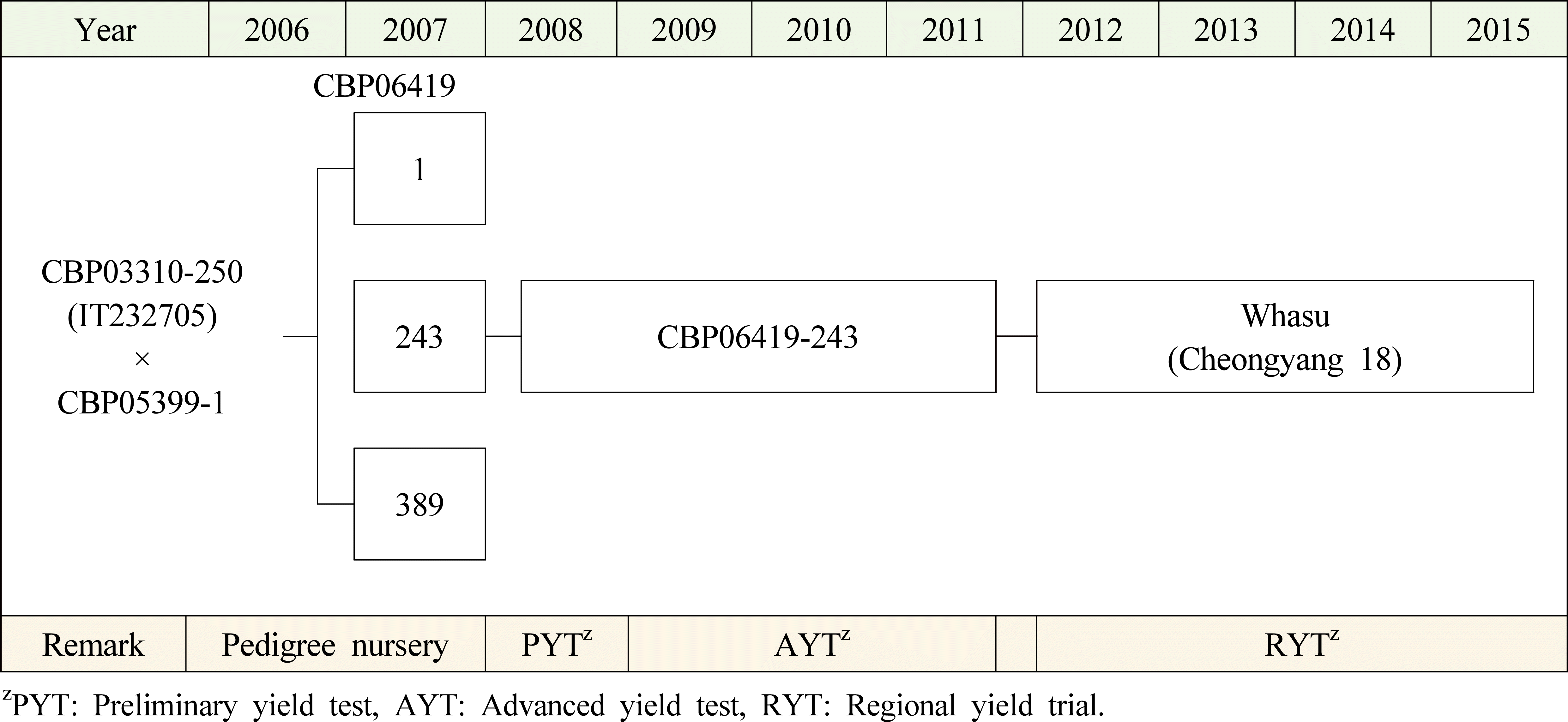
Fig. 2Genealogical diagram of ‘Whasu’.
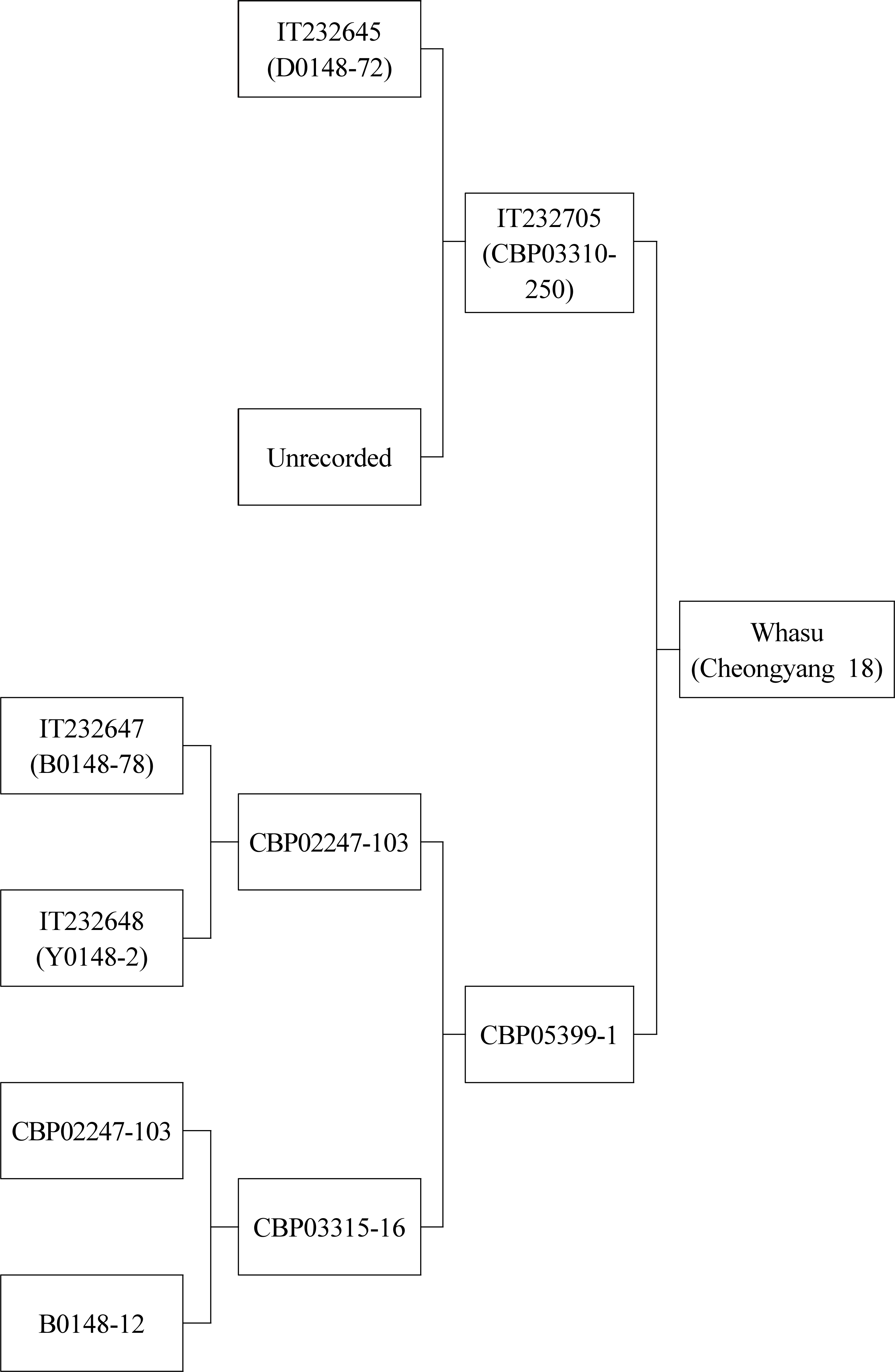
Fig. 3Flower, leaf and fruit of goji berry cultivar ‘Whasu (Middle)’ and the reference ‘Cheongmyeong (right)’, ‘Cheongun (left)’.
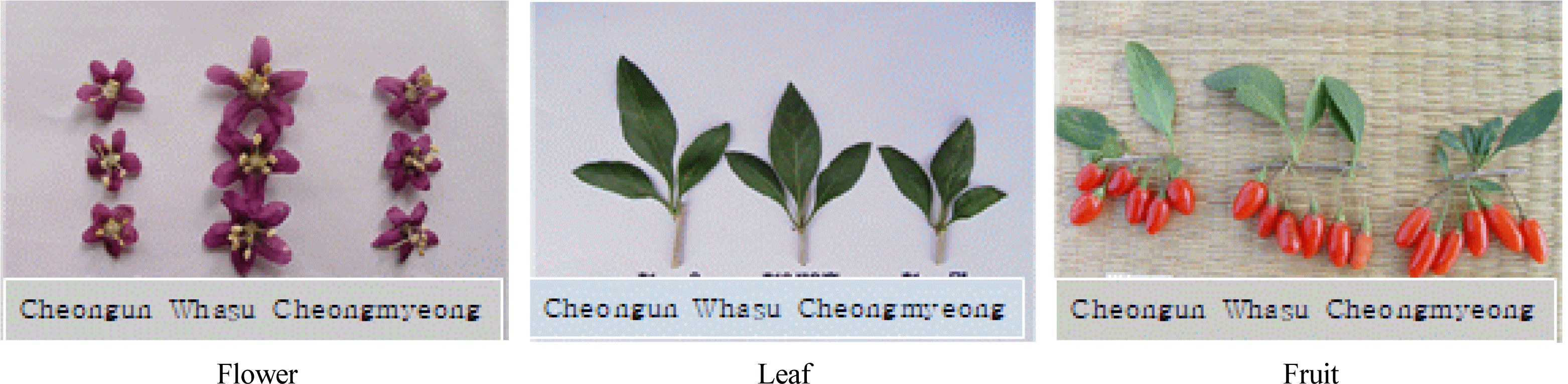
Fig. 4Flow cytometry analysis of DNA content of goji berry cultivar ‘Whasu’ and the reference ‘Cheongmyeong’.
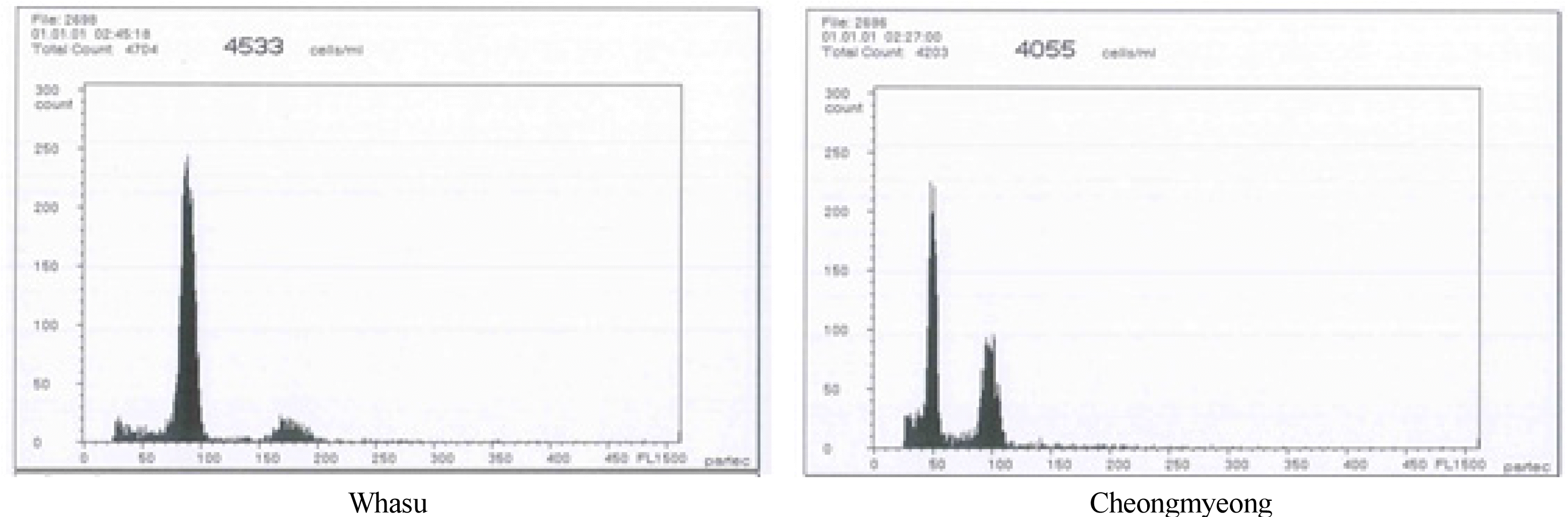
Table 1Morphological characteristics of goji berry cultivar ‘Whasu’ and the reference ‘Cheongmyeong’.
Table 1
|
Cultivar |
Plant shape |
Leaf |
Branching habit |
Flower |
Fruit shape |
Chromosome number |
|
|
|
Color |
Shape |
Size |
Color |
Size |
|
Whasu |
Semi-spreading |
Green |
Lanceolate |
Medium |
Low |
Purple |
Large |
Long ellipsoidal |
2n=4x=48 |
|
Cheongmyeong |
Semi-spreading |
Green |
Lanceolate |
Medium |
Medium |
Purple |
Medium |
Long ellipsoidal |
2n=2x=24 |
Table 2Flowering dates and agronomic characteristics of goji berry cultivar ‘Whasu’ and the reference ‘Cheongmyeong’.
Table 2
|
Cultivar |
Start day of flowering |
Leaf |
Stem |
No. of branch (ea/Plant) |
|
|
|
Length (cm, A) |
Width (cm, B) |
Shape (B/A) |
Length (cm) |
Diameter (mm) |
|
Whasu |
June 21 |
6.3 az
|
2.4 a |
0.38 |
113 b |
9.4 a |
64 b |
|
Cheongmyeong |
June 19 |
6.4 a |
2.2 a |
0.34 |
125 a |
8.4 b |
80 a |
Table 3Rate of self-fertilization and flower characteristics of goji berry cultivar ‘Whasu’ and the reference ‘Cheongmyeong’.
Table 3
|
Cultivar |
Rate of self-fertilization (%) |
Pistil Style (mm) |
Stamen filament (mm) |
Length of anther (mm) |
Diameter of flower (mm) |
Flower stalk (mm) |
|
Whasu |
65.7 az
|
7.8 a |
8.3 a |
2.5 a |
21.1 a |
14.3 a |
|
Cheongmyeong |
11.4 b |
7.3 a |
5.7 b |
1.8 b |
18.1 b |
14.1 a |
Table 4Comparison of fruit characteristics of new goji berry cultivar ‘Whasu’ and the reference ‘Cheongmyeong’.
Table 4
|
Cultivar |
No. of fruit per plant (ea) |
100-fruit wt. (g) |
Fruit (mm) |
|
|
|
Fresh |
Dried |
Length (A) |
Width (B) |
B/A |
|
Whasu |
715 bz
|
118.4 a |
21.8 a |
20.4 a |
9.3 a |
0.45 |
|
Cheongmyeong |
1,022 a |
105.7 b |
18.0 b |
20.7 a |
8.6 b |
0.42 |
Table 5Color value (D65) of fresh and dried fruit of goji berry cultivar ‘Whasu’ and the reference ‘Cheongmyeong’.
Table 5
|
Cultivar |
Fresh fruity
|
Dried Fruity
|
|
|
|
L |
a |
b |
L |
a |
b |
|
Whasu |
30.8 bz
|
16.9 b |
14.5 a |
31.9 a |
20.4 b |
16.6 b |
|
Cheongmyeong |
33.1 a |
17.8 a |
14.8 a |
31.4 a |
21.4 a |
17.6 a |
Table 6Characteristics of fresh fruit of new goji berry cultivar ‘Whasu’ and the reference ‘Cheongmyeong’ grown at rain shelter greenhouses.
Table 6
|
Cultivar |
Hardness of fruit (g/cm2) |
Diameter of pericarp (mm) |
No. of seed per fruit (ea) |
100-seed wt. (g) |
|
Whasu |
2.80 az
|
0.244 a |
18.7 b |
9.0 a |
|
Cheongmyeong |
2.44 b |
0.147 b |
28.7 a |
5.9 b |
Table 7Resistance of ‘Whasu’ to Eriophys macrodonis and the Anthracnose.
Table 7
|
Cultivar |
Eriophys macrodonis
|
Infected rates of anthracnose (%) |
|
|
|
Rates of damaged leaf (%) |
No. of insect galls per damaged leaf (ea) |
Open field |
Rain shelter |
|
Whasu |
7.7 bz
|
0.9 a |
39.7 a |
10.4 a |
|
Cheongmyeong |
36.3 a |
1.7 a |
16.2 b |
9.6 a |
Table 8Yield of goji berry cultivar ‘Whasu’ at preliminary yield trial (PYT, 2008) and advanced yield trial (AYT, 2009~2011).
Table 8
|
Cultivar |
PYT (kg/10a) |
AYTz (kg/10a) |
Mean (kg/10a) |
Index (%) |
|
Whasu |
424 ay
|
131 a |
205 a |
163 |
|
Cheongmyeong |
224 b |
93 a |
126 b |
100 |
Table 9Yield of cultivar ‘Whasu’ in the open field at regional yield trial.
Table 9
|
Cultivar |
Year |
Site |
Index (%) |
|
|
Dried-fruit yield (㎏/10a) |
|
|
Cheongyang |
Yesan |
Jindo |
Mean |
|
Whasu |
2012 |
152 |
117 |
65z
|
111 |
|
|
2014 |
218 |
216 |
248 |
227 |
|
2015 |
282 |
196 |
219 |
232 |
|
Mean |
217 |
176 |
177 |
190 |
87 |
|
|
Cheongmyeong |
2012 |
195 |
127 |
84z
|
135 |
|
|
2014 |
263 |
284 |
247 |
265 |
|
2015 |
271 |
243 |
256 |
257 |
|
Mean |
243 |
218 |
196 |
219 |
100 |
Table 10Yield of goji berry cultivar ‘Whasu’ at rain shelter greenhouse.
Table 10
|
Cultivar |
Rain shelter greenhouse (㎏/10a) |
Index (%) |
|
|
2013 |
2014 |
2015 |
Mean |
|
Whasu |
226 |
250 |
486 |
321 az
|
118 |
|
Cheongmyeong |
157 |
277 |
381 |
272 b |
100 |
Table 11Chemical component of goji berry cultivar ‘Whasu’.
Table 11
|
Cultivar |
Betaine (%) |
Soluble solids (°Brix) |
Free sugar (%) |
|
|
Fructose |
Glucose |
|
Whasu |
1.00 az
|
13.8 a |
32.2 a |
16.7 a |
|
Cheongmyeong |
0.86 b |
13.3 a |
30.1 a |
13.3 b |
References
- 1. An TH, Lee SY, Cho JW. 2012. Comparison on antioxidant activity of ethanolic extracts of chinese matrimony vine (Lycium chinensis M.). Korean J Crop Sci 57: 22-28.
- 2. Cho JH, Sin JS, Lee KJ, Kim YB, Kang JK, Hwang SY. 2004. Therapeutic effect of Lycii fructus extract in hepatotoxicity Induced by carbon tetrachloride. Korean J Clinical Laboratory Sci 36: 55-63.
- 3. Cho JW, An TH, Lee SY, Park KW. 2012. Determination of total content of phenolic compounds in chinese matrimony vine's accessions. Korean J Crop Sci 57: 409-417.
- 4. Cho YJ, Chun SS, Cha WS, Park JH, Lee KH, Kim JH, Kwon HJ, Yoon SJ. 2005. Antioxidative and antihypertensive effects of Lycii frutus extracts. J Korean Soc Food Sci Nutr 34: 1308-1313.
- 5. Chung JW, Lee GA, Lee SS, Bang KH, Park CB, Park YJ. 2009. Cultivar discrimination of korean and chinese boxthorn (Lycium chinense Mill. and Lycium barbarum L.) using SSR markers. Korean J Medicinal Crop Sci 17: 445-451.
- 6. Craig SAS. 2004. Betaine in human nutrition. The American J Clinical Nutrition 80: 539-549.
- 7. Day CR, Kempson SA. 2016. Betaine chemistry, roles, and potential use in liver disease. Biochemica et Biophysica Acta, General Subjects 1860: 1098-1106.
- 8. Ju JI, Kim SD, Park YC, Lee BH, Seo JS, Nam YG, Baek SW, Kim HH. 2015. A chinese matrimony vine (Lycium chinense Miller) cultivar with many branches and high ingredients 'Cheongkwang'. Korean J Breed Sci 47: 318-323.
- 9. Ju JI, Yun DS, Park YC, Lee BH, Kim SD, In MS, Kim HH. 2016. A chinese matrimony vine (Lycium chinense Miller) cultivar 'Cheonghong' with early flowering, spreading-plant shape and high yielding. Korean J Breed Sci 48: 367-372.
- 10. Kang KS, Kwon RH, Kim ID, Lee DG, Lee JH, Lee SH, Ha JM Ha BJ. 2007. The preventive effects of Lycii frutus extract against LPS-induced acute hepatotoxicity. Yakhak Hoeji 50: 296-300.
- 11. Kim SD. 2012. Growth characteristics, chemical compositions and biological activities of boxthorn tetraploid (Lycium chinense Mill.). Ph. D. Thesis. Chungnam National University.
- 12. Lee BC, Paik SW, Kim SD, Yun TS, Park JS, Kwak TS. 1999. Growth characteristics and yield of collected boxthorn (Lycium chinense Mill.) varieties. Korea. J Medicinal Crop Sci 7: 147-154.
- 13. Lee HC, Lee BC, Kim SD, Paik SW, Lee SS, Lee KS, Kim SM. 2008. Changes in composition of Gugija (Lycii fructus) species according to harvest time. Korean J Medicinal Crop Sci 16: 306-3012.
- 14. Lee WS, Choi SY, In SI, Cho IH, Lee SY, Kwon YS. 2007. Assessment of genetic relationship among boxthorn (Lycium chinensis Mill.) accessions by ISSR markers. Korean J Breed Sci 39: 9-14.
- 15. Ministry of agriculture, food and rural affairs (MAFRA)2019. 2018 Production statistics of industrial crops 35.
- 16. Park YJ, Kim MY, Bae SJ. 2002. Enhancement of anticarcinogenic effect by combination of Lycii frutus with vitamin C. J Korean Soc Food Sci Nutr 31: 143-148.
- 17. Rural Development Administration (RDA)2012. Manual for agricultural investigation Suwon. Korea, 773-775.
- 18. Rural Development Administration (RDA)2019. 2018 Regional Agricultural income analysis 162.
- 19. Seo GS. 1988. New boxthorn (Lycium chinense Miller) varieties 'Yu seong 1' and 'Yu seong 2'. J oriental Bot Res 191: 72-79.
Citations
Citations to this article as recorded by

- High-Fence Type Cultivation Method for Improving Yield of Fresh Goji Berry (Lycium chinense Mill.) Variety ‘Cheonggam’
Hyun Gu Choi, Bo Hee Lee, Seung Wan Son, Jeong Lee, Hyeon Dong Jang, Seon Joong Kim, Sang Lim Yoon, Ju Yeong Kim, Su Dong Kim, Hwan Suk Cheong, Young Chang Kim
Korean Journal of Medicinal Crop Science.2025; 33(5): 291. CrossRef - ‘Hwaseon’, a Tetraploid Gogi Berry (Lycium chinense Miller) Cultivar with Self-compatibility and Resistant to Gall Mite (Eriophyes spp. Keifer)
Jeong Lee, Bohee Lee, Seonjoong Kim, Sanglim Yoon, Hyungu Choi, Juyeong Kim, Sudong Kim
Korean Journal of Breeding Science.2024; 56(3): 309. CrossRef