Abstract
Research on tongil-type rice has aimed to enhance genetic diversity and yield through indica-japonica hybridization; however, poor eating quality remains a limitation in Korea. We evaluated three high-yielding tongil-type waxy cultivars, focusing on the allelic variation in the granule-bound starch synthase I (GBSSI) gene and its effects on quality traits. Physicochemical properties, including texture and retrogradation, were assessed using a texture analyzer, and pasting properties were analyzed using a Rapid Visco Analyzer (RVA). ‘Hanareumchal’ showed the softest texture (1.70 Kgf) and the slowest retrogradation rate. Genetic analysis revealed a unique Wx-g2 allele derived from Japanese waxy rice (‘Odorokimochi’), which likely underlies these favorable traits. RVA profiling further indicated reduced viscosity parameters, supporting its suitability for processed rice products that require extended shelf life and texture stability. These findings highlight the role of Wx-g2 in improving tongil-type waxy rice and provide useful insights for breeding programs targeting enhanced processing performance.
-
Key words: tongil-type rice, waxy, Wx-g2, processing quality, retrogradation
Introduction
Rice (
Oryza sativa L.) is a staple food for nearly half of the world’s population and serves as both a dietary essential and a cultural-economic foundation (
Seck et al. 2012). As national income rises and dietary preferences diversify, the demand for high-quality and diverse rice-based products has increased markedly, creating a pressing need for innovations in rice breeding to meet both consumer expectations and industrial requirements (
Choi 2002,
Lee et al. 2018,
Lee et al. 2020,
Lee et al. 2021,
Oh 2016). Beyond traditional dishes, rice is now widely utilized in value-added products such as noodles, rice milk, ice cream, beverages, and functional foods (
Cho et al. 2018,
Karimidastjerd & Kilic-Akyilmaz 2021,
Li et al. 2021,
Seong et al. 2022,
Seong et al. 2023,
Shin et al. 2016). Globally, research has increasingly focused on enhancing retrogradation stability and textural consistency for frozen and ready to eat products. However, most studies have centered on
japonica or
indica types, leaving
tongil-type waxy rice largely unexplored in terms of processing suitability.
Waxy rice, characterized by low amylose and high amylopectin content, is indispensable for traditional food production due to its soft texture, stickiness, and slow retrogradation (
Park & Kim 2023,
Shi & Gao 2011,
Wang et al. 2022,
Xie et al. 2022). Nevertheless, waxy rice cultivars differ widely in their eating and processing qualities, influenced by physicochemical traits such as alkali digestion value, gel consistency, and starch gelatinization temperature (
Loyda et al. 2021).
In Korea, demand for rice used in food processing surged from 680,000 tons in 2021 to 810,000 tons in 2023 (KSIS 2024), yet many processing cultivars suffer from low yield potential, limiting their cost competitiveness.
tongil-type rice, developed through inter-subspecific crosses between
indica and
japonica, yields approximately 30% more than traditional
japonica cultivars and is thus a promising candidate for industrial applications (
Bresciani et al. 2022,
Kim et al. 2014).
At the molecular level, the
granule-bound starch synthase I (
GBSSI) gene plays a pivotal role in determining amylose content and starch retrogradation behavior (
Adeva et al. 2020,
Bao et al. 2020). Rare allelic variants of
GBSSI are uncommon but can significantly modify starch structure, thereby influencing both eating quality and processing stability. Identifying such an allele in a high yield
tongil-type waxy cultivar is of particular breeding value, as it combines desirable yield performance with unique starch functionality. This genetic resource has the potential to lower raw material costs, enhance the competitiveness of rice based food products, and expand opportunities for domestic and export markets.
In this study, we characterize the physicochemical properties, quality traits, and GBSSI allelic variation of three tongil-type waxy rice cultivars. By linking a rare GBSSI allele to starch functionality and processing performance, we aim to provide a genetic and functional basis for developing high yield, processing optimized waxy rice cultivars, thereby supporting the sustainable growth of the rice based food industry.
Materials and Methods
Experimental Materials
Four rice cultivars were used to evaluate quality traits and GBSSI genotypes in tongil-type waxy rice. Three tongil-type waxy cultivars (‘Mirchal’, ‘Hangangchal 1’, and ‘Hanareumchal’) were tested, with the japonica waxy cultivar ‘Baegokchal’ included as a control. Grain samples were produced by the Department of Southern Area Crop Science, National Institute of Crop Science, Rural Development Administration (Miryang, Republic of Korea).
Visual Appearance and Amylose and Protein Content
Color parameters were measured on milled white rice using a bench-top spectrophotometer (CM-3500d; Minolta, Tokyo, Japan) in triplicate (n=3). Milled white rice were evenly spread to fully cover the measurement aperture, and the instrument was calibrated with standard tiles prior to measurement. The color parameters were measured using the CIE Lab system, where L represents lightness, a represents redness/greenness, and b represents yellowness/blueness. A higher L value indicates a lighter color, while lower a and b values indicate lower red and yellow tones, respectively.
Amylose was determined by the Juliano colorimetric method with three technical replicates (
Juliano 1985,
Tuaño et al. 2021). Briefly, 0.1 g of rice flour was combined with 1 mL ethanol and 9 mL 1 N NaOH (Sigma-Aldrich, St. Louis, MO, USA), heated in a water bath for 10 min, and diluted to 100 mL with distilled water. A 5 mL aliquot of this solution was mixed with 1 mL acetic acid and 2 mL of 2% I
2-KI solution (Sigma-Aldrich, St. Louis, MO, USA), and the volume was adjusted to 100 mL with distilled water. Absorbance was read at 620 nm on a UV-visible spectrophotometer (UV-2700, Shimadzu, Kyoto, Japan). Amylose percentage was calculated from a standard calibration curve.
Protein content was measured using a near-infrared spectrometer (FOSS XDS Rapid Content Analyzer; Foss, Hillerød, Sweden), with 0.6 g of rice flour placed in a measurement container, and spectra were measured in the visible and near-infrared range (400-2,500 nm) after removing air gaps. Measurements were performed in triplicate.
Evaluation of Cooked Rice Texture Characteristics
The texture characteristics of cooked rice were measured using the Cooked Rice Taste Analyzer (RHS1A, SATAKE Company, Tokyo, Japan). Cooked rice (8 g) was placed in the measurement container, covered with plastic film to minimize moisture loss, and compressed under a constant load for 10 s. Hardness, viscosity, balance, and elasticity were recorded. Each measurement was performed five times (n=5) and expressed in kilogram-force (kgf). The instrument was operated and calibrated according to the manufacturer’s instructions.
Pasting Property Analysis
The pasting properties of starch were measured using a Rapid Visco Analyzer (RVA-4500; Perten Instruments, Hägersten, Sweden). The moisture content of the samples was measured using an infrared moisture analyzer (MS-70; A&D Company, Tokyo, Japan), and appropriate amounts of sample and distilled water were used to measure pasting properties. The measurement protocol was as follows: 0-1 min at 50℃, 1-4.7 min increasing to 95℃, 4.7-7.2 min holding at 95℃, 7.2-11 min cooling to 50℃, and 11-13 min holding at 50℃. Pasting temperature (PT), peak viscosity (PV), trough viscosity (TV), final viscosity (FV), breakdown (BD=PV-TV), and setback (SB=FV-TV) were calculated, with viscosity expressed in rapid viscosity units (RVU). Each sample was analyzed in triplicate.
Retrogradation Rate Measurement
Retrogradation of cooked rice was evaluated by texture profile analysis using a texture analyzer (Z0.5, Zwick GmbH & Co. KG, Ulm, Germany) equipped with a 50-mm aluminum cylindrical probe. A three-bite (three-cycle) compression protocol was applied. Cooked rice (8 g) was molded into cylinders (3 cm diameter × 1 cm height), covered with plastic film to minimize moisture loss, and pre-loaded under a constant pressure for 10 s prior to testing. Test parameters were: pre-test speed 1 mm s-1, test speed 1 mm s-1, hold time 2 s, and target strain 60%. Hardness was obtained from the texture profile curve. For retrogradation assessment, molded samples of ‘Baegokchal’, ‘Mirchal’, and ‘Hanareumchal’ were kept at room temperature (~25 °C) for 12 h, and texture (including hardness) was recorded at 3 h intervals to track retrogradation progression. Unless otherwise specified, five repeated measurements (n=5) were collected per time point.
Genotype Comparison of granule-bound starch synthase I
Sanger sequencing was performed to compare
GBSSI genotypes among four rice cultivars (‘Hanareumchal’, ‘Mirchal’, ‘Hangangchal 1’, and ‘Baegokchal’) with the
japonica cultivar ‘Nipponbare’ used as the reference sequence (
Sanger et al. 1977,
Song et al. 2011,
Song et al. 2013,
Seong et al. 2022). Genomic DNA was extracted using the yesG™ Plant DNA Extraction Kit (GenesGen, Busan, Republic of Korea). Polymerase chain reaction (PCR) primers were designed to amplify the coding sequence (CDS) region of
GBSSI. PCR products were purified and sequenced by BioTo Co., Ltd. (Daejeon, Republic of Korea) using forward and reverse primers. Resulting chromatograms were inspected, base calls were edited as needed, and sequences were assembled and aligned using CodonCode Aligner (v12.0, CodonCode Corporation). Multiple sequence alignment against the ‘Nipponbare’ reference enabled identification of polymorphisms among cultivars, including single nucleotide polymorphisms (SNPs) and small insertions/deletions (InDels).
Descriptive statistics, post-hoc analysis (Duncan’s multiple range test), and principal component analysis were performed using R (Version 4.3.1, The R Foundation for Statistical Computing Platform). The ‘agricolae’ package was used for post-hoc analysis, and the ‘ggplot2’ package was used for data visualization. All grain samples were harvested in bulk from representative experimental plots to ensure a uniform population sample. For physicochemical and pasting property analyses, measurements were performed in at least three independent replicates starting from sample preparation to account for experimental variability.
Results and Discussion
Physicochemical and Textural Properties of tongil-type Waxy Rice Cultivars
Asian rice cultivars are classified into two major subspecies,
indica and
japonica, based on their morphological and physiological characteristics and geographical distribution (
Morishima & Oka 1981,
Sano & Morishima 1992).
tongil-type rice, a hybrid developed from the cross between
indica and
japonica, was primarily designed to increase genetic diversity and promote hybrid vigor. However, introducing desirable
indica traits into
japonica cultivars has proven challenging due to reproductive barriers and the transfer of undesirable traits, such as poor eating quality. This issue is particularly significant in Korea, where consumers prefer
japonica rice (
Bresciani et al. 2022,
Chung & Heu 1991,
Kim et al. 2014).
Generally, lower amylose and protein content are associated with better eating quality. In this study, we assessed the visual, chemical, and textural properties of three
tongil-type waxy cultivars compared to a
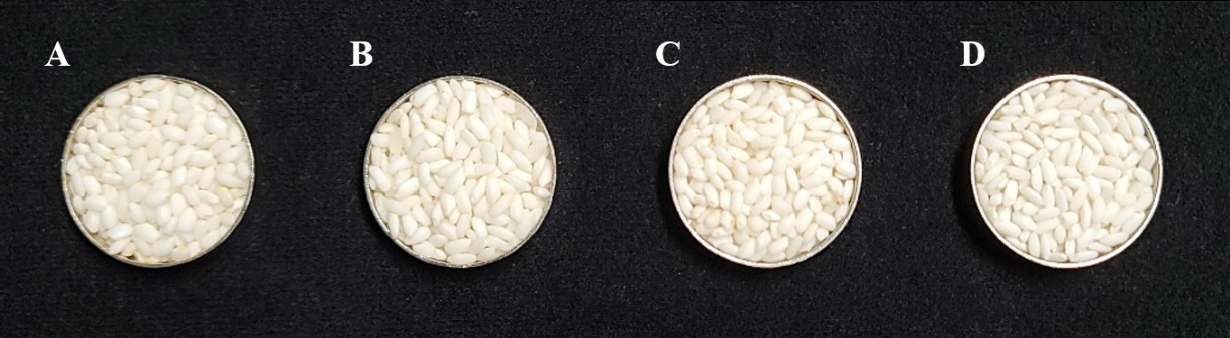
japonica control. Visual appearance is a key factor in consumer assessment, with higher lightness (L) and lower redness (a) and yellowness (b) values being preferable. ‘Hanareumchal’ showed the highest lightness (81.37) and the lowest redness (-0.32) and yellowness (13.08), indicating a brighter, more neutral, and visually appealing appearance comparable to the ‘Baegokchal’ control (
Table 1,
Fig. 1). Chemically, ‘Mirchal’ had the highest amylose (6.80%) and protein (6.24%) content, while ‘Hanareumchal’ showed intermediate levels (6.14% amylose, 6.15% protein), which were slightly higher than the ‘Baegokchal’ control (5.82% amylose, 5.84% protein) (
Table 1).
Despite
tongil-type cultivars often having similar or lower amylose content than
japonica cultivars, their sensory evaluations have consistently been less favorable (
Lee et al. 2014). This is largely attributed to differences in starch composition and cooked texture. Our analysis of cooked rice texture revealed that ‘Hanareumchal’ was significantly softer (1.70 kgf) than the other
tongil-type cultivars, ‘Mirchal’ (2.39 kgf) and ‘Hangangchal 1’ (2.30 kgf), and even softer than the
japonica control ‘Baegokchal’ (2.10 kgf) (
Table 2). This soft texture, combined with its bright appearance, suggests ‘Hanareumchal’ possesses unique quality traits that distinguish it from other
tongil-type rice.
The pasting properties and retrogradation rate of starch are critical indicators of its suitability for processed foods. Pasting temperature (PT) was similar across all cultivars (around 70-71°C). However, the
tongil-type cultivars exhibited significantly higher peak viscosity (PV), trough viscosity (TV), and final viscosity (FV) than the ‘Baegokchal’ control (
Table 3). A high breakdown (BD) indicates lower paste stability under heat and shear. All three
tongil-type cultivars showed high BD values (112-118 RVU) compared to ‘Baegokchal’ (61.17 RVU), suggesting their starch granules are more susceptible to disruption during cooking. While high PV can be useful for thickening, lower BD is generally preferred for processes involving thermal and mechanical stress (
Sim et al. 2018).
Setback (SB) is closely related to retrogradation, where gelatinized starch molecules recrystallize upon cooling, leading to hardening. A lower or more negative SB value indicates a reduced tendency for retrogradation, which is highly desirable for products requiring extended shelf-life and textural stability, such as rice cakes and ready-to-eat meals. ‘Hanareumchal’ exhibited the most negative SB value (-95.17 RVU), suggesting it has the slowest retrogradation rate among the tongil-type cultivars.
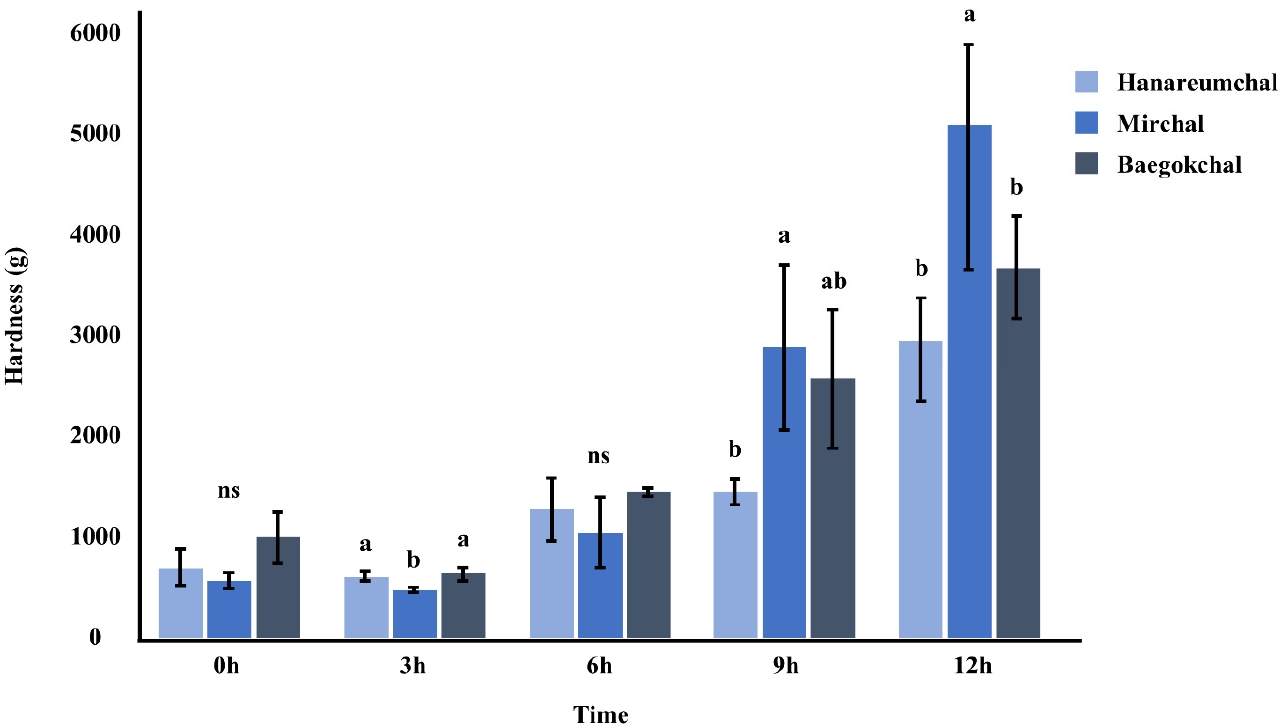
To confirm this, we directly measured the hardness of cooked rice over a 12-hour period at room temperature (
Fig. 2). While initial hardness values were similar, distinct patterns emerged after 9 hours. ‘Mirchal’ retrograded rapidly, reaching the highest hardness (5,080 g) at 12 hours. In contrast, ‘Hanareumchal’ hardened much more slowly (3,676.67 g at 12 h), a rate even comparable to the
japonica control ‘Baegokchal’ (2,856.67 g). This slow retrogradation rate underscores the superior potential of ‘Hanareumchal’ for developing stable, high-quality processed rice products, overcoming a key limitation of typical
tongil-type rice.
To identify the genetic basis for these unique traits, we analyzed the
GBSSI gene, which encodes the Waxy protein responsible for amylose synthesis (
Li et al. 2021,
Shetty et al. 2021). Variations in amylose content are closely linked to allelic differences at the Waxy locus (
Mikami et al. 2008,
Yang et al. 2013,
Zhang et al. 2021). These allelic variations significantly affect cooked rice texture, with higher amylose content typically resulting in firmer and less sticky rice (
Hu et al. 2021,
Liu et al. 2020,
Reddy et al. 1993). The waxy and semi-waxy traits of most rice cultivars are regulated by allelic variations in
GBSSI (
Biselli et al. 2014,
Hasjim et al. 2013,
Tao et al. 2019). A well-known allele contributing to the waxy phenotype is a 23 bp duplication located in the second exon of this gene, which causes a premature stop codon and disrupts amylose synthesis (
Isshiki et al. 2001,
Wang et al. 1990).
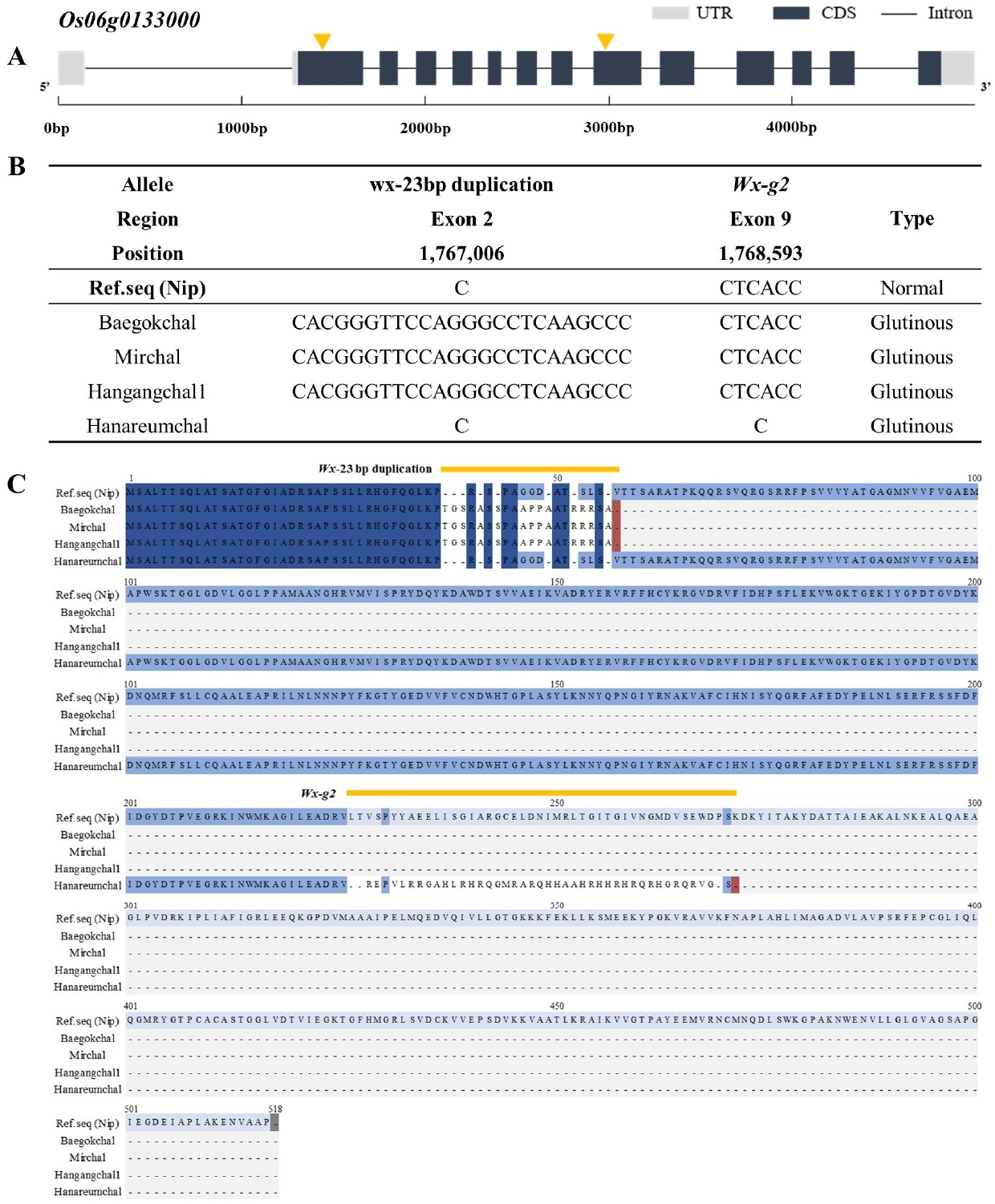
Our Sanger sequencing analysis confirmed this 23 bp duplication, which is responsible for the waxy trait, in ‘Baegokchal’, ‘Mirchal’, and ‘Hangangchal 1’ (
Jeazet Dongho Epse Mackon et al. 2022, Kharshiing & Chrungoo 2021). Surprisingly, ‘Hanareumchal’ did not have this duplication and its sequence in this region resembled that of non-waxy rice. This suggested a different mutation was responsible for its waxy phenotype. Further sequencing of the entire
GBSSI gene in ‘Hanareumchal’ revealed a novel 5 bp deletion (CTCACC → C) in the ninth exon at position 1,768,593 on chromosome 6 (
Figs. 3A,
3B). This deletion, known as the
Wx-g2 allele, also results in a premature stop codon, disrupting amylose synthesis through a different mechanism (
Morita et al. 2009). The protein sequence alignment clearly visualizes how both the 23 bp duplication and the
Wx-g2 deletion lead to truncated proteins, explaining the waxy phenotype in all tested cultivars (
Fig. 3C).
Although both mutations lead to truncated
GBSSI proteins, the functional consequences may differ due to the distinct truncation sites. The 23 bp duplication in exon 2 results in a highly truncated, likely non-functional protein fragment. In contrast, the
Wx-g2 mutation in exon 9 occurs much further downstream, potentially allowing the synthesis of a larger portion of the enzyme. This suggests that the
Wx-g2 allele might retain minimal residual enzymatic activity compared to the exon 2 duplication allele. Such subtle differences in
GBSSI activity, even within a waxy phenotype, could influence the fine structure of starch and the arrangement of amylopectin chains, thereby contributing to the significantly softer texture and delayed retrogradation observed in ‘Hanareumchal’ (
Fu et al. 2023,
Zhang et al. 2021). While the
Wx-g2 allele is the most likely primary contributor to the unique quality of Hanareumchal, the potential influence of other genetic factors within its specific background should also be considered in future research.
The
Wx-g2 allele in ‘Hanareumchal’ is particularly noteworthy. It originated from the Japanese waxy cultivar ‘Odorokimochi’, which was developed by subjecting the
indica cultivar ‘Takanari’ to gamma-ray irradiation (
Imbe et al. 2004). ‘Takanari’ itself was derived from a cross between two Korean
tongil-type cultivars. Therefore, the
Wx-g2 allele represents a rare, induced mutation reintroduced into a
tongil-type genetic background. Given the limited genetic diversity among
tongil-type cultivars, which share a short breeding history, this unique allele is the most likely contributor to the distinct processing-friendly quality attributes of ‘Hanareumchal’.
In conclusion, this study demonstrates that the tongil-type waxy cultivar ‘Hanareumchal’ exhibits favorable physicochemical properties that suggest a high potential for processing applications, including a soft texture and significantly slower retrogradation, which are attributable to the rare Wx-g2 allele in its GBSSI gene. These characteristics make it a promising material for industrial applications like rice cakes and ready-to-eat meals, where texture retention and shelf-life are critical.
While the Wx-g2 allele offers valuable traits, challenges remain. Trait expression could vary under different environmental conditions, affecting amylose content and retrogradation. Furthermore, while slow retrogradation is beneficial for many products, it may be less desirable for applications requiring rapid texture setting. Future research should evaluate the stability of Wx-g2-associated traits across diverse environments and optimize its use in various processing contexts. By leveraging this unique genetic resource, it is possible to significantly enhance the processing quality of high-yielding tongil-type waxy rice, expanding its utility in the food industry and improving its overall value.
The identification of the Wx-g2 allele underscores its breeding value as a pivotal genetic tool for developing next generation processing rice that overcomes the traditional yield quality trade off in tongil-type cultivars.
Conclusion
Tongil-type rice cultivars, developed through inter-subspecific hybridization between indica and japonica, are characterized by high yield potential; however, their eating and processing qualities remain limiting factors for broader utilization. In this study, we evaluated the physicochemical properties, starch functionality, and genetic variation of the GBSSI gene in three tongil-type waxy rice cultivars (‘Mirchal’, ‘Hangangchal 1’, and ‘Hanareumchal’), with the japonica waxy cultivar ‘Baegokchal’ used as a control. Cooked rice texture analysis revealed that ‘Hanareumchal’ exhibited the lowest hardness (1.70 kgf), indicating a softer texture compared with the other cultivars. RVA profiling showed that ‘Hanareumchal’ had relatively lower final viscosity and setback values, suggesting reduced starch retrogradation. Consistent with these results, time course texture analysis demonstrated that ‘Hanareumchal’ displayed a slower increase in hardness during storage, indicating superior textural stability. Genotypic analysis of the GBSSI gene revealed that ‘Mirchal’, ‘Hangangchal 1’, and ‘Baegokchal’ carried the typical 23 bp duplication in exon 2 associated with the waxy phenotype. In contrast, ‘Hanareumchal’ possessed a rare Wx-g2 allele characterized by a 5 bp deletion in exon 9, resulting in the formation of a premature stop codon. This unique allelic variation is likely responsible for the distinct starch properties and delayed retrogradation observed in ‘Hanareumchal’. These findings demonstrate that the Wx-g2 allele plays a key role in improving the processing quality and storage stability of tongil-type waxy rice. Notably, ‘Hanareumchal’ has already been adopted for commercial processing applications by CJ CheilJedang, reflecting its practical value and industrial relevance. By combining high yield potential with favorable starch functionality, ‘Hanareumchal’ represents a promising genetic resource for the development of industrially suitable waxy rice cultivars. This study provides a genetic and physicochemical basis for breeding strategies aimed at enhancing the processing performance of tongil-type rice.
Notes
-
Acknowledgments
This study was supported by the Rural Development Administration Research Project (Project title: Development of Breeding Materials for Tongil-type Rice Suitable for Industrial Use and Mass Consumption, Project number: PJ017383012025) and the 2026 RDA Fellowship Program of the National Institute of Crop Science, Rural Development Administration. We extend our gratitude for their support.
Fig. 1.White rice of japonica and tongil-type waxy cultivars used in this study: (A) Baegokchal, (B) Mirchal, (C) Hangangchal 1, and (D) Hanareumchal.
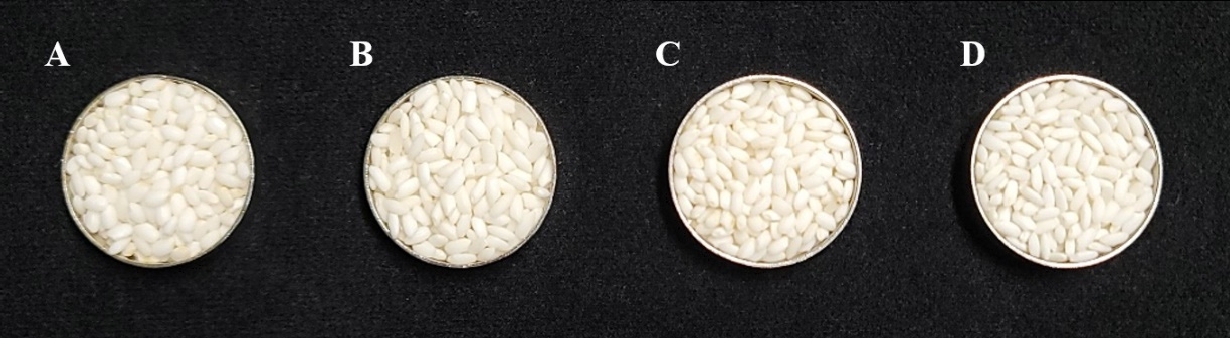
Fig. 2.Hardness levels for analyzing the retrogradation of tongil-type waxy cultivars at different times. Orange, gray, and blue boxes represent ‘Hanaremchal’, ‘Mirchal’, and ‘Baegokchal’, respectively. Error bars indicate standard error. The letters ‘a’ and ‘b’ denote different significance levels at p<0.01 (Duncan’s test).
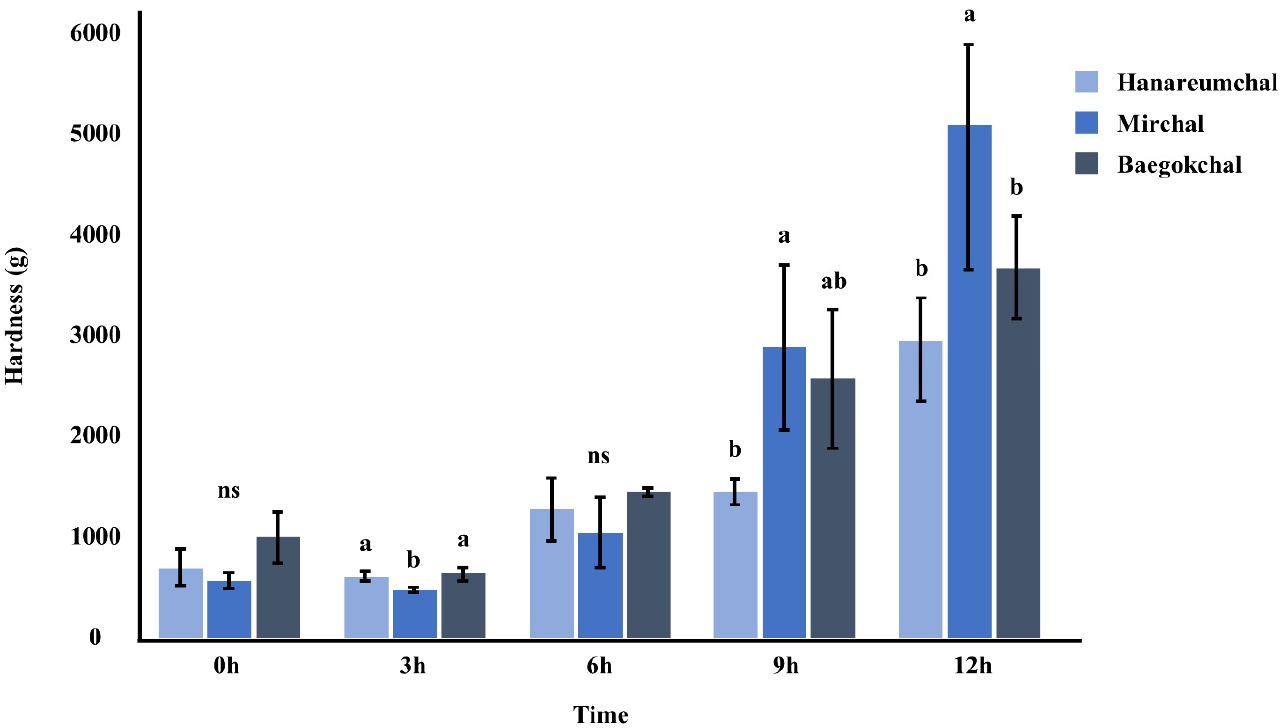
Fig. 3.Genetic and protein-level analysis of GBSSI allelic variations. (A) Schematic representation of the GBSSI gene structure. Gray and black blocks represent untranslated regions (UTRs) and exons, respectively; gray lines represent introns. Yellow vertical bars indicate the positions of the two key InDel regions. (B) DNA sequence comparison of the two major alleles: the 23 bp duplication in Exon 2 and the 5 bp Wx-g2 deletion in Exon 9 across the tested rice varieties. (C) Gene-protein sequence alignment of GBSSI. Blue shading indicates conserved regions across all cultivars. Red highlights mark the premature stop codons resulting from the 23 bp duplication (in ‘Baegokchal’, ‘Mirchal’, ‘Hangangchal 1’) and the Wx-g2 deletion (in ‘Hanareumchal’). The yellow bars correspond to the mutation regions. The Nipponbare sequence was used as the reference in all analyses.
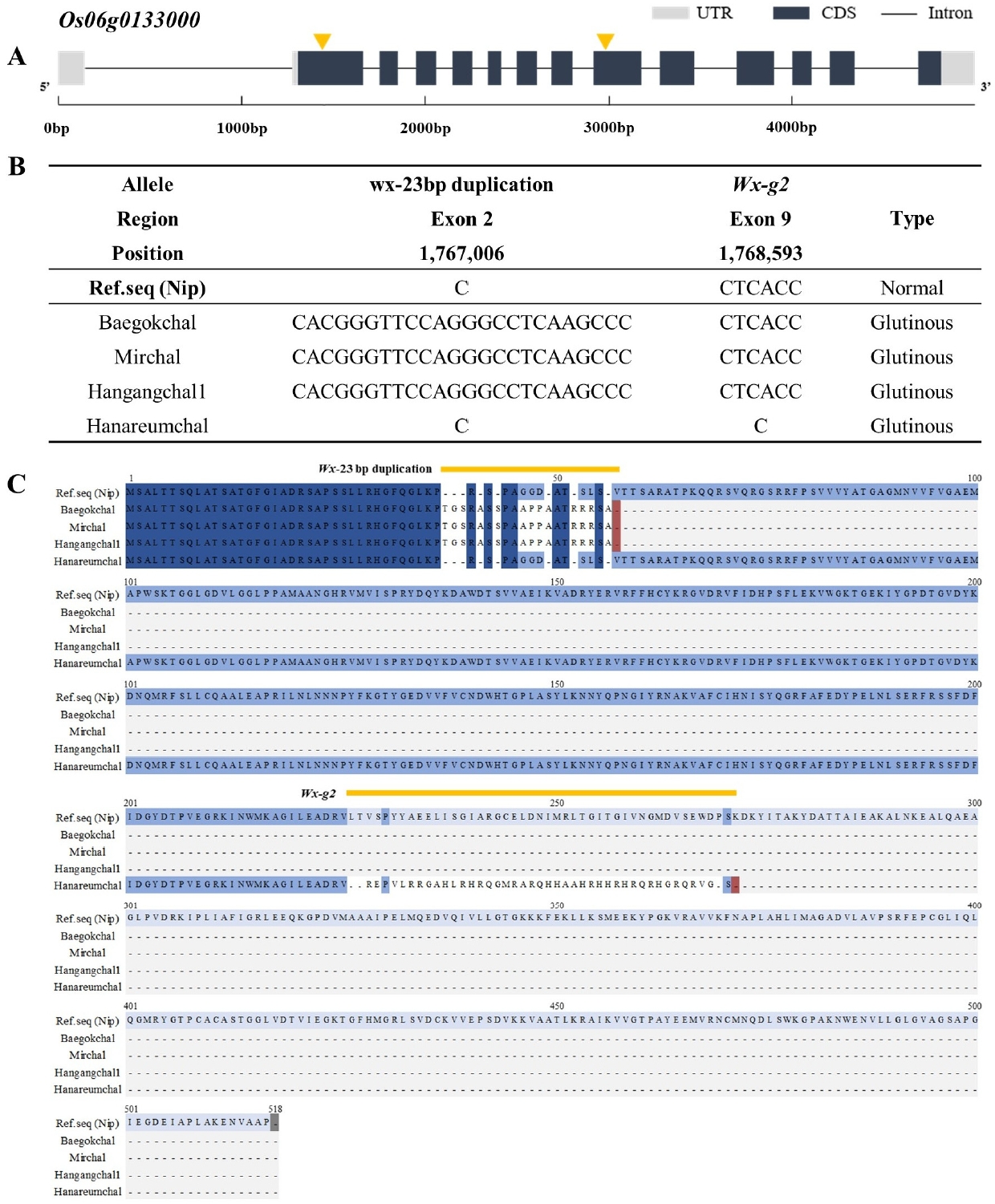
Table 1.Chromaticity, amylose and protein content of tongil-type waxy cultivars.
Table 1.
|
Cultivar |
Visual appearance
|
Amylose (%) |
Protein (%) |
|
L (Lightness) |
a (Redness) |
b (Yellowness) |
|
Baegokchal |
81.13±0.17az, y
|
0.11±0.13b |
14.21±0.19b |
5.82±0.19c |
5.84±0.02c |
|
Mirchal |
79.41±0.21b |
-0.13±0.02c |
15.10±0.19a |
6.80±0.02a |
6.24±0.01a |
|
Hangangchal 1 |
79.21±0.49b |
0.44±0.18a |
14.48±0.50b |
5.92±0.03c |
6.19±0.03ab |
|
Hanareumchal |
81.37±0.27a |
-0.32±0.05c |
13.08±0.27c |
6.14±0.06b |
6.15±0.05b |
Table 2.Texture properties of tongil-type waxy cultivars.
Table 2.
|
Cultivar |
Hardness (kgf)z
|
Viscosity (kgf) |
Balance |
Elasticity |
|
Baegokchal |
2.10±0.38aby, x
|
0.48±0.09ns |
0.22±0.01a |
0.78±0.04ns |
|
Mirchal |
2.39±0.37a |
0.43±0.06 |
0.18±0.02b |
0.76±0.02 |
|
Hangangchal 1 |
2.30±0.27a |
0.50±0.11 |
0.22±0.02a |
0.76±0.02 |
|
Hanareumchal |
1.70±0.18b |
0.37±0.04 |
0.22±0.02a |
0.78±0.02 |
Table 3.Pasting properties of tongil-type waxy cultivars.
Table 3.
|
Cultivar |
Pasting Temp (℃) |
Peak viscosity (RVU) |
Trough viscosity (RVU) |
Breakdown (RVU) |
Final viscosity (RVU) |
Setback (RVU) |
|
Baegokchal |
70.95±0.91nsz
|
83.31±0.10dy
|
22.14±0.27d |
61.17±0.25c |
29.36±0.31d |
-53.94±0.27a |
|
Mirchal |
70.95±0.43 |
216.86±2.57a |
98.69±1.84a |
118.17±2.75a |
127.94±0.68a |
-88.91±1.90b |
|
Hangangchal 1 |
71.18±0.38 |
199.64±2.41b |
86.47±1.17b |
113.17±1.48b |
106.67±1.21b |
-92.97±1.21c |
|
Hanareumchal |
70.40±0.48 |
192.22±3.39c |
79.33±1.11c |
112.89±2.23b |
97.06±0.81c |
-95.17±2.60c |
References
- 1. Adeva CC, Lee HS, Kim SH, Jeon YA, Shim KC, Luong NH, Kang JW, Lim CS, Cho JH, Ahn SN. 2020. Two complementary genes, SBE3 and GBSS1 contribute to high amylose content in japonica cultivar Dodamssal. Plant Breed Biotech 8: 354-367.
- 2. Bao J, Ying Y, Zhou X, Xu Y, Wu P, Xu F, Pang Y. 2020. Relationships among starch biosynthesizing protein content, fine structure and functionality in rice. Carbohydr Polym 237: 116118.
- 3. Biselli C, Cavalluzzo D, Perrini R, Gianinetti A, Bagnaresi P, Urso S, Orasen G, Desiderio F, Lupotto E, Cattivelli L, Valè G. 2014. Improvement of marker-based predictability of apparent amylose content in japonica rice through GBSSI allele mining. Rice 7: 1-18.
- 4. Bresciani A, Vaglia V, Saitta F, Fessas D, Casiraghi MC, Erba D, Pagani MA, Lee JY, Kang JW, Ko JM, Bocchi S, Cho JH, Marti A. 2022. High-amylose and tongil type Korean rice varieties: Physical properties, cooking behaviour and starch digestibility. Food Sci Biotechnol 31: 681-690.
- 5. Cho JH, Lee JH, Park NB, Son YB, Oh SH, Han SI, Song YC, Seo WD, Park DS, Nam MH, Lee JY. 2018. ‘Saemimyeon’, a tongil-type medium-late maturing rice variety with high amylose content used for rice noodle preparation. Korean J Breed Sci 50: 522-528.
- 6. Choi HC. 2002. Current status and perspectives in varietal improvement of rice cultivars for high quality and value-added products. Korean J Breed Sci 47: 15-32.
- 7. Chung GS, Heu MH. 1991. Improvement of tongil-Type Rice Cultivars from indica japonica Hybridization in Korea. pp. 105-112. In: Bajaj YPS (Ed). Biotechnology in Agriculture and Forestry. Springer-Verlag Berlin, Germany.
- 8. Fu Y, Hua Y, Luo T, Liu C, Zhang B, Zhang X, Liu Y, Zhu Z, Tao Y, Zhu Z, Li P, Zhu J. 2023. Generating waxy rice starch with target type of amylopectin fine structure and gelatinization temperature by waxy gene editing. Carbohydr Polym 306: 120595.
- 9. Hasjim J, Li E, Dhital S. 2013. Milling of rice grains: Effects of starch/flour structures on gelatinization and pasting properties. Carbohydr Polym 92: 682-690.
- 10. Hu Y, Cong S, Zhang H. 2021. Comparison of the grain quality and starch physicochemical properties between japonica rice cultivars with different contents of amylose, as affected by nitrogen fertilization. Agriculture 11: 616.
- 11. Imbe T, Horisue N, Akama Y, Nakane A, Ando I, Suto M, Hata T, Ise K, Numaguchi K, Furutachi H, Takadate M. 2004. “Odorokimochi”-a multipurpose high-yield glutinous rice variety. Bull Natl Res Cent 6: 19-35.
- 12. Isshiki M, Yamamoto Y, Satoh H, Shimamoto K. 2001. Nonsense-mediated decay of mutant waxy mRNA in rice. Plant Physiol 125: 1388-1395.
- 13. Jeazet Dongho Epse Mackon GC; Mackon E, Ma Y, Zhao Y, Yao Y, Dai X, Liu P. 2022. Development of the PARMS markers of the waxy gene and utilization in discriminating wild accessions, and cultivated rice (Oryza sativa L.) with different eating and cooking quality. Agronomy 12: 1294.
- 14. Juliano BO. 1985. Criteria and tests for rice grain quality. pp. 443-524. In: Juliano BO (Ed). Rice: Chemistry and Technology. American Association of Cereal Chemists, Saint Paul, MN, USA.
- 15. Karimidastjerd A, Kilic-Akyilmaz M. 2021. Formulation of a low-protein rice drink fortified with caseinomacropeptide concentrate. Food Bioprod Process 125: 161-169.
- 16. Kharshiing G, Chrungoo NK. 2021. Wx alleles in rice: Relationship with apparent amylose content of starch and a possible role in rice domestication. J Genet 100: 1-18.
- 17. Kim B, Kim DG, Lee G, Seo J, Choi IK, Choi BS, Yang TJ. Kim KS, Lee J, Chin JH, Koh HJ. 2014. Defining the genome structure of ‘tongil’ rice, an important cultivar in the Korean “Green Revolution.” Rice 7: 1-9.
- 18. Korean Statistical Information Service. 2024 Rice consumption in the business sector. https://kosis.kr/statHtml/statHtml.do?orgId=101&tblId=DT_1ED0006&conn_path=I2. Accessed July 10 2025.
- 19. Lee EJ, Ramachandraiah K, Hong GP. 2018. Processing optimization of soybean sprouts pre-treatment for manufacturing frozen Kongnamul-Bibimbap product. Korean J Food Sci 50: 186-190.
- 20. Lee JS, Lee JK, Yoon MR, Kwak J, Chun A, Kang KH, Jeung JU, Chun J, Kim BK. 2014. Varietal preference of grain appearance and sensory of African on rice ecotypes. Korean J Int Agric 26: 232-237.
- 21. Lee JY, Lee NG, Song YC, Lee JH, Jo SM, Kwon YH, Lee SM, Kang JW, Park DS, Cho JH. 2021. ‘Miho’ (Milyang300), a mid to late low-amylose variety of processed rice. Korean J Breed Sci 53: 295-304.
- 22. Lee JY, Kang JW, Jo SM, Kwon Y, Lee SM, Shin DJ, Song YC, Park DS, Lee JH, Ko JM, Cho JH. 2020. A new approach for glutinous rice breeding through dull genes pyramiding. Plant Breed Biotechnol 8: 405-412.
- 23. Li C, You Y, Chen D, Gu Z, Zhang Y, Holler TP, Ban X, Hong Y, Cheng L, Li ZA. 2021. Systematic review of rice noodles: Raw material, processing method and quality improvement. Trends Food Sci Technol 107: 389-400.
- 24. Li D, Fei T, Wang Y, Zhao Y, Dai L, Fu X, Li X. 2021. A cold-active 1, 4-α-glucan branching enzyme from Bifidobacterium longum reduces the retrogradation and enhances the slow digestibility of wheat starch. Food Chem 324: 126855.
- 25. Liu Q, Tao Y, Cheng S, Zhou L, Tian J, Xing Z, Liu G, Wei H, Zhang H. 2020. Relating amylose and protein contents to eating quality in 105 varieties of japonica rice. Cereal Chem 97: 1303-1312.
- 26. Loyda C, Singanusong R, Jaranrattanasri A, Tochampa W. 2021. Physicochemical characterization of broken rice and analysis of its volatile compounds. Walailak J Sci Technal 18: 9136.
- 27. Mikami I, Uwatoko N, Ikeda Y, Yamaguchi J, Hirano HY, Suzuki Y, Sano Y. 2008. Allelic diversification at the wx locus in landraces of Asian rice. Theor Appl Genet 116: 979-989.
- 28. Morishima H, Oka HI. 1981. Phylogenetic differentiation of cultivated rice. XXII. Numerical evaluation of the indica-japonica differentiation. J Breed Sci 31: 402-413.
- 29. Morita R, Kusaba M, Iida S, Yamaguchi H, Nishio T, Nishimura M. 2009. Molecular characterization of mutations induced by gamma irradiation in rice. Genes Genet Syst 84: 361-370.
- 30. Oh SK. 2016. Development of rice varieties for processing and trend of food industry. J Korea Soc Food Sci Nutr 21: 8-14.
- 31. Park J, Kim HS. 2023. Rice-based gluten-free foods and technologies: A review. Foods 12: 4110.
- 32. Reddy KR, Ali SZ, Bhattacharya KR. 1993. The fine structure of rice-starch amylopectin and its relation to the texture of cooked rice. Carbohydr Polym 22: 267-275.
- 33. Sanger F, Nicklen S, Coulson AR. 1977. DNA sequencing with chain-terminating inhibitors. Proc Natl Acad Sci USA 74: 5463-5467.
- 34. Sano R, Morishima H. 1992. Indica-japonica differentiation of rice cultivars viewed from variations in key characters and isozymes, with special reference to landraces from the Himalayan hilly areas. Theor Appl Genet 84: 266-274.
- 35. Seck PA, Diagne A, Mohanty S, Wopereis MCS. 2012. Crops that feed the world 7: Rice. Food Secur 4: 7-24.
- 36. Seong GU, Kim J, Kim J, Park S, Cho JH, Lee JY, Lee SB, Shin D, Park DS, Moon KD, Kang JW. 2022. Quality characteristics of plant-based rice milk prepared with different rice varieties. Korean J Food Preserv 29: 395-406.
- 37. Seong GU, Kim JY, Kim JS, Jeong SU, Cho JH, Lee JY, Lee SB, Kabange N-R, Park DS, Moon KD, Kang JW. 2023. Quality characteristics of rice-based ice creams with different amylose contents. Foods 12: 1518.
- 38. Shetty PR, Batchu UR, Buddana SK, Rao KS, Penna S. 2021. A comprehensive review on α-D-Glucans: Structural and functional diversity, derivatization and bioapplications. Carbohydr Res 503: 108297.
- 39. Shi MM, Gao QY. 2011. Physicochemical properties, structure and in vitro digestion of resistant starch from waxy rice starch. Carbohydr Polym 84: 1151-1157.
- 40. Shin DS, Choi YJ, Sim EY, Oh SK, Kim SJ, Lee SK, Woo KS, Kim HJ, Park HY. 2016. Comparison of the hydration, gelatinization and saccharification properties of processing type rice for beverage development. J Korea Soc Food Sci Nutr 29: 618-627.
- 41. Sim EY, Lee JY, Cho JH, Yoon MR, Kwak JE, Kim NG, Jeon YH, Lee CK, Lee JS, Hong HC. 2018. Quality characteristics of porridge made from different Korean rice varieties including high yield tongil-type rice. Food Sci Preserv 25: 651-658.
- 42. Song YC, Cho JH, Jung KH, Ha WG, Kim SR, Kwak DY, Park NB, Kim YD, Kim SY, Oh SH, Lim SJ, Shin MS. 2011. A new tongil-type glutinous rice variety ‘Hangangchal1’ of multi-diseases and insect resistance. Korean J Breed Sci 43: 201-205.
- 43. Song YC, Cho JH, Lee JH, Kwak DY, Park NB, Yeo US, Kim CS, Jeon MG, Lee JY, Lee GH, Ha WG, Lee JS, Jung KH, Cho YH, Kang HW. 2013. A glutinous rice variety with multiple disease resistance ‘Baegokchal’. Korean J Breed Sci 45: 31-37.
- 44. Tao K, Li C, Yu W, Gilbert RG, Li E. 2019. How amylose molecular fine structure of rice starch affects functional properties. Carbohydr Polym 204: 24-31.
- 45. Tuaño APP, Barcellano ECG, Rodriguez MS. 2021. Resistant starch levels and in vitro starch digestibility of selected cooked Philippine brown and milled rices varying in apparent amylose content and glycemic index. Food Chem 2: 100010.
- 46. Wang Y, Liu S, Yang X, Zhang J, Zhang Y, Liu X, Zhang H, Wang H. 2022. Effect of germination on nutritional properties and quality attributes of glutinous rice flour and dumplings. J Food Compos Anal 108: 104440.
- 47. Wang ZY, Wu ZL, Xing YY, Zheng FG, Guo XL, Zhang WG, Hong MM. 1990. Nucleotide sequence of rice waxy gene. Nucl Acids Res 18: 5898.
- 48. Xie LH, Tang SQ, Wei XJ, Sheng ZH, Shao GN, Jiao GA, Hu SK, Lin W, Hu PS. 2022. Simultaneous determination of apparent amylose, amylose and amylopectin content and classification of waxy rice using near-infrared spectroscopy (NIRS). Food Chem 388: 132944.
- 49. Yang J, Wang J, Fan FJ, Zhu JY, Chen T, Wang CL, Zheng TQ, Zhang J, Zhong WG, Xu JL. 2013. Development of AS-PCR marker based on a key mutation confirmed by resequencing of Wx-mp in Milky Princess and its application in japonica soft rice (Oryza sativa L.) breeding. Plant Breed 132: 595-603.
- 50. Zhang C, Yang Y, Chen S, Liu X, Zhu J, Zhou L, Lu Y, Li Q, Fan X, Tang S, Gu M, Liu Q. 2021. A rare Waxy allele coordinately improves rice eating and cooking quality and grain transparency. J Integr Plant Biol 63: 889-901.