Abstract
Weed control is among the principal challenges limiting the wider adoption of direct-seeded rice cultivation. Glufosinate is an effective non-selective herbicide, although its use in rice fields is limited by the high sensitivity of cultivated rice to this compound. However, a previously identified OsGS1;1 6-bp insertion allele (GCCTTC) has been established to confer glufosinate tolerance in rice, and in this study, using a dual-pegRNA prime editing strategy, we precisely introduced this allele into the Korean japonica rice cultivar Dongjin. Sanger sequencing of regenerated T0 plants identified the predicted homozygous 6-bp insertion in 14 of the 23 analyzed lines, corresponding to a homozygous precise editing frequency of 61%. Compared with the wild-type plants, when subjected to 2.5 mg/L glufosinate treatment, T2 plants derived from the homozygous line PE-gs1-1 were characterized by significantly greater shoot and root lengths, whereas only minor differences were observed in the absence of the herbicide. These findings reveal that the 6-bp OsGS1;1 insertion allele confers glufosinate tolerance in Dongjin following prime editing, thereby providing a transgene-free edited genetic resource for weed management and a strategy that is potentially applicable to other Korean rice cultivars.
-
Key words: prime editing, glufosinate tolerance, OsGS1;1, Dual-pegRNA, rice (Oryza sativa)
Introduction
Weeds in paddy fields are a major constraint on rice productivity and grain quality, and weed control is widely recognized as one of the principal challenges limiting the wider adoption of direct-seeded rice cultivation (
Shekhawat et al. 2020). Weedy rice, which is taxonomically and physiologically similar to cultivated rice, frequently occurs with cultivated rice in direct-seeded paddies, making selective chemical control particularly difficult. In Korea, weedy rice occurrence has been reported to increase up to four times relative to machine transplanting when direct seeding is practiced continuously for two to three years (
Shon et al. 2013), underscoring weedy rice management as a practical constraint on the further expansion of direct-seeded rice cultivation (
Shekhawat et al. 2020).
Glufosinate (phosphinothricin) is a non-selective herbicide that inhibits glutamine synthetase (GS), a key enzyme in nitrogen assimilation, leading to ammonia accumulation, inhibition of photosynthesis, and rapid plant death (
Logusch et al. 1991). It has been widely deployed in glufosinate-tolerant transgenic soybean and maize but is rarely applied directly to rice fields because cultivated rice itself is highly sensitive to the herbicide. Effective glufosinate tolerance in rice has been obtained by introducing the PAT (phosphinothricin acetyltransferase) or bar (bialaphos resistance) genes through plant transformation (
Cui et al. 2016).
Genome editing offers an alternative route to herbicide tolerance by introducing precise sequence changes directly into endogenous target genes (
Butt et al. 2020). A naturally evolved Ser59Gly substitution in the GS1 gene (EiGS1-1) of the weed
Eleusine indica was shown to confer glufosinate tolerance (
Zhang et al. 2022). In rice,
Ren et al. (2023) identified several glufosinate-tolerant
OsGS1;1 (Os02g0735200) alleles through base editing, including an allele carrying a 6-bp insertion (GCCTTC) that introduces two additional amino acid residues (alanine and phenylalanine, AF) between Pro64 and Gly65 of the OsGS1;1 protein. This target-site mutation is presumed to reduce glufosinate binding while preserving catalytic activity toward glutamate. The precise structural basis remains uncharacterized.
Prime editing couples a Cas9 nickase with a reverse transcriptase to enable precise substitutions, insertions, and deletions without double-strand breaks (
Widya et al. 2026). It allows a broader range of sequence changes than base editing and has been applied to trait improvement in major crops (
Nguyen et al. 2025,
Tian et al. 2025). Glufosinate-tolerant
OsGS1;1 alleles have previously been demonstrated in Kitaake and the elite Chinese cultivar Nangeng 46 (
Ren et al. 2023). However, their applicability to Korean rice cultivars has not yet been demonstrated.
In this study, we used prime editing to introduce a previously validated glufosinate-tolerant OsGS1;1 allele carrying a 6-bp insertion into the Korean japonica rice cultivar Dongjin. This study aimed to evaluate its applicability for weed and weedy rice management in Korean rice production.
Materials and Methods
Vector Construction
A dual-pegRNA strategy was employed, in which two pegRNAs target the same site on opposite strands but encode identical edits (
Lin et al. 2021). The endogenous
OsGS1;1 sequence in the Dongjin cultivar was first confirmed by Sanger sequencing to design cultivar-specific pegRNAs. A pegRNA pair was designed using PlantPegDesigner to introduce a targeted 6-bp insertion (GCCTTC) at the
OsGS1;1 locus (
Jin et al. 2023);
http://www.plantgenomeediting.net/). This dual-pegRNA strategy uses two pegRNAs recognizing opposite strands (CCN-pegRNA and NGG-pegRNA), each carrying the intended edit within its reverse-transcriptase template (RTT,
Table 1). The CCN-pegRNA and NGG-pegRNA cassettes were PCR-amplified and cloned into the pTaU3 and pH-ePPE vectors, respectively (
Jin et al. 2023). The pTaU3 promoter::CCN-pegRNA cassette was subsequently transferred into pH-ePPE by Gibson assembly using the ClonExpress Ultra One Step Cloning Kit (Vazyme, China). The final construct was verified by colony PCR and Sanger sequencing.
The binary vector carrying the dual-pegRNA prime editing cassette was introduced into
Agrobacterium tumefaciens strain LBA4404. Mature seed-derived calli of the
japonica rice cultivar Dongjin were induced for 4 weeks at 28℃ in the dark, and were subsequently co-cultivated with the
Agrobacterium strain harboring the construct for 3 days at 23℃ in the dark. Transformed calli were selected through two rounds of selection on medium containing 30 mg/L hygromycin and 250 mg/L cefotaxime at 28℃ in the dark to eliminate non-transformed tissue and residual
Agrobacterium. Resistant calli were then transferred to regeneration medium and cultured at 28℃ under light to induce shoot regeneration, following the method of
Hiei et al. (2008). Regenerated plantlets were acclimatized and transferred to a paddy field in Miryang, Republic of Korea, for further growth.
Genomic DNA was extracted from leaf tissue of regenerated plants using the CTAB method. The target region encompassing the
OsGS1;1 editing site was amplified by PCR using primers listed in
Table 2. PCR products were subjected to Sanger sequencing, and the resulting chromatograms were decomposed and aligned against the wild-type control sequence using CodonCode Aligner software (CodonCode Corporation,
www.codoncode.com, accessed 21 Sept 2025) to determine the genotype of each individual plant.
T
2 progeny that were PCR-negative for both the Cas9 and hygromycin resistance marker sequences, and homozygous for the target edit were used for the glufosinate tolerance assay. To evaluate glufosinate tolerance, seeds of wild type and edited plants were surface sterilized and germinated on half-strength Murashige and Skoog (1/2 MS) medium in cylinders (Incu Tissue; SPL Life Sciences, Republic of Korea) containing 0 or 2.5 mg/L glufosinate (Basta, Glufosinate-Ammonium TK 50; SB SUNGBO, Republic of Korea). The assay was conducted once using one cylinder for each genotype×treatment combination, with four seeds sown per cylinder. The glufosinate concentration (2.5 mg/L) was selected based on the germination assay conditions used by
Ren et al. (2023). Plants were grown in a growth chamber with short-day conditions (10 h light at 30℃ / 14 h dark at 25℃). Phenotypes were recorded 10 days after treatment, and shoot and root length were measured and compared between wild-type and edited plants using Student's
t-test.
Results and Discussion
Development of OsGS1;1 Mutants
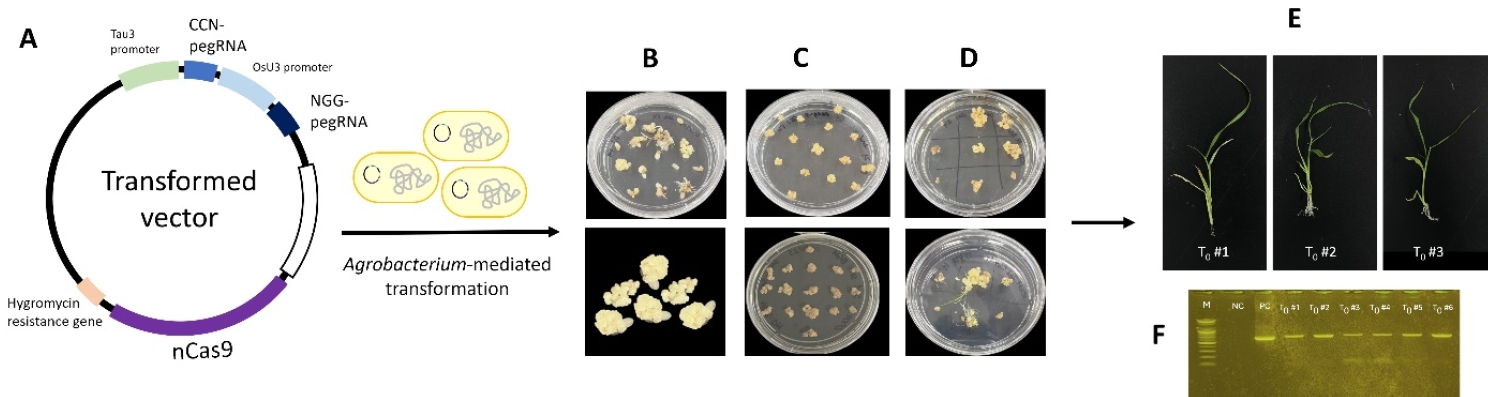
A previously characterized glufosinate tolerance conferring 6-bp
OsGS1;1 allele was introduced into the rice cultivar Dongjin using the dual-pegRNA prime editing vector described above, delivered via
Agrobacterium-mediated transformation (
Fig. 1,
Ren et al. 2023).
Genomic DNA was extracted from regenerated T
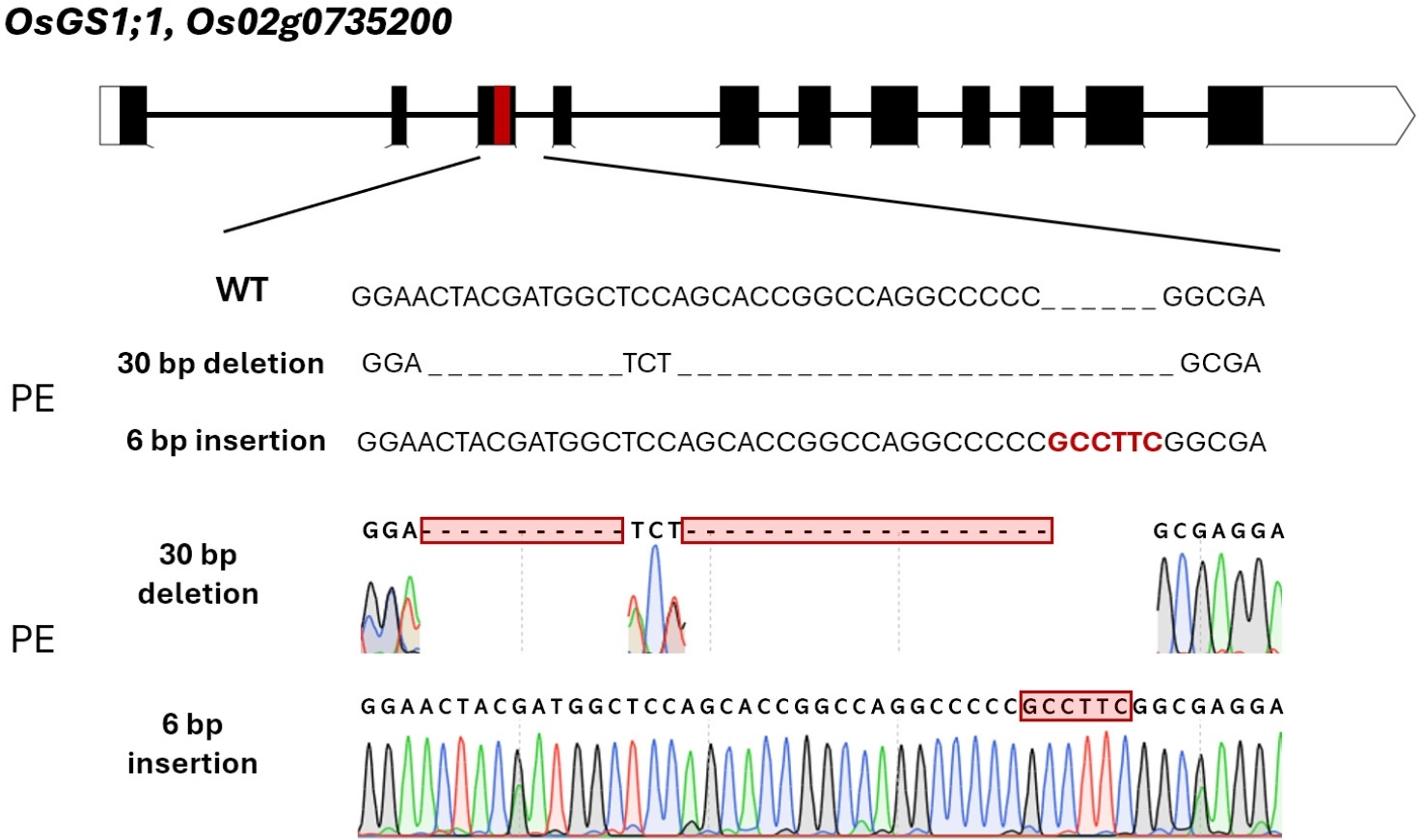
0 plants and screened by PCR for the hygromycin resistance marker gene, and 23 plants positive for the marker were selected for genotyping. Sanger sequencing of regenerated T
0 plants identified 14 lines carrying the intended homozygous 6-bp insertion and six lines heterozygous for the same edit, while three lines contained an unintended 30-bp deletion at the target site (
Fig. 2). Thus, the dual-pegRNA strategy achieved a homozygous precise editing efficiency of 61% (14/23) in the Korean
japonica cultivar Dongjin. This result demonstrated that a high prime editing frequency can be achieved at this target site using the dual-pegRNA ePPE system in a Korean rice cultivar background.
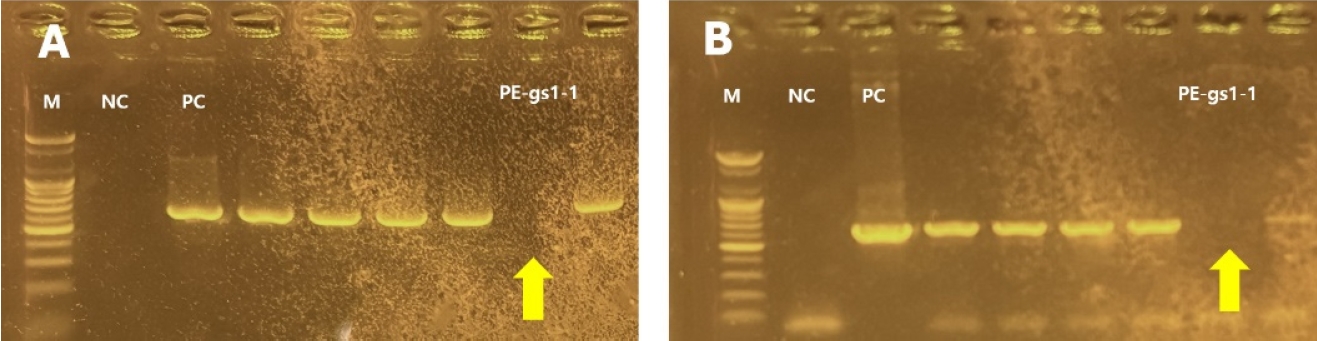
The absence of nCas9 and hygromycin resistance marker transgenes in line PE-gs1-1 was confirmed by PCR at the T
1 generation, using primers specific to nCas9 and the hygromycin resistance marker gene, respectively (
Fig. 3). Homozygous T
2 progeny derived from this transgene-free line were used for the subsequent glufosinate tolerance assay. To evaluate glufosinate tolerance, PE-gs1-1 T
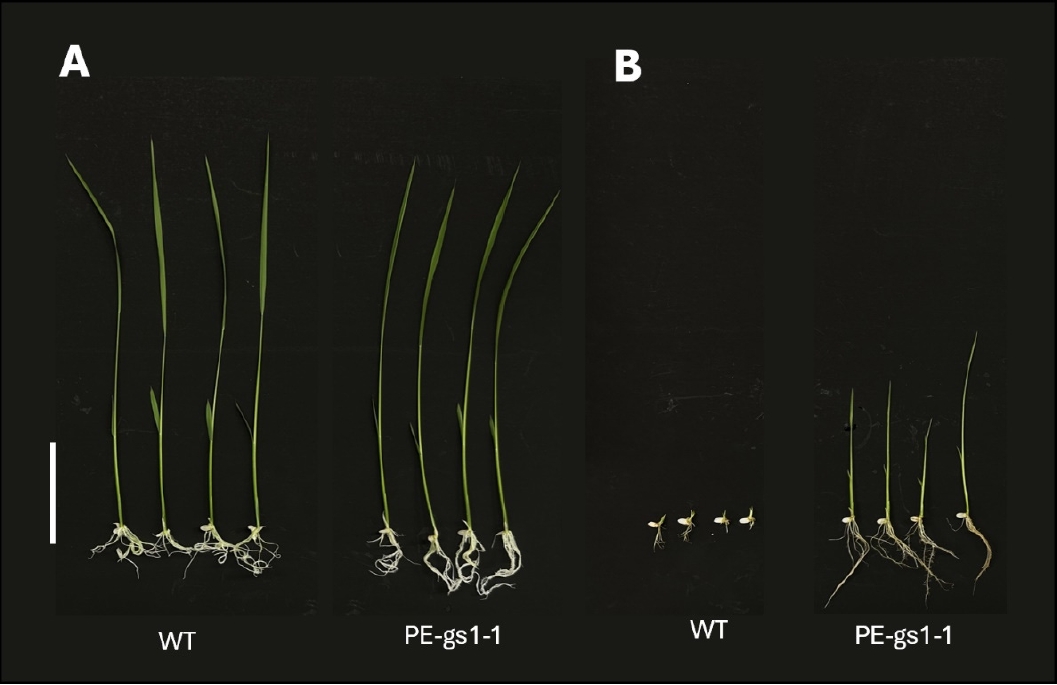
2 seeds were germinated alongside wild-type controls on 1/2 MS medium containing 0 or 2.5 mg/L glufosinate. Phenotypes were assessed after 10 days. In the absence of glufosinate, PE-gs1-1 plants showed a slightly shorter shoot length than wild-type plants, while root length did not differ significantly between genotypes (
Fig. 4A,
Table 3). Under 2.5 mg/L glufosinate, PE-gs1-1 plants showed markedly greater shoot and root length than wild-type plants (Student's
t-test,
p<0.05,
Table 3,
Fig. 4B). This difference was substantially larger than the minor difference observed in the absence of glufosinate, confirming that the introduced
OsGS1;1 edit conferred glufosinate tolerance in the Dongjin cultivar background.
OsGS1;1 encodes a glutamine synthetase involved in nitrogen metabolism in rice. Loss of
OsGS1;1 results in reduced growth and grain filling (
Tabuchi et al. 2005). In this study, the edited allele carried a two-amino-acid insertion that confers glufosinate tolerance. This amino acid insertion may alter glufosinate binding and potentially affect
OsGS1;1 activity. A previous study has shown that amino acid substitutions in
OsGS1;1 can affect both glufosinate sensitivity and substrate affinity (
Tian et al. 2015). Thus, the slight reduction in shoot length observed in PE-gs1-1 under untreated conditions may reflect a minor alteration in
OsGS1;1 function caused by the amino acid insertion. This possibility remains speculative and will require further physiological characterization to confirm.
Although PE-gs1-1 represents a potentially valuable genetic resource for glufosinate tolerance, further evaluation is required before its practical application under field conditions. The present study was limited to seedling-stage assays under laboratory conditions. Therefore, glufosinate tolerance should be evaluated across a range of field-relevant concentrations, together with agronomic traits and yield performance under field conditions.
The introduction of herbicide tolerance may provide an effective strategy for weed management; however, the potential risk of gene flow from cultivated rice to weedy rice should also be considered. Herbicide-resistant weedy rice populations have emerged following the cultivation of herbicide-resistant rice in several countries. In the southern United States, weedy rice populations resistant to herbicides became widespread in fields with a history of Clearfield
® rice cultivation (
Wedger et al. 2022). Similarly, in Brazil, weedy rice acquired imidazolinone resistance within just 3 years of the introduction of IMI-resistant rice (
Merotto Jr et al. 2016). These cases indicate that the development of herbicide-tolerant rice alone is not sufficient for sustainable weed management. Additional management practices, including crop rotation and the alternate use of herbicides with different modes of action, are required to reduce the risk of resistance spread and maintain the long term effectiveness of herbicide-tolerant cultivars (
Avila et al. 2021,
Sudianto et al. 2013).
Collectively, this study demonstrated that prime editing enables the efficient introduction of a validated glufosinate-tolerance allele into a Korean rice cultivar. Further field evaluation and appropriate management strategies will be necessary for the practical and sustainable use of this genetic resource.
Notes
-
Acknowledgments
This research was funded by the Rural Development Administration, Republic of Korea (RS-2024-00322502).
Fig. 1.
Agrobacterium-mediated generation of transgenic plants. (A) Schematic representation of the dual-pegRNA prime editing binary vector introduced into Agrobacterium tumefaciens. (B) Callus induction. (C) Antibiotic selection. (D) Shoot regeneration. (E) Regenerated T0 lines (#1-#3). (F) PCR screening for the hygromycin resistance marker gene in regenerated T0 plants (T0 #1-#6). M: DNA size marker; NC: negative control (wild type Dongjin); PC : positive control (pH-ePPE vector).
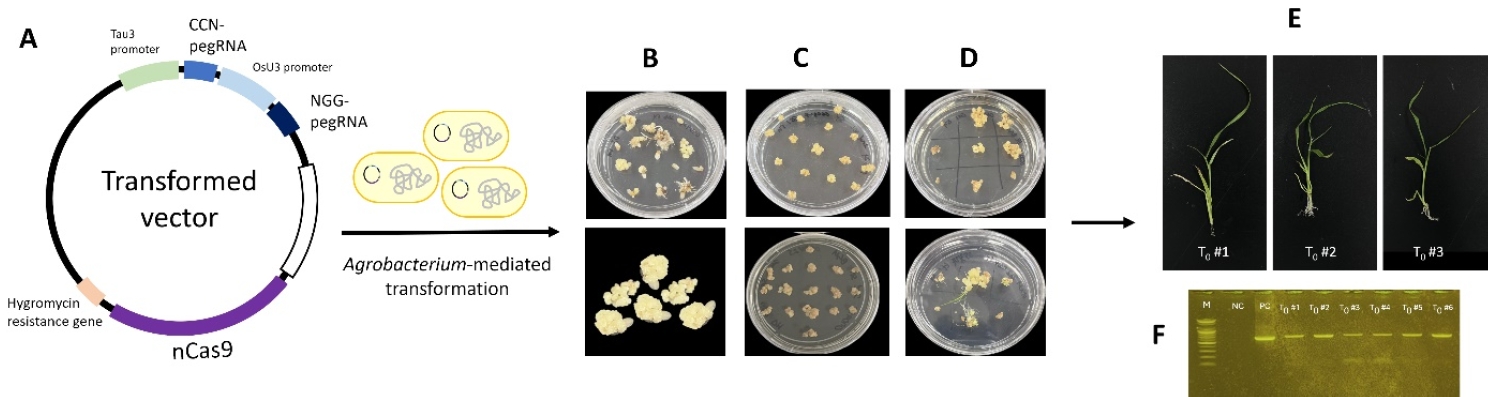
Fig. 2.Sequence of OsGS1;1 (Os02g0735200) in wild-type (WT) and prime-edited (PE) T0 rice plants. The red block in the gene model indicates the exon containing the OsGS1;1 target site. In the sequencing chromatograms, the red-boxed regions indicate the 30-bp deletion and the 6-bp insertion, respectively, and the red bold sequence indicates the inserted 6-bp sequence (GCCTTC) at the target site.
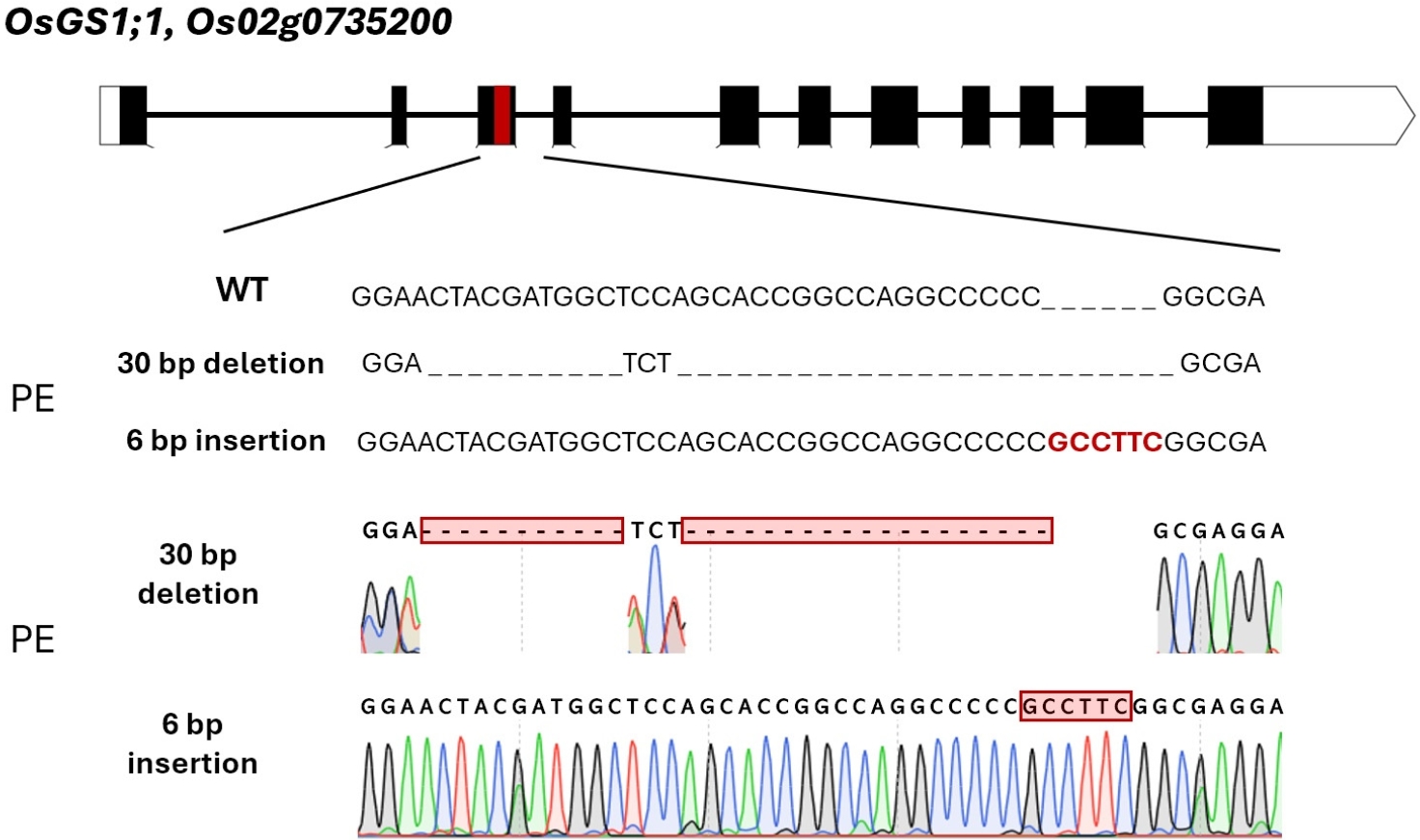
Fig. 3.PCR screening for transgene sequences in T1 progeny derived from the same T0 line. (A) PCR using the nCas9_check primer pair. (B) PCR using the HPT_check primer pair. M : DNA size marker; NC : negative control (wild-type Dongjin); PC; positive control (pH-ePPE vector). Absence of amplification in the PE-gs1-1 lane (arrow) in both (A) and (B) confirms that this line is free of the Cas9-RT and hygromycin resistance marker transgenes.
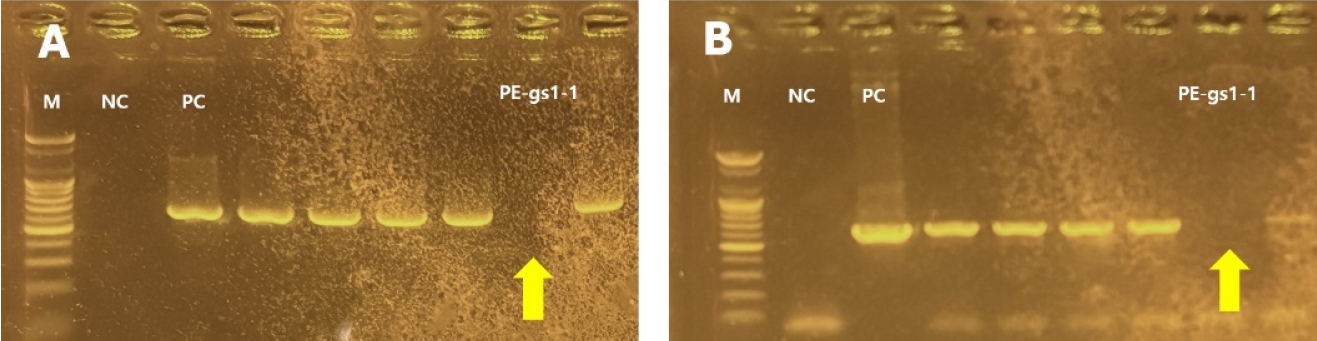
Fig. 4.Phenotypes of wild-type (WT) and PE-gs1-1 plants under (A) 0 mg/L and (B) 2.5 mg/L glufosinate treatment. Scale bar, 5 cm.
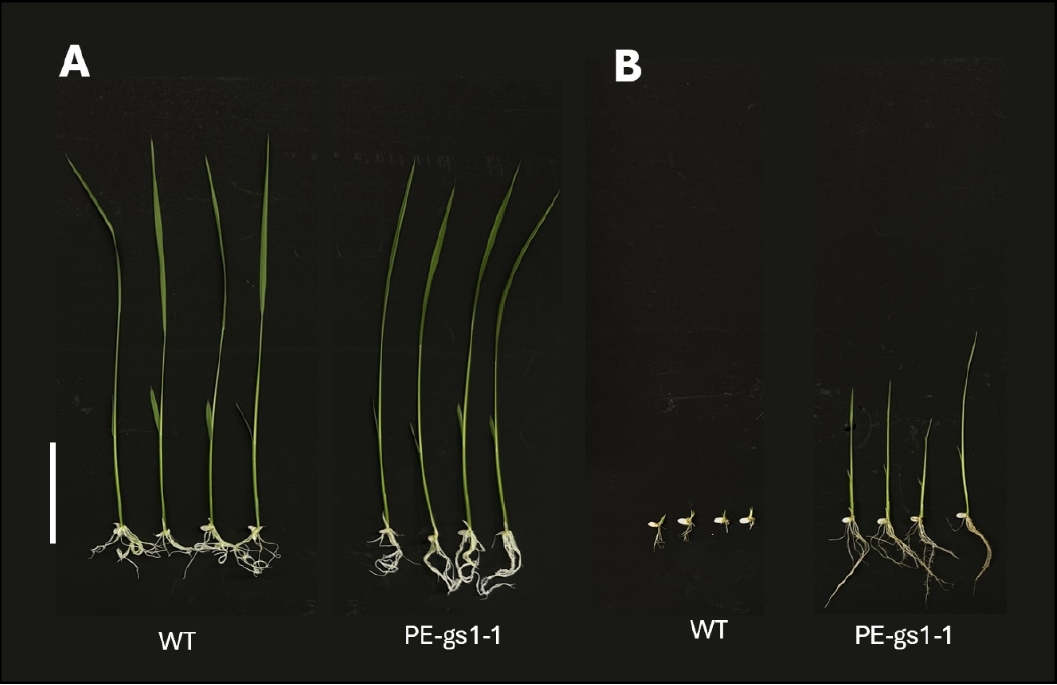
Table 1.Sequences of pegRNA components used for prime editing of OsGS1;1 in this study (Sequence 5′ → 3′).
Table 1.
|
CCN-pegRNA |
NGG-pegRNA |
|
Spacer-PAM |
GACCTCACTGTCCTCGCCGG |
TCCAGCACCGGCCAGGCCCC |
|
PBS + RTT |
GCCAGGCCCCCGCCTTCGGCGAGGACA |
TGTCCTCGCCGAAGGCGGGGGCCTGGCC |
|
Scaffold |
GTTTTAGAGCTAGAAATAGCAAGTTAAAATAAGGCTAGTCCGTTATCAACTTGAAAAAGTGGCACCGAGTCGGTGC |
Table 2.Primer sequences for detecting the hygromycin resistance marker, nCas9, and the OsGS1;1 target sequence.
Table 2.
|
|
Primer sequence (5′ → 3′) |
PCR Product Sizes (bp) |
|
HPT_check primer (Hygromycin resistance marker) |
Forward |
CAAGCTCTGATAGAGTTGGTCA |
656 |
|
Reverse |
ATCGTTATGTTTATCGGCACTT |
|
nCas9_check primer (nCas9) |
Forward |
AAGAAGTTCAAGGTCCTGGG |
641 |
|
Reverse |
GCAATGAGATTCCCGAACAG |
|
OsGS1_seq primer (OsGS1;1 target sequence) |
Forward |
CACTGGCTGAGCTGTTCTTG |
544 |
|
Reverse |
CCCCTTCAGTGGTGCATCTA |
Table 3.Phenotypes of wild-type and edited rice plants under 0 and 2.5 mg/L glufosinate treatments (mean±SD, n=4 plants from one cylinder).
Table 3.
|
Treatment |
Genotype |
Shoot length (cm) |
Root length (cm) |
|
0 mg/L |
Wild type |
19.6±0.5 |
7.3±0.3 |
|
0 mg/L |
PE-gs1-1 |
18.7±0.5*
|
7.2±1.0 |
|
2.5 mg/L |
Wild type |
0.6±0.1 |
0.9±0.3 |
|
2.5 mg/L |
PE-gs1-1 |
6.9±1.8**
|
5.1±0.3**
|
References
- 1. Avila LAd, Marchesan E, Camargo ER, Merotto A, Ulguim AdR, Noldin JA, Andres A, Mariot CHP, Agostinetto D, Dornelles SHB, Markus C. 2021. Eighteen years of Clearfield™ rice in Brazil: What have we learned? Weed Science 69: 585-597.
- 2. Butt H, Rao GS, Sedeek K, Aman R, Kamel R, Mahfouz M. 2020. Engineering herbicide resistance via prime editing in rice. Plant Biotechnol J 18: 2370.
- 3. Cui Y, Liu Z, Li Y, Zhou F, Chen H, Lin Y. 2016. Application of a novel phosphinothricin N-acetyltransferase (RePAT) gene in developing glufosinate-resistant rice. Sci Rep 6: 21259.
- 4. Hiei Y, Komari T. 2008. Agrobacterium-mediated transformation of rice using immature embryos or calli induced from mature seed. Nat Protoc 3: 824-834.
- 5. Jin S, Lin Q, Gao Q, Gao C. 2023. Optimized prime editing in monocot plants using PlantPegDesigner and engineered plant prime editors (ePPEs). Nature Protocols 18: 831-853.
- 6. Lin Q, Jin S, Zong Y, Yu H, Zhu Z, Liu G, Kou L, Wang Y, Qiu JL, Li J, Gao C. 2021. High-efficiency prime editing with optimized, paired pegRNAs in plants. Nat Biotechnol 39: 923-927.
- 7. Logusch EW, Walker DM, McDonald JF, Franz JE. 1991. Inhibition of plant glutamine synthetases by substituted phosphinothricins. Plant Physiol 95: 1057-1062.
- 8. Merotto Jr A, Goulart ICGR, Nunes AL, Kalsing A, Markus C, Menezes VG, Wander AE. 2016. Evolutionary and social consequences of introgression of nontransgenic herbicide resistance from rice to weedy rice in Brazil. Evol Appl 9: 837-846.
- 9. Nguyen PD, Pham XH, Le MQ. 2025. CRISPR/Cas9-mediated improvement of major rice variety TBR225 for low cadmium accumulation. Plant Breed Biotech 13: 71-83.
- 10. Ren B, Kuang Y, Xu Z, Wu X, Zhang D, Yan F, Li X, Zhou X, Wang G, Zhou H. 2023. Three novel alleles of OsGS1 developed by base-editing-mediated artificial evolution confer glufosinate tolerance in rice. The Crop Journal 11: 661-665.
- 11. Shekhawat K, Rathore SS, Chauhan BS. 2020. Weed management in dry direct-seeded rice: A review on challenges and opportunities for sustainable rice production. Agronomy 10: 1264.
- 12. Shon J, Lee CK, Kim J, Yang W, Choi KJ, Park HK, Park TS, Kim CK, Yoon YH. 2013. Changes of weedy rice occurrence in repeated wet direct seeding and alternate transplanting/wet direct seeding of rice. Weed and Turfgrass Science 2: 348-351.
- 13. Sudianto E, Beng-Kah S, Ting-Xiang N, Saldain NE, Scott RC, Burgos NR. 2013. Clearfield® rice: Its development, success, and key challenges on a global perspective. Crop Protection 49: 40-51.
- 14. Tabuchi M, Sugiyama K, Ishiyama K, Inoue E, Sato T, Takahashi H, Yamaya T. 2005. Severe reduction in growth rate and grain filling of rice mutants lacking OsGS1;1, a cytosolic glutamine synthetase1;1. The Plant Journal 42: 641-651.
- 15. Tian S, Yao L, Zhang Y, Rao X, Zhu H. 2025. Prime editing for crop improvement: A systematic review of optimization strategies and advanced applications. Genes 16: 965.
- 16. Tian YS, Xu J, Zhao W, Xing XJ, Fu XY, Peng RH, Yao QH. 2015. Identification of a phosphinothricin-resistant mutant of rice glutamine synthetase using DNA shuffling. Sci Rep 5: 15495.
- 17. Wedger MJ, Roma-Burgos N, Olsen KM. 2022. Genomic revolution of US weedy rice in response to 21st century agricultural technologies. Commun Biol 5: 885.
- 18. Widya F, Hungsaprug K, Comai L, Chadchawan S. 2026. Multi-generational analysis of multiplex CRISPR/Cas9-induced mutation in the rice progenies. Plant Breed Biotech 14: 197-206.
- 19. Zhang C, Yu Q, Han H, Yu C, Nyporko A, Tian X, Beckie H, Powles S. 2022. A naturally evolved mutation (Ser59Gly) in glutamine synthetase confers glufosinate resistance in plants. J Exp Bot 73: 2251-2262.