1경기도농업기술원
1Gyeonggi Agricultural Research & Extension Services, Hwaseong 445-784, Korea
2농촌진흥청 국립식량과학원
2Natoinal Institute of Crop Science(NICS), RDA, Suwon 441-857, Korea
© The Korean Society of Breeding Science
This is an Open-Access article distributed under the terms of the Creative Commons Attribution Non-Commercial License (http://creativecommons.org/licenses/by-nc/3.0) which permits unrestricted non-commercial use, distribution, and reproduction in any medium, provided the original work is properly cited.
| Cultivar | Flowering datez | Maturity datez | Plant height (cm) | No. of nodes | No. of blanches | No. of pods | Lodging (0-9)y | Wt. of 100 seed (g) |
|---|---|---|---|---|---|---|---|---|
|
|
||||||||
| Manpoong | July 14 | Sept. 29 | 82bx | 12.7b | 4.7b | 32a | 4a | 29.5a |
| Taekwang | July 22 | Oct. 8 | 90a | 15.7a | 6.4a | 34a | 4a | 26.0b |
| Cultivar | Excess water | Drought | Pod borer |
|---|---|---|---|
| (0-9)z | (0-9)†z | (Damaged seeds, %) | |
|
|
|||
| Manpoong | 4 | 4 | 1.5 |
| Taekwang | 4 | 5 | 2.9 |
| Cultivar |
Artificial inoculationz |
Natural infection | ||
|---|---|---|---|---|
| G7H | G6H | G5 | (0-9)y | |
|
|
||||
| Manpoong | -/M | -/M | -/N | 1 |
| Taekwang | L/N | L/N | L/N | 0 |
| Cultivar |
Stem root rot |
Bacterial pustule |
||
|---|---|---|---|---|
| (%) | (0-9)z |
Artificial inoculation |
Natural infection |
|
| (0-9)z | (0-9)z | |||
|
|
||||
| Manpoong | 1.3 | 2 | 2 | 1 |
| Taekwang | 2.3 | 2 | 6 | 5 |
| Cultivar | Crude protein (%) | Crude oil (%) |
Fatty acids(%) |
Isoflavone (μ/g) |
Amino acids(mg/100 g) |
||||||
|---|---|---|---|---|---|---|---|---|---|---|---|
| Sat. | Unsat. | Asp. | Glu. | Phe | Met. | Cys. | Total | ||||
|
|
|||||||||||
| Manpoong | 41.3az | 19.3a | 12.7b | 87.3a | 2,425a | 42.2a | 69.2a | 20.2a | 3.5b | 5.4a | 381.2a |
| Taekwang | 38.9b | 18.7a | 14.8a | 85.2b | 904b | 40.5b | 64.3b | 17.9b | 4.1a | 3.4b | 360.9b |
| Cultivar | Yield |
Physical characteristics |
||||
|---|---|---|---|---|---|---|
| Elasticity | Gumminess | Cohesiveness | Hardness | Chewiness | ||
| (g/3.14 mm2) | ||||||
|
|
||||||
| Manpoong | 230az | 18.50a | 0.111a | 0.300a | 3.719b | 2.258b |
| Taekwang | 215b | 18.53a | 0.145a | 0.327a | 4.387a | 2.494a |
| Cultivar |
Soybean malt |
Fermented soybean |
||||
|---|---|---|---|---|---|---|
| Degree of fermentation | Yeild | Flavor | Degree of fermentation | Yield | Flavor | |
| (1-5)z | (%) | (1-5)y | (1-5)z | (%) | (1-5)y | |
|
|
||||||
| Manpoong | 2 | 79ax | 2 | 4 | 192b | 5 |
| Taekwang | 3 | 78a | 3 | 3 | 211a | 3 |
| Cultivar |
Yield (MT/ha) |
Index | |||
|---|---|---|---|---|---|
| PYTz (’03) | AYTy (’05) | ATY (’06) | Mean | ||
|
|
|||||
| Manpoong | 3.25ax | 3.36a | 2.03a | 2.88a | 114 |
| TaeKwang | 2.76b | 2.79b | 2.02a | 2.52b | 100 |
| Cropping | Location |
Manpoong (MT/ha) |
Index |
Taekwang (MT/ha) |
||||||
|---|---|---|---|---|---|---|---|---|---|---|
| 2007 | 2008 | 2009 | Mean | 2007 | 2008 | 2009 | Mean† | |||
|
|
||||||||||
| Mono | Yeonchon | 1.72 | 1.51 | 1.97 | 1.73cz | 81 | 1.45 | 1.94 | 3.04 | 2.14b |
| Suwon | 2.65 | 2.43 | 3.21 | 2.76a | 105 | 2.34 | 2.31 | 3.22 | 2.62a | |
| Chunchon | 2.23 | 3.19 | 2.31 | 2.58a | 102 | 2.62 | 2.82 | 2.17 | 2.54a | |
| Milyang | 2.11 | 2.72 | 2.89 | 2.57b | 97 | 2.43 | 3.02 | 2.53 | 2.66a | |
|
|
||||||||||
| Mean | 2.18 | 2.46 | 2.60 | 2.41b | 97 | 2.21 | 2.52 | 2.74 | 2.49a | |
|
|
||||||||||
| Double | Yeonchon | - | 3.36 | 3.18 | 3.27a | 110 | - | 2.75 | 3.17 | 2.96a |
| Cheongwon | 2.56 | 3.00 | 1.87 | 2.48b | 114 | 2.46 | 2.17 | 1.92 | 2.18b | |
| Mean | 2.56 | 3.18 | 2.53 | 2.87a | 112 | 2.46 | 2.46 | 2.55 | 2.57a | |
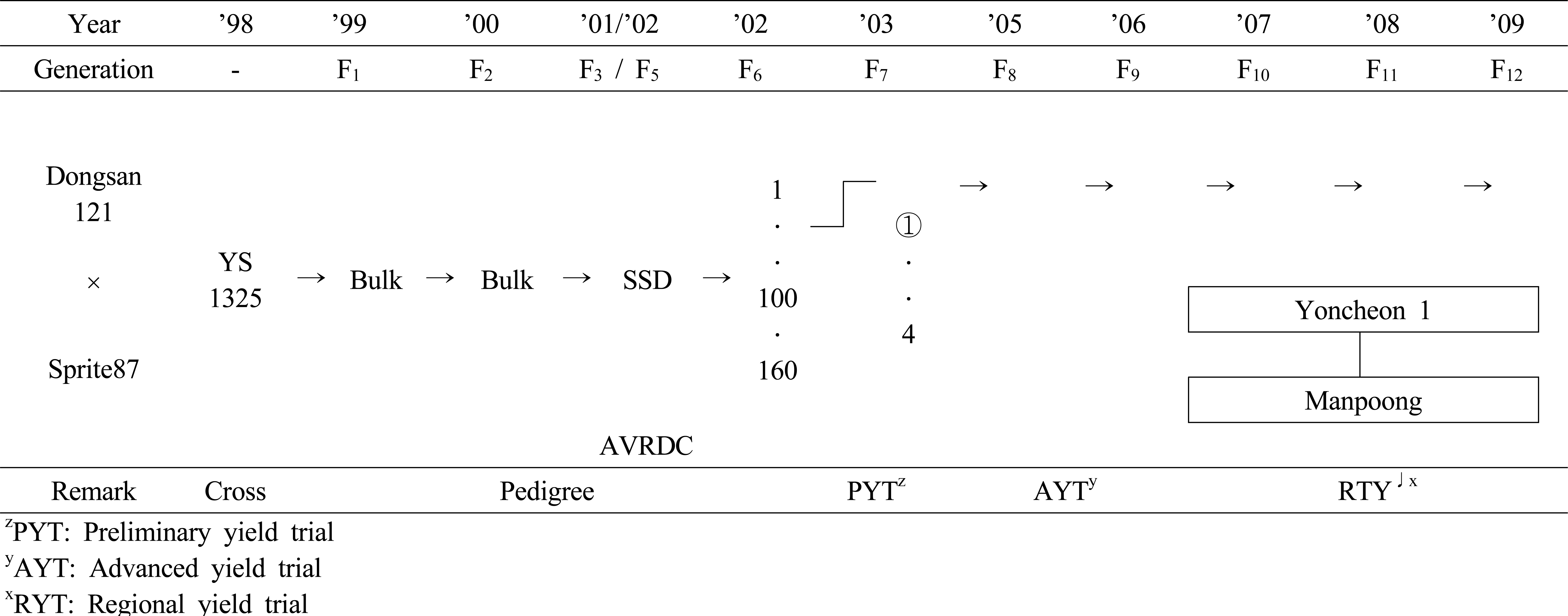
Inherent characteristics of ‘Manpoong’. (’07~’09, RYT)
| Cultivar | Growth habit | Leaf shape | Flower color | Pube-scence color | Pod color | Seed coat color | Cotyledon color | Seed shape | Pod shattering |
|---|---|---|---|---|---|---|---|---|---|
| Manpoong | Determinate | Oval | White | Light gray | Dark brown | Yellow | Yellow | Elongated spherical | Difficult |
| Taekwang | Determinate | Oval | Purple | Light gray | Brown | Yellow | Yellow | Spherical | Difficult |
Quantitative characteristics of ‘Manpoong’. (’07~’09, RYT)
| Cultivar | Flowering date |
Maturity date |
Plant height (cm) | No. of nodes | No. of blanches | No. of pods | Lodging (0-9) |
Wt. of 100 seed (g) |
|---|---|---|---|---|---|---|---|---|
| Manpoong | July 14 | Sept. 29 | 82b |
12.7b | 4.7b | 32a | 4a | 29.5a |
| Taekwang | July 22 | Oct. 8 | 90a | 15.7a | 6.4a | 34a | 4a | 26.0b |
Data at Yeoncheon
0: Tolerant, 9: Susceptible
Mean with the same letter are not significantly different at 5% significant level by Duncan’s Multiple range test.
The resistance of ‘Manpoong’ to the water stress and pod borer. (’07~’09, RYT)
| Cultivar | Excess water | Drought | Pod borer |
|---|---|---|---|
| (0-9) |
(0-9)† |
(Damaged seeds, %) | |
| Manpoong | 4 | 4 | 1.5 |
| Taekwang | 4 | 5 | 2.9 |
0: Tolerant, 9: Susceptible.
The resistance of ‘Manpoong’ to the SMV of soybean. (’07~’09, RYT)
| Cultivar | Artificial inoculation |
Natural infection | ||
|---|---|---|---|---|
| G7H | G6H | G5 | (0-9) |
|
| Manpoong | -/M | -/M | -/N | 1 |
| Taekwang | L/N | L/N | L/N | 0 |
Reaction of inoculated leaf/upper leaves, -: no symptom, L: Local reaction, N: Necrosis, M: Mosaic
0: Resistant, 9: Susceptible.
The resistance of ‘Manpoong’ to the stem root rot, bacterial pustule of soybean. (’07~’09, RYT)
| Cultivar | Stem root rot |
Bacterial pustule |
||
|---|---|---|---|---|
| (%) | (0-9) |
Artificial inoculation |
Natural infection |
|
| (0-9) |
(0-9) |
|||
| Manpoong | 1.3 | 2 | 2 | 1 |
| Taekwang | 2.3 | 2 | 6 | 5 |
0: Resistant, 9: Susceptible
Seed quality characteristics in ‘Manpoong’. (’09, RYT)
| Cultivar | Crude protein (%) | Crude oil (%) | Fatty acids(%) |
Isoflavone (μ/g) | Amino acids(mg/100 g) |
||||||
|---|---|---|---|---|---|---|---|---|---|---|---|
| Sat. | Unsat. | Asp. | Glu. | Phe | Met. | Cys. | Total | ||||
| Manpoong | 41.3a |
19.3a | 12.7b | 87.3a | 2,425a | 42.2a | 69.2a | 20.2a | 3.5b | 5.4a | 381.2a |
| Taekwang | 38.9b | 18.7a | 14.8a | 85.2b | 904b | 40.5b | 64.3b | 17.9b | 4.1a | 3.4b | 360.9b |
Mean with the same letter are not significantly different at 5% significant level by Duncan’s Multiple range test
Characteristics of tofu of ‘Manpoong’. (’08~’09, RYT)
| Cultivar | Yield | Physical characteristics |
||||
|---|---|---|---|---|---|---|
| Elasticity | Gumminess | Cohesiveness | Hardness | Chewiness | ||
| (g/3.14 mm2) | ||||||
| Manpoong | 230a |
18.50a | 0.111a | 0.300a | 3.719b | 2.258b |
| Taekwang | 215b | 18.53a | 0.145a | 0.327a | 4.387a | 2.494a |
Mean with the same letter are not significantly different at 5% significant level by Duncan’s Multiple range test.
The processing capacity of ‘Manpoong’ in malt and fermentation. (’08~’09, RYT)
| Cultivar | Soybean malt |
Fermented soybean |
||||
|---|---|---|---|---|---|---|
| Degree of fermentation | Yeild | Flavor | Degree of fermentation | Yield | Flavor | |
| (1-5) |
(%) | (1-5) |
(1-5) |
(%) | (1-5) |
|
| Manpoong | 2 | 79a |
2 | 4 | 192b | 5 |
| Taekwang | 3 | 78a | 3 | 3 | 211a | 3 |
1: Bad 2: Fair, 3: Good
1: Very bad, 2: Bad, 3: Fair, 4: Good, 5: Excellent
Mean with the same letter are not significantly different at 5% significant level by Duncan’s Multiple range test
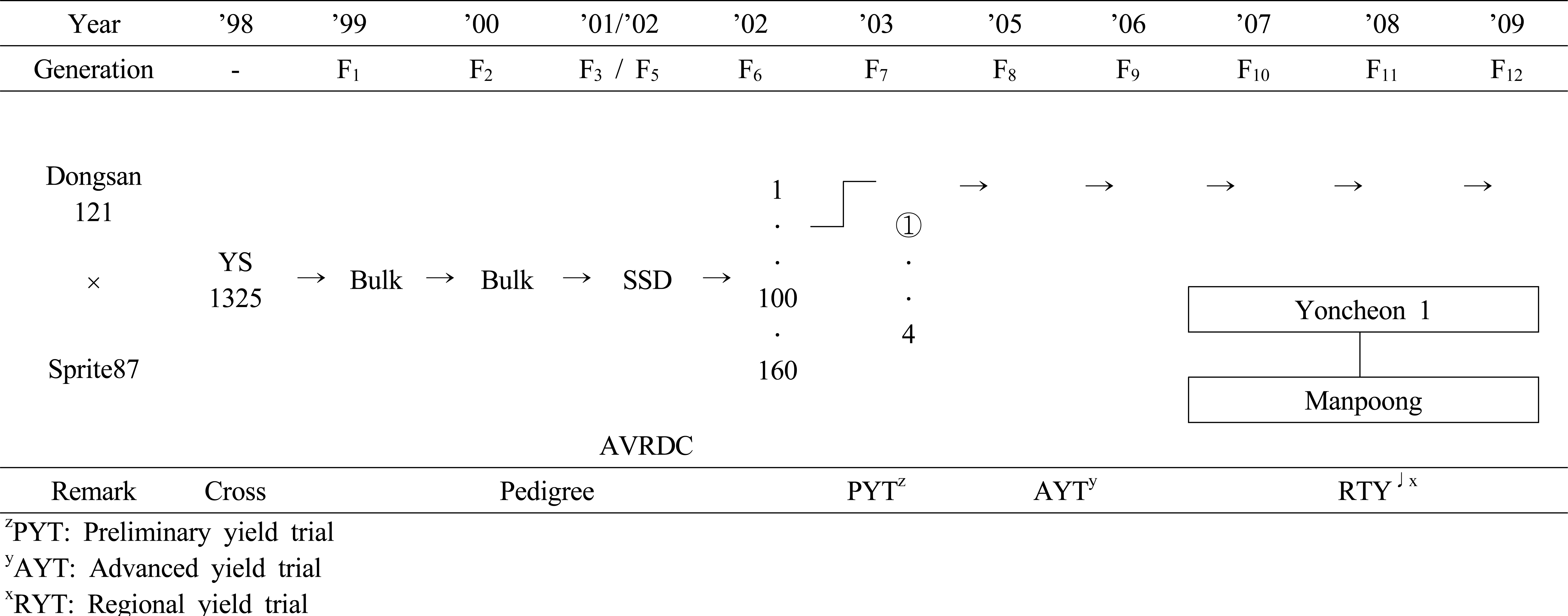
Result of yield trials of ‘Manpoong’. (NICS: ’03, Gyeonggi, ARES: ’05~’07)
| Cultivar | Yield (MT/ha) |
Index | |||
|---|---|---|---|---|---|
| PYT |
AYT |
ATY (’06) | Mean | ||
| Manpoong | 3.25a |
3.36a | 2.03a | 2.88a | 114 |
| TaeKwang | 2.76b | 2.79b | 2.02a | 2.52b | 100 |
PYT: Preliminary yield trial
AYT: Advanced yield trial
Mean with the same letter are not significantly different at 5% significant level by Duncan’s Multiple range test.
Yield of ‘Manpoong’ on the regional yield trials carried out at 5 locations. (’07~’09, RYT)
| Cropping | Location | Manpoong (MT/ha) |
Index | Taekwang (MT/ha) |
||||||
|---|---|---|---|---|---|---|---|---|---|---|
| 2007 | 2008 | 2009 | Mean | 2007 | 2008 | 2009 | Mean† | |||
| Mono | Yeonchon | 1.72 | 1.51 | 1.97 | 1.73c |
81 | 1.45 | 1.94 | 3.04 | 2.14b |
| Suwon | 2.65 | 2.43 | 3.21 | 2.76a | 105 | 2.34 | 2.31 | 3.22 | 2.62a | |
| Chunchon | 2.23 | 3.19 | 2.31 | 2.58a | 102 | 2.62 | 2.82 | 2.17 | 2.54a | |
| Milyang | 2.11 | 2.72 | 2.89 | 2.57b | 97 | 2.43 | 3.02 | 2.53 | 2.66a | |
| Mean | 2.18 | 2.46 | 2.60 | 2.41b | 97 | 2.21 | 2.52 | 2.74 | 2.49a | |
| Double | Yeonchon | - | 3.36 | 3.18 | 3.27a | 110 | - | 2.75 | 3.17 | 2.96a |
| Cheongwon | 2.56 | 3.00 | 1.87 | 2.48b | 114 | 2.46 | 2.17 | 1.92 | 2.18b | |
| Mean | 2.56 | 3.18 | 2.53 | 2.87a | 112 | 2.46 | 2.46 | 2.55 | 2.57a | |
Mean with the same letter are not significantly different at 5% significant level by Duncan’s Multiple range test.
Data at Yeoncheon
0: Tolerant, 9: Susceptible
Mean with the same letter are not significantly different at 5% significant level by Duncan’s Multiple range test.
0: Tolerant, 9: Susceptible.
Reaction of inoculated leaf/upper leaves, -: no symptom, L: Local reaction, N: Necrosis, M: Mosaic
0: Resistant, 9: Susceptible.
0: Resistant, 9: Susceptible
Mean with the same letter are not significantly different at 5% significant level by Duncan’s Multiple range test
Mean with the same letter are not significantly different at 5% significant level by Duncan’s Multiple range test.
1: Bad 2: Fair, 3: Good
1: Very bad, 2: Bad, 3: Fair, 4: Good, 5: Excellent
Mean with the same letter are not significantly different at 5% significant level by Duncan’s Multiple range test
PYT: Preliminary yield trial
AYT: Advanced yield trial
Mean with the same letter are not significantly different at 5% significant level by Duncan’s Multiple range test.
Mean with the same letter are not significantly different at 5% significant level by Duncan’s Multiple range test.