Skip to main navigation Skip to main content

Korean. J. Breed. Sci. : Korean Journal of Breeding Science

OPEN ACCESS
ABOUT
BROWSE ARTICLES
EDITORIAL POLICIES
FOR CONTRIBUTORS

Articles

Article

단경 다수성 녹두 품종 ‘문평’

김동관1,*, 최진경1, 권오도1, 이경동2, 서민정3, 김현태4

Mungbean Cultivar, ‘Munpyeong’, with a Short Stem and High Yield

Korean Journal of Breeding Science 2018;50(4):485-489.
Published online: December 1, 2018

전남농업기술원

동신대학교

국립식량과학원 중부작물부

국립식량과학원 남부작물부

Crop Research Division, JARES, Naju 58213, Korea

Department of Oriental Medicine Materials, Dongshin University, Naju, 58245, Republic of Korea

Department of Central Area Crop Science, NICS, RDA, Suwon, 16429, Republic of Korea

Department of Southern Area Crop Science, NICS, RDA, Miryang, 50424, Republic of Korea

* (E-mail: kms1996@korea.kr, Tel: +82-61-330-2521, Fax: +82-61-336-8177)
• Received: August 3, 2018   • Revised: August 5, 2018   • Accepted: August 22, 2018

Copyright: © 2018 by the Korean Society of Breeding Science

This is an Open-Access article distributed under the terms of the Creative Commons Attribution Non-Commercial License (http://creativecommons.org/licenses/by-nc/3.0) which permits unrestricted non-commercial use, distribution, and reproduction in any medium, provided the original work is properly cited.

  • 4 Views
  • 0 Download
prev next
  • A mungbean cultivar “Munpyeong” (Vigna radiata (L.) Wilczek) was derived as a cross between “Keumseong” and “IT163157” at the Jeollanamdo Agricultural Research and Extension Services (JARES) in 2013. “Munpyeong” has an erect growth habit, heart leaflet, green hypocotyls, black and straight pods when matured, and a dull green seed surface. The stem length of “Munpyeong” was 60 cm, which was 6 cm shorter than that of the control cultivar “Owool.” The pod number per plant was 25, which was 3 more than that of the control cultivar. The 1000 seed weight of “Munpyeong” was 45 g, which was 4 g lighter than that of the control cultivar “Owool.” Its field resistance to mungbean mottle virus, cercospora leaf spot, and powdery mildew are similar to the control cultivar, whereas its field resistance to lodging was slightly stronger. The hard seed rate of “Munpyeong” was 3.2%, which was similar to that of the control cultivar. The sprout yield ratio was 7.54 times, which was 9% more than that of the control cultivar. The average yield of “Munpyeong” was 1.93 ton/ha, which was 21% more than that of the control cultivar “Owool” (Cultivar registration number: 5878).
녹두(Vigna radiata (L.) Wilczek)는 아열대성 작물로 발아와 생육 적온이 28~31°C이고(Kim et al. 2006), 재배기간이 100일 내외로 비교적 짧아 다양한 작부수립에 용이하게 사용되고 있다. 우리나라에서 예로부터 해독 또는 독성 중화에 이용된 녹두는 항산화, 미백활성 등을 가진 vitexin과 isovitexin이 껍질에 함유되어(Kim et al. 1998, Kim et al. 2008) 꾸준하게 소비되는 전통작물이다. 녹두는 개화시까지 30일 동안의 일사량이 2배 많으면 수량도 2배 증가하고 인공적으로 일조량을 40~50% 줄이면 수량이 67% 감소하기(Kim et al. 2006) 때문에 일조가 풍부한 여름철에 재배할수록 좋은 작물이다. 그러므로 마늘 등 겨울작물 후작보다는 옥수수, 감자 등의 봄작물 후작으로 이용하는게 더욱 유리하다고 할 수 있다. 이러한 특징을 활용해 남부지역에서 콤바인 수확이 가능한 파종 적기(7월 중⋅하순)를 구명하고(Kim et al. 2009a) 가장 적합한 품종으로 ‘다현’을 선발하였다(Kim et al. 2010). ‘다현’ 기계수확 재배작형을 지속적으로 보급하여 현재는 전국 재배면적의 80% 가량이 ‘다현’으로 대체된 것으로 추정하고 있다. 최근에는 농가에서 변형된 방법으로 ‘다현’, ‘산포’ 등 동시성숙성이 우수한 품종을 6월 하순에서 7월 상순에 파종하고 1차 수확기인 9월 하순에서 10월 상순에 소금물 등을 살포하여 식물체를 건조하고 콤바인 수확하기도 한다. 이 경우 기계 수확을 통한 인건비 절감뿐만 아니라 후작으로 다양한 겨울 소득작물을 선택할 수 있어 적용 지역이 확대되고 있다. 이와 같은 영농현장의 변화를 반영하여 ‘다현’과 같이 성숙 특성이 비슷하면서 경장이 작아 쓰러짐에 강하고 수량이 많은 ‘문평’을 육성하였기에 그 육성경위와 주요특성 등을 요약 보고하는 바이다.
재배방법 및 특성조사
‘문평’의 내재해성 및 생산성 검정은 전라남도 나주(전라남도농업기술원), 경기도 수원(국립식량과학원 중부작물부), 경상남도 밀양(국립식량과학원 남부작물부)에서 난괴법 4반복으로 ‘어울’과 비교하였다. ‘어울’은 생육후기 녹체성이 약한 약점이 1차 수확비율이 86%로 높은(동시성숙성 우수) 장점으로 작용된 반면 일정 수준 이상의 수량 확보가 가능하여(Lee et al. 1998) ‘문평’ 육성 당시에도 국내에서 주로 재배되는 품종 중 하나이다. 2011년부터 2013년까지 나주에서는 각각 6월 13일, 6월 22일, 6월 26일, 수원에서는 각각 6월 14일, 6월 26일, 6월 14일, 밀양에서는 각각 6월 14일, 6월 11일, 6월 18일에 60×10 cm로 점파하고 2~3엽기에 주당 2개체씩 남기고 솎아주었다. ha 당 질소 40 kg, 인산 70 kg, 칼리 60 kg을 전량 시용하였고 기타 재배방법은 관행에 준하였다. 신육형, 배축색, 잎모양 등 고유형질은 녹두 유전자원 특성조사 및 관리 요령(Kim et al. 2006), 개화시, 경장, 천립중 등 양적형질과 병해와 도복 저항성 및 수량성 등은 신품종개발공동연구사업 과제수행계획서(RDA 2012)에 준하여 조사하였다.
이화학분석
전분 등 일반성분과 vitexin 등 기능성성분은 전라남도 나주(전라남도농업기술원)에서 2013년 1차와 2차에 수확한 종실을 이용하여 분석하였다. 분석용 시료는 열풍건조기로 40°C에서 수분 함량이 13%가 되도록 건조하고 분쇄기(C/11/1, Glenmills, USA)로 분쇄하였다. 전분 함량은 AOAC 전분시험법으로 전처리하고 Bertrand법으로 정량 하였다. 조단백질 함량은 CN분석기(Vario max CN)로 전질소 함량을 측정하고 단백계수를 적용 환산하여 산출 하였다. Vitexin과 isovitexin은 녹두 분말 1 g을 70% 에탄올로 80°C에서 90분 동안 추출하여 여과(Whatman No. 2)하고 증류수로 정용한 후에 syringe filter (0.2 μm)로 여과하여 HPLC로 분석하였다. HPLC는 Waters 2695 Alliance System (Milford, MA, USA)을 사용하여 Table 1의 조건으로 분석하였다(Kim et al. 2008). 표준물질(vitexin, isovitexin)의 외부표준물질 각 농도별 피크 면적을 기준으로 검량하였다.
Table 1
High performance liquid chromatography (HPLC) conditions for analysis of vitexin and isovitexin.
Table 1
Items Conditions
Mobile phase A (H2O : EtOAC=92 : 8) : B (MeOH)=85 : 15
Flow rate 1 mL/min
Detector Photo diode array 254 nm
Column Type SunFire C18 (5 μm, 4.6×150 mm)
Oven temperature 40°C
나물 품위와 수율 조사
나물 품위와 수율은 나주(전남농업기술원)에서 2012년과 2013년에 1차에 수확하여 수분 함량을 13%로 조정한 원료곡을 이용하여 조사하였다. 실내온도와 재배용수 조절이 가능하도록 제작된 나물재배기(항온기 상단에 재배용수의 공급 간격과 온도 조절이 가능하도록 제작)로 암 조건에서 재배용수를 시간당 12회(각 1분씩) 공급하고 온도를 27±0.5°C로 설정하여 2012년에는 72시간, 2013년에는 96시간 동안 재배하였다. 나물 재배 직후에 배축장, 근장, 나물 수율(나물 생체중/원료곡 무게×100) 및 경실 비율(경실수/원료곡 종실수×100)을 조사하여 산출하였다(Kim et al. 2009b).
육성경위
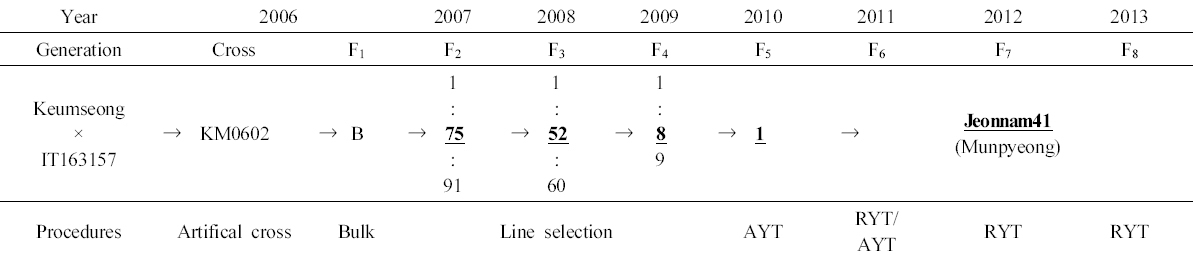
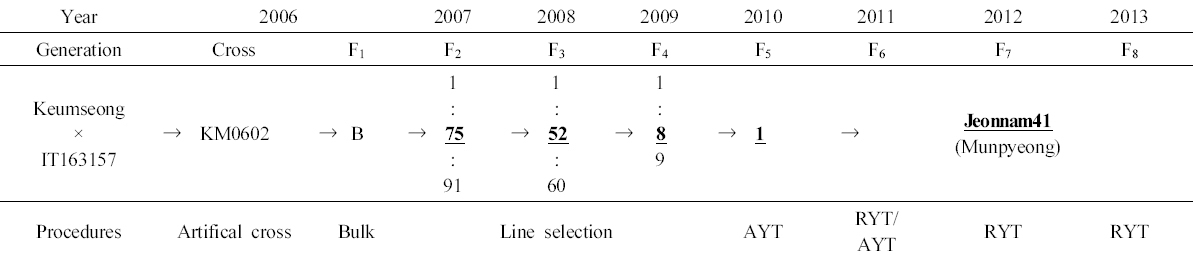
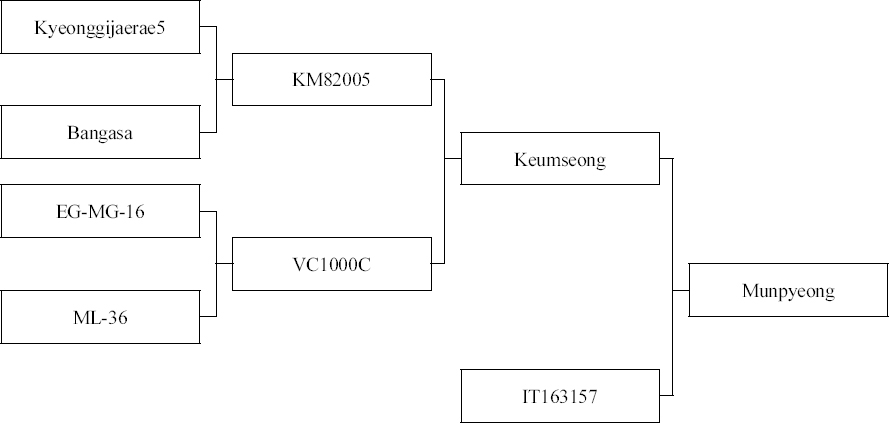
‘문평’은 중소립종에 속하고 다수성인 ‘금성’을 모본으로 하고 경장이 작고 쓰러짐에 비교적 강한 ‘IT163157’을 부본으로 한 품종이다. 2006년 5월에 온실에서 교배하여 6월에 획득한 종실로 7~10월에 F1을 온실에서 양성하고 2007년부터 3년간 F2~F4 세대를 전개하여 선발한 계통 ‘KM0602-75-52-8’이다. 2010년에 생산력검정 예비시험을 실시한 결과 ‘어울’보다 수량이 32% 많아 ‘전남41호’로 계통명을 부여하고 2011년에 생산력검정 본시험을 실시한 결과 ‘어울’보다 쓰러짐에 강하고 꼬투리가 많았다. 2011년부터 3년간 지역적응성을 수원과 밀양 및 나주에서 검토한 결과, 경장이 작고 도복저항성이 강한 다수성 품종으로 인정되어 2013년 12월에 농촌진흥청 농작물 직무육성 신품종선정위원회에서 신품종으로 선정하고 ‘문평’으로 명명되었다. ‘문평’의 육성 계통도는 Fig. 1, 계보도는 Fig. 2와 같다.
Fig. 1
Pedigree diagram of a new mungbean cultivar ‘Munpyeong’, AYT: Advanced yield trial, RYT: Regional yield trial.
KJBS_50_485_fig_1.jpg
Fig. 2
Parentage diagram of a new mungbean cultivar ‘Munpyeong’.
KJBS_50_485_fig_2.jpg
고유특성
‘문평’은 직립 초형에 심장형 잎 모양과 녹색 배축 및 담황색 꽃을 가졌다. 성숙되었을 때 꼬투리는 검정색이고 중간 정도의 개열성을 보이며 만곡이 거의 없다. 종실 모양은 원통형이고 종피는 광택이 없는 녹색이다(Table 2).
Table 2
Inherent characteristics of a new mungbean cultivar ‘Munpyeong’.
Table 2
Cultivar Growth habit Leaflet shape Hypocotyl color Corolla color Pod Seed


Color at maturity Shattering Curvature Coat color Surface luster Shape
Munpyeong Erect Heart Green Light yellow Black Moderate Straight Green Dull Angular drum
Owool Erect Heart Green Light yellow Black Moderate Straight Green Dull Angular drum
일반특성 및 내재해성
‘문평’의 개화시는 7월 30일이고 성숙시는 8월 18일로 ‘어울’보다 각각 1일씩 늦다. 경장은 60 cm로 ‘어울’보다 6 cm 짧고 개체당 꼬투리수는 25개로 3개 많은 반면 꼬투리당 종실수는 10.9개로 0.5개 적으며 천립중은 45 g으로 4 g 낮다(Table 3). 그리고 ‘문평’의 바이러스, 갈색무늬병, 흰가루병에 대한 포장저항성은 ‘어울’과 비슷하거나 약간 강한 편이고 도복에 대한 포장저항성이 강하다(Table 4).
Table 3
Agronomic characteristics of a new mungbean cultivar ‘Munpyeong’ determined by regional yield trial from 2011 to 2013.
Table 3
Cultivar 1st flowering date 1st maturing date Stem length (cm) No. of pod per plant No. of seed per pod 1,000-seed weight (g)
Munpyeong July 30 Aug. 18 60ns 25* 10.9ns 45*
Owool July 29 Aug. 17 66 22 11.4 49

nsNot significant in the t-test, while

*Significant at p<0.05.

Table 4
Field resistance to diseases and lodging of a new mungbean cultivar ‘Munpyeong’ determined by regional yield trial from 2011 to 2013.
Table 4
Cultivar Mungbean mottle virus (0~9) z Cercospora leaf spot (0~9) Powdery mildew (0~9) Lodging (1~9) y
Munpyeong 0.9ns 0.9ns 0.4ns 2.1*
Owool 1.0 1.4 0.4 3.8

z0: Resistant, 9: Susceptble,

y1: Resistant, 9: Susceptble

nsNot significant in the t-test, while

*Significant at p<0.05.

품질특성
‘문평’ 종실의 전분과 단백질 함량은 각각 50.8%, 23.4%로 ‘어울’과 비슷하고, 대부분 녹두 껍질에 함유된(Kim et al. 2008) 비텍신과 이소비텍신 함량은 각각 10.2 mg/g, 9.7 mg/g로 ‘어울’보다 각각 19%, 13% 많으나 그 차이는 적은 편이다(Table 5). 녹두에 함유된 비텍신과 이소비텍신은 항산화, 항염증 및 미백활성이 등이 우수하여 미백제품 등의 원료로 이용되고 있어(Kim et al. 1998, Kim et al. 2008) 산업적 가치의 중요한 요소 중 하나라고 볼 수 있다. ‘문평’을 원료곡으로 한 나물의 배축 길이는 7.8 cm로 ‘어울’로 생산한 나물보다 1.1 cm 긴 반면 뿌리 길이는 유의차가 없다. 나물 수율은 754%로 ‘어울’보다 9%(62%point) 높으나 유의차는 없고, 나물을 재배한 후에 조사한 경실 비율은 3.2%로 1.12%point 낮으나 유의차는 없다(Table 6).
Table 5
Contents of nutritional and flavoniod of a new mungbean cultivar ‘Munpyeong’.
Table 5
Cultivar Nutritionals (%) Flavonoids (mg/g)


Starch Crude protein Vitexin Isovitexin
Munpyeong 50.8ns 23.4ns 10.2* 9.7ns
Owool 50.4 22.3 8.6 8.6

nsNot significant in the t-test, while

*Significant at p<0.05.

Table 6
Sprout characteristics and yield a new mungbean cultivar ‘Munpyeong’.
Table 6
Cultivar Year Hypocotyl length (cm) Root length (cm) Hard seed rate (%) Sprout yield (%) Sprout yield index (A/B)
Munpyeong (A) 2012 6.4 8.5 0.04 724 104
2013 9.3 6.4 6.36 784 114

Mean 7.8* 7.5ns 3.20ns 754ns 109

Owool (B) 2012 5.3 8.0 0.37 698 100
2013 8.0 6.1 8.27 685 100

Mean 6.7 7.1 4.32 692 100

nsNot significant in the t-test, while

*Significant at p<0.05.

수량성
수원, 밀양, 나주에서 2011년부터 2013년까지 3년간 실시한 지역적응성 검정에서 ‘문평’의 ha당 수량은 1.93톤으로 ‘어울’의 1.60톤보다 21% 많다(Table 7).
Table 7
Yield of a new mungbean cultivar ‘Munpyeong’ determined by regional yield trial from 2011 to 2013.
Table 7
Location Munpyeong (MT/ha, A) Owool (MT/ha, B) Index (A/B)


2011 2012 2013 Mean 2011 2012 2013 Mean
Suwon (NICS) 2.01 1.44 1.58 1.68 1.81 1.18 1.30 1.43 117
Miryang (NICS) 1.72 1.79 2.23 1.91 1.52 1.57 1.99 1.69 113
Naju (JARES) 1.18 1.35 4.04 2.19 0.83 1.24 3.01 1.69 130

Mean 1.64 1.53 2.62 1.93* 1.39 1.33 2.10 1.60 121

*Significant at p<0.05 in the t-test.

적응지역 및 재배상의 유의점
‘문평’은 일반적인 녹두 특성과 같이 물 빠짐이 불량한 토양에서 약하므로 가급적 배수가 양호한 포장에서 재배한다. 아열대성 작물이므로 가급적 6월 중⋅하순에서 7월 중⋅하순 사이에 파종하는 것이 좋다.
녹두 품종 ‘문평’은 ‘금성’과 ‘IT163157’을 교배하여 2013년에 전라남도농업기술원에서 육성되었다. ‘문평’의 초형은 직립이고 잎 모양은 심장형이며 배축은 녹색이다. 성숙한 꼬투리는 곧고 검정색이며 종피는 광택이 없는 녹색이다. ‘문평’의 경장은 60 cm로 표준품종인 ‘어울’보다 6 cm 작고, 꼬투리수는 25개로 3개 많으며 천립중은 45 g으로 4 g 낮다. ‘문평’의 바이러스, 갈색무늬병 및 흰가루병 포장저항성은 ‘어울’과 비슷하고, 도복 포장저항성은 강한 편이다. ‘문평’의 경실 비율은 3.2%로 표준품종과 비슷하고 나물 수율은 7.54배로 9% 높다. ‘문평’의 수량은 1.93 톤/ha로 ‘어울’보다 21% 많다(품종보호권등록번호: 제5878호, 2016년 2월 1일).
본 논문은 농촌진흥청 연구사업비(과제명: 두류 신품종 육성 및 이용촉진사업, 과제번호: PJ006537) 일부 지원에 의해 수행된 결과이다.
  • 1. Kim BJ, Kim JH, Hea Y, Kim HP. 1998. Antioxidant and anti-inflammatory activities of the mungbean. Cosmetics &Toiletries magazine 113: 71-74.
  • 2. Kim DK, Choi JG, Jung BJ, Son DM, Kim KH. 2009a. Proper seeding time for mechanical harvesting in mungbean. Korean J Crop Sci 54: 7-12.
  • 3. Kim DK, Chon SU, Lee KD, Kim JB, Rim YS. 2008. Variation of flavonoids contents in plant parts of mungbean. Korean J Crop Sci 53: 279-284.
  • 4. Kim DK, Park KY, Shin SH, Han WY, Oh KW, Choi YM, Na YW, Ho HC, Gwag JG, Cho KT. 2006. Characteristics survey and management tips of genetic resource in mungbean. RDA 3-21.
  • 5. Kim DK, Son DM, Choi JK, Chon SU, Lee KD, Rim YS. 2010. Growth property and seed quality of mungbean cultivars appropriate for labor saving cultivation. Korean J Crop Sci 55: 239-244.
  • 6. Kim DK, Son DM, Chon SU, Lee KD, Kim KH, Rim YS. 2009b. Phenolic compounds content and DPPH, ADH, ALDH activities of mungbean sprout based on growth temperature. Korean J Crop Sci 54: 1-6.
  • 7. Lee YS, Park TD, Yoon CY, Choi JK, Kim MS, Lee JY, Kim SC, No SK, Kim SD, Lee YH, Min KS. 1998. A new synchronized maturity and high yielding mungbean varity “Owoolnogdu”. RDA J Crop Sci 40: 126-129.
  • 8. Rural Development Administration (RDA)2012. 2012 Research plan of development new cultivar of summer crops 99-101.

Download Citation

Download a citation file in RIS format that can be imported by all major citation management software, including EndNote, ProCite, RefWorks, and Reference Manager.

Format:

Include:

Mungbean Cultivar, ‘Munpyeong’, with a Short Stem and High Yield
Korean. J. Breed. Sci.. 2018;50(4):485-489.   Published online December 1, 2018
Download Citation

Download a citation file in RIS format that can be imported by all major citation management software, including EndNote, ProCite, RefWorks, and Reference Manager.

Format:
Include:
Mungbean Cultivar, ‘Munpyeong’, with a Short Stem and High Yield
Korean. J. Breed. Sci.. 2018;50(4):485-489.   Published online December 1, 2018
Close

Figure

  • 0
  • 1
Mungbean Cultivar, ‘Munpyeong’, with a Short Stem and High Yield
Image Image
Fig. 1 Pedigree diagram of a new mungbean cultivar ‘Munpyeong’, AYT: Advanced yield trial, RYT: Regional yield trial.
Fig. 2 Parentage diagram of a new mungbean cultivar ‘Munpyeong’.
Mungbean Cultivar, ‘Munpyeong’, with a Short Stem and High Yield

High performance liquid chromatography (HPLC) conditions for analysis of vitexin and isovitexin.

Items Conditions
Mobile phase A (H2O : EtOAC=92 : 8) : B (MeOH)=85 : 15
Flow rate 1 mL/min
Detector Photo diode array 254 nm
Column Type SunFire C18 (5 μm, 4.6×150 mm)
Oven temperature 40°C

Inherent characteristics of a new mungbean cultivar ‘Munpyeong’.

Cultivar Growth habit Leaflet shape Hypocotyl color Corolla color Pod Seed


Color at maturity Shattering Curvature Coat color Surface luster Shape
Munpyeong Erect Heart Green Light yellow Black Moderate Straight Green Dull Angular drum
Owool Erect Heart Green Light yellow Black Moderate Straight Green Dull Angular drum

Agronomic characteristics of a new mungbean cultivar ‘Munpyeong’ determined by regional yield trial from 2011 to 2013.

Cultivar 1st flowering date 1st maturing date Stem length (cm) No. of pod per plant No. of seed per pod 1,000-seed weight (g)
Munpyeong July 30 Aug. 18 60ns 25* 10.9ns 45*
Owool July 29 Aug. 17 66 22 11.4 49

nsNot significant in the t-test, while

*Significant at p<0.05.

Field resistance to diseases and lodging of a new mungbean cultivar ‘Munpyeong’ determined by regional yield trial from 2011 to 2013.

Cultivar Mungbean mottle virus (0~9) z Cercospora leaf spot (0~9) Powdery mildew (0~9) Lodging (1~9) y
Munpyeong 0.9ns 0.9ns 0.4ns 2.1*
Owool 1.0 1.4 0.4 3.8

z0: Resistant, 9: Susceptble,

y1: Resistant, 9: Susceptble

nsNot significant in the t-test, while

*Significant at p<0.05.

Contents of nutritional and flavoniod of a new mungbean cultivar ‘Munpyeong’.

Cultivar Nutritionals (%) Flavonoids (mg/g)


Starch Crude protein Vitexin Isovitexin
Munpyeong 50.8ns 23.4ns 10.2* 9.7ns
Owool 50.4 22.3 8.6 8.6

nsNot significant in the t-test, while

*Significant at p<0.05.

Sprout characteristics and yield a new mungbean cultivar ‘Munpyeong’.

Cultivar Year Hypocotyl length (cm) Root length (cm) Hard seed rate (%) Sprout yield (%) Sprout yield index (A/B)
Munpyeong (A) 2012 6.4 8.5 0.04 724 104
2013 9.3 6.4 6.36 784 114

Mean 7.8* 7.5ns 3.20ns 754ns 109

Owool (B) 2012 5.3 8.0 0.37 698 100
2013 8.0 6.1 8.27 685 100

Mean 6.7 7.1 4.32 692 100

nsNot significant in the t-test, while

*Significant at p<0.05.

Yield of a new mungbean cultivar ‘Munpyeong’ determined by regional yield trial from 2011 to 2013.

Location Munpyeong (MT/ha, A) Owool (MT/ha, B) Index (A/B)


2011 2012 2013 Mean 2011 2012 2013 Mean
Suwon (NICS) 2.01 1.44 1.58 1.68 1.81 1.18 1.30 1.43 117
Miryang (NICS) 1.72 1.79 2.23 1.91 1.52 1.57 1.99 1.69 113
Naju (JARES) 1.18 1.35 4.04 2.19 0.83 1.24 3.01 1.69 130

Mean 1.64 1.53 2.62 1.93* 1.39 1.33 2.10 1.60 121

*Significant at p<0.05 in the t-test.
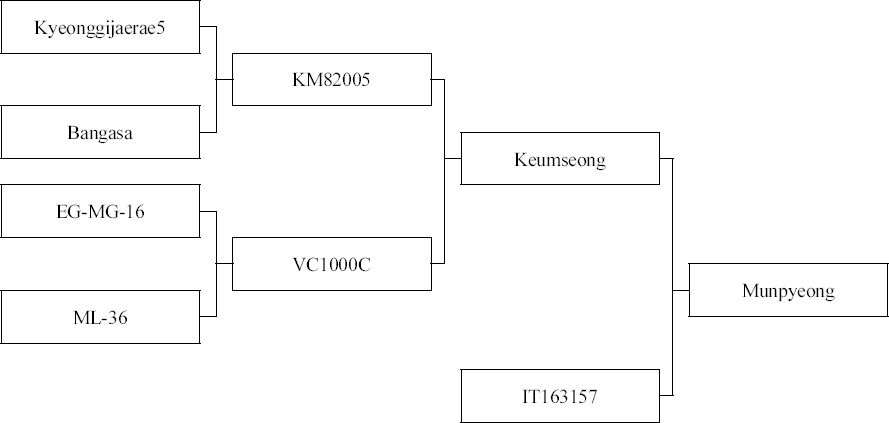
Table 1 High performance liquid chromatography (HPLC) conditions for analysis of vitexin and isovitexin.
Table 2 Inherent characteristics of a new mungbean cultivar ‘Munpyeong’.
Table 3 Agronomic characteristics of a new mungbean cultivar ‘Munpyeong’ determined by regional yield trial from 2011 to 2013.

nsNot significant in the t-test, while

Significant at p<0.05.

Table 4 Field resistance to diseases and lodging of a new mungbean cultivar ‘Munpyeong’ determined by regional yield trial from 2011 to 2013.

0: Resistant, 9: Susceptble,

1: Resistant, 9: Susceptble

nsNot significant in the t-test, while

Significant at p<0.05.

Table 5 Contents of nutritional and flavoniod of a new mungbean cultivar ‘Munpyeong’.

nsNot significant in the t-test, while

Significant at p<0.05.

Table 6 Sprout characteristics and yield a new mungbean cultivar ‘Munpyeong’.

nsNot significant in the t-test, while

Significant at p<0.05.

Table 7 Yield of a new mungbean cultivar ‘Munpyeong’ determined by regional yield trial from 2011 to 2013.

Significant at p<0.05 in the t-test.