적요
A peanut cultivar ‘Sewon’(Arachis hypogaea ssp. fastigiata L.) was developed at the Department of Southern Area Crop Science, National Institute of Crop Science (NICS) in Milyang, Korea, in 2017. The cultivar is a cross between the Shinpung-type red skin ‘Charmwon’ and the Virginia-type large grain ‘Milyang27’. ‘Sewon’, which is a Shinpung type of plant, had 13 branches per plant, main stem length of 35 cm, and branch length of 51 cm. Each pod contained two grains with red testa and a large and long ellipse-shaped kernel. The cultivar yielded 38 pods per plant, 113 g of 100-seed-weight (dry), and 1.73 seeds per pod in the regional yield trials (RYT). Crude oil accounted for 35.2% and protein 31.7% of the seed. This cultivar was resistant to early leaf spot, and it was more resistant to late leaf spot, stem rot, and lodging when compared with that of the reference cultivar ‘Palkwang’. In the three-year-long regional yield trials, ‘Sewon’ was more productive than the reference cultivar; it yielded 11.97 MT/ha of fresh pod and 5.23 MT/ha of dry grain, corresponding respectively to 21% and 16% increase compared with those of ‘Palkwang’. ‘Sewon’ is a promising high yielding peanut with early maturing and cultural stability (Registration No. 7926).
서 언
풋땅콩은 삶아 먹는 소비 형태로서 영남지역이 소비 중심이었으나 지금은 전국적으로 확대되어 국산땅콩의 많은 부분이 건조 전 풋땅콩 상태로 소비되고 있다. 풋땅콩은 단맛과 고소함을 위해 완숙땅콩에 비해 20일 정도 이른 시기인 개화 후 80 일경에 수확하며 소비는 8월에서 10월까지 집중된다. 최근에는 전국 대규모 농가도 풋땅콩 출하에 참여하여 시장이 활발하지면서 농가 소득 품목으로 자리잡고 있다(
Pae et al. 2007,
Pae et al. 2014).
그 동안 풋땅콩 품종개발에 있어서 초기에는 풋땅콩 품종이 없어서 기존품종 중에서 협모양과 맛을 고려하여 ‘새들’을 선정하였고(
Ko et al. 1999,
Lee et al. 1999), 근년에는 조숙 고품질 다수성 풋땅콩 품종 ‘자광’, ‘선안’, ‘자선’ 등을 육성하기에 이르렀다(
Pae et al. 2004,
Pae et al. 2014). 재배법 연구로는 풋땅콩 기계수확을 위해 대형 컴바인을 이용한 생력시험을 하였고(
Park et al. 1999), 파종기는 남부지역에서 비닐피복재배로 3월 하순까지 앞 당길 수 있었고 6월 중~하순까지 파종기간을 연장할 수 있음이 구명되어 2모작 작부체계에서 풋땅콩이 소득작물 전⋅후 작물로서 재배가 가능하게 되었다(
Chung et al. 1985,
Moon et al. 1989,
Pae et al. 2002,
Pae et al. 2007). 또한 외국산과의 차별화를 위해 기름의 산화안정이 우수한 고 올레산 땅콩 ‘케이올’(
Yang et al. 2010,
Pae et al. 2016), 종피에 안토시아닌을 함유한 검정땅콩 ‘흑생’(
Pae et al. 2017)을 육성하였으며, 이러한 특성은 풋땅콩용 조숙 대립 품종 육성에도 적용하고 있다.
그 동안 땅콩 육종연구를 전담해 온 국립식량과학원 남부작물부에서는 풋땅콩 및 간식에 적합한 품종을 육성하기 위하여 노력한 결과, 조숙종이고 자색종피면서 수량성도 높은 풋땅콩 신품종 ‘세원’을 육성하게 되었기에 이 품종의 육성경위와 주요특성을 요약 보고하는 바이다.
재료 및 방법
재배 방법
신품종 ‘세원’(밀양71호)의 특성 및 수량성 검정 시험은 2015부터 2017까지 3년간 4개 지역(청원, 익산, 대구, 밀양)에서 지역적응시험을 수행하면서 표준품종 ‘팔광’(
Oh et al. 1998)과 3반복으로 비교 검토하였다(
RDA 2015). 시비량은 ha당 N-P
2O
5-K
2O로서 30-100-100 kg을, 석회와 퇴비는 각각 1 ton과 10 ton을 전량기비로 시용하였다. 재식거리는 조간거리 40 cm, 휴간거리 60 cm, 주간거리는 25 cm로 하는 1휴 2열 재배방식으로 ha당 80,000 주를 재배하였다. 비닐피복은 규격이 폭 110 cm, 두께 0.015 mm, 구멍크기 5 cm인 흑색유공비닐을 이용하였다. 파종기는 전 시험지에서 4월 30일로 2립씩 파종하여 출현 후 솎음 작업으로 1주1본으로 재배하였다.
생육조사에서 주경장, 분지장 및 분지수는 각 시험구에서 고유특성이 잘 나타나는 균일지역을 선정하여 10주씩 조사하였다. 풋땅콩 수확은 개화후 80 일에 각 시험구당 6 m
2씩 굴취하여 협의 표면에 그물무늬가 뚜렷하여 상품가치가 있는 협을 성숙협으로 하여 풋땅콩 무게를 환산하였고, 그 협을 다시 햇볕에 2주정도 수분함량이 10%이하로 풍건하여 종실수량 및 수량구성요소를 조사하였다. 이들 조사는 땅콩지역적응시험 조사기준에 준하여 실시하였으며(RDA 2014), 4개 지역에서 3년간 수행한 시험성적을 정리한 평균치를 품종간 생육 및 수량구성요소의 비교 값으로 활용하였다(
RDA 2017). 병해는 낙엽병류인 갈반병, 흑반병, 그물무늬병에 대하여 성숙기와 수확기 등 2회의 병반면적율을 조사하여 평균하였고, 충해는 수확기 담배거세미 등에 의한 잎 피해율로 조사하였다. 그 외 생육 및 수량특성 등 지역적응시험 조사 방법은 농촌진흥청 농업과학기술 연구조사분석 기준에 준하여 실시하였다(
RDA 2012).
수확 후 땅콩 종실의 주요성분 분석으로 지방은 종실 분말시료 2 g을 Hexane 용매로 지방추출기(B-811, Buchi, Switzerland)에서 20회 추출 후 측정하였다. 지방산 분석은 전처리로서 기름 150 μl과 시약(MeOH:H
2SO
4:Toluene=20:1:10) 5 ml를 가하여 1시간 중탕을 통하여 지방의 Methyl ester로 변환시킨 후 Gas chromatography (7890A, Agilent, USA)를 이용해 분석하였다. GC column은 HP-FFAP capillary, 온도는 150-230℃, Carrier gas는 N
2 등 분석조건으로 수행하였다. 종자의 단백질은 시료 1 g을 자동 Kjeldahl (rapid N cube, Elementar, Germany)기기로 분석하였다. 삶은 풋땅콩의 당 분석은 HPLC (Dionex ultimate 3000, USA), 경도 측정은 Ametex TA1 (USA), 색차계는 Konica Minolta CM-3700D (Japan)를 이용하여 연구조사분석 기준(
RDA 2012)에 준하여 실시하였으며 그 외 조사는 일반 분석방법(
Kim et al. 1990)으로 하였다.
결과 및 고찰
육성경위
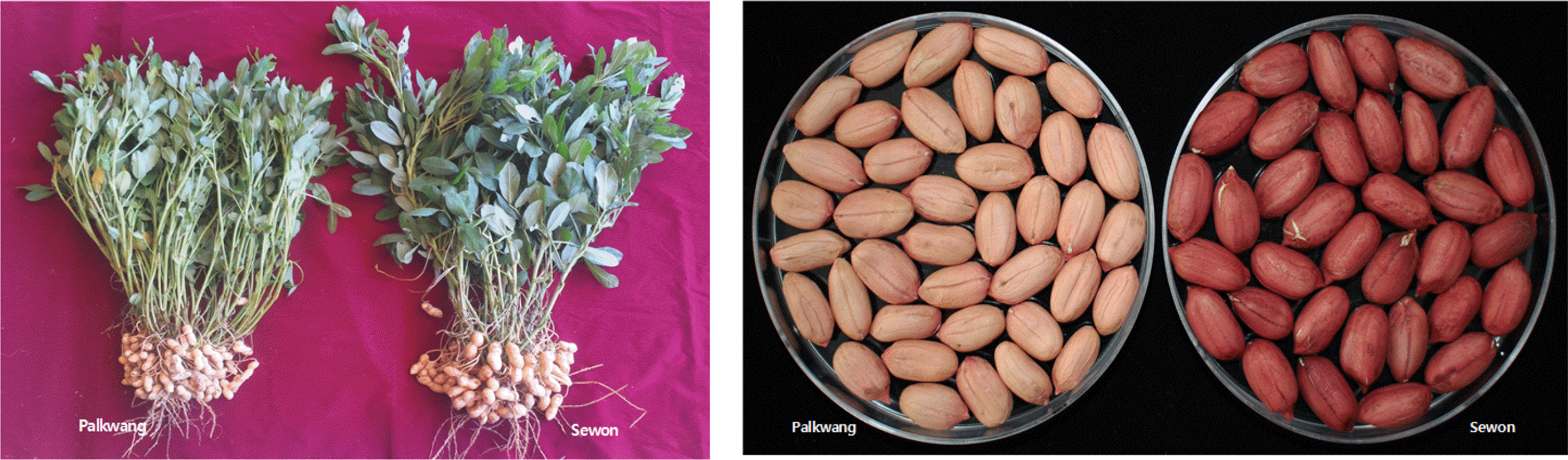
‘세원’은 국내 생산자와 소비자 선호도가 높은 간식용 풋땅콩을 육성코자 내재해 조숙 대립 다수성 품종 육성에 목표를 두고 선발 육성된 신품종으로 신풍초형의 자색종피 단경인 계통인 ‘참원’를 모본으로 버지니아 대립 계통인 ‘밀양27호’를 부본으로 2007년 인공교배 후 계통육성 과정을 거쳐 선발되었다. 2013년부터 2년간 생산력검정시험을 거쳐 2015부터 3년간 ‘밀양71호’의 계통명으로 지역적응시험(2015~2017년, RDA)을 실시하였다(
Figs. 1,
2). 그 결과 ‘밀양71호’는 소분지 단경 반직립 초형을 가진 대립 다수성 계통으로 그 우수성이 인정되어 2017년 12월 농촌진흥청 신품종선정위원회에서 신품종으로 선정하고 명칭은 ‘세원’으로 명명하였다(
Fig. 3).
‘세원’의 고유 특성은 대비 품종인 ‘팔광’(
Oh et al. 1998)이 분지수가 많고 분지에서만 착협하는 습성과는 달리 분지수가 적은 신풍 초형으로 중경과 분지에서 착협하는 특성이 있다. 협당립수는 2립이고, 소엽의 크기는 크고, 종피색은 적색이며, 종실형태는 장타원형의 대립종이다(
Table 1).
지상부 생육특성으로 ‘세원’의 개화기는 ‘팔광’에 비해 1일 빠르다. 일반적으로 분지수가 적은 신풍 초형은 분지수가 많은 버지니아 초형에 비해 개화가 빠르고 초기 개화수가 많은 특성(
Lee et al. 1983,
Pae et al. 1997)을 보여 본 품종에서도 이러한 경향을 나타내고 있다. 주경장은 35 cm, 분지장은 51 cm로서 ‘팔광’에 비해 각각 9 cm, 2 cm 더 짧고, 분지수가 13개인 소분지 반직립 초형 특성을 나타낸다(
Table 2).
‘세원’의 수확 건조한 지하부 특성으로 수량구성요소(건조)를 보면 대조품종 ‘팔광’에 비해 유의성은 없었으나 주당 성숙협수가 38개로서 ‘팔광’에 비해 1개 낮고, 협실비율은 72%로서 2% 더 낮았으나, 성숙협비율은 81%로서 2% 더 높고, 100협립수가 173개로서 4개 더 높은 경향을 보여 성숙이 비교적 양호한 특성을 보였다. 100립중은 113 g으로 ‘팔광’보다 19 g 더 무거운 대립종이다(
Table 3).
건조 전인 ‘세원’의 풋땅콩 특성은 대비품종 ‘팔광’에 비해 100협의 풋협중은 415 g으로 69 g, 종실의 100립중은 171 g으로 23 g 더 무거웠다. 풋협수와 상품협비율, 협실비율은 지역간 편차로 인해 유의성은 인정되지 않았으나 풋협수는 42개로서 3개 더 많고, 협실비율에서 68%로서 4% 더 낮으며, 상품협비율은 88%로서 같은 경향을 보였다. ‘세원’은 ‘팔광’에 종피비율이 낮은 약간 낮았으나 수량구성요소인 착협수, 풋협중, 100립중에 있어서 현저히 양호한 성숙을 나타내었다(
Table 4).
‘세원’의 육성지인 밀양에서 정밀한 조사를 위해 따로 포장 병해검정시험을 3년간 실시하여 등숙기와 수확기에 병반면적율을 달관 조사한 평균치의 결과, ‘세원’의 주요 병해로서 낙엽병류인 갈반병(
Cercospora arachidicola), 흑반병(
Cercosporidium. personatum)은 포장에서 강한 편이며 그물무늬병(
Phoma arachidicola)은 ‘팔광’ 정도의 중도 저항성을 나타내며, 생육후기에 발생하여 포기째 고사하는 흰비단병(
Sclerotium. rolfsii)에도 다소 강하여 전반적인 내병성이 양호함을 보여주고 있다. ‘세원’은 ‘팔광’에 비해 내도복성이 양호한 편이나 성숙기에 측지에서 분지 도복이 다소 발생하였다. 잎 피해로 문제가 되는 담배거세미등에 대한 충해 저항성은 같은 수준이다(
Table 5).
개화 후 80일에 풋땅콩으로 수확한 후 건조한 종실에서 ‘세원’의 조단백 함량은 31.7%로서 ‘팔광’에 비해 0.2% 높으나, 조지방은 35.2%로서 6.5% 더 낮은 유의한 특성을 보이고 있다. 지방산 조성에 있어서는 ‘팔광’에 비해 포화지방산인 팔미트산이 11.5%로서 2.5% 더 낮고, 불포화 지방산인 올레산은 52.3%로서 3.9% 더 높은 유의성을 보였으며, 그 외 지방산은 품종간 유의성이 인정되지 않았으나 리놀산은 25.3%, 스테아르산 4.9% 등을 나타내고 있다(
Table 6). 미국 땅콩 유전자원에서 단백질 함량은 16.2~36% 분포를 보이며, 지방 함량은 35.5~54.2%에 분포(
Pattee et al. 1995)하였는데, ‘세원’이 완숙기에 비해 20일 앞 당겨 수확함으로 미국자원 지방함량의 최소에 해당된 것으로 보아 저 지방 풋땅콩 품종으로도 가치가 있을 것으로 생각된다.
풋땅콩은 단맛이 좋고 조기수확 시 수량도 높은 품종으로 육성하고 있는데, ‘세원’을 풋땅콩으로 삶았을 때 풋땅콩의 맛에 영향을 미치는 물리성과 당함량을 보면 유의성은 없으나 경도는 1007 gf로서 61.7 gf 더 높고, 유리당 함량은 2.1%로서 0.3% 더 낮은 경향을 보인다. 풋땅콩에 있어서 ‘세원’이 조숙하여 경도가 높아지고 당함량이 약간 낮아진 것으로 생각된다. 땅콩은 종피색(흑색~검정)이 다양하여 품질 차별화를 위한 기초로서 삶았을 때 종피의 색차 값은 갈색인 ‘팔광’에 비해 자색인 ‘세원’이 L
*⋅a
*⋅b
* 값에 유의성을 보여 좀 더 어두운 적색을 띄고 있다(
Table 7).
2013년부터 2014년까지 2개년간 실시한 생산력검정시험 결과 ‘세원’은 ha당 평균 풋땅콩은 10.60 MT, 종실수량은 4.67 MT로 ‘팔광’ 대비 각각 31%, 21% 증수하였다(
Table 8).
2015년부터 2017년까지 3개년간 전국 4개 지역에서 실시한 지역적응시험 결과 ‘세원’은 전 지역 고른 증수를 보여 ha당 풋땅콩 수량성은 1,197 MT으로 ‘팔광’에 비해 21% (
Table 9), 건조 종실 수량성은 5.23 MT으로 16% 더 높아 각각 유의성이 인정되었다(
Table 10). ‘세원’은 수량적인 면에서 기존 풋땅콩 품종(
Pae et al. 2014) 보다 현저히 개선 되었음을 알 수 있는데, 증수요인으로는 단경 소분지 초형으로 흰비단병, 도복 등이 개량됨에 따라 성숙협수와 협중, 100협립수와 100립중 등 수량구성요소가 양호한 등숙특성 때문으로 생각된다.
‘세원’의 적응지역은 대립종의 재배특성상 높은 온도가 필요하므로 적산온도 3,300℃ 이상인 지역으로 경기북부와 강원도 산간지를 제외한 남부 땅콩 재배지이다. 재배상 유의점으로는 대립종의 특성상 초기의 생육과 개화 환경에 유리하도록 기비시용과 결주 관리를 잘해야 하며 성숙기의 적습을 통하여 자방병 지하침투와 착과성을 원활히 하며, 병해 및 충해(특히 굼벵이) 방제를 철저히 하여 등숙성을 좋게 하여야 수량 특성을 잘 발휘할 수 있다.
적 요
간식용 대립 땅콩의 선호도가 높음에 따라 조숙 대립 다수성 풋땅콩 신품종을 육성하기 위하여 자색종피 소분지인 ‘참원’과 다분지 대립종인 ‘밀양27호’을 인공교배하여 육성한 ‘세원’의 주요 특성을 요약하면 다음과 같다. ‘세원’은 신풍 초형으로 개화기가 ‘팔광’에 비해 1일 빠르며 주경장은 35 cm로서 9 cm 더 작고 분지장은 51 cm로서 2 cm 작으며 분지수는 13개 정도인 소분지 반직립 초형이다. ‘세원’은 주당 성숙협수는 38개로서 ‘대광’에 비해 1개 더 적으나, 성숙협비율(81%), 협당립수(1.73개), 100립중(113 g)등 수량구성요소가 우수한 대립종이다. 갈반병, 흑반병 과 흰비단병 저항성은 포장에서 강한 편이다. 품질특성으로 ‘세원’의 단백질함량은 31.7%, 지방은 35.2%이고 지방산의 불포화 지방산인 올레산이 52.3%, 리놀산이 25.3%인 특성을 가지고 있다. ‘세원’은 3년간 4개소 지역적응시험 결과 풋땅콩 수량은 평균 11.97 MT/10a, 종실은 5.25 MT/10a으로서 ‘팔광’에 비하여 각각 21%, 16% 증수하였다. ‘세원’은 대립 소분지 초형으로 생육후기 낙엽병류인 흑반병과 그물무늬병 방제가 중요하며 충분한 성숙을 위하여 경기북부와 강원도 산간 고랭지를 제외한 이남 지역에서 적응성이 높은 품종이다.
사 사
본 논문은 농촌진흥청 시험연구사업(과제번호: PJ01419201)의 지원에 의해 이루어진 것임.
Fig. 1Pedigree diagram of a peanut variety ‘Sewon’.
Fig. 2Genealogical diagram of ‘Sewon’.
Fig. 3Peanut plant type and grain shape of variety ‘Sewon’.
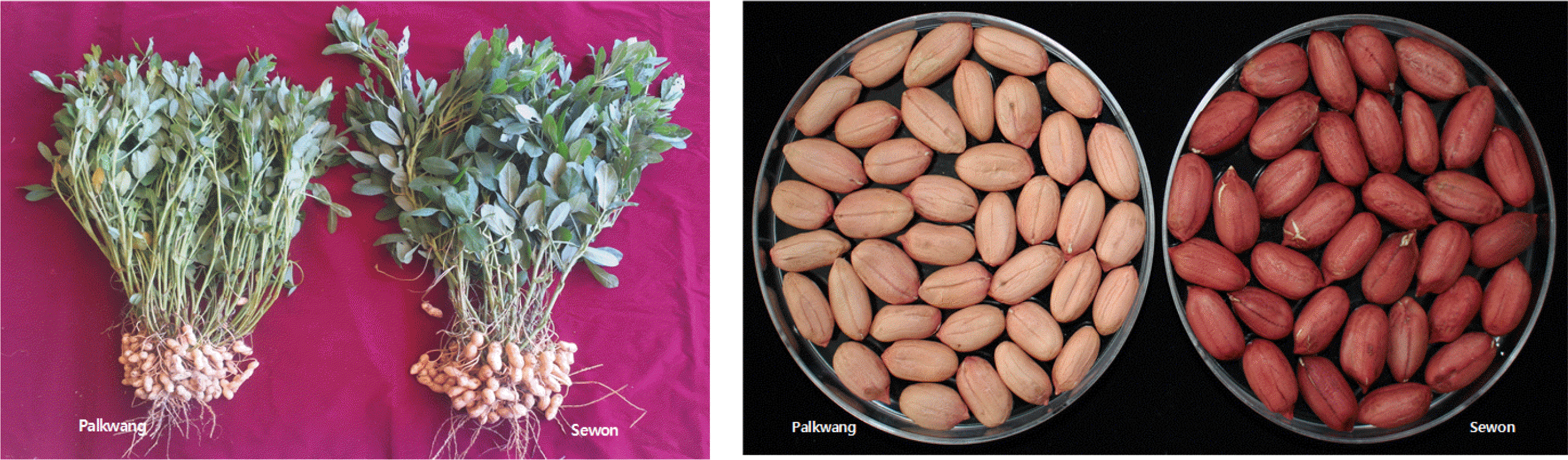
Table 1Inherent characteristics of a peanut variety ‘Sewon’.
Table 1
|
Variety |
Plant type |
Pod setting |
Leaf color |
Seeds/pot |
Leaf size |
Seed shape |
Testa color |
|
Sewon |
Shinpung |
Main stem & Branch |
Dark green |
2 |
Medium |
Long ellipse |
Red |
|
Palkwang |
Virginia |
Branch |
Green |
2 |
Small |
Long ellipse |
Brown |
Table 2Agronomic characteristics of a peanut variety ‘Sewon’.
Table 2
|
Variety |
Flowering date |
Main stem height (cm)z
|
Branch length (cm) |
No. of branch/plant |
|
Sewon |
June 7 |
35±3.89a
|
51±6.02a
|
13±2.89a
|
|
Palkwang |
June 8 |
44±4.11b
|
53±7.58a
|
26±4.36b
|
Table 3Pod and seed characteristics of a peanut variety ‘Sewon’.
Table 3
|
Variety |
No. of pods/plantz
|
Matured pods (%) |
Shelling ratio (%) |
Matured grains (%) |
Wt. of 100 seed (g) |
Seeds/pod |
|
Sewon |
38±4.18a
|
81±3.23a
|
72±2.32a
|
93±1.47a
|
113±2.17a
|
1.73±6.67a
|
|
Palkwang |
39±4.43a
|
79±4.54a
|
74±2.89a
|
93±1.78a
|
94±4.11b
|
1.69±5.14a
|
Table 4Fresh pod and seed characteristics of a new peanut variety ‘Sewon’.
Table 4
|
Variety |
Fresh pods no./plantz
|
Pod wt. (g/100 pod) |
Good quality pod (%) |
Shelling ratio (%) |
100 seed wt. (g) |
|
Sewon |
42±4.29a
|
415±10.13a
|
88±6.26a
|
68±3.19a
|
171±7.35a
|
|
Palkwang |
39±4.51a
|
346±9.76b
|
88±7.78a
|
72±4.02a
|
148±8.18b
|
Table 5Resistance to major disease, insect and lodging of ‘Sewon’.
Table 5
|
Variety |
Disease degree (0~9)z
|
Insect damage (0~9)y
|
Lodging (0~9)x
|
|
|
C. arachidicola
|
C. personatum
|
P. arachidicola
|
S. rolfsii
|
|
Sewon |
1 |
1 |
3 |
1 |
1 |
5 |
|
Palkwang |
0 |
1 |
3 |
3 |
1 |
7 |
Table 6Oil and protein content and fatty acid composition in kernels of a peanut variety ‘Sewon’.
Table 6
|
Variety |
Protein (%) |
Oil (%) |
Fatty acid compositionz (%) |
|
|
Pal. |
Ste. |
Ole. |
Lin. |
Ara. |
Eic. |
Beh. |
|
Sewon |
31.7ay
|
35.2b
|
11.5b
|
4.9a
|
52.3a
|
25.3a
|
2.0a
|
1.0a
|
3.1a
|
|
Palkwang |
31.5a
|
41.7a
|
14.0a
|
4.9a
|
48.4b
|
26.5a
|
2.0a
|
1.0a
|
3.2a
|
Table 7Physiochemistric characteristics of boiled vegetable peanut of a new variety ‘Sewom’
Table 7
|
Variety |
Hardness (gf) |
Color-differencez
|
Sugar content (%) |
|
|
|
L*
|
a*
|
b*
|
stachyose |
sucrose |
Total |
|
Sewon |
1007.0±170.4ay
|
38.3±1.1b
|
7.1±1.0a
|
2.1±0.6b
|
0.4±0.08b
|
1.7±0.19b
|
2.1 |
|
Palkwang |
945.3±215.4a
|
49.6±2.9a
|
5.8±0.3b
|
10.0±0.9a
|
0.3±0.06b
|
2.2±0.21a
|
2.4 |
Table 8Preliminary yield trials of a peanut variety ‘Sewon’.
Table 8
|
Variety |
Fresh pod yield (MT/ha) |
Kernel yield (MT/ha) |
|
|
|
2013 |
2014 |
Ave.z
|
Index |
2013 |
2014 |
Ave.z
|
Index |
|
Sewon |
1100 |
1,020 |
1,060a
|
131
|
480 |
454 |
467a
|
121
|
|
Palkwang |
811 |
799 |
805b
|
100 |
395 |
378 |
387b
|
100 |
Table 9Fresh pod yield potential of ‘Sewon’ in regional yield trial for 3 years.
Table 9
|
Location |
Sewon (MT/ha, A) |
Index (A/B) |
Palkwang (MT/ha, B) |
|
|
|
2015 |
2016 |
2017 |
Ave. |
2015 |
2016 |
2017 |
Ave. |
|
Milyang |
10.06 |
12.53 |
10.88 |
11.35 |
128 |
8.63 |
9.32 |
8.58 |
8.84 |
|
Cheongwon |
10.27 |
11.04 |
9.23 |
10.18 |
125 |
8.08 |
8.19 |
8.11 |
8.13 |
|
Iksan |
12.82 |
12.73 |
14.25 |
13.27 |
117 |
11.48 |
10.88 |
11.81 |
11.39 |
|
Daegu |
14.50 |
11.24 |
13.50 |
13.08 |
117 |
13.48 |
10.31 |
9.70 |
11.15 |
|
Mean |
12.06 |
11.89 |
11.96 |
11.97
|
121 |
10.41 |
9.68 |
9.55 |
9.88 |
|
|
T0.05=8.067*
|
Table 10Grain yield potential of ‘Sewon’ in regional yield trial for 3 years.
Table 10
|
Location |
Sewon (MT/ha, A) |
Index (A/B) |
Palkwang (MT/ha, B) |
|
|
|
2015 |
2016 |
2017 |
Ave. |
2015 |
2016 |
2017 |
Ave. |
|
Milyang |
4.97 |
5.53 |
4.31 |
4.94 |
121 |
4.00 |
4.28 |
3.93 |
4.07 |
|
Cheongwon |
4.40 |
4.96 |
4.10 |
4.49 |
115 |
3.91 |
4.04 |
3.73 |
3.89 |
|
Iksan |
5.09 |
5.70 |
8.13 |
6.31 |
116 |
4.74 |
5.41 |
6.16 |
5.44 |
|
Daegu |
5.78 |
4.24 |
5.54 |
5.19 |
113 |
5.48 |
4.31 |
3.99 |
4.59 |
|
Mean |
5.06 |
5.11 |
5.52 |
5.23
|
116
|
4.53 |
4.51 |
4.45 |
4.50 |
|
|
T0.05=4.173*
|
References
- 1. Chung SH, Hwang HB, Lee SB, Choi DW, Kang KH. 1985. Effect of planting time on flowering and kernel development in the southern region of Korea. Res Rept RDA (Crops) 27: 199-206.
- 2. Kim KJ, Kang KH, Chung KW, Seong RC. 1990. Studies on fatty acid composition for breeding high quality variety in major oil crops. Res Rept RDA (Agri. Institution Cooperation) 33: 273-284.
- 3. Ko JC, Oh YS, Cheong YK, Park MS, Cho SY. 1999. Panting date control of eatable fresh peanut for the development of arable land utilization. Korean J Crop Sci 44(S.1):106-109.
- 4. Lee JI, Park HW, Park YH, Han ED, Ham YS, Kang KH. 1983. A new erect type, high oil content and high-yielding peanut variety 'Shinpung'. Res Rept ORD 25(C):190-194.
- 5. Lee SW, Park CH, Kang CW, Kim SD. 1999. Changes in oil, tannin, total sugar contents and yield after flowering in peanut. Korean J Crop Sci 44: 159-162.
- 6. Moon JS, Kim KT, Oh HJ, Kang CS, Jin SK, Song CH. 1989. Double cropping peanut cultivation in Cheju region. 1. Weather characteristics of Cheju region and selection of high yielding variety for double. Res Rept RDA (U & I) 31: 34-40.
- 7. Oh YS, Cheong YK, Ko JC, Kim JT, Oh Mk, Kim S, Kim JG, Park KH, Park MS, Cho SY. 1998. A wide adaptable high yielding new peanut variety 'Palkwangttangkong'. RDA J Indus Crop Sci 40: 117-121.
- 8. Pae SB, Cheong YK, Kim JT, Park KH, Suh DY. 2004. A new early maturing, leaf spot resistant and high quality peanut cultiva, "Jakwang". Korean J Breed Sci 36: 375-376.
- 9. Pae SB, Hwang CD, Lee MH, Kim SU, Oh KW, Lee BK, Park CH, Park KY, Baek IY, Jun YC. 2016. A high oleate peanut variety 'K-Ol'. Korean J Breed Sci 48: 313-318.
- 10. Pae SB, Kim SU, Lee MH, Hwang CD, Oh KW, Jung CS, Song DY, Baek IY, Lee YH. 2017. A peanut variety 'Heuksaeng' with short stem and purple testa. Korean J Breed Sci 49: 103-108.
- 11. Pae SB, Jung CS, Oh KW, Ko JC, Kim JT, Park CB. 2002. The changes of growth habits and pod setting for fresh peanut by seeding dates in southern part of Korea. Korean J Crop Sci 47: 374-378.
- 12. Pae SB, Kim JJ. 1997. Inflorescence habits of different plant types in peanut. Korean J Crop Sci 42: 841-848.
- 13. Pae SB, Kim JT, Shim KB, Hwang CD, Chung CS, Lee MH, Park KY. 2007. Effects of plant types and cultivars on pod yield in late seeing peanut. Korean J Crop Sci 52: 55-59.
- 14. Pae SB, Park CH, Shim KB, Ha TJ, Lee MH, Hwang CD, Baek IY, Lee JK. 2014. A new early maturing and high yielding peanut variety 'Jaseon' for vegetable use. Korean J Breed Sci 46: 307-312.
- 15. Park CH, Lee SW, Son YG, Park HW, Kim SD, Lee BH. 1999. Cultural techniques of fresh peanut and their quality characteristics. Korean J Crop Sci 44: 190-191.
- 16. Pattee EH, Stalker HT. 1995. Advances in peanut science. APRES, pp. 614.
- 17. Rural Development Administration (RDA)2012. Standard method of investigation and analysis for research on the agricultural science and technology (5th) 1124.
- 18. Rural Development Administration (RDA)2015. Plan of regional yield trials for new variety development in summer season crop 200-212.
- 19. Rural Development Administration (RDA)2017. Annual report of regional yield trials for new variety development 558-582.
- 20. Yang KW, Pae SB, Park CH, Lee MH, Jung CS, Son JH, Park KY. 2010. Development of selectable marker of high oleate trait in peanut. Korean J Breed Sci 42: 507-514.
Citations
Citations to this article as recorded by

- Quantification of trans-resveratrol and soyasaponin Bb in different parts of two Korean peanut cultivars
Hwan-Hee Yu, Jong-Suk Park, Jae-Hyung Ko, Sanghyun Lee
Journal of Applied Biological Chemistry.2025;[Epub] CrossRef - A Peanut Variety, ‘Gowon1’ with Large Grain and High Fresh Pod Yield
Eunyoung Oh, Sungup Kim, Jung In Kim, Min Young Kim, Sang Woo Kim, Jeongeun Lee, Eunsoo Lee, Chae-Yeon Han, Heungsu Lee, Myoung-Hee Lee
Korean Journal of Breeding Science.2024; 56(3): 345. CrossRef - UPLC-Orbitrap-MS/MS Analysis of Polyphenolic Compounds from Ethanol Extracts of Peanut Skin and Their Antioxidant Activities
Tae Joung Ha, Eom-ji Hwang, Eunyoung Oh, Myoung-Hee Lee, Seok-Bo Song, Jung-In Kim, You-Jin Park
Journal of the Korean Society of Food Science and Nutrition.2023; 52(8): 821. CrossRef