적요
황해쑥(Artemisia argyi)의 육성 품종 ‘평안애’는 수량성, 도복 저항성 및 기능성 성분 함량이 우수한 약용작물로 육성하기 위해 개발되었다. 본 품종은 황해쑥 수집종(MPR-0506)을 방임 수분하여 얻은 집단으로부터 계통선발법을 통해 선발되었으며, 생육특성이 우수한 계통 AA1903을 선발한 후 생산력 및 지역적응성 검정을 거쳐 육성되었다. ‘평안애’는 직립형 초형을 가지며 대비종(황해쑥 재래종)에 비해 줄기가 굵어 도복에 강하고, 엽비율이 높은 특성을 보였다. 지역적응성 시험 결과, 건엽 수량은 대비종보다 약 2배 높은 수량성을 나타내었다. 또한 진딧물 저항성 평가에서 보통의 저항성을 보였다. 유효성분 분석 결과, 개화 전 eupatilin 함량이 상대적으로 높았다. RAW264.7 대식세포를 이용한 생리활성 평가에서 물 추출물이 에탄올 추출물에 비해 낮은 세포 독성을 나타내었고, 두 추출물 모두 LPS에 의해 유도된 산화질소 생성을 유의적으로 억제하였으며, 에탄올 추출물이 더 강한 억제 효과를 보였다. ‘평안애’는 뿌리줄기를 활용한 영양번식으로 증식되며, 품종보호권(등록번호 제398호)으로 등록되었다. 본 품종은 우수한 농업적 특성과 기능성 성분 안정성을 갖추어 약용작물로서의 재배 및 산업적 활용 가능성이 높은 품종으로 판단된다.
Abstract
An Artemisia argyi cultivar, designated ‘Pyeong-an-ae’, was developed to enhance yield, lodging resistance, and functional compound content for medicinal use. The breeding objective was to select a high-yielding cultivar with improved agronomic performance and regional adaptability. The breeding material originated from an open-pollinated population of a collected accession (MPR-0506), and superior lines were selected through pedigree selection. Line AA1903 was selected for favorable growth traits and subsequently evaluated in yield and regional adaptation trials under the designation Y-MCD-007-1 in Eumseong-gun and Pyeongchang-gun, Korea. ‘Pyeong-an-ae’ exhibited an erect growth habit, thicker stems, and a larger leaf area than the control (Artemisia argyi landrace), resulting in enhanced lodging resistance and biomass production. The average dry leaf yield was 535 kg/10a, approximately two-fold higher than that of the control. The cultivar maintained relatively higher levels of eupatilin than the control before flowering. RAW264.7 macrophage-based bioactivity assays showed that the water extract exhibited lower cytotoxicity than the ethanol extract. Both extracts significantly inhibited LPS-induced nitric oxide production, with the ethanolic extracts exhibiting stronger inhibitory effects. ‘Pyeong-an-ae’ is vegetatively propagated and registered under Plant Variety Protection No. 398. Its superior agronomic traits, stable bioactive compound contents, and functional properties support its potential for commercial cultivation and medicinal applications.
-
Key words: Artemisia argyi, ‘Pyeong-an-ae’, eupatilin, jaceosidin, cultivar
서언
황해쑥(
Artemisia argyi Lévl. et Vant.)은 국화과(Asteraceae) 속하는 다년생 초본 식물로, 신생대 중반에 온대 아시아의 건조한 지역에서 기원하여 한국, 중국, 일본 등 동아시아 지역에 널리 분포하는 것으로 알려져 있다(
Lee et al. 2018,
Wang 2004). 국내에서는 서해안 또는 남해안 바닷가를 중심으로 분포하고 있다. 황해쑥의 형태적 주요 특성으로 줄기는 직립하며, 잎은 근생엽과 경생엽으로 구분되고, 근생엽 및 경생엽의 하부엽은 난형의 형태이다. 잎은 2회 우상으로 호생하고 열편이 갈라지면서 엽병에는 탁엽이 있다. 일반 쑥과 달리 강한 향과 털이 밀생하며 잎 뒷면에는 백선선점이 분포한다. 지하부는 마디사이에 눈(bud)이 존재하는 지하경(stoloniferous rhizome type)이 있는 것이 특징이다(
Lee et al. 2018).
쑥속 식물은 오랫동안 인류의 약식동원(藥食同源)으로 활용되어 왔으며, 특히 황해쑥은 다양한 약리 효과로 인해 약용작물로서의 가치가 높게 평가되고 있다. 한약으로는 쑥(
Artemisia indica Willd.), 산쑥(
Artemisia montana Pamp.)과 함께 어린 잎과 줄기를 ‘애엽(艾葉)’으로 활용되고 있다(
KIOM 2022). 한방에서의 주요 효능은 손발이 차거나 혈행이 순조롭지 못한 증상을 완화하고, 토혈, 육혈, 변혈, 요혈 등 실혈 증상에 효과가 있는 것으로 알려져 있으며(
Han et al. 2008), 동의보감 등의 고문헌에서도 그 효능이 기록되어 있다. 유효성분으로는 플라보노이드 계열의 eupatilin (5,7-dihydroxy-3,4,6-tri-methoxy-flavone)과 jaceosidin (5,7,4′-trihydroxy-3′,6-dimethoxy-flavone)이 있다. Eupatilin 은 항암(
Kim et al. 2005), 항산화(
Choi et al. 2008), 항염(
Lee et al. 2024), 신경보호(
Sapkota et al. 2017), 항알러지(
Song et al. 2018)및 심장 보호(
Nageen et al. 2020)와 같은 다양한 약리학적 특성을 보이는 것으로 알려져 있다. Jaceosidin은 eupailin과 같은 항암, 항산화 특성 뿐만 아니라 면역억제(
Yin et al. 2011), 세포사멸 촉진(
Liu et al. 2024) 등 다양한 생물학적 작용 기전이 연구되고 있어 지금까지도 제약업체의 산업 소재로 유망 받고 있는 천연물 중 하나이다(
Nam et al. 2013).
한편 천연물 기반 건강기능식품 및 화장품 산업의 성장과 함께 국민 건강에 대한 관심이 높아지고 있어, 황해쑥을 포함한 기능성 약용작물의 고품질 원료 확보에 대한 산업적 요구 또한 증가하고 있다. 하지만 황해쑥은 환경에 따라 형태적 변이가 심해 종을 구분하는 데 많은 어려움을 가지고 있다. 이러한 문제로 인해 다양한 약리작용과 우수한 생리활성 성분을 함유한 유망자원임에도 재현성 있는 기초적인 연구가 제한 되어져 왔으므로 약리적 유용성과 함께 재배 안정성, 도복 저항성, 수량성 등 농업적 특성을 동시에 고려한 우수한 신품종 개발은 원료 표준화 등 시장에 수요를 충족하기 위해 반드시 필요한 실정이다. 또한, 세계무역기구 지식재산권 협정(WTO/TRIPS)에 따라 식물 신품종을 개발한 개발자에게 지식재산권을 부여하고 보호해 주는 제도가 마련되면서 식물에 새로운 품종의 필요성이 더욱 중요해지고 있다(
Park et al. 2015,
Park et al. 2016).
이에 본 논문에서는 도복에 강하고 생육이 우수하여 건엽 수량이 높은 ‘평안애’ 신품종을 개발하고 품종 등록을 완료하였기에, 그 육성 경위 및 생육 특성을 보고하고자 한다.
재료 및 방법
재배 및 특성조사
본 시험은 2017년부터 2020년까지 충북 음성군 소재 국립원예특작과학원 인삼특작부 유전자원보존 포장에서 수행하였다. 대비종으로는 재래종 황해쑥과 생육 특성 및 수량성 등을 비교하였다. 정식은 4월 중순에 지하경 번식 방법으로 증식하여 실험에 사용하였다. 시비량은 N-P
2O
5-K
2O:10-7-7 kg/10a 및 퇴비 2,000 kg/10a를 기비 하였다. 재식거리는 조간 거리 30 cm, 주간거리는 15 cm로 하였으며, 시험구는 난괴법 3 반복으로 배치하여 조사하였다. 생육 특성은 품종 출원 특성조사표를 기반으로 시험구 별로 20개체를 조사하였다. 수량성 조사는 농촌진흥청 시험 연구 조사 기준에 준하여 실시하였다. 해충 저항성인 진딧물 저항성은 5월 - 6월 최적 발생 시기에 맞춰 농촌진흥청 특성 조사 기준을 기반으로 조사하였다(
RDA 2012).
황해쑥 시료는 수확 후 열풍 건조시킨 뒤 분쇄하여 분말화하였다. 분말 시료 1 g에 methanol (MeOH)을 가하여 상온에서 24시간 동안 추출하였으며, 추출액은 여과한 후 감압 농축하여 MeOH 추출물을 얻었고, 농축된 추출물은 -20℃에서 보관하였다.
HPLC 분석을 위해 MeOH 추출물 10 mg을 정확히 취하여 MeOH 1 mL에 용해한 뒤 초음파 추출기에서 5분간 처리하였다. 이후 불용성 부산물을 제거하기 위해 4℃에서 3,000 × g로 5분간 원심분리 하였으며, 상층액을 취하여 0.45 μm syringe filter로 여과한 후 분석 시료로 사용하였다. 황해쑥 내 flavonoid 성분인 eupatilin과 jaceosidin의 정량 분석은 YMC-Triart C18 컬럼(5 μm, 4.6 × 250 mm; YMC Co., Ltd., Kyoto, Japan)을 장착한 JASCO LC-2000 Plus series HPLC system (JASCO Corp., Tokyo, Japan)을 이용하여 수행하였다.
이동상은 0.1% (v/v) formic acid를 함유한 증류수(A)와 0.1% (v/v) formic acid를 함유한 acetonitrile (B)를 사용하였으며, 검출 파장은 330 nm로 설정하였다. 유속은 1.0 mL⋅min-1, 컬럼 오븐 온도는 35℃로 유지하였고, 시료 주입량은 자동 시료 주입기를 이용하여 10 μL로 하였다. 기울기 용리 조건은 0분에서 A:B=90:10, 10분에서 80:20, 40분에서 50:50, 50분에서 40:60으로 설정하였으며, 이후 55분부터 60분까지 A:B=80:20 조건으로 재평형하였다.
표준품인 eupatilin과 jaceosidin (Chengdu Biopurify Phytochemicals Ltd., Sichuan, China)은 MeOH에 용해하여 50, 100, 200, 250 및 500 μg⋅mL-1 농도의 표준용액을 조제하였고, 각 농도 별 peak 면적을 이용하여 검량선을 작성하였다. 검량선의 직선성은 결정계수(R2)를 통해 확인하였다. 각 시료에서 검출된 eupatilin 및 jaceosidin의 함량은 HPLC peak 면적을 검량선 회귀 방정식에 대입하여 산출하였으며, 최종 함량은 추출물 기준 mg/g로 환산하였다. 모든 분석은 3 반복으로 수행하였다.
세포독성 분석
시료는 ‘평안애’의 잎을 열풍 건조 후 물과 50% 주정으로 상온에서 3회 추출하고 동결 건조하여 실험에 사용하였다. 본 연구에 사용한 마우스 대식세포주(RAW264.7 cell line)는 한국세포주은행(KCLB)에서 구입하였다. 세포주는 10% Fetal Bovine Serum (FBS; HyClone, Logan, UT, USA)과 100 units/㎖ penicillin과 100 ㎍/㎖ streptomycin이 포함된 Dulbecco’s-modified Eagle’s medium (DMEM, high glucose; HyClone, Logan, UT, USA) 배양액으로 배양하였으며, 37℃, 5% CO2 조건(MCO-2OAIC, Sanyo, Moriguchi, Osaka, Japan)을 유지하였다.
마우스 대식 세포주에서 시료에 의한 세포 생존율 변화를 측정하기 위하여 3-(4,5-dimethylthiazol-2-yl) -2,5-diphenyltetrazolium bromide (MTT) assay를 실시하였다. 96-well plate에 세포를 1 × 10⁴ cells/well의 농도로 분주하고, 24시간 동안 안정화 시킨 후 추출물을 처리한 다음 37℃, 5% CO2 조건에서 48시간 더 배양한 후, MTT 용액을 1시간 처리하여 microplate reader (Biotek, Winooski, VT, USA)로 540 nm에서 흡광도를 측정하였다.
마우스 대식세포주(RAW264.7 cell line)를 96-well plate에 1.0 × 10⁵ cells/well로 분주하여, 24시간 배양하였다. 배양된 세포에 물 및 50% 주정 추출물을 12.5, 25, 500 μg/mL 농도로 1시간 동안 처리한 후 lipopolysaccharides (LPS)를 1 μg/mL 농도로 처리하였다. 18시간 배양 후 배양액과 동량의 Griess 시약을 가하고 30분 동안 상온에서 반응시키고 540 nm에서 흡광도를 측정하였다. sodium nitrite의 농도 별 표준곡선을 이용하여 배양액의 산화질소(nitric oxide; NO) 농도를 결정하였다.
통계분석
통계분석은 SAS Enterprise Guide 7.1 (SAS Institute Inc., Cary, NC, USA)을 이용하여 수행하였다. 육성 품종과 대비종 간 평균의 차이는 F-검정을 통해 두 집단의 분산 동질성을 확인한 후 Student’s t-test를 실시하였으며, 유의성은 p<0.05 수준에서 판단하였다.
결과 및 고찰
육성경위
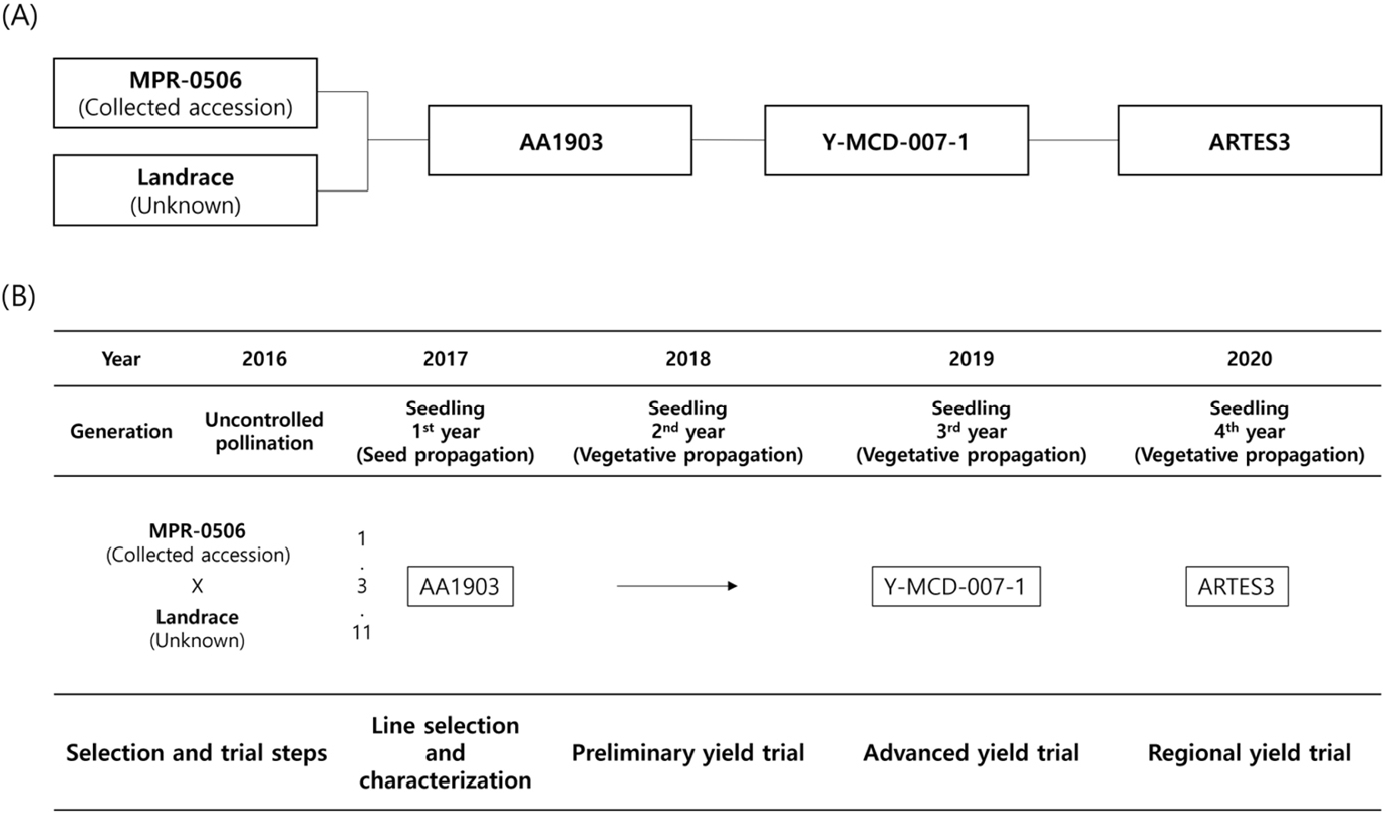
‘평안애’는 황해쑥 수집종(MPR-0506)을 방임수분하여 채종한 종자를 이용해 2017년에 실생번식을 통해 계통을 분리하였으며, 생육 특성이 우수한 계통(AA1903)을 선발하였다. 2018년에는 AA1903 계통을 영양번식(뿌리줄기)하여 시험포장에 정식한 후 특성평가를 실시하고, 해당 계통을 지속적으로 영양번식하여 증식하였다. 이후 증식된 계통을 Y-MCD-007-1로 명명하고, 2019년에 생산력 검정 시험을 수행하였다. 2020년에는 지적명을 ARTES3호로 부여하고 충청북도 음성군, 강원도 평창군 등 2지역에서 지역 적응성 검정시험을 실시하였다. 그 결과 ‘ARTES3호’는 줄기가 굵고 도복에 강하며 개화 전 유파틸린(eupatilin) 성분이 상대적으로 높은 것이 인정되어 농촌진흥청 직무육성심의회를 거쳐 신품종으로 등록하였다. 황해쑥은 속을 편하게 하는 효능을 가지고 있어 육성 품종을 섭취하고 몸과 마음이 평안해지길 기대하는 뜻으로 ‘평안애’로 명명하였으며, 품종보호출원을 실시하여 현재 품종보호권 등록(품종등록번호 제398호)이 완료되었다. ‘평안애’의 육성 계통 및 계보는
Fig. 1과 같다.
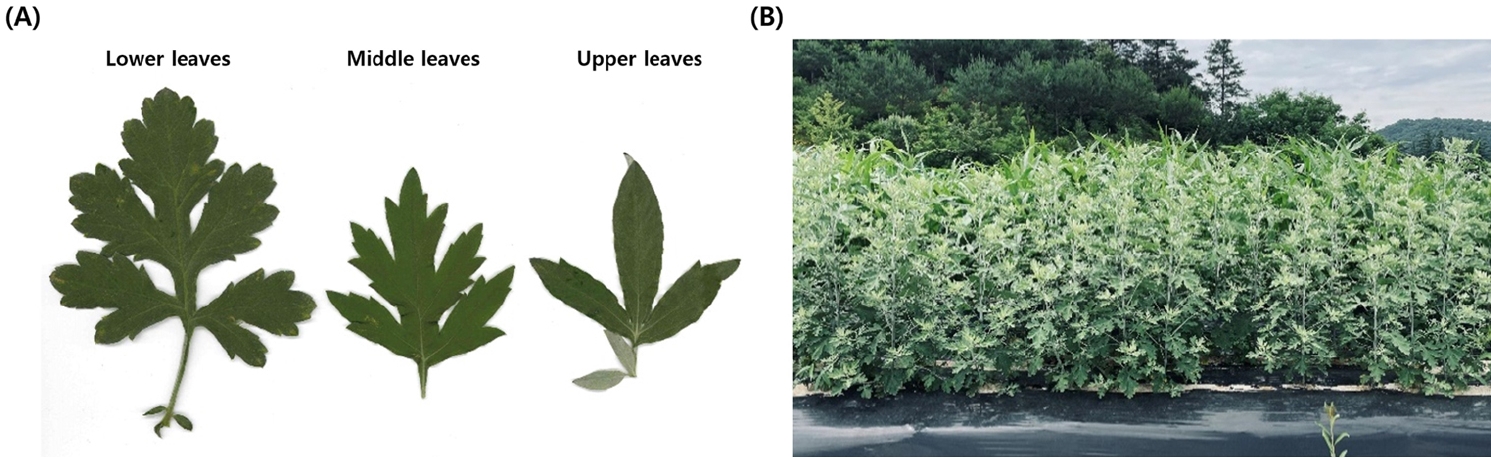
‘평안애’의 초형은 직립형이며, 잎의 형태는 삼각난형으로 이는 대비종인 황해쑥(재래종)이 둥근난형인 것과 구별된다. 대비종 잎의 색이 녹색인 반면, ‘평안애’ 잎의 색은 백색선모(白色腺毛)가 밀생하여 연녹색을 띄는 특징을 가지고 있다(
Fig. 2). 소엽의 갈라짐과 화형은 대비종과 ‘평안애’ 모두에서 각각 심열과 반종형의 형태를 보였다(
Table 1).
Table 2는 대비종인 황해쑥 재래종과 신품종 ‘평안애’의 연도별 생육 특성을 비교한 결과를 나타낸 것이다. 초장은 2019년과 2020년의 조사에서 ‘평안애’와 대비종 간에 유의미한 차이를 보이지 않았다. 경경(stem diameter)의 경우 2019년에는 두 품종 간 유의한 차이가 나타나지 않았으나, 2020년에는 ‘평안애’(12.9 mm)가 재래종(10.4 mm)보다 유의적으로 큰 값을 나타냈다. 분지수(branch number) 또한, 2019년에는 품종간 유의적인 차이가 없었지만 2020년에는 ‘평안애’가 39.8개로 유의미한 차이를 보였다.
엽 특성을 보면 ‘평안애’는 전반적으로 재래종보다 큰 엽 크기를 보였다. 특히 2020년 조사에서 ‘평안애’의 엽장(12.0 cm)과 엽폭(10.0 cm)은 각각 재래종(11.1 cm, 8.5 cm)보다 유의적으로 높은 값을 나타냈다(
Table 2). 이러한 결과는 ‘평안애’가 상대적으로 키가 작고 줄기는 굵으며, 엽면적이 넓은 특성을 지녀 도복에 강하고 생육이 양호함을 시사하며, 수량성에서도 우수한 품종임을 나타낸다.
저항성 평가는 관능평가에 의해 0 (저항성)에서 9 (감수성)까지의 척도로 수행되었으며, 2019년과 2020년 동안 진딧물에 대한 저항성을 평가한 결과, ‘평안애’는 2019년에 3점, 2020년에 2점을 보이며 전반적으로 보통의 저항성을 보였다. 대비종 또한 2019년 2020년 모두 진딧물에 대한 저항성이 보통인 것으로 평가되었다(
Table 3).
황해쑥 신품종 ‘평안애’의 지역별 수량성을 평가한 결과, 충청북도 음성군 지역에서 10 a당 591.7 kg, 강원도 평창군 지역에서 478 kg/10a의 건엽 수량을 나타내었으며, 평균 수량은 534.9 kg/10a로 조사되었다. 반면, 대비종은 각각의 지역에서 448 kg/10a (음성), 89 kg/10a (평창)의 수량을 보였으며, 강원도에서 동해 피해가 발생하여 평균 수량은 268.5 kg/10a에 불과하였다. 수량지수(Index)는 ‘평안애’ 수량을 대비종 수량으로 나눈 값으로, 음성에서는 132.1%, 평창에서는 537%, 전체 평균 기준으로는 199%를 기록하여 ‘평안애’가 대비종에 비해 전반적으로 2배 정도 높은 수량성을 확인할 수 있었다(
Table 4). 특히 강원도 평창 지역에서는 대비종에 비해 약 5배 이상의 수량 증가를 나타내어 재배 지역에 따라 품종 간 수량성 차이가 더욱 두드러질 수 있음을 시사했다.
황해쑥의 유효성분인 eupatilin 및 jaceosidin을 개화 전과 개화 후로 구분하여 분석한 결과, 개화 전에는 ‘평안애’의 eupatilin 함량이 대비종보다 다소 높았으나, 통계적으로 유의한 차이는 나타나지 않았다. 개화 후에는 ‘평안애’와 대비종 모두에서 eupatilin과 jaceosidin 함량이 개화 전보다 감소하는 경향을 보였다(
Table 5). 이러한 결과는 황해쑥의 유효성분이 주로 영양생장기(vegetative stage)에 축적되고, 생식생장기(reproductive stage)로 전환되면서 함량이 감소하는 특성에 기인한 것으로 판단되며(
Kang et al. 2018), 이를 고려할 때 ‘평안애’의 적정 수확시기는 개화기 이전이 안정적인 유효성분 확보에 보다 유리한 것으로 판단된다.
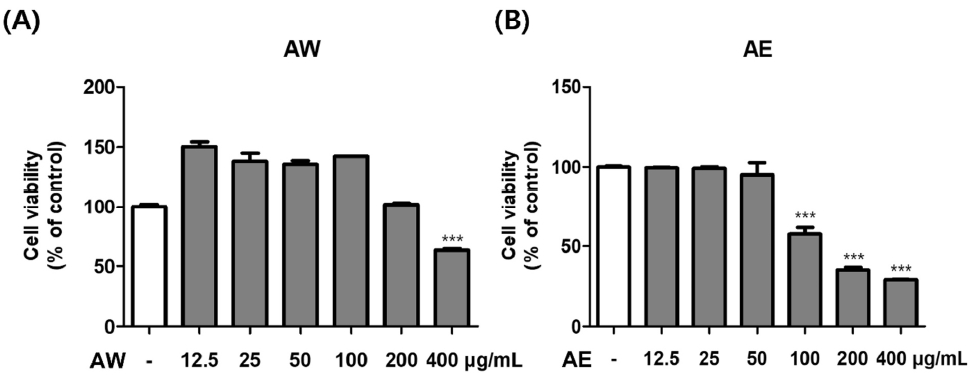
황해쑥 ‘평안애’의 물 추출물(AW) 및 50% 주정 추출물(AE)의 세포 독성을 평가하기 위해 RAW264.7 대식세포에 각각의 추출물을 12.5, 25, 50, 100, 200, 400 μg/mL 농도로 24시간 처리한 후 MTT 분석을 통해 세포 생존율을 측정하였다. AW 처리군에서는 100 μg/mL 이하의 농도에서 세포 생존율이 90% 이상으로 유지되어 유의한 독성이 나타나지 않았으나, 400 μg/mL 처리 시 생존율이 유의하게(
p<0.001) 감소하였다. 반면, AE 처리군은 100 μg/mL 이상의 농도부터 세포 생존율이 농도 의존적으로 감소하였으며, 100, 200, 400 μg/mL 농도에서 모두 통계적으로 유의한 세포 독성이 관찰되었다(
p<0.001). 이 결과는 AE가 AW에 비해 상대적으로 높은 세포 독성을 나타냄을 시사한다(
Fig. 3).
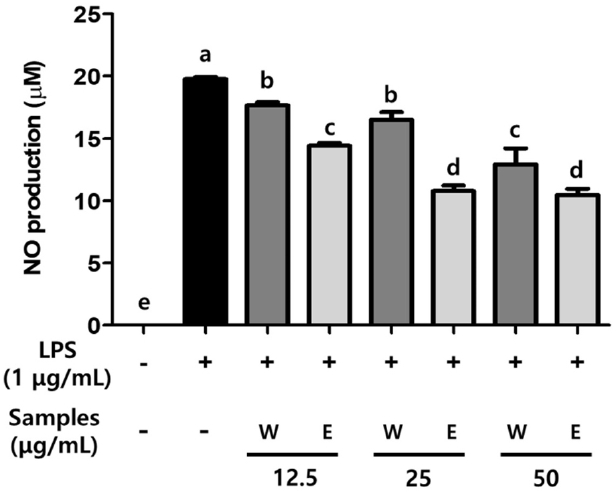
또한, ‘평안애’ 추출물의 항염증 활성을 평가하기 위해 LPS (1 μg/mL)로 자극된 RAW264.7 대식세포에서 황해쑥물 추출물(AW)과 50% 주정 추출물(AE)이 산화질소(NO) 생성에 미치는 영향을 분석하였다. LPS 처리군에서는 대조군에 비해 NO 생성이 유의하게 증가하였으며(<0.05), AW 및 AE를 각각 12.5, 25, 50 μg/mL 농도로 처리한 결과, 농도 의존적으로 NO 생성이 유의하게 감소하였다. 특히 AE 추출물은 동일 농도에서 AW보다 더 강한 억제 효과를 나타내는 경향을 보였다(
Fig. 4). 이러한 결과는 황해쑥의 주요 성분인 eupatilin (
Choi et al. 2011)과 jaceosidin (
Kim et al. 2008)이 LPS에 의해 유도된 산화질소 생성을 억제하는 것으로 보고된 선행 연구와 일치한다. 따라서 ‘평안애’ 추출물은 추출 용매에 따라 항염증 효과에 차이가 있으며, 물 추출물은 에탄올 추출물에 비해 세포 독성이 낮고 비교적 안정적인 생리활성 추출물로 활용될 수 있을 것으로 판단된다. 또한, 추출물의 농도에 따라 산화질소 생성 억제 효과를 기대할 수 있다.
Notes
-
사사
본 연구는 농촌진흥청 국립원예특작과학원의 공동연구사업(RS-2022-RD010228)의 지원으로 수행되었고, 2026년도 농촌진흥청 국립원예특작과학원 전문연구원 과정 지원사업에 의해 이루어진 것임.
Fig. 1.Pedigree diagram (A) and genealogical diagram (B) of Artemisia argyi cultivar ‘Pyeong-an-ae’.
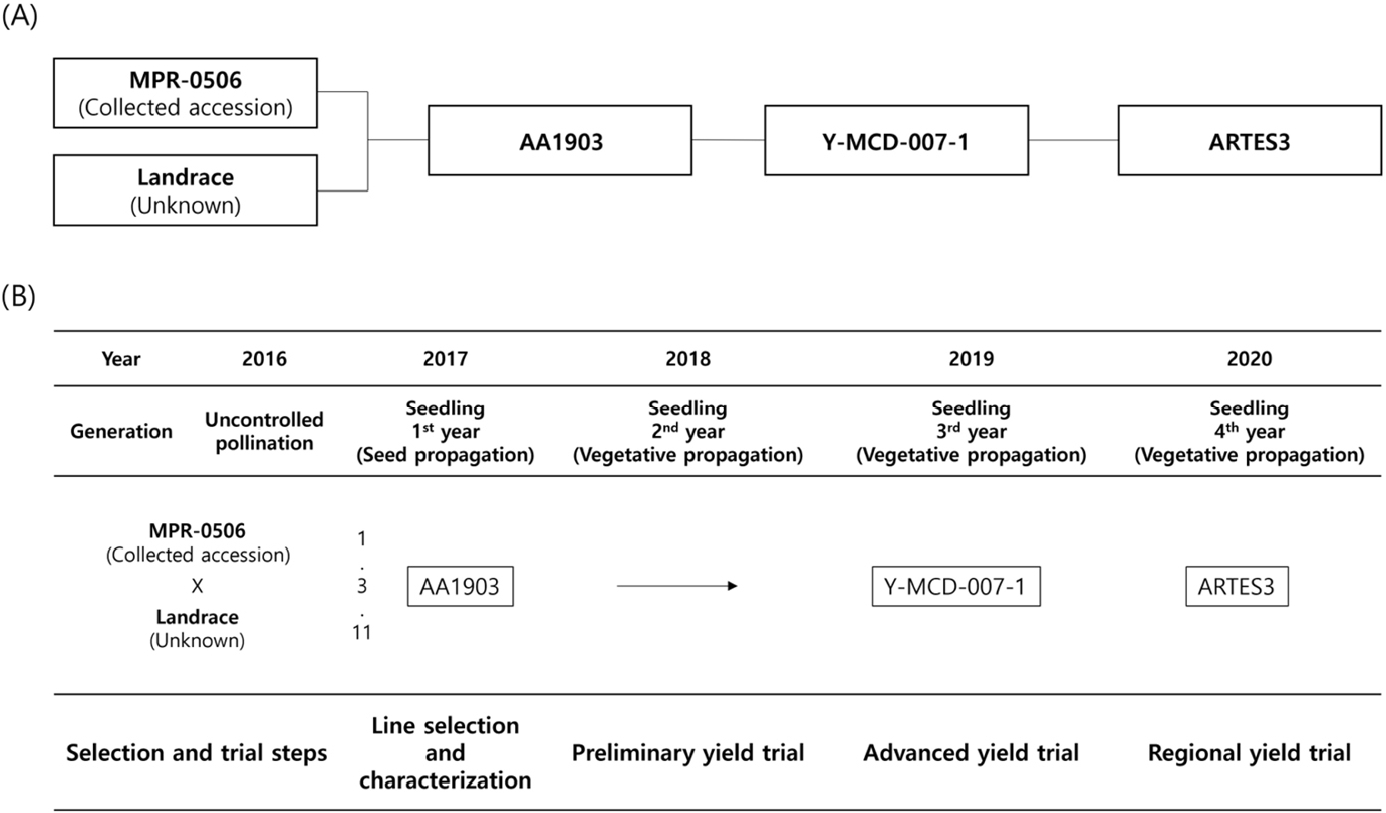
Fig. 2.Morphological characteristics and cultivation appearance of Artemisia argyi cultivar ‘Pyeong-an-ae’. (A) Representative leaf morphologies of ‘Pyeong-an-ae’. (B) Field-grown plants of ‘Pyeong-an-ae’.
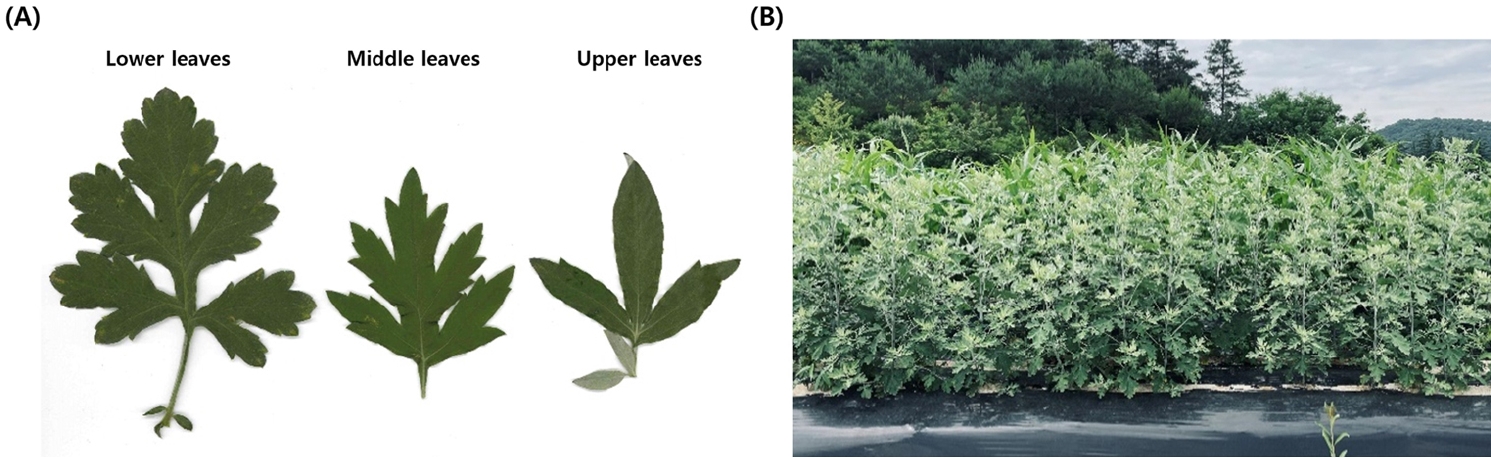
Fig. 3.Effects of ‘Pyeong-an-ae’ (A) water (AW) and (B) 50% ethanol (AE) extracts on the viability of RAW264.7 macrophages. Data are presented as the mean±standard deviation (n=3). Statistical significance was determined using Student’s t-test; *** p<0.001 versus the untreated control.
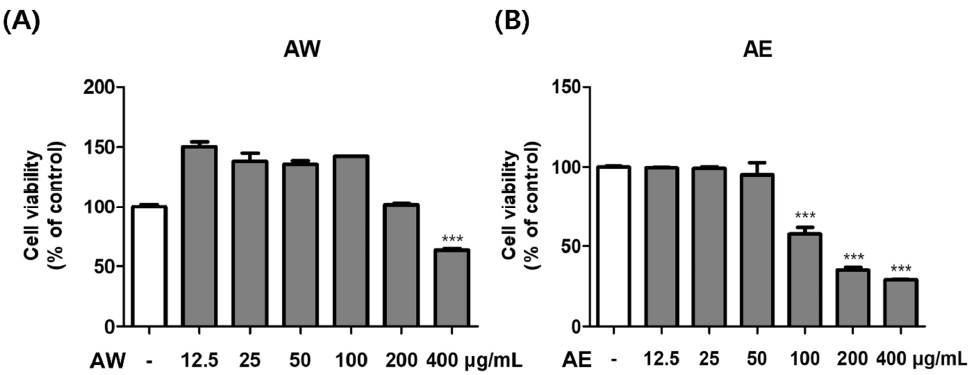
Fig. 4.Effects of ‘Pyeong-an-ae’ water (W) and 50% ethanol (E) extracts on nitric oxide (NO) production in LPS-stimulated RAW264.7 macrophages. Data are presented as the mean±standard deviation (n=3). Different letters above the bars indicate statistically significant differences between groups (<0.05), as determined by one-way ANOVA followed by Tukey’s post hoc test.
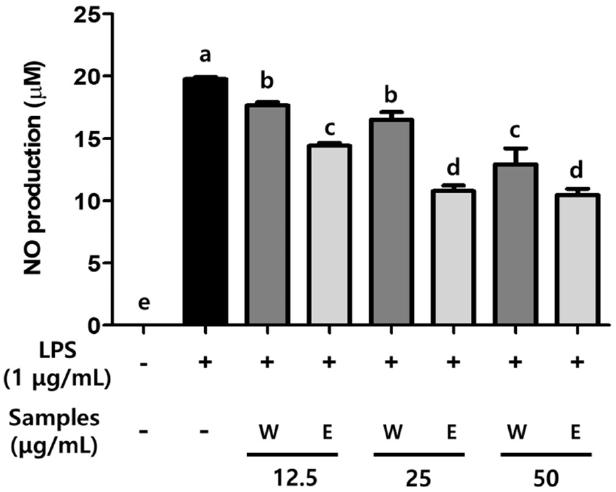
Table 1.Morphological characterization of cultivars based on growth and floral traits.
Table 1.
|
Cultivar |
Plant type |
Leaf type |
Leaf color |
Leaf margins |
Flower shape |
|
Artemisia argyi (Landrace) |
Erect |
Round oval |
Green |
Deeply lobed |
Semi-erect |
|
Pyeong-an-ae |
Erect |
Triangular oval |
Light green |
Deeply lobed |
Semi-erect |
Table 2.Yearly comparative analysis of agronomic traits between Artemisia argyi and cultivar ‘Pyeong-an-ae’.
Table 2.
|
Cultivar |
Year |
Plant height (cm) |
Stem diameter (mm) |
Branch number (ea/plant) |
Leaf length (cm) |
Leaf width (cm) |
|
Artemisia argyi (Landrace) |
2019 |
217.5±26.1z
|
10.5±2.2 |
33.0±9.6 |
9.8±0.9 |
9.8±1.0 |
|
2020 |
149.5±16.4 |
10.4±2.0 |
32.1±10.3 |
11.1±1.0 |
8.5±1.3 |
|
Pyeong-an-ae |
2019 |
211.9±10.5ns y
|
10.4±1.7ns
|
36.8±11.4ns
|
10.4±0.9ns
|
10.2±1.1ns
|
|
2020 |
150.0±16.8ns
|
12.9±3.0***
|
39.8±6.9*
|
12.0±1.0*
|
10.0±1.5***
|
Table 3.Yearly assessment of aphid resistance in and the cultivar ‘Pyeong-an-ae’.
Table 3.
|
Cultivar |
Aphid resistance (0-9)z
|
|
2019 |
2020 |
|
Artemisia argyi (landrace) |
3 |
3 |
|
Pyeong-an-ae |
3 |
2 |
Table 4.Regional dry leaf yield (kg/10a) of the cultivar ‘Pyeong-an-ae’.
Table 4.
|
Cultivar |
Chungcheongbuk-do Eumseong (kg/10a) |
Gangwon-do Pyengchang (kg/10a) |
Meanx (kg/10a) |
Indexw (%) |
|
Artemisia argyi (Landrace) |
448.0±8.5z
|
89.0±13.1 |
268.5±179.8 |
100 |
|
Pyeong-an-ae |
591.7±38.8* y
|
478.0±169.0ns
|
534.9±135.2ns
|
199 |
Table 5.Comparison of eupatilin and jaceosidin contents at different flowering stages.
Table 5.
|
Cultivar |
Before flowering (mg/g)
|
Total (mg/g) |
After flowering (mg/g)
|
Total (mg/g) |
|
Eupatilin |
Jaceocidin |
Eupatilin |
Jaceocidin |
|
Artemisia argyi (Landrace) |
1.37 |
0.57 |
1.94 |
1.31 |
0.32 |
1.63 |
|
Pyeong-an-ae |
1.41ns z
|
0.54ns
|
1.95 |
0.96*
|
0.27*
|
1.23 |
References
- 1. Choi EJ, Lee S, Chae JR, Lee HS, Jun CD, Kim SH. 2011. Eupatilin inhibits lipopolysaccharide-induced expression of inflammatory mediators in macrophages. Life Sci 88: 1121-1126.
- 2. Choi EJ, Oh HM, Na BR, Ramesh TP, Lee HJ, Choi CS, Choi SC, Oh TY, Choi SJ, Chae JR, Kim SW, Jun CD. 2008. Eupatilin protects gastric epithelial cells from oxidative damage and down-regulates genes responsible for the cellular oxidative stress. Pharm Res 25: 1355-1364.
- 3. Han HS, Park WS, Lee JY. 2008. Studies on the immuno modulating acitivity of fermented artemisiae argyi folium extract. Kor J Herbology 23: 103-112.
- 4. Kang WH, Han Z, Lee SJ, Shin JH, Ahn TI, Lee JY, Kang SW, Jung SH, Son JE. 2018. Analysis of year-round cultivation characteristics of Artemisia princeps in greenhouse and enhancement of eupathilin content by environmental stress. J Bio-Env Con 27: 94-101.
- 5. Kim MJ, Han JM, Jin YY, Baek NI, Bang MH, Chung HG, Choi MS, Lee KT, Sok DE, Jeong TS. 2008. In vitro antioxidant and anti-inflammatory activities of Jaceosidin from Artemisia princeps Pampanini cv. Sajabal. Arch Pharm Res 31: 429-437.
- 6. Kim MJ, Kim DH, Na HK, Oh TY, Shin CY, Surh YJ. 2005. Eupatilin, a pharmacologically active flavone derived from Artemisia plants, induces apoptosis in human gastric cancer (AGS) cells. J Environ Pathol Toxicol Oncol 24: 261-270.
- 7. Korea Institute of Oriental Medicine (KIOM). 2022. Defining dictionary for medicinal herbs. Daejeon, Korea.
- 8. Lee BE, Park SJ, Kim GH, Joo DC, Lee MW. 2024. Anti-inflammatory effects of eupatilin on Helicobacter pylori CagA-induced gastric inflammation. PLoS One 19: e0313251.
- 9. Lee JH, Kim YJ, Lee YJ, Jeong JT, Park CG, Chang JK. 2018. Crop characteristics and flavonoid contents of mugwort (Artemisia argyi H.Lév. & Vaniot). Hortic Sci Technol 36: 647-657.
- 10. Liu J, Li SM, Tang YJ, Cao JL, Hou WS, Wang AQ, Wang C, Jin CH. 2024. Jaceosidin induces apoptosis and inhibits migration in AGS gastric cancer cells by regulating ROS-mediated signaling pathways. Redox Rep 29: 2313366.
- 11. Nageen B, Sarfraz I, Rasul A, Hussain G, Rukhsar F, Irshad S, Riaz A, Selamoglu Z, Muhammad A. 2020. Eupatilin: A natural pharmacologically active flavone compound with its wide range applications. J Asian Nat Prod Res 22: 1-16.
- 12. Nam Y, Choi M, Hwang H, Lee MG, Kwond BM, Lee WH, Suk K. 2013. Natural flavone jaceosidin is a neuroinflammation inhibitor. Phytother Res 27: 404-411.
- 13. Park CW, Choi KJ, Soh EH, Koh HJ. 2015. Study on the plant variety protection system in european union. Korean J Breed Sci 47: 173-182.
- 14. Park CW, Choi KJ, Soh EH, Koh HJ. 2016. Study on the future development direction of plant variety protection system in Korea. Korean J Breed Sci 48: 11-21.
- 15. Rural Development Administration (RDA). 2012. Standard method of investigation and analysis for research on the agricultural science and technology. 5th ed. Jeonju, Korea.
- 16. Sapkota A, Gaire BP, Cho KS, Jeon SJ, Kwon OW, Jang DS, Kim SY, Ryu JH, Choi JW. 2017. Eupatilin exerts neuroprotective effects in mice with transient focal cerebral ischemia by reducing microglial activation. PLoS One 12: e0171479.
- 17. Song EH, Chung KS, Kang YM, Lee JH, Lee M, An HJ. 2018. Eupatilin suppresses the allergic inflammatory response in vitro and in vivo. Phytomedicine 42: 1-8.
- 18. Wang WM. 2004. On the origin and development of Artemisia (Asteraceae) in the geological past. Bot J Linn Soc 145: 331-336.
- 19. Yin Y, Sun Y, Gu L, Zheng W, Gong F, Wu X, Shen Y, Xu Q. 2011. Jaceosidin inhibits contact hypersensitivity in mice via down-regulating IFN-γ/STAT1/T-bet signaling in T cells. Eur J Pharmacol 651: 205-211.